I WISH that I might raise my voice and train my pen that it might shower an avalanche of pleadings for this great need in the public school system. Philanthropists endow institutions for the cultivation of this, the progress of that, and the diffusion of all sorts of weird schemes of charity, but when it comes to needs that beget refinement and add so much to the pleasures of life, they seem to regard such training as superfluous. Moralists, imbued with but one idea, labor in the slums to reform those who do not want to be reformed and wouldn't reform, unless they were too hungry and God-forsaken to do anything else, and forget the refining influence that elevates the very lowliest. Physical “culturists” rave and rant of physical development, and deluge journalistic columns with formulas: “How to get fat” “How to get thin.” “How to sandpaper wrinkles,” and a lot of rot and fads that are suicidal to good looks, unless manipulated by one so expert that the price is far away and beyond the size of the wrinkle.
Hygiene is fairly slobbered over, and mothers made to feel that it takes whole hospital staff to bring up one scrawling, bawling, crawling mite of humanity, that would be a precious sight better off if it were not brought up at all, but just allowed to grow; for it is a melancholy fact that the children even of millionaires are a pitiably sorry crop when compared with the healthy little beggars that feast on little mud pies and have to raise themselves, irrespective of hygiene and sterilized appetites.
It takes a rich man’s stomach to cater to dyspepsia. The poor man’s diaphragm is not so well educated, consequently not so fastidious and is better off in the end. In the homes of wealth may be often seen miserable little nervous dyspeptic wrecks, but who ever heard of a laborer’s offspring having anything so aristocratic and expensive? The public schools are filled with these sprouting sprigs of humanity, whose only stock in trade is a good healthy appetite with a stomach that is grateful for the wholesome treatment it receives, and it is to these children that lessons in politeness and refinement should be considered a moral obligation.
Politeness and refinement exercise a far more potent influence over character than one is prone to believe, and its cultivation should be a matter of pride with the teacher. There is a large spice of temerity in my advocacy of this branch in the public schools, as I have a very distinct recollection of a series of indignant protests in the form of letters from an assortment of teachers scattered throughout the land, many of whom answer with no little asperity. Have not the teachers duties enough? Is not the life hard enough?
Yes. I admit that it may be, but they forget, in this clamor, that every woman who has to earn her living has more or less a precious hard time of it, with fewer roses than thorns and a larger installment of sorrow than of gladness; but though admitting this, I am of the opinion that a woman’s life is very much more pleasant and that the rough edges are wonderfully smoother when the environment is made more pleasant by withdrawing some of the thorns. Now, to the refined woman, one who has been sufficiently well cultured to be able to secure the appointment as teacher, it must be self-evident that she would be much happier amid refined surroundings, and should they not be so, then her influence should establish such a condition.
One-half hour each week would do wonders in effecting a transformation that will more than repay any extra effort. One ambitious, sensitive child as an ally, whose example will accomplish good, will make miracles. In all of the ultra-fashioned schools girls particularly are taken through a regular course of etiquette, to fit them for the social world, and why not the children less fortunate who have no advantages of home training?
A woman of refinement teaching a public school must often feel revolted at the manners of the little people who are so easily corrected when approached in the proper spirit, and it would seem less unpleasant to reform these tender sprigs than to train the hardened shoots of later years. A teacher who meets the children @nfided to her with a pleasant "Good morning" fosters a habit that a child will never outgrow.
The teacher who adopts the rule of saying with a smile. "Thank you, will be more cheerfully obeyed, and we all krow that we comply more cheerfully when asked “Will you kindly do so and so,” than when we are commanded to do “so and so.” No one is ever the loser through extending courtesy, and we all know how much pleasure these trifles add to life. The politeness classes should embrace a series of “talks.” or, as the Italians say, “conversaziones,” in which various topics should be discussed.
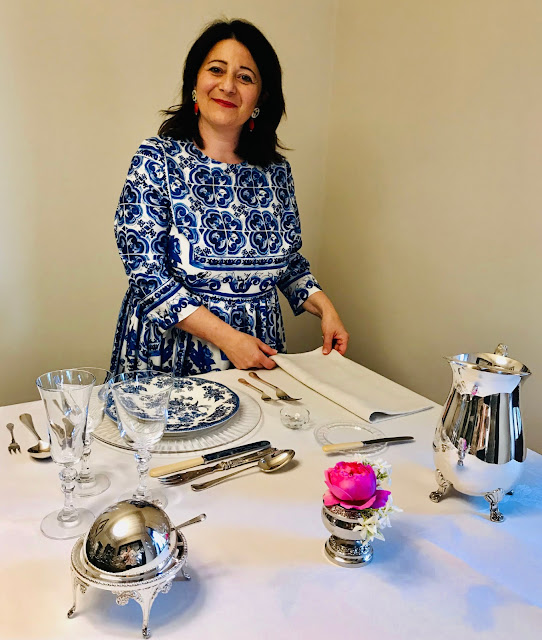
Take, for instance, table manners. Let a knife fork plate, cup and saucer, table and teaspoon, napkin and finger-bowl be provided, and one of the children be seated at the table in full view of the others. The teacher could then proceed to instruct the child in the presence of the whole school as to the proper use of table appointments. After a series of such lectures, which should be repeated at short intervals lest they forget, another phase could be descanted upon.
Two children should be introduced and taught the conventional way of extending and receiving an introduction, and then, by walking in pairs and meeting other pairs, the series of introductions could be invested with such humor as would make it a pleasure to both teacher and pupil. An amiable teacher with a well developed vein of humor would find such classes a pleasant relaxation, but she should cultivate the tact that steers clear of both ridicule and sarcasm. A sensitive child, who felt its lack of polish, would be deeply hurt by ridicule in the presence of a whole school, but this self same sensitive young one would be the quickest to profit by such lessons.
In this splendid country of ours, where fortunes are made in a day and the sons of laborers have an equal chance, through brains and ability, of rising to the very highest positions in the gift of the people, where the daughters, through beauty of person or the indefinable charm of grace, may wed millionaires, the necessity of this species of training is obvious. Many of these children know nothing of the graceful amenities of life, which they are so anxious to learn. They are ambitious and self-rellant, as all American children are, and yet are hampered by the total ignorance of the merest rudiments of social ethics.
In Washington, which is supposed to be the segregation focus of the most brilliant men in the country, the lack of polish is often deplorable, and those having the interests of the rising generation at heart cannot fail to appreciate the value of a course of “polite lessons” in the schools. From the rules of etiquette, the subject of “Cleanliness” should progress and be insisted upon. The hands and nails should be examined each day, and soon the child would learn to take pride in being considered neat.
I confess I have more confidence in a good old-fashioned lathering than in the inexhaustible subject of hygiene. The latter sounds more scientific and grandiloquent, but a real strenuous scrubbing with plenty of old-fashioned soap and a large percentage of elbow grease and muscle will fill the bill as far as young ones are concerned. An abiding faith in this enforcement would seem to accomplish much absolute good as lessons in the Bible, as we can certainly serve the Lord with a much cleaner spirit when physically clean.
Mental and physical cleanliness are very closely allied and the child who is taught to be clean mentally and physically is apt to be clean morally. At any rate, lessons in cleanliness will never do any harm, and perhaps a little less science and a little more common sense might be better understood by little people. Home training is undoubtedly the best, but where the mother is ignorant and knows nothing save of hard, unflagging labor and multiplied cares she has little time to teach the brood, even did she know herself, as many of them do not. In fact, she can better learn from them. That children would be immensely improved by the introduction of such classes cannot be denied, and that the teacher also would be benefited goes without saying.
It might come a little hard in the beginning to tone down a crowd of young savages, but the teacher who set the example of good breeding herself and who spoke courteously at all times would be repaid by the influence of her own personality. There are few children who cannot be Influenced by example in this regard, and it seems a pity that so many bright, ambitious and attractive little ones should grow up totally ignorant of the very principles of courtesy, or the little mannerisms 80 graceful in a woman. The children of the public schools go through an awful system of cramming that is often both foolish and useless as far as future use may be concerned, and it would seem a wise provision to substitute practical lessons on politeness for some of the extraneous matters that will amount to nothing In the long run.
Let some of the women so devoted to club life, who are always canting about the betterment of everything under the sun that had better be let alone, do some practical good by agitating this idea. If they have the time to figure in women's conclaves the time so devoted might be better spent in visiting various schools once or twice a week, and instead of poking their noses into all the cupboards in search of water-bugs or little specks of dust and overturning lunch baskets to see if the food were nourishing, thus mortifying and humiliating little people, as is often done if these ladies with hearts so full of morality and meddlesomeness would take this time and do the real good that would better fit these ambitious children for a higher social environment more good would be accomplished.
One-half hour each week would do wonders in effecting a transformation that will more than repay any extra effort. One ambitious, sensitive child as an ally, whose example will accomplish good, will make miracles. In all of the ultra-fashioned schools girls particularly are taken through a regular course of etiquette, to fit them for the social world, and why not the children less fortunate who have no advantages of home training?
A woman of refinement teaching a public school must often feel revolted at the manners of the little people who are so easily corrected when approached in the proper spirit, and it would seem less unpleasant to reform these tender sprigs than to train the hardened shoots of later years. A teacher who meets the children @nfided to her with a pleasant "Good morning" fosters a habit that a child will never outgrow.
The teacher who adopts the rule of saying with a smile. "Thank you, will be more cheerfully obeyed, and we all krow that we comply more cheerfully when asked “Will you kindly do so and so,” than when we are commanded to do “so and so.” No one is ever the loser through extending courtesy, and we all know how much pleasure these trifles add to life. The politeness classes should embrace a series of “talks.” or, as the Italians say, “conversaziones,” in which various topics should be discussed.
Take, for instance, table manners. Let a knife fork plate, cup and saucer, table and teaspoon, napkin and finger-bowl be provided, and one of the children be seated at the table in full view of the others. The teacher could then proceed to instruct the child in the presence of the whole school as to the proper use of table appointments. After a series of such lectures, which should be repeated at short intervals lest they forget, another phase could be descanted upon.
Two children should be introduced and taught the conventional way of extending and receiving an introduction, and then, by walking in pairs and meeting other pairs, the series of introductions could be invested with such humor as would make it a pleasure to both teacher and pupil. An amiable teacher with a well developed vein of humor would find such classes a pleasant relaxation, but she should cultivate the tact that steers clear of both ridicule and sarcasm. A sensitive child, who felt its lack of polish, would be deeply hurt by ridicule in the presence of a whole school, but this self same sensitive young one would be the quickest to profit by such lessons.
In this splendid country of ours, where fortunes are made in a day and the sons of laborers have an equal chance, through brains and ability, of rising to the very highest positions in the gift of the people, where the daughters, through beauty of person or the indefinable charm of grace, may wed millionaires, the necessity of this species of training is obvious. Many of these children know nothing of the graceful amenities of life, which they are so anxious to learn. They are ambitious and self-rellant, as all American children are, and yet are hampered by the total ignorance of the merest rudiments of social ethics.
In Washington, which is supposed to be the segregation focus of the most brilliant men in the country, the lack of polish is often deplorable, and those having the interests of the rising generation at heart cannot fail to appreciate the value of a course of “polite lessons” in the schools. From the rules of etiquette, the subject of “Cleanliness” should progress and be insisted upon. The hands and nails should be examined each day, and soon the child would learn to take pride in being considered neat.
I confess I have more confidence in a good old-fashioned lathering than in the inexhaustible subject of hygiene. The latter sounds more scientific and grandiloquent, but a real strenuous scrubbing with plenty of old-fashioned soap and a large percentage of elbow grease and muscle will fill the bill as far as young ones are concerned. An abiding faith in this enforcement would seem to accomplish much absolute good as lessons in the Bible, as we can certainly serve the Lord with a much cleaner spirit when physically clean.
Mental and physical cleanliness are very closely allied and the child who is taught to be clean mentally and physically is apt to be clean morally. At any rate, lessons in cleanliness will never do any harm, and perhaps a little less science and a little more common sense might be better understood by little people. Home training is undoubtedly the best, but where the mother is ignorant and knows nothing save of hard, unflagging labor and multiplied cares she has little time to teach the brood, even did she know herself, as many of them do not. In fact, she can better learn from them. That children would be immensely improved by the introduction of such classes cannot be denied, and that the teacher also would be benefited goes without saying.
It might come a little hard in the beginning to tone down a crowd of young savages, but the teacher who set the example of good breeding herself and who spoke courteously at all times would be repaid by the influence of her own personality. There are few children who cannot be Influenced by example in this regard, and it seems a pity that so many bright, ambitious and attractive little ones should grow up totally ignorant of the very principles of courtesy, or the little mannerisms 80 graceful in a woman. The children of the public schools go through an awful system of cramming that is often both foolish and useless as far as future use may be concerned, and it would seem a wise provision to substitute practical lessons on politeness for some of the extraneous matters that will amount to nothing In the long run.
Let some of the women so devoted to club life, who are always canting about the betterment of everything under the sun that had better be let alone, do some practical good by agitating this idea. If they have the time to figure in women's conclaves the time so devoted might be better spent in visiting various schools once or twice a week, and instead of poking their noses into all the cupboards in search of water-bugs or little specks of dust and overturning lunch baskets to see if the food were nourishing, thus mortifying and humiliating little people, as is often done if these ladies with hearts so full of morality and meddlesomeness would take this time and do the real good that would better fit these ambitious children for a higher social environment more good would be accomplished.
And there are precious few children, particularly those in the higher grades, who have received just enough education to enable them to realize its advantages, who would not gladly welcome the chance to learn such little etiquette as would give them confidence should chance th them amid other and better surroundings. Let women who are always in an agitation panic and who have the time to stir things up generally do a little agitation, act on this score, and perhaps where they are now reaping anathemas the tide will turn and blessings will come in their stead. By all means let us try to have politeness classes in the public schools.— San Francisco Call, 1903
🍽️Etiquette Enthusiast, Maura J. Graber of The RSVP Institute of Etiquette, is the Site Editor of the Etiquipedia© Etiquette Encyclopedia