Showing posts with label Mess Manners. Show all posts

Thursday, February 26, 2015

Messing with Manners and Military Terminology

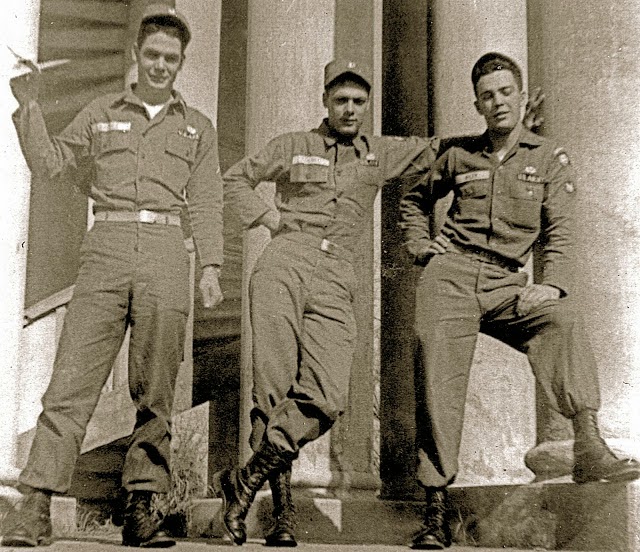
Three Paratroopers Messing Around with  a Paper Airplane in 1956, at Fort Bragg, North Carolina


When referencing food and the military, I am frequently asked the same questions by students. “Why does the military give out mess kits?”, and “Why is the place where soldiers eat called a mess hall?” I am a person who needs answers that add up. Inquisitive kids are that way too. 

When I first started looking around for an answer back in the early 1990s, I found a few bits and pieces of information available, but not one source I read actually tied it all together to where it made sense to me. 

From the outset “mess” obviously meant “food” and nothing more. The biblical Essau had a “mess of potage” which is believed to be a portion of lentil soup or beans. While growing up my brothers had G I Joe action figures that came with “mess kits” and watching the “Beverly Hillbillies” on television I heard the term “mess a’vittles” frequently used. While listening to former Presidential aide Dee Dee Meyers talking on late night t.v. she referred to her “mess bill” for something she had eaten on Air Force One. It was starting to drive me a bit nuts. If “mess” historically had meant food, how, why and when did it become the definitive term for a state of confusion and disorderliness? 

It took me much sleuthing, but I finally found a very old book on word origins and voila… there was an answer that made sense. The change in the general public’s definition of the word apparently was in the 1590s, when a party game called “Muss” spread across Europe. Muss was a game in which trinkets were tossed around a room and the party guests would scramble to retrieve them (anyone for some 52 pickup?)   As popularity of the game spread throughout Europe, with its various languages, the name of the game somehow was changed to “Mess”.   The Bible, military handbooks, and all other writings had naturally been left with the original meaning of the word intact. But from that point on, “muss” has rarely been used as a common term for something in a state of disarray, other than regionally in a few parts of the world. 

Many southern states here in the U.S. are one such regional area.   The term "muss" is still used in the south, while I rarely hear it here in Southern California.  The eyes of an octogenarian attending one of my seminars became misty as he recounted how his grandmother in Alabama would scold him for wearing his hat in her home. “I would say that my hair was a mess underneath my hat. She would then correct me by saying, ‘Your hair is mussed. It is not a mess!” 

Now I always try to remember that my daughter’s room is not a mess.  Her room is simply mussed up. It sounds better and somehow makes me feel a bit better about it. 


From Site Editor, Maura Graber, The RSVP Institute of Etiquette

14th C. Boke of Curtasye Etiquette

King Edward I of England, 1272-1307 AD. Known also as "Edward Longshanks," due to his great height and stature, was perhaps the most successful of the medieval monarchs. The first twenty years of his reign marked a high point of cooperation between crown and community in England, though his campaigns and efforts to capture territory in Wales, Scotland, Ireland, etc... "aroused in the Scots a hatred of England that would endure for generations." http://www.britannia.com/history/monarchs/mon30.html


From "The Boke of Curtasye" 
On reaching a Lord’s gate, give the Porter your weapon, and ask leave to go in. If the master is of low degree, he will come to you: if of high, the Porter will take you to him. At the Hall-door, take off your hood and gloves, greet the Steward, etc.., at the dais, bow to the Gentlemen on each side of the hall both right and left; notice the yeomen, then stand before the screen till the Marshal or Usher leads you to the table. 
Be sedate and courteous if you are set with the gentlemen.  
Cut your loaf in two, the top from the bottom; cut the top crust in, and the bottom in  cut the top crust in, and the bottom in.  
Put your trencher before you, and don’t eat or drink till your Mess is brought from the kitchen, lest you be thought starved or a glutton.  
Have your nails clean.  
Don’t bite your bread, but break it.  
Don’t quarrel at table, or make grimaces. 
Don’t cram your cheeks out with food like an ape, for if any one should speak to you, you can’t answer, but must wait. 
Don’t eat on both sides of your mouth. 
Don’t laugh with your mouth full, or sup up your potage noisily. 
Don’t leave your spoon in the dish or on its side, but clean your spoon. 
Let no dirt off your fingers soil the cloth. 
Don’t put into the dish bread that you have once bitten. 
Dry your mouth before you drink. 
Don’t call for a dish once removed, or spit on the table: that’s rude. 
Don’t scratch your dog. 
If you blow your nose, clean your hand; wipe it with your skirt or put it through your tippet. 
Don’t pick your teeth at meals, or drink with food in your mouth, as you may get choked, or killed, by its stopping your wind. 
Tell no tale to harm or shame your companions. 
Don’t stroke the cat or dog. 
Don’t dirty the table cloth with your knife. 
Don’t blow on your food, or put your knife in your mouth, or wipe your teeth or eyes with the table cloth. 
If you sit by a good man, don’t put your knee under his thigh. 
Don’t hand your cup to any one with your back towards him. 
Don’t lean on your elbow, or dip your thumb into your drink, or your food into the salt cellar: That is a vice. 
Don’t spit in the basin you wash in or loosely (?) before a man of God. 

If you go to school you shall learn: 

1. Cross of Christ,
2. Pater Noster, 
3. Hail Mary and the Creed, 
4. In the name of the Trinity, 
5. of the Apostles, 
6. the Confession. 
 
Seek the kingdom of God, and worship Him.  At church, take holy water; pray for all Christian companions; kneel to God on both knees, to man only on one. At the Altar, serve the priest with both hands. Speak gently to your father and mother, and honour them. Do to others as you would they should do to you. Don’t be foolishly meek. The seed of the righteous shall never beg or be shamed. Be ready forgive, and fond of peace. If you cannot give an asker goods, give him good words. Be willing to help every one. Give your partner his fair share. Go on the pilgrimages (?) you vow to saints, lest God take vengeance on you. Don’t believe all who speak fair: the Serpent spoke fair words (to Eve). Be cautious with your words, except when angry. Don’t lie, but keep your word. Don’t laugh too often, or you’ll be called a shrew or a fool.   
Man’s 3 enemies are: the Devil, the Flesh, and the World. Destroy these, and be sure of heaven. Don’t strive with your lord, or bet or play with him. In a strange place don’t be too inquisitive or fussy. If a man falls, don’t laugh, but help him up: your own head may fall to your feet. At the Mass, if the priest doesn’t please you, don’t blame him. Don’t tell your secrets to a shrew. Don’t beckon, point, or whisper. When you meet a man, greet him, or answer him cheerily if he greets you: don’t be dumb, lest men say you have men say you have no mouth. Never speak improperly of women, for we and our fathers were all born of women.  
A wife should honour and obey her husband, and serve him.  
Try to reconcile brothers if they quarrel.  
At a gate, let your equal precede you; go behind your superior and your master unless he bids you go beside him. 
On a pilgrimage don’t be third man: 3 oxen can’t draw a plough. 
Don’t drink all that’s in a cup offered you; take a little. 
If you sleep with any man, ask what part of the bed he likes, and lie far from him. 
If you journey with any man, find out his name, who he is, where he is going. 
With friars on a pilgrimage, do as they do. 
Don’t put up at a red (haired and faced) man or woman’s house. 
Answer opponents meekly, but don’t tell lies. 
Before your lord at table, keep your hands, feet, and fingers still. 
Don’t stare about, or at the wall, or lean against the post. 
Don’t pick your nose, scratch your arm, or stoop your head. 
Listen when you’re spoken to. 
Never harm child or beast with evil eye.
Don’t blush when you’re chaffed, or you’ll be accused of mischief. 
Don’t make faces.
Wash before eating. 
Sit where the host tells you; avoid the highest place unless you’re told to take it.


🍽Etiquette Enthusiast, Maura J. Graber, is the Site Editor for the Etiquipedia© Etiquette Encyclopedia 

Thursday, February 12, 2015

Etiquette at Sea: Manners in the Mess

Tall Ships Adventures take people on adventures around the UK coast, Europe, the Canaries, the Azores and the Caribbean
Etiquette on board ship is just as relevant as any other time or place, perhaps even more so as you’re living in very close proximity to others. Your days and nights are spent pulling on ropes and scrubbing the decks, keeping watch in the pouring rain, climbing the rigging and setting the sails. It can be a high stress environment but in order for a ship to run smoothly there must be discipline and there must be teamwork. Manners and considering the needs of your shipmates are therefore of paramount importance.

When I refer to table manners at sea I’m not talking about the manners you use on some lavish Caribbean cruise or leisurely yacht charter. If that’s the kind of seafaring you enjoy then I recommend eating as you would at a fine dining establishment. I’m talking about when you’ve barely slept in four days; you’re cold, and your clothes are dirty and smell musty. Your muscles acPosd you have bruises down your arms; your stomach is churning from sea sickness and you feel woozy but there is no option of taking a nap. Etiquette and manners may be the furthest thing from your mind but they matter.

The mess on a working vessel is a far cry from the opulence and splendour of a cruise liner. It is small and cramped and only too easy to accidentally spill your soup down your front. Etiquette about which fork to use isn’t an issue because you only have one fork. And one spoon. And one knife. Not everyone can eat at once so they have separate sittings. This means that mealtime can be fast paced. You eat and you leave so that the galley staff can clean up, wash up, and serve the next lot of weary seafarers.

Etiquette is all about adaptability. You adapt the etiquette to suit the situation, the company and the circumstances. If you’re eating with tired, grouchy sailors then you need to adapt to their ways. One thing remains though: consideration and respect for your fellow diners. You may not make use of all the rules you learned in Fine Dining for Dummies but you still need to be aware of the people around you and do your part in making it a pleasurable experience for all concerned.

                    
Rachel North, at sea and in the mess, 2nd from the right

Some Do’s and Don'ts for Dining at Sea

  • DON’T be late for your mealtime.
  • DO make sure you know what time your sitting is and go as soon as you are called.
  • DON’T wait until everyone has been served before you start eating.
  • DO pass the plates down the table to the people at the far end.
  • DON’T ask the galley staff to get you a drink.
  • DO offer a drink to everyone else at your table when you get one for yourself.
  • DON’T refuse to eat anything if you feel sea sick.
  • DO try and nibble on anything to settle your stomach, even if it’s just a piece of bread or dry biscuit.
  • DON’T hog the salad.
  • DO offer the bowl to your neighbours once you’ve taken your share.
  • DON’T finish the salad.
  • DO offer your shipmates the last of the salad and then tell the galley staff that it needs to be refilled.
  • DON’T leave half your food untouched.
  • DO tell the galley staff if you don’t want something being served.
  • DON’T elbow your neighbours as you try and cut your food.
  • DO keep your elbows in. Yes, it’s cramped but everyone’s in the same boat (literally).
  • DON’T spill your food and drink.
  • DO ask for a cloth if you do spill anything.
  • DON’T bash into your neighbours even if the ship seems to be on its side.
  • DO apologise for bashing into your neighbours and try to keep upright for the remainder of the meal.
  • DON’T sit there in silence no matter how tired you are.
  • DO smile, make polite conversation and say thank you to the staff and your fellow diners.
  • DON’T lean over your shipmates if you want something.
  • DO ask politely for something to be passed to you.
  • DON’T talk with your mouth full.
  • DO chew carefully and swallow before speaking.
  • DON’T make a distasteful face when your food is served.
  • DO thank the cook for feeding you so well
  • DON’T throw up in the mess or galley
  • DO go on deck if you feel queasy but keep to the leeward side of the ship (also, put your harness on and secure yourself to the ship – we don’t want any accidents!)
  • DON’T stay seated for fifteen minutes drinking your tea after finishing your meal.
  • DO take your tea with you out on deck
  • DON’T try and be helpful by taking dirty plates and cups into the galley (you’ll just be in the way).
  • DO help the galley staff by passing them plates and cups from the table.
  • DON’T sit in the captain’s seat even if he isn’t there.
  • DO sit anywhere else where the table has been laid.

I hope you’ve found this list helpful for the next time you find yourself on a working vessel at sea. Just remember that even when you’re feeling tired, sick and grouchy you still need to be aware of your shipmates around you who most likely feel the exact same way… Good manners cost nothing. Bad manners can cost you an otherwise amazing experience.


Rachel North is a writer, etiquette and tea enthusiast with a heart for young people and a special interest in youth development. In her spare time Ms North enjoys sailing, visiting places of historical interest, attending social events and curling up with a good book, her husband and a cup of Earl Grey tea.


Etiquette Enthusiast, Maura J. Graber, is the Site Editor for the Etiquipedia© Etiquette Encyclopedia