Showing posts with label Old Wedding Customs. Show all posts

Monday, February 19, 2024

1930’s Bridegroom’s Financial Duties

The bridegroom of nearly a century ago, needed to buy a wedding present for the bride which was something for her personal use, jewelry if he could afford it…


Question: What expenses are traditionally born by the groom?

Answer: The groom pays for: 
  • The engagement ring, 
  • A wedding present for the bride which should be something for her personal use, jewelry if he can afford it, 
  • The wedding ring, 
  • The bachelor supper, 
  • The marriage license, gifts to the best man and ushers, 
  • The best man and ushers’ wedding ties, gloves and boutonnieres, 
  • The bride's bouquet, 
  • The clergyman's fee, 
  • And all expenses of the wedding trip.–

 –Imperial Valley Press, 1931

.

 🍽Etiquette Enthusiast, Maura J. Graber, is the Site Editor for the Etiquipedia© Etiquette Encyclopedia

Friday, December 15, 2023

Colonial American Wedding Customs

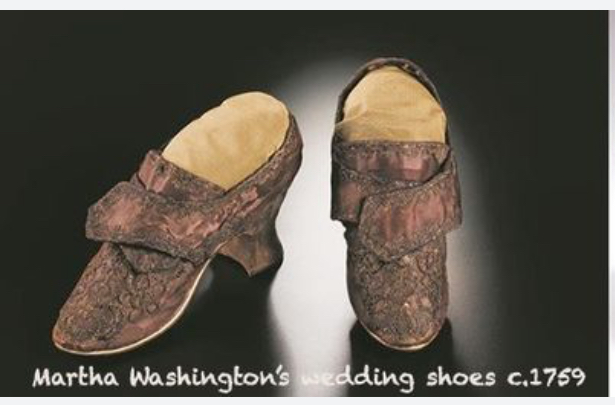
Martha Washington’s bridal shoes were lavender. According to WhiteHouse History. org, as the wife of the nation’s first President, “Martha set important social and political precedents by building the stage of presidential hospitality with her warmth and conviviality.” - Image source, Pinterest


Many weddings in Colonial era America took place close to, and after, the Christmas season. Before brides started wearing white at their weddings, they wore the very best dress they owned and it was regardless of the color, though darker colors were more popular. They were easier to keep clean. For example, Martha Washington wore lavender shoes when she married future U.S. President George. She wore the lavender shoes with a gold-colored dress when the Washingtons were married shortly after Christmas of 1758, on Jan. 6, 1759.


🍽Etiquette Enthusiast, Maura J. Graber, is the Site Editor for the Etiquipedia© Etiquette Encyclopedia

Thursday, May 23, 2019

19th C. Armenian Wedding Etiquette

The young bride... “Her hair was long and thick and braided full of little jingling coins. In ignorance of etiquette, I forgot to look at her feet, when she took the initiative and stuck out one, and then the other, to show that she had velvet slippers worked with gold thread and pearls. Then she showed her solitaire earrings.” 

How They Wed in Armenia – The Bride’s Dowery $100,000 – Bride and Groom Stood One Hour With Foreheads Touching, While Four Priests Performed the Rites

While the Armenians who live in European Turkey, and above all in Constantinople, have adopted foreign dress and modes of living, their religious observances have never undergone any change, and probably never will. Their weddings, their baptisms, and their funerals, as well as their church services, are all to-day exactly the same as when the Armenian Catholic church was founded in the third century by the Apostle Andrew. Those ancient customs fit in to-day with modern ideas very oddly, and for a person of the end of the nineteenth century to find himself alone at one of these ceremonies is to feel as if he were dreaming of times long past. The writer of this was invited to an Armenian wedding in Constantinople not so very long ago. 


The bridegroom was a clerk and was rather taller than is usual for an Armenian to be as they are generally rather under than over the medium height. He was well built and had dark eyes and curling hair and a good fresh color, and in fact was quite a good looking young fellow. His name was Haskas. He, like all the Greeks and Armenians, as well as the majority of Europeans was quite willing to accept a fortune with his bride. In fact, I suspect that the prospective fortune was the prime motive of this young man. A young man of those countries has but few chances of making money for himself, and custom makes it appear quite proper for him to secure a fortune, more or less great, with his bride. Parents begin to lay aside their daughter's dowery from the time a girl is born, and according to the family and social providence of the young man and the demands of his friends. He is allowed no social intercourse with the unmarried ladies of any family, and therefore his affections cannot be said to be engaged. 

When an Armenian family has a young daughter to marry, they look about until they find some young man who suits their ideas and then a messenger is sent to this young man's nearest relatives, telling of the admirable qualities of the girl and naming the sum of her dower. This is promptly refused if the young man's family thinks it is insufficient. The young man's parents want all they can get and they haggle and bid back and forth, until finally thinking they can do no better, they accept. The preliminaries are arranged either by the professional match makers or the relatives of bride and groom. The young man then makes a formal demand for the hand of the young lady through the nearest friend, the groom's mother, if she is living. The match-makers are old women, and they are paid by one family or the other. Often, two sets of matchmakers are employed, and they arrange everything, making the proposal and bearing the shy acceptance. 

In the case of the wedding of which I write, an old woman from the bride's family had gone down to the young man's office and made her proposal there. The offer was accepted on condition that the dowry proved to be all that she said, viz. 30.000 perkits liras, or nearly 8100,000. The bride's family was a very wealthy one and she was was the only daughter. She had seen Haskas in some way and that shortened the preliminaries somewhat as a direct bid could be made. The girl was young and pretty and Haskas was considered very fortunate. The bride, in addition to the money dowry, received the gift of two houses, one in Prinkipo and one in Pera, but those were settled upon her. The furuiture and clothes were all part of the dowery, and Haskas’ mother went to verify the inventory to see if anything was put down that was not there. Haskas’ mother thought he was letting himself go dirt cheap, but as the bride was an only child and the parents lived near Yerimbourgas, and already showed evidences of the insalubrity of that place, she finally consented to the match. 

The day before the wedding the whole amount of the dowry in cash was paid over to Haskas, and from a clerk with a pitiful salary of three liras a week he became in one hour, a partner in the firm he had formerly worked for. Out of this money Haskas bought a diamond necklace and some other jewels for his bride and his own wedding clothes. The wedding was to be at the home of the bride. When I arrived at the house she was just dressed, and I was invited into the bedroom where she stood in her magnificence. She was completely covered from head to foot with a veil of long slips of tinsel like that with which we decorate our Christinas trees. You could see nothing through this but the bottom of her dress. The women lifted the veil to show her face. 

The bride was not over fifteen or sixteen and was quite pretty so far as one could judge. Her cheeks were painted and her eyebrows penciled darkly, to meet in the centre and reach to her hair. The rest of her face was one dead white, made so by lead cosmetic. Her dress was white satin embroidered with silver and pearls. The clothes were clumsily made as are all oriental garments and completely disfigured whatever of grace she had. At a hint from my friends, I took up a fold of her dress to see that the pearls were genuine. Her hair was long and thick and braided full of little jingling coins. In ignorance of etiquette, I forgot to look at her feet, when she took the initiative and stuck out one, and then the other, to show that she had velvet slippers worked with gold thread and pearls. Then she showed her solitaire earrings. 

After the inspection of the little bride we took seats on the divan and sipped black coffee served in egg shell cups standing in gold filagree holders. Sweet meats were handed around in glasses, with spoons. The sweetmeats are of violet rose and anise flavors, and are made very thick. There are glasses of water, and another with spoons and one empty glass. You are expected to take a spoon, dip it into whichever jelly you prefer, eat a spooufnl, and then put your soiled spoon into the empty glass. I succeeded in upsetting a glass of water and both glasses of spoons, which for some reason they appeared to consider a good omen. After this we were taken to see the trousseau. Many of the dresses were of rich and handsome stuffs. Then we went to see the supper table. 
The bride and groom touched foreheads for an hour 

This was spread in a long and icy cold room. There were fowls, cakes, dried fruits, enormous quantities of bread and cheese, and three, immense boiled fish, besides black olives, and confectioners' cakes. Hot dishes were to be served later when the guests were seated. The whole party then went into the parlor to wait the arrival of the bridegroom and the priests, of whom there were to be four. The rest of the company were all assembled, and at nine, Haskas and his mother arrived. The bride was led in and seated on a stool, the tinsel covering her completely. Haskas’ mother looked like a veritable old witch, and she passed her time making invidious remarks and declaring that the amount of dowry they were giving such a noble, beautiful and well connected young man as Haskas was utterly ridiculous. Everybody but the bride talked, smoked and had a good time, and at eleven the priests had not come. The bride's father went to see what had become of them. He soon returned to say that they would be along in a short time. So coffee and more sweetmeats were served, and mastic was offered to the men to sharpen their appetites. 

Finally, at one o'clock in the morning a boy came and spread a piece of carpet in the center of the floor and said the priests were coming. The guests did not mind the delay, but the poor little bride sitting on the stool under her glittering head-gear tottered with sleep two or three times. No one spoke to her or offered her a glass of water, nor did she speak to any one. It must have been a cruel penance. At half past one the priests arrived, preceded by several boys with censors chanting. The priests were dressed in magnificent robes stiff with gold embroidery and jewels. The head priest had a sort of mitre blazing with jewels. The first carpet was now covered with another having jewelled tassels. The chief priest took the center of this with the other three behind him. 

The bride's father led her forward to the bridegroom and they both stepped before the priest, cushions of red velvet were then presented, on which were wreaths of artificial leaves. These were put on the heads of the young couple. The tinsel veil kept that of the bride steady, but Haskas’ did not fit and kept slipping around, to his great discomfort. The bride was short, Haskas tall, and they were obliged to stand one hour with their foreheads touching. The wreaths were changed from head to head three times. The ceremony appeared to resemble the Catholic form closely, but with much more symbolism. When it was over, the newly married pair arose and and the priests went to the supper room, and after they had eaten and departed, the rest went to supper. 

The poor, weary bride was placed on the same stool and the bridegroom came forward with a richly trimmed cushion on which his presents were displayed, a watch with a long, heavy chain, a diamond brooch and necklace and a pair of filagree bracelets, over four inches wide, studded with rubies and a red silk purse filled with gold money. After the presentation of the jewels, Haskas awkwardly unfastened the tinsel veil, handed it to his mother and clasped the jewels on the bride, to whom he then offered his hand and led her to the supper room, followed by all the rest. Hot roast mutton and pilaf and several other very substantial dishes were served, and an abundance of wine. The bride never spoke nor did anyone appear to regard her as other than a lay figure, though she ate a little. 

It was daylight before they had finished eating for every one did full justice to the feast. Then every one went home in the gray light of morning, after one last cup of coffee and a speech congratulatory. Every wedding is carried out in the same general manner allowing for difference in the station and circumstances of the families. The mother-in-law exists in Armenian, as well as in our comic papers. Haskas’ mother never left off belitling the supper, the dowry and the appearance of the bride, but no one appeared to feel hurt or vexed, so I imagine it must be customary. Weddings being so complex, one is usually enough to last a life-time aud divorces are almost unheard of. Olive Harper, 1895 


Etiquette Enthusiast, Maura J Graber, is the Site Editor for the Etiquipediag Etiquette Encyclopedia

Wednesday, July 25, 2018

Etiquette of Second-Time Brides

Not proper? “It’s not true that white is improper for a second wedding, say etiquette experts, however a veil symbolizes maidenhood, and is taboo for a second marriage.”


Woman Marrying Second Time Faces Lots Of Ceremony Taboos

The divorcee or widow who marries for the second time, often faces many taboos. Take the matter of the white dress. It’s not true that white is improper for a second wedding, say etiquette experts. The custom of a white dress has its origins in economics. In early Saxon days, the poorer bride dressed in a plain white robe to show that she brought nothing with her to her marriage. This indicated that her husband was not responsible for her debts. 


Although there is no restriction against wearing white, the bride’s choice should be based on comfort. If she feels more comfortable in an off-white shade or pastel she can select beige, pink, blue, green or whatever is most becoming. 

A veil symbolizes maidenhood, and is taboo for a second marriage. So is a formal gown with a train, since a formal wedding with many attendants is not in keeping with a second marriage. 

The gown should be ballerina or street length, and instead of a veil, a small flower hat, a cap or a head dress complimenting the gown may be worn. The style of the gown is determined by the time of day of the wedding, but shoulder and upper arms should be covered. If the bride wears an after-five or dinner dress, the maid of honor and bridesmaids should dress accordingly. It is better to wear a suit or simple street dress if the wedding takes place at the pastor’s home, say the experts. 

The choice of engraved or hand-written invitations is governed by the number of invited guests. Hand-written invitations are correct for weddings of 50 guests or less. If more than 50 guests are invited, engraved invitations may be sent. The invitation should carry the bride’s full name, including her given name, maiden name and name by a previous marriage. 

Guests are not obliged to present a gift to the previously married bride, but most will. If you have been a widow or divorcee for a long time, you may invite to the wedding both families, as well as close friends, on both sides. 

Etiquette does not determine whether children of a first marriage should be present for the second wedding. The choice is up to the engaged couple. –Chicago (UPI) News, 1963


Etiquette Enthusiast, Maura J. Graber, is the Site Editor for the Etiquipedia© Etiquette Encyclopedia

Tuesday, November 17, 2015

Etiquette and Wedding Invitations

In large towns and cities it became necessary to invite by written word those who were to attend the wedding ceremonies.
The development of the wedding invitation was particularly marked. In small villages the wedding bells ringing sweetly from the church belfry were the only invitation. All the friends and neighbors gathered together to greet the bridal party. But in large towns and cities it became necessary to invite by written word those who were to attend the wedding ceremonies.

The following rare old invitation, written in 1786, was clipped by William Hone from a Cumberland (England) newspaper and incorporated by him in his famous, “Table Book.” Here is an exact reproduction of the invitation:
Notice is hereby given that the marriage of Isaac Pearson with Frances Atkinson will be solemnized in due form in the parish church of Lamplugh, in Cumberland, on Tuesday next, the 30th of May inst. (1786); immediately after which the bride and bridegroom with their attendants will proceed to Lonefoot, in the said parish, where the nuptials will be celebrated by a variety of rural entertainments.

Then come one and all, at Hymen's soft call. From Whitehaven, Workington, Harington, Dean, Hail, Ponsonby, Blaming, and all places between;

From Egremont, Cockermouth, Barton, St. Bee's,
Cint, Kinnyside, Calder and parts such as these; And the country at large may flock in if they please.


Such sports there will be as have seldom been seen,
Such wrestling and fencing, and dancing between,
And races for prizes, for frolic and fun
By horses and asses and dogs will be run,
That you'll go home happy – as sure as a gun.
In a word, such a wedding can never fail to please;
For the sports of Olympus were trifles to these.

*Nota Bene- You'll please observe that the day Of this grand bridal pomp is the 30th of May,
  When 'tis hoped that the sun, to enliven the sight,Like the flambeau of Hymen, will deign to burn bright.
This specimen of an 18th century wedding invitation is doubly valuable. Not only does it reveal to us the kind of wedding invitations that were being written and publicly printed in those days, but it gives us an excellent picture of the kind of weddings that were then in vogue. Can you imagine races by dogs and horses at the modern marriage? Can you imagine fencing and wrestling and the “country at large” flocking in? 

The custom of posting invitations did not come until comparatively late. Not because posting was unknown– a royal post system existed even in ancient Persia. But for a long time a popular superstition made it an insult to send an invitation any other way than by personal messenger. Gradually this superstition passed out of favour, and soon everyone who entertained was posting invitations– recognizing this as a simple expedient toward getting guests together." – Lillian Eichler

*Nota bene is Latin. It means “note well” (effectively meaning ‘please pay attention to this’).


Etiquette Enthusiast, Maura J. Graber, is the Site Editor for the Etiquipedia© Etiquette Encyclopedia

Thursday, July 9, 2015

Bridal Etiquette, Customs and a "Proposing Chair"

No tossing of the bouquet at the Newhall-Cheseborough wedding ~"It is the habit of the Misses Newhalls when they become brides to establish new rules for nuptials."

A Society Bride Shattered Precedents

Mrs. Arthur Chesebrough (Nee Newhall) Keeps Bouquet Despite Ancient Custom


No fortunate maiden grabbed the exquisite bridal bouquet that Miss Elizabeth Newhall carried at the moment she became Mrs. Arthur Chesebrough Wednesday evening. For Mrs. Chesebrough held to the beautiful shower of white orchids and lilies of the valley and enmeshed in tulle and satin ribbon. Thus she established a precedent, for all the brochures on etiquette have admonished the bride to toss her bouquet among the languishing bridesmaids and let them scramble for it. The attendants at the Chesebrough-Newhall wedding were Miss Marion Newhall, the bride's sister; Miss Julia Langhorne, Miss Martha Calhoun, Miss Helene Irwin, Miss Helen Chesebrough and Miss Alexandra Hamilton.

It is the habit of the Misses Newhalls when they become brides to establish new rules for nuptials. When Mrs. Athole McBean, who was Miss Margaret Newhall, was married, the bride set a pretty fashion of simplicity. Her gown of clinging white satin was cut in long straight lines, there was exquisite lace, but as little of it as the mode of her gown would permit, and the bridal veil was simply confined with a wreath of orange blossoms. She wore no sting of pearls nor tiara of diamonds. Her only ornament was her wedding ring. Mrs. Chesebrough followed the bridal traditions with her wedding cake. The tiny gold wedding ring went to Miss Helen Chesebrough and the coin to Stewart Lowery. The thimble, symbol of spinsterhood, was not found.
Bay Area society matron, Mrs. Athole McBean, circa 1940s, had many years earlier, been proposed to in the "proposing chair"owned by her family, the Newhalls.

If ever there should be an auction sale of the Newhall furniture, every society girl in town would set out to acquire one particular article of the household. It is a chair, known as the "proposing chair." Whether or not it is responsible there've been two brides claimed in the domicile recently —the chair has been reupholstered twice.— San Francisco Call, 1911


Etiquette Emthusiast, Maura J. Graber, is the Site Editor  for the Etiquipedia© Etiquette Encyclopedia

Thursday, June 11, 2015

Etiquette and Wedding Customs

Traditional Mongolian clothing ~ “However much a Chinese girl may become Christianized there are generally several points of Mongolian etiquette which she expects to observe rigidly at her wedding.”
How Mrs. Fong Fung Regulated Her Nephew's Wedding Feast — A Unique Chinese Marriage Celebrated at the Methodist Mission

The Methodist Mission, on Washington Street, was the scene of a unique Chinese wedding last night. Ngan Kuk was the bride. Five years ago she was rescued from slavery and brought into the home, and since that time, little by little, she has learned Western ways and has abjured her idols, her ancestors and her heathen customs. But, however much a Chinese girl may become Christianized there are generally several points of Mongolian etiquette which she expects to observe rigidly at her wedding.

On that occasion, if on no other, she will paint her face, adorn her head and put on attire more gorgeous than a peacock's tail. She will also refuse the dainties of the marriage feast and refrain from casting even a sidelong glance at the bridegroom. When Ngan Kuk accepted the hand and heart of Chan Hay, a convert of the mission, she expected that her wedding feast would be as regal as the circumstances of the groom would permit, but fate, in the shape of the gentleman's aunt, willed otherwise. It is a Chinese custom that when a man who is about to get married has a mother she shall manage and control all the arrangements for his wedding. There are so few mothers-in-law in Chinatown, that this custom has almost fallen into abeyance.

Chan Hay had no mother, but he had an aunt — Mrs. Fong Fung— who has always been to him as a parent, and this lady made her presence felt at last night's wedding. She is the wife of a well-to-do Chinese merchant, and has been a consistent member of the Methodist Episcopal church for six years. She disapproves of frivolity in dress or deportment, and she considers Chinese custom and etiquette little short of sinful. It was owing to Mrs. Fong Fung's religious scruples that the bride wore no finery last night, and was simply arrayed in a blue blouse and a black shirt, with neat but not gaudy embroidery. The groom's attire was marked by the same absence of extravagance in dress, and as for Mrs. Fong Fung herself nothing could have been simpler than her attire. She was almost a Chinese tailor-made lady.

Rev. Dr. Masters, the head of the mission, performed the ceremony and throughout the whole, proceedings were conducted on the American plan, without the least particle of heathen custom or etiquette. There were about 150 American and Chinese visitors present and at the feast which followed the wedding, they all, the bride included, sat down in tbe big schoolroom of the mission to prettily decorated tables and partook of light refreshments prepared in American style. People declared it was the most unique Chinese wedding they had ever witnessed.
–San Francisco, 1896


Etiquette Enthusiast, Maura J. Graber, is the Site Editor for Etiquipedia© Etiquette Encyclopedia

Wednesday, May 28, 2014

Old Wedding Etiquette Customs

French fashion for the American bride - “Les modes parisiennes: Peterson's magazine. October, 1886.” -“Wedding cakes have played a role in British marriage ceremonies since medieval times. They used to be made of wheat, a symbol of fertility. Stories suggest that they were thrown at brides, or broken up over their heads. Tiered wedding cakes first became popular amongst royalty and nobility in the 1600s. To stop them from drying, they used to be stored in lard, which was scraped off when it was time for them to be eaten. Later, sugar was added to the lard to make it taste better and it was left on the cake. Icing as we know it emerged in Victorian times. The whiter the cake, the richer the bride's family was seen to be. This is because the finely refined sugar needed to make a lighter mixture was more expensive.”- BBCThe Amish continue the tradition of giving brides and grooms a quilt in the 'double ring' or 'bridal' pattern.

Irish brides and grooms were said to be brought good luck if the sun shone on the bride on the day of the wedding, or if they heard a cuckoo, or if they saw three magpies.

Picturesque Holland : newly wedded couples returning from church at Edam.
A Dutch promise of marriage involved a groom-to-be exchanging a pledge with a bride, using a ring or coin.  The Dutch are credited with the invention of bridal showers.  If a Dutch bride's father didn't approve of groom, he gave no dowry.  To compensate, friends showered her with gifts.

1881 depiction of a German wedding procession
German guests at weddings broke special plates. Pieces 'paid' for dances with the bride while the groom swept the pieces up.

Austrian brides avoid white and red flowers for weddings. A superstition exists that the colors mean bandages and blood.  Unlucky was Austrian bride who had to make her own wedding gown and unlucky the groom too, if he saw her in it, prior to nuptials.
1887 depiction of the French Bride and Groom
A prospective Portuguese bride pretended to be a cow who needed to be recognized by its owner, or soon-to-be husband.

Ukranian brides and grooms made a ritual tree, or hiltse, for the wedding table on the Friday night before they wed.

In Lithuania, brides and grooms are given a meal of wine, bread and salt ~ symbolic of joy, sweat and tears.
Mrs. Edsel B. Ford's bridal party, 1916
In Scotland and Wales, a 'love spoon' was carved from wood by a groom for a bride.  Some now give a silver spoon.  Also in Wales, bridal bouquets included symbol of love, myrtle. Bridesmaids each got a cutting to plant for luck in love.  And many a Scottish bride-to-be was blackened with treacle and soot, ensuring she'd look much prettier on the wedding day.
The Princess of Wales, Alexandra of Denmark, and her bridesmaids, in 1863
If a Danish bride is out of the reception room, female guests may kiss the groom on the cheek and vice versa.

Mongolian brides and grooms killed a chicken together and then would inspect the livers for any good omens.
"An International Marriage" from House Beautiful, early 1900's
In Argentina the mother of groom and the father of the bride stand next to them both throughout the ceremony.

Kuwaiti brides and grooms were chosen from relatives and matchmakers were hired if no ideal relative was found.
A Dinka bridegroom from the Sudan, "bargaining for the bridal ornaments" in 1931
A Nigerian groom’s family 'paid' a bride 'price.' Traditionally this consisted of shoes, bags, clothes and jewelry.

 Photograph of a Japanese bride who has been taken to her husband's house followed by her relatives and friends in nuptial procession.
The Japanese bride's furnishings were removed from her home and taken to the groom's home, the day before a wedding.

In Japan a groom gave his bride a kimono to wear on a ceremonial visit to his parents on third day of marriage.

A Korean bride and groom in 1920
For brides and grooms in Korea, blue and red are important colors, symbols of yin and yang uniting in harmony.

As early as 4000BC, Jewish grooms deposited money as a type of escrow for brides, as 'divorce insurance'.
1898 depiction of a Russian peasant bride from 1800's.
Russian brides and grooms traditionally wed in autumn.  Summer work was over, barns were full, and the new couples were prepared for long winter. 

A ceremonial purifying milk bath before ritual henna painting of bride's feet and hands is a a Moroccan custom. 

Spanish brides chose orange blossoms, symbols of happiness and fulfillment. Trees both blossom and bear fruit. Spanish brides wore black silk wedding dresses and black lace veils. Grooms wore embroidered shirts that their brides had made for them.

The Romanian bride and groom were showered with candy and nuts by their guests. This symbolized prosperity.
The queen of the Belgians in her wedding dress, 1832
An Indian bride and groom are showered with flower petals by the groom's brother at the end of the ceremony.

The newly married bride and groom of Bermuda planted a tree, symbolizing their union and their love.
Depiction of an ancient Roman wedding procession and foot washing from 1784
A Roman groom led a procession to a bride's home and she was escorted by her bridesmaids to greet him.  The Roman bride wore a white tunic with a Knot-Of-Hercules belt. Orange wedding shoes and a veil were very fashionable for the elite Roman brides.  The superstition of tripping over the threshold of one's new home comes from the Roman Empire.  Groom's were very cautious not to trip, and they carried their brides over to ensure that their new bride didn't trip either.
Wedding costume at Setesdal, Norway, 1859
Weddings were the most festive occasions in Norwegian country life, and in some parts the feast extended over two or three days.

The Czech bride wore a wreath of rosemary to symbolize wisdom, loyalty and love.
Depiction of an Armenian marriage procession
Depiction of the Armenian bride, 1862
In Armenia a groom's family brought gifts to bride’s family the night before.  These traditionally included a veil, her shoes and more.

In Italy, male guests of the bride and groom were given cigars, female guests were given candied almonds.  In parts of Italy, the groom's tie would be cut up in pieces and auctioned off to all of the guests.
1868 depiction of a Chinese wedding ceremony.
On the third day of marriage, a Chinese bride and groom returned to the bride's parents' home for a dinner party with their relatives.
Wedding in a Swedish church. Painting from mid-1800's.
A Swedish bride's bouquet was made of flowers with strongest scents to ward off trolls and other evil creatures.

A Brazilian bride placed her shoes in the dance floor's center. Guests placed donations in them for the newlyweds.
1881 depiction of the Malay bride on her honeymoon night
Swiss bridesmaids would sell colorful handkerchiefs to guests. All of the money went to the bride and groom.

Maoris of New Zealand still include a powhiri, or welcome, conducted by a tribal elder and the couple is blessed. 
French bridal fashions from 1834 
French couples gave wedding guests 5 dragées (candy), symbolizing health, wealth, happiness, longevity and fertility.

The Turkish bride depicted from behind.
Explanation of the Turkish bride in her wedding dress, and the rituals performed prior to the wedding.
A Filipino groom's family gave the bride and groom the gift of old coins, as symbols of future prosperity.

Pairs of padrinos and madrinos (Godparents), help brides and and grooms with each part of Hispanic weddings.
1863 depiction of a bridal costume from 1770's France


🍽️Etiquette Enthusiast, Maura J. Graber of The RSVP Institure of Etiquette, is the Site Editor for Etiquipedia© Etiquette Encyclopedia