Showing posts with label Candace Smith Etiquette. Show all posts

Monday, September 21, 2026

American Dining Style’s Roots

Fun Facts About the American Dining Style
American-style DiningImage Source: @peopleimages12 via 123RF

Ever caught yourself switching your fork from hand to hand mid-meal and wondered, "Why am I doing this?" You can thank centuries of etiquette evolution for that little dance. The American Dining Style has a surprisingly quirky backstory, and once you know it, you'll never look at your fork the same way again. Let's dig into some fun facts about the history of eating methods.

Fact #1: We Didn't Always Own Silverware

Long before place settings were a thing, hands, fingers, and sharp knives handled most of the eating. Utensils weren't mass-produced, so people didn't have drawers full of forks and spoons waiting at home. Many dinner guests actually brought their own knife to the table. And in a small act of old-world chivalry, since women typically didn't carry knives of their own, the men at the table would cut food for them.

Fact #2: Forks Were Once Considered Sinister

Believe it or not, the fork had an image problem. Its resemblance to a tiny pitchfork made some diners genuinely suspicious, and it was even branded the "devil's tool" in certain circles. While forks waited out their reputation crisis, the humble spoon had its moment in the spotlight instead.

Fact #3: The Fork-Switching Habit Has a Real Name

That cut-and-switch motion so many Americans do without thinking? It's often called the "zig-zag" method, and it's the heart of the American Dining Style. Here's how it plays out, step by step: cut the food with the knife, set the knife down, move the fork from the left hand to the right, then take the bite. Four steps in total, which traces all the way back to a workaround for right-handed diners using dull dinner knives alongside a spoon.

Fact #4: Europe Actually Invented the Four-Step Method

Here's a twist: the "American" style didn't start in America at all. It originated in Europe, back when spoons were used to steady food while a blunt knife did the cutting. Since most people are right-handed, it felt more natural to switch the spoon over before taking a bite. Somewhere along the way, as forks came into regular use on both sides of the Atlantic by the 1850s, the U.S. held onto this switching habit while European tables moved on.

Fact #5: Europe Simplified Things — We Just Never Got the Memo

Around that same time, upper-class Europeans decided the fork-switching shuffle was more trouble than it was worth. They dropped the extra steps and started keeping the fork in the left hand, tines down, the entire meal; what we now know as the Continental style. It's leaner, it's tidier, and it's the two-step approach most knife-and-fork cultures use today. Meanwhile, America kept dancing.

Fact #6: Etiquette Experts Called It Outdated Decades Ago

This isn't exactly breaking news. Back in 1948, Millicent Fenwick — then an editor at Vogue and later a U.S. representative to the United Nations Food and Agricultural Organization — declared the switching method out of date in Vogue's Book of Etiquette. And yet, nearly 80 years later, it's still going strong at American tables everywhere.

Fact #7: Fast Food Might Be Changing the Game

Here's a fun modern twist: some market data shows forks now outselling knives by roughly two to one in the U.S. Why? Blame convenience. Pre-cut pizza, ready-made meals, and grab-and-go snacks mean more Americans are eating one-handed than ever. As author Jacob Bronowski observed in The Origins of Knowledge and Imagination, "the rise of casual dining and drive-throughs has brought back an era of eating with our hands that hasn't been this common since the 1500s."

The Real Takeaway

Whether you switch your fork four times or keep it steady in your left hand the whole meal, there's no single "correct" way to eat — just the way that feels most comfortable and gracious for you and your table. The American Dining Style has an interesting and quirky history, but at the end of the day (and the end of the meal), good manners are what really matter.

Because no matter which utensil habits you inherited, sharing a meal together will always be in style. 

Sources: Colonial American History Stories—1215-1664: Forgotten and Famous Historical Events (Timeline of United States History) by Paul R. Wonning, “Origins of the Common Fork,” by Chad Ward, author of An Edge in the Kitchen, and Etiquipedia, an Etiquette Encyclopedia and Etiquette History Blog


 Contributor, Candace Smith is a retired, national award-winning secondary school educator, Candace Smith teaches university students and professionals the soft skills of etiquette and protocol. She found these skills necessary in her own life after her husband received international recognition in 2002. Plunged into a new “normal” of travel and formal social gatherings with global leaders, she discovered how uncomfortable she was in many important social situations. After extensive training in etiquette and protocol, Candace realized a markedly increased confidence level in meeting and greeting and dining skills and was inspired to share these skills that will help others gain comfort and confidence in dining and networking situations. Learn more at http://www.candacesmithetiquette.com/

Etiquette. Enthusiast, Maura J Graber, is the Site Editor for the Etiquipedia© Etiquette Encyclopedia

Wednesday, August 12, 2026

Etiquette and Common Condiments

Common Condiments and 
How to Use Them

Condiment SetImage Source: q77photo; "Set with different appetizers in small portions.", 2026. Accessed via https://www.123RF.com/photo_104810817, Standard License.

Whether you're squeezing ketchup onto a burger or drizzling hot sauce over your eggs, condiments are one of life's small but satisfying pleasures. From the salt and pepper shakers at your grandmother's kitchen table to the artisan sauces lining restaurant caddies today, condiments have always played a supporting role in our meals. And knowing how to use them well is a quiet mark of good manners.

What Are Condiments, Exactly?

Condiments are seasonings, sauces, and relishes used to enhance the flavor of a dish. They are the co-stars of the meal, not the main event. Salt, pepper, mustard, ketchup, steak sauce, hot sauce, salad dressing, relish — these are all condiments, and they come in every form imaginable: shakers, squeeze bottles, glass jars, small bowls, and single-serve packets.

The golden rule? Condiments add to a great dish. They are not meant to rescue a poor one.

Salt, Pepper, and the Sprinkle Family

Salt and pepper are the most iconic condiment duo in existence — and they are always a pair. When someone at the table asks for the salt, you pass the pepper along with it. Always. Separating these two creates an unnecessary disruption mid-meal as the table searches for the missing partner.

Beyond salt and pepper, meals are sometimes accompanied by other sprinkle-style condiments: grated Parmesan, dried herbs, cinnamon, nutmeg, or specialty spices. These are typically placed in small shakers or bowls with spoons, and they vary based on the dish being served.

Here is the most important rule of all condiments, especially the sprinkle variety: taste your food first. In any home or restaurant, it's safe to assume the person who prepared your meal knows what they're doing. Reaching for the salt before your first bite sends an unintentional signal that you expect the food to be lacking. Take a bite or two, appreciate the cook's effort, and then season to your preference.

Sauces: A Brief and Delicious History

Not so long ago, ketchup came in tall glass bottles that required a near-heroic level of patience. You tilted the bottle, gave it a gentle shake, and waited. Poking a knife into the neck of the bottle — clean or otherwise — was strictly off-limits. Steak sauce, mustard, and relishes were stored in glass jars with fitted metal lids and little serving spoons tucked inside. Everyone used the same spoon, and it went right back into the jar. (No licking. No finger-wiping. Those rules still apply.)

Today, condiments are served far more casually — plastic squeeze bottles on diner tables, sauce packets in fast food bags, and elegant ramekins in upscale restaurants. But the setting still determines the protocol.

  • Casual restaurants often keep condiments right on the table in a caddy or carousel. Help yourself freely.
  • Mid-range restaurants typically don't set condiments out unless the dish calls for them. If you'd like ketchup or hot sauce, simply ask your server.
  • Upscale restaurants make the decision for you. If a sauce accompanies the dish, it will be served alongside it — often in a small bowl or with a pouring spout. If you'd like something extra, it's perfectly fine to quietly ask your server after a few bites.

When using any pourable condiment, pour or dip a modest amount onto the side of your plate, then dip each bite as you go. For salad dressings, drizzle lightly over the salad, then gently toss to coat. Cut any oversized pieces of lettuce or vegetables with your fork and knife as you mix, then set the knife at the top of your plate and enjoy.

Condiments at Home and as a Guest

At home, the host decides which condiments make it to the table. If you're a guest in someone's home, take a couple of bites before asking for anything additional. It's a small gesture that goes a long way in honoring the effort of whoever cooked for you.

This is also a wonderful habit to pass along to children. Teaching kids to taste before they season builds respect and gratitude, and marks them as thoughtful guests wherever they go.

Condiments, used with just a little intention and grace, make meals more enjoyable for everyone at the table.


Contributor, Candace Smith is a retired, national award-winning secondary school educator, Candace Smith teaches university students and professionals the soft skills of etiquette and protocol. She found these skills necessary in her own life after her husband received international recognition in 2002. Plunged into a new “normal” of travel and formal social gatherings with global leaders, she discovered how uncomfortable she was in many important social situations. After extensive training in etiquette and protocol, Candace realized a markedly increased confidence level in meeting and greeting and dining skills and was inspired to share these skills that will help others gain comfort and confidence in dining and networking situations. Learn more at http://www.candacesmithetiquette.com/


🍽️Etiquette Enthusiast, Maura J Graber, is the Site Editor for the Etiquipedia© Etiquette Encyclopedia 

Monday, August 10, 2026

Etiquette Rules for PDA in 2026

Finding the Sweet Spot for Public
Displays of Affection

Kissing at Santa Monica PierImage Source: rez_art; "Romantic couple kissing in front of Santa Monica Pier.", 2017. Accessed via https://www.123RF.com/photo_42035618, Standard License.

Holding hands at a coffee shop. A quick kiss goodbye at the airport. An arm slipped around a waist while you window-shop together. Displays of affection are one of the sweetest parts of being in a relationship. They're a natural, human way of saying this person matters to me, without needing any words at all.

But because we experience these moments in shared spaces, alongside people who didn't sign up to watch, a little awareness goes a long way. The good news? Reading the room isn't about hiding how you feel. It's a small skill that actually makes affection feel more special, not less.

How Much is Too Much?

Ask five different people where the line is and you'll get five different answers. Comfort levels around touching, kissing, or walking arm-in-arm vary widely. And interestingly, it usually has less to do with someone's age or background than you'd expect. It's more about context: a quiet moment at a candlelit dinner reads very differently than the same moment at a crowded family reunion.

The simplest rule of thumb? You're sharing that space with other people, and they have just as much right to enjoy it comfortably as you do. A little attentiveness to your surroundings goes a long way toward keeping everyone — including you two — at ease.

You don't need to be in a brand-new relationship to feel that pull toward affection, either. Reaching for your favorite person's hand, stealing a smile across the table, catching their eye from across the room — that's just what happens when you genuinely like being around someone. It's when things move past the warm and sweet into more heated territory that it's worth a quick gut check.

Hands
Holding hands or walking arm-in-arm? Lovely, always. Just be mindful of not blocking a walkway or someone's view. Wandering hands during a longer embrace, though, tend to pull more attention than you might intend.

Kisses
A hello kiss, a peck on the cheek, or a spontaneous "I just love you" kiss are the kind of small moments that make a day. A longer, more passionate kiss is best saved for when it's just the two of you.

Hugs
A genuine hug — especially after time apart — is one of the most universally welcome displays of affection out there. It's really only when things get very close, or happen right in someone else's personal space, that it starts to feel like more than a hug.

Reading the Room

None of this is about dimming how you feel. Being in love is genuinely wonderful, and it makes total sense to want the world to see how happy you are. The trick is simply matching your affection to your surroundings: a business dinner calls for something a little more reserved than a beach vacation, and that's okay.

What people actually notice, and remember, isn't how much PDA a couple shows. It's how they treat each other. A gentle hand on the back, a warm smile, genuine attentiveness — these say just as much about respect and connection as any grand gesture. If anything, that quieter, thoughtful kind of affection often reads as even more genuine.

So go ahead and hold hands across the table. Steal that kiss goodbye. Let your affection show — with just enough awareness of the room you're in to keep it sweet for everyone, including the two of you.


 Contributor Candace Smith is a retired, national award-winning secondary school educator, Candace Smith teaches university students and professionals the soft skills of etiquette and protocol. She found these skills necessary in her own life after her husband received international recognition in 2002. Plunged into a new “normal” of travel and formal social gatherings with global leaders, she discovered how uncomfortable she was in many important social situations. After extensive training in etiquette and protocol, Candace realized a markedly increased confidence level in meeting and greeting and dining skills and was inspired to share these skills that will help others gain comfort and confidence in dining and networking situations. Learn more at http://www.candacesmithetiquette.com/

 🍽️Etiquette Enthusiast, Maura J. Graber of The RSVP Institute of Etiquette, is the Site Editor of the Etiquipedia© Etiquette Encyclopedia

Tuesday, June 2, 2026

National Park Etiquette

National Park Etiquette and
Respectful Nature Visits

Yosemite National ParkImage Source: rozabel; "Yosemite National Park, California, USA.", 2024. Accessed via https://www.123RF.com/photo_68566594, Standard License.

Visiting our national parks is a wonderful way to connect with nature and experience some of the most beautiful landscapes our country has to offer. Let’s explore essential etiquette for national park visits, ensuring you leave no trace and preserve these natural wonders for future generations.

Plan Ahead and Prepare

Knowing as much information as possible will help you know what to expect and how to prepare for the unexpected.

  • Research park regulations and special concerns
  • Schedule your trip to avoid times of high use when possible
  • Repackage food to minimize waste
  • Use a map and compass to eliminate the need for rock cairns or flagging

Proper planning not only enhances your experience but also reduces your impact on the environment.

Implementing National Park Etiquette

You’ve done your research and are heading out on your adventure.  The overall guideline to remember is that you are a guest in Mother Nature’s home.  As a human in a natural setting, there are many opportunities for you to unknowingly damage the environment you are there to enjoy.

You can prevent this from happening when you:

1. Travel and camp on durable surfaces. To minimize your footprint:

  • Stick to established trails and campsites
  • Walk single file in the middle of the trail
  • Camp at least 200 feet from lakes and streams
  • Avoid areas where impacts are just beginning to show

2. Dispose of waste properly.  The "Pack it in, Pack it out" principle is crucial.  Whatever you bring into a natural area, you must also take out with you when you leave.  

  • Pack out all trash, leftover food, and litter
  • Use bathroom facilities when available
  • If facilities aren't available, deposit solid human waste in catholes dug 6-8 inches deep, at least 200 feet from water, camp, and trails
  • Pack out toilet paper and hygiene products 
  • Bring reusable containers to minimize waste
  • Carry a small trash bag to collect waste as you go

By following the “Pack it in, Pack it out” principle, you help ensure that natural areas remain clean, safe, and enjoyable for all visitors and wildlife.  It's a crucial part of minimizing human impact on the environment and practicing responsible outdoor recreation. You might want to take this a step further by picking up any litter you find, even if it isn't yours – sometimes referred to as "Pack it in, Pack it out, and then some."

3. Leave what You find.

  • Leave rocks, plants, and other natural objects as you find them
  • Don't build structures or dig trenches
  • Avoid introducing or transporting non-native species
  • Don't carve into trees or deface natural surfaces

Take only photographs, leave only footprints.

4. Minimize campfire impacts by using extreme caution.  Responsible fire management prevents wildfires and preserves the natural landscape.

  • Use established fire rings or camp stoves
  • Keep fires small and burn all wood to ash
  • Put out fires completely and scatter cool ashes  
  • In some areas, fires may be prohibited - always check local regulations

5. Observing wildlife is a privilege and must be done respectfully and responsibly.

  • Observe wildlife from a distance; don't follow or approach them
  • Never feed animals - it damages their health and alters natural behaviors
  • Store food and trash securely
  • Control pets or leave them at home

Remember, we are visitors in their home.

6. Be considerate of and courteous to other visitors. 

  • Yield to other users on the trail
  • Camp away from trails and other visitors if possible
  • Let nature's sounds prevail - avoid loud voices and noises
  • Respect the quality of other visitors' experiences

Etiquette-fulness goes a long way in ensuring everyone enjoys their park visit.

7. Follow park rules and regulations, which may vary depending on the park you are visiting.   These rules exist to protect both visitors and the environment.

  • Adhere to entrance fee requirements
  • Observe speed limits and parking regulations
  • Stay on designated trails, especially in fragile ecosystems
  • Follow guidelines for activities like fishing, boating, or rock climbing

8. Practice photography etiquette. Capturing memories is important, but safely doing so ensures you can enjoy them for years to come.

  • Don't use drones where prohibited
  • Avoid disturbing wildlife for the perfect picture
  • Be mindful of other visitors when setting up equipment
  • Don't venture off-trail for a photo opportunity that could easily lead to a dangerous situation

Foster an Appreciation for our National Parks

Aside from enjoying time in nature, our national parks offer educational opportunities that help strengthen our appreciation for these amazing places.  You can become a steward of our national parks.

  • Learn about the area's natural and cultural history, including indigenous peoples' connections to the land
  • Share your knowledge with others, especially children
  • Lead by example in following park etiquette
  • Check out the National Park Service website to learn more and follow them on Instagram (@nationalparkservice) for fun posts

By following the etiquette guidelines above, we can all play a part in preserving our national parks for future generations. As you explore these magnificent landscapes, take pride in knowing that your responsible behavior is helping to protect these natural wonders.  So pack your bags, lace up your hiking boots, and set out to experience the awe-inspiring beauty of our national parks - all while treading lightly and respectfully on the earth.


Contributor, Candace Smith is a retired, national award-winning secondary school educator, Candace Smith teaches university students and professionals the soft skills of etiquette and protocol. She found these skills necessary in her own life after her husband received international recognition in 2002. Plunged into a new “normal” of travel and formal social gatherings with global leaders, she discovered how uncomfortable she was in many important social situations. After extensive training in etiquette and protocol, Candace realized a markedly increased confidence level in meeting and greeting and dining skills and was inspired to share these skills that will help others gain comfort and confidence in dining and networking situations. Learn more at http://www.candacesmithetiquette.com/


🍽Etiquette Enthusiast, Maura J. Graber, of The RSVP Institute of Etiquette, is the Site Editor for the Etiquipedia© Etiquette Encyclopedia

Thursday, May 21, 2026

Etiquette for Camping

Camping Etiquette Guidelines

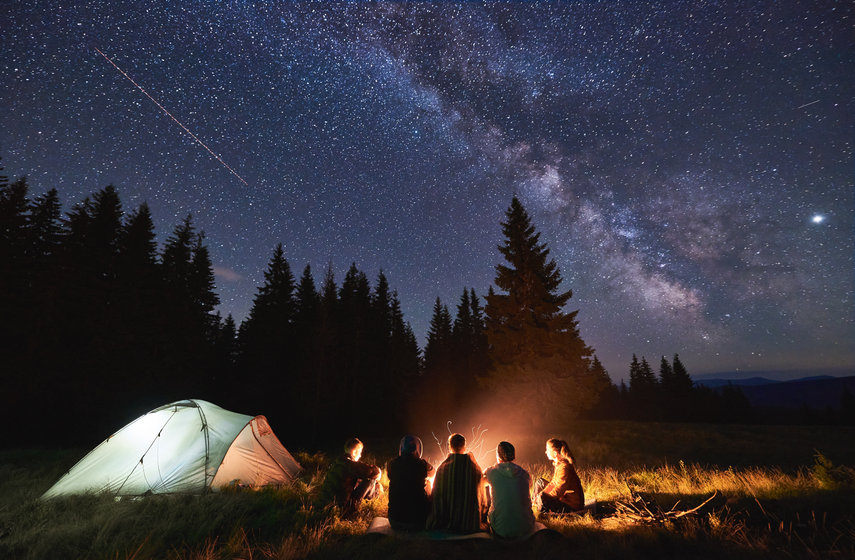
Camping Under Stars

Camping etiquette guidelines are important to know whether you’re an outdoor enthusiast or planning your first weekend in the woods.  These rules will help keep you safe and keep you in good standing with Mother Nature – as well as your campsite neighbors.

Respect the Space

Respect is the foundation of etiquette, and this is most important to remember when spending time in nature.  You are a guest in Mother Nature’s house, and your decisions and actions in how you treat her space can have many consequences.

  • Enter lightly and don’t litter.  Bring only what you need to make your time at the campsite comfortable.  The more you bring, the more disruptive you may be to the natural environment.  And the more likely you are to leave something behind.  Make sure you leave your camping space just as you found it.  Clean and natural.

  • Put the fire out.  Campfires are lots of fun!  So many memories are made when sitting around them with people you love.  But campfires can easily turn into forest fires if not extinguished correctly.  Before leaving your campsite or turning in for the night, pour water on it and ensure that nothing within the ashes and embers is still burning or hot.

  • Don’t feed the animals.  It’s adorable when a cute forest animal comes into your campsite and acts friendly.  But it’s not a good thing.  Animals in nature need to belong to their natural world, not to our human world.  Avoid the temptation to make friends with them by feeding them.  Be sure your food is stored away where it cannot be found or accessed by animals.  And make sure all trash is placed in appropriate receptacles or stored away so that critters can’t get to it.

  • Follow the path.  Many campgrounds have driveways and paths winding through them.  These are the driving and walking areas you should stay on.  It’s best not to venture off unless you know the area well, have a valid reason, or take a guided tour.  If you do, you could be putting yourself or someone else in danger.

  • Don’t bring in or take away firewood.  Transporting firewood from one area to another can cause insect infestation that may not have otherwise occurred.  Beetles, moths, and other insects that live in wood in one area now have the opportunity to live and breed in another if you move the wood in which they live.  Most campgrounds or nearby stores sell firewood you can use at your site.  You can learn more at dontmovefirewood.org.

Mind Your Noise Level

When you have a large group camping together, it can easily slide into a party.  This is great, so long as it doesn’t disturb others.  Others being people and animals.

If you are planning a campsite party, check in with other campers near you and let them know they may hear your group.  You may invite them to join you as a courtesy, but definitely invite them to tell you if the noise level is disturbing to them.

A large number of people together in a limited space can get pretty rowdy when a good time is had by all.  Place a time limit on your party so that everyone has an expectation of when things should quiet down.

Keep your music volume at a minimum by bringing your own acoustic instruments.  Modern technology affords us the convenience of using speakers that are only inches in size, but you still need to keep watch on the volume level.

Other Camping Etiquette Rules

If you are camping with children or pets, or both, it is most important to adhere to the rule of staying together.  Educate your children on the rules of nature, as well as the rules of camping etiquette.  However, this is best done when spending time together outdoors rather than conveying instructions.

Know your pets well before deciding to bring them along on a camping trip.  Dogs who bark easily at other people and animals may not be the best campers.  The same goes for those who tend to wander away. 

The camping etiquette guidelines above are important for safety and helping to preserve our natural environment.  But use them in addition to the rules you see posted in the campground in which you are staying.  Each environment of every area and region varies and, therefore, may vary in the rules necessary to keep that environment preserved and safe for campers.

Remember that respect is the key – always.  If you respect the space you’re visiting and the people and animals in your vicinity, your camping etiquette skills will be spot on.  And you can be assured that Mother Nature will continue to welcome you to her home.


 Contributor Candace Smith is a retired, national award-winning secondary school educator, Candace Smith teaches university students and professionals the soft skills of etiquette and protocol. She found these skills necessary in her own life after her husband received international recognition in 2002. Plunged into a new “normal” of travel and formal social gatherings with global leaders, she discovered how uncomfortable she was in many important social situations. After extensive training in etiquette and protocol, Candace realized a markedly increased confidence level in meeting and greeting and dining skills and was inspired to share these skills that will help others gain comfort and confidence in dining and networking situations. Learn more at http://www.candacesmithetiquette.com/


🍽Etiquette Enthusiast, Maura J. Graber, of The RSVP Institute of Etiquette, is the Site Editor for the Etiquipedia© Etiquette Encyclopedia

Friday, March 6, 2026

Smartwatch Etiquette

One of the technological advances needing courteous attention is the smartwatch. A very helpful gadget that tracks your health and fitness goals and is also connected to your mobile phone so it helps you decide what incoming information you should attend to without pulling out your phone.

Checking Your Smartwatch 
During Mealtime


If you’ve read my blog articles or attended one of my classes, you’ve probably read or heard me say that technology is helpful, as long as it is used courteously.

One of the newest technological advances needing courteous attention is the smartwatch. A very helpful gadget that tracks your health and fitness goals and is also connected to your mobile phone so it helps you decide what incoming information you should attend to without pulling out your phone.

However, there is a downside to glancing at your smartwatch that is common to glancing at any watch: it relays the impression that you’re checking the time because you’d rather be doing something else. And depending on who you’re dining with, the degree of this downside could be pretty steep.

Avoiding Distractions

The point of sharing a meal with your family, friends, or someone special is to enjoy the food served while simultaneously enjoying the pleasure of good company and conversation. It stands to reason that electronic devices do not fit in this scenario.

Before smartwatches, you could keep your silenced phone off the table and put away to prevent distractions. But now, it’s instinctual and tempting to look at your wrist when you feel a buzz because you know something is happening. A text? A call? Social media or email announcement?

Who can resist glancing, especially if you’ve been recently engaged prior to whatever is happening in the present moment?

Essentially, smartwatch etiquette requires more vigilance than other mobile devices. Silencing or removing them altogether may be necessary, especially if you are attending an important lunch or dinner where other guests need your undivided attention.

Yielding to Temptation

Depending on the occasion and the people you are with, it’s acceptable to glance at your watch to check the time or see what’s streaming onto your wrist. As long as there is no individual or group face-to-face interaction going on at the time, glancing at your watch is helpful and requires less attention than having your cell phone out.

But keep in mind: just as you would never place your cell phone on the table (as third parties aren’t invited), don’t be fooled into thinking the interruption of smartwatches won’t be noticed by others. Even though table etiquette dictates the personal space of each diner, as I tell my students, “eyeballs don’t follow property right observances.”

So, you might think the occasional glance at your smartwatch isn’t noticed, but it is! Especially if you glance frequently at it. That someone will conclude you aren’t interested in what’s going on at the table will eventually happen.

Noticing Others

What should you do when you notice someone glancing at their phone often at dinner? What are your boundaries of propriety and politeness?

At work or in business: 
  • If it’s a co-worker, that person may count on you to have his or her back. “John, as a heads up, I noticed the boss was looking your way a lot a lunch today—and it happened that every time you were glancing at your smartwatch.”
  • Try to step aside from judging others as they might be a new owner of a smartwatch and might still be adjusting to their own distractions.
  • Customers are observant and in business you would never want another person to think that your smartwatch is more important than interactions with him. It takes only one mistake to lose a customer.
At home: 
  • As a parent of the lucky youngster who has a smartwatch, your responsibility is to set clear boundaries about paying proper attention to others at the table. 
  • After-dinner discussions of what you observed will help your child become more mindful of the distraction. Stress that you are counting on her to manage her behavior and leave good impressions with others.
  • Be a role model. Train yourself not to glance at your own smart watch.
  • Spouses and partners should help each other by giving feedback on what is observed. It’s helpful to ask for a time to share feedback and how you felt when the person kept glancing at her phone.

You never want to convey the message that another person is boring. The best thing you can always do when sharing a meal is to give your undivided attention to the humans at the table rather than the electronic device on your wrist or in your pocket.


“The hours of folly are measured by the clock; but of wisdom, no clock can measure.”~ William Blake 

 Contributor, Candace Smith is a retired, national award-winning secondary school educator, Candace Smith teaches university students and professionals the soft skills of etiquette and protocol. She found these skills necessary in her own life after her husband received international recognition in 2002. Plunged into a new “normal” of travel and formal social gatherings with global leaders, she discovered how uncomfortable she was in many important social situations. After extensive training in etiquette and protocol, Candace realized a markedly increased confidence level in meeting and greeting and dining skills and was inspired to share these skills that will help others gain comfort and confidence in dining and networking situations. Learn more at http://www.candacesmithetiquette.com/


🍽️Etiquette Enthusiast, Maura J. Graber of The RSVP Institute of Etiquette, is the Site Editor of the Etiquipedia© Etiquette Encyclopedia 

Tuesday, February 3, 2026

Etiquette and Using Last Names

Why We Should Use Last Names in
Professional and Social Settings

Group of Positive, Diverse ColleaguesImage Source: gabrieltf; "Through glass group of positive diverse colleagues.", 2026. Accessed via https://www.123RF.com/photo_202464213, Standard License.

Over the past quarter-century, something fundamental has shifted in how Americans address one another. The decision to use last names has become increasingly rare, replaced by an immediate first-name basis that many find presumptuous. Walk into a doctor's office, meet a service provider, or introduce yourself to a colleague, and you'll likely hear your first name used within seconds of meeting. For many people raised with different standards of formality, this casual approach feels less like friendliness and more like a breach of etiquette.

Commander Adam Benson, a retired Naval officer, articulates what many feel but struggle to express: the erosion of formal address represents more than a simple change in linguistic habit. It reflects a broader shift in how we signal respect, maintain boundaries, and navigate social hierarchies in professional and casual settings alike.

The Social Function of Formal Address

The practice to use last names with honorifics serves several important social functions that immediate first-name basis interactions cannot replicate.

When you use last names, you create a respectful distance that allows relationships to develop naturally. Addressing someone as "Mr. Rodriguez," "Ms. Nelson," or "Dr. Chen" acknowledges that intimacy is earned rather than assumed. This distance isn't coldness; it's consideration. It recognizes that trust, familiarity, and affection grow over time through shared experiences and mutual regard.

To use last names also demonstrates basic respect for another person's station, accomplishments, and dignity. A judge who has spent decades serving the legal system, a professor who has earned advanced degrees, or simply an adult who deserves recognition as such — all merit the small courtesy of formal address until they invite otherwise.

Perhaps most importantly, the permission to use someone's first name becomes meaningful precisely because it isn't automatic. When we consistently use last names initially, the invitation to "Please, call me Jennifer" becomes a genuine gesture of warmth and welcome rather than a meaningless default.

When Society Stopped Using Last Names: A Generational Shift

Those who came of age in earlier decades learned a clear protocol: use last names and appropriate honorifics with adults and new acquaintances until invited to do otherwise. This wasn't stiffness or snobbery; it was simply how respect was demonstrated across generations and between people of different levels of familiarity.

Today's prevailing culture champions informality as a sign of openness and egalitarianism. The thinking goes that first names break down barriers, create friendly atmospheres, and prevent stuffy hierarchies from taking root. While genuine warmth certainly matters, informality imposed without choice isn't really egalitarian at all.

When the new contractor at your home launches immediately into calling you by your first name, or when a teenager addresses an adult they've just met as "Steve" rather than "Mr. Thompson," they may simply be oblivious to the preferences and comfort levels of others. The choice not to use last names becomes presumptuous when made unilaterally.

How to Use Last Names in Today's Informal Culture

How can those who prefer to use last names navigate today's first-name-default culture without seeming standoffish or outdated?

Commander Benson offers a practical example. While technically entitled to be addressed by his military rank, he accepts "Mr. Benson" as meeting the basic level of respect he seeks. This represents a reasonable compromise — maintaining formality without insisting on every ceremonial nicety.

When meeting new people, model the behavior you'd like to see. Introduce yourself with your full name and use last names for others until they indicate their preference. If someone immediately uses your first name, you might gently say, "I prefer Mr. Benson, at least until we know each other better." Most people, when clearly informed of a preference, will honor it.

In professional settings, defaulting to the practice to use last names remains especially appropriate. Business introductions, client relationships, and workplace hierarchies all benefit from the clarity and respect that formal address provides.

Teaching Children to Use Last Names

Another concern about immediate first-name usage involves children addressing adults. Unless an adult explicitly requests to be called by their first name, teaching children to use last names with appropriate titles instills several valuable lessons.

When children learn to use last names — "Mr. Lee," "Ms. Gupta," "Dr. Patterson" — they develop respect for elders, awareness that different contexts call for different behaviors, and understanding that not all relationships operate on the same level of familiarity. These aren't antiquated notions; they're building blocks of social intelligence that serve young people well throughout their lives.

Parents and educators who teach children to use last names when addressing adults give them a significant advantage in navigating formal settings, job interviews, academic environments, and professional relationships as they mature.

The Professional Advantage of Using Last Names

In business contexts, the decision to use last names can convey professionalism, respect, and appropriate boundaries. When meeting clients, potential employers, or senior colleagues for the first time, choosing to use last names demonstrates social awareness and respect for hierarchy and experience.

Many professionals find that when they use last names initially, they're taken more seriously and establish credibility more quickly. The transition to first names can then occur naturally as working relationships develop, making that shift meaningful rather than assumed.

Use Last Names to Preserve Choice and Respect

The practice to use last names need not represent stuffiness or social rigidity. At its best, formal address is a gift we give others: the acknowledgment that their comfort, dignity, and preferences matter. In a culture that increasingly defaults to immediate informality, maintaining the option to use last names preserves choice, respects boundaries, and allows the transition to first names to carry genuine meaning when it comes.

Whether you're navigating professional introductions, teaching children proper etiquette, or simply trying to show respect in daily interactions, the choice to use last names offers a time-tested tool for demonstrating consideration and building relationships on solid foundations of mutual respect.


 Contributor, Candace Smith is a retired, national award-winning secondary school educator, Candace Smith teaches university students and professionals the soft skills of etiquette and protocol. She found these skills necessary in her own life after her husband received international recognition in 2002. Plunged into a new “normal” of travel and formal social gatherings with global leaders, she discovered how uncomfortable she was in many important social situations. After extensive training in etiquette and protocol, Candace realized a markedly increased confidence level in meeting and greeting and dining skills and was inspired to share these skills that will help others gain comfort and confidence in dining and networking situations. Learn more at http://www.candacesmithetiquette.com/


🍽️Etiquette Enthusiast, Maura J. Graber of The RSVP Institute of Etiquette, is the Site Editor of the Etiquipedia© Etiquette Encyclopedia  

Thursday, January 8, 2026

Happiness and Etiquette

Etiquette and the Happiness Factor

Sharing Happiness

Fundamental to human nature is the desire to be happy.  One thing the pandemic brought us is the time to reassess this basic fundamental.    

Relationships are at the core of happiness—relationships with family, friends, colleagues, animals, your environment, yourself and your higher sense of being.  Being social creatures, we long for connectedness.  

When I teach etiquette seminars, the emphasis is always on the reasons why we would want to apply etiquette:  the confidence, comfort, and connectedness it brings.  

Connectedness is the essence of happiness, and the happier you choose to be, the more confident and comfortable you are.

Being Connected

Our human need for connection drives us to engage in social interactions with others.  These interactions create experiences that lead to acquaintanceship, friendship, romance, dislike, or confrontation.

Etiquette plays a direct role in determining the outcome of your attempts to connect with someone.

Five outwardly etiquette-ful actions to help others connect with you:

  • Smile when you speak to someone.  Even while wearing a mask, be physical with your smile.  
  • Looking directly at others when speaking is a necessary part of your smile.  Keep the gaze going. 
  • Keeping your distance, your body language conveys your being present.  Arms to your side, palms open when you speak conveys openness.  Quick or unnecessary movement, keeping your arms crossed, or appearing distracted, shows the opposite.
  • Validating other people’s views, even if you don’t agree, makes them feel as if they’ve been heard.
  • Occasioning communication means that you are committed to showing up.  Encourage others to speak about themselves.  Even if you can’t spend time in person, texting, emailing or social media go a long way in communicating. 

Five inwardly etiquette-ful actions that help others connect with you: 

  • Create a desire to make others feel important.  It will challenge your creativity.
  • Choose to pay attention!  Cut out distractions when communicating.  Keep the phone out of sight and off the table when spending time in person.  
  • Engage even if you don’t really feel like it.  Stay positive, share happy news, find something uplifting to share.   
  • Adopt the philosophy that you are a giver.  Then give of yourself.
  • Be available to ask others for advice.  This is easy if you engage another in something positive about that person’s life and look for something you genuinely appreciate. 

When we are etiquette-ful and kind to others and ourselves, we are bound to experience a level of happiness.  It is the same concept of the giver of a gift experiencing the same amount of joy and appreciation as the receiver of a gift.  Practicing etiquette guidelines during our interactions with people is a form of kindness in action.

Sharing Happiness

Some believe that being joyful is a responsibility of being human.  The HeartMath Institute has conducted many studies that help support this belief.  Their research shows that the emotions we feel – happiness, anger, uncertainty, fear – are shared energetically when we connect or interact with another being.  

Mindful of this, we can all celebrate moments of humility realizing that we can’t begin to know everything, but that we can contribute to the greater good by the little things we do inwardly and outwardly in kindness.  From this perspective, we can look around and appreciate everyday experiences – that the sun did rise, that seasons are occurring, and that we are all connected in some way.  How joyous!  How etiquette-ful!


 Contributor, Candace Smith is a retired, national award-winning secondary school educator, Candace Smith teaches university students and professionals the soft skills of etiquette and protocol. She found these skills necessary in her own life after her husband received international recognition in 2002. Plunged into a new “normal” of travel and formal social gatherings with global leaders, she discovered how uncomfortable she was in many important social situations. After extensive training in etiquette and protocol, Candace realized a markedly increased confidence level in meeting and greeting and dining skills and was inspired to share these skills that will help others gain comfort and confidence in dining and networking situations. Learn more at http://www.candacesmithetiquette.com/


 🍽️Etiquette Enthusiast, Maura J. Graber of The RSVP Institute of Etiquette, is the Site Editor of the Etiquipedia© Etiquette Encyclopedia