Showing posts with label Etiquette for the Sickroom. Show all posts

Saturday, December 3, 2022

Quiet Manners Always the Best

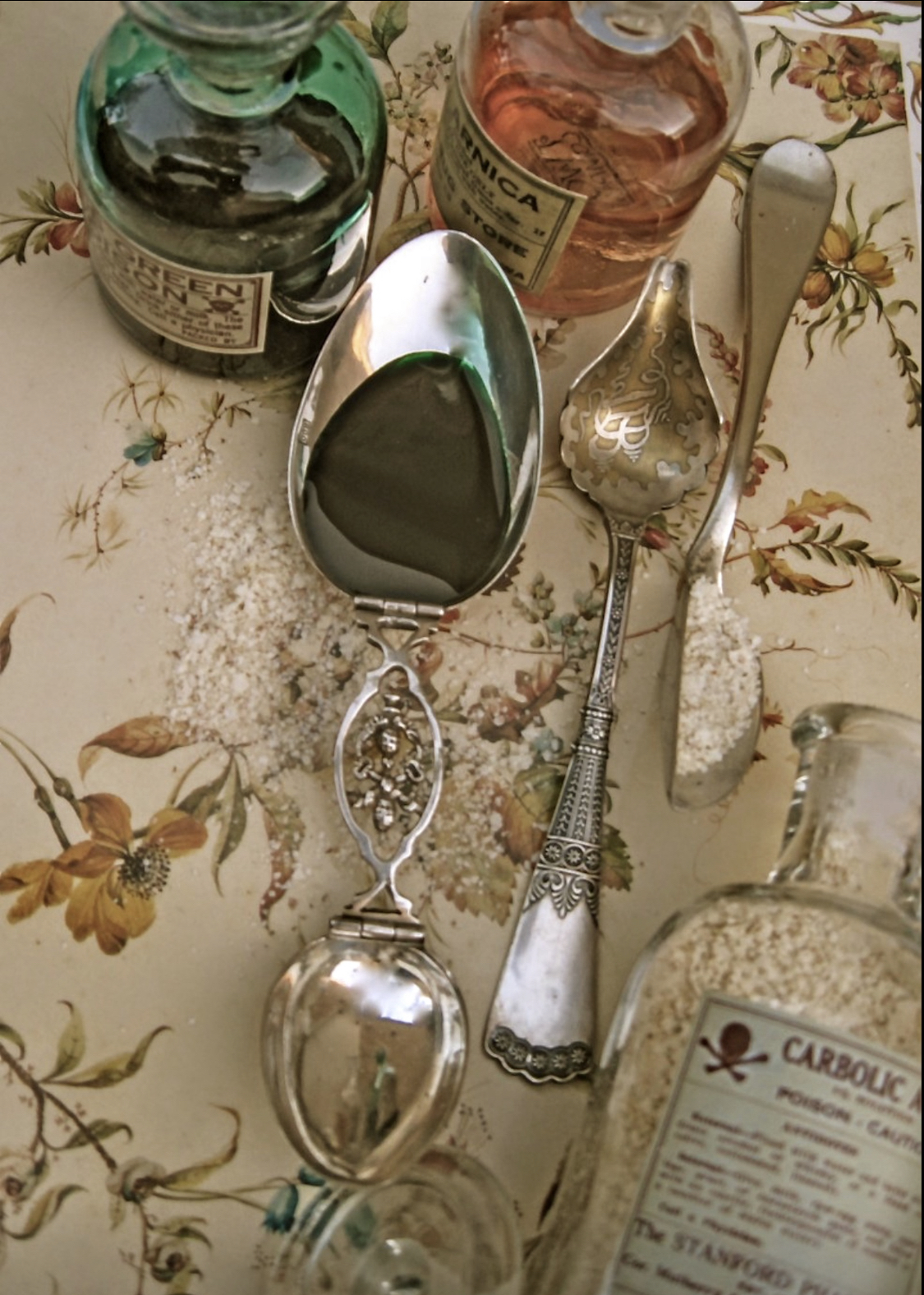
A folding doctor’s medicinal spoon, a pap spoon and a half teaspoon measuring spoon.— A doctor once told me that if women in the home wanted to learn but one branch of nursing and wanted that to be the most helpful it should be this matter of manner and professional etiquette.

“If there be a regal solitude it is the sick bed. How the patient lords it there!”— Charles Lamb

One of the best things about a good trained nurse is her manner, and it for that alone that a doctor sometimes requests the services of a nurse, when some member of the patient’s family might be perfectly to read thermometers, competent to keep charts and otherwise attend to the bodily wants of the patient. But the nurse's professional manner does much to soothe the nerves of the sick person and it does quite as much to expedite the doctor’s calls, and to accomplish what would be impossible to accomplish without the protection of the nurse's manner.

A doctor once told me that if women in the home wanted to learn but one branch of nursing and wanted that to be the most helpful it should be this matter of manner and professional etiquette. As a matter of fact few women do the right thing at the right time when the doctor comes. There is nothing that a doctor dreads so much, outside of a relapse or a weak heart, as an anxious mother with a taste for recounting anecdotes— long drawn out anecdotes that begin when the doctor enters the house and extend through his visit and then follow him down the stairs and keep him standing there hat in hand for whole minutes at a time till she brings the tale to completion. Then, of course, there are the deluded women who like to cheer the doctor on with a piece of fresh cake or some doughnuts.

There are times, however, when it is extremely considerate to provide some sort of refreshments for the doctor. If he has been watching some sort of refreshments for the doctor. If he has been watching through a long night of sickness it would be inconsiderate not to think of his hunger. Then it is courteous to prepare a dish of bouillon with bread and butter sandwiches, or a cup of coffee or tea and bring it to the doctor on a tray. If you ask him beforehand, do not ask him whether he will have it. Rather say some- thing like this: “I am sending up a tray for you. You are surely faint. Do you prefer bouillon, tea or coffee?—all are in readiness.”

It is in extremely bad form— in fact the worst offense against the etiquette of the sickroom for members of the family to remain in the room after the doctor has come. One member of the family, who is acting as nurse only, should remain during the visit, but she should make no uninvited comments on the patient, and it is considerate to leave the doctor alone within the patient’s hearing, if only for a minute or so, as many sick persons have some usually fanciful, confidences to make to the doctor. There is something about the room that worries them and they are unwilling to tell the faithful mother or sister who is nursing them, relying on his tact to have the change made without giving offense. — By Marshall Duffee, 1918


 🍽️Etiquette Enthusiast, Maura J. Graber, is the Site Editor for the Etiquipedia© Etiquette Encyclopedia 

Saturday, January 15, 2022

Gilded Age Sickroom Do’s & Don’ts


Don't Whisper – A whisper will often wake a light sleeper, when an ordinary voice would not. Don't Sniff or Sigh – Sniffs and sighs may better be indulged in the open air where a gust of wind can blow them away. – Late 19th C. Medicinal spoons, including a half-teaspoon.
  • Don't Tiptoe – A tiptoe will sometimes cause more disturbance than a carefully, squarely placed footfall.
  • Don't Whisper – A whisper will often wake a light sleeper, when an ordinary voice would not.
  • Don't Sniff or Sigh – Sniffs and sighs may better be indulged in the open air where a gust of wind can blow them away.
  • Don't Handle Rattling Papers – The folding and unfolding of papers that “rattle” is well calculated to “rattle” invalids, to say nothing of those who are strong and well.
  • Don't Shout, or allow the voice to be keyed on a high note – Shouting may be a necessity in connection with the treatment of “beasts of burden,” but should be counted a luxury for indulgence only indoors, when conversing with those who are “deaf as a post.”
  • When hot applications are ordered, let them be hot, not warm.
  • Put your piety into your nursing, as well as into your prayers.
  • Smooth off, with a fine file, the rough end of the glass drinking tube.
  • Let no drinks be brought in large tumblers or glasses; little ones are far more acceptable.
  • Use finest old linen, if linen at all, for bathing the mouth and lips; nothing else makes them so grateful.
  • Make the most of the privilege of being near the suffering mortal who longs for your presence.
  • Raise the invalid's head by putting your hand under the upper pillow, and, with as much firmness as possible, lifting it. – Good Housekeeping, 1892


Etiquette Enthusiast, Maura J. Graber, is the Site Editor for the Etiquipedia© Etiquette Encyclopedia

Sunday, January 9, 2022

Etiquette for Comforting Invalids

Two Victorian Pap Boats… Pap Boats or Invalid Feeders were for feeding small children, the ill or the elderly. The Blue Onion or “bulb design” on the left, was a Chinese design, but became extremely popular in Europe of the 18th and 19th centuries, and was reimagined by other manufacturers in response. 
– In its earliest usage, ‘pap’ referred to breast-feeding infants. “Pap” meant ‘breast’, “nipple,’ or even ‘teat”. By the 18th century, ‘pap’ also referred to a sweet-tasting, heavily diluted, porridge or gruel, similar to baby food. Pap was comfort food… soothing, often sweet and easy on the stomach and on the digestive system. If  toddlers or babies were ill, medicine was often mixed into the pap formula so that the dosage could be taken with a minimal amount of fuss. Recipes for pap typically called for milk, occasional fruit juices, flour, butter, sugar, softened breads and/or breadcrumbs.

Would You Comfort an Invalid? 
If you would, follow this etiquette…
  1. Look hopeful, never despairing.
  2. When requested to read the news, omit the death list.
  3. Tell only the pleasant tidings; there is no fear of for getting the evil.
  4. Sigh, if you must, after leaving the sick-room, not in the presence of the sufferer. 
  5. Leave stiff linen cuffs outside – in England, where they are fashionable, if you like.
  6. Refrain from telling about a similar case in which the invalid died a shocking death.
  7. Let every article of food be delicately dished, taking only small, tempting quantities.
  8. If you must chew gum, munch popcorn or nuts, wait until a half-mile away from sensitive ears.
  9. Make the most of the luxuries at hand without expatiating upon the charms of the unattainable.
  10. If your sick ones think the curtain is green when it is really blue, what harm in allowing them to think so? – L. Sturges, 1892


 Etiquette Enthusiast, Maura J. Graber, is the Site Editor for the Etiquipedia© Etiquette Encyclopedia