(1.) Good etiquette, for a man, is what ever makes a woman feel more like a woman, without making her feel weak minded. (2.) Good etiquette, for a woman, is whatever makes a man feel more like a man, without making him feel more harassed and put upon then he normally does anyway.
Lady Chatterly’s Mistress: Men and Women and What to Do About It
The subject of men and women versus etiquette is absolutely fraught with sex, which is as it should be. It is a good thing from other standpoints, too, for the fact greatly simplifies the approach to this chapter.
1. Good etiquette, for a man, is what ever makes a woman feel more like a woman, without making her feel weak minded.
2. Good etiquette, for a woman, is whatever makes a man feel more like a man, without making him feel more harassed and put upon then he normally does anyway.
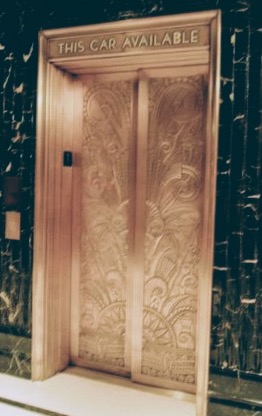
These are the touchstones, then, against which to test any puzzling point of intersexual etiquette, whether in the elevator* or in the bed. For today, with each sex doing so many of the same things, and push buttons doing most of the rest, both men and women need occasional reminders as to which team they're on.
It has come to my attention that some people have, as a matter fact, forgotten. That is, some men would rather act like women, and some women would rather act like men, which makes for a certain confusion. But several books have already been written about this, so I won't need to go into it. This chapter will concern itself only with the old-fashioned clear-cut kind of people, of whom there are still many around. It will not concern itself, however, with the sex appeal factor (except in so far as it becomes as a happy side effect of observing points 1 and 2.)
Lady writers in particular are always advising other women on how to attract men: 14 ways to up your sex appeal**. And it is a curious fact that these pieces are often read and followed even by women who don't want any more sex appeal – say a woman who has so much already that she is in perpetual hot water, or a woman who privately considers the whole thing a great nuisance and doesn't really want to get to where all that sex appeal would probably lead her. Like a vegetarian going to a great deal of trouble to make friends with the butcher.
At any rate, before upsetting your applecart to do things those articles recommend. It's wise to take a look at the men attracted to the lady writer who is touting her own wiles. Of course, you seldom get a chance to – although, just once, I did. I met a couple of the men this charm expert had attracted, herself, and decided I'd sooner draw flies. So each to his own, and you can never tell.
Actually, and the glorious fact is that everyone – flat-chested or bulbous,silent or talkative, rosy or sallow, tiny or tall – everyone appeals to someone, as a cursory glance at one's married friends will attest.
But who can make the rules? Some men think sultry perfume is sex appealing; others like a fresh soap and water smell, like a little child's clean hair. Some women find a male mustache fetching; some find it scratchy. Many people haven't the slightest idea what they want until they marry it, or till they don't marry it and wish they had.
So let's get down to where the work is – right into the etiquette of going out together and being out together – before we go on to the matter of living together, around the house and in the bedroom. (Most etiquette books never get into the bedroom, but this one will, because, after all, a great deal of etiquette takes place there, or ought to.)
Before getting mired in some minor details (what woman actually cares much whether a man is on the outside or the inside of an ordinary suburban sidewalk?), we 'll look at some basics: for one thing, the etiquette of the invitation proffered female by the male.
To hear your apt to get some real sparklers: “Want to go anywhere tonight, hon?” Or, “Nothing special you want to do, is there?” these approaches don't make a woman feel womanly, they make her feel either apathetic or domineering. (Now she'll have to think of something.)
What she would vastly prefer is the approach of a high school boy I know. He phones a girl and says, “I'm going to go see that Western at the Paramount tonight. Want to come?” If she doesn't, fine. He'll call somebody else. This lad will go far.
Some men would counter my thesis here with “yes, but she never wants to do what I want to do.” But this probably isn't so. If he clearly and enthusiastically wants to do it enough, she usually will – that is, if they like each other, and if they don't, what are we talking about?
Anyway, many women like men to fight harder for their rights. There's too much male docility around, these days, and it's taking a lot of fizz out of the battle between the sexes. Take the matter of who was supposed to go first.
Well, he is. Nearly every time. Common sense says so, and so does present-day etiquette, although many men have Ladies First so firmly wedged into their heads they often hang back when they shouldn't.
Women like men to go first. After all, the farmer walking six feet ahead of his wife across the cow pasture showed native gallantry, even when she was carrying the cow. He was blazing the trail around ditches and other unpleasant things she might have stepped in. A woman doesn't mind doing a little toting, so long as he will pioneer.
(If ever saw a well-meaning man trying to get a woman through a revolving door headed him without knocking her hat off and her teeth in , you saw good example of misguided manners. He should have gone through first. Then she'd have followed, on his push.)
Look at some other instances: he goes up a ladder first, for reasons of delicacy and so you can give her an assist at the top. He gets into a cab first, so she need'nt scoot across the wide backseat to make room for him. Scooting is easier for someone and trousers. He goes first down a train corridor because it's going to take biceps to open those stubborn doors between the cars.
If he has no biceps, this will develop them. He goes first down the theater if there's no usher. (If there is, she goes first, close to the wandering pool of light from the ushers torch.) He goes first into a dark nightclub. This could be a nasty bistro, and he'd better lead the way. He goes first into a restaurant, it's no maître d' is there to greet them. Masterfully he finds a table.
He climbs into a bus or streetcar first, to help her up. He gets off first, to help her down – unless it's crowded and she's nearest the door, in which case she'll just have to keep her eyes open and her wits about her and move.
An exception is escalators. Here she should go first – and she usually does, automatically, because she's on a high lope for the Dress Sale on Three. But he's supposed to be behind, anyway, to catch her if she slips.
Finally, he gets off a crowded elevator first if he's nearest the door. Women prefer this to being squashed by his gallantly hanging back. He should just get out. It's all quite simple, you see. He goes first when ever that's easier or safer for her.
Sometimes a man finds it hard to play his proper role with aplomb or even with good will. I asked a worldly man I know what annoys him most in the area of women and etiquette. After considerable thought, he said, “the woman who takes me for a salaried doorman when I hold the door for her in a public building.” He thought some more. “And,” he added, “the forty women right behind her who know a good thing when they see it.”
Then, too, when a woman slams full tilt into a man and waits for him to apologize, or hogs the middle of the escalator step so no one can get around her, or forgets that her umbrella points on the average male's eye level, or that her free swinging 10 pound pocketbook is a first-class battering ram – Well, she does her cause no good, for men find it hard to be gallant to a Sherman tank. But many men would enjoy being more courtly, it women would make it easier.
“... Pleasant as they have been, my years in the United States whatever more agreeable if American women had allowed me to kiss their hands... Despite my frustration, I still regard the kissing of a woman's hand as one of those small courtesies necessary for the preservation of the essential margin between men and women, which makes them both, in different ways, superior to each other and, therefore, again in different ways, and on a higher level, truly equal.” -Romain Gary
Which isn't to say that she should be an entirely fragile blossom. Take modern car doors. Automotive companies pay high-priced talent to design latches that open at the touch of a pinky, and so Antoinnette might as well use hers. Or, if that is just more than she can bring herself to do, a man can correctly reach across her to open it for her.
A great deal of trivia has crept into intersexual etiquette, and that's a fact. For instance a man – saith the etiquette book – mustn't walk between two women, except when the Trio crosses a street. But if he's the only man they've got why mustn't he? The book says it's because he'd have to turn his face away from one of them in speaking to the other. But this isn't so terrible. Maybe each of the ladies enjoys having a man beside her, and if he weren't, she'd feel like Orphan Annie. Did they ever look at it that way?
Also, a man isn't supposed to take a woman's arm, and except when crossing the street. But if she is wearing spike heels, or if it is spring (as or summer, autumn, or winter) and they are in love, he certainly may. That's what this book says.
Consider Men's Hatiquette. It's simple, but many words have been wasted on it. Actually, all that matters is that he make sure his hat* is off whenever there's a roof or ceiling overhead – except for long covered thoroughfares like public halls and terminals, and in the Jewish Temple, and on special ceremonial or costumed occasions.
Elevators are a moot point. Taking off his hat is a gracious gesture. But in a closed-packed elevator it can create more distress then joy you must elbow people and knock their hats off in the process.
He never has to take his hat off in the street, unless the flag goes by or stops. Not when a lady goes by or stops. The merest flick of the brim will suffice. And if it's a raw day, practical intersexual etiquette demands that he keep it securely on. Should he catch cold in his sinuses, some woman will probably have to nurse him or put up with him, and thus he has'nt proved to be so gallant in the long run.
Her point is well taken. Then, there are a few things she should remember, as well, and I am sure she does.
For one, not to keep him waiting too long before they even start out, while she decides that her makeup base is too light or her stockings too, well, purplish or something, and changes them. In most fair to good restaurants these days you need a miner's cap to read the menu by, anyway. Ten gets you twenty the man you're with won't notice what color stockings you're wearing, if any, but he'll certainly notice the three cigarettes he had to smoke while he waited.
She should carry the minimum equipment. If she knows she'll need a complete ballot and ring job by mid-evening, it's simpler to bring along a veil. I know a girl who tapes a lipstick, a dime, and a folded dollar bill above her knee (is she could slip them into her bra too) before she goes dining and dancing. This makes great sense – no swollen velvet pouch to end up in a man's pocket and make him heavy on his feet, or hers. (Of course, a girl must carry a small bag she is lost without Compact, cigarettes, and so forth. But it should have a wrist strap or loop, so she can wear it while she dances.)
As for mad money, you don't hear much about these days, a charge account at a cab company can be handy. It is a no-host evening, she won't need much money along, either. Sonia Goodkid always hands Bill Youngenbroke her contribution before they leave. Or if it is entirely her celebration, she'll have stopped in earlier and arranged with the restaurant to bill her later. (However, she better watch her step with this routine, or Bill will get the habit, and first thing you know, she'll be putting him through med school.)
A working girl, at any age in any job, pays for own lunch when she lunches with a man. Or, at any rate, she is expected to, unless this is a budding office romance (as most wives will assume it is, if their spouses lunch money starts disappearing with twice its usual feverish rapidity). She can give him a few dollars before they go into the restaurant – for her share of the bill – and hope she gets her change back.
Or, if she knows he isn't sensitive about these things – and there's no reason he should be, at a business lunch – she can simply pay her own check and leave her own tip. Either way.
By the way, these financial matters should always be clearly understood all around, whether the situation is business or social. A woman I know gave a lavish restaurant party for three couples – she had been visiting in the city and this was the only way she could return their royal hospitality. The champagne flowed; she urged upon them the pressed duckling, the grapes after the fashion of Suzette, the brandy; and her guests needed little urging. Finally, when she asked for the check, it developed that one of the gentleman had already paid it. She protested, but he was adamant. All she could do was send him a note and a gift – a desk clock, it was. He owned to already, but she still feels indebted to her friends.
The worst female restaurant menace, according to men is the woman who stops to chat – standing – with acquaintances at another table. A man feels ungentlemanly if he doesn't rise, and uncomfortable if he can't sit down immediately thereafter. A sweet smile from the lady, and a brisk hello, are sufficient, before she strides on. If she has to say something, she can send a note by the waiter.
Finally, to the matter of ordering. This is a male prerogative. Giving the order to the waiter will – back to our original touchstone – somewhat build the male ego, if he is knowledgeable about these things, and cares. But not if he isn't and doesn't. He'll properly consider it's not worth the effort, if the menu is abstruse, or if the lady shuffles nervously from Crab Thermidor to the Lamb Chops, with a short but dramatic pause at the Curry Indienne along the way. If she can see her way clear, or if she wants to discuss sauces with the waiter, she'd better do her own ordering.
If there are more than two people at the table, each had better order. The hosts usually can't remember all that. Like a wraparound skirt in a high wind, the whole thing is apt to blow up.
And so to a few rough notes on the Social Gathering, as it concerns men and women, and etiquette.
It is true that a man gets gold stars on a ladies ledger – which cancel some of the black marks on his rap sheet – when he tells her how pretty she looks ( or handsome or well put together, as the case may be) before they go to a party, or while they are en route. But he gets double credit for telling her once they get there, for then it has twice the impact. The reason is this: Before she leaves home, a woman is tolerably satisfied with how she looks (or she wouldn't have left). Indeed, she is often delighted with her appearance – the naked black basic, the company face – wholly different from the rather soul – shattering reflection the mirror handed her early that morning. But once they arrive, her innocent glory is apt to be dimmed by all the other naked black basics and company faces, which in her excitement she had forgotten would be there. At this point, especially, she must know how she stacks up, this is the time to tell her.
Still, this is a minor point. A major one – or, to put it another way, what makes women the maddest – is the male tendency to herd together, drinking and talking shop. Many a woman asked for it, with her crossfire chitchat about purely female concerns, which drives the man perforce into the tall timber where the bottle is. But many a woman who doesn't ask for it gets it, too, which can have unhappy repercussions. After all, she didn't put on her company face and her nice little dress just to swap tatting patterns with Irene and Thelma. She'd be glad to do it for a while, mind you, but not all night.
The fact is that the virtuous housewife – if she doesn't work outside the house – sees and talks to few males alone, except for the milkman and the little old codger in the Blanket Department twice a year at White Sales. And this party – she thought – would be a chance to shine a little, showing a few pretty facets that may have rested a bit at the kitchen sink. If she doesn't get to go – if, on the contrary, she goes home feeling like the little woman in the tight permanent, with a pocket full of tuna recipes – she'll feel like kicking the cat.
This sorry state of affairs, with the sexes is getting no practice in attracting and interesting each other, is often reflected in a certain lackluster performance in the bedroom, particularly where our heroine is concerned. Nothing has come alive for her, including herself, though the moon shine ne'er so brightly over the cow shed.
An exception is escalators. Here she should go first – and she usually does, automatically, because she's on a high lope for the Dress Sale on Three. But he's supposed to be behind, anyway, to catch her if she slips.
Finally, he gets off a crowded elevator first if he's nearest the door. Women prefer this to being squashed by his gallantly hanging back. He should just get out. It's all quite simple, you see. He goes first when ever that's easier or safer for her.
Sometimes a man finds it hard to play his proper role with aplomb or even with good will. I asked a worldly man I know what annoys him most in the area of women and etiquette. After considerable thought, he said, “the woman who takes me for a salaried doorman when I hold the door for her in a public building.” He thought some more. “And,” he added, “the forty women right behind her who know a good thing when they see it.”
Then, too, when a woman slams full tilt into a man and waits for him to apologize, or hogs the middle of the escalator step so no one can get around her, or forgets that her umbrella points on the average male's eye level, or that her free swinging 10 pound pocketbook is a first-class battering ram – Well, she does her cause no good, for men find it hard to be gallant to a Sherman tank. But many men would enjoy being more courtly, it women would make it easier.
“... Pleasant as they have been, my years in the United States whatever more agreeable if American women had allowed me to kiss their hands... Despite my frustration, I still regard the kissing of a woman's hand as one of those small courtesies necessary for the preservation of the essential margin between men and women, which makes them both, in different ways, superior to each other and, therefore, again in different ways, and on a higher level, truly equal.” -Romain Gary
Which isn't to say that she should be an entirely fragile blossom. Take modern car doors. Automotive companies pay high-priced talent to design latches that open at the touch of a pinky, and so Antoinnette might as well use hers. Or, if that is just more than she can bring herself to do, a man can correctly reach across her to open it for her.
A great deal of trivia has crept into intersexual etiquette, and that's a fact. For instance a man – saith the etiquette book – mustn't walk between two women, except when the Trio crosses a street. But if he's the only man they've got why mustn't he? The book says it's because he'd have to turn his face away from one of them in speaking to the other. But this isn't so terrible. Maybe each of the ladies enjoys having a man beside her, and if he weren't, she'd feel like Orphan Annie. Did they ever look at it that way?
Also, a man isn't supposed to take a woman's arm, and except when crossing the street. But if she is wearing spike heels, or if it is spring (as or summer, autumn, or winter) and they are in love, he certainly may. That's what this book says.
“A now famous Hollywood actor reveals his lower white-collar origins every time he sits down. He pulls up his trousers to preserve the crease.” – Vance Packard
Consider Men's Hatiquette. It's simple, but many words have been wasted on it. Actually, all that matters is that he make sure his hat* is off whenever there's a roof or ceiling overhead – except for long covered thoroughfares like public halls and terminals, and in the Jewish Temple, and on special ceremonial or costumed occasions.
Elevators are a moot point. Taking off his hat is a gracious gesture. But in a closed-packed elevator it can create more distress then joy you must elbow people and knock their hats off in the process.
He never has to take his hat off in the street, unless the flag goes by or stops. Not when a lady goes by or stops. The merest flick of the brim will suffice. And if it's a raw day, practical intersexual etiquette demands that he keep it securely on. Should he catch cold in his sinuses, some woman will probably have to nurse him or put up with him, and thus he has'nt proved to be so gallant in the long run.
MEN AND WOMEN IN RESTAURANTS
“If men dine alone, 10 men together, how they dress*** I really don't mind. I'm not there. But if a man takes me out to dinner, I like him to smell of a nice soap, to wear his best suit, maybe a black tie, so that I can wear my nice little dress. I will know then he has kindness of heart, he has said to himself, ‘I will make a little effort so that she can look her best’.” – Louise De Vilmorin
Her point is well taken. Then, there are a few things she should remember, as well, and I am sure she does.
For one, not to keep him waiting too long before they even start out, while she decides that her makeup base is too light or her stockings too, well, purplish or something, and changes them. In most fair to good restaurants these days you need a miner's cap to read the menu by, anyway. Ten gets you twenty the man you're with won't notice what color stockings you're wearing, if any, but he'll certainly notice the three cigarettes he had to smoke while he waited.
She should carry the minimum equipment. If she knows she'll need a complete ballot and ring job by mid-evening, it's simpler to bring along a veil. I know a girl who tapes a lipstick, a dime, and a folded dollar bill above her knee (is she could slip them into her bra too) before she goes dining and dancing. This makes great sense – no swollen velvet pouch to end up in a man's pocket and make him heavy on his feet, or hers. (Of course, a girl must carry a small bag she is lost without Compact, cigarettes, and so forth. But it should have a wrist strap or loop, so she can wear it while she dances.)
As for mad money, you don't hear much about these days, a charge account at a cab company can be handy. It is a no-host evening, she won't need much money along, either. Sonia Goodkid always hands Bill Youngenbroke her contribution before they leave. Or if it is entirely her celebration, she'll have stopped in earlier and arranged with the restaurant to bill her later. (However, she better watch her step with this routine, or Bill will get the habit, and first thing you know, she'll be putting him through med school.)
A working girl, at any age in any job, pays for own lunch when she lunches with a man. Or, at any rate, she is expected to, unless this is a budding office romance (as most wives will assume it is, if their spouses lunch money starts disappearing with twice its usual feverish rapidity). She can give him a few dollars before they go into the restaurant – for her share of the bill – and hope she gets her change back.
Or, if she knows he isn't sensitive about these things – and there's no reason he should be, at a business lunch – she can simply pay her own check and leave her own tip. Either way.
By the way, these financial matters should always be clearly understood all around, whether the situation is business or social. A woman I know gave a lavish restaurant party for three couples – she had been visiting in the city and this was the only way she could return their royal hospitality. The champagne flowed; she urged upon them the pressed duckling, the grapes after the fashion of Suzette, the brandy; and her guests needed little urging. Finally, when she asked for the check, it developed that one of the gentleman had already paid it. She protested, but he was adamant. All she could do was send him a note and a gift – a desk clock, it was. He owned to already, but she still feels indebted to her friends.
The worst female restaurant menace, according to men is the woman who stops to chat – standing – with acquaintances at another table. A man feels ungentlemanly if he doesn't rise, and uncomfortable if he can't sit down immediately thereafter. A sweet smile from the lady, and a brisk hello, are sufficient, before she strides on. If she has to say something, she can send a note by the waiter.
Finally, to the matter of ordering. This is a male prerogative. Giving the order to the waiter will – back to our original touchstone – somewhat build the male ego, if he is knowledgeable about these things, and cares. But not if he isn't and doesn't. He'll properly consider it's not worth the effort, if the menu is abstruse, or if the lady shuffles nervously from Crab Thermidor to the Lamb Chops, with a short but dramatic pause at the Curry Indienne along the way. If she can see her way clear, or if she wants to discuss sauces with the waiter, she'd better do her own ordering.
If there are more than two people at the table, each had better order. The hosts usually can't remember all that. Like a wraparound skirt in a high wind, the whole thing is apt to blow up.
And so to a few rough notes on the Social Gathering, as it concerns men and women, and etiquette.
It is true that a man gets gold stars on a ladies ledger – which cancel some of the black marks on his rap sheet – when he tells her how pretty she looks ( or handsome or well put together, as the case may be) before they go to a party, or while they are en route. But he gets double credit for telling her once they get there, for then it has twice the impact. The reason is this: Before she leaves home, a woman is tolerably satisfied with how she looks (or she wouldn't have left). Indeed, she is often delighted with her appearance – the naked black basic, the company face – wholly different from the rather soul – shattering reflection the mirror handed her early that morning. But once they arrive, her innocent glory is apt to be dimmed by all the other naked black basics and company faces, which in her excitement she had forgotten would be there. At this point, especially, she must know how she stacks up, this is the time to tell her.
Still, this is a minor point. A major one – or, to put it another way, what makes women the maddest – is the male tendency to herd together, drinking and talking shop. Many a woman asked for it, with her crossfire chitchat about purely female concerns, which drives the man perforce into the tall timber where the bottle is. But many a woman who doesn't ask for it gets it, too, which can have unhappy repercussions. After all, she didn't put on her company face and her nice little dress just to swap tatting patterns with Irene and Thelma. She'd be glad to do it for a while, mind you, but not all night.
The fact is that the virtuous housewife – if she doesn't work outside the house – sees and talks to few males alone, except for the milkman and the little old codger in the Blanket Department twice a year at White Sales. And this party – she thought – would be a chance to shine a little, showing a few pretty facets that may have rested a bit at the kitchen sink. If she doesn't get to go – if, on the contrary, she goes home feeling like the little woman in the tight permanent, with a pocket full of tuna recipes – she'll feel like kicking the cat.
This sorry state of affairs, with the sexes is getting no practice in attracting and interesting each other, is often reflected in a certain lackluster performance in the bedroom, particularly where our heroine is concerned. Nothing has come alive for her, including herself, though the moon shine ne'er so brightly over the cow shed.
* “An almost outmoded grace that still thrills me actually is to have a man take his hat off an elevator when I enter. It makes me feel feminine and cherished – makes me feel, and act, much nicer for at least half an hour.” ~ Kay Taylor
** I don't know what makes them think they're auricles. It's common knowledge that female writers and resemble either horses or birds, and their fingers are usually smudgy from changing typewriter ribbons.
***This goes for the convention hats with the funny tassels, too. Sometimes the boys forget, and keep them on and restaurants.
From Peg Bracken's 1959, “I Try To Behave Myself”
Etiquette Enthusiast, Maura J Graber, is the Site Editor for the Etiquipedia© Etiquette Encyclopedia