Showing posts with label Gilded Age Tea Etiquette. Show all posts

Sunday, October 19, 2025

Gilded Age Etiquette Christian-Based

22. Leave your plate with the knife and fork lying parallel, the handles pointing to the right. – 
“The 12 o'clock and 6 o'clock or 5 and 11 are the official ‘Finished’ positions for one's knife and fork for American-style dining, but this Continental-style position seems to be universally recognized as the ‘Finished’ position for one's utensils. I recommend placing these as far to the right as possible on a plate. That way, when the server or waiter removes your plate, he or she can grasp the handles of the flatware at the same time as grasping the plate, and remove the three noiselessly from your right side. If sitting in a booth, and the only way that your plates can be removed is from your left side, a courtesy is to place the utensils together toward the left hand side of your plate. Etiquette rules can be flexible, especially when it comes to the consideration of others.” – Photo and text from the book, 
What Have We Here?: The Etiquette and Essentials of Lives Once Lived, from the Georgian Era through the Gilded Age and Beyond... by Etiquipedia Site Editor, Maura J. Graber

 RULES FOR TABLE ETIQUETTE

True politeness has its origin in Christian charity and kindness, and all standard rules of etiquette were founded for the greater convenience and happiness of all the members of society. Although the reasons may not be obvious at first sight, they exist, and will be apparent on a careful consideration.

1. Do not keep others waiting for you, either at the beginning or at the close of the meal.

2. Do not sip soup from the tip, but from the side of the spoon.

3. Be careful not to drop nor spill anything on the table cloth.

4. Keep your plate neat; do not heap all sorts of food on it at once.

5. In passing your plate to be re- helped, retain the knife and fork.

6. When asked for a dish, do not shove but hand it.

7. While drinking do not look around.

8. Instruct the servant to hand the cup at the left side, so that it may be received by the right hand.

9. Do not drink your tea or coffee without first removing the teaspoon from the cup to the saucer.

10. Use the knife for cutting only; never put it to the lips nor in the mouth.

11. Break your bread into small pieces and rest there on your plate while spreading.

12. Do not eat too fast. Besides giving one the appearance of greed, it is not healthy.

13. If you find anything disagreeable in your food put it aside as quietly as possible, without drawing the attention of any one to it.

14. Do not open the lips nor make any unnecessary noise in chewing.

15. Do not touch the head.

16. Do not rest the elbow on the table.

17. Do not speak with the mouth full.

18. Brush the table neatly before bringing on the dessert.

19. Be thoughtful and attentive to the wants of those about you.

20. Converse on pleasant subjects with those sitting near you.

21. Do not say anything not intended for all present to hear.

22. Leave your plate with the knife and fork lying parallel, the handles pointing to the right.

23. Never leave the table before others without asking the lady or gentleman who presides to excuse you. 

– Russian River Flag, 1871


🍽️Etiquette Enthusiast, Maura J. Graber of The RSVP Institute of Etiquette, is the Site Editor of the Etiquipedia© Etiquette Encyclopedia  

Saturday, March 29, 2025

Wearing Gloves While Drinking Tea

Note: Etiquipedia does not condone the following advice regarding the vulgar and pretentious behavior described while taking tea, and this is the first time in decades of research when she has seen the subject so flippantly been advised upon! – “In taking tea a lady may retain her gloves or not, exactly as she chooses. Many buttoned gloves are a nuisance to take off and put on again, and many ladies shirk the trouble. On the other band, fastidious people dislike greasing or soiling a glove which they must continue to wear in that unsightly condition till the end of the entertainment and prefer to remove the glove before eating rich cake or bread and butter.” Oh puhleez!

Points That Make an Afternoon “At Home” Agreeable Guests and Hostess

Introductions at “At homes” must vary according to the tact and judgment of the hostess. They are never general, but if she sees two strangers standing next each other, with no acquaintance near to speak to, she should, as a general rule, make them known to each other in an informal way. She must exercise judgment, however, for the neighbors of a moment may be permanent foes. 

Nothing may be further from the desire of either than a mutual acquaintance. In such a case the hostess, in making them known to each other, has conferred anything but a favor upon either friend. People who are acquaint1ed with each other naturally converse on these occasions, and gentlemen offer to escort ladies to the tearoom without waiting for any prompting from their hostess.

Ladies move about from place to place and from one room to another, speaking to their friends. There is no formality about the entertainment, and a hostess is grateful to those of her guests who help the afternoon to go off well and amuse everybody. 

The hostess’ own hands and those of her daughters are generally so full, if it is at all a large gathering, with trying to entertain people and distribute notice impartially among all that she is delighted if her guests will relieve her of some part of her burden and not stand or sit like marble statues or like bored specimens of humanity, which is even more annoying.

In taking tea a lady may retain her gloves or not, exactly as she chooses. Many buttoned gloves are a nuisance to take off and put on again, and many ladies shirk the trouble. On the other band, fastidious people dislike greasing or soiling a glove which they must continue to wear in that unsightly condition till the end of the entertainment and prefer to remove the glove before eating rich cake or bread and butter.

People stand or sit about the room, their cups or ice plates in their hands. It is better not to remain too close to the table or buffet, as by so doing other guests are prevented from approaching, and the space becomes inconveniently crowded. As soon as the guests have finished their refreshments they should return from the tearoom to the drawing room and give place to others who may wish to follow. – The Expositor, 1896


 🍽️Etiquette Enthusiast, Maura J. Graber, is the Site Editor for the Etiquipedia© Etiquette Encyclopedia

Sunday, August 22, 2021

Gilded Age Teas and Tea Fads

“And oh! by the way, society has had a laugh this Winter at some ultra-important women who have had butlers and footmen serve the tea. It's not good form at all. The servants are in attendance at the tea table to change the spirit lamps, replenish, and assist the ladies who preside in any needed way, but to hand the tea, never!”

“There has been a demand for Empire gowns at teas this Winter. I have assisted in receiving at a number, and have invariably been asked to wear such a toilet. The receiving party arrange their gowns to harmonize, of course. I poured tea yesterday afternoon at a place, and for fun I tried to count how many cups were taken from my hand. 

“And oh! by the way, society has had a laugh this Winter at some ultra-important women who have had butlers and footmen serve the tea. It's not good form at all. The servants are in attendance at the tea table to change the spirit lamps, replenish, and assist the ladies who preside in any needed way, but to hand the tea, never!

“But to get back to my tea statistics. I poured over 200 cups of tea alone, and the other women serving chocolate and bouillon seemed equally busy: of that number not one cup had cream in it. Many took sugar, and everybody took lemon and cordial or rum; some asked for more cordial than I at first put in. 

“The fashionable cordial for tea this Winter is Kirschwasser, and it is served either in the tiny cordial cups or ladled in spoonfuls in a cordial spoon of Norwegian enamel. The tea caddies are lower than have been used heretofore, and a Russian one of silver and gold inlaid is most esteemed.

Low, flaring tea cups, very small, are oftenest seen, some holding as little as an after-dinner coffee oup. There are fewer flowers at teas, too, and, except for the musicians screened by palms and other potted plants, the florist has not been in much demand for these affairs. Many society women are noted for some specialty at their teas, as Mrs. Robert Roosevelt, whose chocolate is famous, with its dash of sherry, and Mrs. Butterfield, whose clam broth is incomparable.

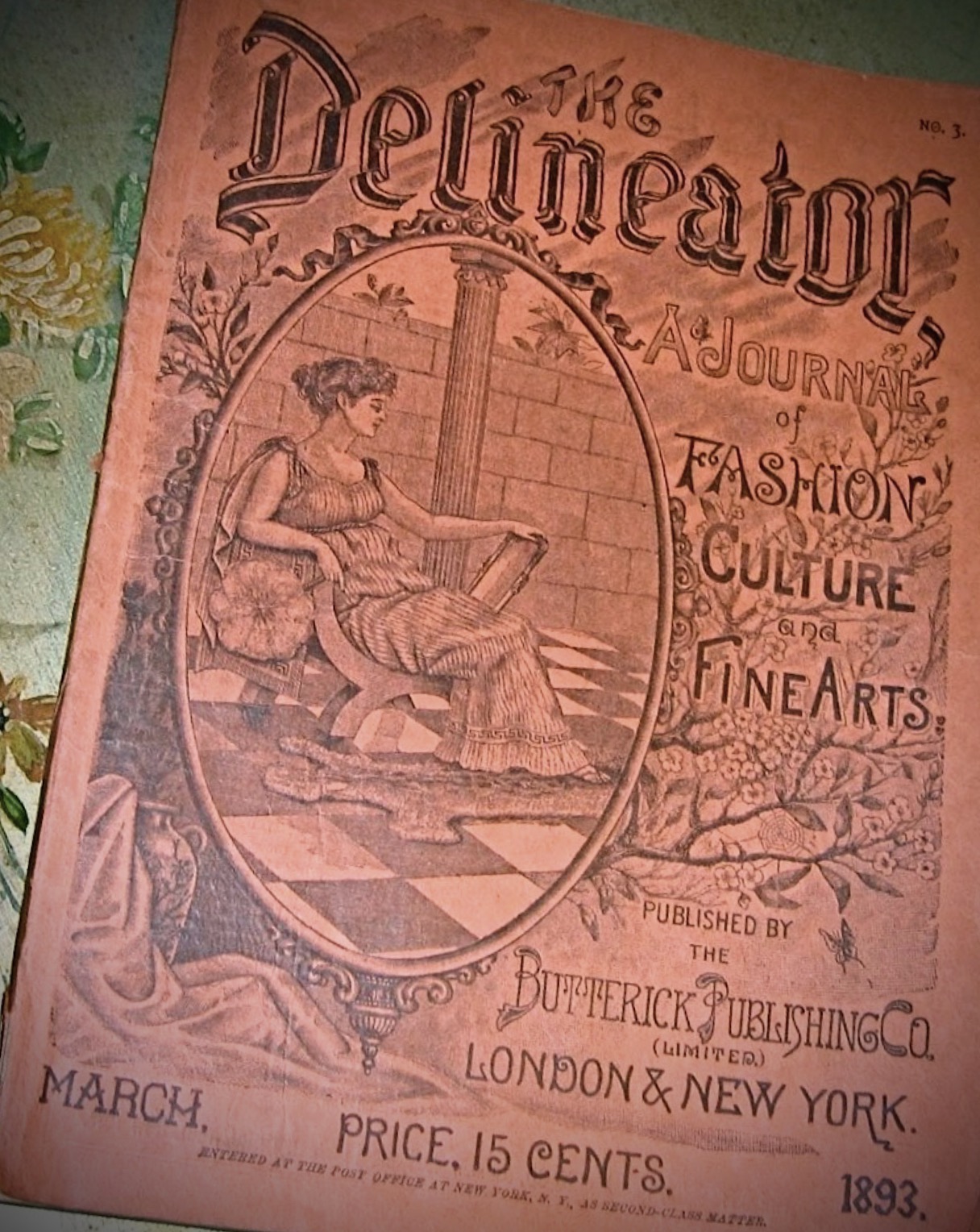
“Punches have been revived this year. They fell rather into disfavor since a few seasons ago, when it was whispered that punches offered at teas at some houses were too strong for women’s heads. But they have been offered this season, and all tea has its dash of something.”– New York Times, 1893


🍽️Etiquette Enthusiast, Maura J. Graber of The RSVP Institute of Etiquette, is the Site Editor for Etiquipedia© Etiquette Encyclopedia

Tuesday, September 24, 2013

Gilded Age Etiquette of Teas, High Teas and Calls

The Centennial Tea Party, The U.S. Capitol, 1875
AFTER an invitation to a formal breakfast or luncheon, a call is quite as much de rigueur as after a dinner, but is not required after a “tea at five o'clock.”

That is a form of entertainment which means to dispense with formal etiquette and to save time. A lady or gentleman who chooses to accept the invitation thus tendered has made his call; he need not make another. Nor need a lady do more than leave her card on the day of the tea; her duties are then over for the season, unless a dinner invitation follows. Dinner invitations demand a speedy call.

But life would be a sorry burden did every five o'clock tea involve a call afterward, as well as the original visit.

Five o'clock teas should be marked by the absence of any other refreshment than tea, thin sandwiches and cake. If even chocolate and nonpareils are added, there is no longer an excuse for calling it a “five o'clock tea.” It has become a reception.

The original five o'clock tea arose in England, from the fact that gentlemen and ladies, before they dressed for dinner, met to take the slight refreshment of a cup of tea, and to perhaps indulge in a little chat. Like everything informal, it  became very popular, and came over to America as an English fashion of entertaining. The teakettle, here, however, became a floral decoration, and the five o'clock tea a party.

This has confused people as to the etiquette of leaving a card afterward, but we assure the doubtful, that neither the invited guest is required to call again, nor is the lady of the house required to call on those who come to her five o'clock tea. Her card inviting them has entirely served the purpose.


The Victorian or Gilded Age Kitchen and Servants
There are entertainments, known as “high teas,” which do necessitate a call. These are usually given on Sunday evenings in cities; but at watering-places, or at country places, or in rural cities, they take the place of dinners. They are very pretty entertainments, and great favorites in Philadelphia. It is an opportunity for the hostess to show her beautiful cut-glass, to get out her preserves, to offer her hot rolls, scalloped oysters and delicate fried chicken. 

Berries and cream, and all sorts of delicate dishes, appear at the high tea, which would be lost at dinner. The hostess sits behind her silver salver and pours the coffee, tea or chocolate herself. It is only fair to say, that this meal is a greater favorite with ladies than with gentlemen, the partridges, mushrooms on toast, pâté de foie gras, and delicately-sliced cold ham, belonging, in the masculine mind, either to breakfast or lunch, and needing wine to wash them down. But young ladies who drink no wine are devoted to high teas. The invitations are always written as to a dinner, as only a limited number can be asked.

In the country these high teas are delightful, and, coming after a long drive or a picnic, with the solid accompaniments of a beefsteak and a baked potato, are very popular. Waffles and hot cakes, honey and maple molasses, all the American dishes, are popular at this meal, which has its prototype in England or on the Continent.

It is doubtful whether the high tea will ever be popular in New York, whereto it conflicts with the custom of seven o'clock dinners. People find them antagonistic to digestion—it is a violent change of living. Tea and coffee taken in the evening keep many people awake, a single little cup of black coffee, which helps digestion, being the only stimulant that most Americans can endure of the “beverages which we infuse.”

Frozen coffee (a delicious refreshment), cold birds, meat pies, salads, salmon, various kinds of punch, biscuits, and, perhaps, jellies, ices and Charlotte's standing where the guest can go and help himself.
Some ladies, who give these receptions, choose to have a “buffet” entertainment. Frozen coffee (a delicious refreshment), cold birds, meat pies, salads, salmon, various kinds of punch, biscuits, and, perhaps, jellies, ices and Charlotte's standing where the guest can go and help himself. One or two servants can serve such a table, it is less trouble than the hot oyster style of thing, and even the serving of tea is more onerous. It has the advantage, too, of being scentless; while hot oysters, served in the house, invariably fill the house with odor. Perhaps as elegant a table as is needed is one where iced tea and coffee, cold game and salad, and punch, with pâté de foie gras sandwiches, stand invitingly ready through the three hours' reception.

On very cold days, hot tea and bouillon are, however, eagerly sought for by the shivering ladies who go from house to house.

No formal calls are made in America on Sunday. A gentleman must have a lady's permission to call on that day. In Europe it is very different. The opera is never so fashionable as on Sunday evening; dinners are always given, and Sunday is especially a fete day. But in America, all dinners and teas are informal on that day, and generally confined to the members of one's family.

Now, all books of etiquette have a chapter on “Cards” and card leaving, but no two of them agree. Young men—who, in America, are extremely remiss in social duties—are told in one, that, if they send their cards by post, they have requited the hospitality of the lady who invites them. This is far from being the opinion of the best ladies in society. If a lady has time to invite a gentleman to dinner, and he comes, he should certainly find time, either to call, in person, on her reception day, or on some evening. It is not enough that he should send a card by post. The only person who is excused for sending a card by post is he who is suddenly called on to leave town, or someone who is, by the death of a relative, thrown into mourning.


“While Mr. Tittlebat Titmouse adorns his outer man, the reader gets a glimpse of his inner man, such as it is.”

A modern writer on etiquette has the following rather plain talk:

“The properly-trained youth does not annoy those next to whom he sits by fidgeting in his chair, moving his feet, playing with his bread or with the table equipage. Neither does he chew his food with his mouth open, or talk with it in his mouth. His food is not conveyed in too large or in too small quantities to his mouth. He neither holds his head as erect as a ramrod, nor does he bury his face in his plate. He handles his knife and fork properly, and not 'overhand' as a clown would. He removes them from the plate as soon as it is placed before him, and he crosses them, side by side, when he has finished" (Here we differ. The modern youth lets his knife and fork alone, except when he is conveying food to his mouth with them, or should do so), "and not before, as this is a sign which a well-drilled butler observes for returning the plate. He does not leave his coffee or tea spoon in the cup. He avoids using his handkerchief unnecessarily, or disgusting those near him by trumpet-like performances with it. He does not converse in a loud tone, nor indulge in uproarious laughter. If he breaks an article, he is not profuse in apologies, but shows his regret in his face and his manner rather than in words. Tittlebat Titmouse, when he broke a glass dish, assured his hostess that he would replace it with the best in London.”

This is good, strong writing, and undoubtedly would have been useful to the Roger Chawbacons of the fifteenth century. But we can hardly suppose that many young men would, in the present day, need these very practical hints. The age is beyond 
them. – From “Etiquette, the American Code of Manners,” 1884, by Mary Elizabeth Wilson Sherwood


🍽Etiquette Enthusiast, Maura J Graber, is the Site Editor for the Etiquipedia© Etiquette Encyclopedia