Showing posts with label Telephone Etiquette. Show all posts

Saturday, July 29, 2017

Etiquette for Telephoning

When there are several different persons using the same line, two or three of them may mistake the call for theirs, and all rush to the telephone at once. If at all stupid, or lacking in politeness, they will make it quite unpleasant for each other. - From "Practical Etiquette," 1899  
While it is fun to read retro-etiquette or vintage etiquette posts, which preceded our carrying our phones everywhere with us,  they rarely need much modification to suit today's needs.  Keep this in mind when reading. With mobile phones, or cell phones, fewer people are making actual phone calls. Texting and engagement through social media sites are far more prevalent. 
The amount of text, email and social media app data usage, surpassed the amount of voice data used in cell phone calls in less than a decade. One 40-year-old marketing consultant from Canton Massachusetts, said that she probably only spoke to someone verbally on her cell phone, once a week, when interviewed by the New York Times in 2010. To get, and keep jobs, in which conversation skills are highly valued, proper telephone manners may have to be learned, or refreshed, as the current trends continue.


Telephoning

For the benefit of those who but seldom make use of the telephone, and consequently feel more or less ill at ease when attempting to use one, and also for those who, from ignorance of the first laws of politeness, or who, from thoughtlessness, ignore them, a few hints upon the subject may not come amiss. It is after having called up “Central,” and been given the number requested, that one often stands in need of no small amount of tact and good breeding, as well as of some idea of the best method of procedure. 

When there are several different persons using the same line, two or three of them may mistake the call for theirs, and all rush to the telephone at once. If at all stupid, or lacking in politeness, they will make it quite unpleasant for each other. The one entitled to speak should politely inquire for the one for whom she has called at the telephone, also giving her own name as the one delivering the message. If this does not suffice to enlighten those who sometimes keep calling “hello,” “hello,” without waiting to learn if they are the ones desired, the one talking should again announce herself, and the name of the one to whom she wishes to speak. Then, occasionally, even while in the midst of a conversation, some one will break in with a “Hello!” “Who is it?” “What do you want?” etc., which is quite distracting. If one can gain a hearing in no other way, it is well to say: “Excuse me, I hold the line.” If this does not bring order out of chaos, one should ring off and call again.

One should be careful not to call up friends at inconvenient hours, and when one is notified by a servant, or otherwise, that someone, the name being given, is at the telephone wishing to speak with her, she should certainly be as expeditious as possible in replying; for, by holding the wire, she is inconveniencing others, as well as the one who is waiting for her. No lady needs to be warned against speaking discourteously under any circumstances to the telephone assistants at the central office. It is in these little things that one shows herself to be well-bred or not.

None, of course, but the most informal of invitations can be delivered by telephone.

Servants should be taught always to answer the telephone politely and intelligently. When answering, a servant should say whose residence it is, if asked, not by giving the family name, as “Smith,” but as “Mr. Smith,” and then, if asked who is at the instrument, she should reply, “Mrs. Smith’s cook” or “maid.”

One’s individual manners, and ordinary polite or impolite forms of address, are very noticeable when accentuated by the telephone. — From Practical Etiquette 


Etiquette Enthusiast, Maura J. Graber, is the Site Editor for the Etiquipedia© Etiquette Encyclopedia 

Wednesday, February 1, 2017

Etiquette History and Telephones

Texting Isn’t the First New Technology Thought to Impair Social Skills– When Alexander Graham Bell introduced the telephone, skeptics worried about how it might affect people’s interactions.


Is text-messaging driving us apart? These days, we talk to each other a lot with our thumbs—mashing out over six billion text messages a day in the United States, and likely a few billion more on services like WhatsApp and Facebook Messenger.

But some worry that so much messaging leads, paradoxically, to less communication. When Sherry Turkle, the MIT clinical psychologist and author, interviewed college students, they said text­ing was causing friction in their face-to-face interactions. While hanging out with friends they’d be texting surreptitiously at the same time, pretending to maintain eye contact but mentally somewhere else. The new form of communication was fun, sure, but it was colliding with—and eroding—the old one.

“Our texts are fine,” as one student said. “It’s what texting does to our conversations when we are together that’s the problem.” Plenty of people agree. Jenna Birch, a young journalist, recently argued that texting is inferior to talking face to face because it’s too easy to misinterpret—over-overinterpret—tone. Worse, texting makes it more likely for her generation to dodge difficult emotional conversations, the “hard stuff.” If we don’t shape up, she warned, “we’ll all end up on interconnected islands, together in our aloneness.”

New technologies often unsettle the way we relate to one another, of course. But social ruptures caused by texting have a strong echo in the arguments we had a hundred years ago. That’s when a newfangled appliance gave us a strange new way to contact one another en masse: the telephone.

When Alexander Graham Bell introduced his telephone in March 1876, the invention was riddled with problems. The line was a crackly mess—prone to interference from nearby electrical lines—and it was powered by a battery that leaked acid. Still, it allowed for a remarkable, unmooring experience: For the first time, you could talk in real time to someone blocks or miles away. “It was like a voice from another world,” marveled one early user. Bell quickly improved the quality, and customers thronged. In the first year, over 3,000 telephones sold; by 1900 there were over one million phones nationwide.

At first, the telephone was marketed mainly as a tool for business. Physicians and drugstores bought them to process orders, and business owners installed them at home so they could be quickly reached. The phone, proclaimed early ad copy, gave business leaders an ESP-like “sixth sense” of their far-flung operations.

The idea of using such a powerful tool for everyday conversation? That seemed laughable and obnoxious. One early social critic warned that the phone should not be used for the “exchange of twaddle between foolish women.” Businessmen prohibited their wives from tying up the line, lest they interfere with commerce. “At the beginning, women were forbidden to use the phone — the business was supposed to have the priority,” notes Michéle Martin, a professor emeritus at Canada’s Carleton University and author of Hello, Central?

But it quickly became apparent that people wanted to talk—to socialize. One phone company manager in 1909 did a survey of usage and found that 30 percent of all calls were “idle gossip,” lasting 7.5 minutes on average each. He didn’t like this chitchat, but he was running against the stream. Eventually phone firms realized there was more money in selling lines for banter than for business. “They realized, ‘We can make money off gossip and idle conversation and sociability on the telephone,’” says Claude Fischer, author of America Calling: A Social History of the Telephone to 1940.

Within a few years, phone companies were emphasizing how they could reduce isolation and bring friends together. A California firm in 1911 declared that its phone was “a Blessing to the Farmer’s Wife,” adding that “it relieves the monotony of life. She cannot be lonesome with the Bell Service.”

Indeed, women quickly became the dominant users of the telephone. “In some ways it was liberating,” Martin notes, because it gave housebound wives much more social contact—without the enormous work of maintaining visual appearances in face-to-face interactions.

Still, users struggled to figure out the social protocols of this new ethereal realm. How do you start a conversation when you can’t see the person you’re talking to? Thomas Edison advocated beginning each call with “Hello,” but masters of etiquette cringed. “It sounded too much like a ship-to-ship call across to another,” laughs Fischer—far too crude and abrupt, a barbaric yawp devoid of social grace. As one social critic sneered at the time: “Would you rush into an office or up to the door of a residence and blurt out ‘Hello! Hello! Who am I talking to?’” 

Others argued that the phone might be fine for some things, but not for delicate communications — like inviting an acquaintance to dinner. (“Never excusable, save among very intimate friends,” etiquette author Annie Randall White wrote in 1901.)

Nonetheless, the telephone quickly gave birth to curious new forms of socializing. Callers arranged regular weekly “visiting” calls, dialing remote family to catch up on news. “Distance rolls away and for a few minutes every Thursday night the familiar voices tell the little family gossip that both are so eager to hear,” a Bell ad cooed in 1921.

Phone companies even boasted that the phone was an improvement over that stodgy, low-fi communication, the letter. “Correspondence will help for a time, but friendships do not flourish for long on letters alone,” a 1931 Bell sales manual noted. “When you can’t visit in person, telephone periodically. Telephone calls will keep up the whole intimacy remarkably well.”

Soon, though, social critics began to wonder: Was all this phone chatter good for us? Was it somehow a lesser form of communication than what had come before? “Does the telephone make men more active or more lazy?” wondered the Knights of Columbus in a 1926 meeting. “Does the telephone break up home life and the old practice of visiting friends?”

Others worried that the inverse would occur—that it would be so easy to talk that we’d never leave each other alone. “Thanks to the telephone, motor-car and such-like inventions, our neighbors have it in their power to turn our leisure into a series of interruptions,” complained an American professor in 1929. And surely it couldn’t be healthy to talk to each other so much. Wouldn’t it create too much information?

“We shall soon be nothing but transparent heaps of jelly to each other,” a London writer moaned in 1897. Others fretted that the telephone sped up life, demanding instant reactions. “The use of the telephone gives little room for reflection,” wrote a British newspaper in 1899. “It does not improve the temper, and it engenders a feverishness in the ordinary concerns of life which does not make for domestic happiness and comfort.”

Perhaps the strangest thing was being in the room while a friend talked to someone else—someone outside the room. In 1880, Mark Twain wrote “A Telephonic Conversation,” transcribing the half-a-conversation as he listened to his wife on the phone. To the observer, as the skit pointed out, a telephone call sounded like disjointed nonsense. Even phone companies worried about whether the device created new forms of rude behavior; a 1910 Bell ad warned about “Dr. Jekyll and Mr. Hyde at the Telephone.”

In essence, the telephone was a teleportation device, bringing other people—including, disconcertingly, strangers—suddenly into one’s home. Young ladies, some fretted, were at romantic risk. “The serenading troubadour can now thrum his throbbing guitar before the transmitter undisturbed by apprehensions of shot guns and bull dogs,” a magazine article in Electrical World noted. Scamsters loved the phone.

“It changed people’s ideas of social trust,” notes Carolyn Marvin, a professor at the Annenberg School for Communication and author of When Old Technologies Were New. We could no longer read someone based on face-to-face social cues.

Indeed, some believed the phone improved our social behavior, because it forced a listener to pay closer attention to a speaker. Devoid of visual signals, we must be “all ears and memory,” a pundit wrote in 1915: “The mind cannot wander.” Plus, by eradicating distance, wouldn’t the phone reduce misunderstanding? War, even? “Someday we will build up a world telephone system making necessary to all peoples the use of a common language, or common understanding of languages, which will join all the people of the earth into one brotherhood,” gushed John J. Carty, AT&T chief engineer, in 1907.

These utopian views, of course, were wildly optimistic. But the gloomy views of pessimists, as Fischer notes, didn’t come true either. Even Emily Post, the etiquette expert, came around to the telephone. By the 1920s, she’d accepted “Hello” as a suitable greeting, and even thought it was acceptable to invite someone to dinner with a call. “Custom which has altered many ways and manners has taken away all opprobrium from the message,” she shrugged.

Nowadays, the telephone call seems like a quaint throwback to a gentler era. When Jenna Birch, the journalist, started dating a man who insisted on calling her on the phone, she found it warm and delightful—though her friends thought the behavior odd. Phone calls now seem retro.

Academics have observed this shift, too. “My students just do not think of the phone as a mechanism of vocal interaction—they think of that as very rare,” says John Durham Peters, a communication professor at the University of Iowa, and author of Speaking Into the Air. He doesn’t think the shift to texting has degraded our interactions, though. By the middle of the 20th century, studies found that the telephone appeared not to have eroded social contact—indeed, some research found those with phones wrote more old-fashioned letters than those without.
Similarly, modern surveys by the Pew Research Center have found that teenagers who text the most are also those who spend the most time face to face with friends. Communication, it seems, begets more communication, and—as Peters argues—just because talk happens in text doesn’t mean it’s not meaningful. “Media scholars,” he notes, “have this long romance with ‘conversation’ as the cure to the disease of media.”

Still, it’s not hard to be dispirited by the divided attention so many of Turkle’s subjects bemoaned in their lives. Indeed, Michéle Martin, of Carleton, thinks we’re living through a replay of the telephone, where the things that made it valuable—instant communications—are the same that made it annoying. “People believe they are liberated because they can bring the mobile phone everywhere,” Martin says. “But at the same time they are slaves to it.”

The poet Carl Sandburg captured that dissonance in a 1916 poem about the telephone. He imagined a telephone wire being aware of the disparate uses to which it was being put—coursing with conversations both deep and frivolous. “It is love and war and money; it is the fighting and the tears, the work and want / Death and laughter of men and women passing through me, carrier of your speech.” — Smithsonian Magazine, March 2016


Etiquette Enthusiast, Maura J Graber, is the Site Editor for the Etiquipedia© Etiquette Encyclopedia

Wednesday, October 26, 2016

Early Telephone Etiquette

"Telephone etiquette prescribes that the person making a telephone call should be the one to terminate the conversation."

People are gradually being educated up to the etiquette of the telephone. When the bicycle and the automobile first made their appearances, people did not know how to receive them. They did not know what rights of way to assign to them on the public streets. But as the public became accustomed to these modern improvements in locomotion, we learned the proper way to treat them. So it will be with the telephone.

The time will come when a patron will not think of making a poor telephone girl's life miserable because she happens to make a mistake in a switch. He will treat her as politely as he would a girl who serves him in a store. In Chicago we make 600,000 switches in a day and only about 500 mistakes are made. Considering the vast number of switches that are made I think that it is marvelous that so few mistakes are made. The record is about as near perfection as man can make it. – John Sabin, quoted in the San Francisco Call, 1901

Etiquette Enthusiast, Maura J. Graber, is the Site Editor for the
Etiquipedia© Etiquette Encyclopedia

Wednesday, April 6, 2016

Phone Etiquette for School Girls

When this 1909 etiquette advice was given, no one had dreamt of the telephone evolving eventually into something like the iPhone.


Social Amenities for the School Girl

TELEPHONES have so important a place in the social life of to-day, that there is quite as much etiquette in regard to them as there is to other matters. Take the word itself, for instance. We began by calling it "telephone" as a matter of course, and always in speaking of using it referred to it as "telephoning." But this soon became corrupted by the lazy and slipshod into "phone" and "phoning," which pleased the ears of many and were widely adopted, until among certain classes, they are firmly established as the accepted parlance when referring to, or to the use of, the most indispensable invention of the age. 


But the language of the polite world does not admit of abbreviations of any sort. In good society, any form of slovenliness is abhorrent, and to speak in a slipshod way indicates an untidyness  of speech, as distasteful and as little to be tolerated as untidyness of person or of dress. And, consequently, well bred people from one end of the country to the other say "telephone" and look askance at the persons who shorten it. 

When you are calling up your friends, to greet them with "Hello!" is as bad form as it is to say "phone" or "phoning." "Hello" belongs strictly to the business world and has no place in the social, either at the telephone or at any other place. You should say "Good morning" by way of greeting at the telephone, just as you would at home or in your friend's home, or the street, or wherever you encounter one another. 

If another member of the family than the one to whom you especially wish to talk answers the telephone, do not be so discourteous as to ignore her by asking at once for the other, but exchange a few remarks with her first and then let her know that you wish to talk with another. 

It is not etiquette for girls to telephone to men at their places of business or at their clubs, nor should they call them up at their homes unless for a particular reason, as giving them an informal invitation. So much inviting of an unceremonious character is done by means of the telephone nowadays, that it is quite proper for girls to take this method of reaching young men, always provided they do not try to get them at their places of business. 

There is a great convenience in giving invitations over the telephone, for it means that they are accepted or declined at the moment and one can plan accordingly. But the verbal invitations extended must be followed by a note —that is, when the invitation is accepted. Of course, if it is declined the matter is ended. But when you ask your friend to anything over the telephone and he or she acccpts, the correct thing is to write a note at once corroborating. 

If your mother has allowed you to ask a young man to dinner, for instance, you write that your mother and you are so glad to know that he can dine with you on such a night and at such a time, mentioning the date and hour. The note should be brief, to the point, of one sentence covering the matter, and what the object is, as no doubt you see to fix beyond any possibility of mistake, the day and time in the other's mind. 

So many errors of time and place have occurred through the giving and taking of telephone invitations, to the utter confusion of hostess and guest, that fertile Madame Grundy, ever alert to keep well oiled the wheels of social life, has invented this manner of meeting the situation, so now it is obligatory that you follow your telephone invitation by a note. 

Many women have stated hours for being "get-at-able" at the telephone and give the time out to all their friends, the popular hours being between nine and ten, or ten and eleven, in the morning. If you know that such a person has such an hour, you must never, except in dire necessity, call her at any other time.

Women usually have their maids answer | their telephones and bring them the name of the person calling before they personally respond. Girls who have their own maids do this also and, indeed, in the homes of all fashionable persons, a servant is delegated for the purpose of taking the responsibility of the telephone quite as much as another has the care of the front door. 

It is not etiquette for the person called to the telephone to end the conversation. If a friend calls you, you must remain until she says good-bye. It is not proper for you to say it any more than you would if she were making a call in your house. 

Some people never seem to know how to break off a telephone conversation, and they are just the same people who never seem to know how to go, even after they get started, from a room. But, being well-mannered, you would never think of pushing them out, and neither can you push them off the telephone, which is precisely what you would do if you said good-bye first. 

When you call them up, that is another matter. The tables are turned. The initiative lies with you, and you end the conversation as it pleases you. — Los Angeles Herald, 1909

Etiquette Enthusiast, Maura J Graber, is the Site Moderator and Editor for the Etiquipedia© Etiquette Encyclopedia

Etiquette and Invitations by Phone

Inexperienced hostesses are often perplexed as to the etiquette in the matter of issuing invitations.


Invitations by Telephone:

The Smarter the Dinner, the Shorter
the Notice Given, Is the Rule Now


Special Cable to The Herald

LONDON, June 2.— Inexperienced hostesses are often perplexed as to the etiquette in the matter of issuing invitations for dinners and balls, especially as there is an idea about that the strict rules formerly in vogue as to the length of time necessary have a dinner relaxed. But the fact is that the point entirely depends on the nature of the invitation and a little also on the social position of the one extending it.

The very smartest dances of all are the most informal as to the invitation, for their object is more to diminish the number of guests asked. Therefore, the whole thing is kept as quiet as possible beforehand.

These ultra-smart invitations are often written only on a visiting card, and are constantly given verbally or by telephone.

Political parties, of course, are always planned out long ahead and so are large formal dinners. But the general rule is the smarter the dinner, the shorter the notice given among persons of the very highest standing, unless the function is a purely formal one. —Los Angeles Herald, 1906


Etiquette Enthusiast Maura J Graber is the Site Moderator and Editor for the Etiquipedia© Etiquette Encyclopedia

Etiquette and an Unruly Phone

The telephone is a most ill-mannered member of society. But who would do without it? 
The Unruly Telephone:
Some of the Pranks it Plays Both Day and Night —
It Has No Etiquette or Delicacy
 — 
Though Many Are Its Services to Mankind

It has long been noticed by careful observers that the telephone as an adjunct to civilization has done many marvelous and unlooked for things. It has shortened distance, but it has also doubtless increased profanity among mankind. By reason of the fact thai one's identity is not revealed it has led to fraud, vulgarity, flirtations, and practical joking to a larger scale than ever practiced before. 

It is said that a certain Sacramento restauranteur has had more trouble over orders that were sent in by wags—"just for fun"—than over all his other troubles combined. The same kind of a complaint comes from San Francisco and from every town of any importance in the country. "Send five oyster loaves to room 21," (such and such a street.) sounds like a business-like transaction, especially if the voice making the order over the telephone says it is the voice of a well known customer; yet just such orders have often been sent to the alleged address, only to find that the person living there was wholly innocent of giving the order, or that the place named was a vacant lot. 

The "Record-Union" is only one newspaper in hundreds that have learned through the telephone some of the characteristics, if you please, of women. As a point in illustration: During the great Corbett-Fltzsimmons prize fight, the telephones in this office rang quite often, and many of the eager voices that inquired for the result were the voices of women who would not give their names. In some instances they confessed to a morbid desire to know the result, though they said they had never attended prizefights and had no desire to see one. 

Some weeks ago a doctor, who had been very busy all day, was awakened by the ringing of his telephone. "Who is there?" he asked. "Mrs. Jones," said the voice at the other end of the line. "What is wrong?" "Oh, come up right away," said she, "for baby is very sick. He awake hoarse and is crying now." "Is he near you?" "Yes, right here by the telephone." "Hold him up and let me hear him cry." The babe was held up, the telephone was in good order, and the sleepy doctor heard the hoarse crying of the child. The telephone told the story of the labored breathing. "He has croup," said the doctor, "and it will not be necessary for me to come up. Do what I tell you and all will be well." The doctor then told the excited mother what to do and the child was saved, though the doctor lost the opportunity to charge mileage.

The telephone is a most ill-mannered member of society. On a recent occasion in this city a well-known professional man was engaged in his office on private and important business. The telephone rang and got his ear, though a dozen respectable citizens had been waiting at the outer gates for hours to see the man for just a moment. This illustrates that the telephone has no etiquette and that when it wants to see you its appeals are invincible. 

When it lends its voice to the entire public how is the patron of the noisy thing to tell whose voice it is that calls? It may be his wife, his sweetheart, his banker, or his doctor. There is no way to tell, until one hushes the intermittent ringing of its sharp bell—and then it is too late to say one is not at home. 

There are many points yet to be settled regarding the legal phases of the telephone. Men have accepted service of legal process by telephone, thousands have been interviewed by newspapers in the same way, while the courts show that breach of promise suits have been based on a proposal made over the telephone. The weird instrument plays so many tricks when wires are crossed and when atmospheric conditions are ajar that no man can swear by the card that this or that sound is the voice of friend or foe. A man is just as likely as not to ring up his bitterest enemy by mistake, or to take his friend for a stranger and refuse to grow warm in the conversation. 

In its manifold phases there is much in the telephone to attract the attention of mankind, now drawing forth the admiration and now the condemnation of those who use the talking machine either for pleasure or during the rounds of their daily cares. But who would do without it? — Sacramento Daily Union, 1898


Etiquette Enthusiast Maura J Graber is the Site Editor for the Etiquipedia© Etiquette Encyclopedia

Tuesday, April 5, 2016

Imperial Telephone Etiquette

The Emperor refuses to name himself at the opening of his conversation, as other people do. He "introduces" his telephoned orders merely with the words, "I command that," and so forth.

Emperor William II has his own Imperial way of using the telephone. Despite mistakes caused by the Emperor's refusal to name himself at the opening of his conversation, as other people do, he invariably introduces his telephoned orders merely with the words, "I command that," and so forth.

As soon as a chief of department hears these words, he motions that his subordinates must at once leave the room. The significance of this arrangement is supposed to be that the chief is having something of an audience with his Majesty, and that it would be presumptuous for a person not summoned, to hear the Imperial voice to occupy the room into which its tones are convoyed.

At the end of the conversation the Emperor walks away without saying "good by," and the chief with whom he has conversed must listen for five or six minutes afterward, to make sure that the Imperial orders have been completed. Then he calls back his assistants, and the usual etiquette is resumed. —New York Sun, 1893


Etiquette Enthusiast, Maura J Graber, is the Site Editor for the Etiquipedia© Etiquette Encyclopedia

Monday, April 4, 2016

1920's Phone Etiquette and Use

Talking directly into the mouthpiece with lips a half inch away, will enable the one to whom you are speaking to get your message without straining to hear you. 

Phone Etiquette Advice is Given

Keenly appreciative of the value of correct telephone usage in newspaper work, the New York Sun is at present running a series of suggestions for telephone etiquette in its popular column entitled ’The Sun's Rays" for the information of readers. Forty-two items have been included to date in the series, a number of which follow: 


Telephone Etiquette 
  • The old-fashioned “Hello” when answering the telephone has become obsolete through the modern usage of the name, or telephone number, to identify one's self.
  • Placing the receiver on the hook gently prevents making a disagreeable noise in the other party’s ear and eliminates possible damage to the instrument.
  • Telephone manners are as important for voice-to-voice courtesy, as face-to-face politeness. 
  • “Guess who this is” was never good telephone manners. The modern telephone user establishes his identity immediately. 
  • A courteous way to start the day right is with a sincere “Good morning.” 
  • Good breeding is revealed quite as much by courteous manners over the telephone as though you were physically present. 
  • Talking directly into the mouthpiece with lips a half inch away, will enable the one to whom you are speaking to get your message without straining to hear you. 
  • Impatient “jiggling” of the hook to signal the operator does not flash the small lamp on the switchboard. The right and effective way is to move the hook up and down slowly. —Madera Tribune, 1928


Etiquette Enthusiast Maura J Graber is the Site Editor for the Etiquipedia© Etiquette Encyclopedia

Early Telephone Etiquette

Advantages to a residential phone listed in a 1905 advertisement, included the ability for one to call the doctor, call the police and call one's husband.

Early 20th C. Telephone Etiquette

Here’s a bit of telephone etiquette that is going the rounds: Some people haven’t sense enough to know that when they use a telephone and call up someone, good manners make it necessary for the one calling to introduce one’s self before engaging in conversation. Some ill-bred people have the vulgarity and impudence to try to compel the party called to give their name first. —Madera Mercury, 1905


Etiquette Enthusiast, Maura J Graber, is the Site Editor for the Etiquipedia© Etiquette Encyclopedia

Saturday, January 2, 2016

More Retro Phone Etiquette

     
Impatient “jiggling” of the hook to signal the operator does not flash the small lamp on the switchboard. 

Phone Etiquette Advice is Given

Keenly appreciative of the value of correct telephone usage in newspaper work, the New York Sun is at present, running a series of suggestions for telephone etiquette in its popular column entitled ’The Sun's Rays" for the information of readers.

Forty two items have been included to date in the series, a number of which follow:

                        
“Guess who this is” was never good telephone manners. 

Telephone Etiquette

  • The old - fashioned "Hello" when answering the telephone has become obsolete through the modern usage of the name or telephone number to identify one's self. 
  • Placing the receiver on the hook gently prevents making a disagreeable noise in the other party’s ear and eliminates possible damage to the instrument. 
  • Telephone manners are important for voice to voice courtesy and as important as face to face politeness. 
  • “Guess who this is” was never good telephone manners. The modern telephone user establishes his identity immediately. 
  • A courteous way to start the day right is with a sincere “Good morning.”
  • Good breeding is revealed quite as much by courteous manners over the telephone as though you were physically present. 
  • Talking directly into the mouthpiece with it a half inch away, will enable the one to whom you are speaking to get your message without straining to hear you. 
  • Impatient “jiggling” of the hook to signal the operator does not flash the small lamp on the switchboard. The right and effective way is to move the hook up and down slowly.—The Madera Tribune, 1928 


Etiquette Enthusiast, Maura J. Graber, is the Site Editor for the Etiquipedia© Etiquette Encyclopedia

Telephone Etiquette and Success

A Pleasing and Distinct Voice 
is a Real Asset!
Telephone etiquette, declares the Christian Science Monitor, is not limited to any arbitrary rules laid down for the instruction of its subscribers. 

Telephone Etiquette Combination of Common Sense and Consideration

What may be called telephone etiquette, declares a writer in the Christian Science Monitor, is not limited to any arbitrary rules laid down by this or that telephone company for the instruction of its subscribers. But it is so far-reaching as to include all the general amenities of daily life now associated with the use of the telephone that make things easier and pleasanter for all concerned and, incidentally insure the best results. 

A "party line" was a telephone line or circuit shared by two or more subscribers.
Like most rules of etiquette, the writer finds that the underlying rule of telephone etiquette is a combination of common sense and consideration for others. Co-operation is the word used in telephone circles, but it is a product of co-operation not only on the part of the one who calls, but also of the operator and of the person who answers the call.

Good manners on the telephone, in its use both in business and social relations, is dependent upon clear enunciation. Not only is it courteous to make oneself understood by the person answering the call, but it is necessary that the operator should understand quickly and clearly, not only the number given, but the name of the exchange.

Another effect of improved enunciation is that it becomes a valuable social and business accomplishment, for unconsciously, the intelligent use of the telephone leads to a more careful choice of words and a more pleasing tone of voice. An upward inflection of the voice gives a cheerier air to the conversation. 
Good telephone manners also include thoughtfulness as to the time.
Brevity and conciseness over the telephone should not be mistaken for curtness or brusqueness, which are always quickly noticeable at the other end of the wire, and should be carefully avoided. Another element of telephone etiquette is the prompt answer to a call and in making yourself known at once, while the party who makes the call Is usually the one who should end the conversation. 

Good telephone manners also include thoughtfulness as to the time the calling person is on the wire and reasonable brevity in the conversation, especially when one is using a party line. —The Madera Tribune, 1927

Etiquette Enthusiast, Maura J. Graber, is the Site Moderator and Editor for Etiquipedia© Etiquette Encyclopedia

Wednesday, September 3, 2014

Etiquette and Retro Advertising for the Gracious Home of 1930

"Conversations with the cook or maid can be so conveniently carried on by telephone from your bedroom or your living-room. The day's routine can be arranged in no time at all ... meals planned, orders given and without one unnecessary step. And all this over your regular Bell telephones, which you use to call friends across the street, or across the continent. Telephone convenience is a mark of the modern home ... as important to the smaller household, as it is to the larger."

The Gracious Home Reflects the Ease with which it is Managed


Telephones in important parts of the house simplify the direction of the domestic establishment ... yet from them you can call other homes, other cities, other countries.            

 ^     ^     ^


The House that is managed with a minimum of effort is pleasant to live in, or to visit. And telephone convenience within the home plays a large part in this scheme of things. It enables women to give all of their household directions for the day within a few minutes' time. To make sure, with no unnecessary bother, the domestic affairs are progressing smoothly. And to keep fresh their energies for the varied activities of their interesting lives.

This household administration is conducted over the regular Bell telephones ... the same instruments with which you call friends across the street, or in other cities, or even in other lands.
"Calls to the butler's pantry ... before luncheon, while you are dressing for dinner ... assure the smooth functioning of your household and save time, effort and trouble."
At moderate cost you can have telephone service in all parts of your home. Even in smaller houses, enough telephones add enormously to the efficiency of household affairs ... to your ease in calling friends, or in receiving services from the outside.
"Telephones located in all parts of your home ... the laundry, the maid's room, the garage ... play their important part in the ease and efficiency of modern housekeeping."
Your local Bell Company will be glad to help plan the arrangements which will give you the greatest satisfaction. Just call the Business Office today. 
Advertisement for Bell Telephone Company, from Vogue Magazine, 1930

Wednesday, July 23, 2014

Retro Voices on the Etiquette of Call Waiting and Voicemail

"No. We're not busy.  We've just been sitting here screening our calls on the answering machine.  Hysterically funny!  What are you up to, dear?"

'Call Waiting' and Other Conundrums of Telephone Etiquette
The telephone was an ornery object even when it was simple and ugly. Now that its shape has been streamlined, its colors lightened and brightened, and its works programmed to be as complicated as a jet aircraft, its arrogance knows no bounds. It is rude, intrusive and demanding. It beeps in the middle of a conversation and expects understanding and forgiveness. 
Now that telephones are not only everywhere - showers, airplanes, boats and gardens - but have become increasingly complicated, telephone manners are, quite naturally, becoming equally complicated. Assume that one makes a call and hears splashing water at the other end. Should one pretend that it's perfectly normal to talk to a naked person in a shower, or make a comment about it? Is it time for jokes, embarrassment or savoir-faire? 
''It's unchic to make a big deal out of it; you have to adopt an 'oh yes, so what' attitude,'' one caller said. ''There's no question that you subsconsciously visualize what that person looks like in the buff, but you've got to present yourself as calm, unruffled and unsurprised.'' 
The innovation most resented by most people is ''call waiting,'' a service or disservice formerly available only on telephones with several lines, and now possible on single-line instruments. This development punctuates a call with a beep, or beeps, if someone else is tying to get through while a conversation is going on. When this happens, the person already on the line is almost always asked to hold while the second call is answered.               
"Amazing!  This thing actually works! Oh wait... There's another call coming in.  Hang on. Let me see who that is..." Two of the country's leading etiquette experts were appalled at the concept of call waiting in the 1980s.  Most still are.
''It's last come, first served, an incredibly rude idea,'' said Judith Martin, who is also known as ''Miss Manners.'' ''It's an invention of the devil,'' said the late-Letitia Baldrige, the author of the revised ''Amy Vanderbilt Complete Book of Etiquette'' and ''Letitia Baldrige's Complete Guide to Executive Manners.'' 
''Let them call again,'' she said. ''For years people have re-dialed when the line was busy. They waited their turn. When I'm put on hold, I always hope that as my revenge, their other call will be someone wanting to sell them something.'' 
Mrs. Martin compared call-waiting to ''standing at a cocktail party and not paying attention to the person you're with, waiting for a more important person.'' 
A number of people not in the etiquette business also dislike call-waiting. ''I had it but I gave it up because I think it's terribly rude,'' said a singer-pianist. ''You either had to take that second call or keep on being interrupted by those beeps.'' One woman said she was of two minds about call-waiting, although she herself refused to have it. But, she said, most of the young people she works with, who are on the junior benefit committees for the Youth Counseling League, have the service. 
''I don't know which is more offensive, having your call broken into by another, or to keep calling and get a busy signal,'' she said. ''The only way to handle call-waiting with any kind of manners,'' she added, ''is to excuse yourself for a moment, answer the second call, take the number and return immediately to the original call.''
What's the etiquette of taking a telephone call in a car? 
The publisher of one magazine, said her own car had a speaker-phone but that she never used it if there were other people traveling with her. ''It's just plain manners,'' she said. However, she said, she always hires cars with telephones, and she frequently makes calls from airplanes, she said. She not only didn't agree with people who considered it gauche to announce that they were calling from a car or a plane, but she often found it useful. 
''I might tell them, 'It's costing me 50 cents a second from the car, and let's get down to business,' '' she said. ''And if I call from a plane, I always tell them where I am. People love it, they get a real high, and they always take the call.'' 
As for Mrs. Martin, her feelings about the telephone and its innovations go beyond call-waiting. Of one thing she's certain: She's not going to live at its beck and call. She has no ''ringing'' telephone in her home, she said. She said she manages very well with a 24-hour ''live'' answering service, and she returns calls at her convenience. ''The telephone demands to be attended to when it feels like it, regardless of what anyone is doing - and my husband and I have simply eliminated that,'' she said. ''We do not need to be reached day and night.'' 
''The fact is if more business was conducted by mail, the world would go around a lot faster,'' she said. ''The illusion that the telephone speeds up communication is ridiculous. You can spend days with messages back and forth.'' 
Mrs. Martin was considering updating the calling card routine once practiced by the tonier types of every city. Her idea was to institute ''telephone hours'' at home, where one could be ''in'' for calls between certain hours and ''not receive'' the rest of the time. 
She did, however, consider the answering machine a convenience, although it had one drawback. ''People get very angry because there is a deep-down belief that you should be available 24 hours a day,'' she said. ''The trouble with answering machines is that you're almost forced to return calls,'' said another woman. ''The excuse that your machine is, or was, on the blink can only be used once or twice.'' 
She also pointed out the trap of using the machine to screen calls - picking up only if it's someone you want to talk to. 
''Once they start doing that, their friends never believe that they're really out,'' she said. ''They are convinced that the person is really there but not picking up. The whole thing gets unbelievably convoluted.''

This originally was published in the NY Times, by Enid Nemy


Etiquette Enthusiast, Maura J. Graber, is the Site Editor for Etiquipedia© Etiquette Encyclopedia 
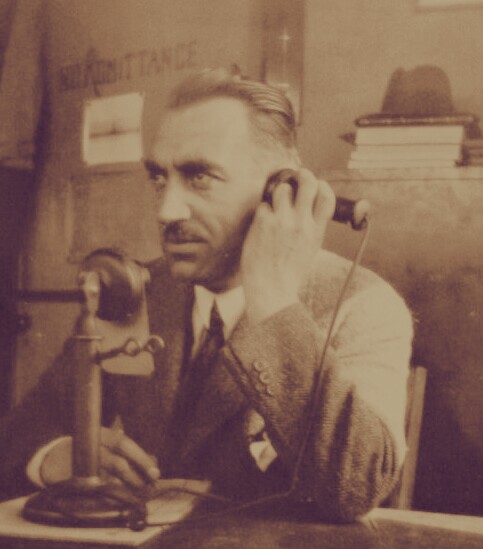
Saturday, April 26, 2014

In Quest of Telephone Manners for the Modern Age


The telephone is a nuisance and no one denies it, but it is a necessity also and no one denies that, either, and one of the greatest conveniences in an age of great conveniences. Some of the disagreeable features connected with it cannot be done away with but must be accepted with as much tranquility as we can master, like the terrific noise which an aëroplane makes or the trail of smoke and cinders which a railway train leaves behind. The one who is calling, for instance, cannot know that he is the tenth or eleventh person who has called the man at the other end of the wire in rapid succession, that his desk is piled high with correspondence which must be looked over, signed, and sent out before noon, that the advertising department is waiting for him to O. K. their plans for a campaign which should have been launched the week before, that an important visitor is sitting in the library growing more impatient every minute, and that his temper has been filed down to the quick by an assortment of petty worries. (Of course, no office should be run like this, but it sometimes happens in the best of them.)

Some one has said that we are all like islands shouting at each other across a sea of misunderstanding, and this was long before telephones were thought of. It is hard enough to make other people understand what we mean, even with the help of facial expression and gestures, and over the wire the difficulty is increased a hundred fold. For telephoning rests upon a delicate adjustment between human beings by means of a mechanical apparatus, and it takes clear thinking, patience, and courtesy to bring it about.– “The Book of Business Etiquette,” by Nella Henney, 1922

“There are two things that are as important to me as the bed in the bedrooms that I furnish, and they are the little tables at the head of the bed, and the lounging chairs. The little table must hold a good reading light, well shaded, for who doesn't like to read in bed? There must also be a clock, and there really should be a telephone. And the chaise-longue, or couch, as the case may be, should be both comfortable and beautiful.”
From 1913's “The House in Good Taste” by Elsie de Wolfe


"Cell phone etiquette rules are still in their infancy, or possibly 'toddler years,' even though cell phones have now been with us for three decades. It has only been in the last dozen years or so that their use has been so ubiquitous among old and young alike. One can still go by the telephone etiquette rules, camera etiquette rules, and even videotaping etiquette rules of yesteryear, as a basic guide. At the heart of those etiquette guidelines, one can see that they are still applicable in present day situations." Maura Graber, The RSVP Institute of Etiquette

Emerging Talk-Rules: The Mobile Phone

Bringing one's phone along to a party wasn't always as simple as it is today. Suddenly, almost everyone in England has a mobile phone, but because this is new, unfamiliar technology, there are no set rules of etiquette governing when, how and in what manner these phones should be used. We are having to ‘make up’ and negotiate these rules as we go along – a fascinating process to watch and, for a social scientist, very exciting, as one does not often get the opportunity to study the formation of a new set of unwritten social rules...

For example: I have found that most English people, if asked, agree that talking loudly about banal business or domestic matters on one’s mobile while on a train is rude and inconsiderate. Yet a significant minority of people still do this, and while their fellow passengers may sigh and roll their eyes, they very rarely challenge the offenders directly – as this would involve breaking other, well-established English rules and inhibitions about talking to strangers, making a scene or drawing attention to oneself. The offenders, despite much public discussion of this problem, seem oblivious to the effects of their behaviour, in the same way that people tend to pick their noses and scratch their armpits in their cars, apparently forgetting that they are not invisible.
"I have also noticed that many women now use their mobiles as ‘barrier signals’ when on their own in coffee bars and other public places, as an alternative to the traditional use of a newspaper or magazine to signal unavailability and mark personal ‘territory’." Kate Fox 
How will this apparent impasse be resolved? There are some early signs of emerging rules regarding mobile- phone use in public places, and it looks as though loud ‘I’m on a train’ conversations – or mobiles ringing in cinemas and theatres – may eventually become as unacceptable as queue jumping, but we cannot yet be certain, particularly given English inhibitions about confronting offenders. Inappropriate mobile-phone use on trains and in other public places is at least a social issue of which everyone is now aware. But there are other aspects of ‘emerging’ mobile-phone etiquette that are even more blurred and controversial.

There are, for example, as yet no agreed rules of etiquette on the use of mobile phones during business meetings. Do you switch your phone off, discreetly, before entering the meeting? Or do you take your phone out and make a big ostentatious show of switching it off, as a flattering gesture conveying the message ‘See how important you are: I am switching off my phone for you’? Then do you place your switched-off phone on the table as a reminder of your courtesy and your client’s or colleague’s status? If you keep it switched on, do you do so overtly or leave it in your briefcase? Do you take calls during the meeting? My preliminary observations indicate that lower-ranking English executives tend to be less courteous, attempting to trumpet their own importance by keeping phones on and taking calls during meetings, while high-ranking people with nothing to prove tend to be more considerate.

Then what about lunch? Is it acceptable to switch your phone back on during the business lunch? Do you need to give a reason? Apologize? Again, my initial observations and interviews suggest a similar pattern. Low- status, insecure people tend to take and even sometimes make calls during a business lunch – often apologizing and giving reasons, but in such a self-important ‘I’m so busy and indispensable’ manner that their ‘apology’ is really a disguised boast. Their higher-ranking, more secure colleagues either leave their phones switched off or, if they absolutely must keep them on for some reason, apologize in a genuine and often embarrassed, self- deprecating manner.

There are many other, much more subtle social uses of mobile phones, some of which do not even involve talking on the phone at all – such as the competitive use of the mobile phone itself as a status-signal, particularly among teenagers, but also in some cases replacing the car as a medium for macho ‘mine’s better than yours’ displays among older males, with discussions of the relative merits of different brands, networks and features taking the place of more traditional conversations about alloy wheels, nought-to-sixty, BHP, etc.

I have also noticed that many women now use their mobiles as ‘barrier signals’ when on their own in coffee bars and other public places, as an alternative to the traditional use of a newspaper or magazine to signal unavailability and mark personal ‘territory’. Even when not in use, the mobile placed on the table acts as an effective symbolic bodyguard, a protector against unwanted social contact: women will touch the phone or pick it up when a potential ‘intruder’ approaches. One woman explained: ‘You just feel safer if it’s there – just on the table, next to your hand . . . Actually it’s better than a newspaper because it’s real people – I mean, there are real people in there you could call or text if you wanted, you know? It’s sort of reassuring.’ The idea of one’s social support network of friends and family being somehow ‘inside’ the mobile phone means that even just touching or holding the phone gives a sense of being protected – and sends a signal to others that one is not alone and vulnerable.
"Most of us no longer enjoy the cosiness of a gossip over the garden fence." Kate Fox
This example provides an indication of the more important social functions of the mobile phone. I’ve written about this issue at great length elsewhere, but it is worth explaining briefly here. The mobile phone has, I believe, become the modern equivalent of the garden fence or village green. The space-age technology of mobile phones has allowed us to return to the more natural and humane communication patterns of preindustrial society, when we lived in small, stable communities, and enjoyed frequent ‘grooming talk’ with a tightly integrated social network of family and friends. 

In the fast-paced modern world, we had become severely restricted in both the quantity and quality of communication with our social network. Most of us no longer enjoy the cosiness of a gossip over the garden fence. We may not even know our neighbours’ names, and communication is often limited to a brief, slightly embarrassed nod, if that. Families and friends are scattered, and even if our relatives or friends live nearby, we are often too busy or too tired to visit. We are constantly on the move, spending much of our time commuting to and from work either among strangers on trains and buses, or alone and isolated in our cars. These factors are particularly problematic for the English, as we tend to be more reserved and socially inhibited than other cultures; we do not talk to strangers, or make friends quickly and easily.

Landline telephones allowed us to communicate, but not in the sort of frequent, easy, spontaneous, casual style that would have characterised the small communities for which we are adapted by evolution, and in which most of us lived in pre-industrial times. Mobile phones – particularly the ability to send short, frequent, cheap text messages – restore our sense of connection and community, and provide an antidote to the pressures and alienation of modern urban life. They are a kind of ‘social lifeline’ in a fragmented and isolating world.

Think about a typical, brief ‘village-green’ conversation: ‘Hi, how’re you doing?’ ‘Fine, just off to the shops – oh, how’s your Mum?’ ‘Much better, thanks’ ‘Oh, good, give her my love – see you later’. If you take most of the vowels out of the village-green conversation, and scramble the rest of the letters into ‘text-message dialect’ (HOW R U? C U L8ER), to me it sounds uncannily like a typical SMS or text exchange: not much is said – a friendly greeting, maybe a scrap of news – but a personal connection is made, people are reminded that they are not alone. Until the advent of mobile text messaging, many of us were having to live without this kind of small but psychologically and socially very important form of communication.

But this new form of communication requires a new set of unspoken rules, and the negotiations over the formation of these rules are currently causing a certain amount of tension and conflict – particularly the issue of whether mobile text is an appropriate medium for certain types of conversation. Chatting someone up, flirting by text is accepted, even encouraged, but some women complain that men use texting as a way of avoiding talking. ‘Dumping’ someone by text-message is widely regarded as cowardly and absolutely unacceptable, but this rule has not yet become firmly established enough to prevent some people from ending relationships in this manner."


From the book "Watching the English: The Hidden Rules of English Behaviour" 2004, by Kate Fox. A social anthropologist and co-director of the Social Issues Research Centre 


Etiquette Enthusiast, Maura J. Graber, is the Site Editor for the Etiquipedia© Etiquette Encyclopedia