Showing posts with label Artichoke Etiquette. Show all posts

Saturday, July 11, 2026

Etiquette of Veggies, Sweets, Etc…

As regards sweets, compôtes of fruit and fruit tarts should be eaten with a dessert-spoon and fork, as should those dishes where juice or syrup prevails to the extent of rendering a dessert-spoon necessary. But whenever it is possible to use a fork in preference to a spoon it is always better to do so. Jellies, creams, blancmanges, ice puddings, etc., should be eaten with a fork. As a matter of course, young ladies do not eat cheese at dinner-parties.

When large potatoes are served in their skins a salad-plate should be handed at the same time whereon to place them.

When asparagus first comes into season it is often given in the second course instead of in the first, in which case it is eaten as a separate dish. When handed with meat or poultry it should be eaten on the same plate containing either.

In eating asparagus, some elderly gentlemen still adhere to the fashion of their youth and hold the stalks in their fingers, but the younger generation cut off the points with a knife and fork.

Seakale also is given in the second course when first in season, and should be eaten with a knife and fork.

Mushrooms are also eaten with a knife and fork.

It need hardly be said that it would be a vulgarity to eat peas with a knife, although those who reside abroad, or who are in the habit of travelling on the continent, are not unaccustomed to seeing this done by foreigners who are well-bred men.

Artichokes are, it may be said, an awkward and untidy vegetable to eat; they are only given in the second course as a separate vegetable; the outside leaves should be removed with the knife and fork, and the inner leaves which surround the heart, or head of the artichoke should be conveyed to the mouth with the fingers and sucked dry; epicures consider this vegetable a dainty morsel; but at dinner-parties young ladies should not attempt to eat these artichokes.

Savouries, when possible, should be eaten with a fork, but occasionally a knife also is of imperative use.

As regards sweets, compôtes of fruit and fruit tarts should be eaten with a dessert-spoon and fork, as should those dishes where juice or syrup prevails to the extent of rendering a dessert-spoon necessary. But whenever it is possible to use a fork in preference to a spoon it is always better to do so.

Jellies, creams, blancmanges, ice puddings, etc., should be eaten with a fork.

As a matter of course, young ladies do not eat cheese at dinner-parties.— From “
Manners and Rules of Good Society, or Solecisms to be Avoided, by a Member of the Aristocracy,” 1918


🍽️Etiquette Enthusiast, Maura J. Graber of The RSVP Institute of Etiquette, is the Site Editor for Etiquipedia© Etiquette Encyclopedia

Tuesday, January 13, 2026

Famous Faux Pas in History

                       A Second Debut Article from 2014            

                                                            
   Former U.S. President George H. W Bush 

1. George Bush senior may hold the record for the most embarrassing behavior at a state dinner. In 1992, the former president vomited, then fainted, after experiencing sudden and violent gastric distress during a state dinner in Tokyo. Unfortunately, he vomited — as the news reports put it – “copiously” into the lap of then Prime Minister Miyazawa. Mr. Bush, formerly with the diplomatic corps, was always a model of gentlemanliness, manners and propriety. His mortification the next day upon seeing the press reports of the mishap must have been horrific. One writer wondered, "Did Japanese hardliners harbor suspicions that the presidential sickness had been no accident?" After all, 48 years prior, Bush had been shot down by the Japanese while trying to torpedo one of their warships. 
                                    
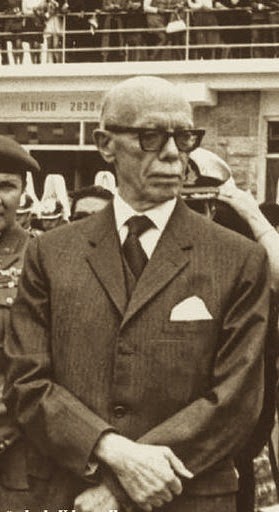
                                      José María Velasco Ibarra 

2. José María Velasco Ibarra was President of Ecuador five different times, but sadly, he was always being deposed. On one occasion, he turned up at an embassy reception. Accounts on this vary. He either vomited over the West German ambassador or he urinated in the punch bowl. According to one version of the story, he actually did both. The army immediately deposed him for having “compromised the dignity of the Republic.” 
                  
                    Former British Prime Minister Harold Wilson 

3. The White House state protocol took a holiday it seems, when Prime Minister Harold Wilson visited Washington in the 1960s. It was at a time when the sun appeared to be setting on the British Empire — colonies everywhere were clamoring for independence, it was post-Suez canal, there was the free-falling pound, not to mention labor strikes. Upon arriving at the White House for the formal welcoming ceremonies, Wilson pointed out to then U.S. Chief of Protocol, Jimmy Symington, that two of the Union Jacks were flying upside down — the international sign of distress. The next day, the Washington Post newspaper ran an enormous photo of the flags with the caption, “Oops!” 
      
These people are dancing the Viennese Waltz. They are not dancing to the Austrian State anthem. 

4. As the story goes, former British Foreign Minister George Brown was at a state dinner in Vienna in 1966, and after enjoying some wine, he turned to "an exquisite creature in violet" sitting beside him, upon hearing the orchestra strike up a tune. Saying, “Madame, you look ravishing. May we dance?” The exquisite creature in violet turned to him and said, in perfect English, “No, Mr. Brown, for three reasons. Firstly, this is a state dinner, not a ball. Secondly, were this a ball and not a state dinner, this would still be the Austrian state anthem, and not a waltz. And thirdly, were this a ball and not a state dinner, and were that a waltz and not the Austrian state anthem, I would still be the Cardinal Archbishop of Vienna.” 

                                        
       Polish leader Lech Walesa was unfamiliar with artichokes.

5. When Polish leader Lech Walesa visited Queen Elizabeth II at Buckingham Palace, he was served artichokes. Never having encountered an artichoke before, he began to eat the spiny leaves. The Queen generously offered, “Why don’t you eat the bottom part? It takes so long to eat the leaves.” That’s what's known as noblesse oblige — a French phrase literally meaning "nobility obliges." It is the concept that nobility extends beyond mere entitlements, to acts of generosity and nobility toward those less privileged. 

                                            
Mozaffar ad-Din Shah Qajar did not know the etiquette for eating asparagus. 

6. The Shah of Persia, Mozaffar ad-Din Shah Qajar, visited London in 1902. At the Edwardian Era dinner, he was served asparagus, which was a legume evidently unknown to the occupant of the Peacock Throne. After eating each spear, he would toss the stalk over his shoulder onto the floor. Feelings of anxiety ensued with those dining with the Shāh. Not wanting to embarrass the world leader, and in a show of true diplomacy, everyone else began tossing their stalks onto the floor.


🍽️Etiquette Enthusiast, Maura J. Graber of The RSVP Institute of Etiquette, is the Site Editor of the Etiquipedia© Etiquette Encyclopedia 

Monday, September 16, 2024

Etiquette for Offices and Artichokes

Experience will teach you that those careful about these discretions are those who gain the promotions; that the careless ones mysteriously and suddenly lose their jobs.

The secretary who is cautious will never allow herself to participate in office criticism that may lose her place for her. Moreover, as long as one's livelihood is dependent upon an organization’s money, one should-in conversation at least-be loyal to its officers. Even when away from the office you should not discuss your employer's business. Experience will teach you that those careful about these discretions are those who gain the promotions; that the careless ones mysteriously and suddenly lose their jobs.

Reader's Question Answered

Dear Miss Markel- How should artichoke be eaten? D. D. Answer- With the fingers. Each leaf should be pulled off sepa- rately and held with the fingers while the edible end is dipped into the sauce. When all the leaves have been eaten the heart should be eaten with a fork after the thorny part has been scraped off with a knife. —Copyright,
1939


🍽Etiquette Enthusiast, Maura J. Graber, is the Site Editor for the Etiquipedia© Etiquette Encyclopedia 

Saturday, November 11, 2023

Learn Manners No One Criticizes

Don’t laugh because Dot stuffs iced cake into her mouth with her fingers. She's to be pitied!
Learn Table Manners No One Can Criticize

Don't laugh at Dot– the girl who stuffs iced cake into her mouth with her fingers. She's to be pitied. For, until she learns better manners, the people she longs to know will just ignore her. What hostess wants to take a chance on a girl who doesn't know layer cake should be eaten with a fork even at simple buffet parties?

If you invited her to dinner she’d probably drink her soup from the tip instead of from the side of her spoon. She'd put the salt for her celery on the table-cloth instead of on her plate. As for tricky foods! Dot would never know that you eat artichokes by pulling off a leaf at a time. And canapés would bewilder her! It's so easy to be correct once you know.– Santa Ana Journal, 1937


 🍽Etiquette Enthusiast, Maura J. Graber, is the Site Editor for the Etiquipedia© Etiquette Encyclopedia

Sunday, March 13, 2022

“Finger-Eating” Etiquette

Even at formal dinners, “finger-eating” is the well-mannered method for certain foods. Glamorous artichokes are properly eaten with the fingers down to the “heart,” which is in the fork territory. – Above, an individual artichoke plate with bowl for butter.


Green Light Shines On ‘Finger-Eating’

Is it ever proper to eat with your fingers? Etiquette experts say “yes!” Even at formal dinners, “finger-eating” is the well-mannered method for certain foods. Glamorous artichokes are properly eaten with the fingers down to the “heart,” which is in the fork territory. Asparagus, when not covered with a sauce,
may be picked up with the fingers in the best of style. There's no need to hesitate to serve guests dishes such as fried chicken or corn on the cob, because they are difficult to eat with knives and forks. Lead the way by picking up the food as a cue to your guests. 

Helpful Deed 

At “sit-down” dinners, the thoughtful hostess provides two large napkins at each place for wiping fingers. Here are some additional socially correct finger foods: 
BACON –If the bacon is crisp, it may be eaten with the fingers. But if you prefer your bacon less than crumble-dry, a knife and fork are required. 
CAKE –Tiny cakes, such as petit-fours, should be eaten with the fingers. Pound cake may be broken into bite-size pieces and also eaten with the fingers. Sticky cake or a larger portion, requires a fork.

 Not in N.Y…

 CHlCKEN— Geography has some effect on chicken manners. According to the experts, fried or broiled chicken may be picked up and eaten with the fingers everywhere, except in New York. In this Eastern area, chicken served at formal dinners calls for knives and forks. Finger eating is for informal occasions only. 

But in other states, it’s considered perfectly acceptable to pick up serving-size pieces of fried or broiled chicken for all occasions. 

RELISHES – Celery and olives should be eaten with the fingers, except when they are a part of a salad or cooked dish. Radishes and small pickles are also finger-food. 

FRUIT – Fresh apricots, cherries, grapes, and plums are always eaten with the fingers. However, when eating fresh apples and pears at the table, peel and quarter with a table knife before eating with the fingers. – Desert Sun, 1963


Etiquette Enthusiast, Maura J. Graber, is the Site Editor for the Etiquipedia© Etiquette Encyclopedia 

Monday, March 30, 2020

Cale-Assiette and French Etiquette

Among the small objects found in flea markets, people are intrigued by funny little glass tabs with notches. Some sellers believe these to be knife holders. But they are not very practical for that use. They are, in fact, cale-assiette or ‘plate holders’ — inclined planes with notches, allowing to slightly raise a plate on one side. What purpose? They were very useful when eating artichokes or asparagus. Very fashionable at the end of the 19th beginning of the 20th century, these objects fell a little in obsolescence, although it is still possible to get some. Manufactured by the majority of large French glass and crystal glassworks, they could also be made of silver and other metals or porcelain.” These appeared in the old catalogs including that of Baccarat, but under the name ‘plate holder’. — information from Andre Ganter of  Verrelene

The Baccarat cale-assiette shown above, and others like it, were produced and used at French tables not so long ago, but have become all but forgotten. Unsure regarding the etiquette of cale-assiette, as Site Editor for Etiquipedia, I decided to ask the debonair, Guillaume Rué de Bernadac, of Academie de Bernadac about them. 

Guillaume is one of the most sought after etiquette instructors in the world — Etiquette runs in his blood. His great-grandfather tutored Moroccan royalty. Cale-Assiette are so archaic, even Guillaume, who learned etiquette at a very early age, admitted he had to ask family members for more details on them. He has not seen them used in many years.

I have a lovely box of Baccarat cale-assiette, but I have never found information on exactly how they were used, so I had several etiquette questions for Guillaume: 

  • Were cale-assiette part of mid-19th century French place settings? 
  • If not part of each place setting, were cale-assiette brought out to the table by the server? 
  • Did the server prop the dish up on one side for each diner? 
  • If the server did not, did the dinner guest prop up one side of the plate? 
  • Were cale-assiette ever used for tilting soup plates or bowls of soup?

Baccarat cale-assiette tilting a plate of asparagus with  sauce —According to Guillaume, cale-assiette, can mean two different things. “What we nowadays call “cale-assiette” in French can designate either something to tilt the plate or something to sort plates out on the table.” Adding that they were, “very trendy during the second part of the 19th century and early 20th. There are some at my grand-mother’s and it’s not uncommon to see a few of them at some flea markets in France.”
The staff would place one on the table first and then the plate on top of it. The guest could potentially place the plate higher on the ’steps’ at the end of the meal to have more sauce...
And the etiquette for their use? “They were indeed specifically for artichokes and asparagus, and any other type of dishes which were supposed to be served with a sauce and dipped in with the fingers. For private use mostly, in the bourgeoise familles, the staff would place one on the table first and then the plate on top of it. The guest could potentially place the plate higher on the ’steps’ at the end of the meal to have more sauce collected. It was removed once the dish was finished.” 

Cale-Assiette do work well when eating soup, provided one is eating soup from the olde-fashioned, low and wide, soup “plates” as opposed to soup bowls, as cale-assiette will easily tip a deeper soup bowls over if moved too far under one side of the bowl.


Guillaume Rué de Bernadac is the President & Founding Director of the luxury etiquette institution, Académie de Bernadac in Shanghai and Paris. He has been featured in Michelin Guide, L’Officiel, Global Times, The Guardian, M6, CNN, etc... Académie de Bernadac


The Verrelène company was created in 2011. The blog provides all of our research on antiques and flea markets, in the form of small notices sometimes also published in the regional press (Vosges Matin, l'Echo des Vosges and Vosges Info). The illustrations used generally come from our personal documentation and our photos. When we use illustrations and / or extracts from articles, we generally put references. If we forgot to quote this or that person or reference, please be so kind as to let us know so that we can correct our mistakes and give back to Caesar what belongs to him.


Etiquette Enthusiast, Maura J Graber, is the Site Editor for the Etiquipedia© Etiquette Encyclopedia 

Sunday, August 3, 2014

6 Famous Etiquette Mishaps and Faux Pas

                          Former President George H. W Bush 

1. George Bush senior may hold the record for the most embarrassing behavior at a state dinner. In 1992, the former president vomited, then fainted, after experiencing sudden and violent gastric distress during a state dinner in Tokyo. Unfortunately, he vomited — as the news reports put it – “copiously” into the lap of then Prime Minister Miyazawa. Mr. Bush, formerly with the diplomatic corps, was always a model of gentlemanliness, manners and propriety. His mortification the next day upon seeing the press reports of the mishap must have been horrific. One writer wondered, "Did Japanese hardliners harbor suspicions that the presidential sickness had been no accident?" After all, 48 years prior, Bush had been shot down by the Japanese while trying to torpedo one of their warships.
                                   
                                      José María Velasco Ibarra

2. José María Velasco Ibarra was President of Ecuador five different times, but sadly, he was always being deposed. On one occasion, he turned up at an embassy reception. Accounts on this vary. He either vomited over the West German ambassador or he urinated in the punch bowl. According to one version of the story, he actually did both. The army immediately deposed him for having “compromised the dignity of the Republic.” 
                 
                    Former British Prime Minister Harold Wilson

3. The White House state protocol took a holiday it seems, when Prime Minister Harold Wilson visited Washington in the 1960s. It was at a time when the sun appeared to be setting on the British Empire — colonies everywhere were clamoring for independence, it was post-Suez canal, there was the free-falling pound, not to mention labor strikes. Upon arriving at the White House for the formal welcoming ceremonies, Wilson pointed out to then U.S. Chief of Protocol, Jimmy Symington, that two of the Union Jacks were flying upside down — the international sign of distress. The next day, the Washington Post newspaper ran an enormous photo of the flags with the caption, “Oops!”
      
These people are dancing the Viennese Waltz. They are not dancing to the Austrian State anthem. 

4. As the story goes, former British Foreign Minister George Brown was at a state dinner in Vienna in 1966, and after enjoying some wine, he turned to "an exquisite creature in violet" sitting beside him, upon hearing the orchestra strike up a tune. Saying, “Madame, you look ravishing. May we dance?” The exquisite creature in violet turned to him and said, in perfect English, “No, Mr. Brown, for three reasons. Firstly, this is a state dinner, not a ball. Secondly, were this a ball and not a state dinner, this would still be the Austrian state anthem, and not a waltz. And thirdly, were this a ball and not a state dinner, and were that a waltz and not the Austrian state anthem, I would still be the Cardinal Archbishop of Vienna.”

                                        
       Polish leader Lech Walesa was unfamiliar with artichokes.

5. When Polish leader Lech Walesa visited Queen Elizabeth II at Buckingham Palace, he was served artichokes. Never having encountered an artichoke before, he began to eat the spiny leaves. The Queen generously offered, “Why don’t you eat the bottom part? It takes so long to eat the leaves.” That’s what's known as noblesse oblige — a French phrase literally meaning "nobility obliges." It is the concept that nobility extends beyond mere entitlements, to acts of generosity and nobility toward those less privileged.

                                            
Mozaffar ad-Din Shah Qajar did not know the etiquette for eating asparagus. 

6. The Shah of Persia, Mozaffar ad-Din Shah Qajar, visited London in 1902. At the Edwardian Era dinner, he was served asparagus, which was a legume evidently unknown to the occupant of the Peacock Throne. After eating each spear, he would toss the stalk over his shoulder onto the floor. Feelings of anxiety ensued with those dining with the Shāh. Not wanting to embarrass the world leader, and in a show of true diplomacy, everyone else began tossing their stalks onto the floor.


🍽️Etiquette Enthusiast, Maura J. Graber of The RSVP Institute of Etiquette, is the Site Editor of the Etiquipedia© Etiquette Encyclopedia