Showing posts with label The RSVP Institute of Etiquette. Show all posts

Tuesday, September 1, 2026

Spotlight on Maura J. Graber


Meet Etiquette Enthusiast, Teacher, Author, Historian and Etiquipedia© Site Editor and Founder, Maura J. Graber of 
The RSVP Institute of Etiquette

The Etiquipedia© Etiquette Encyclopedia was an idea that took shape in late-2011 after an Etiquette Instructor Trainee was lamenting the fact that there wasn’t a free, online resource, where factual etiquette information could be found, along with the reasons behind the etiquette rules. Maura J. Graber decided then to start such a site. Beginning in 2012, Maura’s first posts were rather long, but there were only seven of them, as she was still focused on a personal etiquette blog, “The Etiquette Sleuth.” By 2013, she had tripled the number of posts. By 2016, she was posting hundreds of articles a year. Since 2020 she has posted many more articles and her goal is to post one new article every day, There are now close to 4,000 articles on the site.
Though Graber offers classes to all ages, working with teens and young adults is especially rewarding for her. She says that they are the most vulnerable to depression, peer pressure, and social media. She also loves to speak on proper table setting and antiques for the table. She is a popular speaker for universities, museums and historical groups. She also worked as a consultant for Seasons 1 & 2 of the Julian Fellowes’ show, “The Gilded Age” on HBO-Max

Below are links to just a few of Maura Graber’s articles on etiquette which you’ll find on Etiquipedia:

The following is a Q. & A. with Maura:
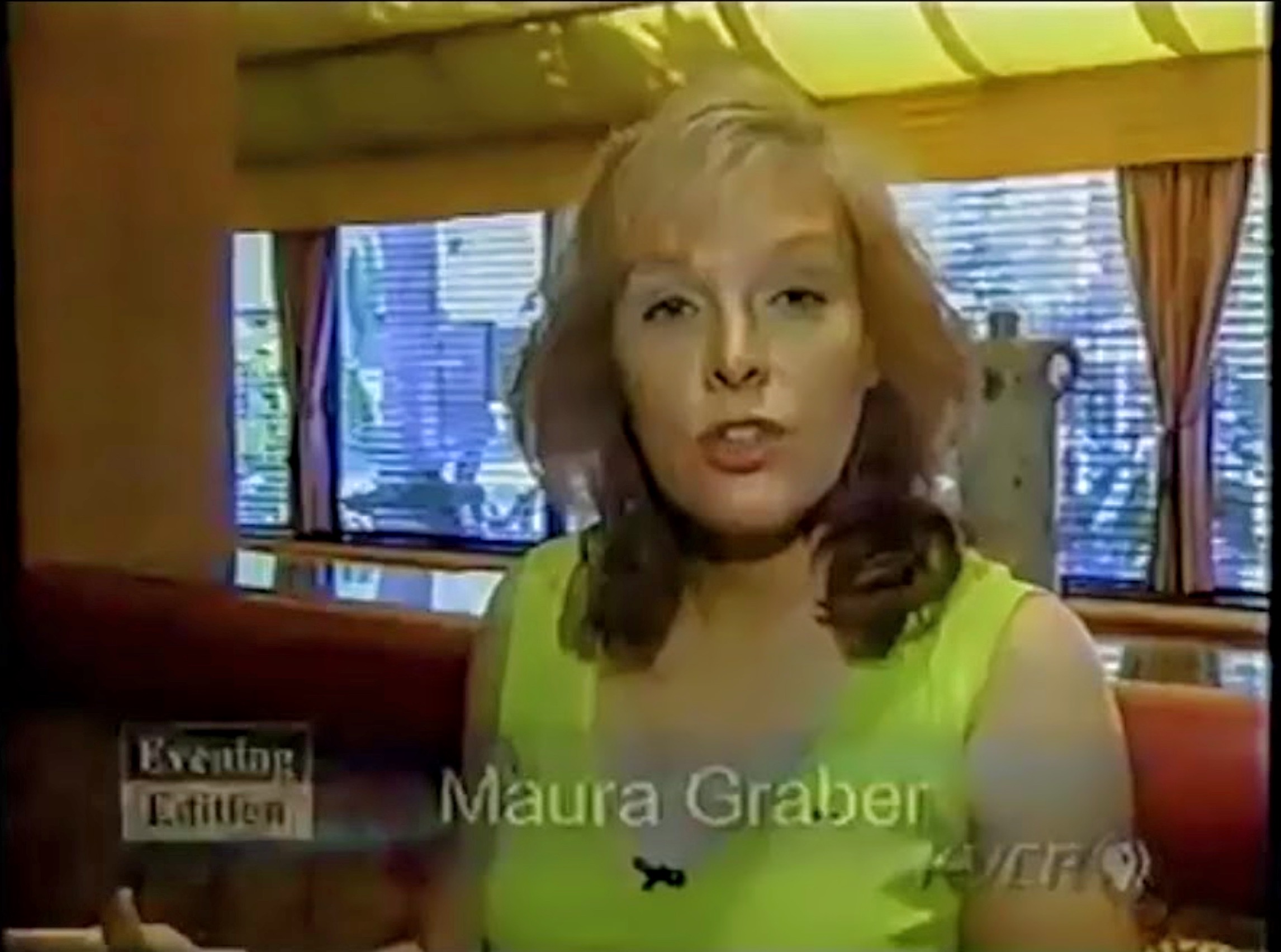
Along with teaching etiquette, Maura was the Table Top Spokesperson for a chain of 9 high-end department stores in Southern California in the mid to late 1990’s, traveling from store to store doing talks. By the time the chain merged with another chain of stores in 1999, expanding to 5 states, Maura decided her children were too young for her to be traveling as much as she would need to, so she continued her busy schedule of after-school etiquette classes throughout several counties and took on a role not only on-air, but producing news segments and reviews for a local PBS station. Her segments highlighted  philanthropic organizations and “feel-good stories.”
What was the impetus for starting your Etiquette business?
After working a few different jobs in high school and college, including as a part-time, Princess House Crystal consultant selling dining and entertaining wares, working in retail sales and also as a telephone operator, I took a position as a restaurant manager in Newport Beach, and got used to watching how people behaved and ate in such a public setting. It was eye-opening. I felt most comfortable selling women’s clothing and accessories though. I was quite good at dressing women, and soon opened my own boutique in 1984. By 1990, with a growing family, I was looking for an old-fashioned charm school but couldn’t find one anywhere, I decided to branch out again and opened my own etiquette school. I quickly became so busy teaching etiquette, I left the fashion business behind me within a few years.
Fun foods and odd utensils are always on the menu at Maura’s etiquette classes for kids.
What do you enjoy most about teaching etiquette?
I found out rather quickly that teaching others etiquette and good manners is very rewarding in a way that most other jobs and businesses are not. Knowing you have given someone social self-confidence and the right tools to navigate their ways throughout all of the societal pitfalls they will likely encounter, especially as teens and young adults, is extremely rewarding. I have also amassed a large collection of antique dining utensils and have written several etiquette history books, featuring the unusual utensils and their uses.
Maura’s latest book is available on Amazon.– In “Yesteryear… More of What Have We Here?” the etiquette authority, social historian, and collector of unusual dining implements, treats readers to a trip back in time through various unusual objects for dining and living, along with the etiquette and social tools that once made up an everyday life in Western society and many that still apply today. Curiosities spanning from prior to the Georgian era, Regency era, Victorian eras, the Gilded Age, throughout the Edwardian era, up until the Mid-20th Century, which describe in a fond clarity, not only how we once socialized, dined and lived, but how to entertain today using antiques and making simple but unique choices.  
Screenshot of Maura on PBS demonstrating and talking about special dining utensils for those with physical challenges, circa 2006.

What type of classes do you offer?
I offer very personalized, one-on-one classes, along with group classes for children and adults. My afternoon tea etiquette sessions are very popular, for all ages. I also offer classes via Zoom for clients who are overseas, though some people will also fly to Southern California to work with me.

What age group do you enjoy working with most? 
Teens to young adults are my favorite group to teach etiquette, though every student, aged 5 though to 85, is unique and special. 

Which are some of the older etiquette authors or authorities you enjoy reading? 
I love reading old books by Lillian Eichler, Letitia Baldridge, Amy Vanderbilt, Elizabeth Post and Judith Martin, aka Miss Manners, and of course, old newspaper and magazine articles on etiquette.

If you’d like to reach Maura, you can call her at 909-923-5650 or (inside the United States, 800-891-RSVP), you can visit her RSVP Institute of Etiquette website or email Maura at rsvpinstitute @gmail.com or etiquipedia @gmail.com

Talking etiquette at an evening program for the Ontario Museum of History and Art in 2017


🍽Etiquette Enthusiast, Maura J. Graber, is the Site Editor for the Etiquipedia© Etiquette Encyclopedia

Friday, August 1, 2025

Spotlight on Maura J. Graber


Meet Etiquette Enthusiast, Teacher, Author, Historian and Etiquipedia© Site Editor and Founder, Maura J. Graber of 
The RSVP Institute of Etiquette

The Etiquipedia© Etiquette Encyclopedia was an idea that took shape in late-2011 after an Etiquette Instructor Trainee was lamenting the fact that there wasn’t a free, online resource, where factual etiquette information could be found, along with the reasons behind the etiquette rules. Maura J. Graber decided then to start such a site. Beginning in 2012, Maura’s first posts were rather long, but there were only seven of them, as she was still focused on a personal etiquette blog, “The Etiquette Sleuth.” By 2013, she had tripled the number of posts. By 2016, she was posting hundreds of articles a year. Since 2020 she has posted many more articles and her goal is to post one new article every day, There are now close to 4,000 articles on the site.
Though Graber offers classes to all ages, working with teens and young adults is especially rewarding for her. She says that they are the most vulnerable to depression, peer pressure, and social media. She also loves to speak on proper table setting and antiques for the table. She is a popular speaker for universities, museums and historical groups. She also worked as a consultant for Seasons 1 & 2 of the Julian Fellowes’ show, “The Gilded Age” on HBO-Max
Below are links to just a few of Maura Graber’s articles on etiquette which you’ll find on Etiquipedia:
The following is a Q. & A. with Maura:
Along with teaching etiquette, Maura was the Table Top Spokesperson for a chain of 9 high-end department stores in Southern California in the mid to late 1990’s, traveling from store to store doing talks. By the time the chain merged with another chain of stores in 1999, expanding to 5 states, Maura decided her children were too young for her to be traveling as much as she would need to, so she continued her busy schedule of after-school etiquette classes throughout several counties and took on a role not only on-air, but producing news segments and reviews for a local PBS station. Her stories highlighted  philanthropic organizations and “feel-good stories.”
What was the impetus for starting your Etiquette business?
After working a few different jobs in high school and college, including as a part-time, Princess House Crystal consultant selling dining and entertaining wares, working in retail sales and also as a telephone operator, I took a position as a restaurant manager in Newport Beach, and got used to watching how people behaved and ate in such a public setting. It was eye-opening. I felt most comfortable selling women’s clothing and accessories though. I was quite good at dressing women, and soon opened my own boutique in 1984. By 1990, with a growing family, I was looking for an old-fashioned charm school but couldn’t find one anywhere, I decided to branch out again and opened my own etiquette school. I quickly became so busy teaching etiquette, I left the fashion business behind me within a few years.
Fun foods and odd utensils are always on the menu at Maura’s etiquette classes for kids.
What do you enjoy most about teaching etiquette?
I found out rather quickly that teaching others etiquette and good manners is very rewarding in a way that most other jobs and businesses are not. Knowing you have given someone social self-confidence and the right tools to navigate their ways throughout all of the societal pitfalls they will likely encounter, especially as teens and young adults, is extremely rewarding. I have also amassed a large collection of antique dining utensils and have written several etiquette history books, featuring the unusual utensils and their uses.
Maura’s latest book is available on Amazon.– In “Yesteryear… More of What Have We Here?” the etiquette authority, social historian, and collector of unusual dining implements, treats readers to a trip back in time through various unusual objects for dining and living, along with the etiquette and social tools that once made up an everyday life in Western society and many that still apply today. Curiosities spanning from prior to the Georgian era, Regency era, Victorian eras, the Gilded Age, throughout the Edwardian era, up until the Mid-20th Century, which describe in a fond clarity, not only how we once socialized, dined and lived, but how to entertain today using antiques and making simple but unique choices.  
Screenshot of Maura on PBS demonstrating and talking about special dining utensils for those with physical challenges, circa 2006.

What type of classes do you offer?
I offer very personalized, one-on-one classes, along with group classes for children and adults. My afternoon tea etiquette sessions are very popular, for all ages. I also offer classes via Zoom for clients who are overseas, though some people will also fly to Southern California to work with me.

What age group do you enjoy working with most? 
Teens to young adults are my favorite group to teach etiquette, though every student, aged 5 though to 85, is unique and special. 

Which are some of the older etiquette authors or authorities you enjoy reading? 
I love reading old books by Lillian Eichler, Letitia Baldridge, Amy Vanderbilt, Elizabeth Post and Judith Martin, aka Miss Manners, and of course, old newspaper and magazine articles on etiquette.

If you’d like to reach Maura, you can call her at 909-923-5650 or (inside the United States, 800-891-RSVP), you can visit her RSVP Institute of Etiquette website or email Maura at rsvpinstitute @gmail.com or etiquipedia @gmail.com

Talking etiquette at an evening program for the Ontario Museum of History and Art in 2017


🍽Etiquette Enthusiast, Maura J. Graber, is the Site Editor for the Etiquipedia© Etiquette Encyclopedia

Friday, November 1, 2024

Spotlight on Maura J. Graber


Meet Etiquette Enthusiast, Teacher, Author, Historian and Etiquipedia© Site Editor and Founder, Maura J. Graber of 
The RSVP Institute of Etiquette

The Etiquipedia© Etiquette Encyclopedia was an idea that took shape in late-2011 after an Etiquette Instructor Trainee was lamenting the fact that there wasn’t a free, online resource, where factual etiquette information could be found, along with the reasons behind the etiquette rules. Maura J. Graber decided then to start such a site. Beginning in 2012, Maura’s first posts were rather long, but there were only seven of them, as she was still focused on a personal etiquette blog, “The Etiquette Sleuth.” By 2013, she had tripled the number of posts. By 2016, she was posting hundreds of articles a year. Since 2020 she has posted many more articles and her goal is to post one new article every day, There are now about 3,500 articles on the site.

Though Graber offers classes to all ages, working with teens and young adults is especially rewarding for her. She says that they are the most vulnerable to depression, peer pressure, and social media. She also loves to speak on proper table setting and antiques for the table. She is a popular speaker for museums and historical groups. She has also worked as a consultant for Julian Fellowes’ show, “The Gilded Age” on HBO-Max

Below are links to just a few of Maura Graber’s articles on etiquette which you’ll find on Etiquipedia:
The following is a Q. & A. with Maura:

Along with teaching etiquette, Maura was the Table Top Spokesperson for a chain of 9 high-end department stores in Southern California in the mid to late 1990’s, traveling from store to store doing talks. By the time the chain merged with another chain of stores in 1999, expanding to 5 states, Maura decided her children were too young for her to be traveling as much as she would need to, so she continued her busy schedule of after-school etiquette classes throughout several counties and took on a role not only on-air, but producing news segments and reviews for a local PBS station. Her stories highlighted  philanthropic organizations and “feel-good stories.”

What was the impetus for starting your Etiquette business?
After working a few different jobs in high school and college, including as a part-time, Princess House Crystal consultant selling dining and entertaining wares, working in retail sales and also as a telephone operator, I took a position as a restaurant manager in Newport Beach, and got used to watching how people behaved and ate in such a public setting. It was eye-opening. I felt most comfortable selling women’s clothing and accessories though. I was quite good at dressing women, and soon opened my own boutique in 1984. By 1990, with a growing family, I was looking for an old-fashioned charm school but couldn’t find one anywhere, I decided to branch out again and opened my own etiquette school. I quickly became so busy teaching etiquette, I left the fashion business behind me within a few years.
An old modeling photo from 1989, wearing an outfit from  her “Timeless Knits” line.
What do you enjoy most about teaching etiquette?
I found out rather quickly that teaching others etiquette and good manners is very rewarding in a way that most other jobs and businesses are not. Knowing you have given someone social self-confidence and the right tools to navigate their ways throughout all of the societal pitfalls they will likely encounter, especially as teens and young adults, is extremely rewarding.  I have also amassed a large collection of antique dining utensils and have written several etiquette history books, featuring the unusual utensils and their uses.
Maura’s latest book is out on Amazon. In “Yesteryear… More of What Have We Here?” the etiquette authority, social historian, and collector of unusual dining implements, treats readers to a trip back in time through various unusual objects for dining and living, along with the etiquette and social tools that once made up an everyday life in Western society and many that still apply today. Curiosities spanning from prior to the Georgian era, Regency era, Victorian eras, the Gilded Age, throughout the Edwardian era, up until the Mid-20th Century, which describe in a fond clarity, not only how we once socialized, dined and lived, but how to entertain today using antiques and making simple but unique choices.  
Screenshot of Maura on PBS demonstrating and talking about special dining utensils for those with physical challenges, circa 2006.

What type of classes do you offer?
I offer very personalized, one-on-one classes, along with group classes for children and adults. My afternoon tea etiquette sessions are very popular, for all ages. I also offer classes via Zoom for clients who are overseas, though some people will also fly to Southern California to work with me.

What age group do you enjoy working with most? 
Teens to young adults are my favorite group to teach etiquette, though every student, aged 5 though to 85, is unique and special. 

Which are some of the older etiquette authors or authorities you enjoy reading? 
I love reading old books by Lillian Eichler, Letitia Baldridge, Amy Vanderbilt, Elizabeth Post and Judith Martin, aka Miss Manners, and of course, old newspaper and magazine articles on etiquette.

If you’d like to reach Maura, you can call her at 909-923-5650 or (inside the United States, 800-891-RSVP), you can visit her RSVP Institute of Etiquette website or email Maura at rsvpinstitute @gmail.com or etiquipedia @gmail.com

Talking etiquette at an evening program for the Ontario Museum of History and Art in 2017


🍽Etiquette Enthusiast, Maura J. Graber, is the Site Editor for the Etiquipedia© Etiquette Encyclopedia

Tuesday, November 21, 2023

The Polite Thanksgiving Guest - 12 Tips

Your cellphone should be set aside for face to face communication with others and taking occasional photos. Keep your phone out of sight unless it’s needed. If you get a personal call, step into another room or go outside to take the call.

Twelve Tips for Being a Welcome Thanksgiving Guest
  1. Don’t enter a home asking for the television remote, video controller or the wifi password. You’re there to visit and socialize. Instead, greet your host &/or hostess and thank them for having you. 
  2. Holidays already bring unexpected surprises. Never show up with an “extra” guest or friend in tow unless you’ve politely discussed the matter with your host/s.
  3. If you are “bringing a dish,” and you know the host’s or hostess’s taste in tableware, bringing an actual dish with your food as a hostess gift is a thoughtful touch. Ex: Your sister collects old, blue and white transferware. You spot unique bowls she’d love online and on sale. Pick a pretty style for her to keep and bring your famous cranberry sauce in it, ready to serve. 
  4. If you aren’t already helping out in the kitchen, ask what you can do to assist. Many hosts & hostesses don’t want help in the kitchen, but may need help in making sure guests’ glasses are on coasters, guests’ coats are hung up or that children aren’t underfoot. Some hosts and hostesses need help with setting the table. Offer to make yourself useful.
  5. If your hosts have the big game on, parade or holiday marathon, go ahead and watch. Just don’t ignore others or let it monopolize your attention.
  6. Your cellphone should be set aside for face to face communication with others and taking occasional photos. Keep your phone out of sight unless it’s needed. If you get a personal call, step into another room or go outside to take the call.
  7. Ask where you should sit at the table, unless your host instructs you to, “sit anywhere.” If there are place cards, sit where the host/s have placed you. It is the rudest of gusts who will rearrange place cards at someone else’s table.
  8. Never criticize the food or how it’s prepared. If you don’t care for something, simply pass on the dish, or pass it on to the next guest without comment.
  9. Keep political opinions and other hot topics out of your conversation. Regardless of your passions or opinions, seasonal get-togethers are not the time for division, especially in someone else’s home.
  10. Don’t expect to take home leftovers, even if it’s the norm in your family or circle. Food prices have skyrocketed the past few years and some families have started asking guests to chip in on the cost of the meal. Leftovers may only be up for grabs if you’ve contributed monetarily to the meal. 
  11. Holidays can be a lonely time for people, even those attending large gatherings. Be polite and try to chat with anyone who looks like they need some kindness sent their way.
  12. Don’t overstay your welcome and always thank your hosts when you leave.


Contributor Maura Graber has been teaching etiquette to children, teens and adults, and training new etiquette instructors, since 1990, as founder and director of The RSVP Institute of Etiquette.  She is also a writer, has been featured in countless newspapers, magazines and television shows and was an on-air contributor to PBS in Southern California for 15 years. Along with teaching and giving talks on old flatware, she is an etiquette consultant for the HBO – Julian Fellowes’ series, “The Gilded Age”


🍽Etiquette Enthusiast, Maura J. Graber, is the Site Editor for the Etiquipedia© Etiquette Encyclopedia

Monday, November 20, 2023

Hosting Thanksgiving – 12 Top Tips

Holidays bring unexpected surprises. If someone shows up with an “extra guest” or new boyfriend in tow, welcome the stranger politely. Someone else’s rudeness is no excuse for you to drop your good manners. People without family, or with fractured families, are especially vulnerable to depression. Expect the unexpected and you’ll find that the day or evening will run much more smoothly.


  Twelve Tips for Hosting a Memorable Thanksgiving  

  1. Make sure your home is clean and welcoming to guests, especially for those who have traveled a long distance. Is the powder room or bathroom clean and well stocked? Is there plenty of seating for everyone? Have you briefed your guests on parking in your neighborhood or parking structure? Imagine being someone invited to you place for Thanksgiving. Mentally walk yourself through every step in getting there, your arrival and being in your home as if it were a stranger’s home. Is there something you haven’t thought of that needs to be considered beforehand in directions or discussions with your guests
  2. Holidays bring unexpected surprises. If someone shows up with an “extra guest” or new boyfriend in tow, welcome the stranger politely. Someone else’s rudeness is no excuse for you to drop your good manners. People without family, or with fractured families, are especially vulnerable to depression. Expect the unexpected and you’ll find that the day or evening will run much more smoothly.
  3. If you ask guests to “bring a dish,” be specific. Asking for “a salad” can mean anything from a bowl of various fruit chunks, to coleslaw, to potato salad, a bowl of greens, etc…
  4. If you aren’t in need of kitchen help or don’t desire help, have a list of easy tasks ready for guests who want to feel helpful. Myself? I’m always asked to set the table or make certain it is set properly. 
  5. Be thoughtful and have a set seating arrangement. Place cards are easy to make. Seat anyone with mobility issues at either ends of tables or where a walker or cane can be placed within easy reach.
  6. Rethink the “Kids Table.” After overhearing kids arguing with parents over their table one year, I enlisted the help of my own teen and pre-teen in setting up the “No Adults Allowed” table in the same spot. We had etiquette class bins in my car, so we used little dollar store toys to make ‘place cards’, added fun, curly straws to the beverage glasses, small treats and place mats that could be drawn on with crayons and gel pens. It was a big hit! We actually had to add 2 extra chairs for the teens who wanted to join the kids.
  7. Keep your cellphone nearby for guests running late or having car trouble.
  8. Before the big day, enlist a trusted family member or friend to help with guests who are known to over indulge in alcohol or other substances, who like to engage in loud, political discourse, and even those whose memories are fading or are hearing impaired. 
  9. Accept all host or hostess gifts or food gracefully, with a smile, and a “Thank you for your thoughtfulness!”
  10. Keep politics and other hot topics out of your conversation. Regardless of your passions or opinions, seasonal get-togethers are not the time for division, especially in your own home.
  11. Prepare for guests who wish to take leftovers home with them. Have containers ready.
  12. Don’t expect everyone to be as enthusiastic in helping with the clean up after the meal as they were when the meal was being prepared. Visiting with and enjoying your guests is important. Some things can wait for the next morning.


Contributor Maura Graber has been teaching etiquette to children, teens and adults, and training new etiquette instructors, since 1990, as founder and director of The RSVP Institute of Etiquette.  She is also a writer, has been featured in countless newspapers, magazines and television shows and was an on-air contributor to PBS in Southern California for 15 years. Along with teaching and giving talks on old flatware, she is an etiquette consultant for the HBO – Julian Fellowes’ series, “The Gilded Age”


🍽Etiquette Enthusiast, Maura J. Graber, is the Site Editor for the Etiquipedia© Etiquette Encyclopedia

Saturday, August 19, 2023

More Etiquette for Place Card Usage


These informal place cards were created from store bought invitations for a young girl’s “Teddy Bear Tea” birthday party. The fronts of the invitations were removed from the back and folded in half, so that each child knew where their place was at the table and the children sitting across from one another, faced a row of tumbling teddy bears. – 
“Place cards are used for seating arrangements and should never be tampered with if you want to be invited back. Hosts/Hostesses go to a lot of trouble and time to make sure the seating arrangements are proper and that everyone's tastes and feelings are accommodated. Sit where a place card has been set for you (the one with your name on it) and mingle with others you didn't sit with afterward.”– From The RSVP Institute of Etiquette’s, “Social Graces Handbook,” 1992

Writing Place Cards

At informal meals, place cards are a practical convenience only, and need follow no special set of rules. First names or nicknames can be used if all the guests are friends. But strangers, squinting anxiously to make sure of their dinner partners' names, should be given more help than "Kitty" or "Sister": "Mrs. Herrick" and "Miss Paton" would be more practical. There is no set custom concerning the handwriting or anything else.

At a semiformal meal, place cards are still a matter of common sense and convenience, rather than form. As explained in "Three Degrees of Formality," the difference between semiformal and informal entertaining is often nothing more than a technicality of service. With common sense as the guide, therefore, at a small semiformal dinner there would probably be no place cards at all; at a big dinner of friends, the place cards would be written informally as shown here; at a big elaborate dinner, they might be written according to the formal pattern described

On the Table

Place cards are laid on top of the napkin, which is folded on the place plate. If the napkin has been folded so as to stand up, the place card is put in front of the napkin, leaning against it. Or else the place card may be laid flat on the table, above each place plate. Folded place cards stand on the table, directly above the place plate. – From Vogue’s Book of Etiquette, 1948


🍽Etiquette Enthusiast, Maura J. Graber, is the Site Editor for the Etiquipedia© Etiquette Encyclopedia

Friday, August 18, 2023

Etiquette for Using Place Cards

When using double-sided place cards for dinner parties of 8 or more people, and at which guests may not be familiar with everyone else’s names, it is best to write the name on both sides of the card so that others at the table only have to glance down to see with whom they are speaking while at the table. – Maura J. Graber, Director, The RSVP Institute of Etiquette
––––––––––––––––––––
“In a pinch, it is better to use the back of a visiting card than it is to use a would-be funny innovation.” – From Vogue’s Book of Etiquette


On Setting the Table:

Place Cards


Place cards are necessary as a matter of custom on all formal tables and as a matter of convenience when there are more than eight guests. When there are very few guests, it is quite easy for the hostess to direct each one to his place at the table, but this is always an informal and, if there are more than a few guests, necessarily a slow and cumbersome system.

The Cards

Like menu cards, place cards are made of heavy card, about 2 by 234 or 3 inches. They may be either white or cream-white but, if there are menu cards on the table, the place cards should be made of exactly the same pasteboard. If the menu card has a beveled edge, silvered or gilded, the place card should also. And if the family crest or coat of arms is embossed on the menu card, the place card may also be decorated in the same way, although this is a matter of individual choice, and not a rule. Some hostesses approve the use of a coat of arms on the menu, but consider it unnecessary on a card as small as a place card.

Because they are so practical, place cards are often used when there are no menu cards. In this case, the heavy pasteboard cards described above may be used or, since there is no menu card that need be matched, one may use lighter, paper cards, in a dull or glazed finish. These are usually about 2 by 31/4 inches, and they are often made with narrow border of silver or gold instead of a beveled edge. They also may be embossed with the family crest or coat of arms.

Another type is the folded place card, of medium-weight paper about 3 by 31/4 inches, folded in half, with the name written across the lower half. These cards too, are often edged with a narrow silver border, but they are rarely decorated. No fancy or colored place cards should ever be used except for public banquets or special occasions. In a pinch, it is better to use the back of a visiting card than it is to use a would-be funny innovation.– From Vogue’s Book of Etiquette, 1948


🍽Etiquette Enthusiast, Maura J. Graber, is the Site Editor for the Etiquipedia© Etiquette Encyclopedia

Monday, July 31, 2023

Q & A on Passing Food at the Table

This image is from a 20+ year old newspaper article on Etiquipedia Site Editor Maura J. Graber’s etiquette business, The RSVP Institute of Etiquette. The image was posted to Instagram in March of 2023. The question was regarding the advice in the article.


At Etiquipedia, we often get asked questions via Twitter and Instagram. Once a month, we will post one of our favorite questions we have received on social media, along with the answer. The following was a great question from last week:

Q. I know this is an old post, but I'm curious about the instruction to pass to the right? I have always been taught to pass to the left so you can hold the dish in your left hand and serve yourself with your right hand.

A. Food in Western countries is passed to the right (or counter-clockwise) at the table, unless there are extenuating circumstances. For example, if someone at the table has physical challenges, is too elderly or too young to pass a heavy dish or carafe, it is best to assist in any way possible, especially if this can alleviate any embarrassment or spills. Oftentimes, it is a kindness to offer to someone at one’s left, something like a dinner roll, before taking one and passing the basket on to one’s right. This rule is also flexible if a group is dining in a restaurant booth. The best etiquette rules are all flexible, as they reflect good manners and respect, above all.


🍽Etiquette Enthusiast, Maura J. Graber, is the Site Editor for the Etiquipedia© Etiquette Encyclopedia

Sunday, February 19, 2023

10 Tips on the Art of Small Talk


Tips to Avoid Foot-in-Mouth Disease When Making Small Talk at Big Parties or Gatherings

  1. Plan to discuss only safe subjects. Avoid hot political or controversial topics. Steer clear of talking about race, sex, money or religion.
  2. Change the subject if you drift into choppy conversational waters.
  3. Give evasive answers to those people, particularly family members, who make your evening miserable. Do not let them push your emotional buttons. Steer clear of the usual suspects by “buddying up” with a sympathetic cohort. Repeatedly remind yourself that you will not react to their comments. Make it a mental mantra.
  4. Be prepared to back up anything you say. Even the most private remarks may be quoted or misquoted. Don't say anything you'll regret.
  5. Avoid debates and arguments. At cocktail parties, there are only losers.
  6. Limit “schmoozing” to 15 minutes per person if need be.
  7. Back slightly away from the person with whom you're talking to avoid crowding them.
  8. Don't monopolize the host or hostess.
  9. Don't force wittiness or use words you don't know.
  10. Apologize on the spot (and in writing the next day) if you say or do something offensive or hurtful.


—From Maura Graber, director of the RSVP Institute of Etiquette in Ontario, California, 2006


🍽️Etiquette Enthusiast, Maura J. Graber, is the Site Editor for the Etiquipedia© Etiquette Encyclopedia


Tuesday, January 31, 2023

Etiquette and Table Top Concerns

Party favors wrapped in “Tiffany blue” paper wait upon the seats to be placed at each of these bridal shower settings. Wait to unwrap such a favor until invited to do so by your host or hostess.

Individual Party Favors

Instead of place cards, sometimes small, festively wrapped party favors with a guest’s name on them are placed at each setting. Wait until the host or hostess encourages you to open yours though, as they are usually a special part of a well planned event.


Table Favors

Much like individual party favors, their larger counterparts, table favors, are meant for the entire table to enjoy. Sometimes these table favors are incorporated in to whimsically created centerpieces. It is incredibly rude to disassemble these types of table favors before one’s host or hostess invites or encourages everyone at the table to do so. 

After mingling briefly at a wedding’s pre-reception cocktail hour, my husband and I arrived at our assigned seats only to discover the table’s centerpiece had been thoroughly taken apart and eaten by four drunken guests also seated at my our table. I had to look around at the 30 or so other tables to enjoy all of the time and creativity which had been put into the still intact centerpieces. 

Table Crumbers

After the main course has been served, prior to dessert or fruit, the table may be “crumbed.” If the waiter or server is attempting to clean the table of crumbs, be your most polite and lean back a bit in from the table to allow him/her to do the job. 

It should only take a matter of seconds at each place setting and should not interfere with conversation at the table when allowed to be done in a smooth fashion. Table crumbers come in many types; miniature brooms or brushes with small “dust pans,” long handled and lidded rectangular dishes, and flat “scrapers” with pans or dishes to push the crumbs onto, etc....

Knife Rests

Another addition to some very formal tables are individual knife rests at each place setting. These are placed on the table above the tip of the knife for the diner to rest the tip on so as not to soil the linens or tablecloth. — From The Rsvp Institute of Etiquette “Social Graces Handbook,” 1990


🍽Etiquette Enthusiast, Maura J. Graber, is the Site Editor for the Etiquipedia© Etiquette Encyclopedia

Friday, August 12, 2022

American Formal Dinner Seating

The host and hostess are seated at opposite ends of one another at the table. (The example shows a rectangular table, however, this formula will work at a round table also.) If the Guest of Honor is a woman, she is seated at the host's right and her husband at the hostess' right. The second most important woman is seated across from the Guest of Honor, to the host's left and her spouse on the hostess' left. The remaining male and female guests are seated in between, with the remaining female guest seated at the left of the second most important woman and the remaining male guest seated to the right of the female Guest of Honor. To be fair, the word “important” can be relative to any given situation. If there is no “Guest of Honor” and the formal dinner is simply a get-together of friends, this seating arrangement works with a little creative thinking.

Formal Seating Arrangements

Seating arrangements are not as complex as people suspect. There is a simple formula for seating groups from as little as six to as large as your table will accommodate. For very large parties, with several tables, the head table is seated with those of the greatest level of importance along with the host and hostess. The remaining tables should be seated in the manner that puts people together with others who they will most likely be compatible with or find the most interesting.

The following is the formula for seating at a formal dinner party of four couples:

The host and hostess are seated at opposite ends of one another at the table. (The example shows a rectangular table, however, this formula will work at a round table also.) If the Guest of Honor is a woman, she is seated at the host's right and her husband at the hostess' right. The second most important woman is seated across from the Guest of Honor, to the host's left and her spouse on the hostess' left. The remaining male and female guests are seated in between, with the remaining female guest seated at the left of the second most important woman and the remaining male guest seated to the right of the female Guest of Honor.

To be fair, the word “important” can be relative to any given situation. If there is no “Guest of Honor” and the formal dinner is simply a get-together of friends, this seating arrangement works with a little creative thinking.

Taking the places of honor to the right of the host/hostess can be the newest members of a group, the eldest in a group or even the friends who have traveled the farthest distance to attend the dinner. If the dinner is a formal family dinner, places of honor would be given to those oldest and then descend by age for the rest of the seating.— From The RSVP Institute of Etiquette’s “Social Graces Handbook,” by Maura J. Graber, 1992


Contributor, and Site Editor, Maura J. Graber has been teaching etiquette to children, teens and adults, and training new etiquette instructors, since 1990, as founder and director of The RSVP Institute of Etiquette. A writer, Graber has been featured in countless newspapers, magazines and television shows, and was an on-air contributor and correspondent for PBS in Southern California for 15 years. She is working on her 4th book on etiquette and antiques throughout history and was a historical etiquette consultant for Julian Fellowes’ newest period drama, The Gilded Age. Her popular books on antique flatware and etiquette history are available on Amazon


🍽Etiquette Enthusiast, Maura J. Graber of The RSVP Institute of Etiquette, is the Site Editor for the Etiquipedia© Etiquette Encyclopedia