Showing posts with label American Mourning Etiquette. Show all posts

Saturday, October 15, 2022

Condolences, the Bereaved and Cards

Persons vary extremely about this, and while some like to see friends, others do not wish their sorrow invaded. It is the privilege of those in mourning to receive or not, as they choose, although after a month one is supposed to be at home to all intimate friends.

Etiquette

Condolences on any bereavement are imperative from all persons who pretend to be polite. To ignore the sorrow through which a friend, even an acquaintance, maybe passing, is to intimate entire indifference.To formal acquaintances a visiting card alone is sufficient, and on hearing of a death in a family, a friend takes her card and that of her husband if she is married and incloses it in an envelope.

Should the person bereaved also be married, and it is not her husband who has died, the regular rule of cards for married persons obtains. That is, the married woman would send one of her own and two of her husband's, one of his being required for both the other man and his wife. If the bereavement is one which leaves a woman a widow, naturally only one card of each would be sent her.

If cards of condolence are going to a man and his wife the envelope should be addressed to both. Nothing is written on the cards, nor is a corner turned. The bit of paste board represents a call which is not made in person, as those in affliction would not be receiving visits.

Visiting Cards Sent After Death Announcement—

The cards should be sent as soon as announcement of the death as soon as announcement of the death is made. It is a very gracious act of courtesy to go within a month to call, but there should be no feeling of an noyance if the visitor is not received. Persons vary extremely about this, and while some like to see friends, others do not wish their sorrow invaded. It is the privilege of those in mourning to receive or not, as they choose, although after a month one is supposed to be at home to all intimate friends.— San Francisco Call, 1908


🍽Etiquette Enthusiast, Maura J. Graber, is the Site Editor for the Etiquipedia© Etiquette Encyclopedia

Tuesday, May 7, 2019

Mourning Etiquette for Daughters

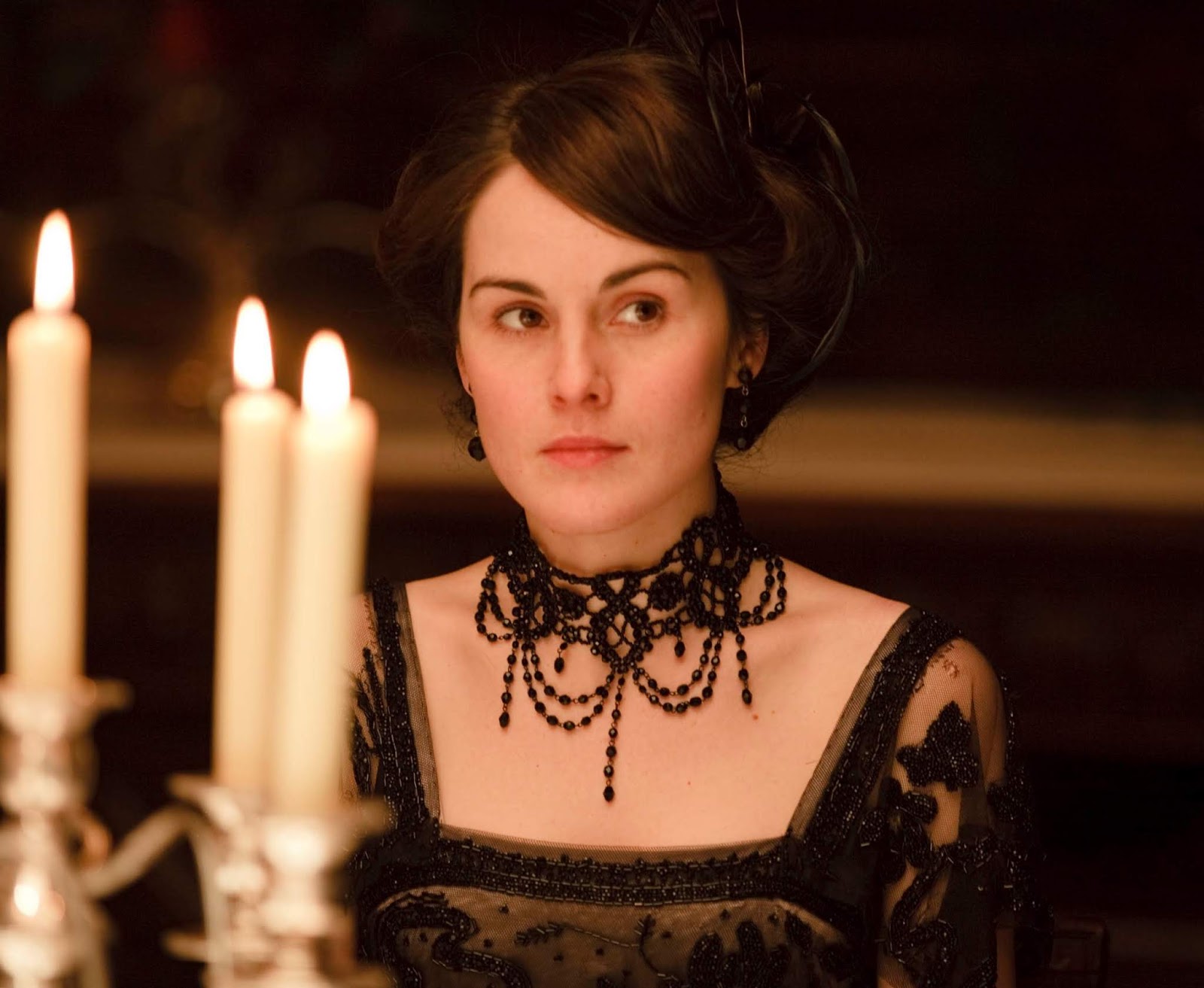
Etiquette demands that a daughter should wear mourning for at least a year, but there is nothing to prevent her, from wearing, such garb for a longer period. –Lady Mary of Downton Abbey in jet jewelry. Jet is a type of lignite, a precursor to coal, and is a gemstone. Jet is not a mineral, but rather a mineraloid. It origin is organic. It is derived from wood that has decayed under extreme pressure.– In the Victorian and Edwardian eras, there was a wide variety of materials used to mimic jet for mourning jewelry. Some was made from genuine jet, onyx, “French jet” (black glass), obsidian, black garnets, black amber, vulcanite, dyed horn or gutta percha.  


The Etiquette Demanded

Mourning: How should a daughter be attired when, after a year of mourning, she attends the ceremony of placing the remains of her deceased mother in a private vault? Should she wear black crepe?

Etiquette demands that a daughter should wear mourning for at least a year, but there is nothing to prevent her, from wearing, such garb for a longer period. On such an occasion as named the daughter should be attired in clothing of subdued colors, and she might wear black crepe if she desired. – San Francisco Call, 1912


Etiquette Enthusiast, Maura J Graber, is the Site Editor for the Etiquipedia© Etiquette Encyclopedia 

Sunday, April 10, 2016

Etiquette, Mourning and Friends

The family friend buys or orders gowns if necessary, sees the dressmaker and arranges fittings. She sends home hats and bonnets to be tried on for approval, and the selection of gloves, veils and even wraps, falls to her lot. 


Loss, Mourning Etiquette and the Valued Family Friend

Strictly defined is the etiquette governing funerals, and only by observing it can one avoid giving offense. For instance, it is customary, as soon as a death occurs, for the immediate relatives and associates to be notified either by telephone, post or telegram. As immediate relatives are too sorrow stricken to attend to such matters, an intimate friend or relative is usually asked to carry out such details, and from that time until the family returns from the cemetery is in charge.

In point of fact, such an office is certainly one of friendship, for not an instant passes but that something is required. All persons who may feel privileged to call to offer sympathy must be met by this efficient individual. She must look after shopping, which, strangely enough to those who have not had death in the family, must be done at once. She buys or orders gowns if necessary, sees the dressmaker and arranges fittings. She sends home hats and bonnets to be tried on for approval, and the selection of gloves, veils and even wraps, falls to her lot. Nor is this all.

If she is wise, she watches the effect of grief upon members of the family, and if necessary calls in a physician before they arrive at the point of breaking down. The writing of notes is part of her duties, and she must be able to tell details concisely, but not brusquely, to persons whom she never saw. Besides all this there is a constant demand upon her sympathies, and she, too, must bear in mind that it is only by not overdoing that she will be helpful; that it will not be of the slightest use for her to wear herself out and to last through the trying time she must eat, sleep and not become exhausted.

On the day of the funeral, the duties of this friend of the family are incessant. As a rule, she has neither time nor strength to arrange the flowers herself and has provided for them by asking other friends to see that they are correctly placed. If the services are held in the home, she has a room made ready for the clergyman in which he may put on his vestments, and either she, or someone else who is helping, must be near the front door to be certain that close relatives are put together in the same room. Whether or not they are with the immediate family depends upon the wish of the latter, but in any event they should be given precedence before friends.

If the funeral is held in the country, so persons are at the house at lunch time or have taken a long journey for the ceremony, it is customary to provide some refreshment after the services. Coffee and sandwiches will be enough, and they should be on the dining room table and ready to serve. That this is done properly, is another duty for the officiating friend to look after. This person, or another, stays at the house after the family has left for the cemetery and puts everything in order. There is always disarrangement of furniture, and it is a tactful and considerate thought to have all in order when the mourners return. —Los Angeles Herald, 1909


Etiquette Enthusiast, Maura J Graber, is that Site Editor for the Etiquipedia© Etiquette Encyclopedia

Monday, February 8, 2016

Etiquette and Mourning Dress

Have we any right to sadden others with our grief? The sight of somber colors, of dull crepe and clinging sable veils is actually painful to many. Perhaps it recalls to them a kindred and terrible experience, perhaps they are merely supersensitlve and easily affected. 

SHALL WE WEAR MOURNING? 

TIME was when such a question would have been simply preposterous. That was the age when widows went into deepest mourning. Black crepe and all, for the rest of their natural lives, or until they married again; when mothers wore black even for little babies that had not lived an hour; when third cousins and almost-fiancés and intimate friends were all subjects for mourning. But, no doubt about it, public opinion has changed. 

Thirty years ago you would have shocked a conventional world by suggesting all-white for deep mourning; now it is almost as common as all-black. Thirty years ago, even those who looked forward to some day terminating their mourning never expected to do so under three or four years at the very least. Now there is much confusion in the matter that from a question of etiquette it has become a question of taste. And that is all it ever really can be. 

You certainly are in no way affecting the dead by wearing black for them; if it were possible thus to show your sorrow to their eyes, there is not one of us who would not wear, on the heart at least, that badge of unforgotten grief. But the dead sleep and cannot dream. You are left, then, with two sides to the situation. Those who wear mourning reasonably — I mean those with whom it is not a mere matter of unthinking convention— say that it is to them a means of withdrawal from pleasures and excitements they could not bear. It puts up a screen between them and the world— a screen that says, "Respect my affliction and leave me for a little time alone." And that is the only good argument for mourning. 

Yet even for these there is another side to the question, and it is this: Have we any right to sadden others with our grief? The sight of somber colors, of dull crepe and clinging sable veils is actually painful to many. Perhaps it recalls to them a kindred and terrible experience, perhaps they are merely supersensitlve and easily affected. Then there are the children; have you ever watched the pathetic solemnity creep over a child's face when he is being made to live in the midst of blackness? 

Sully-Prudlhomme, the French poet, lost his father at an early age. and he tells how the mourning his mother wore and put upon him "sank from the clothing to the heart." Have you a right to subject a child to your sorrow? There are those, too, who even while in mourning cannot endure shutting themselves entirely out from life. How often I have known women to ask if it was proper to go to a wedding in deep mourning! And always, if it was I that was asked, I have answered, "You have no right to intrude your grief on the bride's joy. Unless you can lay aside your mourning, stay away." 

As for those who wear mourning simply because every one else does, they deserve no reverence, and hardly respect. "I am simply crazy to get into colors, and to go around again." said a young widow to me recently. In one year she had lost her father, her sister and her husband. If, after all this, she still felt like "getting into colors and going around again," why in the name of good sense, was she wearing mourning at all?  

At any rate, whatever your position on the subject, one thing you should make your most anxious care. You should never too lightly condemn the man or woman who, after a death in the family, makes no change in garments or in mode of living. How do you know, because a woman wears green and blue and brown, and because she goes to concerts and the theater and to club meetings, that her heart is not heavy and sore? Often, it is this woman who carries with her the heaviest burden, and carries it the longest. "Judge not, that ye be not judged!" —San Francisco Call, 1910


🍽Etiquette Enthusiast, Maura J. Graber, is the Site Editor for the Etiquipedia© Etiquette Encyclopedia

Sunday, October 11, 2015

Mourning Etiquette

Downton Abbey's Dowager Countess in early 20th C. period mourning attire.

Death comes to all alike and custom has long established a conventional observance in dealing with the presence of death, in our own homes or elsewhere. In our own country black is worn as the typical attire of sorrow, and it has come to be regarded as a token of respect to the lost one. It is now decreed that crape shall only be worn six months, even for the nearest relative, and that the duration of mourning shall not exceed a year. A wife’s mourning for her husband is the most conventionally deep mourning allowed. Bombazine and crape, a widow’s cap, and a long, thick veil—such is the modern English idea. Some widows even have the cap made of black crêpe lisse, but it is generally of white. 

In this country a widow’s first mourning dresses are covered almost entirely with crape. There are now, however, other and pleasanter fabrics which also bear the dead black, lustreless look which is alone considered respectful to the dead, and which are not so costly as crape or so disagreeable to wear. The Henrietta cloth and imperial serges are chosen for heavy winter dresses, while for those of less weight are tamise cloth, Bayonnaise, grenadine, nuns’ veiling, and the American silk.

Mourning is expensive, and often costs a family more than they can well afford; but it is a sacrifice that all gladly make. Many consider it an act of disrespect to the memory of the dead if the living are not clad in gloomy black.

Widows wear deep mourning, consisting of woolen stuffs and crape, for about two years, and sometimes by choice for life. Children wear the same for parents for one year, and then lighten it with black silk, trimmed with crape. Half mourning gradations of gray, purple, or lilac have been abandoned, and, instead, combinations of black and white are used. Complimentary mourning is black silk without crape. 

The French have three grades of mourning—deep, ordinary, and half mourning. In deep mourning, woolen cloths only are worn; in ordinary mourning, silk and woolen; in half mourning, gray and violet. In France, etiquette prescribes mourning for a husband—six months of deep mourning, six of ordinary, and six weeks of half mourning. For a wife, a father, or a mother, six months—three deep and three half mourning; for a grandparent, two months and a half of slight mourning; for a brother or a sister, two months, one of which is in deep mourning; for an uncle or an aunt, three weeks of ordinary black. Here, ladies have been known to go into deepest mourning for their own relatives or those of their husbands, or for people, perhaps, whom they have never seen, and have remained for seven or ten years, constantly in black; then, on losing a child or a relative dearly loved, they have no extremity of dress left to express the real grief. Complimentary mourning should be limited to two or three weeks.

                                                               
Lady Mary of Downton Abbey in jet jewelry – In the Victorian era, there was a wide variety of materials used to mimic Whitby Jet for mourning jewelry. Some was made from genuine jet, onyx, French jet (black glass), obsidian, black garnets, black amber, vulcanite, dyed horn or gutta percha. – Source "cleopatra*s_boudoir"            

For light mourning, jet is used on silk, and makes a handsome dress.

Elegant dresses are made with jet embroidery on soft French crape, but lace is never “mourning.” During half mourning, however, black lace may be worn on white silk; but this is questionable. Diamond ornaments set in black enamel are allowed even in the deepest mourning, and also pearls set in black. Gold is never worn in mourning.

The Swedish kid glove is now much more in use for mourning, and the silk glove is made with such neatness and with such a number of buttons that it is equally stylish, and much cooler and more agreeable. Mourning bonnets are worn rather larger than ordinary bonnets.

People of sense, of course, manage to dress without going to extremities in either direction. Exaggeration is to be deprecated in mourning as in everything. The discarding of mourning should be effected by slow stages. It shocks persons of good taste to see a widow change into colors hurriedly. If black is to be dispensed with, let its retirement be slowly and gracefully marked by quiet costumes, as the grief, yielding to time, is giving way to resignation and cheerfulness.

A woman may wear mourning all her life if she choose, but it is a question whether in so doing she does not injure the welfare and happiness of the living.
 –From How to Behave and How to Amuse by G. H. Sandison, 1895


🍽Etiquette Enthusiast, Maura J. Graber, is the Site Editor for the Etiquipedia© Etiquette Encyclopedia