Showing posts with label Tipping Etiquette. Show all posts

Friday, March 26, 2021

Restaurant Savoir Faire — 10 Tips


Restaurant dining is a two-way street. We customers always expect everything to be right every time we dine out. But there are lots of little things we can do to help the restaurant make it the most enjoyable experience it can be. I know this, as years ago I was a restaurant manager, many years back when I was in college. I put together a list of 10 tips that can smooth out the experience and, at the same time, take into consideration the restaurant's position as well.


1. If you prefer to dine without the presence of small children, dine out later in the evening. Families tend to eat out earlier, so they can get kids bathed and ready for bed on schedule. If you are really serious about this issue, call the restaurant well ahead of time. Politely explain you don't care for the company of small children while you dine, and ask if the manager can please help you.

2. Tip #1 one also works well for food allergies and dietary restrictions, as well as any other special needs. The management usually will do their best to accommodate you. Going to extra trouble for you, ensures a certain customer trust and loyalty while eliminating any surprises later on.

Years ago, when my stepson was in a wheelchair and my son in a highchair, I called ahead to the restaurant at which a surprise family birthday dinner had been planned. They said they did not take reservations and I said that I understood, but would they please keep in mind we would be arriving about 7:00 p.m.? The manager said he would do what he could, but could not promise us anything, as Saturday was their busiest evening. 

I was thrilled when we arrived to find a table waiting for us at 7:00, even though they were running a half-hour wait. It wasn’t in a very scenic part of the restaurant and was quite noisy, next to the kitchen, but they had prepared for a large group party that needed special accommodations, as I had alerted them earlier in the week. We were very pleased and let our friends with kids know!

3. Be on time for reservations. If you will be more than 15 minutes late, call and let the host or hostess know. Even when reservations are not involved, as in the case with Tip #2, if we hadn't been there at 7:00 p.m. as I had said we would, I don't know if they would have held that table for us. A good restaurant manager likes to know if there are going to be any surprises. Especially on a Saturday night.

4. Remember you are “sharing” the place with everyone else dining there, so you are “sharing” the staff as well. The waiter or waitress is not your personal servant and should be treated with respect. Although there are poor examples to be found in every profession, on the whole, any group whose main source of income is derived from tips (as is the case here in the United States) and the generosity of those they serve, tends to care about how they perform their jobs.
As a grandmother and an etiquette teacher, I enjoy eating with small children. But it’s not everyone’s cup of tea... — If you prefer to dine without the presence of small children, dine out later in the evening. Families tend to eat out earlier, so they can get kids bathed and ready for bed on schedule. 

5. If you have a problem with your waiter, waitress or food, do not announce angrily, “I want to see the manager immediately!” Politely, ask the host or hostess if the manager is available, and say you would like to speak with him or her. Managers of chain restaurants, as well as privately owned establishments, are usually given authority to pick up tabs for diners who are having problems with the service or food. They are much more sympathetic to a polite patron than to a rude patron. They ultimately decide whether or not they wish you to return for another visit, based on your behavior.

6. Read the fine print on the menu. It will let you know ahead of time if you will be charged for splitting an order, substitutions, requiring separate checks, or any other special requests you want to make.

7. Most restaurants automatically add a gratuity tip to the check for a large groups. In some places “large” can mean over 6 people, and at others, it means over 15.

8. Try to be attentive when the server introduces himself or herself and lists nightly specials, etc... at your table. If you cannot remember his or her name, “Sir,” “Miss” and “Ma’am” are preferred to “Hey! You!” “Waiter” and “Waitress” are also acceptable.

9. The polite tip is 15% to 20% of the check, or tab. The cost of wine is not supposed to be included when figuring your percentage to tip on; however, I always include it as a rule if the server has been helpful in selecting the wine and quick to refill our glasses. Keep in mind, your server most likely gives a portion of his or her tips to the busboy and bartender.

10. Dine without a lot of showing us and fanfare. Don’t order for everyone else and don’t fight over the check, either. If you want to make sure you are paying for the meal, excuse yourself to the powder room or other area and discreetly talk with the host or manager instead. 

Dining out should be a fun experience for everyone in attendance, not a private stage show or an opportunity for someone to show just how much savoir faire he or she has. Don’t confuse arrogance with class. Just put your best foot forward and keep it out of your mouth. By the way, that's where the food goes.— Maura J. Graber


Contributor, and Site Editor, Maura Graber has been teaching etiquette to children, teens and adults, and training new etiquette instructors, since 1990, as founder and director of The RSVP Institute of Etiquette. She is also a writer, has been featured in countless newspapers, magazines and television shows and was an on-air contributor to PBS in Southern California for 15 years


Etiquette Enthusiast, Maura J. Graber, is the Site Editor for the Etiquipedia© Etiquette Encyclopedia

Tuesday, August 18, 2020

Tipping Etiquette for Deliveries

Current Appropriate Tip
Amounts for Deliveries

Delivery App
During the COVID-19 pandemic, while many of us are homebound to some degree, there are many others who are providing services to make our stay at home more convenient and comfortable.

They deliver food from our favorite restaurants, groceries, and prescription medications.  And many of us agree that these delivery people are putting themselves in potential harm’s way.

For this reason, we are noticing a shift in the tip amounts given.  As many other rules and practices are in suspension during this health crisis, there seems to be a consensus that tipping rules are being amended.

Today’s Tipping Amounts

The standard tip for a delivery person has typically been in the 10% to 20% range, depending on the service.  However, several people I have informally surveyed testify giving delivery people 25% during the pandemic.

Even if a tip has been included with the bill, some people prefer to leave a cash tip of a few dollars, which has been placed in an envelope or sealed baggie to give the delivery person a safer way to be thanked.  This helps to ensure the delivery person receives the entire tip, which is not always a guarantee depending on the delivery service you use.  It is also important to remember that the service fee or delivery fee itemized on your bill is not the tip. 

Curbside pick-up is also a popular trend for restaurants.  But even with social distancing guidelines in place, pick-ups still bring people in closer proximity to one another.  This brings tipping back into conscious consideration.  Many of the people in my informal survey report leaving a 15% to 25% on their bill or in the still-present cash tip jar when they pick up food rather than the standard 10%. 

Some people I interviewed have mentioned that the delivery person’s service and attitude is still a consideration when determining a tip amount.  Pleasant communication and tone, a warm greeting, and good eye contact have a positive impact on the person purchasing.  Yes, attitude matters, even when the buyer is hoping he is “paying it forward.”

Touchless Delivery

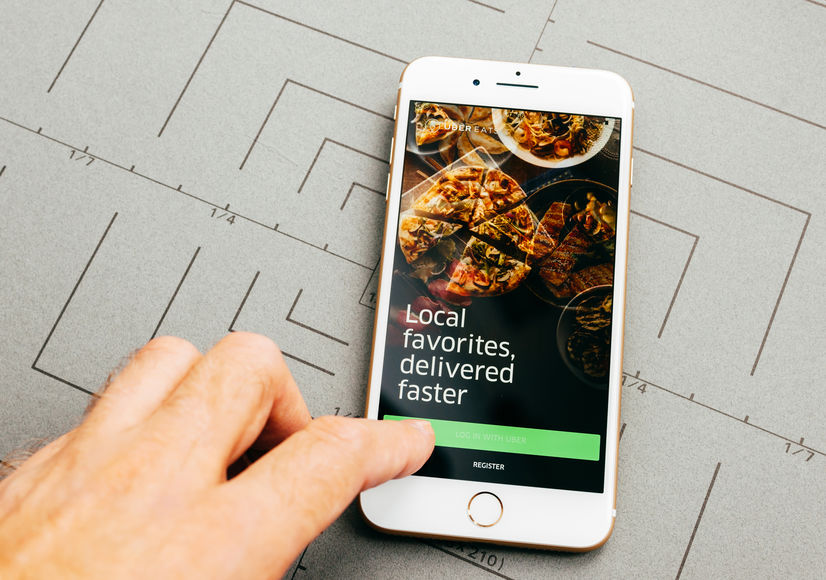
Phone apps have provided numerous delivery methods for food and other items.  Almost all of them encourage “touchless” delivery, providing instruction options such as “leave at front door” or “leave on porch.”   These options ensure that you make no personal contact with your delivery person.

Some who use these technologies report they don’t necessarily feel as connected to the helping hand idea mentioned above, and that they are mostly interested in the getting the food or items they ordered as cleanly and quickly as possible. 

However, even though separated by technology and “touchless” delivery, remember that another human is providing a service that allows you to stay in the safety of your home.

Going Forward

Many of us are showing our loyalty to favorite restaurants and local establishments.  When this pandemic is over, we want them to still be there and able to return to business as usual.  There is a sense that we play a part in serving the common good when we order from them.

Only time will tell as we fall out of these economically and socially challenged times.  But for sure, once we get more into “life as it was” mode, restaurants will have much catching up to do.  I am surmising that standard tips will rise from 18% to 20%.       

Ultimately, the amount of your tip is entirely up to you.  With appreciation, kindness, and respect as your anchors, putting yourself into the shoes of someone else will help in choosing to be the best version of yourself, regardless of the situation. 

And, a generous tip may just be what it takes to make someone else’s day a little better.  After all, much is being accomplished in making your life easier and safer these days.


Contributor, Candace Smith is a retired, national award-winning secondary school educator, Candace Smith teaches university students and professionals the soft skills of etiquette and protocol. She found these skills necessary in her own life after her husband received international recognition in 2002. Plunged into a new “normal” of travel and formal social gatherings with global leaders, she discovered how uncomfortable she was in many important social situations. After extensive training in etiquette and protocol, Candace realized a markedly increased confidence level in meeting and greeting and dining skills and was inspired to share these skills that will help others gain comfort and confidence in dining and networking situations. Learn more at http://www.candacesmithetiquette.com/


Etiquette Enthusiast, Maura J Graber, is the Site Editor for the Etiquipedia© Etiquette Encyclopedia

Saturday, July 18, 2020

Retro Tipping Etiquette from 1963

I don’t think that good or bad service can he measured in percentage points. The actual word ‘tip’ (which is not found in the dictionary, per se) means ‘to insure promptness.’ If this is the case then it should actually he given prior to ordering. 


To Insure Promptness...

“It has been asked of me on several occasions, ‘What about tipping? How much? To whom? etc...’ This is one area in which I do not allow myself to be influenced by any rule book on etiquette. I think a tip is a very personal thing, and should be entirely up to the individual. I don’t think that good or bad service can be measured in percentage points. The actual word ‘tip’ (which is not found in the dictionary, per se) means ‘to insure promptness.’ If this is the case, then it should actually be given prior to ordering. 

It always gives me a great deal of satisfaction to leave a good tip, but I leave one based entirely upon service rendered. What ever your conviction is on this matter, I think that it depends completely upon your own feelings. But one thing I would like to point out, if the service is good, and you are pleased with your dining experience, then the tip should be a good one. Remember, a waiter depends on this income as part of his wages, and for the most part, they are a great bunch of fellows.” —By Al Morgan, “Morgan on the Move,” 1963


Etiquette Enthusiast, Maura J Graber, is the Site Editor for the Etiquipedia© Etiquette Encyclopedia

Thursday, August 29, 2019

Etiquette and Tipping Servants

There are a few of the old nobility of England who set a laudable etiquette example by prohibiting their servants accepting gratuities from visitors or guests. –Victor Cavendish, the 9th Duke of Devonshire -photo public domain


Duke of Devonshire Prohibits Tipping of Servants, but Americans Find a Way to Get Around His Rule

There are a few of the old nobility of England who set a laudable example by prohibiting their servants accepting gratuities from visitors or guests. The Duke of Devonshire, for instance, makes it an inflexible rule that no servant of his shall take a “tip.” When, however, a party of Americans visited Chatsworth, the Duke’s Derbyshire seat, a few days ago and were entertained at luncheon and shown over the beautiful grounds by the Duke’s steward, the leaders of the party thought the usual “shell out” must be the climax of the day’s enjoyment.

The party consisted of four men and three women and among them $35 was subscribed. With commendable discretion, the money was not offered to the steward, who, of course, is above accepting recognition of the kind, but to an underfootman, who saw the party to and from the railway station. But the footman pointed out that it was against the rules of the Duke’s establishment to accept gratuities “in money.” That seemed to suggest a way of getting around the rule. 

The next day various articles of jewelry reached the steward from London with the request that they be distributed among the staff at his discretion. The leaders of the party were Edmund H. Abbot of New York and Alexander Cattanach of Salem, Massachusetts, and both had introductions from Sir Thomas Lipton. The Duke and Duchess were not in residence at Chatsworth at the time of the visit, but the latter sent one of her maids specially up from London to look after the ladies. The beauties of Matlock, Buxton and Bakewell were fully explored before they returned to town. – Los Angeles Herald, 1905

Etiquette Enthusiast, Maura J Graber, is the Site Editor for the Etiquipedia© Etiquette Encyclopedia

Sunday, July 8, 2018

Manners and Mistaken Identities

Evidently, Lady Violet was not the first person to make this mistake! 


“Celebrities” Graciously Accepting Tips

Visitors at an English country house are allowed to do whatever they like during the forenoon. An eminent geologist, who was entertained at one of these houses, asked for coffee early one morning and started out with a suit of old clothes and a bag of tools to make a special study of the rock ledges of the estate. During the forenoon, one of the country gentry came upon him by the roadside, and supposing him to be a workman entered into conversation with him. The geologist was seated on a ledge of rock and was making vigorous use of mallet and chisel.

The stranger talked with him in a patronizing way, and, while not receiving an intelligible account of the work on which he was engaged, was impressed with the supposed workman's intelligence and good manners. Indeed, he fumbled in his pocket and brought out a half crown, which he tossed to the man with the mallet. The geologist seemed surprised, but picked it up and put it in his pocket after thanking the gentleman. There was a dinner party at the country house in the evening and the same gentleman was introduced to the eminent geologist, who at once began to laugh. “I have the half crown,” he said at once, “and I shall not give it up. It is the first tip I ever received, and I shall show it to my friends as a trophy of superior intelligence.” 


Lord James once had a similar experience. He was strolling through the Temple Gardens in London when a party of tourists encountered him and asked to be directed to some of the most interesting places. He volunteered to show them about, and took them first to the Temple Church and Goldsmith's Grave, and finally to the famous Elizabethan Hall of the Middle Temple. His explanations were lucid and interesting, and when he parted from his new acquaintances, one of them gave him a schilling, and remarked that few guides were equally intelligent. The nobleman took the shilling demurely and thanked the stranger. He is said to have kept it to this day, and to have frequently told the story of his experience with the innocent tourists in the Temple Gardens. 

Another story is related of an English Duke who was standing at the door of his house when a carriage rolled up. A near-sighted gentleman alighted, asked if it was the Duke's residence, and on receiving a respectful nod from the supposed servant, gave him a shilling. The Duke, perceiving that he had been mistaken for a footman, kept the shilling, raised his hand to his forehead and made the usual salute. The near-sighted gentleman went into the house, and in due time was presented to the Duke, and never had a suspicion that he had tipped one of the highest members of the British aristocracy at his own door. The Duke could hardly have offered a more striking proof that he was a gentleman by instinct, as well as by birth, than by pocketing the unintentional affront to his dignity. – San Francisco Call, 1898


Etiquette Enthusiast, Maura J. Graber, is the Site Editor for the Etiquipedia© Etiquette Encyclopedia