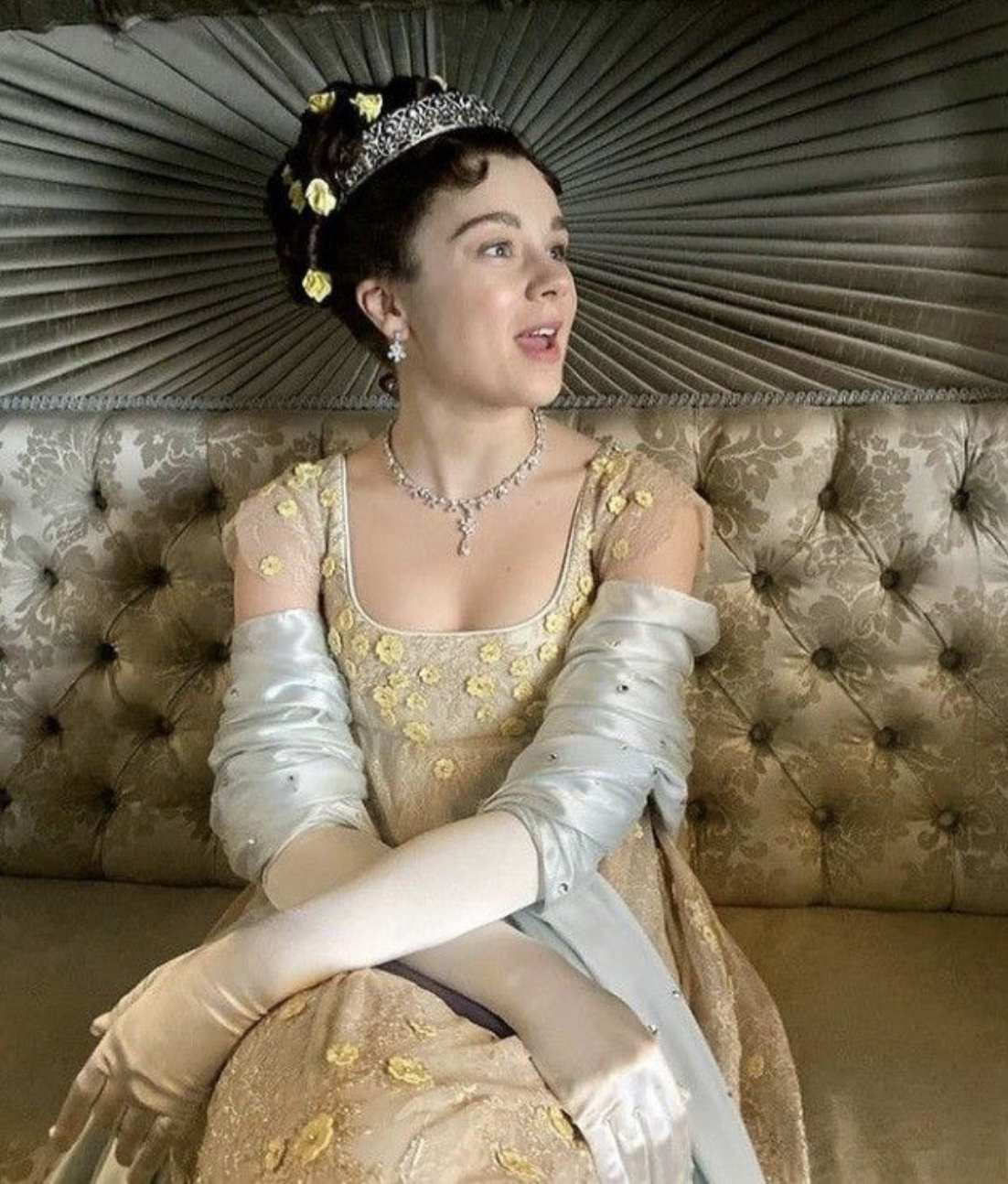
Showing posts with label Gilded Age Fancies. Show all posts

Friday, April 19, 2024

Gilded Age Novelties

The Standard Designer illustrates some of the newest favors and gives directions for making not a few inexpensive but effective ones. 

Newest Cotillon Favors, 
Including “Queen Victoria” crowns…

The custom of giving cotillon favors during the dance comes from Germany, and the favors which come from there are very well made, though perhaps not as effective as those which are made here. 

In Paris beautiful favors are made also, but when imported here become very expensive. It is, however, no longer considered good form to give too expensive favors, and marvelously pretty articles can be made with small outlay.

The Standard Designer illustrates some of the newest favors and gives directions for making not a few inexpensive but effective ones.

To begin with, the banjo is one of the latest. It is made of cardboard and is entirely covered with tissue paper wound around and around. The strings of the banjo are made of gilt tinsel, such as is used on Christmas trees, and around the head are fastened roses made of crape or tissue paper to correspond in color. 

Satin ribbons are tied on the handle so that the favor can be worn slung over the shoulder. Some have bells instead of roses. Toy banjos can be bought and covered, and so save the expense of making them oneself.

Queen Victoria crowns are very new favors, and 100 of them have just been ordered for a cotillon to be given in New York. They are miniature crowns, made of fine wire, covered entirely with tiny pink roses and surmounted by a small gilt ball.

Large palm leaf fans may be transformed into lovely cotillon favors by pasting all over them closely on both sides small paper roses, violets, orchids or any other flower.

The cheapest cotillon favor which can be given is an ordinary tin fish horn. This is simply tied with a bow of ribbon. French horns are also much used as favors. They are generally of wood and are either gilded or silvered and tied also with ribbons. A pretty favor is the scented work bag made of satin brocade or other silken material.

Favors for men should be small. Rosettes of ribbon, different colors, to wear in the buttonhole, crape paper flowers for boutonnieres, cravat holders in silver, pen wipers, Japanese trifles of all kinds, including stamp boxes, account books, canes which pull out, forming candy boxes in the crook handle, and small lyres which are gilded and tied with ribbon. 

Only a very few of these articles can be made, but all can be bought at very little outlay. At all the large dances the favors are placed on a table and given out by one or more of the patronesses. Sometimes the leader of the cotillon takes them around from one couple to the other, as it comes their turn to dance, or else they go to the table and receive them from the patroness. -Ruth Ashmore in Ladies' Home Journal, 1897


🍽Etiquette Enthusiast, Maura J. Graber, is the Site Editor for the Etiquipedia© Etiquette Encyclopedia

Thursday, February 9, 2023

Gilded Age Resort Sojourn Fashions

“Every watering place demands a different set of dresses. Richfield and Sharon demand cool, fresh ‘cottons,’ as our English friends call them. Saratoga demands everything, from the elaborate Valenciennes, Maltese or Breton, with India mull and ribbons, up to the magnificent gauze with satin and brocade. Newport demands thick silks and wraps, and carriage dresses, dinner dresses and evening ball dresses, morning dresses of every shade…” American or European Dress from 1888 – Public domain image from the Metropolitan Museum

Pity the Slaves to Fashion

Mrs. Sherwood, who is usually authority on clothes and manners, says in her latest letter, after speaking of the large outfits ladies must prepare for summer resort sojourns:
“Every watering place demands a different set of dresses. Richfield and Sharon demand cool, fresh ‘cottons,’ as our English friends call them. Saratoga demands everything, from the elaborate Valenciennes, Maltese or Breton, with India mull and ribbons, up to the magnificent gauze with satin and brocade. Newport demands thick silks and wraps, and carriage dresses, dinner dresses and evening ball dresses, morning dresses of every shade and of thickness, batiste, momie cloth, camel's hair, cashmere and barège, the tussore silks, the endless varieties of foulards (and could one see the ladies driving in the park of an afternoon they could see foulards of such an alarming and splashed pattern that they would fear that the well-dressed creatures had been under a shower of whitewash), all these are needed in the most variable of summer climates. 
“Mount Desert demands another set of garments. The percales, the cambrics, the woolens, the heavy ulster, the light cloak, the flannel, the yachting suits. Then come the bonnets. We must have one good one for church and several poor ones for every day; we must have a hat with yellow plumes and one crowned with poppies. These for the every-day, one for horse watering-places. But we must have an ‘edition deluxe’ for Newport, and two dozen of each for Saratoga. Then a good brown straw for traveling and a black bat for rainy days. And having got all these, how many boxes will it take to hold them?” –San Jose Herald, 1888


🍽Etiquette Enthusiast, Maura J. Graber, is the Site Editor for the Etiquipedia© Etiquette Encyclopedia

Saturday, July 2, 2022

Gilded Age Fads… the Ring Toss Game

The childish game of tossing rings of different sizes over a small upright pole has been transferred to the drawing room, and ever since the advent of warm weather, these ring-toss parties have been given…
–Image source, Pinterest


The hostess of the moment seems to care only for an opportunity to bestow favors at her entertainments, searching constantly for new excuses to give prizes. The childish game of tossing rings of different sizes over a small upright pole has been transferred to the drawing room, and ever since the advent of warm weather, these ring-toss parties have been given. A jewel casket of silver for the Queen prize and a diamond scarf-pin for the King prize were the favors at a recent one.– “Her Point of View” in the New York Times, June 1892


💍Etiquette Enthusiast, Maura J. Graber, is the Site Editor for the Etiquipedia© Etiquette Encyclopedia

Saturday, April 30, 2022

Gilded Age Excess and Etiquette

Cutting up a $2,100 cake at a birthday party attended by several score of young men and fair girls just entering society has hardly created more than a ripple in New York society, so common are the extravagant whims of millionaires. Yet such a cake was one of the features of the recent birthday given by Mrs. Alva Vanderbilt on the occasion of the social debut of her daughter, Consuelo.


A Vanderbilt Cake
Cut at Miss Consuelo Vandebilt's Birthday Party
💍💍💍💍
Valuable Diamond Rings Inside
The Brilliant Prizes Went to the Lady and Gentleman who Drew the Slices Containing Them

Cutting up a $2,100 cake at a birthday party attended by several score of young men and fair girls just entering society has hardly created more than a ripple in New York society, so common are the extravagant whims of millionaires. Yet such a cake was one of the features of the recent birthday given by Mrs. Alva Vanderbilt on the occasion of the social debut of her daughter, Consuelo.

Strictly speaking, the cake did not cost $2,100. It cost $100, and that is a pretty good price for a cake, even if it was three feet in diameter and was carried by two men with difficulty. The value of $2,100 was due to the presence beneath its frosted and beautifully ornamented crust of two diamond rings, one for the fortunate young lady whose pearly teeth found it nestling in the depths of the wedge which was cut off with a silver knife for her delectation, the other for some equally fortunate young man.

The rings cost $1,000 each. Both were clusters and were especially designed. An inscription was engraved upon the inner surface of the golden bands. The cake was not in itself an especially ornate affair. The baking company which furnished it has made many others and cakes more costly. This cake was 36 inches in diameter and 14 inches in height. It was made of layers of poundcake and marmalade, the whole saturated with French cordials. The surface decorations were of roses in sugar, and the sides of the cake were further decorated by delicate sugar tracery. A dividing line in red was drawn across the snowy surface of the cake.

In one of the halves thus made a tiny blue silk flag bore the letter “G.” In the other field an orange banner displayed the letter “L.” Within these sections were hidden the rings destined for the lucky lady and gentleman. At the close of the elaborate collation, over which the proud mother of the young debutante presided, Miss Consuelo in person undertook the task of cutting up the cake. There was as near an approach to a scramble as good breeding would permit. The cake had been less than half distributed before the prizes had been discovered, and the rest of the guests accepted their pieces as a polite duty. 

In the meanwhile, a cake containing two rings valued at $100 each was being cut in the servants’ hall. “There was nothing remarkable about this prize cake,” said Manager Jansen, of the company which furnished it, “except that the value of the rings given was greater than usual.” The custom of secreting valuable jewels in cakes made for birthday parties and cotillions is common among society people of wealth, and an order for something of this nature is received every day or two. I do not recall an instance of rings being used as valuable as these, but a list of the names of parties who have expended from $200 to $500 in this line would be quite long and embrace most of the names made familiar in society news columns. 

“At a wedding celebrated last October, a bride’s cake contained a handsome solitaire diamond for each of the bridesmaids. If asked to say off-hand how many orders of this kind we have filled in a single year, I would say more than a hundred. On last St. Valentine's Day we put on the market a fancy heart-shaped cake, elaborately ornamented and satin incased, which cost $3 each. In no less than fifty instances, the parties who ordered them – men of course– brought valuable rings to be placed in them.” –Hanford Journal, April 23, 1895


Etiquette Enthusiast, Maura J. Graber, is the Site Editor for the Etiquipedia© Etiquette Encyclopedia

Sunday, November 21, 2021

Gilded Age Fads for Dining, Etc…

A step further than the ices in natural fruit skins, is to hang them from a small tree, which is placed on the table where the course is served and afterward carried about to each guest, who plucks the fruit from its supporting branch.
- Photo source, Pinterest

A few fashionable notes on entertaining and being entertained in May of 1892…

Following the tall goblets of a few years ago succeeded the flat tumblers of recent date. These are in turn supplanted by a medium goblet, with not more than an inch of stem and bowl, which flares slightly at the rim.

A step further than the ices in natural fruit skins, is to hang them from a small tree, which is placed on the table where the course is served and afterward carried about to each guest, who plucks the fruit from its supporting branch.

Some of the florists are showing little sedan chairs of various sizes, which, flower-trimmed and with flowers piling the doorway, are used in decorating apartments and dinner tables.

Pink poppies and cultivated oats are announced to be the favorite London table decoration this season.

Card cases are now made to match gowns, and May shoppers get confused over heliotrope as a shade in stuffs and ribbons. The hue is a deep lilac rather than the purple shade of the flower itself. – New York Times, 1892


Etiquette Enthusiast, Maura J Graber, is the Site Editor for the Etiquipedia© Etiquette Encyclopedia

Tuesday, August 24, 2021

1893’s Etiquette Fads and Fashions

One popular girl, or popular family, can cause a raging fashion for an entire season and beyond. – Eloise Bridgerton in opera gloves.– Photo source, Pinterest

It is a caprice of the moment with a certain set of girls who strive for fads and eccentricities to omit all punctuation marks in their letters. Probably some one who couldn’t put them in, started the fashion. Just as a girl at the operá a few years ago, found that a sore finger throbbed and ached desperately if her hand lay on her lap, and was much relieved when she held it upright. So she sat all the evening in a conspicuous box, with one slender gloved-hand touching her cheek – with the result of making the attitude a marked and raging fashion that entire season.


It is a suggestion to slip a salted almond into the vacuum left by a date or French prune stone and try the surprise.

English tennis cakes are offered at the house tennis parties of the season. They are a good sized loaf cake, tasting like a pound cake, with a little fruit. A New-York caterer introduced them and still monopolizes the custom in them.

Up to a year or so ago, doilies were used in moderation for finger bowls and occasional small dishes. Then they suddenly became fashionable for nearly every separate bit of china. The table was dotted with them until it looked like the counter of a linen store. They were used to set the cup upon in one’s saucer– certainly the silliest and the furthest from neat of all napery whims. Now the reaction has set in. It is no longer form to employ doilies, save in the occasional manner of a twelvemonth.

A late Parisian novelty– Bats in diamonds are bizarre enough to attract the attention of those seeking after new and strange effects. Old jewels can be reset and rearranged in these bats, which are described as setting off to striking advantage a ball costume.

Linen collars and cuffs are again in high favor, but worn with a difference. The cuffs are no longer a mere strip of white below the sleeve, but protrude for an inch or two, like a man's wristbands. This would seem another saucy attempt to seize upon the masculine belongings. –“Her Point of View”, NYT, 1893


Etiquette Enthusiast, Maura J. Graber, is the Site Editor for the Etiquipedia© Etiquette Encyclopedia

Saturday, June 19, 2021

A Literary Gilded Age Fad


Each guest was asked to indicate about her toilet in some way, the title of one of the bard’s plays. One woman wore on her corsage, two small pictures, each of a man, and beneath a bit of ribbon with a large a surmounted with the letters “V.E.R.” to be translated “Two Gentleman of Verona.”


A Shakespeare Luncheon is something of a novelty. At one recently, on the menu cards each dish was appropriately garnished with a quotation from the “immortal William,” and the favors were pretty sketches, executed by the young hostess, of various well-known views about Stratford-on-Avon.

In addition, each guest was asked to indicate about her toilet in some way, the title of one of the bard’s plays. One woman wore on her corsage, two small pictures, each of a man, and beneath a bit of ribbon with a large a surmounted with the letters “V.E.R.” to be translated “Two Gentleman of Verona.” Another, quickly guessed, had a full page periodical illustration of a tempest neatly fitted as a girdle across the front of her waist and belt. 

A third guest created much merriment with a little pen and ink sketch, which was attached to a chatelaine. It represented a dog and cat enjoying a meal of bones with great satisfaction. Beneath pussy was the legend “This is Julia,” which was all the clue the wearer would give. A clever girl finally shouted, “Romeo and Julia eat” and the mystery was solved.- NYTimes, 1892


Etiquette Enthusiast, Maura J Graber, is the Site Editor for the Etiquipedia© Etiquette Encyclopedia

Monday, December 21, 2020

New Fashions Gilded Age Tableware

Other novelties mentioned are flower cups for individual salt-cellars. Liquor sets are prominent either in Russian enamel or repoussé work. The decanters are very low bodied. The glasses are set in perforated silver, enameled or raised. Coalport after dinner and tea sets decorated in representation of jewels such as turquoise and pearls on backgrounds of pale blue, pale pink, gold and ivory are among the many attractive things.— Above, an antique Coalport cup in a sterling silver holder graced with cherubs, atop its saucer.
— Photo source Etiquipedia private library


New for 1892

A bonbon dish of cut glass, with a sterling silver handle. The brightly chased silver beautifully enhances the brilliant stars and roses that form the cutting.


Among charming fashionable wares now to be seen is that combining cut glass with silver mountings in the accompanying illustration from Jewelers’ Circular is shown a bonbon dish of cut glass, with a sterling silver handle. The brightly chased silver beautifully enhances the brilliant stars and roses that form the cutting. Beautiful clear crystal vases are shaped like the cornucopias of a Christmas tree and wreathed with silver flowers which terminate in a standard. 

Other novelties mentioned are flower cups for individual salt-cellars. Liquor sets are prominent either in Russian enamel or repoussé work. The decanters are very low bodied. The glasses are set in perforated silver, enameled or raised. Coalport after dinner and tea sets decorated in representation of jewels such as turquoise and pearls on backgrounds of pale blue, pale pink, gold and ivory are among the many attractive things. 

Dresden handles are applied to gilt knives and spoons of every sort, and are among the things regarded as desirable by every woman who takes an interest in her table. The rival of Dresden china handles is Russian enamel. Silver vegetable dishes and their platters and salvers generally have plain surfaces, excepting the edges, that are in high rich raised work. The covers of vegetable dishes have on their highest curve a narrow band of this raised work. — Red Bluff Daily, 1892


Etiquette Enthusiast, Maura J. Graber, is the Site Editor for the Etiquipedia© Etiquette Encyclopedia

Thursday, December 17, 2020

Brits Copy American Customs, Wares

An 1892 American patented tea pot — “ American practices and precedents are freely quoted and adopted in English society. American ideas are copied without stint, and American wares, novelties, and inventions are generally advertised by London tradesmen.” 


Anglo-American Imitation

It is time that the truth should be understood in this matter of Anglo-American imitation. The opinion prevails that it is wholly one-sided, which most emphatically is not the case. The American leaven works in England about as strongly as the English notions obtain this side the water.

It is not a concession to American good sense and example that the English young woman of the best families now often walk the streets unattended by footmen! Such a thing a few years ago would have been impossible. American practices and precedents are freely quoted and adopted in English society. American ideas are copied without stint, and American wares, novelties, and inventions are generally advertised by London tradesmen. 

The most conservative of the London society and women's periodicals constantly set forth the “fads” of American women, and they long ago ceased the tone of half apology in which such items used to be couched. There seems, in fact, quite as great and admiration and respect for things American over there, as there is here for things English. — The New York Times, 1892


Etiquette Enthusiast, Maura J. Graber, is the Site Editor for the Etiquipedia© Etiquette Encyclopedia

Monday, December 14, 2020

Etiquette and a Sincere Form of Flattery

“Bock, hund! Bock, I soy!”
Anglophile
noun


An·​glo·​phile | \ ˈaŋ-glə-ˌfī(-ə)l \
variants:
or less commonly Anglophil \ ˈaŋ-​glə-​ˌfil

Definition of Anglophile
: a person who greatly admires or favors England and things English
First Known Use of Anglophile
1883, in the meaning defined above


New York Girls... One Wicked Correspondent Thinks They Make Blooming English Idiots

The girls of New York grow more and more English every day. Where the inspiration comes from is a mystery. But they all seem moved by the overwhelming desire to look and act like English girls. Their gowns are made of cloth and cut and fitted by English tailors, whose shops are gaudy with coats of arms of foreign notables and who employ only British assistants. Even the masculine walk, which has caused so much ridicule to be cast upon the English women is mimicked by New York girls, and they stalk about the streets with majestic and grenadier-like aspect. 

Everywhere you go, stalwart young women, with their shoulders thrown back and their chins high in the air, stare at you boldly, calmly, or indifferently, and heavy, tan-colored gloves, tall collars, and heavy hats predominate. Despite the rather bold appearance of all this, the girls have a fine, dashing manner and an easy carriage that is captivating. They are all right as to clothes, but they are still off on the accent. This must of course be so, because the accent is in so many cases copied from grooms, waitresses, butlers and shop girls. It is rather curious that they should adopt the most unpleasant characteristics of the English. 

I was caught in a short shower a day or two ago, and dived under the awning at the ladies’ entrance to the Hotel Brunswick to wait until the shower passed. Two dashing Anglomaniacs sought the same protection from the elements. The elder of them was tall and distinguished in appearance, and very well dressed in a tailor’s suit of dark green cloth. Her companion was a chubby little girl of perhaps seventeen years, who wore a standing collar, a pepper-and-salt waistcoat, a bright red scarf with a diamond horseshoe and a little bob-tailed plaid English jacket and yellow leather boots. In one gloved fist was a whip. 

As she dashed under the awning, somewhat out of breath, two. little bull-terriers scurried after her. She struck them half savagely with the whip, and said with the most absurd accent possible: “Bock, hunds ! Bock, I soy!” Then she stamped her little boot and snapped her whip at the dogs. She seemed ao much pleased at the expression that she repeated it several times, and each time the little bull terriers shrank further out of the way. I presume she had heard some English groom tell the hounds to keep back at one of the Rockaway hunts, and hence the English of it all.— The New York Correspondent, Providence Journal, 1885


Etiquette Enthusiast, Maura J. Graber, is the Site Editor for the Etiquipedia© Etiquette Encyclopedia

Tuesday, November 24, 2020

Gilded Age Fads and Beauty Trends


Ouch! Creating scented blood? Sewing eyelashes on? Throughout time, men and women alike have gone to extremes for the sake of keeping up with the latest, so-called ‘beauty trends.’ The gilded age was no different.


It was the Parisian women who were so credited two or three years ago with the objectionable practice of injecting perfume under the skin, by which the very blood became aromatic, and now to them is ascribed another process, less objectionable, perhaps, but still very questionable. It is a method by which false eyelashes may be made. A fine needle, threaded with dark hair, is drawn through the skin of the eyelid, forming long loops, and after the operation is over— it is said it is painless — there remains a beautiful fringe to veil the wearer's eyes. — The New York Times, June 1894


Etiquette Enthusiast, Maura J. Graber, is the Site Editor for the Etiquipedia© Etiquette Encyclopedia