Depiction of the Queen in her State Carriage on the way to the Royal Levee with the Debutantes.
WHAT IS REQUIRED AT A ROYAL LEVEE?
Miseries of a Debutante in Her Presentation at Court
👑 👑 👑 👑 👑 👑 👑 👑 👑
Rigid Rules Prescribed for Her Conduct – Annoyances to Which Those Seeking the Honor Are Subjected –
Part 2
The principal feature of fashionable life in a monarchical country is the presentation at court, without which no society belle considers any season properly finished, and which indeed is considered to be both the beginning and the crowning honor of society life. This being the case, it is not remarkable that among people who live in a country where a court is the center of society there should exist a marked anxiety to be presented at court…
Part 2:
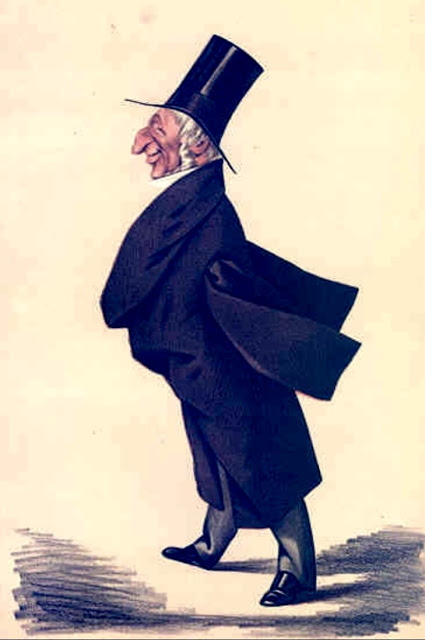
While the etiquette instruction is going on, the dress is being made, and the garment for so momentous an occasion must not only be as costly as her purse can buy, but as original as her imagination can devise. The gentlemen who are presented at Court are not troubled in this respect; an officer wears the uniform of his rank, an Embassador at the Court wears dress of his own country, or occasionally by courtesy, defers in the matter of attire to the Court where he makes his appearance. But for the civilian, a Court dress is carefully devised, and with the pattern he must comply to the smallest particular.
While the etiquette instruction is going on, the dress is being made, and the garment for so momentous an occasion must not only be as costly as her purse can buy, but as original as her imagination can devise. The gentlemen who are presented at Court are not troubled in this respect; an officer wears the uniform of his rank, an Embassador at the Court wears dress of his own country, or occasionally by courtesy, defers in the matter of attire to the Court where he makes his appearance. But for the civilian, a Court dress is carefully devised, and with the pattern he must comply to the smallest particular.
The Court dress at present in use in Great Britain is an abomination, composed of modifications of the hideous costume worn in the time of George III. The time has gone by when courtiers could ape Sir Walter Raleigh in splendor of costume. It is recorded of this nobleman that he appeared at Court in a white satin vest, over which was a doublet flowered and embroidered with pearls. The feather in his hat was fastened with rubies and pearls. His breeches and stockings were of white silk. His shoes were buff, covered with diamonds to the value of $30,000, while his sword and belt blazed with precious stones.
No such gorgeousness is now displayed among English courtiers, but still there is enough to create the impression among the uninitiated that the wearer of the Court fripperies had just escaped from a circus and it had not found time to change his clothes. The lack of latitude allowed the men is atoned for by the license given to the women, for so long as the dress has no sleeves and almost no waist, but a lavish abundance of train, the costume may be made according to the fancy of the wearer.
The dresses are uniformly magnificent, and for weeks after a grand drawing-room the English fashion papers are filled with illustrations of the dresses worn by prominent ladies of the nobility. The name having passed the Lord Chamberlain and being approved by the Queen, the candidate goes in the carriage of her chaperon some hours before the appointed time to the neighborhood of Buckingham Palace. The carriage is always an elegant turnout with coachman and footman in white wigs and their smartest liveries ornamented in front with monstrous boutonnières tied with white satin bows.
The dresses are uniformly magnificent, and for weeks after a grand drawing-room the English fashion papers are filled with illustrations of the dresses worn by prominent ladies of the nobility. The name having passed the Lord Chamberlain and being approved by the Queen, the candidate goes in the carriage of her chaperon some hours before the appointed time to the neighborhood of Buckingham Palace. The carriage is always an elegant turnout with coachman and footman in white wigs and their smartest liveries ornamented in front with monstrous boutonnières tied with white satin bows.
At the appointed time the carriage finds a place in the line and delivers its precious freight ht at the palace door. The ladies are shown in droves into anterooms, which in winter, are cold and in summer hot and ill-ventiiated. Each applicant must be provided with two large cards having her name clearly written upon each. One is given to the Queen’s pages at the palace door, the other to the Lord Chamberlain, who from it reads the name of the lady being presented. After waiting perhaps for several hours, the aspirant hears her name called by a page, a couple of gorgeous attendants adjust her train, she is ushered into the Royal presence, where she courtesies the requisite number of times, then retires backward, managing her train as best she can while bowing to the earth. The ordeal is over, and she goes away to reflect how foolish it all is, and how she would do it over again every day in the week to attain social pre-eminence or to spite some other woman.
The advantages of a presentation are somewhat visionary. It is supposed to give one a standing socially, for according to the theory the person presented at Court is entitled to be presented by the Embassador of his country at any and every other Court. But, in fact, a presentation benefits only those who do not need it, and the great mass of those presented see nothing more of Royalty. They are never invited to the Royal fêtes or balls, they have little more interest in high society than they had before, and the chief benefit, so far as the masses of the presentees are concerned, is to see their names in the paper the next day, and so to be the envy of all the women who have not been presented. As a sort of social triumph it is worth striving for when that sort of distinction is deemed worth having, and for the sake of the honor women go through the tedious drill, the hours of weary waiting, the discomfort, and sometimes the humiliation, just to say they have been recognized by Majesty.
In general, even this statement is not true. So far as England is concerned, the Royal receptions are in the name of the Queen, but as a rule, after the Embassadors have been received, the Queen retires and leaves her daughter-in-law, the Princess of Wales, to do the honors, which are thereby done quite as well, and the Queen is therefore saved the discomfort, to her no doubt very great, of a tedious public audience. Those who have passed through it more than once, generally concede that a royal drawing-room is a misery to most of those concerned, and in particular to the ladies who receive the honor.
It is not necessary to be among those presented, however, to share some of the benefits of a drawing-room. Persons of good character, having proper credentials and fortune enough to secure an introduction to the Lord Chamberlain, may receive tickets permitting them to stand in the corridors of the palace and see the crowds of debutantes and their chaperones pass in and out of a tedious public audience. Those who have passed through it more than once generally concede that a Royal drawing-room is a misery to most of those concerned, and in particular to the ladies who receive the honor. Some people say this is really the most satisfactory way of “doing” a drawing-room, but good credentials are necessary and some influence to secure even so slight a favor as that of being permitted to stand in the passage and see the nobility and gentry go by.
In general, even this statement is not true. So far as England is concerned, the Royal receptions are in the name of the Queen, but as a rule, after the Embassadors have been received, the Queen retires and leaves her daughter-in-law, the Princess of Wales, to do the honors, which are thereby done quite as well, and the Queen is therefore saved the discomfort, to her no doubt very great, of a tedious public audience. Those who have passed through it more than once, generally concede that a royal drawing-room is a misery to most of those concerned, and in particular to the ladies who receive the honor.
It is not necessary to be among those presented, however, to share some of the benefits of a drawing-room. Persons of good character, having proper credentials and fortune enough to secure an introduction to the Lord Chamberlain, may receive tickets permitting them to stand in the corridors of the palace and see the crowds of debutantes and their chaperones pass in and out of a tedious public audience. Those who have passed through it more than once generally concede that a Royal drawing-room is a misery to most of those concerned, and in particular to the ladies who receive the honor. Some people say this is really the most satisfactory way of “doing” a drawing-room, but good credentials are necessary and some influence to secure even so slight a favor as that of being permitted to stand in the passage and see the nobility and gentry go by.
It is not to be supposed, however, that there is no fun at a drawing-room. There is any quantity of it, but it is all for those who have neither part nor lot in the exercises within. The occasion is always announced in the papers some days before, and the order is given in which the carriages are to fall in line. The announcement never fails to attract the public, which gathers numerously, and bestows enthusiastic encouragement on the persons participating. For hours before the appointed time vehicles are slowly moving about the neighborhood in order to be ready to take a place, for the rule stands, first come first presented, and as the clock strikes there is a grand rush toward the palace gate, and in the crush carriages are often broken, sometimes over-turned, and accidents to horses are quite frequent.
The police lend their assistance to form the line, and after a carriage is in position, its occupants must wait from two to four hours until their turn comes at the palace gate. Meantime, the people in groups pass up and down before the carriages, and criticise their occupants with the utmost freedom. The occasion is always available also for the display of patriotism. The Prince and Princess of Wales are cheered as they go by in their gilded chariots; the Lord Mayor and High Sheriff must listen to comments on their gorgeousness, the Embassadors and public functionaries are applauded or hooted as fancy dictates.
In London it is not a statutable offense to howl at anybody, from the Prince of Wales up or down, as you choose to count, and it frequently happens that unpopular public characters have, while waiting in the streets before Buckingham Palace, an excellent opportunity to ascertain what the public think of them. But nobody minds, and even the women who are stared at by the mob on the street, and commented upon in language sometimes the reverse of respectful, take the matter very coolly. Their carriages are provided with curtains, but as a rule they seldom take the pains to draw them up. They are on exhibition, and if they do not object to the publicity, unwelcome though it sometimes is, no one else has a right to complain. – San Francisco Call, 1891
🍽️Etiquette Enthusiast, Maura J. Graber of The RSVP Institute of Etiquette, is the Site Editor of the Etiquipedia© Etiquette Encyclopedia