Showing posts with label Place Setting Contest Winner 2023. Show all posts

Monday, March 25, 2024

Our Blue Ribbon Winner for 2023 – Professional Category


For our Third Annual Etiquipedia International Place Setting Competition, first-time competitor, Renita Jackson, was our Blue Ribbon Winner for the Professional category. Renita’s lovely setting for the place setting 2023 contest was a mid-century modern, post-World War II tea place setting for two in a mixture of whites and pinks.
👑 👑 👑 👑 👑 👑
Renita Jackson is a native of St. Louis, Missouri in the United States and the founder of Jackson Etiquette. She is a graduate of Southern Illinois University at Edwardsville where she double majored in Mass Communications and Public Relations. After working in radio broadcasting and customer service in the insurance industry, she was trained in the etiquette business in 2004 at The Etiquette Institute of St. Louis, though her passion for etiquette and doing things the proper way goes back much further in time.
As a little girl growing up in St. Louis, Renita's mother taught Renita and her siblings the different aspects of etiquette and manners simply by consulting an etiquette reference book they had in their home. Those lessons instilled by her mother continue to spark the passion for teaching etiquette that Renita has today.
 
Renita is a member of The Etiquette Institute and has affiliations with The Protocol School of Washington, The American Associations of Etiquette Professionals, and The National Association of Urban Etiquette Professionals (NAUEP) where she was also awarded the organization’s Etiquette Instructor of the Year for 2016 and served as the President of the organization from 2017-2019.
A busy wife, mother and grandmother, Renita
 teaches etiquette classes and social skills workshops to children and adults in public and private schools, universities, community organizations, businesses, and various other organizations.She is also an active member at Church On The Rock, where she serves on the Host Ministry Team and is a Youth Leader for the Uprising Youth Ministry. She has authored and co-authored several books. 
Her motto is: Restoring and refining social graces for everyone every day. You can learn more about Renita at www.JacksonEtiquette.com
Congratulations, Renita!

The simplicity of the typical post-WWII British tea table is reflected in Renita’s table setting elements. Even in 1953, Great Britain was still, like Europe, recovering from the war and was living with, and dealing with, an austere rationing environment. Any display of ostentation was considered in poor taste. The assemblage of roses, combined with the pink floral teapot and gleaming silver tea tray lend an overall note of elegance.

 The following is our interview with Renita:

1. How did you choose the menu and various elements you used in your setting, and why? Please explain each of the utensils at your setting… For which of the foods on your menu (or course) was each different item intended? 
I created a menu to replicate a selection that was a combination of traditional tea savories, such as the cucumber and egg sandwiches, scones, and butter cookies, as well as more contemporary pimento cheese sandwiches and tartlets. 
The savories, to be eaten first, would be placed on the bottom level of the tray. These are finger sandwiches and therefore there is no utensil provided for them. The middle tray holds the scones. There are two dishes on the table for the clotted cream and jam. The scones can be broken open to spoon on the cream and jam if desired. The individual knife on the place setting for spreading the cream and jam.  
The top tray holds the pastries. These are also finger foods and no utensil was provided for them. The small spoon on the place setting is for use with the tea.

2. Why did you choose this particular period in time to set your table? Please go into as much detail as you can. 
• Afternoon tea not only fulfilled a need to ward off the hunger pangs between breakfast and dinner, it was also a social time for the ladies to gather together and enjoy being in the company of other ladies to chat. Ladies would dress up for such a social event that was possibly the highlight of the day. I chose this particular period for my table setting because I think afternoon tea is a perfect and elegant setting for a gathering of friends to enjoy and share in each other’s company.
Afternoon tea not only fulfilled a need to ward off the hunger pangs between breakfast and dinner, it was also a social time for the ladies to gather together and enjoy being in the company of other ladies to chat. Ladies would dress up for such a social event that was possibly the highlight of the day. I chose this particular period for my table setting because I think afternoon tea is a perfect and elegant setting for a gathering of friends to enjoy and share in each other’s company.

3. Have you always enjoyed a properly set table? Or, if not, was the table setting something you learned to enjoy through your social life and/or business later on in life? 
• Yes. In our home, we try to always sit down to family dinner together. We always set the table. It is not always fancy and it may only consist of just a few needed pieces. I have sons and I raised them to learn how to set a proper table. I thought this was important for them to learn and they now know how to dine properly when they are away from home.

4. Did you do any research on table setting etiquette before setting your elements at the table?
• I know some of the basics, but I did review some of my books for ideas.
The embroidered vintage linen napkin adds a dash of color to the white china background on the tea set and milk-glass plates.

5. Do you plan on entering again next year?
 
• Yes, I plan to enter again next year. I was very late getting started this time and entered the competition on the last day or two. I would like to get an earlier start and do a better job.

6. Do you have any special memory they had of watching the Coronation or the Queen’s funeral (if any)?
• I did watch the Queen’s funeral as well as the King’s Coronation. I don’t have any particular memories that I can recall at this time. However, I do recall that everything was done with great elegance and timing.

Elizabeth Soos and I wish to say again, “Congratulations on your Blue Ribbon winning table, Renita!” 👑
 – Maura Graber


🍽Etiquette Enthusiast, Maura J. Graber, is the Site Editor for the Etiquipedia© Etiquette Encyclopedia

Tuesday, January 30, 2024

Our Best in Show Winner for 2023 – Amateur Category

For our Third Annual Etiquipedia International Place Setting Competition, Stephen Hanson is again our Best in Show Winner for the Amateur Community category. He won in this category in 2022.    
His theme choice options for the 2023 contest were: A period 1953 place setting in honor of the Coronation of Queen Elizabeth II; A 1930's nursery tea party place setting for young Princesses Elizabeth and Margaret; A mid-century modern, post-World War II tea place setting (for one or two); A complete place setting (for 2 or more) from any period in the life of King Charles III. 
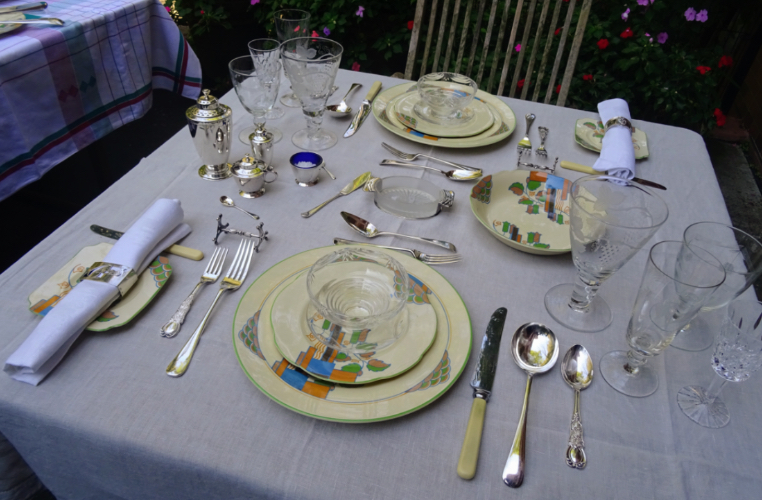
Stephen’s choice was the period 1953 place setting in honor of the Coronation of Queen Elizabeth II. It was a lovely alfresco garden luncheon setting. Congratulations, Stephen!
The following is our interview with Stephen:
1. How did you choose the menu and various elements you used in your setting, and why? Please explain each of the utensils at your setting… For which of the foods on your menu (or course) was each different item intended?

Luncheon Commemorating the Coronation
of
Her Majesty Queen Elizabeth II
on 2 June 1953
Prawn cocktail
Cream of celery soup
Duck confit, served with roast potatoes, cress salad, asparagus with mayonnaise
Selection of cheeses (Stilton, aged Cheddar)
Trifle

Tea & coffee

Cocktail:
Gin & tonic
(Gordon’s London Dry Gin)

Wines:
Champagne Moët & Chandon Impérial Brut
González Byass Tío Pepe Fino Sherry
Château Beauregard Pomerol 1999
Taylor’s 20-year-old Tawny Port
The above menu, I hope, reflects dishes and wines that were available and popular in Britain and elsewhere across the then Empire and Commonwealth in the 1953. One also has to bear in mind that wartime rationing had only ended recently. And not every household had electrical refrigeration, hence the duck confit. Trifle was and remains a popular dessert. Asparagus would have still been in season somewhere in the northern hemisphere in early June.

Being early summer, this meal has been set out on the terrace amid the flowers. (It rained in London, though, on the day of the Coronation.) The champagne is for a toast to the monarch. The Imperial label is appropriate to our late sovereign, who was queen of much of the world when she ascended the throne.Sherry and an aged claret (or burgundy) were regarded as the proper wines to serve with any fine meal. Port was and is de rigueur for cheeses and after a meal.
One hardly needs to explain the role that gin and tonic played in the Empire.

The crockery is prewar. The plates are the Royal Doulton Marina pattern, which came out in 1934. It was created, I believe, to commemorate the marriage of the glamorous Princess Marina of Greece to Prince George, Duke of Kent, who was an uncle of our late Queen. 
The cut-glass champagne flutes and wine glasses date from the 1950s. The water goblets, I believe, are Victorian, while the sherry glasses are the Waterford Crystal Lismore pattern, which came out in 1957. The Stuart crystal bowls for the prawn (shrimp) cocktail bear a number indicating the design was registered in 1926.

The cutlery is mostly sterling silver in the Old English pattern. The Art Deco cruet set and the matching sugar caster are hallmarked for Sheffield 1932 and 1933. The butter dish has an additional hallmark for the 1935 Silver Jubilee of King George V and Queen Mary, the grandparents of our late Queen. 
 
The menu card is on the dining wagon, which is serving as the sideboard. Experience has taught me that someone invariably knocks over the flowers or a wine glass trying to peruse a menu card set on the table. The silver biscuit box (for the cheese course) is hallmarked for Glasgow 1930. The black and white photo of our Queen was taken in 1952 at the start of her reign by Dorothy Wilding.
2. Why did you choose this particular period in time to set your table? Please go into as much detail as you can.
I am a great fan of Art Deco, which lingered into the late    1940s and early 1950s. The Art Deco era brought together craftsmanship and mass production. Mass production won out from the 1950s.
                 
    Note my attire. No self-respecting gent in the early 1950s would have received visitors or ventured outside the house without a jacket and tie (or a hat for that matter). I was also wearing Coronation cufflinks, which I acquired over thirty years ago at a Salvation Army charity bazaar in Tokyo. 
3. Have you always enjoyed a properly set table? Or, if not, was the table setting something you learned to enjoy through your social life and/or business later on in life?
Proper food deserves a properly set table, beautiful        surroundings, and good company. This is something I.   have cherished from a young age. 
4. Did you do any research on table setting etiquette before setting your elements at the table?
 Not really. This is something that grew organically from my upbringing, love of antiques, and reading of history.
5. Do you plan on entering again next year?
Yes.
6. Do you have any special memory they had of watching the Coronation or the Queen’s funeral (if any)?
The funeral of our late Queen was very moving. It’s hard to     believe that Queen Elizabeth II is no longer with us. I greatly     respected and admired the Queen for her selfless devotion to     duty, her deep religious faith, her stoicism, humour, and     impeccable style, and her ability to preserve her privacy and     dignity in this goldfish bowl age.     
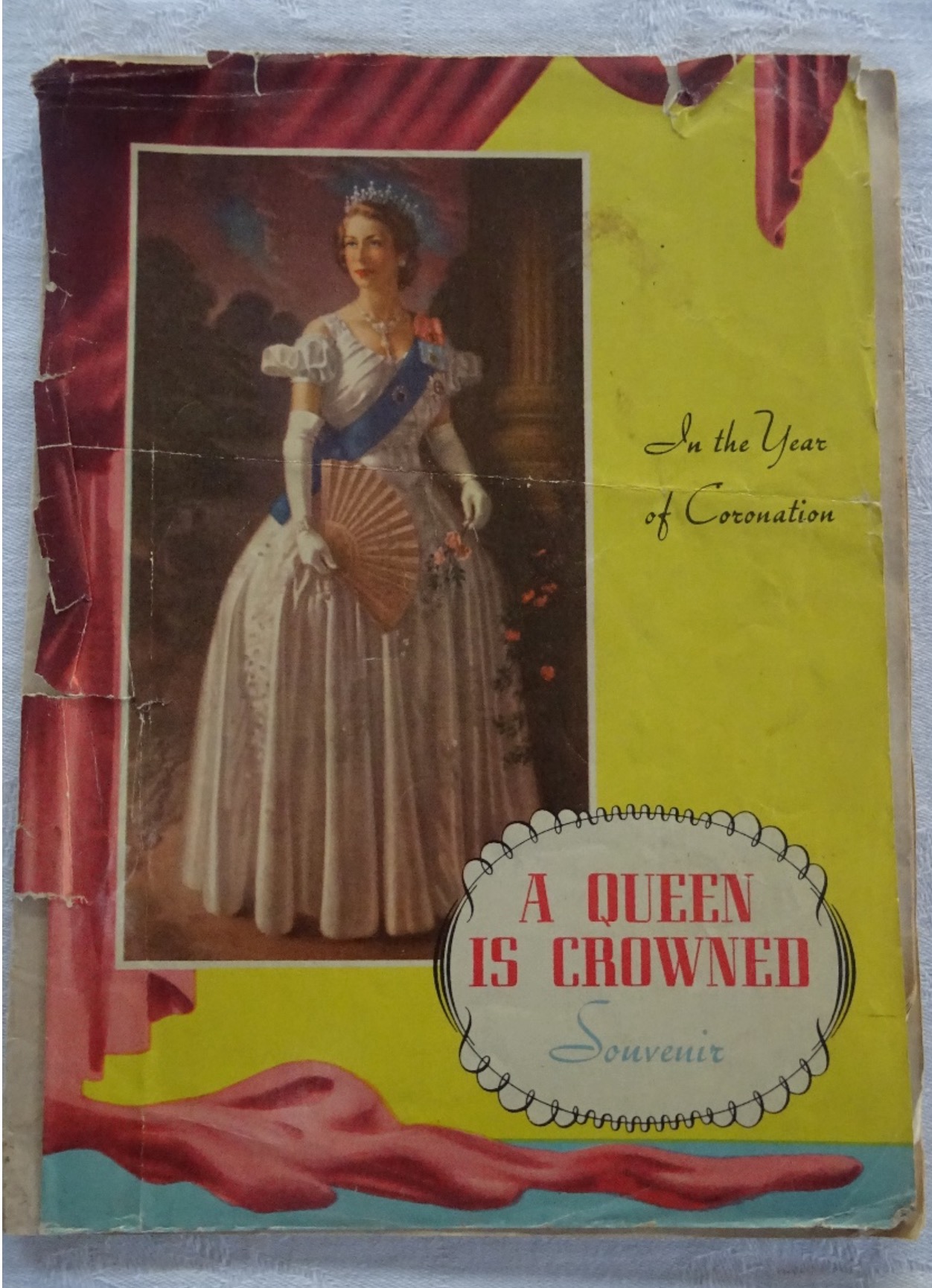
Here is a coronation souvenir that belonged to my paternal grandmother.

Again, Stephen, Elizabeth Soos and I say, “Bravo! And congratulations!” 👑
 – Maura Graber


🍽Etiquette Enthusiast, Maura J. Graber, is the Site Editor for the Etiquipedia© Etiquette Encyclopedia

Thursday, January 18, 2024

Our Best in Show Winner for 2023 – Professional Category

For our Third Annual Etiquipedia International Place Setting Competition, Amy Willcock is again our Best in Show Winner for the Professional and Etiquette Community category. She won in this category in 2022.    
Her theme choice options for the 2023 contest were: A period 1953 place setting in honor of the Coronation of Queen Elizabeth II; A 1930's nursery tea party place setting for young Princesses Elizabeth and Margaret; A mid-century modern, post-World War II tea place setting (for one or two); A complete place setting (for 2 or more) from any period in the life of King Charles III. She chose the 1930’s nursery tea party place setting for young Princesses Elizabeth and Margaret. We found her setting to be charming. Congratulations, Amy!   

Our Interview with Amy:

1. How did you choose the menu and various elements you used in your setting, and why? Please explain each of the utensils at your setting… For which of the foods on your menu (or course) was each different item intended?

My setting is for a children’s tea party – the children just happen to be princesses! It is set with 1930’s Bunnykins Royal Dalton china, the tea cups are slightly smaller than a regular sized tea cup being made for children, there is tea spoon in the saucer and the plate is an 8 inch/20 cm size. There is a bone handled tea knife ready for bread and butter with honey and cake and a spoon for jelly and ice cream. The jam pennies, a favourite of the young princesses, are eaten with the fingers. 
The tablecloth is an original 1930’s Disney table cloth made in Ireland. The honey pot is in the shape of a “skep” and wooden drizzler are sitting on a Peter Rabbit Wedgwood plate. There is a small silver teapot with a china tea strainer and a whimsical butter dish decorated with spaniels and a china milk jug by Gien decorated with circus performers. The small china hen is just for decoration.
We at Etiquipedia simply loved the vintage period details that make up this adorable table. The Bunnykins dishes with the “bone”, or celluloid handled knife and period flatware are the perfect accoutrements.

2. Why did you choose this particular period in time to set your table? Please go into as much detail as you can.

I chose this particular period as not much has changed since the 1930’s in aristocratic and upper class nursery’s, in fact all the same dishes are still great favourites today. All the china was used by my own children who are now grown up and I thought it was a great opportunity to use it. I still use the larger plates for birthday cakes as I love the running rabbits around the edge. 


3. Have you always enjoyed a properly set table? Or, if not, was the table setting something you learned to enjoy through your social life and/or business later on in life?

I grew up until the age of 12 in the United States, but my mother who was British insisted on setting a properly laid table and holding a knife and fork “properly” meaning in the English style, not cutting the food up and laying the knife on the edge of the plate and changing the fork into the right hand as they do in the USA…. and my Grandmother always had beautiful tables and insisted on cloth napkins all the time!

In my professional life as a food and lifestyle writer I have taught etiquette, historical and modern table settings for many years, and admit that I prefer simple tables now but have created many fun and elaborate tables over the years.
The menu: “Jam Pennies” were a tea time favorite of Queen Elizabeth II, as a child and throughout her life. They are small, round bread cutouts spread with butter and jam. 
4. Did you do any research on table setting etiquette before setting your elements at the table?

No, the only thing I knew I would include in the menu were the jam pennies as they were a favourite of the Princesses.

5. Do you plan on entering again next year?

Yes
👑 👑 👑 👑 👑 👑
6. Do you have any special memory they had of watching the Coronation or the Queen’s funeral (if any)?

The late Queen’s lying in state was televised 24/7 and I was glued to it, I found it so calming and emotional. Of course the funeral was magnificent and moving. It doesn’t matter if it is a coronation, a state funeral, or the launching of a battleship, nothing beats the British, we are the best at pomp and ceremony! My eldest daughter is in the RAF and was involved in the Coronation and I held a tea party (using a ERII Coronation embroidered tea cloth) on the day of the Coronation for a few friends, we all watched it on the television together. One of the best bits was when all of the armed forces involved in the coronation were lined up in gardens of Buckingham Palace and gave their Majesties three cheers – that was fantastic!


More on Amy – Amy Willcock is a successful writer of nine cookery and entertainment books. Born in Chicago, she moved to the UK in 1980. Specialising in country living and game recipes, Amy wrote a regular monthly column for The Shooting Gazette for over 19 years writing about food, country lifestyle and gundogs. During the Covid lockdown in Spring 2020, Amy started a new venture, KBO Cakes. The only way she could “send a slice of home” to her children serving in the forces and at university, was to send them a cake. “Nothing says “I’m thinking about you” more than a homemade cake. Everyone needs a little morale booster every now and then” says Amy. www.kbocakes.co.uk Amy was previously in the hotel business - one of which, The George on the Isle of Wight, had a Michelin starred restaurant. Amy held Lifestyle, Cookery and Aga Workshops teaching people to cook, arrange flowers and set beautiful tables along with how to run a house. Her lifestyle and Aga workshops have been described as ‘finishing schools for people in their 30’s’ and Nigella Lawson wrote in Vogue, “Amy Willcock, hand holder to Aga owners everywhere”. She is a founder member of Yarmouth Women’s Institute, the subject of a BBC 4 documentary, and is a WI Cookery and Preserves judge. Amy has appeared on Market Kitchen, Kirstie’s Homemade home, Celebrity Masterchef, and judged the perfect Sunday Lunch with John Torode and Gregg Wallace on Masterchef and is a regular Food and Lifestyle contributor to local radio. Amy lives in Yorkshire where she manages Warter Priory Shoot office, trains her gun-dogs, and enjoys entertaining her friends and family.


🍽Etiquette Enthusiast, Maura J Graber, is the Site Editor for the Etiquipedia© Etiquette Encyclopedia