Showing posts with label Gilded Age Etiquette. Show all posts

Friday, May 22, 2026

Gilded Age San Francisco

I have taken a duplicate of the list in order that future posterity may know something of the personnel of the roster of luminaries who assist in the great work of moulding public sentiment in the metropolitan center of the coast at this enlightened period of pugilism, gaudy deportment and straight-laced etiquette. The numerous “Clubs” may after all ultimately achieve the distinction which the name might seem to indicate. This is evident from the somewhat refreshing and suggestive expose that the Robison-Robertson clash of pens has evolved.

“A Tempest in a Tea-pot”

EDITOR REGISTER: - I am perhaps one of the oldest journalists on the Pacific coast, having been an editor as far back as 1854, and with the exception of a portion of the war period, almost continuously in service ever since. I am not a society man in the modern acceptation of that term, but was fortunate enough a few days ago to obtain from a friend the loan of a volume entitled, “The San Francisco Blue Book,” in the pages of which I discovered a list of the great lights that control the metropolitan press. 

I have taken a duplicate of the list in order that future posterity may know something of the personnel of the roster of luminaries who assist in the great work of moulding public sentiment in the metropolitan center of the coast at this enlightened period of pugilism, gaudy deportment and straight-laced etiquette. The numerous “Clubs” may after all ultimately achieve the distinction which the name might seem to indicate. This is evident from the somewhat refreshing and suggestive expose that the Robison-Robertson clash of pens has evolved. 

“NOTE. The Italics designate the Reception Day, the Bold-Faced Type, the Country Residence”

Now if a duel could only be properly scented as on the tapis as one of the results of this intercine conflict in the classic realm of the “Plug-Hat and Swallow-Tail Brigade,” then Mr. Isaac could complacently fold his arms and serenely contemplate the untoward results of the innocent machinations of a “rough diamond.” Would that the spirit of Horace Greeley could be invoked at this critical juncture to diffuse balm (I don't mean DuBarry Balm) upon this perturbed surface in the excited domain of Bohemia. Verily a crisis has come. What will Ambrose Bierce say? 

If Murat Halstead, Joe McCullah and Stilson Hutchins were here, how they would enjoy the fun! The dudes are seemingly on top as yet, but their sceptre is trembling in the scale and may yet go down before the avenging wrath that common sense and plain home- spun have dared to assert in this very peculiar conflict. So mote it be. — CAPSICUM, San Francisco, June 22, 1889 


🍽Etiquette Enthusiast, Maura J. Graber, of The RSVP Institute of Etiquette, is the Site Editor for the Etiquipedia© Etiquette Encyclopedia

Thursday, April 23, 2026

Gilded Age Elevated Simple Celery


Anytime I find an old patented item in patent archives, which has something to do with food, dining, or serving foods, I get excited. Especially if it’s something I’ve never seen brought to life via old Antiques listed online or in shops. This is one. I don’t believe I’ve seen before. I don’t think it was made or put into production of any kind.

This one is from the Gilded Age and the Gilded Age was a period in which some of today’s simplest sounding foods, could be considered exotic or very important to one’s dining peers. Celery was one such food. That is because celery was perishable, meaning only the truly wealthy could have it at a variety of times in the year they could afford to preserve it in ice and any other manner that was modern in the late 1800s. The poor and lower classes could not afford such a luxury item.

As I’ve shown before in posts here, Celery was rather special. It was elevated at the table in special receptacles, called celery vases. We think of vases as being for holding flowers or purely decorative. Hostesses in the late 19 century displayed celery in them. The simple green stalks with leaves had their own fabulous vessels at the table? Of course! How else was a host supposed to show them off? 

Celery vases came in silver, plate, and sterling, crystal and even delicate china. What was paired with celery stalks? Salt. Another food which most modern dinner guests consider a very humble addition to the table, with no knowledge of how important salt has been throughout history, and to life itself. Below is a portion of an article A Glimpse of Victorian, Middle-Class Dining from 2021. Below that is an explanation of the patented vase and salt holder.

“The impact of new technologies-such as in food processing, meatpacking, refrigeration and rapid transportation-and their relation to food, menu planning and serving implements was also explored. As more foods became available, their status was often reflected by the utensils designed for their service and display. If you look at the implements, you can make some assumptions about the value people placed on certain types of foods.

A blown and engraved footed glass vase for serving celery for example, and a glass and silverplate sardine box and sterling silver sardine server decorated with fish motifs, gives an indication of the regard held for foods now common place, that were once considered rare and unique. “When celery was a high status food, it was displayed high on the table; as it became widely available, it was relegated to low, flat dishes.” Ms. Williams said.

Similarly, a silver-plate cup on a pivotal base was designed with a spiral hook inside, on which an orange could be twisted and firmly held in place as it was rotated, and then eaten with a special knife and spoon. The objects in the show were selected to illustrate a range of styles from simple to ornate. One interesting thing about the exhibition was that it took an object and then showed how elaborate its presentation might have been. Sterling silver and cut glass were used by the upper class while items in pressed glass and silver-plate were used by the middle-class. — Portions of this are from an article published in the New York Times, April 3, 1988


UNITED STATES PATENT OFFICE

FRANK C. WINSHIP, OF BRIDGEPORT, OHIO, ASSIGNOR TO LA BELLE GLASS COMPANY, OF SAME PLACE

DESIGN FOR COMBINED GLASS VESSELS

Specific invention forming part of Design No. 10,954, dated December 10, 1878; application filed November 22, 1878.  [Term of patent 37 years.] 

To all whom it may concern:

Be it known that I, FRANK C. WINSHIP, of Bridgeport, in the county of Belmont and State of Ohio, have invented a new Design for Combined Glass Vessel; and I do hereby declare the following to be a full, clear, and exact description of the same, reference being had to the accompanying drawings, forming part of this specification, in which—

Figure 1 is a perspective view, and Fig. 2 a bottom plan. Similar letters of reference in the several figures denote the same parts.
The vessel for which my design is specially adapted is a combination of a small “individual" salt-holder with a larger holder adapted to contain celery, or to hold a napkin, or, by reducing its size, to be used as an egg-glass, or for other similar table use; and my design consists in the arrangement of an elongated flat bar, e, with an upwardly-projecting annular flange, constituting the salt-holder, and by an upwardly-projecting stem supporting a bowl or goblet shaped vessel, constituting the celery holder, or its equivalent, said salt-holder and celery-holder being independent of each other, except as connected by the base-plate. This necessarily gives the whole combination a peculiar configuration, which is the subject of this invention, independently of any particular ornamentation of the combined vessel.

In the drawings, B is the base; S, the salt-holder, and C the celery-holder, arranged as above described. The edges of the base may be fluted, as shown at a, and the sides of the salt-holder may be fluted as shown at e. mm are crossed marks or indentations on the under side of the base, that show through it and add to the beauty of the device.

I claim as my invention- The design for a combined vessel for table use, herein described, consisting, essentially, in the elongated flat glass base-plate B, supporting the annular salt-vesselS, and the stem and bowl C, arranged with relation to each other in the form substantially as described.

FRANK C. WINSHIP.

Witnesses:
J. A. HARRIS, 
T. C. ROWLES

Contributor Maura Graber has been teaching etiquette to children, teens and adults, and training new etiquette instructors, since 1990, as founder and director of The RSVP Institute of Etiquette.  She is also a writer, has been featured in countless newspapers, magazines and television shows and was an on-air contributor to PBS in Southern California for 15 years. Along with teaching etiquette to all ages and giving talks on old flatware, she was an etiquette consultant for 2 seasons of the HBO – Julian Fellowes’ series, “The Gilded Age” and continues to consult on historical dining and social etiquette.

🍽️Etiquette Enthusiast, Maura J. Graber of The RSVP Institute of Etiquette, is the Site Editor of the Etiquipedia© Etiquette Encyclopedia

Friday, October 17, 2025

Gilded Age Etiquette, Gender and Smoking

Some may not agree with me, as I am of the old school of manners and custom, when it was considered very ill bred to smoke in ladies’ company or in a room that was not for that purpose. It does appear that all such ideas are laid aside. – George Russell lights a cigar in “The Gilded Age” on HBO

Whither are We Drifting?

EDITOR FLAG: I saw in the San Francisco Chronicle a few days ago an article headed “Where are we Drifting” in regard to politics. Now I ask where are we drifting in manners and etiquette? The first thing I will take notice of is a place where almost every person has to go, both ladies and gentlemen. Is there any place that should be more respected than the Post Office? 

Now what I want to know is, are we always to have smoking in the post office? From five to six cigars and pipes not to mention cigarettes, can be seen there almost every night. I saw five young and one old gentlemen smoking, all at the same time. I took note of one young man smoking a cigar about as large as himself, and he was in conversation with two young ladies, The young man appeared to be trying to see how much smoke to give them the benefit second handed and in as short a time as possible, and I thought I could detect a scorn on the young lady’s faces as much as to say, “I don't like smoking even if it is second handed!” 

I have heard men remark that they have to go out on the sidewalk to get fresh air, the smoke inside being so disagreeable to them. Now if men are annoyed, how is it with ladies that never smell tobacco at home? There certainly is some law in regard to how a Post Office should be kept in regard to the room where people have to go to get their mail. If not, there should be, and it should be enforced without regard to persons. Some may not agree with me, as I am of the old school of manners and custom, when it was considered very ill bred to smoke in ladies’ company or in a room that was not for that purpose. It does appear that all such ideas are laid aside. – H. B., Russian River Flag, 1886


🍽️Etiquette Enthusiast, Maura J. Graber of The RSVP Institute of Etiquette, is the Site Editor of the Etiquipedia© Etiquette Encyclopedia 

Thursday, July 24, 2025

Gilded Age Etiquette and Politeness

Manners are acquired by association, by contact, by slow degrees, through several generations, and by laborious effort, line upon line, precept upon precept, in each generation. We observe a similarity in the manner and in the manners of certain families. Sometimes servants take on a likeness of manner to those with whom they live, as children do, personality being always a force and carrying with it impressiveness of some sort. Both children and servants need molding and training in manners, while manner comes to them, as it were, without their knowledge. 


BE NATURAL
Due Regard for the Rights of Others
Harks True Politeness

Manner and manners are not precisely synonymous. One may possess ceremonious manners and in conjunction with these have a manner which antagonizes tbe very people whom the elaborate manners are intended to please. A boorish person may, by dint of careful imitation, acquire a veneer of courtesy, good so far as it goes, but when all is said only veneer, not the solid, polish-bearing wood. A person ignorant of social usages and unskilled in the conventionalities of the period maybe distinguished by a manner essentially chaining. Manner is what we are, so to speak, in the grain. It is individuality. It is the outshining of the soul.

Manners are acquired by association, by contact, by slow degrees, through several generations, and by laborious effort, line upon line, precept upon precept, in each generation. We observe a similarity in the manner and in the manners of certain families. Sometimes servants take on a likeness of manner to those with whom they live, as children do, personality being always a force and carrying with it impressiveness of some sort. Both children and servants need molding and training in manners, while manner comes to them, as it were, without their knowledge. 

Occasionally one meets a gently bred elderly person who has not adopted certain forms and modes which are at present in vogue, and who innocently fails to meet the requirements of good form — a thing to be regretted, because the greater should everywhere include the less, and a well-bred manner should presuppose perfect manners. At all times the requirements of politeness are founded upon good sense, upon kindness of heart, upon due regard for the rights of others. The rude, the brusque, the abrupt, trample on the sensibilities of their friends, as well as invade propriety, sometimes defending themselves as natural, and declaring that they abhor affectation and adore sincerity. 

They appear not to recognize the fallacy in this. A natural manner should, of all manners in the world, be sincere. Sincerity does not imply brutality. Affectation is less heinous and offensive than cruelty, and cruelty exists wherever one person needlessly wounds another. Gentle manners do much to oil the machinery of life at home and in the community. It costs little effort to say, “I thank you” and “If you please,” to acknowledge every kindness as a favor worth appreciation; but, were it otherwise, effort in this direction would be well repaid. Especially in our intercourse with children or with the aged, with those who are in any way at a disadvantage as compared with ourselves, should we be careful to exercise a cordial politeness. If this be the manner of our outlook in the world, it will influence our manners to all whom we meet. – Harper’s Bazar, 1892


 🍽️Etiquette Enthusiast, Maura J. Graber, is the Site Editor for the Etiquipedia© Etiquette Encyclopedia

Wednesday, June 18, 2025

A Review of 1886 Etiquette in 1948

“When tripping over the pavement, a lady should gracefully raise her dress a little above the ankle. With the right hand, she should hold together the folds of her gown, and draw them towards the right side. To raise the dress on both sides, and with both hands, is vulgar. This ungraceful practice can only be tolerated for a moment, when the mud is very deep.” – Above, what the fashionable women of 1886 would be wearing while following the etiquette of the day.
Can You Imagine Following 
Gilded Age Etiquette 
in 1948?
According to an etiquette book published in 1886, there are things that a lady, or gentleman, doesn't do. Can't you just see some Tamites abiding by these rules?
“A lady ought to adopt a modest and measured gait; too great hurry injures the grace which ought to characterize her.” (what if you only have five minutes between classes?) “She should not present herself alone in a library or museum, unless she goes there to study or work as an artist.
“After twilight, a young lady would not be conducting herself in a becoming manner, by walking alone, If the host wishes to accompany you himself, you must excuse yourself politely for giving him so much trouble, but finish, however, by accepting.
“When tripping over the pavement, a lady should gracefully raise her dress a little above the ankle. With the right hand, she should hold together the folds of her gown, and draw them towards the right side. To raise the dress on both sides, and with both hands, is vulgar. This ungraceful practice can only be tolerated for a moment, when the mud is very deep.” – Tamalpais News, 1948

🍽️Etiquette Enthusiast, Maura J. Graber, is the Site Editor for the Etiquipedia© Etiquette Encyclopedia

Friday, June 6, 2025

The Value of Etiquette

Frontier humorist, Bill Nye, more formally known as Edgar Wilson Nye, was the first editor of the “Laramie Boomerang.” He named the Wyoming paper for his mule, because of what he described as the “eccentricity of his orbit.”


A Dissertation on the Folly of Indistinct Introduction and Kindred Topics


There seems to be a growing tendency on the part of the average American toward what I may be pardoned for calling the anonymous or incognito introduction. This introduction generally starts off in a fortissimo strain that if kept up throughout the recital would herald the names of both parties to the uttermost parts of the earth. Then the piano and diminuendo strain comes.

That is the reason we are acquainted with so many people whose names we do not know. A man steps up to you in a crowd somewhere in one of those quiet little town meetings where it is a mark of great conversational genius to talk steadily onward without using the mind, and says: "Pardon me, I want to make you two people acquainted. You ought to know each other. You are both friends of mine. Mr.
 _________, Mr.  _________. There, now you are acquainted!" 

Why a man should write a long letter and write it plainly, signing it at the end with a name that would have bothered Daniel to decipher, is more than I can understand. It is the same style of peculiarity as the anonymous introduction exactly. I may be a little careless about my penmanship while writing in a great hurry, trying to keep up with my surging thoughts, but I most always sign my name so that it can be deciphered. I have written letters where the signature was the only thing that was absolutely beyond the possibility of doubt. But if a man signs his name so that you can write to him and ask him what the balance of his letter was about, it is better than a long beautifui letter from unknown and unknowable person. In the latter case you are left to kick the empty air.

Some day when I get more time I am going to prepare a long, treatise upon etiquette and deliver it to the American people, illustrated by one of those stereopticons. Etiquette has been a life-long study for me. It is a thing that has engrossed my attention from my earliest boyhood, and it shows. itself at once in my polished manners and easy running carriage.

At table especially our American people need a great deal of training. Wherever I go I am struck with our sad need of careful training. As a country we need careful instructions in our manners, more especially at hotels. Only the other day, at the table d'hote, I heard a man ask for half a dozen buckwheat cakes, and when they came to him he moistened the tips of his fingers in a finger-bowl and ran over the cakes as he would a roll of currency if he was the assistant cashier in a National bank. Another man at the same table was asked to pass the pepper- box and he took it with his thumb on the bottom and his two first fingers on the top, just as he had been in the habit of moving a stack of chips from the ace to the deuce, no doubt for years.

So we as a people crowd our vocations to the front and we are not able to banish our trades and professions even at table. We should try to overcome this, and there are many other features of our national etiquette which we need to change. Only last week I saw a fine-looking young man sit at a hotel table combing his mustache with his fork, and while in a brown study the fork slipped out of the mustache and plunged with a sickening jab into his eye. We cannot be too careful in our intercourse with men to avoid all appearance of evil.

Etiquette always marks the true gentleman and makes him an object of curiosity, especially at a hotel. When you see a gentleman with whom you are not acquainted you should look upon him with genteel horror and shudder two times in rapid succession. This will convince a stranger that you have been reared with the greatest care and that your parents have taken special pains not to allow you to associate with vulgar people.

I started out to say a few words about the folly of indistinct introductions and wappy-jawed signatures, but I have wandered away, as I am apt to do, and I apologize, hoping that the genial and rosy-cheeked reader as she sits in her boudoir, on this glorious morning, looking more like a peri than any thing else I can think of, will forgive me. – By Bill Nye, in N. Y. Mercury, 1893


🍽️Etiquette Enthusiast, Maura J. Graber, is the Site Editor for the Etiquipedia© Etiquette Encyclopedia 

Tuesday, March 4, 2025

Gilded Age Social Etiquette

After a lady is married her acquaintances should soon call upon her.

Calls Which Courtesy Demands Should Be Made Promptly

“First calls should always be promptly returned; that is, within seven days,” says a New York woman of society and fashion, in a useful little treatise on manners. “If a first call is immediately followed by an invitation to some entertainment, the call should be returned at once and not delayed until after the entertainment. After the entertainment a second call should be made.

“The recipient of any special hospitality, such as a dinner, luncheon, breakfast, dance, etc..., should call thereafter as soon as possible. After having been invited to visit in a country house, a call should be made upon those extending the invitation immediately after their return to the town residence. After a lady is married her acquaintances should soon call upon her.” – Riverside Enterprise, 28 February 1891


🍽️Etiquette Enthusiast, Maura J. Graber, is the Site Editor for the Etiquipedia© Etiquette Encyclopedia 

Tuesday, January 7, 2025

Etiquette of the Gilded Age Dinner Party

When the party is assembled, the mistress or master of the house will point out to each gentleman the lady whom he is to conduct to the table.


To be acquainted with every detail of the etiquette pertaining lo this subject is of the highest importance to every lady.

Ease, savoir-faire, and good-breeding are nowhere more indispensable than at the dinner-table, and the absence of them is nowhere more apparent. How to eat soup and what to do with a cherry-stone are weighty considerations when taken as the index of social status; and it is not too much to say, that a young woman who elected to take claret with her fish, or ate peas with her knife, would justly risk the punishment of being banished from good society.

An invitation to dinner should be replied to immediately and unequivocally accepted or declined. Once accepted, nothing but an event of the last importance should cause you lo fail in your engagement.

To be exactly punctual is the strictest politeness on these occasions. If you are too early, you are in the way; if too late you spoil the dinner, annoy the hostess, and are hated by the rest of the guests. Some authorities are even of opinion that in the question of a dinner-party "never" is better than "late"; and one author has gone so far as to say, “if you do not reach the house till dinner is served, you had better retire, and send an apology, and not interrupt the harmony of the courses by awkward excuses and cold acceptance.”

When the party is assembled, the mistress or master of the house will point out to each gentleman the lady whom he is to conduct to the table. — From Collier’s Cyclopedia of Social and Commercial Information, 1882


🍽️Etiquette Enthusiast, Maura J. Graber, is the Site Editor for the Etiquipedia© Etiquette Encyclopedia 

Wednesday, December 11, 2024

Gilded Age Etiquette of Audiences

In 1896, a question of the etiquette of audiences arose in New York…

A question of the etiquette of audiences arose once in New York when the Symphony society’s concert was given. Mr. Joseffy played the second Brahms concerto, which threw the audience into a state of intense enthusiasm. He was called out a dozen times, and yet the audience persisted in its applause. Finally Mr. Damrosch, the conductor, made as if to proceed with the programme, but the audience kept up their applause. Mr. Damrosch waved his baton and began the next number. The sounds of the orchestra were drowned, however, by the noise of the audience. Mr. Damrosch then rapped sharply upon his desk, and the musicians and the audience both became silent. He turned to the audience and gave them a sharp rebuke for the manner in which they had conducted themselves, saying to them that to ask a pianist, no matter how much he might have pleased them, to add to his exhausting labors after playing such a concerto was neither an appreciation of his art nor an evidence of good manners. The audience very sensibly accepted the rebuke, and the performance went on. – The Hanford Journal, 1896


🍽Etiquette Enthusiast, Maura J. Graber, is the Site Editor for the Etiquipedia© Etiquette Encyclopedia

Friday, September 20, 2024

Gilded Age Word on the Street

A Question of Street Etiquette… Offer her your arm, young man, every time, and never under any circumstances commit the familiarity and offense by forsaking hers.

“The question is often put to me,” says a lady whose opinion in matters of etiquette is wholly competent, “whether it is permissible to take a young lady’s arm in acting as her escort on a promenade after nightfall. Unhesitatingly and peremptorily, no. Not after nightfall, nor by daylight, nor at any other time. 

An invalid may lean upon a young woman's arm; a grandfather, if he is infirm, may avail himself of a familiar support, and a Broadway policeman seems to have acquired the right to propel his charges in petticoats across that thoroughfare by a grasp upon the arm, but these are the only male persons so privileged. 

For an acquaintance, a friend, or one who aspires to a still nearer place, to take the arm of a young woman when walking with her on a public highway is inexcusable. You may be sure nothing will so quickly offend her good taste, although she may lack the social skill to resent and avoid it. And the spectacle in itself is most unpleasing. 

To see a young woman pushed along, a little in front of her escort, by his clutch upon her arm is neither suitable nor picturesque. It reverses all preconceived ideas of gallantry. The fair should lean upon the brave. Virile strength ought ever to support feminine frailness. Offer her your arm, young man, every time, and never under any circumstances commit the familiarity and offense by forsaking hers.– New York Sun, 1888


🍽Etiquette Enthusiast, Maura J. Graber, is the Site Editor for the Etiquipedia© Etiquette Encyclopedia  
Monday, August 19, 2024

Much Rudeness at 1884 Ball

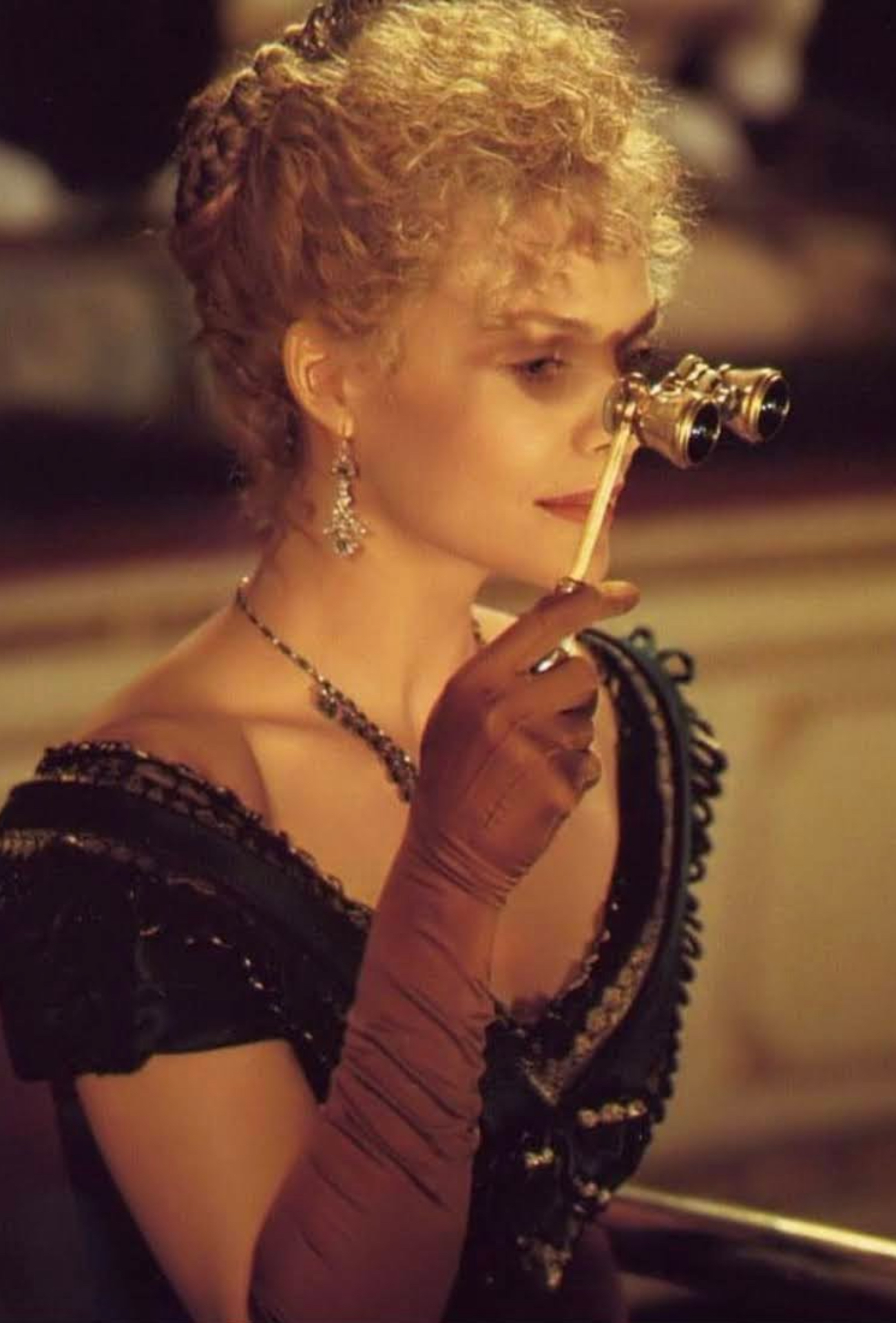
 “… the young men should remember that much confusion on the dancing floor is caused by long delays when partners are called...”  A scene from a ball in HBO’s “The Gilded Age,” ~ Image Source Pinterest


A Reprehensible Practice at a Leap Year Dance

One of the noticeable features of the evening was the frequency with which the gentlemen retired to the dressing-rooms o adjust their silk hose. This in itself very well and proper, but the young men should remember that much confusion on the dancing floor is caused by long delays when partners are called. Several times during the night the gentlemen were not on hand promptly, and the generally good natured ladies were offended and in some cases even angry. 

There is another point of etiquette which was over-looked on the part of the gentlemen. At midnight we chanced near a young fellow elegantly dressed in brocaded silk. A lady stepped up and asked: “May I see you to supper?” “Oh, how nice; but mamma says I must take the children,” replied the thoughtless male. “How many?” “Six” “The suffering Moses: Do you take me for a bank?” “Oh, I don't know.” “But I do, and blast me if I'll ever have any six dirty brats toddling after me. Not much and the offended girl walked indignantly off.”

Again we must repeat that the management is not at fault; what few hitches there were during the program are to be credited only either to the innate depravity or unthinking blunders of some who smuggled themselves past the police guardian at the door, As for him, we recommend This removal from the force; for it is his business to know people and to shut out those not moving in society circles. – In the Stockton Mail, Boston, 1884


Etiquette Enthusiast, Maura J. Graber, is the Site Editor for the Etiquipedia© Etiquette Encyclopedia

Monday, July 22, 2024

Gilded Age Dinner Giving

In an age of questionable kitchen appliances it was often difficult to time meals, thus the best cooks and chefs were in high demand. — “It is very rude to keep other guests waiting for you, and to disturb the serenity of the hostess by delaying her dinner, thereby impairing the quality of the cooked viands.” 
In giving a dinner party it is very essential to know how many guests one is going to entertain. It is a serious inconvenience to have any doubt on the subject. Invitations are usually sent out in the following form:
The four capital letters constitute the initials of four French words, meaning "Answer if you please" (Respondez S'il vous plait). The person thus invited must not fail to reply at once, sending a messenger to the door with the note. It is considered impolite to send it by post, and then you are never certain that it will be received. 

If the person invited has any doubt about being able to attend the dinner at the time stated, he should decline the invitation at once. He should be positive one way or the other, not delaying sending the answer more than one day.

A prompt and decided answer declining, enables Mrs. Jones to supply the place with some other person, thereby preventing a vacant chair at the table. The same rule is applicable to a "German," as a well-bred hostess will not invite more than her house will comfort ably accommodate, and it is important for her to know at once if you intend to accept or decline her invitation.

On the appointed day of the dinner, the guest should arrive at the house ten or fifteen minutes before the appointed hour for dinner; avoid arriving too early, but never be too late. It is very rude to keep other guests waiting for you, and to disturb the serenity of the hostess by delaying her dinner, thereby impairing the quality of the cooked viands. 

She should not be expected to wait more than ten of fifteen minutes for any one. If an engagement makes a very early departure from a dinner party or other entertainment imperative, a guest should mention the fact to the hostess beforehand, and make his departure without leave taking, and unobserved. if possible, so as not to suggest the departure of others.

When the guests are assembled in the drawing room, the host or hostess can quietly intimate to each gentleman the lady he will take to the dining room, and how to find his place at the table. When the dinner is announced, the host should lead the way with the lady guest of honor, the hostess being the last to leave the drawing room.— From “Housekeeping and Dinner Giving in Kansas City,” Mrs. Willis, 1887


  🍽Etiquette Enthusiast, Maura J. Graber, is the Site Editor for the Etiquipedia© Etiquette Encyclopedia

Sunday, June 23, 2024

A Custom of the Hindus

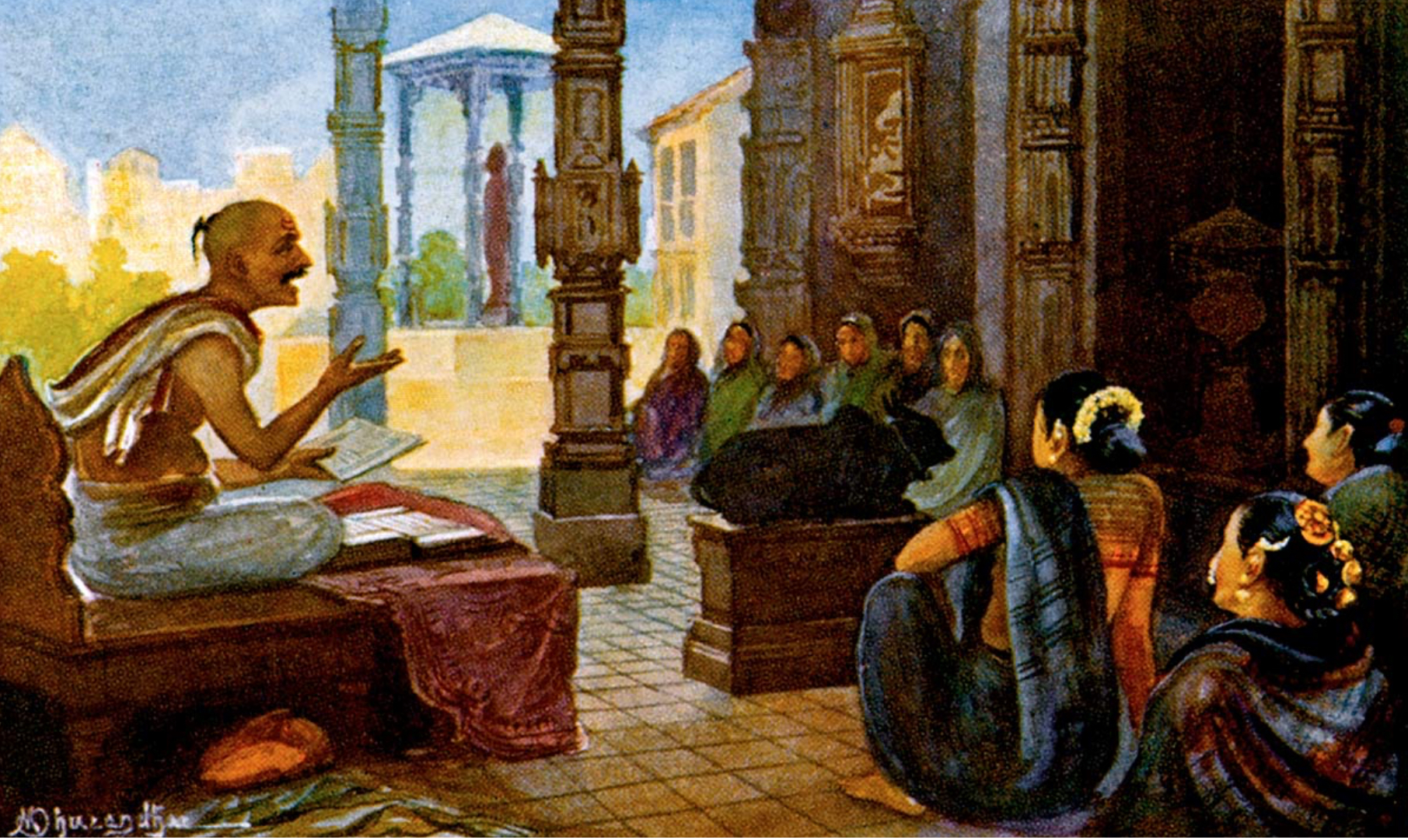
Hindus (Hindustani) are people who religiously adhere to Hinduism. Historically, the term has also been used as a geographical, cultural, and later religious identifier for people living in the Indian subcontinent. ~ 


The frequent invitations every woman receives to “run in and spend the morning with me” gives a forcible suggestion of how little any one must have to do who can afford to take the golden hours of the day for social recreation. The Hindus have a custom, when detained too long by a prosy or untimely visitor, of rising and saying courteously, “Go, and come again.” 

The guest never thinks of resenting the decidedly broad hint, but, receiving it in the spirit in which it is offered, makes his adieu. While the introduction of this habit into America may not be altogether practicable, it would be well if the plea of pressing occupation could be accepted by one woman from another in the same manner that similar excuses are exchanged between business men. -Christine Terhune Herrick in Philadelphia Press, 1886


  🍽Etiquette Enthusiast, Maura J. Graber, is the Site Editor for the Etiquipedia© Etiquette Encyclopedia

Wednesday, June 7, 2023

Table Manners of 1880


Corn on the cob, even today, is not a normal item at a formal meal— it is too messy. Yet, some Victorian hostesses did serve corn on the cob. There were several ways of handling corn on the cob. One was to use the silver cob holders shown. These worked exactly like the plastic cob holders the fastidious use on picnics to day. At least one 1880s etiquette book favored serving corn on the cob, noting, “A lady who gives many elegant dinners at Newport causes to be laid beside the plate of each guest two little silver-gilt spike-like arrangements. Each person then places these in either end of the corn-cob and eats his corn holding it by two silver handles.” Some etiquette writers advised people to use a knife to cut the kernels off the cob and then eat the loose kernels with a fork. The corn fork (bottom middle of photo) reflects another approach. The center portion of this large fork was designed to be used in scraping the corn kernels from the cob. The fork could then be used to eat the loose kernels. As a design, it was a success, the scraper worked quite well. How ever, it was a product for which there was no real market. Few diners wanted to go to that much trouble for corn so the fork sold very poorly and today is almost impossible to find.— From “Forgotten Elegance,” 2003

One of the surest tests of refinement is the test of eating. There may possibly be persona of taste and delicacy who are careless of the table and careless at the table, but they are black swans, exceptions which prove the rule. This test is as applicable to brutes as to men. There is as much difference in tke refinement of individuals of the canine and bovine and feline species as in those of the human species; and this difference is seen most plainly in their personal habits, and particularly in their habits of eating. Even in that omnivorous animal, the pig, we find this statement verified. 

An aristocratic pig is dainty at the trough, and refuses food if not up to grade or served in a slovenly style. There is no pain of the social sort more exquisite than the pain endured by a sensitive and refined nature when by stress of circumstances it is compelled to feed on husks and with swine. This was the crowning agony that brought the prodigal son to himself and influenced him to return to his father’s house, where the servants had good food and to spare. 

To some, good table manners come by nature; to others only by training. Those who are born with a delicate sense of taste and smell, with fine organizations and limited powers of digestion, are naturally particular about their eating, and prefer starvation to indulgence in anything “common or unclean.” Others in whom all the senses are dull and whose bodies are coarsely made, are easily pleased, and have no difficulty in eating whatever is set before them, asking no questions for conscience’s or any other sake. This latter class, unfortunately quite too numerous for the comfort of the former, though not perhaps too many for the rough fare and work of the world, are proper subjects for culture in table manners. 

It was doubtless in the interest of this class our correspondent wrote, at whose earnest request a few hints are here printed. Any one who will from principle and by habit keep the Ten Commandments will have no doubts as to their worth to the world, and their divine origin. “If any man will do His will, he shall know of the doctrine.” The formation of a habit creates a sentiment. It may take a long time to form it, but the habit once formed, a settlement will grow up and twine round it as the ivy graces the oak. This is why mothers who seek to develop good table manners in their children, will first provide good table appointments, and carefully prepared and daintily served food, and will thus insist upon good behavior. 

These three things insisted on, will in time, create a sentiment in the minds of children that will make correct table manners a second nature.
  • 1. As to table appointments.– The cloth, should be scrupulously clean, though it be only coarse material; nicely starched and ironed, and put on straight, its folds parallel with the sides of the table, and they with the sides of the room. The napkins, of however coarse material, must also be clean, carefully ironed and put on in place. The arrangement of the dishes on the table must be uniform, regular and tasteful, each dish, plate, spoon, glass, being in its appointed place and kept there. Any one accustomed to orderly appointments by habit soon learns to feel the necessity of taste and exactitude. These are fearfully neglected in many families. Table furniture of all sorts is hustled on without regard to appearance or order, the napery is disgusting, the carelessness in disposing it equally so, and the results are only such as might be expected. 
  • 2. As to the food.– It is impossible to feel polite and well-mannered over unpalatable, coarse, ill-prepared, indigestible food. Every mouthful of it provokes ill-humor, resentment, dissatisfaction. The house mother who insists on good table manners must give her family good food. There is no need of sour bread, muddy coffee, soggy potatoes, heavy pie-crust, leathery batter cakes. Chesterfield himself would forget his manners if compelled for any length of time to subsist on such a diet. 
  • 3. As to methods of eating.– With the assistance of the knife and fork the food may be so divided as to relieve the incisors of the heaviest part of their work, and make small mouthfuls a pleasure. The grinders indicate that grinding in the mouth is a part of the process of nutrition. Animals destitute of grinders bolt their food. It is not fitting that human beings cat as dogs do, since they have each a “mill” ready for use—which dogs have not. The lips are so constructed that the noise of the grinding, which is intolerable to ears polite, may be effectually disguised. This is a point that cannot be too urgently insisted on. 
Food, whether liquid or solid, must be conveyed into the mouth and from the month downward silently. The position at table should be unconstrained and easy, the person sitting erect or slightly bent forward when eating, so that the mouth may be directly above the plate; the arms should be held at the side, not extended at right angles with the body. The elbows should be kept off the table. Leave-taking is admissible only by permission of the hostess. 

Table talk should be light, agreeable, general, each person present contributing his or her quota to the general fund, and children observing the excellent rule of being “seen and not heard,” unless they are in such majority that the conversation is keyed to their level. Parents who will be at the pains to set their children such examples as they wish to see followed, and will themselves conform ta a high standard of table etiquette, will have little difficulty in attaining the results of culture they all desire. — N. Y. Tribune, 1880


🍽Etiquette Enthusiast, Maura J. Graber, is the Site Editor for the Etiquipedia© Etiquette Encyclopedia

Sunday, March 19, 2023

Etiquette of Taste in Dress

Take care that your appearance should not convey a forbidding idea to the most superficial observer. — Vogue Magazine, 1893

“Taste,” says a celebrated divine, “requires a congruity between the internal character and the external appearance; the imagination will involuntarily form to itself an idea of such a correspondence. 
First ideas are, in general, of considerable consequence. I should therefore think it wise in the female world to take care that their appearance should not convey a forbidding idea to the most superficial observer.” — From “Manners, Culture and Dress,” 1893


🍽Etiquette Enthusiast, Maura J. Graber, is the Site Editor for the Etiquipedia© Etiquette Encyclopedia
Wednesday, July 27, 2022

19th C. Dining Styles


“Godey’s Lady’s Book was the leading nineteenth-century magazine for American women and Virginia Campbell was a regular subscriber.” – Above, an antebellum, March 1859 edition of Godey’s illustrated the ideal table setting which was advised prior to the American Civil War, post-war restoration and the Gilded Age.

Until the early nineteenth century, dining in America was straightforward. Based on the English-style of two courses consisting of multiple items, the first course featured soup, fish, entrées, and joints; the second course included game, additional entrées, and some sweets. An optional third course of fruit and more sweets could follow in those households that had the means to provide them.

All the dishes were placed on the table at once and then cleared to accommodate the next course. This changed with the popularity of a la Francaise (French-style) dining and an emerging merchant class whose new wealth could afford both the new style and food to bring to the table.

French-style service broke the accepted two courses into four, placing fewer dishes on the table. Critics of the day rebuked the style as an indulgent display. In actuality the number of dishes primarily stayed the same. The main difference was order, spacing, and presentation, which gave the appearance of a larger, more elaborate meal.

The French-style course structure is generally divided into four courses: soups and fish in the first course; entrées, which were smaller meat dishes such as ragouts, followed in the second course; third course consisted of joints and entrées; while the fourth course comprised game, sweets, and a few more entrées. Finally, an optional dessert course could follow of fruit and more sweets. Course structure, according to Savarin, was an attempt to serve foods in relationship to each other that in turn would enhance the dining experience. In short, food and its service should have an order.

French service could be compared to a fanciful family style since the dishes placed on the table were designed for guests to serve themselves. If a dish required carving the guest closest to that item was expected to carve. One served themselves, filling their own plate. For dishes out of one’s reach either servants or fellow guests politely passed dishes.
 — From “The Gilded Table: Recipes and Table History from the Campbell House,” by Suzanne Corbett, 2015


🍽Etiquette Enthusiast, Maura J. Graber, is the Site Editor for the Etiquipedia© Etiquette Encyclopedia

Tuesday, July 26, 2022

On “The Gilded Table”

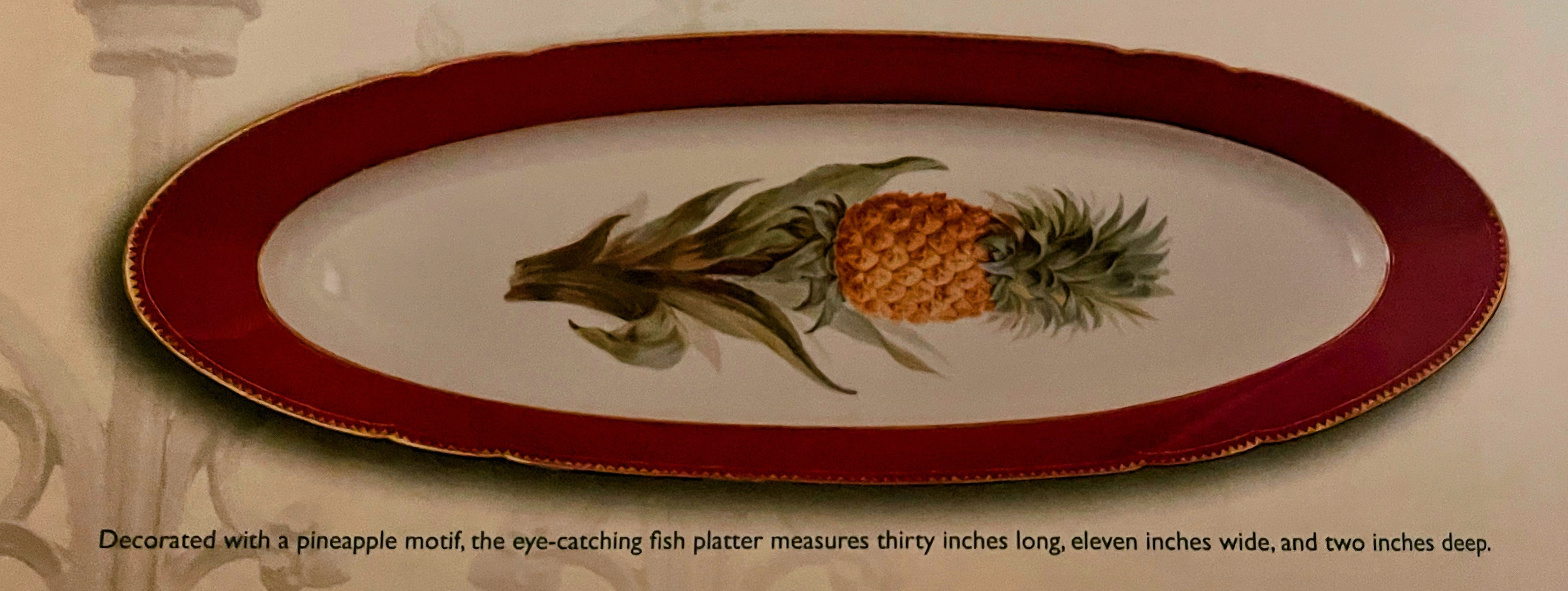
From “The Gilded Table: Recipes and Table History from the Campbell House.” Beautifully written, with terrific photographs, the book features lovely dishes and glassware, including a stunning Campbell family fish platter that is nearly 3 feet in length!


Table Service and Dinner Decorum


The arrangement of seating at the table was never left to chance. Great thought was given to the importance of each guest— where each person was placed indicated their importance. Protocol mandated the host and hostess at most tables sat at either end. Virginia generally sat at the north end of the table, facing towards the butler’s pantry door where the servants would enter. It also afforded her a fuller view of the entire dining room. Within close reach was the dining room’s bell pull, used to call servants from the kitchen.


Honored guests, high-ranking officials, or one's age could determine where the hostess placed her guests at her table. The gentleman of honor was seated at the right of the hostess; the ranking lady was placed at the right of the host. The next important or favored guests were seated at the host's and hostess's left. These seating arrangements, alternating ladies and gentlemen, continued down the table until the places were filled. Guests who found themselves seated in the middle of the table were of least importance but nonetheless were generally happy to have a place at the table.


On one occasion while hosting President Grant during her husband’s absence, Virginia was reported as having sat President Grant at the end of the Campbell table. Another account that appeared years later in an 1888 newspaper recollection reported Mrs. Campbell at an 1868 dinner party as having sat center at one side of the table with General Grant on her right hand. No other reference placed Virginia or her guest of honor at the table’s center, bringing this account into question considering the strict etiquette of the day.— From “The Gilded Table: Recipes and Table History from the Campbell House,” by Suzanne Corbett, 2015


🍽Etiquette Enthusiast, Maura J. Graber, is the Site Editor for the Etiquipedia© Etiquette Encyclopedia

Saturday, May 28, 2022

Themes and Gilded Age Levees

Unusual parties of all sorts were commonplace in the Gilded Age. Hostesses were always making attempts to outdo one another in creativity and novelty. The guests at this event wore dominoes? Where? In their hair? The report tells us that the ladies were “elegantly costumed” but fails to mention how they wore the dominoes and why they wore dominoes. But the domino party is certainly not nearly as creative or novel as the “Doll Tea Party” with young adults mainly in attendance during an episode of Julian Fellowes’ and HBO’s “The Gilded Age.” – “Whether their fortunes were old or new, members of Gilded Age society reveled in hosting and attending teas, cotillions, lawn parties, luncheons, and formal dinners—all of which had their own codes of dress and manners. Even picnics were served on fine china.” – SmithsonianAssociates.org

A Brilliant Domino Party 

A brilliant levee was held last evening at the residence of Mrs. Thomas Hildreth, corner of Seventh and Reed streets. The guests wore dominoes, and the ladies were elegantly costumed. The reception was given by Miss Diana Murphy, assisted by Miss Virgie Murphy. Mrs. Dan Murphy and Miss Diana received the guests. The elegant mansion was a blaze of light from top to bottom. The dancing floor was covered with canvass, and at 9:30 dancing commenced. Parkman's band supplied the music.

The company represented the creme de la creme of San Jose society. At 11:30 the dominoes were removed, and at 12 o'clock supper was announced. This important adjunct of the event was conspicuous for its bounty and luxurious provision. It was a royal banquet. Everything passed off in the happiest manner. Miss Diana Murphy is a charming young lady, and her management of this congress of beauty and fashion was a triumph of generalship. Many of the dominoes were quite novel in pattern and color, and the whole affair was characterized by elegance and strict etiquette.

Following is a list of the guests: Miss Annie Colambet, Miss Lois Singletary, Miss Effie Smith, Miss Marcella Spring, Miss D. Sinnott, Miss Ada Ryland, Miss Ryland, Miss Mamie Cory, Miss Carrie Campbell, Miss Gertrude Moore, Miss Amelia Fisher, Miss Virgie Murphy, Miss Viola Lawrey, Miss May Bethell, Miss Lou Bethell, Miss Florence Younger, Miss Gussie Younger, Miss Alice Younger, Miss Fannie Enright, Miss Mary A. Enright, Miss Emma Hildreth, Miss Laura Hildreth, Miss Linda Hildreth, Miss Polhemus, Miss Ida George, Miss Mattie George, Miss Mamie Wilson, Miss Jennie Wilson, Miss Fannie Montgomery, Miss Belle Montgomery, Miss Sallie Trimble, Miss Maggie Trimble, Miss Susie Stone, Miss Ida Davis, Miss Leonia Gambert, Miss Kate Lewis, Miss May Lewis, Miss Lucie Houghton; Mr. and Mrs. Frank Staples, Mr. and Mrs. Dr. Caldwell, Mr. and Mrs. Dr. Thorne, Mr. and Mrs. Charles Hensley, Mr. and Mrs. Capt. Maddox, Mr. and Mrs. Col. Younger, Mr. and Mrs. Joseph Enright, Mr. and Mrs. J. M. Murphy, Mr. and Mrs. Dr. Ben Cory, Mr. and Mrs. Dan Murphy, Mr. and Mrs. J. T. Murphy, Mr. and Mrs. T. W. Spring, Mr. and Mrs. P. McArdle, Mr. and Mrs. Dr. Finigan; Mrs. T. H. Burke; Messrs. Joc Ellis, Chas. B. Hensley, Wm. George, Fred. Saxe, Nich. Bowden, Col. Younger, Mr. Schrieve, Horace H. Stevenson, Ed. Rhodes, Chas. Williams, Ned Younger, Shelby Stone, J. B. Clark, A.W. Inglesby, Frank Metcalf, Frank Lewis, O. N. Kent, D. W. Wallis, C. M. Shortridge, Chas. White, Geo. Polhemus, Clemi Columbet, Chas, Chapman, Dan Murphy Jr., Peter Columbet, J Columbet, Willie Beans, Robt. Brennam, J. R. Loeb, W.L. Gill, John Ryland, Jos. Barry, Joe Maddox, Harry Pierce, John Cory, Howell Moore, T. W. Hobson.
 – San Jose Mercury, 1881


🍽Etiquette Enthusiast, Maura J. Graber, is the Site Editor for the Etiquipedia© Etiquette Encyclopedia

Tuesday, May 10, 2022

Gilded Age Tastemaker Displeased

The Southern drawl voiced, velvety smooth talking tastemaker to The 400 in New York City of the Gilded Age, Ward McAllister (brilliantly played by a restrained Nathan Lane) was knocked from his lofty perch by 1889. He was not happy about this fall from the unofficial governing board of the highest level of the social etiquette strata.
🎩🎩🎩🎩🎩
Regarding a ball he was NOT asked to oversee, an angry McAllister reveled in the aftermath: “
Even the humble reporter admits to share his enjoyment, and to them paints he the ball in the gloomiest possible colors. Doubtless the ball had its drawbacks, but still it was not quite the orgy that in his scorn he not unaccountably chooses to make it. Doubtless the throng was dense and the supper room much over crowded, and there was excess of wine, both honey-hearted and très sec. Doubtless there is an objection to launching young girls in society, even as ships are sped from the well-greased ways to the water, with the breaking over their bows of foaming bottles of champagne. Doubtless when three thousand men demand all their hats at one moment of three sable and sleepy attendants there must be confusion.”


The Wrath of McAllister
Musing yet once more the destructive wrath of McAllister, not yet appeased nor in the least likely to be so till the committee in general, and Stuyvesant Fish in particular, are covered over with shame and sent into permanent Coventry. Truly revenge is sweet even to leaders of germans, howbeit for that function the much disgusted McAllister now may seem to himself somewhat too old and rheumatic. Nathless, when he departed to sulk in his tent at the capital, he did not wholly forsake the sacred cause of society. Still his address might be had and still he might have been sent for when the intrusive committee had got things into a tangle. Doubtless a swell deputation from Stuyvesant Hamiltonides, calling him back to retrieve the results of presumptuous rashness, would have been kindly received and its message considered with patience. Even the swift-footed telegram might have brought back to the rescue (if properly winged and prepaid by the patient but few-counseled Bowen) him who alone could bring some order out of the chaos.

But the besotted committee did not do any of these things, and the lost leader comes back to amuse himself over their downfall. Even the humble reporter admits to share his enjoyment, and to them paints he the ball in the gloomiest possible colors. Doubtless the ball had its drawbacks, but still it was not quite the orgy that in his scorn he not unaccountably chooses to make it. Doubtless the throng was dense and the supper room much over crowded, and there was excess of wine, both honey-hearted and très sec. Doubtless there is an objection to launching young girls in society, even as ships are sped from the well-greased ways to the water, with the breaking over their bows of foaming bottles of champagne. Doubtless when three thousand men demand all their hats at one moment of three sable and sleepy attendants there must be confusion. If to his plans it is that we owe the success of the banquet, why were his plans for the ball not equally wise and foresighted ? 

While he was losing his rest for the sake of taking sweet counsel with learned and eminent cooks concerning suitable dishes, having especial regard to comparative quickness of service, why did he not put on record his views on the care of the cloak room? If he did so, it is but too plain that a fearful responsibility rests on the rash and wretched committee. Still it is hard to believe that a mind absorbed, like the mind of McAllister, with the abstruser points of deep gastronomical problems could at the same time find room for the consideration of hat checks. As to the famous quadrille, his view is doubtless the right one. When the officials declined the committee should have selected statesmen and sages and bards and men of weight and distinction. Personages like these might have felt very awkward and looked so, but the quadrille would have been much more impressive in history danced by a number of wretched and eminent fish out of water than if en joyed by a number of dapper and well-greaved New-Yorkers.

Now that Peleides has left his tent and come forth to take part in the battle, he engages to give us a ball that will shame the committee. Doubtless the scheme he has formed will result in something more pleasant than the crush that afflicts him still, though it happened last Monday. He may not be able to handle with ease the promiscuous nation, but to cull and arrange the flower of New-York in a ballroom is a part he is fitted to shine in by art and by nature. This fitness it is that makes us renew the suggestion of a place and a title to suit a society leader. The place is St.Thomas's Church, and the title of sexton. though humble, has been borne and exalted by Brown to the McAllisterian function. A sexton has charge of funerals and weddings as well as of balls and of banquets. As a sexton McAllister’s sphere would be widened as well as exalted, with power of revenge on committees and on Stuyvesant Hamiltonides. _The New York Times, May 4, 1899


Etiquette Enthusiast, Maura J. Graber is the Site Editor for the Etiquipedia© Etiquette Encyclopedia