Showing posts with label Hollywood Etiquette. Show all posts

Tuesday, September 17, 2024

Etiquette of Hollywood Films

Never ask another actor what he is doing unless you know he is working. It is embarrassing for him to admit that he is “between pictures.” – Public domain image of Golden Globe winner, Mervyn LeRoy, the man who promoted etiquette for the blossoming film industry in Hollywood.


A GUIDE TO FILM LIFE

HOLLYWOOD, March 18 (AP)- A treatise on the etiquette of the movies is being prepared by Mervyn LeRoy, scenario writer with Colleen Moore.
 
Here are some of the rules he lays down: 
  • Never ask another actor what he is doing unless you know he is working. It is embarrassing for him to admit that he is “between pictures.”
  • Never ask an actor about his wife, nor an actress about her husband, unless you have read the morning paper.
  • Directors do not visit sets on which other directors are at work.
  • Three picture people, on parting, will go separate ways, in order that two will not be left to talk about the other. – San Pedro Daily Mail, 1927


🍽Etiquette Enthusiast, Maura J. Graber, is the Site Editor for the Etiquipedia© Etiquette Encyclopedia

Wednesday, November 25, 2020

Etiquette for Movie ‘Extras’


Dancing Don’ts and Other Don’ts for the Uninitiated on Movie Sets


Allen Holubar is thinking of writing a book on ball room etiquette and presenting a copy to each extra man. Holubar has been trying to get several hundred extras to act as though they had been on a varnished floor before in their lives, in a big scene for Dorothy Phillips’ feature, and the director and his assistant, Harry Bucquet, have outlined the following commandments:

  • Do not lift your dancing partner by her ears. 
  • Do not drag back the right leg in making a bow. 
  • Do not nudge your hostess in the ribs to attract her attention. 
  • Under no circumstance must men playing “diplomats” engage in fist fights while the camera is clicking. 
  • Dowagers must not shoot crap with the property men. It interferes with their work. 
  • Dinner guests must not eat all the food until it is certain that a retake will not be necessary. 
  • While dining, the guests will keep the elbows close to the ribs and avoid bayoneting their neighbors with their funny bones. 
  • In the scene where the music recital is depicted, the guests will neither stamp their feet, whistle or be seen accompanying the musicians with mouth organs, comb and tissue, or other instruments. — Los Angeles Herald, 1920


Etiquette Enthusiast, Maura J Graber, is the Site Editor for the Etiquipedia© Etiquette Encyclopedia

Thursday, September 3, 2020

Manners, Mores of Movie Makers

Since the dawn of movie making, there have been “Movie Manners” and “Theater Etiquette.” Good manners and etiquette don’t just apply to being in a movie theater, but the Hollywood movie-making industry, as well. —“Deal-making is to movie people what the tea ceremony is to the Japanese,” contends producer, Nicholas Kent. “They are very, serious about it.” But the fact that Hollywood follows its own etiquette doesn’t mean the town has good manners. Indeed, vulgar behavior is tolerated in movie-land, and some observers decry the incidence of screaming, cursing and abuse to subordinates. “Sometimes money talks and manners walk,” muses Jon Brown, a vice president in the literary department of the Agency for the Performing Arts. Indeed, there are those who dispense with etiquette— and they’re permitted to do so, provided they do it with Hollywood-style pizazz and panache.

Proper Etiquette When Making Movies — What a High Concept! 
Where does ‘yes’ mean ‘no’? Where is a lie considered a human kindness? Where is a returned phone call a status symbol? A guide to Hollywood’s manners and mores.


More than 40 years ago, an anthropologist well-versed in the tribal rituals of South Sea aborigines ventured to Hollywood, where she sojourned for a year. Donning her detached scientific hat, Hortense Powdermaker set her analytical gaze upon the manners and mores of movie-makers.

Here’s some of what she noticed:

* People dining together were assumed to be wheeling and dealing together too.

* Knowing the right people was crucial.

* Job-hopping was the norm.

* And hitting the box-office jackpot was the ultimate fantasy.

Sound familiar? You must have seen “The Player,” part of a recent Hollywood urge to expose its bizarre rituals for the moviegoing public and skewer them mercilessly. But Powdermaker’s findings, which endure to this day, came in her 1950 book, “Hollywood: The Dream Factory.”

To the uninitiated, Hollywood can be a confusing, frenetic scene replete with unusual customs and bewildering ways of doing business.

How do you negotiate this sometimes frightening terrain? Well, there’s a certain Hollywood etiquette. “Isn’t that an oxymoron?” quipped veteran director-producer Gilbert Cates, and the phrase was echoed by many of the people interviewed for this story.

Actually, the term Hollywood etiquette doesn’t convey a contradiction— “etiquette” isn’t just the province of dignified swells who comport themselves with class and poise. Rather, as Webster’s tells us, etiquette is “the forms, manners and ceremonies established by convention as acceptable or required in social relations, in a profession, or an official life.”

In that respect, says Nicolas Kent, producer of the TV series “Naked Hollywood,” the town observes its own rituals. For example, “Deal-making is to movie people what the tea ceremony is to the Japanese,” contends Kent. “They are very, serious about it.”

But the fact that Hollywood follows its own etiquette doesn’t mean the town has good manners. Indeed, vulgar behavior is tolerated in movie-land, and some observers decry the incidence of screaming, cursing and abuse to subordinates.

“Sometimes money talks and manners walk,” muses Jon Brown, a vice president in the literary department of the Agency for the Performing Arts. Indeed, there are those who dispense with etiquette— and they’re permitted to do so, provided they do it with Hollywood-style pizazz and panache.

But phoning, schmoozing, meeting, dining and screening all have distinct ceremonial formalities. Yes, even nay-saying constitutes an etiquette peculiar to Hollywood— part of the canon of celluloid conduct, if you will.


The Art of the ‘No’

Confused because the production executive hot in pursuit of your screenplay last week isn’t returning your calls this week? Well, meet the Hollywood “no.”

“Hollywood is the most masterful town in regard to saying ‘no’ without saying ‘no,’ ” says Adam Fields, executive vice president of Peters Entertainment. “ ‘Yes’ means ‘maybe,’ and ‘maybe’ means ‘no,’ and ‘no’ is ‘maybe’ until I change my mind.”

Rastar Productions marketing vice president Don Safran philosophizes further. “Hollywood is the only city in the world where ‘yes’ is an abstraction,” he explains. “ ‘Yes’ is open for interpretation. ‘No’ is considered hostile.”

Why all this perplexing mumbo-jumbo? “I think most people have a hard time saying ‘no,’ because they’re afraid that they might say ‘no’ to people they may need tomorrow,” says TriStar Pictures Chairman Mike Medavoy. “I think most people appreciate a quick ‘no’ as opposed to a slow ‘no.’ ”

At any rate, slow “nos” and less-than-honest feedback are all too prevalent. Genuine “yeses” are rare, which means that people with yes power tend to be heavy hitters. Back to “no.”

How they communicate a turndown is crucial. Some say no quickly and politely. Others engage in an activity we’ll call the Yes-But-No Ritual, leaving wanna-bes in a frustrating purgatory.

“Hollywood people tend to be very friendly and cordial, even if they don’t like your idea,” says Mark Litwak, the author of the book “Reel Power.” The charm is turned on, Litwak says, because “you may have a dumb idea today, but tomorrow you could have the greatest idea in the world.”

Producer David Permut’s recent experience shows the benefits of building, rather than burning, bridges--or adhering to the “You Never Know Doctrine.”

“Well, I just made a movie called ‘Three of Hearts'--and it was written by a pizza deliveryman in Hollywood who also tended bar in East L.A.,” says the producer of “Blind Date” and “Dragnet.” “You never know--the gate guard at Fox gave me a screenplay yesterday.”

Wasn’t that in poor taste to thrust a script at him like that? “It’s only bad etiquette if it’s bad,” Permut replies. “If it’s a good script, I think it was a very wise move.”


The Phone Is a Deadly Weapon

Boon or bane, phones play leading and supporting etiquette roles in Hollywood. With the aid of portable cellular objects, fax wizardry and the like, most Hollywood connections are carried out via phone lines. But those lines don’t transmit for everybody.

Clearly, as director Martha Coolidge points out, “phone calls are probably the greatest thermometer” of one’s current status.

Hollywood phones ring constantly, and how to manage them all is an art. “Many people prioritize calls the way the military do during medical emergencies,” says writer-director Devorah Cutler, who color-coded message slips while an executive at Columbia.

“The ‘triage’ approach involves deals or relationships in their dying gasps, ones that’ll endure till tomorrow, and wounded ones that’ll survive without instant intervention,” adds Cutler, who teaches “Survival in the Showbiz Trenches” courses at the Learning Annex dressed in military fatigues. “And fun people are in a category of their own--you always want to talk to them,” she notes.

“Business is a series of conversations carried on from dawn into the night,” says Sean Daniel, a producer at Universal Pictures. And sometimes it takes days to complete the connection. “I try to return all my calls, but I think there are still some writers out there angry at me because I didn’t return their calls,” Daniel admits. “But I never killed a screenwriter,” unlike “The Player’s” cellular studio exec, Griffin Mill.


But many screenwriters still are seething because some movie executive didn’t return their calls weeks, months or even years ago. “It’s just plain rude not to return calls,” says screenwriter Robert Newcombe, who recently sold his first script to Walt Disney Pictures. “I understand these people get a lot of phone calls, but that doesn’t mean they can’t take two seconds to call you back or have someone else call you back,” Newcombe adds. “The weird thing is, you remember every person who doesn’t call you back.”

Cary Brokaw, “The Player’s” executive producer, understands that not returning calls can be risky. “After all, the call you don’t return today might be the next Larry Kasdan three years from now,” says Brokaw.

Although unreturned calls are considered a horrific breach of decorum, such trespasses are common. “People don’t return calls on a regular basis,” admits one veteran agent.

“You’ll call 18 times, make friends with the secretary, you’ll be strung along, and then you’ll never hear from them again. It’s like you never existed,” says a producer who moved here a year ago from New York. “They’ll kill you with kindness.”

Mark Litwak agrees. “In New York, at least you know where you stand,” Litwak adds. “In Hollywood, you just don’t hear from them.”

In fact, unreturned calls are such a heated Hollywood topic that many bosses, including Columbia Pictures Chairman Mark Canton, insist that employees always ring people back. “I don’t understand it. It (not returning calls) just doesn’t make sense,” Canton says. “We’re in a business, and one can never know where something’s going to come from.

“It’s impractical to let things back up,” Canton continues. “The amount of flak that you get is not worth it. I mean, who wants to be castigated all the time?”

Nonetheless, some people do return their calls, but they return them deviously— they resort to sneaky phone tactics— like calling late at night, during lunch or early in the morning.

“I won’t do that,” says A&M; Films President Dale Pollock. “I find that insulting.”

“I think that’s a real cheap shot,” concurs Jon Brown of the Agency for the Performing Arts.

“People go to such lengths to avoid each other that it’s amazing they get things done,” says writer-producer David King, who once handled calls for players Dawn Steel and Jon Peters.

Evidently, this evasive after-hours phoning practice--which author Buzzell aptly terms “call dumping"--is widespread. Essentially, says casting director Mike Fenton, “it salves their conscience.”

Of such behavior, producer Lynda Obst says, “They’re meant to be returned calls that aren’t really returned. They’re saying, ‘I don’t want to talk to you.’ ”

Phone behavior can get mighty strange when movie execs--like one studio head and a less-powerful producer--are pals outside of the office. “During the week, the producer will call the studio head for business purposes,” an assistant explains. “The studio head dumps the call (after hours). The business never gets resolved.” But, as the assistant reveals, come the weekend, “The studio head will call the producer at his home and say, ‘Hey, let’s go to dinner?’ Neither makes a mention of the unreturned call. Can you believe that?”

People aren’t happy about other pervasive phone rituals in Hollywood. As when someone doesn’t call you back even though you initiated the first contact. Or you are kept on hold for eons. Or an executive talks to you on a speaker phone. Or, worse, he or she permits an assistant to eavesdrop.

You get the idea. Phones also provide plenty of fodder for jokes. “I finally returned a bunch of calls today. And, the good news is, I got their answering machines,” one insider cracks.

Naturally, horror stories abound:

* Like the time a development director returned Ted Dodd’s call almost instantly. “As it turns out, the guy was returning my call from three months ago,” says Dodd, a former production-executive-turned-independent-producer.

* Then there’s the occasion Dodd couldn’t get through, after six tries, to a studio head to invite him to give a talk. The “no” came via the unreturned call. Months later, at a party, several other folks, similarly shunned, berated the mogul. “He was kind of pressed in a corner and looking very sheepish,” recalls Dodd, who resisted the urge to join in the mock-lynching.

* Another phone story comes from Karen Dare, director of creative affairs for Trimark Pictures. An out-of-the-office executive had his assistant place a call, assuming the callee wouldn’t be on hand. Says Dare: “When it turned out that the guy was there, the assistant then had to say, ‘Oh, well, he’s gone; we’ll have to call you again.’ ”

* And oodles of calls haven’t worked yet for New Jersey native Terry Coyle, a TV producer who recently moved west armed with a glowing letter of introduction from an entertainment bigwig to one as-yet-unavailable producer. “I’ve called at least 12 to 15 times at two different numbers,” Coyle says. “I know his secretaries.” Still no callback after four months. “They’ll never say they totally don’t want you, but it’s like a sorority or fraternity,” Coyle remarks.

Electronic etiquette even applies to assistants, who need to know when to put their bosses on the line. And the Hollywood decorum for assistants can be quite elaborate. When executives are deemed equal in stature, assistants might say, “Shall we ring together?” In a situation where one caller outranks the other, the assistant of the less-influential player puts his or her boss on the line first, who must wait until the more powerful person’s assistant puts him or her on the line. “It’s like saying, ‘My boss is more important,’ ” discloses a veteran assistant. Not everyone does that, of course.

But the cellular age has ushered in a new set of concerns and practices.

Producer David Permut says, “The most common phrase in Hollywood today is ‘You’re cutting out.’ . . . When there’s a piece of paper in the car and you crumple it up near the microphone, it sounds pretty much like static. I must admit there was a time I did that, because it was such a belabored conversation. So I’ve crossed the line on etiquette.”

According to Dale Pollock, “The new hip thing to say is, ‘Are you on a secure phone?’ ”

Actress and writer Carrie Fisher warns, “Try not to say too much on your car phone or your portable phone, because everyone has those scanners. I mean, literally, people are making decisions or learning stuff based on those scanners. It’s become a way of working.”


Put a Shine on Your Schmooze

Of course, another way of working is recognizing that schmoozing with the right people can open career doors. Not surprisingly, forging business unions in Hollywood has its own intricate rules of etiquette.

“The whole town operates in a dance of seduction,” says Linda Buzzell, former movie executive, now a career counselor and psychotherapist. “You’re seducing people into getting involved with your project or your talent. A pitch meeting over lunch at the Ivy is almost like a date. You woo them into a good mood, and then you pop the question.

“There is even a rhythm of the pitch, and a rhythm of the schmoozing, and a rhythm of the bonding,” says Buzzell, whose book, “How to Make It in Hollywood,” was recently published. “It’s really poor etiquette to immediately launch into some hard sell when you see someone. You need to set the right climate first.”

Carrie Fisher says “It better not look like schmoozing. . . . You have to schmooze with the goods. I mean, if you can do something that can be identified as schmoozing, you’re (in trouble). It has to be seamless. Or it can only be identified as schmoozing in retrospect--after it’s been effective. I think conscious schmoozing ought to be outlawed or taboo.”

“Network laterally and network up,” says Linda Obst. “And don’t give cards. No business cards.”

‘Your Movie Is, uh, Interesting’

Don’t know what to say to your director friend whose awful film you’ve just seen? Find something nice to say. The prevailing view on etiquette at screenings is to be kind, even if the movie reeks.

“Movies are children, and you just don’t want to tell someone they’ve got an ugly child,” says Brokaw of Avenue Pictures.

Deceit is considered de rigueur . But lies can come in two flavors.

“One is, you qualify what you say . . . so that it’s truthful even when you hated it. Or, the other school is that you completely perjure yourself,” Brokaw says.

Interscope Communications President Robert Cort edifies: “There are movies which you patently didn’t like, over which you basically have to lie. You don’t like doing it, but you do it.

“Because,” Cort adds, “the alternative to not doing it— which is to tell the truth— is uglier.”

While any number of lines will do, certain comments such as, “You did it again” or “You couldn’t have done it better,” are dead-giveaways that the movie stunk. Some other options:

* “Find one thing about the movie that was very positive, and don’t say another word."--casting director Mike Fenton

* “If it’s an offbeat picture or something that goes against the mainstream, you can always qualify it with, ‘It’s gonna take special handling to find its audience.’” —Adam Fields.

* “Never use the word ‘interesting.’ It’s the kiss of death.” — casting director Sheila Manning.

* “You can always say a lot without saying anything.” — Karen Dare, director of creative affairs for Trimark Pictures

* “You just leave. You say, ‘Hey, thanks,’ and leave. No one’s asking you there to be a critic.” —producer Freddie Fields

* “It’s common decency to keep your opinions to yourself.” — talent agent Gary Salt


The Bottom Line on Good Manners

Interscope’s Cort thinks the true manners test is trying times. “People are incredibly well-mannered so long as things are going their way,” Cort says. “Should things fail to go their way, manners do tend to be one of the first things to disappear.”

“Some of the biggest people in the industry are rude and crude,” says agent-turned-producer Freddie Fields. “And some of the biggest people in the industry are gentlemen and gentlewomen--and gentle human beings.”

Columbia Pictures Chairman Canton contends there’s no room for arrogant people. “There’s such difficulties in the world at large, it’s pathetic not to have good conduct,’ says Canton. “Manners really do matter. It’s very important to make a real effort to be appropriate with people.”

Adds producer Obst: “People in Hollywood are either at your throat or at your feet. If they’re at your throat, all bets are off. If they’re at your feet, then there’s etiquette.
— By Connie Benesch, 1993


Etiquette Enthusiast, Maura J Graber, is the Site Editor for the Etiquipedia© Etiquette Encyclopedia

Thursday, February 11, 2016

Red Carpet Worthy Etiquette

When honored with an Academy Award nomination, Red Carpet attire should be chosen carefully. Attire should invite compliments, not questions of your judgement, regardless of how much fun you feel it would be to attend in what appears to be a giant, dead swan!— “Society has its own definite code of manners that must be observed before one can enter its portals. There are certain rules that must be followed before one can enter its envied circle. There are conventionalities that must be observed ... There are certain prevailing modes in dressing ... To know and adhere to these laws is to be admitted to the highest society and enjoy the company of the most brilliant minds. — Etiquette is an art—the art of doing and saying the correct thing at the correct time—the art of being able to hold oneself always in hand, no matter how exacting the circumstance.” —From Lillian Eichler's 1921, Book of Etiquette

The Red Carpet: A brief history...

For decades, stars great, small and dubious have swanned down the Oscars regal rug — Crimson being the color of royalty for millennia. But what of its origins? It has a backstory as rich and multifarious as a Selznick epic!

458 B.C.
In Aeschylus' tentpole tragedy, Agamemnon returns from the Trojan War to find that his wife, Clytemnestra, had laid a path of dark red tapestries, supposedly in his honor. Agamemnon's response, "Only the gods deserve the pomps of honor, I am human." What that 21st-century red carpet honorees were so humble.

1821 A.D.
In Georgetown, South Carolina, a ceremonial red carpet was rolled out for President James Monroe when he arrived by riverboat.

1902
The New York Central launched the 20th Century Limited, an exclusive passenger express between New York and Chicago. Embarking passengers at Grand Central Terminal walked a red carpet that ran the length of the platform, supposedly inspiring the bromide "red-carpet treatment."

In Hitchcock's, North by Northwest, Cary Grant escapes Manhattan on the Limited -— The scene was shot at Grand Central and featured a carpet by industrial designer Henry Dreyfuss. Grant, disguised as a Red Cap, and Eva Marie Saint, tromp on plush red when the train arrives in Chicago.

1922
Hollywood's first red carpet event usually is ascribed to the opening of Sid Grauman's Egyptian Theatre and the premiere of "Robin Hood," starring Douglas Fairbanks. The irrepressible Grauman, a founding Academy of Motion Picture Arts and Sciences member, later would take credit for the red carpet becoming a staple at Hollywood events.

1961
The first Oscar's red carpet was rolled out at the 33rd Academy Awards on April 17, 1961 at the Santa Monica Civic Auditorium.

1966
The Oscars were broadcast in color for the first time, giving millions of viewers a glimpse of the red carpet in living color.

1992
The American Turf and Carpet company took over making the Oscars red carpet. The continuous filament nylon creation is manufactured and dyed in Dalton Georgia, and replaced every two years. The carpet is not wholly red. It's dyed with a proprietary blend of colors, used exclusively for the carpet to make it "read red" on television ("Nancy Reagan red", as Joan Rivers called it), sealed to prevent the color from degrading under assault from innumerable high heels.

2001
The Oscars moved to the Kodak (now Dolby) Theater. The red carpet followed.

2003
US forces invaded Iraq three days before the Oscars. In deference, the preshow hoopla was scaled-back dramatically, including the red carpet itself, which shrunk to a vestigial doormat in front of the theater entrance.

2013
A metastasizing number of awards events and premieres inspired organizers to roll out carpets in yellow, (like at the 2013 Nickelodeon Kids' Choice Awards,) blue, pink and even white. The Grammys, Emmys, and Oscars carpets remain steadfastly red.

2014
Today's Oscar red carpet has grown to 16,500 square feet and takes two days to install. Scraps are jealously guarded to keep them out of the hands of eBay trolls.  Source —The Hollywood Reporter


Etiquette Enthusiast, Maura J. Graber, is the Site Editor for the Etiquipedia© Etiquette Encyclopedia
Thursday, April 24, 2014

Audience Etiquette for TV Show Tapings

Pay attention to the instructions given by your warm-up person, and behave accordingly.

General Audience Etiquette Guidelines:

How to Dress

With sitcoms, the audience is not on camera.  If T-shirts and shorts, or jeans, are all you have with you while vacationing, then choose to go to a sitcom taping. The studios are kept cold, and you'll probably be there for longer than you imagine, so it's best to bring a sweater or jacket, even when it is hot outside.

If you are receiving them by mail, most TV show taping tickets will include a letter with instructions regarding what to wear; (no flip-flops, no T-shirts with messages on them, etc...) Well-dressed people have a better chance of being placed in good seats and being on camera.  Business casual is more often the norm than not.

Because audience members are frequently on camera, they're a bit more serious about dress codes for reality shows and talk shows.  If you dress appropriately, and stick within a conservative dress-code, you probably won't be relegated to a spot behind a pole somewhere, or dumped into an off-camera area.

Your television show taping ticket will have instructions specific to the production you are attending.  Keep in mind that some rules are more strongly enforced than others.


What Not to Bring

No food is allowed in the studio, but you can usually eat while you wait in line.  Just remember your manners and throw away your food wrappers or other trash before entering the studio. There will not be problems with say, that energy bar in your bag, or even a small bottle of water.

Do not bring cell phones with cameras, video cameras or recorders of any kind with you. Leave them in your car (or locked up in your hotel room), otherwise you'll have to leave them with the studio security or staff.  They will put any electronic device you have in an envelope, to be picked up by you at the end of the show.  You can save them the trouble though, by not showing up with the banned items to begin with.

Proper Behavior

When the camera is rolling, remain quiet when required, or you'll be escorted out.

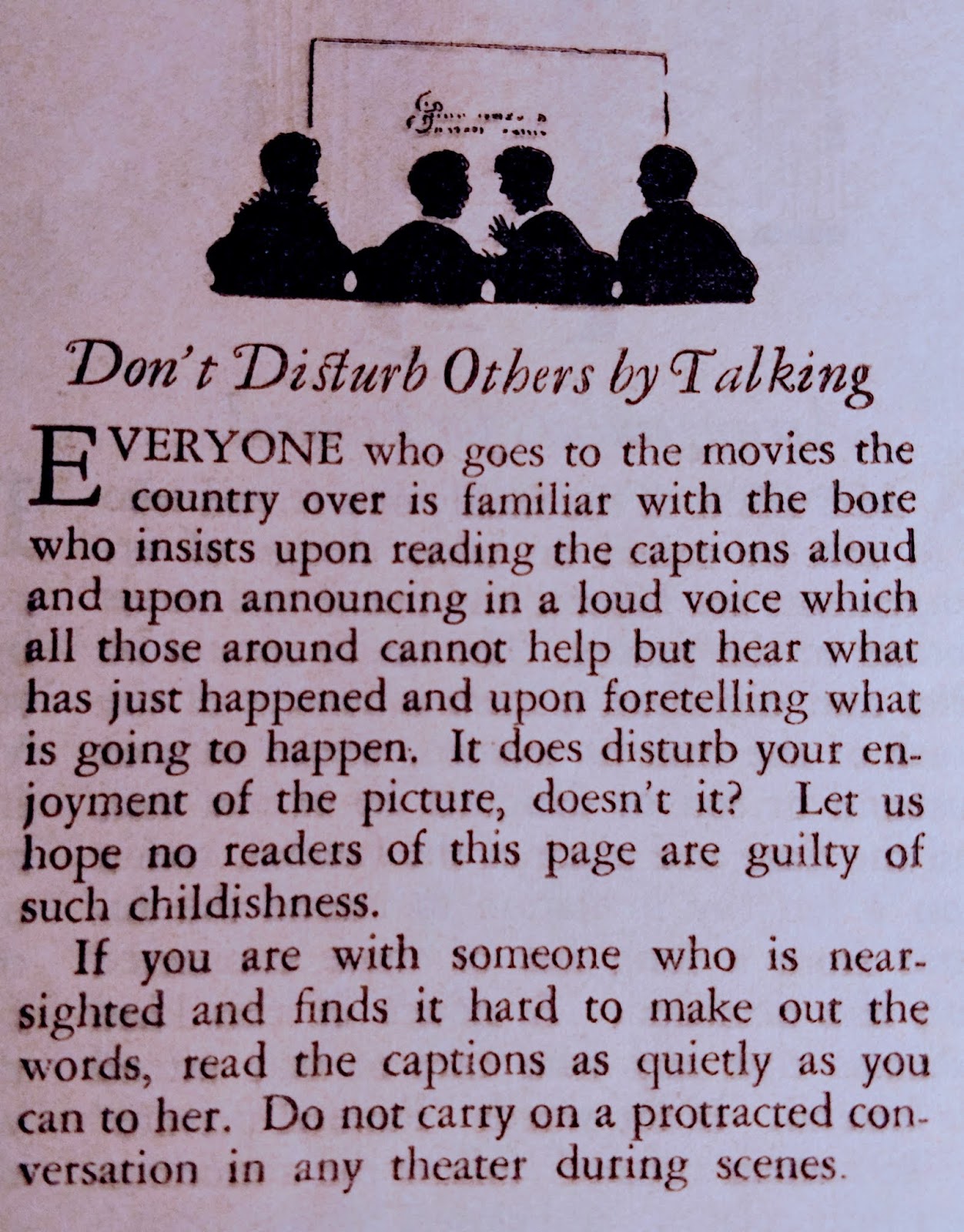
Remember where you are.  Attending the taping of a sitcom is not at all like watching TV in the privacy of one's home, but more like attending live theatre.

Do not try to converse, or even whisper loudly, about the plot line with a seat neighbor, make unnecessary noises, nor yell at the characters or actors.

Be enthusiastic but only to a certain degree.  Clap with enthusiasm when warranted, but don’t scream or interrupt the taping of the show.

They will not allow you in for the taping if you seem to be intoxicated in any manner.

It is always a good idea to use restroom facilities before you are seated, as there are very limited opportunities to use the restrooms.

Understandably, reality shows have different levels of audience participation, so audience exclamations are often encouraged.

If you pay attention to the instructions given by the warm-up person, and behave accordingly, you'll most likely be welcomed back.


🍽Etiquette Enthusiast, Maura J. Graber of 
The RSVP Institute of Etiquette, is the Site Editor for the Etiquipedia© Etiquette Encyclopedia