Showing posts with label Gilded Age Visiting Etiquette. Show all posts

Sunday, June 23, 2024

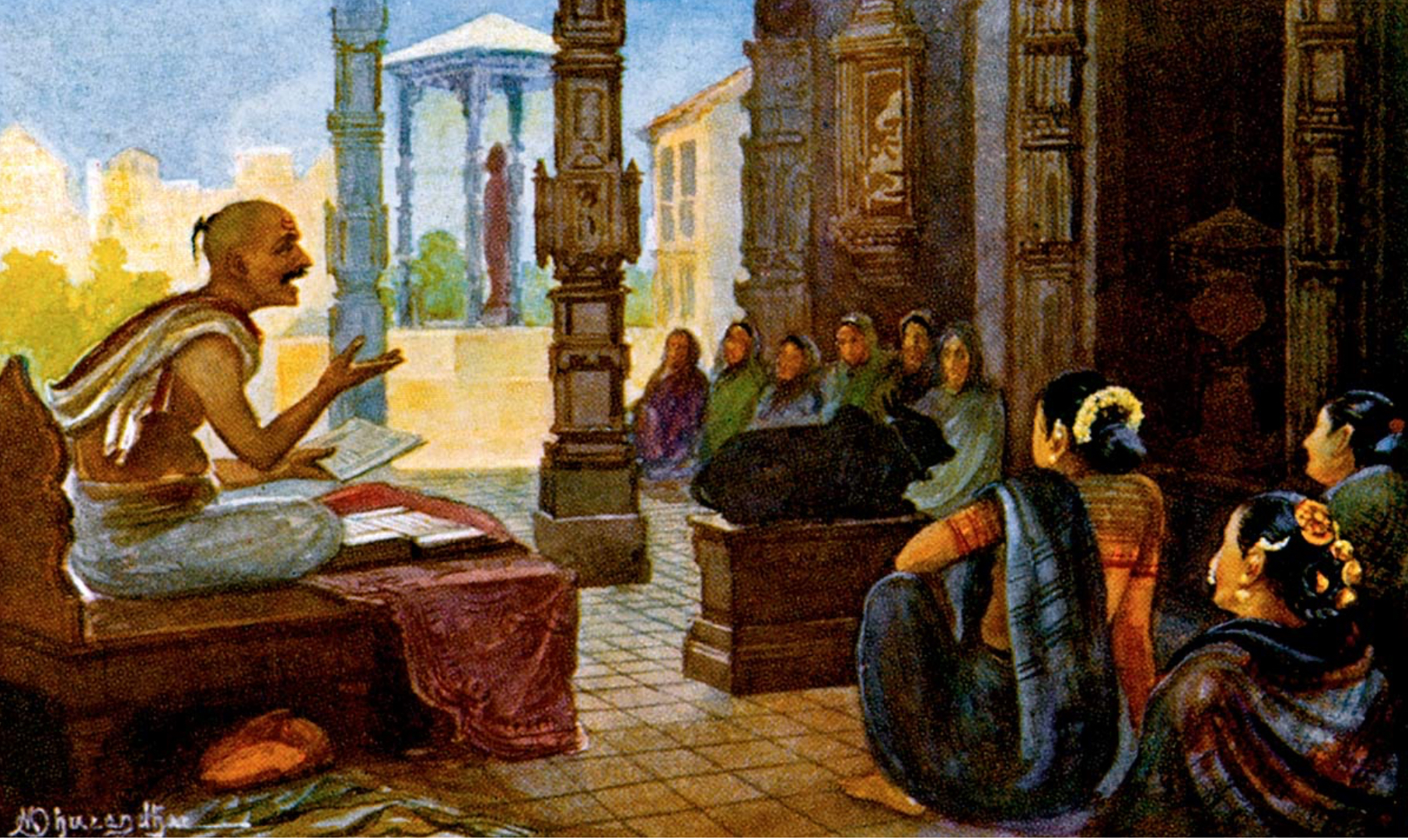
A Custom of the Hindus

Hindus (Hindustani) are people who religiously adhere to Hinduism. Historically, the term has also been used as a geographical, cultural, and later religious identifier for people living in the Indian subcontinent. ~ 


The frequent invitations every woman receives to “run in and spend the morning with me” gives a forcible suggestion of how little any one must have to do who can afford to take the golden hours of the day for social recreation. The Hindus have a custom, when detained too long by a prosy or untimely visitor, of rising and saying courteously, “Go, and come again.” 

The guest never thinks of resenting the decidedly broad hint, but, receiving it in the spirit in which it is offered, makes his adieu. While the introduction of this habit into America may not be altogether practicable, it would be well if the plea of pressing occupation could be accepted by one woman from another in the same manner that similar excuses are exchanged between business men. -Christine Terhune Herrick in Philadelphia Press, 1886


  🍽Etiquette Enthusiast, Maura J. Graber, is the Site Editor for the Etiquipedia© Etiquette Encyclopedia

Friday, May 24, 2024

Gilded Age Card Protocol

‘‘There is one unvarying rule for women, married and single. It is never right nor in good form to sign one’s name with the addition of Miss or Mrs. You are Mary Emily Jones, not Mrs. Patrick Fitzgerald Jones, to whomsoever you may be writing. If it is necessary to notify your correspondent of your married style and estate, you may do so and in one of several ways. 
A Woman’s Name: The Etiquette of the Signature and the Name on the Card

As far as the etiquette of the signature is concerned, Harper’s Bazar says: ‘‘There is one unvarying rule for women, married and single. It is never right nor in good form to sign one’s name with the addition of Miss or Mrs. You are Mary Emily Jones, not Mrs. Patrick Fitzgerald Jones, to whomsoever you may be writing. If it is necessary to notify your correspondent of your married style and estate, you may do so and in one of several ways. 

“Please remember that a correspondent should not be left in doubt as to this, much embarrassment being frequently caused by the omission, in letters between strangers, of exact information as to whether the writer is married or single. You may readily indicate all you wish to tell. “You may place Mrs. P. F. before the Mary Emily aforesaid in parentheses. You may write Mrs. Patrick Fitzgerald out fully and plainly in the left hand corner of your sheet below your proper signature, or you may simply inclose your engraved visiting card in your letter, this being on the whole most elegant and also the most convenient method of showing one’s relation to society. 

“The exception must be remarked here that the visiting card is out of place in an exclusively business letter — one which has not even remotely a social bearing. Card etiquette is one of the finest and most delicate tests by which a woman classifies her acquaintances. Its laws are unalterable, its sins of omission or commission among the few that are absolutely unpardonable. Concerning the name on the card an authority tells that the name engraved in script through the center should have the address below it in the right hand corner, the day for receiving in the left corner. This name should never include a husband’s title or profession, but spell out the husband’s name in full, and not be written with the initials alone. 

“A daughter in the first year of her social life has no card, but engraves her name on her mother’s card. After this probationary year the eldest or the only daughter in a family writes only Miss before her family name. The younger daughters write the full name. It has been decided that on a widow’s card the dear name so long borne, so hard to relinquish, may be retained with propriety for social use, though in all practical matters the widow writes her own Christian name instead of that of her husband.”— Los Angeles Herald, 1893


  🍽Etiquette Enthusiast, Maura J. Graber, is the Site Editor for the Etiquipedia© Etiquette Encyclopedia

Friday, September 17, 2021

Gilded Age Visiting Etiquette

Using both hands, while his hat rests gracefully– A gentleman should never take the principal place in the room, nor, on the other hand, sit at an inconvenient distance from the lady of the house. He must hold his hat gracefully, not put it on a chair or table, or, if he wants to use both hands, must place it on the floor close to his chair. 
-Photo source, Pinterest

In good society, a visitor, unless he is a complete stranger, does not wait to be invited to sit down, but takes a seat at once easily. A gentleman should never take the principal place in the room, nor, on the other hand, sit at an inconvenient distance from the lady of the house. He must hold his hat gracefully, not put it on a chair or table, or, if he wants to use both hands, must place it on the floor close to his chair. 

A well-bred lady, who is receiving two or three visitors at a time, pays equal attention to all, and attempts, as much as possible, to generalize the conversation, turning to all in succession. The last arrival, however, receives a little more attention at first than the others, and the latter, to spare her embarrassment, should leave as soon as convenient. 

People who out-sit two or three parties of visitors, unless they have some particular motive for doing so, come under the denomination of “bores.” A “bore” is a person who does not know when you have had enough of his or her company. – Martine’s Handbook, 1870


Etiquette Enthusiast, Maura J. Graber, is the Site Editor for the Etiquipedia© Etiquette Encyclopedia