Showing posts with label British Coronation Etiquette. Show all posts

Saturday, May 6, 2023

Coronation Street Party Etiquette

British markets and online sites are bursting with street party treats, drinks and festive decor. For over a century, street parties in England have been localized festive celebrations for Coronations and Royal weddings. The British love these street parties are use them to mark all kinds of special occasions and build community spirit with one’s neighbors at the same time. —Image source, Instagram

How About Some Royal Manners for the Coronation of Charles III and His Queen?

Grant Harrold was butler to Prince Charles at Highgrove from 2004 to 2011. For a well-mannered Coronation street party, he says everyone should be invited ‘and that means everyone’.

Don't be a fancy-dress fascist, he says: ‘Not everybody is comfortable with fancy dress, so if you do want a theme, make it clear the dress code is optional with a “or come as you're comfortable”. There's nothing worse than making your less-showy guests dread the day.’

And have a team of hosts. 'The King is an excellent host because he's always thinking of others and making sure everyone feels personally welcomed.

‘At my job interview, he served me tea and biscuits himself.

‘Get a team of hosts together and space them out evenly along the tables. It's their responsibility to make sure everyone in their section has their glass topped up, plenty to eat and is feeling included in any conversation or games.’

Don't forget to lay your tables: this isn't a school canteen: ‘Not only will a fully laid table look wonderfully inviting, it's also the best way to ensure everyone seated has a glass, plate, cutlery and napkin.’

Grant’s biggest bugbear is people who text at the table. ‘Only get your phone out to take pictures and videos of all the fun going on around you. And if you really can't manage to keep your phone on silent, at least set your ringtone to God Save The King.’

And don't let everyone just sit next to their pals: ‘The temptation at a party like this is to make a beeline for the neighbours you know best, have a riotous time and ignore everyone else. But a street or village party is a brilliant chance to build a sense of community. The royals are consummate minglers and always opt for “how nice to see you” as an opener.

‘They also talk to the guest on their left during the main course, and the one on their right during pudding.’ — From Mail Online, April 2023


 🍽Etiquette Enthusiast, Maura J. Graber, is the Site Editor for the Etiquipedia© Etiquette Encyclopedia

Tuesday, April 25, 2023

The Coronation of King Charles III


The Coronation of King Charles III and Queen Consort Camilla
Picture
This coming May, millions of people around the world will gather in front of television sets and computer screens, to watch what to many, is a once in a blue moon event. Like a rather rare celestial event, the coronation of King Charles III and Queen Camilla of England, will be watched with great anticipation, and with many questions in people’s minds.

Who will be in attendance? Will it just be working Royals and the landed gentry? Or will it include commoners or nonworking Royals, who have travelled in for the event? Who will be participating in the ceremony? Will favoured charities have members in attendance? Everyone wants a seat to see the leader of this new slimmed down monarchy crowned King. Who are those favoured few who have already received “save the date” emails from Buckingham Palace. No one knows for certain.

Other questions have had the talking heads on radio, television and podcasts asking about the traditions which have long been the standard for British coronations. Will Charles and Camilla be sticking with tradition? Or will they stray from the norm. Will traditions evolve to include changes in Royal protocol? Many in the news are speculating. But we really won’t know everything until the 6th of May.

The protocol of coronations in Great Britain goes back over 1000 years.  Gleaning from European traditions, government and religion entwined and evolved over time to bring us what we have seen in the coronation of Queen Elizabeth II in 1953 and soon, King Charles III and his Queen, this May.
Picture
What To Expect
What can you expect at a coronation today?  The ultimate guidebook for the Royal family is Liber Regalis (Royal Book), created in 1382. It has assisted members for over 600 years in organising this state event.  This book may have captured elements of the event created by Saint Dunstan for King Edgar’s coronation ceremony at Bath Abbey in 973.  Then in 1066, the crowing of William the Conqueror saw proceedings take place at Westminster Abby, where it remains today. 

When Did It All Start
As Queen Elizabeth II was Lying-in-State and the fully planned State Funeral was being held, the organisation for the crowning of King Charles III began.  The significant players overseeing this momentous event are the coronation committee comprising the Government of the United Kingdom, the Royal Household, the Privy Council and the Church of England.  What do these bodies need to consider when planning a coronation?  The coronation date, its proclamation, the price, who attends, the required furniture, music and the honours conferred to mark the grand occasion. 

Of course, modern safety laws have to be adhered to, so the number of those in attendance has already been slashed by the thousands. Many are already disappointed, fearing they will never receive the coveted email and confirmation of their expected attendance from Buckingham Palace. And if someone does receive a coveted email to attend the coronation, does that mean all is well? Some members of the peerage, who wear their coronets and robes only at a coronation, have waited a lifetime for this opportunity. Will they be disheartened in the end?

Rumour has it that disappointed duchesses have had a traditional key role of theirs dismantled in the coronation ceremony. The queen wants her five grandchildren to take centre stage at the coronation alongside the King’s royal heirs, performing a role previously given to duchesses. This role has in coronations past, been performed as the new Queen is anointed with holy oil. And what of the new King’s pledge to make the coronation more inclusive of other religions? In the ceremony, the Archbishop of Canterbury by tradition, asks the King three lengthy questions. These are specifically regarding the Church of England. The coronation has now been shortened to one hour from the original three hours. Will those questions by the Archbishop be shortened or eliminated altogether? Will they and actually include the mention of other religions?
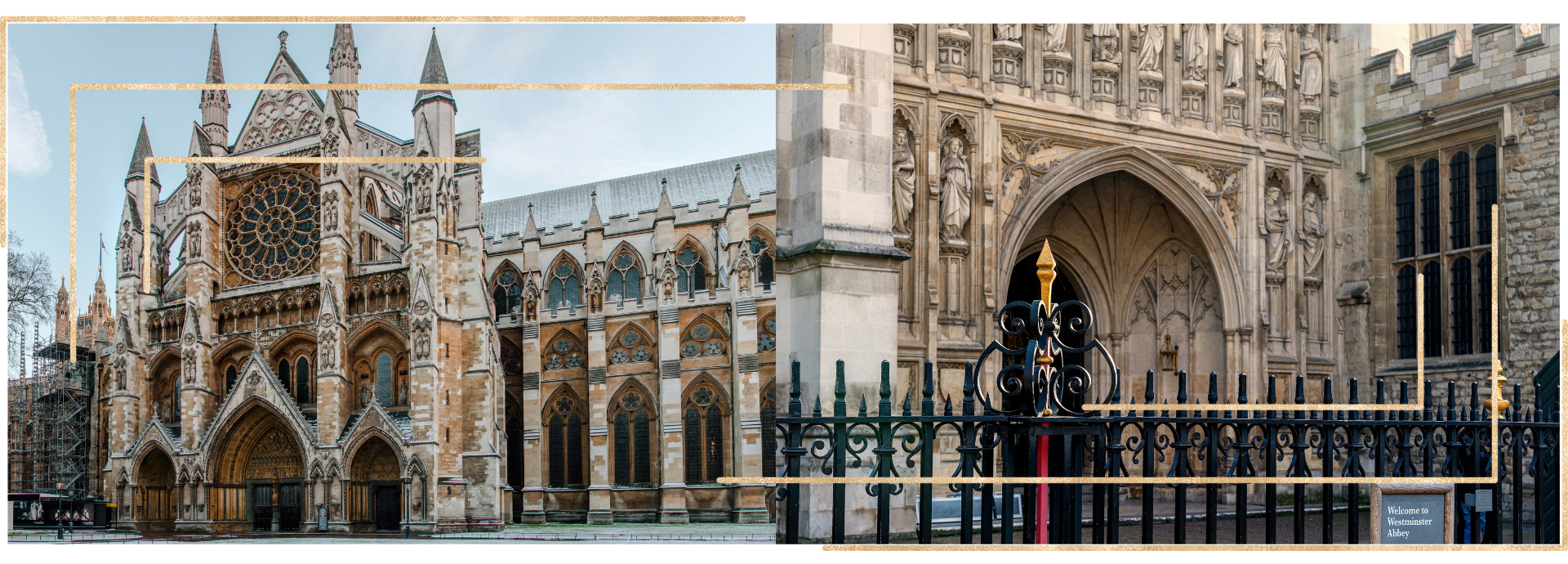
For more about the Coronation at Westminster Abbey, please go to >> westminister-abbey.org
Picture
The Crowning Event
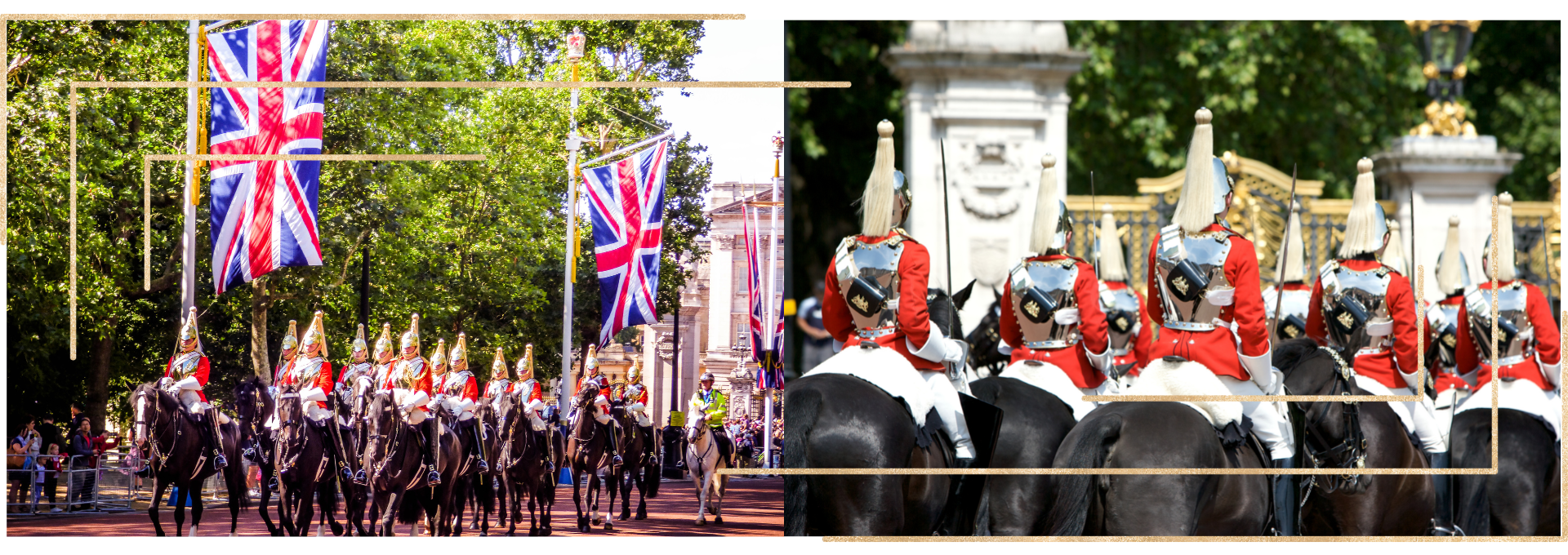
The main event occurs at Westminster Abbey, where the King will be escorted by carriage from Buckingham Palace. Rumor has it that the very uncomfortable, but exquisite gold carriage, that previous Kings and Queens have used for the ceremony, will not be used in May. Will this have the look of an ordinary, albeit exciting royal wedding, instead of an extraordinary coronation?

Once there, the Procession to the Abbey begins quickly  to move to the Procession inside the Abby.  There begins The Recognition of King Charles III.  After that, one can expect hymns to be sung during and after the Coronation Oath and The Anointing. The Homage is where the highly anticipated and photographed moment of a coronation occurs, where King Charles III is given the Orb placed into his right hand and the Scepter, which he holds with his left hand, as well as golden bracelets and a ring. Once this occurs, the choir will sing anthems, drums beats, trumpets sound, and joyful crying out to mark the crowing of Great Britain's new King. 

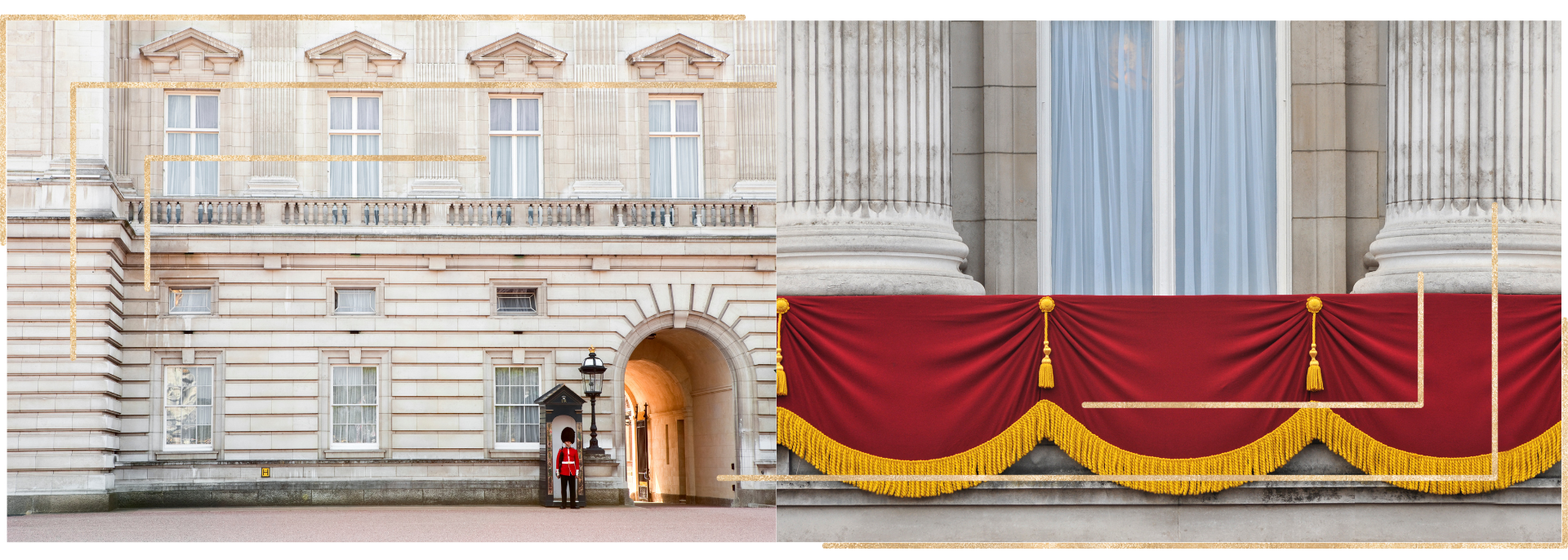
Camilla, The Queen Consort, will be crowned after the Homage takes place.  Once that is complete, the departure will occur, and esteemed guests, family and hosts will make their way from Westminster Abbey to Buckingham Palace to be seen by thousands of onlookers and broadcasted to millions.  The King and the Queen Consort, along with the Members of the Royal Family, will assemble for a perfectly Instagramable balcony appearance.  The day ends with a Coronation banquet.

Life After The Crown
In the days and months after the Coronation, there will be many public opportunities for the new King and Queen to meet their subjects. These traditionally begin with a Coronation Review of the Fleet, Service of thanksgiving, UK and Commonwealth tours, Coronation portraits, and most importantly, the Investiture of the Prince of Wales. The Investiture tells the world who will be the next in succession to the throne. — By contributor, Elizabeth Soos, at Auersmont.com 
Picture
For more about the Coronation, please go to >> cornontion.gov.uk
Picture

Contributor, Elizabeth Soos, has had a keen interest in cultural customs. With her European background and extensive travel, Soos developed an interest in the many forms of respect and cultural expectations in the countries she has visited. With her 20+ years’ experience in customer service within private international companies based in Australia, and her lifetime interest in manners and research, she decided to branch out into the field of etiquette and deportment. Through her self-directed studies and by completing the Train-The-Trainer’s course offered by Emma Dupont’s School of Etiquette in London and by Guillaume Rue de Bernadac at Academie de Bernadac based in Paris and Shanghai, she founded Auersmont School of Etiquette.


 🍽Etiquette Enthusiast, Maura J. Graber, is the Site Editor for the Etiquipedia© Etiquette Encyclopedia

Saturday, September 17, 2022

Royal Dresser Consulted Hollywood

Hilda Grenier is Coronation Specialist. She explains royal jewels to actress Jean Simmons.
                 
Hollywood’s ‘royal matters’ no problem for this lady 
Elizabeth is crowned. As consultant on MGM's new Technicolor romance, “Young Bess,” she viewed the rise of England's great Queen Elizabeth (played by Jean Simmons) from childhood until the death of Queen Mary (Bloody Mary) in 1558, at which time Young Bess be came queen.

Mrs. Grenier’s Royal parlay will be complete when she witnesses the Coronation of the new Elizabeth.

The latter hadn’t yet entered the world when Mrs. Grenier came to America with her husband in 1915, but she knew Elizabeth’s father, the late George VI, and her grandmother, the late Queen Mary, with whom she corresponded regularly before the latter's death.

Mrs. Grenier said that the Queen was vitally interested in the filming of the new picture, which, in addition to Miss Simmons, stars Stewart Granger, as Tom Seymour; Deborah Kerr, as Queen Catherine Parr, and Charles Laughton, as the pompous Henry.

When Mary became Queen 

Planning on being in London on June 2 for the Coronation? No? Well, don't fret about it because there's a gray-haired little lady right here in Hollywood who can give you a quick run down on the whole affair.

Hilda Grenier, in her 60s, is as enthusiastic as a teen-ager over her own approaching trip to England for the great occasion. She was there in 1902 when Edward VII was crowned, and again in 1911 when George V ascended the throne.

Now, as she puts it, “I believe I’ll be the only person to see two Elizabeths become Queen of England in a period of little more than six months.”

That rather confounding historical twist is the result of Mrs. Grenier’s present occupation as a technical consultant in Hollywood. Scarcely a motion picture Coronation scene or one of Royal pageantry is filmed these days without her being present to see that it is done correctly.

Her latest chore in this respect is what brought up the business about her seeing two Royal procession forms in the annex. “Then the procession enters the Abbey by the west door the Lord Mayor of London, foreign Royalty, Rajahs, Ladies in Waiting, diplomats, little pages, chamberlains, etc… All is confusion for a moment, then, as if by magic, comes order. A blaze of lights illuminates the walls of ageless stone, a boys choir and a great organ are heard.

“The ceremony is a tremendous emotional and religious experience. There is the lengthy Litany and Sermon,” Mrs. Grenier continued, “then, the Queen makes the first oblation at the altar, and takes the Coronation oath and is anointed by the Archbishop. Many other colorful ceremonies follow, during which she is loaded down with emblematic burdens of Monarchy. Then the Archbishop stands alone at the altar, and raises significantly and reverently in his hands, a shining, blazing object— the Crown of England. He consecrates it, raises it high above the Queen and then slowly lowers it upon her head.

“Then comes the Holy Communion, the gathering in St. Edward’s chapel and, finally, the procession leaves the Abbey, This, is when the man in the street has his hour.”

Whether inside or outside the Abbey, Mrs. Grenier says that it's a celebration that brings out goose pimples. In her 37 years in the U.S. —she's been a naturalized citizen, since 1926— she has learned that not much surprises Americans. “But,” she said, “those in London on June 2 will experience a surprise a minute. You just have to see a Coronation to be impressed by it. Words alone are not enough.”

Knowledge of Royal matters has kept her in steady demand in Hollywood. Besides “Young Bess,” she has advised on such films as “The Prisoner of Zenda,” “My Cousin Rachel,” “Gunga Din,” “Great Expectations,” “Disraeli,” “Mudlark” and “The Prince and the Pauper.” It was the last picture, incidentally, that brought her some regret. She was busily supervising a Hollywood Coronation scene when George VI received the crown in England. She hated to miss it. But in her mind’s eye, she saw everything that attended the Coronation just as she can now picture in advance all the splendorous details of Elizabeth II’s great day.

“It is always, unalterably, the same,” she said. “And that just seems to add to its greatness— the greatness of an occasion pregnant with history and hallowed by centuries. Only the faces are different.

“The real excitement actually begins from two to three weeks before the Coronation, when the highest representatives of governments and Royalty start arriving from all over the world. There is a steady stream of fetes, dinners and balls at the palaces and gala performances at the opera and the theatre. Most of London’s business streets are elaborately decorated and flags are flown at the embassies and many private homes.

“When June 2 dawns, the parade route from Buckingham Palace to Westminster Abbey will be swarming with people, many of whom have been waiting from the day before. Thousands will have paid from $25 to $85 for bleacher seats along the route.

“The biggest and most enthusiastic crowd will be gathered outside the Abbey. A great cheer will go up as the Queen approaches in the lumbering State Coach built for George III in 1761. Inside the Abbey, more than 7000 peers and peeresses will be waiting, packed tightly together in their resplendent robes.

While with Queen Mary, Mrs. Grenier was in close personal attendance to her in the executive position of an accredited
Royal Dresser, the modern name for Keeper of the Robes. She simultaneously was trained in all branches of etiquette and protocol because of State visits to other Courts. (She has stayed in most of the old castles, palaces and great houses of Britain and Europe and, besides Coronations, has been present at every kind of Royal and social functions from baptisms and weddings, not to mention several Royal tiger and elephant hunts in India.)

The vast fund of information she has gathered, has made her probably the best informed person in the country on Royal matters. Born in Kent on Nov. 14, 1886, the same birthday as the new Elizabeth's little Prince Charles– Mrs. Grenier began training for her Court service when she was 17, at which time she was sent to the German Imperial Court as Royal Dresser to the late Duchess of Saxe Meininger, eldest granddaughter of Queen Victoria. Los Angeles Daily News, 1953


👑Etiquette Enthusiast, Maura J. Graber, is the Site Editor for the Etiquipedia© Etiquette Encyclopedia


Tuesday, September 11, 2018

British Coronation Etiquette – King Henry V

Tom Hiddleston portraying Henry V in the 2012 British television film based on the play of the same name by William Shakespeare. It was the fourth film in the series of television films called “The Hollow Crown.”

Remarkable incidents in this most important occasion of a British ruler’s life. Striking features of ceremony from the earliest day to the last great Coronation event of the 19th Century
👑👑👑👑👑👑👑👑👑👑👑👑
The Coronation of England’s Henry V

In the age of the Plantagenets, Tudors and under the Stuarts, until the Coronation of James II, it was customary for Kings to reside in the Tower of London for some time, previous to the Coronation. On the Saturday before the Coronation, the Sovereign went from Westminster to the Tower of London, attended by great numbers of the Nobility and civic dignitaries, and by those people who were to be Knighted, and who watched their arms that night. Each squire had a chamber allotted him, and a bath in which he bathed. The ensuing day after mass, the Sovereign created them Knights. After their investiture they were permitted to sit down in the King's presence, but during the whole time of dinner, they were rot allowed to partake of any part, of the entertainment. The Queens in their own right, Mary and Elizabeth, though they girded the swords on the Knights with their own-hands, did not give the accolade or blow, which is the determinate action that impresses the character of Knighthood. At both Coronations, Henry, Earl of Arundel, performed this office. A copy of his appointment is to be found in Rymer.

Henry V was Crowned on the 9th of April, 1413. Katherine of France, the Queen of Henry V, was Crowned on the 24th of February, 1420. The account which Holinshed gives of the magnificence displayed upon this occasion is far too characteristic of the age to be omitted: “After the great solemnization of the foresaid Coronation in the church of St. Peter’s, at Westminster, was ended, the Queene was conveied into the great Hall of Westminster, and there set to dinner. Upon whose right hand sat, at the end of the table, the Archbishop of Canterbury and Henrie surnamed the Rich, Cardinall of Winchester. 

Upon the left hand of the Queene sat the King of Scots in his estate who was served with covered masse, as were the foresaid Bishops, but yet after them. Upon the left hand, next to the cupboard, sat the maoir and his brethren, the aldermen of London. The Bishops began the table, against the Barons of the Cinque Ports; and the Ladies against the maior. These, with, others, ordered the service, and, for the first course, brawne in mustard, eels in burneur, pike in herbage, fuiment with balien, lamprie powdered, trout, codling, plaice fried, martine fried trout, codling, plaice fried crabs, leech lumbard flourished tartes and a device called a pelican, sitting on hir nest, with hir birds and an image of St. Katherine holding a booke and disputing with doctors. 

“The second course was gellie coloured with columbine flowers, whits potage or creame of almonde, breame of the sea, conger, cheuen, barbil, and roch, fresh salmon, haliba, gurnard, rochet broilee, smelts, fried, crevis, or lobster, leechdamaske, with the King's posie flourished thereon. The third course was dates in compost, creame motle, carp deore, turbut, tench perch with goion, fresh turgion with welks, porperous rosted, creves da cau doure, branis, eeles rosted with lamprie, a leech, called the white leech, flourished with hawthorne leaves and red hawes; a marchpane garnished with diverse figures of angels.”– San Francisco Call, 1901

Etiquette Enthusiast, Maura J. Graber, is the Site Editor for the Etiquipedia© Etiquette Encyclopedia 
Saturday, September 8, 2018

British Coronation Etiquette – Queen Elizabeth I

Actress Cate Blanchett in one of her fine film portrayals of Elizabeth I – By the end of Elizabeth’s I reign, in his “Court and Country,” of 1618, Nicholas Breton gives an instructive account of the strict rules which were drawn up for observance in great households at that time, and says that the gentlemen who attended on great Lords and Ladies had enough to do to carry these orders out. “Not a trencher must be laid or a napkin folded awry; not a dish misplaced; not a capon carved or a rabbit unlaced contrary to the usual practice; not a glass filled or a cup uncovered save at the appointed moment: everybody must stand, speak, and look according to regulation.”

Remarkable incidents in this most important occasion of a British ruler’s life. Striking features of ceremony from the earliest day to the last great Coronation event of the 19th Century
👑👑👑👑👑👑👑👑👑👑👑👑
The Coronation of England’s Elizabeth I


Speed's account of the procession of Queen Elizabeth contains some particulars' too remarkable to be omitted. “All things in readiness, upon the fourteenth of January, with great triumphes and suptuous shewes, shee passed thorow London, towards “Westminster, to receive her Imperiall Crowne; but before she entered her chariot in the Tower, acknowledging that the seat was God's into which shee was to enter, and shee his viceregent to wield the English sceptre: in that royall assembly, with eyes and hands elevated to heaven, upon her knees, she prayed for his assistance, as Solomon did for wisdome when he tooke the like charge: with a thankful remembrance unto God for his continued preservation, which had brought her thorow great dangers unto that present dignitie.”

She was crowned the 5th of January, 1555, by Oglethorpe, Bishop of Carlisle, the see of Canterbury being vacant by the death of Cardinal Pole. Holinshed says that she composed the following prayer as she went to her coronation: “O Lord Almightie and Everlasting God, I give thee most heartle thanks that thou hast beene so merciful into me, as to spare me to behold this joifull daie. And I acknowledge that thou has delt as wonderfullie and as merciefullie with me as thou didst with thy true and faithful servant Daniell, thy prophet, whome thou delivered out of the den from the crueltie of the greedy and roaring lions. Even so was I overwhelmed, and only by thee delivered. To thee, therefore, onelle be thanks, honor and praise for ever. Amen.” – San Francisco Call, 1901


Etiquette Enthusiast, Maura J. Graber, is the Site Editor for the Etiquipedia© Etiquette Encyclopedia 
Friday, September 7, 2018

British Coronation Etiquette – Queen Victoria


Even though an entire era of purported graceful living and good manners was named after Victoria, her manners needed quite a bit of work – According to Kate Hubbard, in her book, “Serving Victoria: Life in the Royal Household” Victoria, “loved her food. She was greedy and she gobbled. She liked her dinners to last no more than half an hour. Guests would quite often find their plates whisked away while they were still eating because once she had finished, all the plates were removed. She was a hearty eater and she was a fast eater.” And as for courtly conversation" at the table? She did not like politics to be brought up, and, oddly, “She didn't like marriage being discussed in front of her youngest daughter, Beatrice, before Beatrice married. Anyone who mentioned marriage at dinner was swiftly reprimanded.


Remarkable incidents in this most important occasion of a British ruler’s life. Striking features of ceremony from the earliest day to the last great Coronation event of the 19th Century
👑👑👑👑👑👑👑👑👑👑👑👑
The Coronation of England’s Victoria

At seventeen minutes past three on the morning of June 28, 1838, a Royal salute of twenty-one guns announced that the sun was then rising upon the Coronation day of Victoria. By 4 o'clock the streets were so thronged with carriages and pedestrians, that they were in many places impassable and the whole population seemed to have poured out in the direction of the parks and of Westminster Abbey. It was not until half-past ten that her Majesty's carriage passed Apsley House. It moved on amid the loud acclamations of her subjects. The state coach was drawn by eight cream-colored horses and attended by a yeoman of the guard at each wheel and two footmen at each floor. 


Endless grooms and guards attended the long procession. It was as splendid as befitted the rejoicing of the people over a Coronation, that made them happier than any since the time of Alfred. The London Sun of the 28th reported that: The Queen, attended, passed to the altar. Her Majesty, kneeling upon the cushion, made her first offering of a pail of altar-cloth of gold, which was delivered by an Officer of the Wardrobe to the Lord Chamberlain, by his Lordship to the Lord Great Chamberlain, and by him to the Queen, who delivered it to the Archbishop of Canterbury, by whom it was placed on the altar.


After elaborate services followed the sermon by the Bishop of London, then came the oath and the anointing. Then there were further ceremonies of the spurs, the sword, the mantle, the orb, ring and scepters, and at last came the Dean of Westminster bearing the Crown. Tho Archbishop took and placed it on her Majesty's head, when the people, with loud and repeated, shouts, cried: “God save the Queen.” There was a doffing of caps, a sound of trumpets, a beating of drums, a firing of guns. The old report says: “Never did we hear louder or more hearty plaudits, that almost rent the walls of the old abbey, setting at naught all etiquette and ceremony, than those which burst from the lips and hearts of her attached and loyal people, when the Crown was placed on the head of their young and lovely Sovereign.” –San Francisco Call, 1901


Etiquette Enthusiast, Maura J. Graber, is the Site Editor for the Etiquipedia© Etiquette Encyclopedia
Thursday, September 6, 2018

British Coronation Etiquette – William II, Henry I and King Stephen

King William Rufus (William II) House of Normandy 1087 - 1100 – According to ‘Live as Free People.com,’ Rufus and his younger brother and successor, Henry I, were trained in the household of the Archbishop Lanfranc of Canterbury.Before the Norman conquest in England, between 10% and 30% of the population was held in slavery. Slaves were treated as human chattel. Slaves could be sold, beaten and branded. It was a sin for a master to kill a slave, but not considered a crime.
–Photo source Wayne Miles, Pictify


Remarkable incidents in this most important occasion of a British ruler’s life. Striking features of ceremony from the earliest day to the last great Coronation event of the 19th Century
👑👑👑👑👑👑👑👑👑👑👑👑

The Coronation of England’s William II, Rufus


William II laid claim to the Crown by virtue of a form of election, the nobles believing that he would be less inclined to control their usurped privileges than William’s elder brother, Robert. He was Crowned at Westminster September 27, 1086. by Lafranc, Archbishop of Canterbury, and the Archbishop of York. Besides swearing to observe justice, equity and mercy in all his conduct, and to maintain the peace, liberties and privileges of the church, he promised that he would follow the Archbishop's counsels in his administrations.

Both Henry and his brother, Rufus, were knighted by the Archbishop Lanfranc of Canterbury. , Henry in 1086, as an eighteen-year-old, Rufus at an unknown date, but probably at eighteen as well (by 1079). Here are seven knightly accomplishments that a young man had to do: Swimming, falconry, song-writing, chess (newly fashionable), riding, archery, and combat. 


The Coronation of England’s of King Henry I
The Coronation of Henry I was performed in a hurried manner on the fourth day after the death of Rufus. In every respect the forms of his Coronation were the same as those of the Saxon Kings.


King Stephen was altogether a different character than was usual in his family . The very antithesis of his uncle, Henry I and his grandfather William the Conqueror. According to contemporary chroniclers, he was known to have had an attractive personality and was good natured and courteous, he was also lacking in resolution, weak-willed, did not enforce law and order and anarchy was the inevitable result. The lords recognised these weaknesses and exploited them to their own advantage. Robber barons became a law unto themselves and built unlicensed castles from which they terrorised the populace. – English Monarchs.com


The Coronation of England’s King Stephen

The coronation of Stephen, after he had sworn allegiance to the Empress Matilda, was viewed with much anxiety in an age when it was supposed that the punishment of perjury was immediate and visible. The ceremony was performed by William, Archbishop of Canterbury, and it is said that a dreadful storm arose which threw all the parties into such confusion, that the consecrated water fell on the ground, the Kiss of Peace after the sacrament was omitted, and even the final benediction forgotten. – San Francisco Call, 1901


Etiquette Enthusiast, Maura J. Graber, is the Site Editor for the Etiquipedia© Etiquette Encyclopedia 

British Coronation Etiquette – William the Conqueror

The Normans introduced chivalry to Britain – Savage in their warfare, William and the Normans were more civilised in their politics. Before 1066, the English political elite had routinely resorted to murdering their political rivals, as they would do again in the later Middle Ages. But for more than two centuries after the Conquest, chivalry prevailed, and political killing became taboo. “No man dared slay another, no matter what wrong he had done him”, said the Anglo-Saxon Chronicle in its summary of the plus points of William’s reign. Waltheof of Northumbria, beheaded in 1076, was the only Earl to be executed after the Norman takeover. The next execution of an Earl in England occurred in 1306, some 230 years later. – From Medieval Archives.com

Remarkable incidents in this most important occasion of a British ruler’s life. Striking features of ceremony from the earliest day to the last great Coronation event of the 19th Century
👑👑👑👑👑👑👑👑👑👑👑👑
The Coronation of England’s William the Conqueror  

In the age of the Plantagenets, Tudors and under the Stuarts, until the Coronation of James II, it was customary for Kings to reside in the Tower of London for some time, previous to the Coronation. On the Saturday before the Coronation, the Sovereign went from Westminster to the Tower of London, attended by great numbers of the Nobility and civic dignitaries, and by those people who were to be Knighted, and who watched their arms that night. Each squire had a chamber allotted him, and a bath in which he bathed. The ensuing day after mass, the Sovereign created them Knights. After their investiture they were permitted to sit down in the King's presence, but during the whole time of dinner, they were rot allowed to partake of any part, of the entertainment. The Queens in their own right, Mary and Elizabeth, though they girded the swords on the Knights with their own-hands, did not give the accolade or blow, which is the determinate action that impresses the character of Knighthood. At both Coronations, Henry, Earl of Arundel, performed this office. A copy of his appointment is to be found in Rymer.

After William had taken the Coronation oath, to protect the church, prohibit oppression and execute judgment in mercy, Aldred put the question, “Will ye have this Prince to be your King?” The people answered with loud shouts, and the noise gave so much alarm to the Norman garrison in the city, that the soldiers, believing the English to have revolted, without waiting to make any investigation, immediately set the next houses on fire, which, spreading and giving a general alarm, most of the congregation rushed out of the church, the English hastening to stop the fire and the Normans to plunder. The bishops, clergy and monks, who remained within the church, were in such confusion that they were scarce able to go through the office of crowning the King. William himself, who saw the tumult, and could not conjecture its cause, sate trembling at the foot of the altar, and, though no great mischief was done by the fire, it laid the foundation of a long and inveterate enmity between the English and the Normans. San Francisco Call, 1901


Etiquette Enthusiast, Maura J. Graber, is the Site Editor for the Etiquipedia© Etiquette Encyclopedia