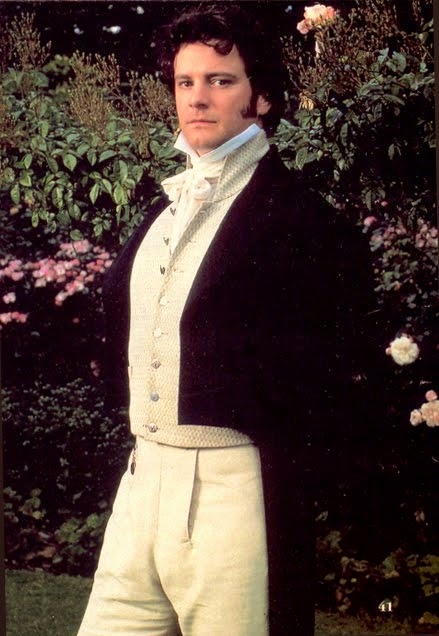
Showing posts with label Georgian Era Etiquette. Show all posts

Monday, October 11, 2021

Georgian Era Dining and Etiquette

Dinnertime for the elite became later and later, and in contrast to the meagre breakfast, a formal dinner could be a dazzling array of food.

In Georgian times lunch hardly existed, although for those who breakfasted early, a small snack might be eaten. In towns many shops sold pies and pastries, while street sellers offered shellfish and other ready-to-eat items. Dinner was the main meal, eaten at any time in the afternoon between two and five o'clock. The timing of dinner was related to the hours of daylight, since the cooks needed to work in daylight, especially for formal dinners with guests where preparations could take hours. 

Dinnertime for the elite became later and later, and in contrast to the meagre breakfast, a formal dinner could be a dazzling array of food. The first course, served on the table all at once, had numerous dishes, and was followed by a second course with a smaller selection of meats and fish, along with savoury and sweet items. Finally, a selection of nuts, sweetmeats and occasionally fruit constituted the dessert course, at which point the servants withdrew.

When Woodforde entertained Squire Custance and other guests, he did his best to provide a suitable feast: ‘I gave them for dinner, a couple of chicken boiled and a tongue, a leg of mutton boiled and capers, and batter pudding for the first course. Second, a couple of ducks rosted and green peas, some artichokes, tarts and blamange. After dinner, almonds and raisins, oranges and strawberries. Mountain and port wines.’ Even in more modest households, the hostess rose after the dessert course when guests were present and led the ladies to the drawing room, leaving the men to their own conversation for a while before they rejoined the ladies for tea or coffee.

An everyday family dinner was more restrained, and Woodforde routinely recorded meals such as ‘Dinner calfs feet stewed, hash mutton & etc…’ or ‘Dinner to day hashed calfs head and a loin of lamb rosted with stewed gooseberrries.’ For better-off people like Woodforde, even mundane dinners could be lengthy affairs, but most working people had no more than an hour's break for dinner, before continuing with their labours. Supper was the day’s final meal and was usually something insubstantial.

Table manners were of importance to the higher classes, although the poorest were more concerned with survival than etiquette. In a book on manners, the Reverend John Trusler warned how to avoid appearing low class or impolite: ‘Eating quick, or very slow, at meals, is characteristic of the vulgar; the first infers poverty, that you have not had a good meal for some time; the last, if abroad [dining out], that that you dislike entertainment: if at home [and eating slowly], that you are rude enough to set before your friends what you cannot eat yourself.’ From “Jane Austen’s England,” by Roy and Leslie Adkins


Etiquette Enthusiast, Maura J. Graber, is the Site Editor for the Etiquipedia© Etiquette Encyclopedia

Thursday, September 23, 2021

Georgian Vulgarity vs Table Manners


“Eating quick, or very slow, at meals, is characteristic of the vulgar; the first infers poverty, that you have not had a good meal for some time; the last, if abroad [dining out], that you dislike your entertainment: if at home [and eating slowly], that you are rude enough to set before your friends what you cannot eat yourself.”

Table manners were of importance to the higher classes, although the poorest were more concerned with survival than etiquette. In a book on manners, the Reverend John Trusler warned how to avoid appearing low class or impolite: “Eating quick, or very slow, at meals, is characteristic of the vulgar; the first infers poverty, that you have not had a good meal for some time; the last, if abroad [dining out], that you dislike your entertainment: if at home [and eating slowly], that you are rude enough to set before your friends what you cannot eat yourself.”

Some hosts did offer food that we would now discard, and just before Christmas 1778 Woodforde unashamedly set before his guests a dinner that included part of a ham, the major part of which ham was entirely eaten out by the flies getting into it. Even so, his guests also stayed for supper, and “We were exceeding merry all the night.”– From, “Jane Austen’s England,” by Roy and Leslie Adkins


Etiquette Enthusiast, Maura J. Graber, is the Site Editor for the Etiquipedia© Etiquette Encyclopedia

Monday, April 19, 2021

Tea Etiquette and Use in Early America

 The bitter concoction that New Englanders made with tea was enough to discourage anyone from adopting it. Few knew how to prepare it. Most often they boiled the leaves much too long, and then, after drinking the liquid, they salted the leaves and ate them with butter, as had been done in England in the 1650s. — Pictured above is grouping of Georgian and Regency Era tea equipage, including a rare mote spoon. 
—Photo source, Etiquipedia private library


“Tea was first brought to America in the late 17th century. At that time cider, ale, and wine were the favorite table drinks, and the bitter concoction that New Englanders made with tea was enough to discourage anyone from adopting it. Few knew how to prepare it. Most often they boiled the leaves much too long, and then, after drinking the liquid, they salted the leaves and ate them with butter, as had been done in England in the 1650s. After New Amsterdam passed into the hands of the English and became New York, it took on English customs, and tea, though still expensive, became more popular.

“At fashionable dinner parties, the ladies withdrew after the meal was finished, and were rejoined later by the gentleman in the parlor. Dessert in the form of fruit, biscuits, or cakes, was then served with tea. Tea was also taken privately in the morning and socially in the afternoon, following the English custom. In the homes of professional men, tea was served with their earlier family supper. And so drinking tea went hand-in-hand with the development of the private and social life of the 18th century. Acquiring the proper equipage and the etiquette for serving tea was the ambition of every housewife with social obligations. And even the very young used dolls’ tea sets in the very serious world of make-believe.” — Patricia Easterbrook Roberts, 1960


Etiquette Enthusiast, Maura J. Graber, is the Site Editor for the Etiquipedia© Etiquette Encyclopedia

Thursday, July 9, 2020

Georgian Etiquette for Gentlewomen

Gentlewomen, the first thing you are to observe is, to keep your back straight, and do not lean your elbows on the table.
—Photo source, Fanpop


How To Eat 
Social Etiquette Advice, circa 1831


An English magazine has brought to light a “Manual on Social Etiquette” which was promulgated many years ago. We give an extract or two: “Gentlewomen, the first thing you are to observe is, to keep your back straight, and do not lean your elbows on the table. Discover not by any ravenous gesture your angry appetite, nor fix your eyes too greedily on the meat before you as if you would devour more that way, than your throat can swallow.”

In another page: “Do not eat spoon-meat so hot that the tears stand in your eyes, or that thereby you betray your intolerable greediness. Do not bite your bread, but cut or break it, and keep not your knife always in your hand, for that is as unseemly as a gentlewoman who pretended to have as little a stomach as she had a mouth, and, therefore, would not swallow her peas by spoonfuls, but took them one by one, and cut them in two before she could eat them.”

Gentlewomen are further instructed: “Fill not your mouth so full, that your cheeks shall swell like a pair of Scotch bagpipes.” Gentlewomen are also pleasantly put on their guard against the possible perpetration of certain minor misdemeanors: “You will show yourself too saucy by calling for sauce on any dainty things. Avoid smacking in your eating. Forbear putting both hands to your mouth at once; nor gnaw your meat, but cut it handsomely, and eat sparingly.” The latter admonition is addressed to what the author styles “the female younger sort,” but always gentlewoman born and bred. — From “Public Opinion” periodical, 1863


Etiquette Enthusiast, Maura J Graber, is the Site Editor for the Etiquipedia© Etiquette Encyclopedia

Friday, February 7, 2020

Sugar Etiquette in Jane Austen’s Era

When entertaining guests with afternoon tea, sugar and milk are essential to the properly set tea table. — Socially conscious Georgian and Regency era tea drinkers would either refuse sugar in their brew or only drink their tea with non-slave trade, East India Sugar. — Above are Georgian era sugar tongs: “These early scissor-shaped sugar tongs resembled candle douters, with loop handles and scrolled stems, terminating in wide, flat, shell-shaped claws for holding the sugar.”


“The introduction of coffee, tea, and cocoa into Europe provided the well-off with an alternative to alcohol for the 1st time in history. Chocolate drinking, coffee houses, and afternoon tea all acquired a gentility far removed from ale house bawdiness, and became 1st a luxurious amenity, then by the 4th quarter of the 17th century a middle-class necessity. But all 3 were crude, often bitter, and unconsumable, it was said, without sugar. From about 1680 the fashion for these hot drinks became a potent factor in the surge in sugar demand and consequent increased production, which progressively raised the sugar trade to the point of importance which it had assumed by 1700.During the 2nd half of the 18th century the temperance cause developed into an important social movement, initiated by various Protestant denominations and therefore strongest in northern Europe, in countries such as Britain and the Netherlands. 

“Sugared tea became the respectable alternative to beer or wine long before water was safe to drink without boiling. These changes in social habits significantly increased the demand for sugar and were probably responsible for about half of the increased trade. Socially conscious tea drinkers would either refuse sugar in their brew or only drink East India Sugar. The ingenious wording of a certain English china ware-house’s advertisement for sugar basins in the early 1800s exploited the contemporary wave of liberal thinking: ‘East India Sugar not made by Slaves,’ the pots were printed, thus enabling the purchaser to display his conscience publicly. ‘A Family that uses 5lb of Sugar a Week,’ the advertisement continued, ‘will, by using East India instead of West India, for 21 Months, prevent the Slavery, or Murder, of one Fellow Creature! Eight such Families in 191⁄2 years will prevent the Slavery, or Murder of 100!’” — from “Sugar and the Slave Trade,” H. Hobhouse

In the Georgian era, lumps of sugar, cracked from the loaf with steel sugar nippers, were lifted from sugar bowl to tea cup, with the aid of sugar tongs. The earliest reference to this constituent of the silver tea-equipage appears in W. King's cookery book, published in 1708. These early scissor-shaped sugar tongs resembled candle douters, with loop handles and scrolled stems, terminating in wide, flat, shell-shaped claws for holding the sugar.

The scissor design long retained its popularity and, as with scissors themselves, included the stork design of the third quarter of the eighteenth century. In this the tongs resembled a long-beaked stork, consisting of two long has joined together by a rivet forming the bird's eyes and serving as a pivot the body was shaped and chased to resemble wing feathers and the legs ended in circular loops for the fingers. — “1500-1820: Three Centuries of English Domestic Silver,” by Bernard and Therle Hughs, 1952


Etiquette Enthusiast, Maura J Graber, is the Site Editor for the Etiquipedia©️ Etiquette Encyclopedia

Sunday, February 2, 2020

Mote Spoon Etiquette and Usage

The skimming was done by the “tea-blender,” usually the most presentable house-maid or parlor maid, who had charge of the tea-table equipment, preparing the tea and handing a cup of tea to each guest and member of the family. Unless on formal occasions, however, mote-skimming was each individual’s own concern. Modern day usage and etiquette would have the honored guest at an afternoon tea— one who has been asked to pour — to use the mote spoon for skimming any pieces of tea leaf floating in a tea cup. 

The Georgian tea equipage usually included a tea strainer or mote-skimmer, “mote” being the old English word for a minute particle of foreign matter in food or drink. This dainty little tool was like a long-handled spoon. The barbed or point on its slender stem, was used for clearing the perforations at the base of the tea spout, and the bowl patterned with perforations, for skimming the infusion in the cup.

The London Gazette for 1697, refers to long or ‘strainer’ teaspoons, with narrow pointed handles. They were known as “long teaspoons” throughout Queen Anne's reign. The bowl had rat-tail strengthening and circular perforations. Saw pierced bowls, lacking the rat-tail, were of the Georgian era. Early examples were sold en suite with the teaspoons.

It has been suggested that the contemporary tea-pot spout was usually too boldly curved for the spear-topped stem to be thrust down it. This suggestion overlooks the fact that the juncture of spout and body was protected by a perforated tea leaf strainer.

At that period, according to John Worlidge and other contemporary writers, the tea leaves were dried whole. After two or three minutes infusion in the pot, “the leaves spread out to their former breadth and shape” and were liable to block up the perforations, obstructing the flow of the tea into the spout. The sphere knop of the mote-skimmer was used to remove these from inside the perforations.

Another widespread misapprehension concerns the perforations in the bowl of the mote skimmer. Some collectors consider these too large to collect tea dust. In this connection, it must be remembered that Georgian tea contained all the foreign matter now extracted by mechanical means. Such as floating on the cup of tea, (the motes) could be removed in the skimmer bowl.

The skimming was done by the “tea-blender,” usually the most presentable house-maid or parlor maid, who had charge of the tea-table equipment, preparing the tea and handing a cup of tea to each guest and member of the family. Unless on formal occasions, however, mote-skimming was each individual's own concern. 


Giant specimens (of mote spoons) usually bear George III hallmarks and were designed for use with contemporary tea urns. Some collectors of strainer spoons express their belief that they were used in France as snail spoons, shell-fish spoons and absinthe spoons. While somewhat resembling the mote-skimmer, such spoons show certain dissimilarities of design in keeping with their different purposes. - From “1500-1820: Three Centuries of English Domestic Silver,” by Bernard and Therle Hughs, 1952


Etiquette Enthusiast, Maura J Graber, is the Site Editor for the Etiquipedia©️ Etiquette Encyclopedia 

Friday, August 23, 2019

Bath’s Master of Ceremonies

In 18th c. Britain, Beau Nash was a celebrated dandy, arbiter of Georgian etiquette and leader of fashion. He is best remembered at the spa town of Bath, the most fashionable resort in 18th-century England. – In 1704, after stints in the army and as a barrister, Nash became known as the “Master of Ceremonies” at a rising spa town - Bath. His was a leading, though unofficial, role in making Bath the Georgian era social center it became, and Nash’s became a job for life. Indispensable in Bath, he not only matched ladies with appropriate dancing partners at each ball, but he’d pay the musicians at many events. Nash would meet the newest arriving visitors to Bath and judge whether they were suitable to join the select “Company” of 500 to 600 people who had pre-booked tables there. He would broker marriages, escort unaccompanied wives when needed, and even regulated what gambling he could, by restraining compulsive gamblers or warning players against cardsharps and risky games. The Corporation of the city funded an elaborate funeral for Nash upon his death in 1761, and he was buried in the nave of Bath Abbey, not far from a monument memorializing him.


Bath, England and Its Celebrated 
Arbiter of Manners
“Beau Nash of Bath was intellectually, and in the matter of actual power, a King indeed, in comparison with all the buffoon imitators who have followed him.”– Wakeman, 1882
  
The city got its name because of the hot mineral water that bubbles out of the ooze, something like 250,000 gallons every day at about 120 degrees. But the story only begins with the water. The city of Bath is steeped in history and tradition. Its secrets are told in art and literature. Its 18th century streets weren't made for automobiles, and the pedestrian is the kingpin. 

Daniel Defoe (of Robinson Crusoe fame) summed it all up in the early 1700s: “We may say now it is ... a place that helps the indolent and the gay to commit that worst of murders to kill time.” Defoe was a little grumpy, but his words describe well the kind of goings-on in Bath at that time. The reigning Monarch at the time, Queen Anne, was enamored of the waters, and then as now, it became fashionable to do what the Monarchy does. The social whirl in Bath got kicked into gear by one Beau Nash, your basic good-timer, who became arbiter of taste, etiquette and parties. 

Nash’s title was Master of Ceremonies, and he went about his job with all the aggressiveness of a public relations man. He led a crackdown on hoodlums so as to make the streets safe to walk, and he led a similar crackdown on those who didn’t dress or act right. Ostracism by Beau Nash was more than most people could stand, and soon the town’s social life was made over, according to Nash’s taste. Nash is noted for encouraging a new informality in manners, breaking down the rigid barriers which had previously divided the nobility from not only the middle-class patrons, but the gentry of Bath. Under Nash, Bath became one fashionable and fun place. It remained so for many years after Nash’s death in 1761.

Jane Austen spent time there and wrote Bath’s shops, amusements and entertainments into her novels. Thomas Gainsborough painted portraits for 20 pounds apiece. William Pitt governed from a simple flat. Bath held great appeal to the Georgians of the late 1700s and early 1800s, but fashionable and fun places in general faded in post-Regency era England. When the Victorian Era came to be after 1837, Bath's influence in British life faded along with the rest of them. – from an article in Santa Cruz Sentinel, 1987


Etiquette Enthusiast, Maura J Graber, is the Site Editor for the Etiquipedia© Etiquette Encyclopedia 

Friday, February 3, 2017

Georgian Era Tea Etiquette

Etiquette demanded that the tea should be tasted from the spoon, and that the hostess should then inquire: “Is your tea agreeable?”

“Tea Drinking a Century Ago”
as it was told in 1899
A hundred years ago it was considered a lack of courtesy to take much cream or sugar in one's tea. Etiquette demanded that the tea should be tasted from the spoon, and that the hostess should then inquire: “Is your tea agreeable?”

Modern women would be shocked by a fashionable lady of those days who cooled her tea with her breath, yet Young wrote of a certain bewildering Lady Betty: Her two red lips affected zephyrs blow, To cool the Bohea and inflame the beau; While one white finger and a thumb conspire, To lift the cup and make the world admire. – Sacramento Daily Union, 1899


Etiquette Enthusiast, Maura J Graber, is the Site Editor for the Etiquipedia©Etiquette Encyclopedia 

Thursday, March 24, 2016

Jane Austen Etiquette and Lexicon

I rarely read novels. And by “rarely,” I mean I read one every 10 or 20 years. I do read daily, but I read for research, from my old etiquette books and news archives. A few years ago, when I finally decided to read Jane Austen's, “Sense and Sensibility,” I was often looking up many of the words and phrases, so I listed them and created  the Georgian and Regency Era Lexicon below.


Alacrity: briskness

Apes leader: an old maid or a spinster


Assiduities: persistent personal attentions

Banditti: wild outlaws, bandits

Bartholomew Baby: a person dressed up in a tawdry manner, like the dolls sold at the Bartholomew Fair (a two-week festival celebrating the Feast of St. Bartholomew)

Batman: an orderly assigned to a military officer

Bear leader: A travelling tutor, who leads his charges as if they were trained bears

Bedlam: An insane asylum in London. The full name was the “Hospital of Saint Mary of Bethlehem”

Bit o'muslin: woman of who gives sexual favors in exchange for payment

Bluestocking: an academic female

Bonomi: Ignatius Bonomi, a well known architect at the time

Bowling Green: grassy lawn where game of ninepins could be played

Brook: put up with something painful or difficult

Casino: point-scoring card game in which players combine cards exposed on the table with the cards in their hands, the 10 of diamonds being the highest-valued card

Cavil: a trivial objection

Conjurer: someone who draws astute conclusions

Colicky gout: abdominal pain and swollen joints, especially the toes and feet

Consequences: a pencil-and-paper game for several players, in which each player adds a line of a story without knowing with the previous lines are. The resulting stories are incongruous and humorous

Consumption: a wasting away, a bout of tuberculosis


Corinthian: a dandy, a fashionable man, who is also good at sports. It can also mean “a rake.” But originally it meant profligate and derived from the elegant but dissipated lifestyle led in Ancient Corinth.

Coxcomb: a conceited and vain person. In origin, it meant “fool” as fools used to wear caps with bells and a piece of red cloth on top which was shaped like a cock's comb

Covert: a thicket providing cover for game

Cry rope on someone: give them away, to tell secrets

Curricle: a light, two-wheeled carriage drawn by two horses, side by side

Dilatoriness: slowness, procrastination

Direction: return address

Douceur: pleasantry

Dovecote: small house or box with compartments for nesting doves or pigeons

Drive unicorn: to drive a vehicle with three horses, one in front and the other 2 behind

Drury Lane: general term for the Theatre Royal; street were the London playhouse is located

Ebullition: a sudden outburst, as of emotion

Enclosure: common land, previously used by everyone, this is fenced in by the landowner so that others can't use his land for pasture or gathering fuel

Exeter Exchange: a wild animal exhibit


Exigence: exigency; urgency

Foxed: tipsy, drunk

Flying one's colors: blushing

Frank: a piece of mail marked with an official signature, so that it can be mailed for free

Fudge: a false rumor

Fustian: bombast, pompous language, pretentious speech

Gammon: nonsense (noun), to deceive or lie (verb)

Gigs: light, open, two wheeled carriages

Glebe: church land to be used by the rector

Green Girl: a girl who is young and inexperienced

Gudgeon: it derives from the name of a fish that gets easily caught and means someone who is easily duped or imposed upon


Hackney Coach:  a coach kept for hire; especially a four-wheeled carriage drawn by two horses and having seats for six persons

Had as lief: would just as soon, would just as readily or willingly

Hard by: nearby or near by


Hartshorn: smelling salts or spirits

Huswifes: pocket cases for needles, pins, thread and scissors, forerunner of “housewife”

Illiberal: narrow minded; bigoted

Importune: troublesome; overly persistent in request or demand

Incommode: inconvenience, disturb

Inferiority of parts: lack of talent or capabilities
 

“To be well received, you must always be circumspect at table, where it is exceedingly rude, to scratch any part of your body, to spit, or blow your nose, (if you can't avoid it, turn your head,) to eat greedily, to lean your elbows on the table, to sit too far from it, to pick your teeth before the dishes are removed, or leave the table before grace is said.” ~ John Tusler 1791

Knowing: fashionable

La Boulangere: a simple circle dance for a group of couples

Jarvey: driver of a hackney coach

Jointure: settlement to a wife from her husband throughout her life, which will then transfer to her children

Lush some slop: to drink some tea

Michaelmas: September 29th, the feast in honor of Saint Michael. One tradition is that if a young lady finds the ring hidden in a Michaelmas pie, she will soon marry.

Mohurs: 19th & 20th century gold coins used in British India

Moiety: one of two parts, not necessarily equal

Nabob: it comes from the Hindustani word “nawab” which was the name for the ruler in the Mogul Empire and means a rich man, a person of great wealth and prominence, especially one who made his fortune in India.

Natural child: child born out of wedlock

Nonpareil: a leader of fashion. Also known as a nonesuch

Nuncheon: also “nunchion,” a light, noon drink or snack, forerunner of the word “luncheon”

Offices: parts of the house in which servants work

Open weather: mild and free from frost

Palanquins: enclosed litters borne on the shoulders of men by means of poles

Pall-Mall: main thoroughfare in the Saint James district of London

Pinkest of the Pinks: a very fashionable man

Piquet: a card game for two players, with 32 cards

Porter: a dark brown beer made from charred or brown malt

Post-Horses: horses used or kept at inns, or post-houses, for use by mail-riders, or for hire by travelers

Public School: in England it is a private school

Queen Mab: Queen of the fairies in English literature

Red-Gum: swelling and redness due to teething

Retailed: repeated

Reticule: a woman's handbag closed with a draw string.

Round Game: game, as in cards, on which each plays on his or her own account

Rubber: session or round of playing a card game


Se’enight: similar to “fortnight,” except se’enight was short for seven nights, or one week’s time.

Serviley: in the manner of a slave

Snuff: a powdered, often scented, tobacco that was taken into the nose. It was usually carried around in small and decorated boxes

Sponging House: debtors' quarters before being taken to jail.

Stewponds: fishponds

Temple: one of two sets of buildings in London's Inns of Court, which served as residences for lawyers and law students

Town Tabby: an aristocratic dowager

Two-penny post: In 1801, the charge for mailing letters locally went from one pence (a penny), to two

Whip Hand: upper hand, advantage (the hand that holds the whip controls the carriage or horse)

Whist: a card game in which two pairs of players try to take a majority of tricks, with the trump suit being determined by the last card dealt; a forerunner of bridge

Wooly bandits: wild sheep who steal picnic baskets

Work-bags: bags for needlework


Compiled by Site Editor, Maura J Graber

Etiquette Enthusiast, Maura J. Graber, is the Site Editor for the Etiquipedia© Etiquette Encyclopedia

Friday, January 29, 2016

More Etiquette of Snuff

A nobleman with his fingers in his snuff box — Snuff is powdered tobacco, usually blended with aromatic herbs or spices. The habit of snuff-taking spread to China from the West during the 17th century and became established in the 18th century. People generally carried snuff in a small bottle. By the 20th century these bottles had become collectors' items, owing to the great variety of materials, precious stones, rock crystal, etc.... and decorative techniques used in their production.
More Snuff Etiquette

Traditionally gentlemen should never take snuff when ladies are present. However if you are in a situation where modern interaction would usually allow both sexes to smoke, for example a public house, then it is acceptable. 

Formal etiquette dictates that women abstain from tobacco until at least fifty years of age. (Wife of King George III, "Snuffy Charlotte," could have avoided that nick-name, had she heeded this advice).

The best of the Viennese tradition of gold box-making is shown in this superbly enameled snuff box, which forms part of a set. Catering for the necessities of elegant life, it comprises an étui or small case with a knife, snuff spoon, toothpick and ear pick, watch and châtelaine (from which one's watch hung) and a matching snuff-box. 

Snuff-boxes should be chosen for each varying occasion. For a formal event, a silver, ivory or mother-of-pearl snuff-box, is appropriate. A brass or teak snuff-box is much more appropriate for watching rugby, or 'rugger.' Pewter should not be used, as the metal is too soft, and a leather or cloth snuff-pouch is not considered suitable, because the snuff will often become too moist.

Take the snuff-box from your pocket and pass it into your left hand. Your inner left jacket pocket should be used to store all tobacco products.


Tap the snuff-box with your middle and fore-finger, so that the powdered tobacco gathers at one side. This will also alert your acquaintances that snuff is about to be passed around.              

Open the snuff-box and inspect the contents. Check that the tobacco is not damp and that it is finely powdered. If one finds it is unusable, or if there is insufficient snuff to provide for the group, there is no shame in returning the snuff-box to one's pocket at this point.


If one finds there is enough snuff for the present company, the proper etiquette is to present the snuff-box with a courteous bow. 

The snuff-box travels in a clockwise manner, (the opposite of food at a table) and should only be held in the left hand. It is very reminiscent of the way port is passed.

Receive the snuff-box back with the left hand.          
Above– A selection of Chinese snuff holders. French Emporer Napoleon was once given a fragile mother-of-pearl snuff-box by Empress Josephine. When it broke through his overuse, Napoleon was distraught until Josephine presented him with another.     

Gather the snuff by striking the side with the middle and forefinger. Take a pinch with the right hand, between the thumb and fore-finger. Hold the snuff for a second or two between the fingers before taking. This not only allows sufficient time to pass the snuff-box forward without keeping people waiting, but also displays that you are not greedy, nor are you hoarding the snuff-box.

Carry the pinch to the nose. Never lean towards your hand. If anything snuff should be taken with your head tilted slightly backwards. 

A fashionable, mustachioed gent's snuff holder ··· "Edward Wortley Montagu, the eccentric son of Lady Mary, is said to have possessed more snuff- boxes than would suffice a Chinese idol with a hundred noses— a collection which, perhaps, was never equaled, unless by that of King George IV, who was not less extravagant and recherche in snuff and snuff-boxes than in other things."— San Francisco Call, 1896
Snuff can also be taken from an indentation formed at the base of the thumb. If you place your hand flat on the table with your fingers spread. Then as you raise the thumb this will reveal what is known as 'The Anatomical Snuff-box' or what is sometimes known colloquially as 'The Poorman's Snuff-box.' This method is not recommended because the valuable snuff is far more likely to spill. 

One should attempt to snuff with precision by both nostrils and without grimaces or distortion of the features.
                     
Above- An ornate, wooden snuff-box, in the shape of a boot. – According to Betty Boyd Caroli, Dolly Madison, the wife of US President James Madison, used snuff. Caroli writes, "Stained fingers left little doubt that she used snuff, not an acceptable habit for 19th C. ladies, but one that was excused in her." One woman supposedly mused that in Mrs. Madison's hands, "... the snuff-box seems only a gracious implement with which to charm" according to the author. It is also said that Mrs. Madison requested a closed casket at her funeral, as snuff-taking had falllen out of vogue for women and she did not want anyone to see her stained fingers. 

A very important point of differentiation between the etiquette of British and European snuff-takers, is that in European countries it is acceptable to let out a large sneeze after taking snuff. However, in Britain, doing so is considered quite rude. 

It is also very important that you sniff but do not snort. The snuff should not enter deeply into the sinuses. (Contrary to this advice in 1820 the "double barreled snuff pistol" was invented; it was capable of packing a day's worth of snuff into the nose using an explosive charge. This kind of behavior would be considered vulgar by anyone's standards.)
          
"PARDON MY SNEEZE! —Dating from days when it was customary for gentlemen to take snuff, the two delicately, colored snuff-boxes at the entrance to the Senate chamber in Washington are kept filled while the Senate is in session. Here is Dick Oyster, in charge of stationery, filling them. Originally placed to prevent head colds, the snuff is still used liberally by the solons." — The Madera Tribune, 1937

Close your snuff-box with a flourish. Then, return it to your jacket pocket.


Always wipe your nose and collar with a handkerchief. Specialist handkerchiefs are available for this purpose. Usually found to be colorful, patterned and silken, they are made to be thrown away, as they will rapidly become soiled and a dark brown, whenever the nose runs.


🍽️Etiquette Enthusiast, Maura J. Graber of The RSVP Institute of Etiquette, is the Site Editor for Etiquipedia© Etiquette Encyclopedia

Tuesday, March 17, 2015

Regency Etiquette, Creoles and Quadroons of New Orleans

“I left England with feelings so strongly opposed to slavery, that it was not without pain I witnessed its effects around me.” Frances Trollope, in Chapter 2 of “Domestic Manners of the Americans,” first published in 1832 
"On first touching the soil of a new land, of a new continent, of a new world, it is impossible not to feel considerable excitement and deep interest in almost every object that meets us. New Orleans presents very little that can gratify the eye of taste, but nevertheless there is much of novelty and interest for a newly arrived European. The large proportion of blacks seen in the streets, all labour being performed by them; the grace and beauty of the elegant Quadroons, the occasional groups of wild and savage looking Indians, the unwonted aspect of the vegetation, the huge and turbid river, with its low and slimy shore, all help to afford that species of amusement which proceeds from looking at what we never saw before. 
The town has much the appearance of a French Ville de Province, and is, in fact, an old French colony taken from Spain by France. The names of the streets are French, and the language about equally French and English. The market is handsome and well supplied, all produce being conveyed by the river. We were much pleased by the chant with which the Negro boatmen regulate and beguile their labour on the river; it consists but of very few notes, but they are sweetly harmonious, and the Negro voice is almost always rich and powerful. 
By far the most agreeable hours I passed at New Orleans were those in which I explored with my children the forest near the town. It was our first walk in "the eternal forests of the western world," and we felt rather sublime and poetical. The trees, generally speaking, are much too close to be either large or well grown; and, moreover, their growth is often stunted by a parasitical plant, for which I could learn no other name than "Spanish moss;" it hangs gracefully from the boughs, converting the outline of all the trees it hangs upon into that of weeping willows.
The chief beauty of the forest in this region is from the luxuriant undergrowth of palmetos, which is decidedly the loveliest coloured and most graceful plant I know. The pawpaw, too, is a splendid shrub, and in great abundance. We here, for the first time, saw the wild vine, which we afterwards found growing so profusely in every part of America, as naturally to suggest the idea that the natives ought to add wine to the numerous production of their plenty-teeming soil. The strong pendant festoons made safe and commodious swings, which some of our party enjoyed, despite the sublime temperament above-mentioned. 
Notwithstanding it was mid-winter when we were at New Orleans, the heat was much more than agreeable, and the attacks of the mosquitos incessant, and most tormenting; yet I suspect that, for a short time, we would rather have endured it, than not have seen oranges, green peas, and red pepper, growing in the open air at Christmas. In one of our rambles we ventured to enter a garden, whose bright orange hedge attracted our attention; here we saw green peas fit for the table, and a fine crop of red pepper ripening in the sun. 
Agostina Bruins’ “Women of Color with their Children and Servants in a Landscape”
A young Negress was employed on the steps of the house; that she was a slave made her an object of interest to us. She was the first slave we had ever spoken to, and I believe we all felt that we could hardly address her with sufficient gentleness. She little dreamed, poor girl, what deep sympathy she excited; she answered us civilly and gaily, and seemed amused at our fancying there was something unusual in red pepper pods; she gave us several of them, and I felt fearful lest a hard mistress might blame her for it. How very childish does ignorance make us! and how very ignorant we are upon almost every subject, where hearsay evidence is all we can get! I left England with feelings so strongly opposed to slavery, that it was not without pain I witnessed its effects around me. At the sight of every Negro man, woman, and child that passed, my fancy wove some little romance of misery, as belonging to each of them; since I have known more on the subject, and become better acquainted with their real situation in America, I have often smiled at recalling what I then felt. 
The first symptom of American equality that I perceived, was my being introduced in form to a milliner; it was not at a boarding-house, under the indistinct outline of "Miss C—," nor in the street through the veil of a fashionable toilette, but in the very penetralia of her temple, standing behind her counter, giving laws to ribbon and to wire, and ushering caps and bonnets into existence. She was an English woman, and I was told that she possessed great intellectual endowments, and much information; I really believe this was true. Her manner was easy and graceful, with a good deal of French tournure; and the gentleness with which her fine eyes and sweet voice directed the movements of a young female slave, was really touching: the way, too, in which she blended her French talk of modes with her customers, and her English talk of metaphysics with her friends, had a pretty air of indifference in it, that gave her a superiority with both. 
I found with her the daughter of a judge, eminent, it was said, both for legal and literary ability, and I heard from many quarters, after I had left New Orleans, that the society of this lady was highly valued by all persons of talent. Yet were I, traveller-like, to stop here, and set it down as a national peculiarity, or republican custom, that milliners took the lead in the best society, I should greatly falsify facts. I do not remember the same thing happening to me again, and this is one instance among a thousand, of the impression every circumstance makes on entering a new country, and of the propensity, so irresistible, to class all things, however accidental, as national and peculiar.
“Our stay in New Orleans was not long enough to permit our entering into society, but I was told that it contained two distinct sets of people, both celebrated, in their way, for their social meetings and elegant entertainments.”
On the other hand, however, it is certain that if similar anomalies are unfrequent in America, they are nearly impossible elsewhere. In the shop of Miss C— I was introduced to Mr. M'Clure, a venerable personage, of gentlemanlike appearance, who in the course of five minutes propounded as many axioms, as "Ignorance is the only devil;" "Man makes his own existence;" and the like. He was of the New Harmony school, or rather the New Harmony school was of him. He was a man of good fortune, (a Scotchman, I believe), who after living a tolerably gay life, had "conceived high thoughts, such as Lycurgus loved, who bade flog the little Spartans," and determined to benefit the species, and immortalize himself, by founding a philosophical school at New Harmony.
There was something in the hollow square legislations of Mr. Owen, that struck him as admirable, and he seems, as far as I can understand, to have intended aiding his views, by a sort of incipient hollow square drilling; teaching the young ideas of all he could catch, to shoot into parallelogramic form and order. This venerable philosopher, like all of his school that I ever heard of, loved better to originate lofty imaginings of faultless systems, than to watch their application to practice. With much liberality he purchased and conveyed to the wilderness a very noble collection of books and scientific instruments; but not finding among men one whose views were liberal and enlarged as his own, he selected a woman to put into action the machine he had organized.  
As his acquaintance with this lady had been of long standing, and, as it was said, very intimate, he felt sure that no violation of his rules would have place under her sway; they would act together as one being: he was to perform the functions of the soul, and will everything; she, those of the body, and perform everything. The principal feature of the scheme was, that (the first liberal outfit of the institution having been furnished by Mr. M'Clure,) the expense of keeping it up should be defrayed by the profits arising from the labours of the pupils, male and female, which was to be performed at stated intervals of each day, in regular rotation with learned study and scientific research. 
Famous creole, Madame Pierre Gautreau, in a painting by John Singer Sargent. The term "creole" was first used by French settlers to distinguish between someone born "from away" and anyone born in Louisiana. Someone could be African Creole, Native American Creole, French-Creole or Spanish-Creole.


But unfortunately the soul of the system found the climate of Indiana uncongenial to its peculiar formation, and, therefore, took its flight to Mexico, leaving the body to perform the operations of both, in whatever manner it liked best; and the body, being a French body, found no difficulty in setting actively to work without troubling the soul about it; and soon becoming conscious that the more simple was a machine, the more perfect were its operations, she threw out all that related to the intellectual part of the business, (which to do poor soul justice, it had laid great stress upon), and stirred herself as effectually as ever body did, to draw wealth from the thews and sinews of the youths they had collected. When last I heard of this philosophical establishment, she, and a nephew-son were said to be reaping a golden harvest, as many of the lads had been sent from a distance by indigent parents, for gratuitous education, and possessed no means of leaving it. 
Our stay in New Orleans was not long enough to permit our entering into society, but I was told that it contained two distinct sets of people, both celebrated, in their way, for their social meetings and elegant entertainments. The first of these is composed of Creole families, who are chiefly planters and merchants, with their wives and daughters; these meet together, eat together, and are very grand and aristocratic; each of their balls is a little Almack's, and every portly dame of the set is as exclusive in her principles as the excluded but amiable Quandroons, and such of the gentlemen of the former class as can by any means escape from the high places, where pure Creole blood swells the veins at the bare mention of any being tainted in the remotest degree with the Negro stain. 
Of all the prejudices I have ever witnessed, this appears to me the most violent, and the most inveterate. Quadroon girls, the acknowledged daughters of wealthy American or Creole fathers, educated with all of style and accomplishments which money can procure at New Orleans, and with all the decorum that care and affection can give; exquisitely beautiful, graceful, gentle, and amiable, these are not admitted, nay, are not on any terms admissable, into the society of the Creole families of Louisiana. They cannot marry; that is to say, no ceremony can render an union with them legal or binding; yet such is the powerful effect of their very peculiar grace, beauty, and sweetness of manner, that unfortunately they perpetually become the objects of choice and affection. If the Creole ladies have privilege to exercise the awful power of repulsion, the gentle Quadroon has the sweet but dangerous vengeance of possessing that of attraction.
The unions formed with this unfortunate race are said to be often lasting and happy, as far as any unions can be so, to which a certain degree of disgrace is attached. There is a French and an English theatre in the town; but we were too fresh from Europe to care much for either; or, indeed, for any other of the town delights of this city, and we soon became eager to commence our voyage up the Mississippi. Miss Wright, then less known (though the author of more than one clever volume) than she has since become, was the companion of our voyage from Europe; and it was my purpose to have passed some months with her and her sister at the estate she had purchased in Tennessee. This lady, since become so celebrated as the advocate of opinions that make millions shudder, and some half-score admire, was, at the time of my leaving England with her, dedicated to a pursuit widely different from her subsequent occupations. Instead of becoming a public orator in every town throughout America, she was about, as she said, to seclude herself for life in the deepest forests of the western world, that her fortune, her time, and her talents might be exclusively devoted to aid the cause of the suffering Africans.
Her first object was to shew that nature had made no difference between blacks and whites, excepting in complexion; and this she expected to prove by giving an education perfectly equal to a class of black and white children. Could this fact be once fully established, she conceived that the Negro cause would stand on firmer ground than it had yet done, and the degraded rank which they have ever held amongst civilized nations would be proved to be a gross injustice.
This question of the mental equality, or inequality between us, and the Negro race, is one of great interest, and has certainly never yet been fairly tried; and I expected for my children and myself both pleasure and information from visiting her establishment, and watching the success of her experiment.
“On the first of January, 1828, we embarked on board the Belvidere, a large and handsome boat...”
The innumerable steam boats, which are the stage coaches and fly waggons of this land of lakes and rivers, are totally unlike any I had seen in Europe, and greatly superior to them. The fabrics which I think they most resemble in appearance, are the floating baths (les bains Vigier) at Paris. The annexed drawing will give a correct idea of their form. The room to which the double line of windows belongs, is a very handsome apartment; before each window a neat little cot is arranged in such a manner as to give its drapery the air of a window curtain. This room is called the gentlemen's cabin, and their exclusive right to it is somewhat uncourteously insisted upon. The breakfast, dinner, and supper are laid in this apartment, and the lady passengers are permitted to take their meals there. On the first of January, 1828, we embarked on board the Belvidere, a large and handsome boat; though not the largest or handsomest of the many which displayed themselves along the wharfs; but she was going to stop at Memphis, the point of the river nearest to Miss Wright's residence, and she was the first that departed after we had got through the customhouse, and finished our sight-seeing.
We found the room destined for the use of the ladies dismal enough, as its only windows were below the stem gallery; but both this and the gentlemen's cabin were handsomely fitted up, and the former well carpeted; but oh! that carpet! I will not, I may not describe its condition; indeed it requires the pen of a Swift to do it justice. Let no one who wishes to receive agreeable impressions of American manners, commence their travels in a Mississippi steam boat; for myself, it is with all sincerity I declare, that I would infinitely prefer sharing the apartment of a party of well conditioned pigs to the being confined to its cabin.
I hardly know any annoyance so deeply repugnant to English feelings, as the incessant, remorseless spitting of Americans. I feel that I owe my readers an apology for the repeated use of this, and several other odious words; but I cannot avoid them, without suffering the fidelity of description to escape me. It is possible that in this phrase, "Americans," I may be too general. The United States form a continent of almost distinct nations, and I must now, and always, be understood to speak only of that portion of them which I have seen. In conversing with Americans I have constantly found that if I alluded to anything which they thought I considered as uncouth, they would assure me it was local, and not national; the accidental peculiarity of a very small part, and by no means a specimen of the whole. "That is because you know so little of America," is a phrase I have listened to a thousand times, and in nearly as many different places. It may be so—and having made this concession, I protest against the charge of injustice in relating what I have seen.

From “Domestic Manners of the Americans,” first published in 1832, by Frances 'Fanny' Trollope, 1780—1863 (Mother of the author Anthony Trollope)


Etiquette Enthusiast, Maura J. Graber, is the Site Editor for the Etiquipedia  Etiquette Encyclopedia 

Tuesday, May 13, 2014

Etiquette Advice for Gents from a Georgian and Regency Era Dandy

"Every one cannot indeed be an Adonis, but it is his own fault if he is an Esop." The 'fop' pictured above, was sorely in need of some advice on style and dress from the 'dandy' of later days.
First impressions are apt to be permanent; it is therefore of importance that they should be favourable. The dress of an individual is that circumstance from which you first form your opinion of him. It is even more prominent than manner, it is indeed the only thing which is remarked in a casual encounter, or during the first interview. It, therefore, should be the first care.
Beau Brummell, the most famous "dandy" of them all ~ Brummell was an English dandy, famous for his friendship with George, Prince of Wales (regent from 1811 and afterward King George IV). Brummell was deemed the leader of men's fashion at the beginning of the 19th century.  Those who followed his lead were known as 'dandies,' 'beaus,' and 'gallants.'  They were known to place particular importance upon physical appearance, refined language, and leisurely hobbies, pursued with the appearance of nonchalance in a 'cult of Self.'  Historically, especially in late 18th- and early 19th-century Britain, a dandy, who was self-made, often strove to imitate an aristocratic lifestyle despite coming from a middle-class background.  Previous to this, foolish men who were overly concerned with their appearance and clothes, were known as 'fops.'  17th century England saw many fops.  These men were also known as 'coxcombs,' 'fribbles,' 'popinjays' (meaning 'parrots') 'ninnies,' and 'fashion-mongers.'
The first 'fop?'  Engraving of a painting of the English actor Colley Cibber as "Lord Foppington" in the Restoration comedy The Relapse (1696) by John Vanbrugh
What style is to our thoughts, dress is to our persons. It may supply the place of more solid qualities, and without it the most solid are of little avail. Numbers have owed their elevation to their attention to the toilet. Place, fortune, marriage have all been lost by neglecting it. A man need not mingle long with the world to find occasion to exclaim with Sedaine, "Ah! mon habit, que je vous remercie!" In spite of the proverb, the dress often does make the monk. Your dress should always be consistent with your age and your natural exterior. That which looks outré on one man, will be agreeable on another. As success in this respect depends almost entirely upon particular circumstances and personal peculiarities, it is impossible to give general directions of much importance. We can only point out the field for study and research; it belongs to each one's own genius and industry to deduce the results. However ugly you may be, rest assured that there is some style of habiliment which will make you passable. 
“Before going to a ball or party it is not sufficient that you consult your mirror twenty times.” Beau Brummell once responded to a query on boot blacking, by a young man fascinated with with the brilliancy of his boots, “Well, you know, for blacking I never use anything but the froth of champagne.” Another man asked Brummell the name of his hairdresser. "”I have three : the first is responsible for my temples, the second for the front part of my head, and the third for the back of it.”
If, for example, you have a stain upon your cheek which rivals in brilliancy the best Chateau-Margout; or, are afflicted with a nose whose lustre dims the ruby, you may employ such hues of dress, that the eye, instead of being shocked by the strangeness of the defect, will be charmed by the graceful harmony of the colours. Every one cannot indeed be an Adonis, but it is his own fault if he is an Esop. If you have bad, squinting eyes, which have lost their lashes and are bordered with red, you should wear spectacles. If the defect be great, your glasses should be coloured. In such cases emulate the sky rather than the sea: green spectacles are an abomination, fitted only for students in divinity,-- blue ones are respectable and even distingué.
“Let your wig be large enough to cover the whole of your red or white hair.”
Almost every defect of face may be concealed by a judicious use and arrangement of hair. Take care, however, that your hair be not of one colour and your whiskers of another; and let your wig be large enough to cover the whole of your red or white hair. It is evident, therefore, that though a man may be ugly, there is no necessity for his being shocking. Would that all men were convinced of this! I verily believe that if Mr. -- in his walking-dress, and Mr. -- in his evening costume were to meet alone, in some solitary place, where there was nothing to divert their attention from one another, they would expire of mutual hideousness.

 
Willy Wonka... A fictional dandy for the modern era
If you have any defect, so striking and so ridiculous as to procure you a  nickname then indeed there is but one remedy,--renounce society. In the morning, before eleven o'clock even if you go out, you should not be dressed. You would be stamped a parvenu if you were seen in anything better than a reputable old frock coat. 

If you remain at home, and are a bachelor, it is permitted to receive visitors in a morning gown. In summer, calico; in winter, figured cloth, faced with fur. At dinner, a coat, of course, is indispensable. The effect of a frock coat is to conceal the height. If, therefore, you are beneath the ordinary statue, or much above it, you should affect frock coats on all occasions that etiquette permits.

Before going to a ball or party it is not sufficient that you consult your mirror twenty times. You must be personally inspected by your servant or a friend. Through defect of this, I once saw a gentleman enter a ball-room, attired with scrupulous elegance, but with one of his suspenders curling in graceful festoons about his feet. His glass could not show what was behind.

“Upon the subject of the cravat – (for heaven's sake and Brummel's, never appear in a stock after twelve o'clock) – We cannot at present say anything.”
If you are about to present yourself in a company composed only of men, you may wear boots. If there be but one lady present, pumps and silk-stockings are indispensable. There is a common proverb which says, that if a man be well dressed as to head and feet, he may present himself everywhere. The assertion is as false as Mr. Kemble's voice. Happy indeed if it were necessary to perfect only the extremities. The coat, the waistcoat, the gloves, and, above all, the cravat, must be alike ignorant of blemish.

Upon the subject of the cravat– (for heaven's sake and Brummel's, never appear in a stock after twelve o'clock)– We cannot at present say anything. If we were to say anything, we could not be content without saying all, and to say all would require a folio. A book has been published upon the subject, entitled “The Cravat considered in its moral, literary, political, military, and religious attributes.” This and a clever, though less profound, treatise on “The art of tying the Cravat,” are as indispensable to a gentleman as an ice at twelve o'clock.

  
She approves of his attire ~ “That your dress is approved by a man is nothing;--you cannot enjoy the high satisfaction of being perfectly comme il faut, until your performance has received the seal of a woman's approbation.”
When we speak of excellence in dress we do not mean richness of clothing, nor manifested elaboration. Faultless propriety, perfect harmony, and a refined simplicity,--these are the charms which fascinate here. It is as great a sin to be finical in dress as to be negligent. Upon this subject the ladies are the only infallible oracles. Apart from the perfection to which they must of necessity arrive, from devoting their entire existence to such considerations, they seem to be endued with an inexpressible tact, a sort of sixth sense, which reveals intuitively the proper distinctions. That your dress is approved by a man is nothing;--you cannot enjoy the high satisfaction of being perfectly comme il faut, until your performance has received the seal of a woman's approbation.
There are many ways for dandies to fold their cravats.
If the benefits to be derived from cultivating your exterior do not appear sufficiently powerful to induce attention, the inconveniences arising from too great disregard may perhaps prevail. Sir Matthew Hale, in the earlier part of his life, dressed so badly that he was once seized by the press-gang. Not long since, as I entered the hall of a public hotel, I saw a person so villainously habited, that supposing him to be one of the servants, I desired him to take my luggage upstairs, and was on the point of offering him a shilling, when I discovered that I was addressing the Honorable Mr. * * *, one of the most eminent American statesmen.


Author Unknown, 1836  

Etiquette Enthusiast, Maura J. Graber, is the Site Editor for the Etiquipedia© Etiquette Encyclopedia