Showing posts with label British Royal Etiquette. Show all posts

Sunday, May 5, 2024

British Royal Etiquette is by Precedent


It’s interesting that for many years prior to 1968, the Lord Chamberlain’s Office played a much more significant role in British society. The Office was the official censor for every theatre performance performed in Britain. Overall, the theatre owners were satisfied by this arrangement, even if the playwrights were not. Owners were basically free from prosecution for any offense possibly caused by a play, that was as long as they presented only “licensed” plays. There were campaigns by some playwrights in opposition to what they saw as the Office’s censorship. Two (one in 1909 & one in 1911) were involving Sir James Matthew Barrie, 1st Baronet, OM, the author of the popular play, “Peter Pan,” according to Wikipedia and other sources.– Above,  public domain image of Scottish playwright, J.M. Barrie


Etiquette by Precedent

For example of how men may live and act according to precedent there can be no better reference than to the Lord Chamberlain’s office in London. There in quiet rooms, day after day, men learned in State etiquette, Court dress and Royal functions reach down in heavy volumes to see what was done on such and such an occasion. Beautiful pictures showing with minute exactness the details of the Court costume under various circumstances are ready to their hands. 
Is the Shah of Persia coming? Is the Kaiser soon to arrive? Is the King going to receive the Monarch of Siam? Is one of the Royal Princesses to be married? When any of these events happens the officials at the Lord Chamberlain’s office know exactly what to do. And if at some point should crop up anything which has not been raised for a century or more, they have the faithful official records as to what was done on the last like occasion. – San Luis Obispo Daily Telegram, July 1910

🍽Etiquette Enthusiast, Maura J Graber, is the Site Editor for the Etiquipedia © Etiquette Encyclopedia

Friday, March 29, 2024

Etiquette Changed by Ungloved Prince

Before becoming King Edward VII, Prince Albert spent quite a bit of time socializing and womanizing in Paris. Gloves were required there, though he started the “no gloves” trend in his home country. – Image source, Pinterest
No Gloves

The ungloved hand can now be extended in society without reproach. The fact illustrates the whimsical basis upon which conventions rest. One day the Prince of Wales drove off in a hurry to hold a levee for the Queen. On arriving at the drawing-room he found himself gloveless. It was too late to send, and as it wouldn’t have been etiquette for the rest to wear gloves when the Prince had none, the ceremony was a gloveless one. 
After that gloves were banished from the great socials, ceremonials, and even in the street. The fashion has come to this country. During the last two years gentlemen have appeared everywhere ungloved in the street, the drawing-room, the opera, and the theatre. In France, however, it would be considered as improper to appear in a drawing-room ungloved as unshod. But as gloves are cheaper on the Continent than in this country or England, the proprieties may be observed at a less cost. – The Daily Morning Times, 1881


🍽Etiquette Enthusiast, Maura J. Graber, is the Site Editor for the Etiquipedia© Etiquette Encyclopedia

Thursday, November 9, 2023

British Royal Curtsey Etiquette


Queen Elizabeth II meeting with Norwegian royalty. Note the curtsey… – “There are no obligatory codes of behavior when meeting The Queen or a member of the Royal Family, but many people wish to observe the traditional forms.” – People Magazine
–Image source, Pinterest


According to the royal family's website, which has yet to be updated in full following the death of Queen Elizabeth in September 2022, “There are no obligatory codes of behavior when meeting The Queen or a member of the Royal Family, but many people wish to observe the traditional forms.”

“For men, this is a neck bow (from the head only) whilst women do a small curtsy. Other people prefer simply to shake hands in the usual way,” the page states.

As a gesture of respect, Princess Kate has dipped into deep curtsies to greet King Charles and Queen Camilla during formal events like the Order of the Garter ceremony day and their May coronation at Westminster Abbey. 

Her curtsies to the royal couple at the second annual Royal Carols: Together at Christmas last December even went viral online, though fans may have been surprised to see that Prince George and Princess Charlotte didn’t bow or curtsy as well.

The protocol around that goes back to their young age. Because George and Charlotte are children, they are not required to do so while greeting the King or Queen. – People Magazine, October, 2023


🍽Etiquette Enthusiast, Maura J. Graber of The RSVP Institute of Etiquette, is the Site Editor for the Etiquipedia© Etiquette Encyclopedia

Tuesday, April 25, 2023

The Coronation of King Charles III


The Coronation of King Charles III and Queen Consort Camilla
Picture
This coming May, millions of people around the world will gather in front of television sets and computer screens, to watch what to many, is a once in a blue moon event. Like a rather rare celestial event, the coronation of King Charles III and Queen Camilla of England, will be watched with great anticipation, and with many questions in people’s minds.

Who will be in attendance? Will it just be working Royals and the landed gentry? Or will it include commoners or nonworking Royals, who have travelled in for the event? Who will be participating in the ceremony? Will favoured charities have members in attendance? Everyone wants a seat to see the leader of this new slimmed down monarchy crowned King. Who are those favoured few who have already received “save the date” emails from Buckingham Palace. No one knows for certain.

Other questions have had the talking heads on radio, television and podcasts asking about the traditions which have long been the standard for British coronations. Will Charles and Camilla be sticking with tradition? Or will they stray from the norm. Will traditions evolve to include changes in Royal protocol? Many in the news are speculating. But we really won’t know everything until the 6th of May.

The protocol of coronations in Great Britain goes back over 1000 years.  Gleaning from European traditions, government and religion entwined and evolved over time to bring us what we have seen in the coronation of Queen Elizabeth II in 1953 and soon, King Charles III and his Queen, this May.
Picture
What To Expect
What can you expect at a coronation today?  The ultimate guidebook for the Royal family is Liber Regalis (Royal Book), created in 1382. It has assisted members for over 600 years in organising this state event.  This book may have captured elements of the event created by Saint Dunstan for King Edgar’s coronation ceremony at Bath Abbey in 973.  Then in 1066, the crowing of William the Conqueror saw proceedings take place at Westminster Abby, where it remains today. 

When Did It All Start
As Queen Elizabeth II was Lying-in-State and the fully planned State Funeral was being held, the organisation for the crowning of King Charles III began.  The significant players overseeing this momentous event are the coronation committee comprising the Government of the United Kingdom, the Royal Household, the Privy Council and the Church of England.  What do these bodies need to consider when planning a coronation?  The coronation date, its proclamation, the price, who attends, the required furniture, music and the honours conferred to mark the grand occasion. 

Of course, modern safety laws have to be adhered to, so the number of those in attendance has already been slashed by the thousands. Many are already disappointed, fearing they will never receive the coveted email and confirmation of their expected attendance from Buckingham Palace. And if someone does receive a coveted email to attend the coronation, does that mean all is well? Some members of the peerage, who wear their coronets and robes only at a coronation, have waited a lifetime for this opportunity. Will they be disheartened in the end?

Rumour has it that disappointed duchesses have had a traditional key role of theirs dismantled in the coronation ceremony. The queen wants her five grandchildren to take centre stage at the coronation alongside the King’s royal heirs, performing a role previously given to duchesses. This role has in coronations past, been performed as the new Queen is anointed with holy oil. And what of the new King’s pledge to make the coronation more inclusive of other religions? In the ceremony, the Archbishop of Canterbury by tradition, asks the King three lengthy questions. These are specifically regarding the Church of England. The coronation has now been shortened to one hour from the original three hours. Will those questions by the Archbishop be shortened or eliminated altogether? Will they and actually include the mention of other religions?
For more about the Coronation at Westminster Abbey, please go to >> westminister-abbey.org
Picture
The Crowning Event
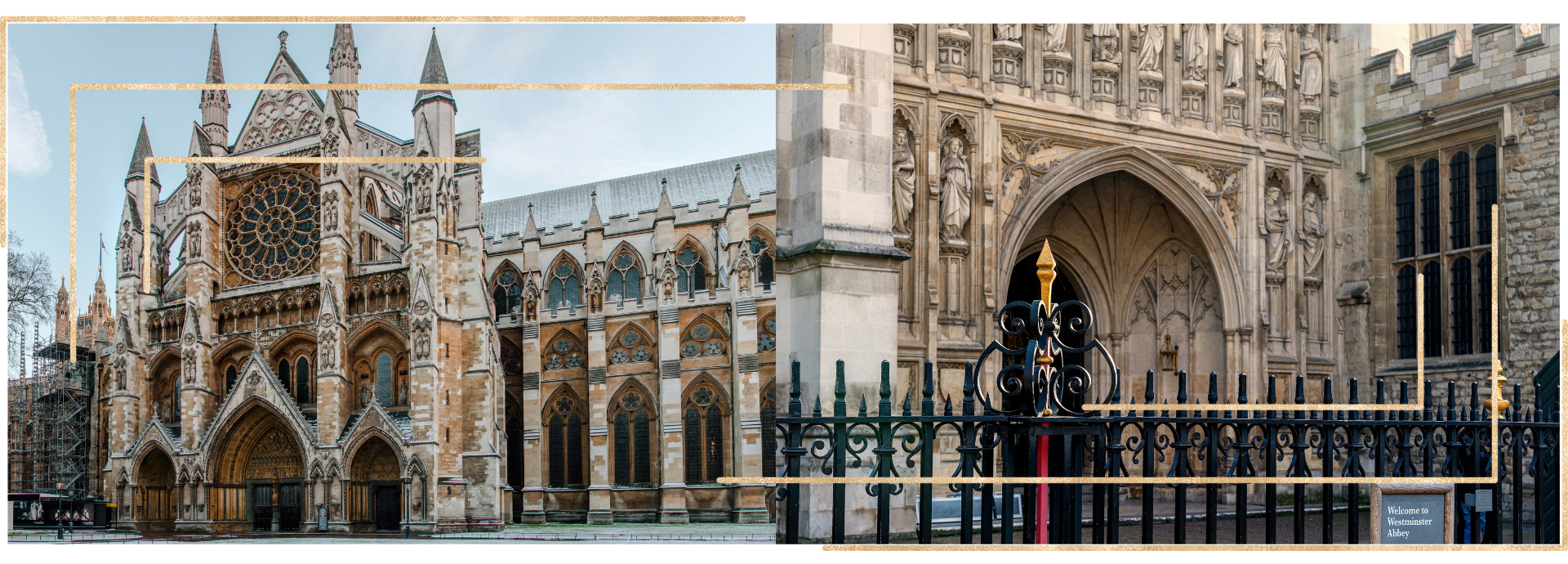
The main event occurs at Westminster Abbey, where the King will be escorted by carriage from Buckingham Palace. Rumor has it that the very uncomfortable, but exquisite gold carriage, that previous Kings and Queens have used for the ceremony, will not be used in May. Will this have the look of an ordinary, albeit exciting royal wedding, instead of an extraordinary coronation?

Once there, the Procession to the Abbey begins quickly  to move to the Procession inside the Abby.  There begins The Recognition of King Charles III.  After that, one can expect hymns to be sung during and after the Coronation Oath and The Anointing. The Homage is where the highly anticipated and photographed moment of a coronation occurs, where King Charles III is given the Orb placed into his right hand and the Scepter, which he holds with his left hand, as well as golden bracelets and a ring. Once this occurs, the choir will sing anthems, drums beats, trumpets sound, and joyful crying out to mark the crowing of Great Britain's new King. 

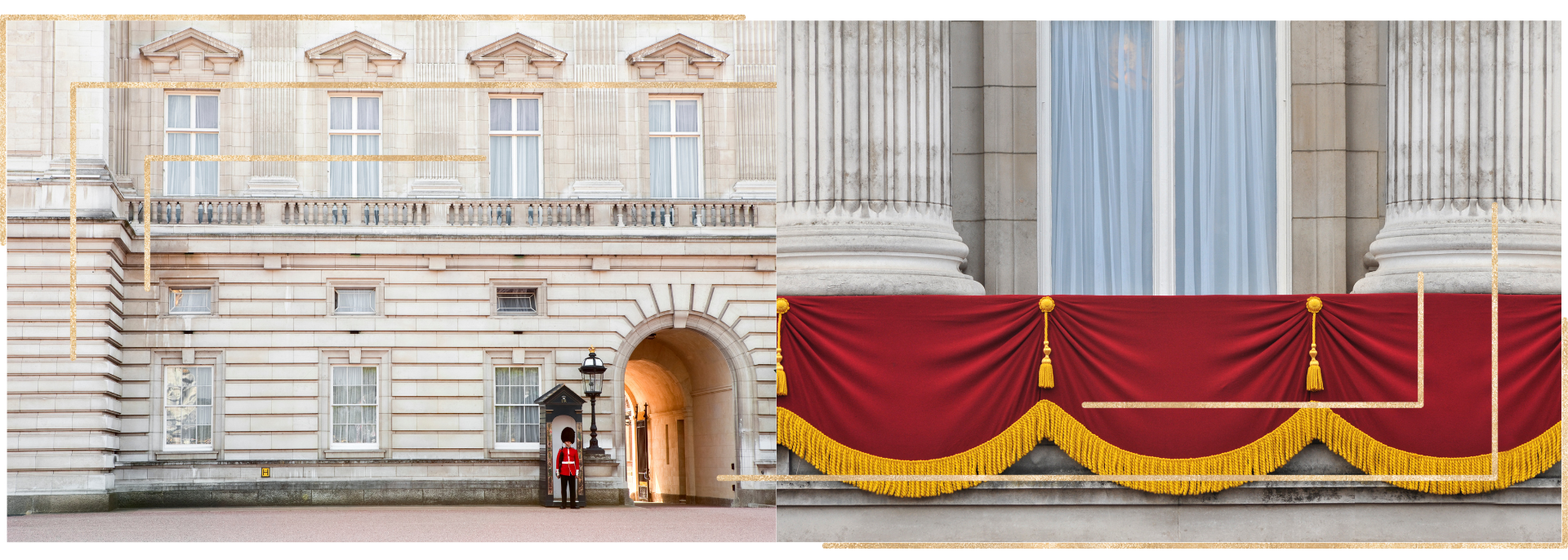
Camilla, The Queen Consort, will be crowned after the Homage takes place.  Once that is complete, the departure will occur, and esteemed guests, family and hosts will make their way from Westminster Abbey to Buckingham Palace to be seen by thousands of onlookers and broadcasted to millions.  The King and the Queen Consort, along with the Members of the Royal Family, will assemble for a perfectly Instagramable balcony appearance.  The day ends with a Coronation banquet.

Life After The Crown
In the days and months after the Coronation, there will be many public opportunities for the new King and Queen to meet their subjects. These traditionally begin with a Coronation Review of the Fleet, Service of thanksgiving, UK and Commonwealth tours, Coronation portraits, and most importantly, the Investiture of the Prince of Wales. The Investiture tells the world who will be the next in succession to the throne. — By contributor, Elizabeth Soos, at Auersmont.com 
Picture
For more about the Coronation, please go to >> cornontion.gov.uk
Picture

Contributor, Elizabeth Soos, has had a keen interest in cultural customs. With her European background and extensive travel, Soos developed an interest in the many forms of respect and cultural expectations in the countries she has visited. With her 20+ years’ experience in customer service within private international companies based in Australia, and her lifetime interest in manners and research, she decided to branch out into the field of etiquette and deportment. Through her self-directed studies and by completing the Train-The-Trainer’s course offered by Emma Dupont’s School of Etiquette in London and by Guillaume Rue de Bernadac at Academie de Bernadac based in Paris and Shanghai, she founded Auersmont School of Etiquette.


 🍽Etiquette Enthusiast, Maura J. Graber, is the Site Editor for the Etiquipedia© Etiquette Encyclopedia

Tuesday, September 13, 2022

Thoughtful Queen’s Umbrella Etiquette

Brolly Good Show!
Queen Elizabeth and Her Chic, Colorful Secret

Queen Elizabeth has a Charming Secret Reason for Her Chic and Transparent Umbrellas

In my line of work, I follow a large amount of international news, which I pass on to others via social media. I came across this one night and was completely charmed by the Queen's simple way of letting her public see her, and stay dry at the same time. 


I was at first struck by the simplicity and complexity, the yin and yang of the whole notion. But I had to wonder; Did the Queen come up with this idea on her own? Did she hire an image and wardrobe consultant? Is this part of the ‘new and improved’ modern 21st century version of the Queen and British monarchy?

Regardless of how the decision was made, I applaud the choice. Kudos to the Queen for desiring to be more visible to “her people.” To me, she is now the ‘Chic and Thoughtful’ Queen Elizabeth.

The Duchess takes a cue from the Queen


The following came from the U.K.'s “Daily Mail”- 

“When the Queen was caught in the rain outside St Paul’s Cathedral this week, she flourished a transparent umbrella with a deep red trim which matched her outfit. Coincidence? Hardly. She has a delightful and little-known indulgence:

She commissions see-through umbrellas - so the public can see her - that are colour-matched with her clothes. The Duchess of Cambridge also ordered a black-trimmed matching umbrella, which she carried at the War Horse film premiere in January.” – From the Daily Mail Online and the Maura Graber Etiquette Sleuth Blogspot, March 2012 – For more on this- http://www.dailymail.co.uk/femail/article-2112488/Queen-Elizabeth-The-secret-Queens-bespoke-umbrellas.html


🌂Etiquette Enthusiast, Maura J. Graber, is the Site Editor for the Etiquipedia© Etiquette Encyclopedia


In Fond Memory of  Her Majesty, Queen Elizabeth II, 1926 - 2022