Showing posts with label Native American History. Show all posts

Monday, July 29, 2019

Democracy and Americanization

“Democracy is a word in quotation marks instead of a factor in life with too many native Americans.” – Mary Antin was an immigrant, an author and an immigration rights activist. She is best known for her 1912 autobiography The Promised Land, an account of her emigration and subsequent Americanization.

Says Americans Should Learn to Be Neighborly

Mary Antin, famous author, lecturer, and Russian immigrant, says: “There will be no problems of immigration when American citizens learn the lesson of neighborliness. There are almost as many native Americans who need to be Americanized as there are foreigners. Democracy is a word in quotation marks instead of a factor in life with too many native Americans. Where there are ghettoes there are no free women. But ghettoes can meet only ultimate obliteration in America.” With an eloquent plea to “open the doors to those who knock at our gates,” and denying any possible terrors in immigration problems, Mary Antin, foremost woman writer in America, noted lecturer, and naturalized Russian immigrant, arrived in Los Angeles today, where she will remain for the remainder of the week.

A mere slip of a person, with boyish slimness and a happy smile for California sunshine, Miss Antin (in private life wife of Andrew Graham, Columbia university professor) was a surprise to the delegation of city teachers who met her at the train. Only in the intense, tragic blue eyes does the woman portray the dramatic emotion with which she has swayed thousands by her books, “The Promised Land,” “They Who Knock at Our Gates,” or reveal the tremendous life tragedies which she has witnessed and participated in, with the Russian Jews in their native land.

Must Learn Neighborliness

While at first refusing to discuss immigration, Miss Antin finally declared; “It can be summed up in a word or two. There will be no problem of immigration when each individual American citizen learns the lesson of true neighborliness—not that of a convention halls, but of every day life. Talk about foreigners learning our customs and manners! It is Americans’ duty to learn theirs, to extend hospitality and neighborliness to the foreigner within the gate—and behold! There will be no longer any problem. But the trouble is that too many native Americans need to be Americanized. Democracy is only a word in quotation marks to them—not a principle of life.” – Los Angeles Herald, 1915


Etiquette Enthusiast, Maura J Graber, is the Site Editor for the Etiquipedia© Etiquette Encyclopedia 

Wednesday, November 18, 2015

Etiquette and Social Invitations

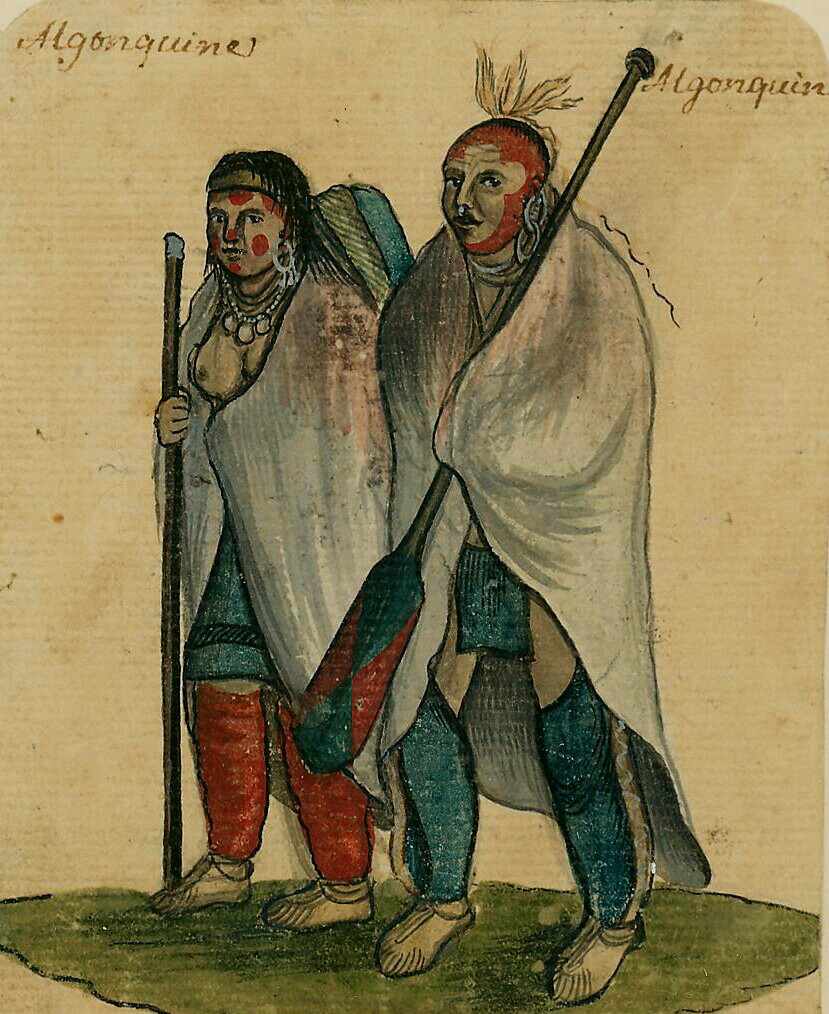
Long before 1600 the Algonquins were sending out "dinner invitations" in the form of specially cut blocks of wood about the size of the little finger. All those who received the bit of wood with its curious picture message, knew that they were invited to attend the feast and celebration being given by the Algonquin

Writing very early became a device for making social affairs run more smoothly. Writing in the sense of books, newspapers, records, stories is one thing; writing in the sense of social correspondence, invitations, cards of greetings, congratulation, and condolence is quite another.

The North American Indians were among the first to use actual invitations. They burned their message on buckskin and sent it by runner to the person for whom it was intended. Tribes also had a smoke message which they used to call their people together for purposes of feasting, celebrating, etc... The smoke message was used sometimes in warfare.

It appears that among the Indians, ever a hospitable people, the development of the invitation was rapid and marked. Long before 1600 the Algonquins were sending out "dinner invitations" in the form of specially cut blocks of wood about the size of the little finger. All those who received the bit of wood with its curious picture message, knew that they were invited to attend the feast and celebration being given by the Algonquin. They came from far and wide to join in the merrymaking.

Among early European peoples the invitation developed slowly. The peasantry, of course, had no need for any such thing as an invitation; if one of their number wished to celebrate at the public bar or in his home, he merely called all his friends together with as much proud noise as he could command. Among the upper classes, a private messenger was sent to give the information orally.

By the time of Shakespeare the invitation had reached a fairly high point of development. The mode of the written invitation first found favour at court and then spread to the people in the cities. These invitations were written on huge sheets of white paper, by hand, the initial letters usually made by stamp and decorated with color.
   
"So many guests invite as here are writ," says Shakespeare. The invitations were carried by pages or messengers to the homes of the people for who they were intended, and usually an answer was required, in the manner of our acknowledgement. –Lillian Eichler


Etiquette Enthusiast, Maura J Graber, is the Site Editor for Etiquipedia© Etiquette Encyclopedia