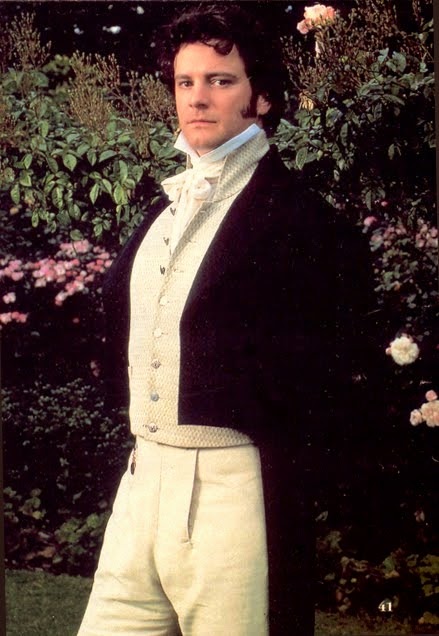
Showing posts with label Georgian Era Manners. Show all posts

Monday, October 11, 2021

Georgian Era Dining and Etiquette

Dinnertime for the elite became later and later, and in contrast to the meagre breakfast, a formal dinner could be a dazzling array of food.

In Georgian times lunch hardly existed, although for those who breakfasted early, a small snack might be eaten. In towns many shops sold pies and pastries, while street sellers offered shellfish and other ready-to-eat items. Dinner was the main meal, eaten at any time in the afternoon between two and five o'clock. The timing of dinner was related to the hours of daylight, since the cooks needed to work in daylight, especially for formal dinners with guests where preparations could take hours. 

Dinnertime for the elite became later and later, and in contrast to the meagre breakfast, a formal dinner could be a dazzling array of food. The first course, served on the table all at once, had numerous dishes, and was followed by a second course with a smaller selection of meats and fish, along with savoury and sweet items. Finally, a selection of nuts, sweetmeats and occasionally fruit constituted the dessert course, at which point the servants withdrew.

When Woodforde entertained Squire Custance and other guests, he did his best to provide a suitable feast: ‘I gave them for dinner, a couple of chicken boiled and a tongue, a leg of mutton boiled and capers, and batter pudding for the first course. Second, a couple of ducks rosted and green peas, some artichokes, tarts and blamange. After dinner, almonds and raisins, oranges and strawberries. Mountain and port wines.’ Even in more modest households, the hostess rose after the dessert course when guests were present and led the ladies to the drawing room, leaving the men to their own conversation for a while before they rejoined the ladies for tea or coffee.

An everyday family dinner was more restrained, and Woodforde routinely recorded meals such as ‘Dinner calfs feet stewed, hash mutton & etc…’ or ‘Dinner to day hashed calfs head and a loin of lamb rosted with stewed gooseberrries.’ For better-off people like Woodforde, even mundane dinners could be lengthy affairs, but most working people had no more than an hour's break for dinner, before continuing with their labours. Supper was the day’s final meal and was usually something insubstantial.

Table manners were of importance to the higher classes, although the poorest were more concerned with survival than etiquette. In a book on manners, the Reverend John Trusler warned how to avoid appearing low class or impolite: ‘Eating quick, or very slow, at meals, is characteristic of the vulgar; the first infers poverty, that you have not had a good meal for some time; the last, if abroad [dining out], that that you dislike entertainment: if at home [and eating slowly], that you are rude enough to set before your friends what you cannot eat yourself.’ From “Jane Austen’s England,” by Roy and Leslie Adkins


Etiquette Enthusiast, Maura J. Graber, is the Site Editor for the Etiquipedia© Etiquette Encyclopedia

Thursday, September 23, 2021

Georgian Vulgarity vs Table Manners


“Eating quick, or very slow, at meals, is characteristic of the vulgar; the first infers poverty, that you have not had a good meal for some time; the last, if abroad [dining out], that you dislike your entertainment: if at home [and eating slowly], that you are rude enough to set before your friends what you cannot eat yourself.”

Table manners were of importance to the higher classes, although the poorest were more concerned with survival than etiquette. In a book on manners, the Reverend John Trusler warned how to avoid appearing low class or impolite: “Eating quick, or very slow, at meals, is characteristic of the vulgar; the first infers poverty, that you have not had a good meal for some time; the last, if abroad [dining out], that you dislike your entertainment: if at home [and eating slowly], that you are rude enough to set before your friends what you cannot eat yourself.”

Some hosts did offer food that we would now discard, and just before Christmas 1778 Woodforde unashamedly set before his guests a dinner that included part of a ham, the major part of which ham was entirely eaten out by the flies getting into it. Even so, his guests also stayed for supper, and “We were exceeding merry all the night.”– From, “Jane Austen’s England,” by Roy and Leslie Adkins


Etiquette Enthusiast, Maura J. Graber, is the Site Editor for the Etiquipedia© Etiquette Encyclopedia

Friday, August 23, 2019

Bath’s Master of Ceremonies

In 18th c. Britain, Beau Nash was a celebrated dandy, arbiter of Georgian etiquette and leader of fashion. He is best remembered at the spa town of Bath, the most fashionable resort in 18th-century England. – In 1704, after stints in the army and as a barrister, Nash became known as the “Master of Ceremonies” at a rising spa town - Bath. His was a leading, though unofficial, role in making Bath the Georgian era social center it became, and Nash’s became a job for life. Indispensable in Bath, he not only matched ladies with appropriate dancing partners at each ball, but he’d pay the musicians at many events. Nash would meet the newest arriving visitors to Bath and judge whether they were suitable to join the select “Company” of 500 to 600 people who had pre-booked tables there. He would broker marriages, escort unaccompanied wives when needed, and even regulated what gambling he could, by restraining compulsive gamblers or warning players against cardsharps and risky games. The Corporation of the city funded an elaborate funeral for Nash upon his death in 1761, and he was buried in the nave of Bath Abbey, not far from a monument memorializing him.


Bath, England and Its Celebrated 
Arbiter of Manners
“Beau Nash of Bath was intellectually, and in the matter of actual power, a King indeed, in comparison with all the buffoon imitators who have followed him.”– Wakeman, 1882
  
The city got its name because of the hot mineral water that bubbles out of the ooze, something like 250,000 gallons every day at about 120 degrees. But the story only begins with the water. The city of Bath is steeped in history and tradition. Its secrets are told in art and literature. Its 18th century streets weren't made for automobiles, and the pedestrian is the kingpin. 

Daniel Defoe (of Robinson Crusoe fame) summed it all up in the early 1700s: “We may say now it is ... a place that helps the indolent and the gay to commit that worst of murders to kill time.” Defoe was a little grumpy, but his words describe well the kind of goings-on in Bath at that time. The reigning Monarch at the time, Queen Anne, was enamored of the waters, and then as now, it became fashionable to do what the Monarchy does. The social whirl in Bath got kicked into gear by one Beau Nash, your basic good-timer, who became arbiter of taste, etiquette and parties. 

Nash’s title was Master of Ceremonies, and he went about his job with all the aggressiveness of a public relations man. He led a crackdown on hoodlums so as to make the streets safe to walk, and he led a similar crackdown on those who didn’t dress or act right. Ostracism by Beau Nash was more than most people could stand, and soon the town’s social life was made over, according to Nash’s taste. Nash is noted for encouraging a new informality in manners, breaking down the rigid barriers which had previously divided the nobility from not only the middle-class patrons, but the gentry of Bath. Under Nash, Bath became one fashionable and fun place. It remained so for many years after Nash’s death in 1761.

Jane Austen spent time there and wrote Bath’s shops, amusements and entertainments into her novels. Thomas Gainsborough painted portraits for 20 pounds apiece. William Pitt governed from a simple flat. Bath held great appeal to the Georgians of the late 1700s and early 1800s, but fashionable and fun places in general faded in post-Regency era England. When the Victorian Era came to be after 1837, Bath's influence in British life faded along with the rest of them. – from an article in Santa Cruz Sentinel, 1987


Etiquette Enthusiast, Maura J Graber, is the Site Editor for the Etiquipedia© Etiquette Encyclopedia 

Thursday, March 24, 2016

Jane Austen Etiquette and Lexicon

I rarely read novels. And by “rarely,” I mean I read one every 10 or 20 years. I do read daily, but I read for research, from my old etiquette books and news archives. A few years ago, when I finally decided to read Jane Austen's, “Sense and Sensibility,” I was often looking up many of the words and phrases, so I listed them and created  the Georgian and Regency Era Lexicon below.


Alacrity: briskness

Apes leader: an old maid or a spinster


Assiduities: persistent personal attentions

Banditti: wild outlaws, bandits

Bartholomew Baby: a person dressed up in a tawdry manner, like the dolls sold at the Bartholomew Fair (a two-week festival celebrating the Feast of St. Bartholomew)

Batman: an orderly assigned to a military officer

Bear leader: A travelling tutor, who leads his charges as if they were trained bears

Bedlam: An insane asylum in London. The full name was the “Hospital of Saint Mary of Bethlehem”

Bit o'muslin: woman of who gives sexual favors in exchange for payment

Bluestocking: an academic female

Bonomi: Ignatius Bonomi, a well known architect at the time

Bowling Green: grassy lawn where game of ninepins could be played

Brook: put up with something painful or difficult

Casino: point-scoring card game in which players combine cards exposed on the table with the cards in their hands, the 10 of diamonds being the highest-valued card

Cavil: a trivial objection

Conjurer: someone who draws astute conclusions

Colicky gout: abdominal pain and swollen joints, especially the toes and feet

Consequences: a pencil-and-paper game for several players, in which each player adds a line of a story without knowing with the previous lines are. The resulting stories are incongruous and humorous

Consumption: a wasting away, a bout of tuberculosis


Corinthian: a dandy, a fashionable man, who is also good at sports. It can also mean “a rake.” But originally it meant profligate and derived from the elegant but dissipated lifestyle led in Ancient Corinth.

Coxcomb: a conceited and vain person. In origin, it meant “fool” as fools used to wear caps with bells and a piece of red cloth on top which was shaped like a cock's comb

Covert: a thicket providing cover for game

Cry rope on someone: give them away, to tell secrets

Curricle: a light, two-wheeled carriage drawn by two horses, side by side

Dilatoriness: slowness, procrastination

Direction: return address

Douceur: pleasantry

Dovecote: small house or box with compartments for nesting doves or pigeons

Drive unicorn: to drive a vehicle with three horses, one in front and the other 2 behind

Drury Lane: general term for the Theatre Royal; street were the London playhouse is located

Ebullition: a sudden outburst, as of emotion

Enclosure: common land, previously used by everyone, this is fenced in by the landowner so that others can't use his land for pasture or gathering fuel

Exeter Exchange: a wild animal exhibit


Exigence: exigency; urgency

Foxed: tipsy, drunk

Flying one's colors: blushing

Frank: a piece of mail marked with an official signature, so that it can be mailed for free

Fudge: a false rumor

Fustian: bombast, pompous language, pretentious speech

Gammon: nonsense (noun), to deceive or lie (verb)

Gigs: light, open, two wheeled carriages

Glebe: church land to be used by the rector

Green Girl: a girl who is young and inexperienced

Gudgeon: it derives from the name of a fish that gets easily caught and means someone who is easily duped or imposed upon


Hackney Coach:  a coach kept for hire; especially a four-wheeled carriage drawn by two horses and having seats for six persons

Had as lief: would just as soon, would just as readily or willingly

Hard by: nearby or near by


Hartshorn: smelling salts or spirits

Huswifes: pocket cases for needles, pins, thread and scissors, forerunner of “housewife”

Illiberal: narrow minded; bigoted

Importune: troublesome; overly persistent in request or demand

Incommode: inconvenience, disturb

Inferiority of parts: lack of talent or capabilities
 

“To be well received, you must always be circumspect at table, where it is exceedingly rude, to scratch any part of your body, to spit, or blow your nose, (if you can't avoid it, turn your head,) to eat greedily, to lean your elbows on the table, to sit too far from it, to pick your teeth before the dishes are removed, or leave the table before grace is said.” ~ John Tusler 1791

Knowing: fashionable

La Boulangere: a simple circle dance for a group of couples

Jarvey: driver of a hackney coach

Jointure: settlement to a wife from her husband throughout her life, which will then transfer to her children

Lush some slop: to drink some tea

Michaelmas: September 29th, the feast in honor of Saint Michael. One tradition is that if a young lady finds the ring hidden in a Michaelmas pie, she will soon marry.

Mohurs: 19th & 20th century gold coins used in British India

Moiety: one of two parts, not necessarily equal

Nabob: it comes from the Hindustani word “nawab” which was the name for the ruler in the Mogul Empire and means a rich man, a person of great wealth and prominence, especially one who made his fortune in India.

Natural child: child born out of wedlock

Nonpareil: a leader of fashion. Also known as a nonesuch

Nuncheon: also “nunchion,” a light, noon drink or snack, forerunner of the word “luncheon”

Offices: parts of the house in which servants work

Open weather: mild and free from frost

Palanquins: enclosed litters borne on the shoulders of men by means of poles

Pall-Mall: main thoroughfare in the Saint James district of London

Pinkest of the Pinks: a very fashionable man

Piquet: a card game for two players, with 32 cards

Porter: a dark brown beer made from charred or brown malt

Post-Horses: horses used or kept at inns, or post-houses, for use by mail-riders, or for hire by travelers

Public School: in England it is a private school

Queen Mab: Queen of the fairies in English literature

Red-Gum: swelling and redness due to teething

Retailed: repeated

Reticule: a woman's handbag closed with a draw string.

Round Game: game, as in cards, on which each plays on his or her own account

Rubber: session or round of playing a card game


Se’enight: similar to “fortnight,” except se’enight was short for seven nights, or one week’s time.

Serviley: in the manner of a slave

Snuff: a powdered, often scented, tobacco that was taken into the nose. It was usually carried around in small and decorated boxes

Sponging House: debtors' quarters before being taken to jail.

Stewponds: fishponds

Temple: one of two sets of buildings in London's Inns of Court, which served as residences for lawyers and law students

Town Tabby: an aristocratic dowager

Two-penny post: In 1801, the charge for mailing letters locally went from one pence (a penny), to two

Whip Hand: upper hand, advantage (the hand that holds the whip controls the carriage or horse)

Whist: a card game in which two pairs of players try to take a majority of tricks, with the trump suit being determined by the last card dealt; a forerunner of bridge

Wooly bandits: wild sheep who steal picnic baskets

Work-bags: bags for needlework


Compiled by Site Editor, Maura J Graber

Etiquette Enthusiast, Maura J. Graber, is the Site Editor for the Etiquipedia© Etiquette Encyclopedia

Tuesday, May 13, 2014

Etiquette Advice for Gents from a Georgian and Regency Era Dandy

"Every one cannot indeed be an Adonis, but it is his own fault if he is an Esop." The 'fop' pictured above, was sorely in need of some advice on style and dress from the 'dandy' of later days.
First impressions are apt to be permanent; it is therefore of importance that they should be favourable. The dress of an individual is that circumstance from which you first form your opinion of him. It is even more prominent than manner, it is indeed the only thing which is remarked in a casual encounter, or during the first interview. It, therefore, should be the first care.
Beau Brummell, the most famous "dandy" of them all ~ Brummell was an English dandy, famous for his friendship with George, Prince of Wales (regent from 1811 and afterward King George IV). Brummell was deemed the leader of men's fashion at the beginning of the 19th century.  Those who followed his lead were known as 'dandies,' 'beaus,' and 'gallants.'  They were known to place particular importance upon physical appearance, refined language, and leisurely hobbies, pursued with the appearance of nonchalance in a 'cult of Self.'  Historically, especially in late 18th- and early 19th-century Britain, a dandy, who was self-made, often strove to imitate an aristocratic lifestyle despite coming from a middle-class background.  Previous to this, foolish men who were overly concerned with their appearance and clothes, were known as 'fops.'  17th century England saw many fops.  These men were also known as 'coxcombs,' 'fribbles,' 'popinjays' (meaning 'parrots') 'ninnies,' and 'fashion-mongers.'
The first 'fop?'  Engraving of a painting of the English actor Colley Cibber as "Lord Foppington" in the Restoration comedy The Relapse (1696) by John Vanbrugh
What style is to our thoughts, dress is to our persons. It may supply the place of more solid qualities, and without it the most solid are of little avail. Numbers have owed their elevation to their attention to the toilet. Place, fortune, marriage have all been lost by neglecting it. A man need not mingle long with the world to find occasion to exclaim with Sedaine, "Ah! mon habit, que je vous remercie!" In spite of the proverb, the dress often does make the monk. Your dress should always be consistent with your age and your natural exterior. That which looks outré on one man, will be agreeable on another. As success in this respect depends almost entirely upon particular circumstances and personal peculiarities, it is impossible to give general directions of much importance. We can only point out the field for study and research; it belongs to each one's own genius and industry to deduce the results. However ugly you may be, rest assured that there is some style of habiliment which will make you passable. 
“Before going to a ball or party it is not sufficient that you consult your mirror twenty times.” Beau Brummell once responded to a query on boot blacking, by a young man fascinated with with the brilliancy of his boots, “Well, you know, for blacking I never use anything but the froth of champagne.” Another man asked Brummell the name of his hairdresser. "”I have three : the first is responsible for my temples, the second for the front part of my head, and the third for the back of it.”
If, for example, you have a stain upon your cheek which rivals in brilliancy the best Chateau-Margout; or, are afflicted with a nose whose lustre dims the ruby, you may employ such hues of dress, that the eye, instead of being shocked by the strangeness of the defect, will be charmed by the graceful harmony of the colours. Every one cannot indeed be an Adonis, but it is his own fault if he is an Esop. If you have bad, squinting eyes, which have lost their lashes and are bordered with red, you should wear spectacles. If the defect be great, your glasses should be coloured. In such cases emulate the sky rather than the sea: green spectacles are an abomination, fitted only for students in divinity,-- blue ones are respectable and even distingué.
“Let your wig be large enough to cover the whole of your red or white hair.”
Almost every defect of face may be concealed by a judicious use and arrangement of hair. Take care, however, that your hair be not of one colour and your whiskers of another; and let your wig be large enough to cover the whole of your red or white hair. It is evident, therefore, that though a man may be ugly, there is no necessity for his being shocking. Would that all men were convinced of this! I verily believe that if Mr. -- in his walking-dress, and Mr. -- in his evening costume were to meet alone, in some solitary place, where there was nothing to divert their attention from one another, they would expire of mutual hideousness.

 
Willy Wonka... A fictional dandy for the modern era
If you have any defect, so striking and so ridiculous as to procure you a  nickname then indeed there is but one remedy,--renounce society. In the morning, before eleven o'clock even if you go out, you should not be dressed. You would be stamped a parvenu if you were seen in anything better than a reputable old frock coat. 

If you remain at home, and are a bachelor, it is permitted to receive visitors in a morning gown. In summer, calico; in winter, figured cloth, faced with fur. At dinner, a coat, of course, is indispensable. The effect of a frock coat is to conceal the height. If, therefore, you are beneath the ordinary statue, or much above it, you should affect frock coats on all occasions that etiquette permits.

Before going to a ball or party it is not sufficient that you consult your mirror twenty times. You must be personally inspected by your servant or a friend. Through defect of this, I once saw a gentleman enter a ball-room, attired with scrupulous elegance, but with one of his suspenders curling in graceful festoons about his feet. His glass could not show what was behind.

“Upon the subject of the cravat – (for heaven's sake and Brummel's, never appear in a stock after twelve o'clock) – We cannot at present say anything.”
If you are about to present yourself in a company composed only of men, you may wear boots. If there be but one lady present, pumps and silk-stockings are indispensable. There is a common proverb which says, that if a man be well dressed as to head and feet, he may present himself everywhere. The assertion is as false as Mr. Kemble's voice. Happy indeed if it were necessary to perfect only the extremities. The coat, the waistcoat, the gloves, and, above all, the cravat, must be alike ignorant of blemish.

Upon the subject of the cravat– (for heaven's sake and Brummel's, never appear in a stock after twelve o'clock)– We cannot at present say anything. If we were to say anything, we could not be content without saying all, and to say all would require a folio. A book has been published upon the subject, entitled “The Cravat considered in its moral, literary, political, military, and religious attributes.” This and a clever, though less profound, treatise on “The art of tying the Cravat,” are as indispensable to a gentleman as an ice at twelve o'clock.

  
She approves of his attire ~ “That your dress is approved by a man is nothing;--you cannot enjoy the high satisfaction of being perfectly comme il faut, until your performance has received the seal of a woman's approbation.”
When we speak of excellence in dress we do not mean richness of clothing, nor manifested elaboration. Faultless propriety, perfect harmony, and a refined simplicity,--these are the charms which fascinate here. It is as great a sin to be finical in dress as to be negligent. Upon this subject the ladies are the only infallible oracles. Apart from the perfection to which they must of necessity arrive, from devoting their entire existence to such considerations, they seem to be endued with an inexpressible tact, a sort of sixth sense, which reveals intuitively the proper distinctions. That your dress is approved by a man is nothing;--you cannot enjoy the high satisfaction of being perfectly comme il faut, until your performance has received the seal of a woman's approbation.
There are many ways for dandies to fold their cravats.
If the benefits to be derived from cultivating your exterior do not appear sufficiently powerful to induce attention, the inconveniences arising from too great disregard may perhaps prevail. Sir Matthew Hale, in the earlier part of his life, dressed so badly that he was once seized by the press-gang. Not long since, as I entered the hall of a public hotel, I saw a person so villainously habited, that supposing him to be one of the servants, I desired him to take my luggage upstairs, and was on the point of offering him a shilling, when I discovered that I was addressing the Honorable Mr. * * *, one of the most eminent American statesmen.


Author Unknown, 1836  

Etiquette Enthusiast, Maura J. Graber, is the Site Editor for the Etiquipedia© Etiquette Encyclopedia