Showing posts with label Early Man's Social Boundaries. Show all posts

Monday, April 22, 2024

“What is Etiquette,” You Ask?

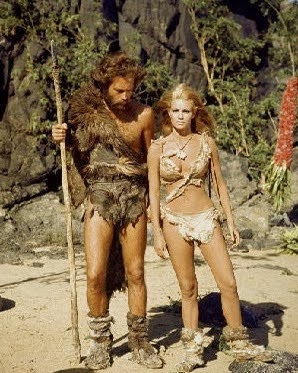
Etiquette and the Golden Rule: John Caveman came to learn that it was smart to speak gently to his neighbor if he didn't want a sizable stone ax bounced on his skull.

You can find a lot of definitions of the word “etiquette” in the dictionary. Boiled down, they all mean about the same thing as that old copy-book favorite: “Do unto others as you would have them do unto you.”

Even back in the days when our ancestors trotted around in skins, John Caveman came to learn that it was smart to speak gently to his neighbor if he didn't want a sizable stone ax bounced on his skull. Probably it would cost John a good many burned houses, stolen wives, and private wars to find that out, but sooner or later he had to admit that the surest way to success in life is by getting along with other people.— From “Manners for Moderns,” by Kathleen Black, 1938


🍽️Etiquette Enthusiast, Maura J. Graber, is the Site Editor for the Etiquipedia© Etiquette Encyclopedia 

Wednesday, February 21, 2018

Manners Make Us Human

How good manners are what really make us human... and help keep us free from disease – Dr Val Curtis, an expert on disease control at the London School of Hygiene and Tropical Medicine, said: ‘Manners should be up there with fire and language as a prime candidate for what makes us human.’ 

How Manners Make Us Human 
“... the first, and most ancient function of manners, is to allow bacteria and virus-ridden humans to socialise without falling ill.” 
  • An expert on disease control says  manners stop us from standing so close to people we could spread infection 

  • They also encourage us to keep ourselves and homes clean 

  • Good manners stop us from biting into food already eaten

Manners really do maketh man – it could be that they are one of the keys to being human.

Scientists have suggested that good manners not only distinguish us from the rest of the animal kingdom, they help keep humans free of disease and underpin the co-operation that helps the world go round.
 

Dr Val Curtis, an expert on disease control at the London School of Hygiene and Tropical Medicine, said: ‘Manners should be up there with fire and language as a prime candidate for what makes us human.’
 
Dr Curtis warns of the dangers of handshakes which could transfer salmonella bacteria among other unwanted infections
‘Far from being an old-fashioned set of rules about which fork to use, manners are so important that they should be up there with fire and the invention of language as a prime candidate for what makes us human.'  
She argues that the first, and most ancient function of manners, is to allow bacteria and virus-ridden humans socialise without falling ill.  

Writing in New Scientist, she added: ‘Although I’d like to hang around in case you have information or goods to exchange, it might be more sensible if I ran way because, to me, you are a walking bag of microbes.  


'With every exhalation you might emit millions of influenza viruses and your handshake might transfer salmonella bacteria. ‘When we fail in these civilities, the disgust shown provokes shame and teaches us not to repeat the offence. ‘More intimate contact could give me hepatitis, syphilis or worse.  ‘You too, of course, make the same subconscious calculation. 


'So how can we get close enough to share the benefits but avoid sharing our microbes? This is the job of manners.' Good manners stop us from standing so close to someone that we spray them with saliva as we speak.  
They also encourage us to keep ourselves and our homes clean and stop us from sharing food we have already bitten into.

The consequences of bad manners don’t end with falling ill.  Dr. Curtis said: ‘If I fail in my manners, you may reject and ostracise me and refuse further collaboration, denying me access to the benefits of life as a member of an intensely social species. We play out a mannerly dance every day, getting close but not too close. 
Dr. Curtis also suggests good manners compel us to keep clean and tidy homes which will further reduce the risk of infection
‘Worse, you may gossip about my lapses in hygiene and tarnish my reputation, denying me access to the benefits of life as a member of an intensely social species.’ 

Dr Curtis, who covers the topic in her book, Don’t Look, Don’t Touch, says that manners also underpin our ability to co-operate with others, with polite people seen as team players.  


Her article concludes: ‘We play out a mannerly dance every day, getting close but not too close, offering tokens of goodwill but not giving away too much. ‘Yet we do the dance largely unaware of why we do it.
   ‘We have vague intuitions that it would be better not to disgust a guest by appearing unkempt or by offering them a dirty towel and we follow the rules of politeness that were drummed into us as children.' – 
By Fiona Macrae – Science Correspondent, Daily Mail Online


 🍽Etiquette Enthusiast, Maura J. Graber of The RSVP Institute of Etiquette, is the Site Editor for the Etiquipedia© Etiquette Encyclopedia 

Wednesday, March 26, 2014

Stone Aged Etiquette to Modern Snobs

 From Stone Age Societal Snubs to 21st Century Segregation and Snobs 
Social polarization: Associated with the segregation within a society that may emerge from income inequality, economic displacements, etc... and result in such differentiation that would consist of various social groups, from high-income to low-income to the Haves and Have-nots.
Social polarization dated back to Stone Age.  Neighboring farmers, hunter-gatherers lived with strict boundaries.
 
Social polarization wasn’t invented yesterday. Ask the scientists studying the bones of prehistoric Europeans. Hundreds of skeletal remains, many from a newly discovered cave in Germany, have produced a startling reminder of the power of social boundaries.

When farmers showed up from the Near East about 7,500 years ago, eager to grow their grains in the soil of Central Europe, they were met by indigenous hunters and gatherers. The locals, apparently, did not welcome them with open arms.

Two new scientific techniques, ingeniously paired, suggest that for some 2,000 years, these distinct groups rarely crossed their cultural boundaries to find a mate.

At first, the indigenous people largely disappeared from the scene altogether, fleeing to the north to continue their traditional mode of life. But even when they drifted back and became neighbors with the farmers, they remained to a large extent a breed apart.

“We don’t really know who set up those social boundaries, so we don’t know if it was the farmers who didn’t mix with the hunter-gatherers or if it was the hunter-gatherers who wanted to stay by themselves. Or maybe it’s both groups that wanted to keep their own identity,” said Ruth Bollongino, a biologist at the University of Mainz and the lead author of “2000 Years of Parallel Societies in Stone Age Central Europe,” one of two new papers on Neolithic Europe published online Thursday by the journal Science.

“We don’t really know who set up those social boundaries, so we don’t know if it was the farmers who didn’t mix with the hunter-gatherers or if it was the hunter-gatherers who wanted to stay by themselves..."
This is an old story. Think of the plot of the movie “Shane,” in which the ranchers do battle with the “sod busters.” Recall the tensions between “the farmer and the cowman” in the musical “Oklahoma!”

Exactly how cultures clashed in prehistoric times is necessarily a foggy subject, given that no one had a written language and archeologists must piece together the story from broken pottery, tools, bones and charcoal.

But new research techniques are clarifying that story. The analysis of mitochondrial DNA from skeletal remains allows scientists to study migration patterns and lineages. Moreover, scientists can tell what people ate by studying variations in the carbon, sulfur and nitrogen isotopes in their teeth and bones. They can tell, for example, if a diet was heavy in fish or heavy in grains.

An enduring debate for decades has been whether agriculture arose in Europe through “cultural diffusion,” in which the techniques of farming and animal husbandry were adopted by the indigenous population from distant sources, or whether an entirely new population of people rolled into that part of the world and pushed out the natives.

The second paper published Thursday in Science, reporting an analysis of hundreds of skeletal remains from multiple sites in Central Europe, provides evidence for the second scenario, which likely involved some degree of unpleasantness.

“There’s certainly a big culture clash at that time,” said Wolfgang Haak, a geneticist at the University of Adelaide and co-author of that paper. “Farmers are probably loud, noisy and stinky at the same time. They come with domestic farm animals and just take over the place.”


Spencer Wells, explorer in residence at the National Geographic Society, and project director of the Genographic Project, a human migration research effort that contributed to the second paper, called the new findings “a huge insight.”

“In my opinion, certainly for the case of Europe, it’s going to be the nail in the coffin of this cultural diffusion idea,” he said.

It's a jungle out there! ~ “Apparently, most humans need to have some kind of identity, or some kind of group that they belong to and they feel part of. I think keeping up this identity also means that you do not admix with people from other groups, from other cultures.”

The “parallel societies” evidence is based on skeletal remains found in a cave near the German city of Hagen. The cave, called Blatterhohle, or Leaf Cave, has a long, narrow entrance and was not discovered until 2004. Excavators found more than 400 skeletal remains. The DNA evidence showed that some people were descendants of hunter-gatherers and some had farming lineage.

Then came the surprise. Bollongino assumed that she and her colleagues would wind up writing a paper about the mixing of these populations.

But instead, the isotopic analysis showed that the people from the hunter-gatherer lineage were still living that way, with a diet relying heavily on fish, and that the people from the farming lineage continued to be farmers. Everyone stuck to their way of life and rarely interbred.

“It wasn’t until we saw the isotopes that we realized we were going to have to rewrite the paper completely,” Bollongino said. “They shared the same burial place for something between 400 and 600 years, so it would be very hard to explain that they did not know each other. We believe that they were close neighbors and had contact with each other and traded with each other. But still they didn’t mix.”

The moral of the story?

“Apparently, most humans need to have some kind of identity, or some kind of group that they belong to and they feel part of. I think keeping up this identity also means that you do not admix with people from other groups, from other cultures,” she said.


Just how far did man come with regard to social polarization over thousands of years, to 20th century, New York City? 

Seriously? Your furniture is out being cleaned? —  There are few Cinderellas... “... people are more likely to interact with others from a similar financial setting. Wealth impacts where people live, what schools they attend and therefore whom they meet. The traits people are most attracted to may also be more prevalent in those from the same financial background.” Kerwin Kofi Charles, Economist, University of Chicago

“The class tensions that ran high at the end of the 19th century still existed in the twentieth. After the Great War, fears of radicals prompted by the Russian Revolution led to the Red Scare and a hysterical search for radicals, especially foreigners, who could be thrown out of the country. In 1919, a strike wave rippled through the country. May Day riots broke out in many cities, including New York. The country suffered through an economic recession from 1920 until 1922, with almost five million Americans unemployed.  Strikes threatened to cripple the country in the early years of the decade despite the sinking economy, President Warren G. Harding's Secretary of the Treasury, Andrew Mellon, a multimillionaire, worked to reduce taxes on the wealthy, and the income gap between the rich and the poor grew.

“While class tensions rose after the Great War, race tensions exacerbated by the great migration during the war years continued to soar.  The summer of 1919 saw an outbreak of violence between whites and blacks; James Weldon Johnson aptly named those months the 'Red Summer.' Although the summer violence took place in cities like Chicago and Washington DC, New York also experienced tensions brought about by the migration and the emergence of a more assertive 'New Negro' who wanted access to full citizenship rights.  Nationally, President Warren Harding helped further tensions when he denounced racial amalgamation in an October 1921 speech given in Birmingham, Alabama.

“The early newspaper reports on Leonard (Kip) and Alice Rhinelander's marriage from the fall of 1924 focused on social status, class, and color.  The press described Alice Rhinelander's father as a stagecoach a driver, identified her brother-in-law as a butler, and claimed that Alice worked as a nurse or a laundress. These occupations demonstrated the Jones family's status as colored, since such working class jobs were understood to be of low status and therefore filled primarily by Negroes in the North in the twentieth century, unlike the 19th when many domestic service jobs were held by Irish women like Margaretta McGuiness.  In contrast to the picture of the Joneses, the press depicted Leonard's family as wealthy and noted that Leonard's father belong to many exclusive clubs, signaling that the Rhinelander belonged to New York City's white upper class.


“In light of the tentative identification of Alice Jones as colored and the undisputed categorization of Leonard Rhinelander as white and upper class, many of the papers speculated about the reaction of high society, the so-called Four Hundred, to the potentially interracial and cross-class marriage of Alice and Leonard Rhinelander.  Some of the curiosity over the alliance between Leonard Rhinelander and Alice Jones was not unusual for the press of the day. New York's tabloids liked stories about marriages between partners from different social stations. At least three accounts of such unions appeared in the press during same period that the Rhinelander marriage surfaced.  Public concern with these couples, like the interest in the Rhinelander marriage, might be explained by the appeal of the Cinderella factor-- the possibility that a poor working girl might marry a rich swell.  Not every poor girls marriage to a rich swell, however, public approbation.


“At the end of 1924, the Chicago Defender published an editorial cartoon that pointed to the fears that distinguished reactions to different Cinderella like marriages. The cartoon illustrated a white man and a woman in evening dress seated in opposing chairs. The man is reading aloud excerpts from the daily paper. First, he tells a woman, presumably his wife, about a wedding between a millionaire and a scrub woman with an Eastern European surname.  She responds, ‘I just love to hear of those kinds of marriages— They're so thrilling!’ Next the husband mentions the union of a wealthy society girl with an Italian scissors grinder. The wife declares, ‘Isn't that romantic?’ Finally, the man appears apoplectic as he reads a report that a wealthy jeweler married a Negro maid. His wife cries, ‘Disgraceful! What is Society coming to?-- Why that's an outrage!’ The Chicago Defender's cartoon spoke to the fact that distinctions among different white racial categories had started to dissolve into a larger sense of whiteness but that at the same time the line between black and white remained heavily defended.  Consequently, Italians and Eastern Europeans might be marriageable but never the ‘Negro maid’ -- there could be no ‘dusky Cinderella.’” 


Original article by Joel Achenbach for The Washington Post, October 2013

From "Property Rites: The Rhinelander Trial, Passing and the Protection of Whiteness" by Elizabeth M. Smith-Pryor  

🍽Etiquette Enthusiast, Maura J. Graber, is the Site Editor for the Etiquipedia Etiquette Encyclopedia