Showing posts with label Gabriella Kanyok Etiquette. Show all posts

Wednesday, October 1, 2025

Spotlight on Gabriella Kanyok


Meet our Contributor in the Spotlight is Gabriella Kanyok
Meet Gabriella Kanyok,  a diplomatic protocol, etiquette and communication expert with more than 15 years' experience in working with EU institutes, NGOs, international organizations, and supporting professionals. She not only advises and trains government and EU officials, and businessmen in the field of diplomatic protocol and business etiquette, but she leads the communication department of an international organization. Gabriella holds a Master’s degree in International Studies, and a Master’s in Protocol, Diplomacy and Cross Cultural Relations. She speaks Hungarian, English, French, and Mandarin Chinese.

Below are links to Gabriella Kanyok’s articles on etiquette which you’ll find on Etiquipedia:

The following is a Q. & A. with Gabriella:

What was the impetus for starting your Etiquette business or career involving Etiquette?

About 16 years ago, I recognized a significant gap in the availability of etiquette professionals, particularly in Europe and specifically in Hungary. While working at the European Parliament, I observed how customs varied from one country to another. I realized that if etiquette—both general and international business etiquette—were more widely taught throughout Europe, it could greatly benefit professionals in their daily interactions. Upon my return to Hungary, I served as a protocol officer at the Trade Office of the Embassy of the Republic of The Sudan in Budapest, where I was heavily involved in diplomatic protocol. This experience highlighted the growing need for business etiquette. While I initially focused on advising regarding diplomatic protocol, I took a significant step in 2017 by launching my business, Etiquette.hu, to share my knowledge and expertise in this essential field.

Apart from “White Tie Attire,” “Black Tie” is the most formal of all dress codes. It requires a sophisticated level of dressing. For women, the code typically calls for a floor-length dress or gown. While cocktail dresses can be an appropriate option for Black Tie (when the dress is stipulated as “Black Tie optional”), long dresses tend to be a more elevated choice.
What do you find the most enjoyable about what you do with regard to Etiquette in your work?
During my studies for a second master's degree in diplomatic protocol, I developed a passion for table manners and the art of setting a table beautifully for various meals and occasions. What began as a professional focus has now blossomed into a cherished hobby, allowing me to create diverse table settings and share them on my Instagram page and blog. A beautifully arranged table truly fills my heart with joy.

In addition to this, I find great satisfaction in sharing my knowledge through real-life examples, recounting stories of my own challenges and successes as I navigated my career. It’s rewarding to witness the transformations in others, especially when small adjustments in communication or behavior lead to significant outcomes, such as promotions or perfect dates. I firmly believe that manners are always in style, and etiquette offers personal security by protecting the feelings of others, clarifying communication, enhancing your status at work, and ensuring impactful first impressions.
I find great satisfaction in sharing my knowledge through real-life examples, recounting stories of my own challenges and successes as I navigated my career. It’s rewarding to witness the transformations in others, especially when small adjustments in communication or behavior lead to significant outcomes, such as promotions or perfect dates.
What do you find the most rewarding aspect of your career regarding Etiquette?
The most rewarding aspect of my career in etiquette is the opportunity to witness personal growth and transformation in my clients. I find immense joy in helping individuals improve their professional demeanor, refine their communication skills, and enhance their self-presentation. These changes can lead to significant achievements, such as promotions or meaningful relationships. Additionally, sharing my passion for etiquette through creating beautiful table settings allows me to inspire others to appreciate the finer aspects of social interactions, including the importance of proper dining etiquette and appropriate dress codes. Ultimately, knowing that I can positively impact people's lives by boosting their confidence and social acumen is incredibly fulfilling.
Proper etiquette not only aids in securing jobs and promotions but also fosters strong relationships within the workplace. 

What types of classes or training do you offer, if any? If you don’t offer classes or training, how do you share your expertise?
I offer a range of classes and training programs designed to enhance etiquette in various contexts. In the realm of Business Etiquette, I emphasize the importance of good manners as a vital component for success in today’s competitive environment. Proper etiquette not only aids in securing jobs and promotions but also fosters strong relationships within the workplace. 

For professionals navigating the complexities of international relations, I provide training in Diplomatic Protocol, which focuses on the etiquette essential for diplomacy and state affairs, outlining the correct conduct and procedures in this field. 

My Private Coaching sessions offer personalized, one-on-one training tailored to individual needs, ensuring that participants present themselves with a level of polish and professionalism that stands out. Additionally, my Corporate Training programs equip companies with the necessary tools to instill business and international etiquette in their teams, preparing them for global interactions. Lastly, I delve into the nuances of Table Manners, where mastering international dining etiquette is crucial—especially during job interviews and important meetings—ensuring every gesture reflects confidence and grace.
What age group do you enjoy working with most when it comes to etiquette? And why?
I particularly enjoy teaching adolescents and young adults, especially young professionals, about business etiquette. I feel a strong sense of purpose in guiding them as they embark on their career journeys. The teenage years are a pivotal time to shape daily habits and instill a foundation of good manners and etiquette. With young professionals, I find great satisfaction in witnessing their transformation and the positive outcomes that result from incorporating business etiquette into their everyday lives.
While there are general guidelines that govern etiquette, each of us brings a unique perspective shaped by our diverse career paths. This collective knowledge and experience enriches our understanding and helps us all grow in this ever-evolving field.
Who are some of the older etiquette authors or authorities you enjoy reading most?
I greatly admire the works of those established etiquette authors and authorities whose insights resonate with my own values in the field. Additionally, I find the resources available in Etiquipedia to be invaluable. I believe that learning from colleagues in the etiquette community is essential; while there are general guidelines that govern etiquette, each of us brings a unique perspective shaped by our diverse career paths. This collective knowledge and experience enriches our understanding and helps us all grow in this ever-evolving field.

If you would like to reach Gabriella, you can can contact her via her website 
https://www.etiquette.hu/en/ or find her on Instagram @kgetiquette


🍽️Etiquette Enthusiast, Maura J. Graber of The RSVP Institute of Etiquette, is the Site Editor of the Etiquipedia© Etiquette Encyclopedia

Saturday, February 1, 2025

Spotlight on Gabriella Kanyok


Meet our Contributor in the Spotlight for February 2025, Gabriella Kanyok
Meet Gabriella Kanyok,  a diplomatic protocol, etiquette and communication expert with more than 15 years' experience in working with EU institutes, NGOs, international organizations, and supporting professionals. She not only advises and trains government and EU officials, and businessmen in the field of diplomatic protocol and business etiquette, but she leads the communication department of an international organization. Gabriella holds a Master’s degree in International Studies, and a Master’s in Protocol, Diplomacy and Cross Cultural Relations. She speaks Hungarian, English, French, and Mandarin Chinese.

Below are links to Gabriella Kanyok’s articles on etiquette which you’ll find on Etiquipedia:

The following is a Q. & A. with Gabriella:

What was the impetus for starting your Etiquette business or career involving Etiquette?

About 16 years ago, I recognized a significant gap in the availability of etiquette professionals, particularly in Europe and specifically in Hungary. While working at the European Parliament, I observed how customs varied from one country to another. I realized that if etiquette—both general and international business etiquette—were more widely taught throughout Europe, it could greatly benefit professionals in their daily interactions. Upon my return to Hungary, I served as a protocol officer at the Trade Office of the Embassy of the Republic of The Sudan in Budapest, where I was heavily involved in diplomatic protocol. This experience highlighted the growing need for business etiquette. While I initially focused on advising regarding diplomatic protocol, I took a significant step in 2017 by launching my business, Etiquette.hu, to share my knowledge and expertise in this essential field.

Apart from “White Tie Attire,” “Black Tie” is the most formal of all dress codes. It requires a sophisticated level of dressing. For women, the code typically calls for a floor-length dress or gown. While cocktail dresses can be an appropriate option for Black Tie (when the dress is stipulated as “Black Tie optional”), long dresses tend to be a more elevated choice.
What do you find the most enjoyable about what you do with regard to Etiquette in your work?
During my studies for a second master's degree in diplomatic protocol, I developed a passion for table manners and the art of setting a table beautifully for various meals and occasions. What began as a professional focus has now blossomed into a cherished hobby, allowing me to create diverse table settings and share them on my Instagram page and blog. A beautifully arranged table truly fills my heart with joy.

In addition to this, I find great satisfaction in sharing my knowledge through real-life examples, recounting stories of my own challenges and successes as I navigated my career. It’s rewarding to witness the transformations in others, especially when small adjustments in communication or behavior lead to significant outcomes, such as promotions or perfect dates. I firmly believe that manners are always in style, and etiquette offers personal security by protecting the feelings of others, clarifying communication, enhancing your status at work, and ensuring impactful first impressions.
I find great satisfaction in sharing my knowledge through real-life examples, recounting stories of my own challenges and successes as I navigated my career. It’s rewarding to witness the transformations in others, especially when small adjustments in communication or behavior lead to significant outcomes, such as promotions or perfect dates.
What do you find the most rewarding aspect of your career regarding Etiquette?
The most rewarding aspect of my career in etiquette is the opportunity to witness personal growth and transformation in my clients. I find immense joy in helping individuals improve their professional demeanor, refine their communication skills, and enhance their self-presentation. These changes can lead to significant achievements, such as promotions or meaningful relationships. Additionally, sharing my passion for etiquette through creating beautiful table settings allows me to inspire others to appreciate the finer aspects of social interactions, including the importance of proper dining etiquette and appropriate dress codes. Ultimately, knowing that I can positively impact people's lives by boosting their confidence and social acumen is incredibly fulfilling.
Proper etiquette not only aids in securing jobs and promotions but also fosters strong relationships within the workplace. 

What types of classes or training do you offer, if any? If you don’t offer classes or training, how do you share your expertise?
I offer a range of classes and training programs designed to enhance etiquette in various contexts. In the realm of Business Etiquette, I emphasize the importance of good manners as a vital component for success in today’s competitive environment. Proper etiquette not only aids in securing jobs and promotions but also fosters strong relationships within the workplace. 

For professionals navigating the complexities of international relations, I provide training in Diplomatic Protocol, which focuses on the etiquette essential for diplomacy and state affairs, outlining the correct conduct and procedures in this field. 

My Private Coaching sessions offer personalized, one-on-one training tailored to individual needs, ensuring that participants present themselves with a level of polish and professionalism that stands out. Additionally, my Corporate Training programs equip companies with the necessary tools to instill business and international etiquette in their teams, preparing them for global interactions. Lastly, I delve into the nuances of Table Manners, where mastering international dining etiquette is crucial—especially during job interviews and important meetings—ensuring every gesture reflects confidence and grace.
What age group do you enjoy working with most when it comes to etiquette? And why?
I particularly enjoy teaching adolescents and young adults, especially young professionals, about business etiquette. I feel a strong sense of purpose in guiding them as they embark on their career journeys. The teenage years are a pivotal time to shape daily habits and instill a foundation of good manners and etiquette. With young professionals, I find great satisfaction in witnessing their transformation and the positive outcomes that result from incorporating business etiquette into their everyday lives.
While there are general guidelines that govern etiquette, each of us brings a unique perspective shaped by our diverse career paths. This collective knowledge and experience enriches our understanding and helps us all grow in this ever-evolving field.
Who are some of the older etiquette authors or authorities you enjoy reading most?
I greatly admire the works of those established etiquette authors and authorities whose insights resonate with my own values in the field. Additionally, I find the resources available in Etiquipedia to be invaluable. I believe that learning from colleagues in the etiquette community is essential; while there are general guidelines that govern etiquette, each of us brings a unique perspective shaped by our diverse career paths. This collective knowledge and experience enriches our understanding and helps us all grow in this ever-evolving field.

If you would like to reach Gabriella, you can can contact her via her website 
https://www.etiquette.hu/en/ or find her on Instagram @kgetiquette


🍽Etiquette Enthusiast, Maura J. Graber, is the Site Editor for the Etiquipedia© Etiquette Encyclopedia

Monday, November 30, 2020

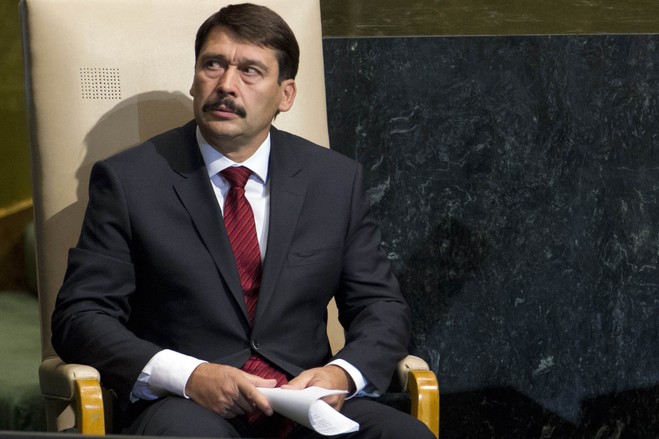
The United Nations' White Chair


János Áder, President of Hungary is waiting to speak at the General Assembly. An interesting protocol rule, tradition is established at the General Assembly: a White chair is placed on the podium for the honour of a high dignitary guest. 


A Glimpse into the Protocol of the United Nations' General Assembly


Order of Precedence


Every year during the session of the General Assembly, the seating order between the Member States is changed by drawing a name of a country. That lucky state has the right to precede the other Member States during the General Assembly meetings. The precedence of countries is followed by the designated state in English language, alphabetical order. Member states have to seat the Heads of States or Prime Ministers first, then the Ministers, and then on the last row, their Permanent Representatives.


Official Visits of Dignitaries


When a Head of State or Government visits the Secretary-General, the Chief of Protocol greets the Head of State as he or she alights from his or her vehicle and escorts him or her to the office of the Secretary-General. At the end of the meeting, the Secretary-General will bid farewell to the Head of State or Government. 
Brazilian President Michel Temer addresses the opening of the 73rd General Assembly of the United Nations in 2018. 

The Chief of Protocol escorts the Head of State or Government either to the General Assembly Hall or to another designated area. During the general debate, seats are reserved in the VIP area of the General Assembly Hall for the spouses of the Heads of State or Government, Vice-Presidents, Crown Princes or Princesses participating in the general debate, provided that the Chief of Protocol is notified in advance of their attendance at the Session. (Reference: https://protocol.un.org/dgacm/pls/site.nsf/xpManual.xsp)

When a Head of State or Government speaks on the podium at the General Assembly, he or she always has to be accompanied by the Chief of Protocol of the United Nations, who waits for the high ranking person to finish the speech.
The chair itself had its own wait backstage with a cautionary sign, before the opening of the General Assembly.


The White Chair

An interesting protocol rule, tradition is established at the General Assembly: a White chair is placed on the podium for the honour of a high dignitary guest. When Royalty, Prime Minister, or a President, etc... attends the General Assembly meeting by entering the Assembly, he or she goes — in the company of the Head of Protocol of the United Nations— directly to the podium and sits on the White Chair.


The White Chair, right next to the podium of the U.N. General Assembly in New York City is reserved for world leaders waiting to speak at the annual meeting, which is a very interesting tradition of the UN.


Gabriella Kanyok is a diplomatic protocol, etiquette and communication expert with more than 10 years' experience in working with EU institutes, NGOs, internaionalorganisations, and supporting professionals. She not only advises and trains government- and EU officials, and businessmen in the field of diplomatic protocol and business etiquette, but she leads the communication department of an international organisation. Gabriella holds a Master’s degree in International Studies, and a Master’s in Protocol, Diplomacy and Cross Cultural Relations. She speaks Hungarian, English and French, and is currently learning Mandarin Chinese.


Etiquette Enthusiast, Maura J. Graber, is the Site Editor for the Etiquipedia© Etiquette Encyclopedia
Tuesday, May 26, 2020

Social Etiquette and Masked Messaging

Wearing face masks has become de rigueur Covid-19 etiquette for many around the world. They are being worn for one’s piece of mind, safety and health. But as Gabriella Kanyok explains, they can damage an important part of human communication. — This piece of textile covers half of our face, taking away what we have developed over centuries, our visual cues, which are part of our everyday interactions. By wearing a mask, our communication tool-kit is partially dwindled away. The movement of our lips, our facial expressions remain hidden. Our face as a whole is the gateway, which shows the reality of our feelings and mood, and is the focal point. With a global effort to defeat Covid-19, we have currently lost part of this focal point of that kind of communication, which only increases the distance between us, and slows down communication. These times, I would say, the mask protects us and alienates us at the same time.


Smile and the world smiles with you. Unless you’re wearing a mask, because then no one in the world can see you smiling, so they don’t smile with you, or if they do, you will never know it for sure. We don’t realize how many times we wear a smile a day: when we greet someone, when we express appreciation, when we like something, when we're embarrassed etc... Smiling is particularly important in the human gesture system. A smiling person makes a very positive impression and is extremely attractive. On the other hand, there are many different types of smiles, which are particularly important while interacting with each other.

Nowadays, we wear more often protective masks than our smile. This piece of textile covers half of our face, taking away what we have developed over centuries, our visual cues, which our part of our everyday interactions. By wearing a mask, our communication tool-kit is partially dwindled away. The movement of our lips, our facial expressions remain hidden.

Have you thought about that yet? Yet non-verbal cues play a central role in shaping our relationships, and right now, when we talk to someone, we don’t know how the other person feels, we can’t read his face, we don’t know what his intentions are. The eye is a mirror of the soul… but our eyes alone are not sufficient for the purpose. The movement of our eyebrows carries so many different meanings (confused, angry, surprised etc...), and shouldn’t be taken for granted. 

Our face as a whole is the gateway, which shows the reality of our feelings and mood, and is the focal point. We have currently lost part of this focal point of that kind of communication, which only increases the distance between us, and slows down communication. These times, I would say, the mask protects us and alienates us at the same time.

Furthermore, communication, and human to human interactions are not just transactional exchanges. The aim is to build relationships, and connect with each other, which is challenging these days. If the situation remains for months, then perhaps we need new, socially distanced non-verbal cues, otherwise how could we bring the message across? Will this be the new normal?

We don’t know it yet, but what we surely know is that currently we cannot rely on the non-verbal cues. What we could do is to clarify, and make sure that our messages are going across. 


Gabriella Kanyok is a diplomatic protocol, etiquette and communication expert with more than 10 years' experience in working with EU institutes, NGOs, internaionalorganisations, and supporting professionals. She not only advises and trains government- and EU officials, and businessmen in the field of diplomatic protocol and business etiquette, but she leads the communication department of an international organisation. Gabriella holds a Master’s degree in International Studies, and a Master’s in Protocol, Diplomacy and Cross Cultural Relations. She speaks Hungarian, English and French, and is currently learning Mandarin Chinese.


Etiquette Enthusiast, Maura J Graber, is the Site Editor for the Etiquipedia© Etiquette Encyclopedia

Thursday, March 19, 2020

The Etiquette of Smiles

"Let us always meet each other with smile, for the smile is the beginning of love." —Mother Teresa


Language is the medium of communication between people, it allows you to convey your thoughts to another person. So what is better communication than a smile? Smiling is good manners and good for your business, as this is one of the easiest ways to immediately connect with others. It conveys a feeling of warmth and goodwill to another instantly. Smiling doesn't need a language. Yet, many people still underestimate the impact of first impressions which can either unite or alienate people forever, and smiles are something that can easily be misinterpreted by people from different cultures. Here is a little collection of what does smile mean in some countries around the world...

Smile Mask - Asia
In China for instance a smile can mean the person is embarrassed, trying to be helpful, curious, happy or friendly. In the middle of an argument, smiling means that the speaker doesn't want this to become personal. When all else fails, just smile in China. The contrary applies for India, where smiling is linked to falsity.

Even in the Japanese culture, non-verbal expressions use the eyes more than the mouth, which makes it easier for the Japanese to determine if a smile is genuine or fake, smiling is still a way to show respect or to hide what you’re actually feeling. This is also the reason why Japanese emoticons used in texting and chatting on the Internet are often mostly expressed with the eyes than the mouth. - ^_^ - Japanese emoticon to express happiness, main focus on the eyes.

Thailand is often referred to as “The Land of Smiles.” because a smile is much more than just a smile: it is a form of subtle interpersonal-messaging. A smile is appropriate in a variety of different situations including when one is happy, embarrassed, or even fearful, and there are at least 12 different smiles that a Thai person may use, each one having a very specific meaning:
The “I’m so happy I’m crying” smile.
The “polite” smile for someone you barely know.
The “I admire you or I’m proud of you” smile.
The teasing, or “I told you so” smile.
The “I am the winner” smile
The stiff smile, also known as the “I should laugh at the joke even though it’s not funny” smile.
The smile which masks something wicked
The sad smile.
The dry smile, also known as the “I know I owe you the money, but I don’t have it” smile.
The “I disagree with you” smile.
The “smiling in the face of an impossible struggle” smile.
The “I’m trying to smile, but can’t” smile.
It's almost impossible for a non-Thai person to read the Thai smiles, but once you have more of an understanding of the meanings behind the smiles, you will be able to read social situations easier and have a better understanding of Thai culture.

In Cambodia, the smile also plays a very important role in communication. It can mean hello, a simple acknowledgement, but smiles are also used to hide worries, embarrassment or anger. The smile is connected to Buddhist religion, where an inner smile represents harmony and spirituality.

In Korea, smile is not just an expression of joy and humor, but smiling can also indicate that one is feeling ashamed or embarrassed. For example: a Korean may smile when they make a mistake.

Smile Limited Union- Europe

Switzerland, as a culture with some of the happiest people in the world, Swiss people do not smile that much. However, smiling in Switzerland is a way to express respect during a conversation more so than it is to outwardly express one’s internal emotions. The same applies to the Scandinavian nations, where the level of happiness reportedly high, still people don’t tend to smile a lot. The Norwegian government even humorously explains that when a stranger on the street smiles at Norwegians, they may assume that the stranger is insane.

Germans are very conservative when it comes to outwardly showing expressions of happiness, especially via smiling. Russian people don’t smile, because it implies that you are at best foolish or at worst, sneaky and manipulative. In Hungary, people don’t smile a lot, or at least in the capital, people are less likely to smile at strangers or smile at all. Hungarian people are not rude, but rather pessimistic. The same true in Poland and Slovenia. People are warm and friendly, but they just don’t smile. The contrary true for Lithuania, where you should always greet others with a smile.

Peace Broker Smile - Africa

Smiling is a cross-cultural language that means a lot to people living in the African continent, as this is the only language understood by all Africans. A smile means acceptance, love, agreement and its meaning usually depends on the circumstances and occasion, in most cases Africans share freely and enjoy smiles with everyone including strangers. Smiles are also used to solve issues among themselves, and this is an important tool for chiefs and clan heads. They use their smiles to resolve disputes. After solving the problem with talks, chiefs and traditional authorities normally ask the disputing parties to shake hands and smile to each other.


Jolly Joker Smile - America

Smiling in North-America is a sign of happiness and confidence, and the American smile is not as fake as it seems. North Americans value high-energy, happy feelings more than some other countries, so many people are genuinely happy, with a positive mindset, who usually give strangers the benefit of the doubt. There are plenty of cynical Americans, but when it comes to one-on-one interactions, they often assume that the other person is a good person, so that makes them sincerely smile. However in Argentina for instance smiling is associated with dishonesty.The opposite true in Brazil, where people smile every time, all the time, even while they apology, they smile. Brazilians treat smile as their calling card, although historically, if a Brazilian had a nice smile, it indicated that the person comes from a wealthy family.


Gabriella Kanyok is a diplomatic protocol, etiquette and communication expert with more than 10 years' experience in working with EU institutes, NGOs, internaionalorganisations, and supporting professionals. She not only advises and trains government- and EU officials, and businessmen in the field of diplomatic protocol and business etiquette, but she leads the communication department of an international organisation. Gabriella holds a Master’s degree in International Studies, and a Master’s in Protocol, Diplomacy and Cross Cultural Relations. She speaks Hungarian, English and French, and is currently learning Mandarin Chinese.


Etiquette Enthusiast, Maura J Graber, is the Site Editor for the Etiquipedia© Etiquette Encyclopedia

Thursday, January 16, 2020

Black Tie Etiquette

Long dresses tend to be a more elevated choice, therefore I always recommend full length gowns, especially if one is attending a high level event.


My past week was quite busy, exhausting, but also very successful. The picture above was taken at Saturday's gala dinner, which reminded me that ball season has just started, so it is the perfect time to share a few lines about “Black Tie Attire.” 

Apart from “White Tie Attire,” “Black Tie” is the most formal of all dress codes. It requires a sophisticated level of dressing. For women, the code typically calls for a floor-length dress or gown. While cocktail dresses can be an appropriate option for Black Tie (when the dress is stipulated as “Black Tie optional”), long dresses tend to be a more elevated choice, therefore I always recommend full length gowns, especially if one is attending a high level event. 
Cary Grant was the epitome of elegance in traditional “black tie” — “No matter what extremes Hollywood people go to in making black tie garish and tieless, the real thing retains its unassailable verve, élan and sheer swankiness.” —
Glenn O’Brien, GQ’s Original ‘Style Guy’ - Photo source, Pinterest
 

For men, a traditional tuxedo and accompaniments is called for when the dress code is “Black Tie.” A traditional tuxedo consists of a black dinner jacket and matching trousers, a white formal shirt, a black bowtie, an optional black formal waistcoat, black socks and black formal shoes. It is so easy for men, right?


Contributor, Gabriella Kanyok, is a diplomatic protocol, etiquette and communication expert with more than 10 years' experience in working with EU institutes, NGOs, international organisations, and supporting professionals. She not only advises and trains government and EU officials, and businessmen in the field of diplomatic protocol and business etiquette, but she leads the communication department of an international organisation. Gabriella holds a Master’s degree in International Studies, and a Master’s in Protocol, Diplomacy and Cross Cultural Relations. She speaks Hungarian, English and French, and is currently learning Mandarin Chinese


Etiquette Enthusiast, Maura J Graber, is the Site Editor for the Etiquipedia©️ Etiquette Encyclopedia 

Thursday, June 13, 2019

Danish Bicycling Etiquette

Copenhagen is the most bicycle friendly city in the world. 62% of residents ride a bike daily to work or education in the city – Photo source VisitDenmark.com


On 5th of May in 1849, King Frederik signed the Denmark Constitution, which marked the start of a constitutional monarchy, so every May 5th Denmark celebrates its Constitutional Day, and if the beginning of summer treats them gently, Danish people spend today outdoors enjoying open-faced smorrebrod sandwiches on rye bread paired with hyldeblomstsaft. 
But there is one activity what they do throughout the year for sure – cycling! Did you know that Danish people have been dedicated cyclists for centuries? 

This is the so called Danish way of expressing equality between all social classes, and Copenhagen prides itself on being one of the most bicycle-friendly cities in the world. Thanks to Simply Danish Living, I know that more than 45% of all people use the bicycle as their main means of transportation. In the Danish business culture,  many workplaces have a changing room set aside for bikers and it is very common to see top level business professionals in suits biking to and from work. 

So let's briefly explore the Danish cycling etiquette for a safer and more enjoyable ride while in Denmark:
  • Use hand signals! Left hand up- you are stopping, Hand out to the right - you are turning right, hand to the left means you are turning left. Simple.
  • If you are going fast, stay outside, going slow, stay inside, and please always be aware of others, always look over your shoulder before you pull out.
  • Do not listen your music too loudly, because you cannot hear what's going on around you (ambulance, buses, cyclists etc).
  • Do not use your phone, no calls no text messages, unless you can manage it handsfree. In Denmark you can easily get a fine for using your phone while biking.
  • In the darker months, you have to be even more visible, so be sure you have your lights on, and reflectors.
  • Please, don't cycle with your buddy side-by-side - it's annoying.
  • For your and others' safety, please always follow the signs and obey the rules.

Imagine, statistics show that three of the busiest bike streets in Copenhagen boast on average 40,700, 36,000, and 30,200 cyclists per day.


Gabriella Kanyok is a diplomatic protocol, etiquette and communication expert with more than 10 years' experience in working with EU institutes, NGOs, internaionalorganisations, and supporting professionals. She not only advises and trains government- and EU officials, and businessmen in the field of diplomatic protocol and business etiquette, but she leads the communication department of an international organisation. Gabriella holds a Master’s degree in International Studies, and a Master’s in Protocol, Diplomacy and Cross Cultural Relations. She speaks Hungarian, English and French, and is currently learning Mandarin Chinese.


Etiquette Enthusiast, Maura J Graber, is the Site Editor for the Etiquipedia© Etiquette Encyclopedia 

Monday, May 13, 2019

Forest Visiting Etiquette

Remember, if your safety is compromised, anyone who attempts to help rescue you will certainly have their safety compromised too.


Etiquette in the Forest
by Gabriella Kanyok

The other day, I had changed my high heels for comfortable shoes, and we spent a day up in the forest exploring. It was challenging, but fun. And I wouldn't be me, if at the end of the day, I didn't have some tips for you about how to behave in the forest. Here are my tips:

  • Stay safe – First of all, for your own safety and the safety of others, a predictive and appropriate behavior is important. In unseen passages, as well as in narrow or steep places, obstacles and other people can appear at any time. Staying at such points is also a risk. Path conditions and weather conditions influence the experience. For fast descents, you have to be aware that at any time that wild animals can also cross your path. Remember, if your safety is compromised, anyone who attempts to help rescue you will certainly have their safety compromised too.
  • Take care of your surroundings – You are not at home. You are a visitor. Please be respectful, protect animals and plants and behave as appropriately as a visitor should.
  • Make yourself visible – Make yourself visible to other hikers in a polite manner. When you meet others, greet them. 
  • On a faster treks – If you wish to overtake other hikers, alert them in time. If someone is traveling faster or in another direction, let them pass you. We are all in favour for resting and relaxing in nature. Hikers should all be able to enjoy the experience and help create a friendly coexistence.
  • Keep it clean – If you leave your waste or rubbish, you endanger the animal and plant life while destroying the picturesque landscape for others, as well as yourself. Please collect together all your non-organic rubbish and place in the litter bins provided on the way, or take it home with you.
  • Don’t forget the pets – If you bring your dogs, please clean up after them. Basics!
  • Forest fire hazards – Whilst you may roast some bacon - in a designated area - (I know, Hungarian bacon roasting aka "szallonasütés" is a very Hungarian activity and tradition) or smoke cigarettes, please ensure that any fire and/or cigarettes are never left unattended. Make sure that they are extinguished properly.
  • Take care with glass – Importantly, do not leave bottles or glass, broken or otherwise as it can act as a magnifying glass and start a fire. Also, glass can be a danger for children and animals.
  • Lastly – Enjoy the nature!

Gabriella Kanyok is a diplomatic protocol, etiquette and communication expert with more than 10 years' experience in working with EU institutes, NGOs, internaionalorganisations, and supporting professionals. She not only advises and trains government- and EU officials, and businessmen in the field of diplomatic protocol and business etiquette, but she leads the communication department of an international organisation. Gabriella holds a Master’s degree in International Studies, and a Master’s in Protocol, Diplomacy and Cross Cultural Relations. She speaks Hungarian, English and French, and is currently learning Mandarin Chinese.


Etiquette Enthusiast, Maura J Graber, is the Site Editor for the Etiquipedia© Etiquette Encyclopedia