Showing posts with label British Tea Customs. Show all posts

Thursday, January 6, 2022

A New Table Drink from London

A “true trio” is two different shaped, porcelain cups (one for coffee and one for tea) and one matching saucer. This set is circa 1840s. True trios were sold in this manner, as a consumer would conceivably need only need one saucer, as the coffee and tea would not be drunk simultaneously. Etiquipedia has not yet found if a specific gilded age, “coffee-tea” cup was ever invented. 

Coffee-tea, a beverage made from the leaves of the coffee shrub, is a new candidate for popular favor, and would seem to have some advantages over the berry. It has not yet reached this country, save as a chance curiosity, but was recently brought under the notice of the Royal Botanic Society of London. The samples of coffee-tea, or prepared coffee leaves, were grown in the society's conservatory. 

The secretary said it had been estimated that the percentage of theine in the leaves of coffee was 1.26 as against 1.00 in the beans. As the leaves may be easily grown in many parts of the world where it is difficult to insure good crops of coffee beans, he thought it might prove a valuable agricultural product in many warm colonies. At present, he said, only some two millions of men use coffee-tea, in comparison with 110 millions who use the bean, and 500 millions who drink Chinese and Indian tea. — Good Housekeeping Magazine, 1892


Etiquette Enthusiast, Maura J. Graber, is the Site Editor for the Etiquipedia© Etiquette Encyclopedia

Saturday, November 6, 2021

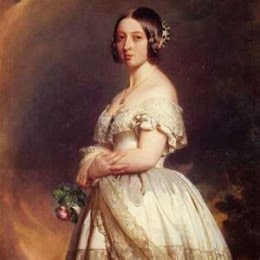
Future Queen Invents Teapot

Princess Mary of Teck became Queen of the United Kingdom and the British Dominions, and Empress of India, from 6 May 1910 until 29 January 1936, as the wife of King-Emperor George V.
–Photo source, Pinterest


A new “hygienic” teapot is the invention of a woman, and a royal woman at that, Princess May of Teck. She has just exhibited the pot in the group of nursing and sick-room appliances displayed in London previous to their forwarding to the Columbian Exposition. 

The model is in plain silver and made in two sections, the upper one of which is the receptacle for the tea. This is furnished with a double and extremely fine sieve, through which the water poured in at the top filters so slowly, that by the time it has reached the lower section all the good quality of the tea is extracted. The principle is quite similar but an improvement on the Japanese teapots, with perforated cups, sold here in New-York. – The New York Times, 1893


Etiquette Enthusiast, Maura J, Graber, is the Site Editor for the Etiquipedia© Etiquette Encyclopedia

Thursday, January 28, 2021

“No, Thank You” to Tea Custom

Afternoon tea in New York business houses is not desired, and if it were, it’s introduction would be impossible. We are all hard at work at the British tea time, except our few men of leisure who are frequently hard put to find playmates.– 1912


Whoever suggested the adoption and our embracing of the English custom of 4:00 tea in business offices deserves rebuke. No New Yorkers, no Americans in this degree of latitude or here about, need to stop work and the busiest hours of the day to drink tea. If we are wise, we breakfast lightly, lunch moderately and briefly, and in the evening, dine intelligently and without excess. We need nothing more to eat. 

The London atmosphere is oppressive. Along in the afternoon one who is working there feels the need of some sort of stimulative substance, and tea is better than whiskey and soda. Sensible Americans, we like to think, have got over the habit of drinking whiskey in the daytime, most Americans drink very little at any time. The increased internal revenue receipts indicate the larger wealth of the vastly increased population.

Afternoon tea in New York business houses is not desired, and if it were, it’s introduction would be impossible. We are all hard at work at the British tea time, except our few men of leisure who are frequently hard put to find playmates. If we like, we take it at breakfast instead of coffee. It is a good substitute, but probably the American who uses either or both very moderately is wise. 

We may continue to ape the British fashions in men's dress, but let us avoid the British custom of mixing up tea and business. “Concentration” for the few hours of the working day, as one of our readers declared in a letter printed in this page yesterday, is essential. The lunch “hour” takes an hour and a half of the day. The tea would take another hour. We're not rich enough yet for that sort of wastefulness. — The New York Times, 1912


Etiquette Enthusiast, Maura J. Graber, is the Site Editor for the Etiquipedia© Etiquette Encyclopedia


Tuesday, June 30, 2020

American Tea Etiquette in 1980

In the 1880’s, the Meriden Britannia Company of Connecticut came out with a “self-pouring pots” for American tea and coffee drinkers. They were designed to “turn drudgery into pleasure,” “relieve aching arms” and avoid “soiled clothes.” Is it just me? I had always thought 19th century women were made of stronger stock than these silly two illustrated young women, who found pouring tea to be such the “drudgery.” 


Tea drinking was a fast growing American passion in 1980

Americans are not the greatest tea drinkers in the world. The British Isles, where six pounds of tea a person are consumed each year, has that distinction. But tea drinking is a fast growing passion in the United States, according to Sam Twining, export director for R. Twining & Co. Ltd of England. As ambassador-at-large for England's oldest tea company (1706 is the founding date) and the ninth generation of his family to join the business, Twining has acquired a large store of knowledge about his favorite beverage. And the thing he would most like to tell Americans, he said in a recent interview over a cup of tea, is that to make a proper cup of tea it is very important to have a proper tea pot. 

An examination of the pots on sale in American outlets has convinced him that Americans are as likely as not to end up with a perfectly dreadful pot, regardless of the cost, unless they learn a few things beforehand. A proper tea pot is one which pours without dripping. Its handle is designed so that the fingers go round it without touching the pot which is certain to be hot. The handle should be made separately and put on afterward so that it stays cool to the touch. 

The lid should have a little lug so it doesn't fall off when you pour the tea. Or, the lid may be hinged onto the pot itself to accomplish the same purpose. So that air can get in when tea is poured, there should be a tiny pinhole in the spout. If it isn’t there, a full teapot will create a kind of vacuum so that it is difficult to pour. A built-in strainer at the base of the spout is necessary to catch the tea leaves before they reach your cup. 

A tea pot may be made of earthenware, silver, stainless steel, glass or porcelain. All are excellent materials and impart no aftertaste to the liquid. Aluminum and enamelled cast iron, which chips easily, are not good teapot material. Aluminum turns tea blue and contact with iron turns it bitter and black, says Twining. Most English families have at least two tea pots, a small one with enough for two or three cups and a large pot, holding enough for at least six. “The brown earthenware pot, which we English call a ‘brown betty,’ makes a great cup of tea. It’s excellent for morning tea. But if I were giving an afternoon tea party, I think I’d prefer to pour from a delicate porcelain pot or a silver one that is more graceful,” said Twining. 

Regardless of the type of pot used, make sure it is clean. “The idea that a layer of built-up tannin in the pot contributes to the taste of the tea is disastrous,” he added. “The best tea is made in a pristine tea pot.” For Twining that does not mean that a pot has to be scrubbed to a fare-thee-well with soap or detergent. He advocates a brief rinse in clean water after each use and a regular, four-hour soaking with water and about a teaspoonful of bicarbonate of soda once a month. 

The English regulate the strength of their tea by the addition of more, or less, hot water. A tea pot and a companion jug of boiled water appear together on the tea tray. Unlike coffee, which tends to get more bitter through the day as it sits, tea stops brewing when the water turns cool. In most pots, this means after about seven minutes. Since the tea is not going to get bitter, unless it is reheated with the leaves, an individual does not have to remove the tea leaves from the pot before serving.

As a nation of coffee drinkers, Americans may not know that coffee cups and tea cups have classically different shapes. The tea cup is narrow at the bottom and wider at the top to emit the bouquet of the tea and to permit rapid cooling, A coffee cup is taller and narrower, said Twining. 


As for accessories for the tea-drinking ritual, Twining is for some, against others. He is against tea cosies, those fabric covers designed to keep the tea pot hot. Why? Tea is supposed to stop brewing when the water cools down. By keeping the water hotter longer, the cosy leads to stewed tea, he said. He does like a new filter pot that accommodates a filter paper and in effect allows the tea brewer to make his own giant tea bag. A lemon squeezer that works like a garlic press is another item of which he approves. 

English tea the meal taken about 5 p.m. each day varies from season to season. In summer, a thin tea such as Lapsong Souchong might be served with cucumber sandwiches or lettuce sandwiches and a light sponge cake. In winter, a strong tea such as Earl Grey would accompany toasted crumpets, hot toast, jam and honey, tea sandwiches, fruit cake and scones. 

Special among famous English teas are cream or Devonshire cream teas and strawberry teas. A cream tea consists of scones, butter, Devonshire or clotted cream, and strawberry jam plus tea. A strawberry tea includes fresh strawberries and Devonshire cream plus tea. Strawberry and cream teas are often taken in small country inns and tea shops, added Twining. — By Barbara Mayer AP Newsfeatures 


Etiquette Enthusiast, Maura J Graber, is the Site Editor for the Etiquipedia© Etiquette Encyclopedia

Etiquette and a Dish of Tea


A Dish of Tea


“Dish” throughout the eighteenth century was a colloquialism for cup. In fashionable houses at first, and for long, tea was drunk from a cup without a handle brought from China. The vessel was termed a “dish.” When the Chinese cup was first copied by English potters, the convenience of a handle was added. 
The deep saucer from a beautiful Samuel Alcock “True Trio” — A true trio is two different shaped, porcelain cups (one for coffee and one for tea) and one matching saucer, circa 1840s. True trios were sold in this manner, as a consumer would conceivably need only need one saucer, as the coffee and tea would not be drunk simultaneously.


The saucer also was brought from China. It received the name because of its resemblance to the English saucer, a platter in which sauce was served. The familiar gibe, “saucer eyes,” was originally inspired by the sauce saucer, long before Lord Arlington gave the first “tea party” in England in Arlington House, where Buckingham Palace stands, at the Restoration period. — London Chronicle, 1913


Etiquette Enthusiast, Maura J Graber, is the Site Editor for the Etiquipedia© Etiquette Encyclopedia

Thursday, May 7, 2020

Memories of British Tea Drinking

There are many ways to enjoy tea. Curling up by the fireplace on a cloudy afternoon with a cup of tea can be the highlight of the day. Just because it’s solitary tea doesn’t mean it should be dreary. Arrange some light food in a plate, make it look pretty and enjoy this quiet time by yourself. Kids can also entertain themselves with tea just like the young children in the “Mary Poppins” or “Alice in Wonderland” classic movies. 


Brewing the Perfect Cuppa 
(tea, that is)

To some, drinking a cup of tea is a ritual. To others, it is simply a time to spend a soothing afternoon with friends. Quite easily, visions of scones, strawberry jam, wafer-thin sandwiches and china cups come to mind. Regardless of what images partaking of tea evokes, people have long been fascinated by this charming custom. The popularity of drinking tea has both diminished and flourished since the Chinese discovered it as a suitable beverage about 4,000 years ago. According to legend, Emperor Shen Nung, who was known as the Divine Healer, made it a habit to drink only boiled water after determining that those who did were sick less often. One day, sitting by a tea bush, some tea leaves found their way into his pot. Seeing that the resulting aroma was pleasant, Nung drank his first cup of tea. But it wasn’t until the 16th century that tea was introduced to Europe by Portuguese merchants who brought silks, spices and other Eastern items into the continent. 

While other European countries found tea flavorless in the mid-1600s, England and Russia found it soothing and relaxing. In the 17th century, tea drinking found its spot in English coffee houses. By the mid-1700s, tea gardens emerged. These lush, landscaped gardens were a meeting ground for the fashionable to chat, drink tea and gossip. By the end of the century, however, tea gardens were less prevalent and tea drinking developed into an at-home activity in England. What is now known as afternoon tea can be attributed to Anna, Duchess of Bedford, who realized this ritual was a way to satisfy her appetite during the void between lunch and dinner.

In those days, a day’s worth of meals consisted of a substantial breakfast, a light lunch and a heavy dinner late in the evening. Feeling a bit faint around five o’clock, the Duchess resorted to drinking tea and petite sandwiches to make it to dinner. This sort of “afternoon tea” is quite a contrast to the “high tea” served then in working class homes where hearty cold meats, breads and cheeses were served when the men returned home from work. Although Coronadan Jan Lichty hasn’t lived in England since 1939, her memories of having tea are still fresh in her mind. “The tea I remember, was with the dainty little cups, cucumber sandwiches and wafer-thin sandwiches,” Lichty said. “As children, we had tea, milky tea, with cakes and snacks.” 

“Don’t forget the war changed everything,” she said. “It was a different world then.” Barbara Taylor, a Coronado resident for most of her adult life, remembers growing up in war-torn England and having tea with her family. During the war, Taylor said a lot of English families would sit down for breakfast with a cup of tea and other breakfast items. At school. Taylor would have a heavy meal with tea at mid-day. After school, Taylor would come home to find tea, bread and butter, jams and cakes to share with her parents and sister. Sometimes, cheese or egg dishes made their way onto the table. “Five o’clock was quite a typical time for an English (working class) family to have tea,” Taylor remarked. 

Sarah O’Sullivan, who grew up in the southwest region of England, also remembers sitting around the dinner table and having traditional tea with scones, clotted cream and jam. “That’s extremely fattening,” she joked. “It’s one of the things we miss here.” Like Taylor, O’Sullivan recalls having a hearty lunch at mid-day and coming home for tea around 5 p.m. She used to come home for lunch at times, since her Dad owned a shop nearby and could join them. “It was nice because it was family time, we all sat down together,” O'Sullivan recalled. “Times have changed a bit now in England," Taylor pointed out. “Customs have shifted somewhat.” Most men are no longer able to come home from work at mid-day to have their cooked meal with tea. That tradition has slowly faded. “England is much more like America, more on the run,” added O’Sullivan, who’s been living in Coronado for the past two years. Her husband, who is part of the Royal Navy, is on an exchange with the U.S. Navy. Nowadays, O’Sullivan and her family have their main meal in the evening when her husband returns from work. “Sunday is the closest you get to having an afternoon tea.” 

Taylor, who travels to England frequently, still drinks tea for breakfast but now has a lighter lunch. She continues to drink her afternoon tea around 4 p.m. everyday before her evening meal. “I think it gives you a lift,” she said. “It’s a shame more people don’t stop and take a break at 4 o’clock in the afternoon,’’ Having a cup of tea in the afternoon brings back fond memories for Shelia Davis Lawrence who recalls quiet afternoons drinking tea with her grandmother. “I guess it’s a quiet time in the afternoon, a more gracious time,” Lawrence said, “It can grow into an interesting past-time as an adult.” Lawrence added that she sees drinking tea as an activity for all occasions, not as something stuffy. 

There are many ways to enjoy tea. Curling up by the fireplace on a cloudy afternoon with a cup of tea can be the highlight of the day. Just because it’s solitary tea doesn’t mean it should be dreary. Arrange some light food in a plate, make it look pretty and enjoy this quiet time by yourself. Kids can also entertain themselves with tea just like the young children in the “Mary Poppins” or “Alice in Wonderland” classic movies. Tea for two? This is a great opportunity for a couple to cozy up together and share a romantic time together. Power teas are also catching on in hotels worldwide. They’re a great way to top off power breakfasts and power lunches for busy executives. What better way to spend an afternoon with friends than to throw a tea party. Delicate snacks, a good pot of tea and stimulating conversation are sure to be a success. 

“The properness of tea is not in the elegance of the implements or delicacies of the food—it’s how food is served,” Lawrence said. It is this hospitality and graciousncss as a hostess that Lawrence finds pleasing when having tea. Prompted by her memories as a young girl, Lawrence recently invited a group of Brownies for tea at Crown Manor. The experience to share tea with these young girls was something Lawrence said she cherished. “It’s like passing on a part of history.” Lawrence, like many others, prefers tea to coffee, yet drinking coffee has seen a rise in popularity with the British—for all the wrong reasons though. “My husband has learned to like coffee because he can’t stand the American tea,” noted O'Sullivan. Lichty, however, rarely drinks tea anymore because it’s more convenient to make coffee. 

“Once in a blue moon (I drink tea),” Lichty said. “But if I want to make the effort to do tea, I want to do it right ” Which brings to mind the ubiquitous tea bag, which dates back to 1904 when Thomas Sullivan, a New York tea merchant, started sending his customers samples of his teas in silk pouches. The idea caught on because of its practicality and has even been accepted now in England, according to Taylor. However, it is the way tea is served in many American restaurants that has given tea bags a bad reputation. O'Sullivan said she will never forget the first time she came across tea in the United States. A waitress at a restaurant brought a jug of lukewarm water to her table with tea bags next to it. “I thought, ‘This isn’t tea’,” O’Sullivan said with a laugh. “It tastes peculiar when the water’s not boiling.” Lichty’s great aunt also had a funny encounter with tea bags when they first came out in England years ago. Lichty remembers her great aunt cutting out the top of the tea bag and pouring the tea leaves into the cup. “She tipped it out, she didn’t know any better until I showed her how to do it,” Lichty said. — Stories by Karen Koehler, Coronado Eagle and Journal Reporter, 1991


Etiquette Enthusiast, Maura J Graber, is the Site Editor for the Etiquipedia©️ Etiquette Encyclopedia

Tuesday, May 5, 2020

A Duchess of Industriousness

The Duchess of Bedford as depicted in Julian Fellowes’ latest period drama, “Belgravia.” 
—————
“When Mrs Trenchard arrives at the grand home of the Duchess of Bedford (pictured played by Naomi Frederick) - the first scene set in London's Belgravia, 26 years after the Battle of Waterloo - she informs her host she is ‘so interested by your invention of afternoon tea’”—From DailyMail.UK


Of English and American Girls


An English traveler writes she can assure you that, having lived in different castles and manor-houses of Great Britain, and been accustomed to the industrious habits of duchesses and countesses, I was utterly astonished at the idleness of American fine ladies. No Englishwoman of rank (with the exception of a few parvenues), from the Queen downward, would remain for one half hour unemployed, or sit in a rocking-chair unless seriously ill. 

They almost all, with hardly an exception, copy the business letters of their husbands, fathers or brothers; attend minutely to the wants of the poor around them, and even take part in their amusements and sympathize with their sorrows; visit and superintend the schools; work in their own gardens; see to their household concerns; think about their visitors; look over the weekly accounts, not only of domestic expenses, but often those of the farm and estate; manage penny clubs in conjunction with the working classes, to help them to keep themselves; and with all these occupations, by early hours, they keep up their acquaintance with the literature and politics of the day, and cultivate the accomplishments of music and drawing, and often acquire, besides, some knowledge of scientific pursuits. 

The late Marchioness of Lansdowne was so well acquainted with the cottagers in her neighborhood, that she used to visit and look at the corpses of the dead, because she found that her doing so soothed and comforted the bereaved. I have known her to shut herself up with a mad woman in her poor dwelling, who used to lock the door and could not be induced to admit any one else. Lady Lansdowne’s only daughter used one hundred guineas (given her by her father-in-law, Lord Suffolk, to buy a bracelet,) to build pig-styes, with his permission, at her husband’s little country residence, she educates her own children without assistance —teaching the boys Latin and the girls all the usual branches of education. 
It is said that Anna, 7th Duchess of Bedford invented afternoon tea sometime during the 1840s. Although her simple pot of tea with a light snack was originally introduced to counteract her hunger pangs, it soon developed into a popular social occasion among the fashionable classes. Now we know she was much more industrious than history has given her credit for!

The late Duchess of Bedford, I accidentally discovered when on a visit to Woburn, had for thirty years of her married life, risen at 6 o’clock, Summer and Winter, lit her own fire, made some tea for the Duke and herself, and then, as he wrote his own letters of business, she copied them, and they, came down to a large party of guests at 10 o’clock, to dispense breakfast, without saying one word of their morning avocations; so that you might have been a visitor at the house without finding out that the Duke or Duchess had transacted the necessary business of the day before, perhaps, you had risen. I rather mention those that are gone to their reward than write of women still among us ; but you may believe me when I say that I am constantly among those who live such lives of energy and usefulness, but they so employ themselves without ostentation or an idea that they are doiug more than their simple duty. — The Christian Witness, 1872


Etiquette Enthusiast, Maura J Graber, is the Site Editor for the Etiquipedia©️ Etiquette Encyclopedia 

Thursday, April 2, 2020

Lord Melbourne’s Tea Etiquette

Lord Melbourne (1779-1848) was British Prime Minister on two occasions. The first  ended when he was dismissed by King William IV in 1834. He was the last British PM to be dismissed by a Monarch. Six months later he was re-appointed and served for six more years. He is best remembered for being Prime Minister in Queen Victoria’s early years. He coached her in the ways of politics, acting almost as a private secretary and confidante. – Public domain image


Manners at Tea Drinking

On one point at least we may congratulate ourselves, and that is on the improvement in tea table manners. Some old fashioned folk used to signalize the conclusion of their tea drinking by turning the cup upside down in the saucer. In other circles, the recognized sign of a disinclination for more tea was the placing of the spoon in the cup instead of in the saucer. 

When the Queen's first Prime Minister, Lord Melbourne, was a lad, residing at Glasgow in the house of one of the university professors —about the end of the last century—he wrote to his mother an account of the Glasgow table manners. “We drink healths at dinner,” he writes, “hand round the cake at tea and desire to have no more exactly in the same manner that we used to behave at Hatfield, at Eton and at Cambridge.”— All the Year Round, 1893


Etiquette Enthusiast, Maura J Graber, is the Site Editor for the Etiquipedia© Etiquette Encyclopedia 

Sunday, January 21, 2018

Tea Etiquette and the Pinky Debate


Not only did Disney have it wrong on the pinky finger sticking out, but Alice having her elbows on the table, is certainly considered rude.
“Disney has it wrong I’m afraid; the extended pinky is a big no-no. The correct way to hold the teacup is to lightly grip the handle between your thumb and fingers but not clutch your fingers around the handle. Sticking your little finger out into the air whilst drinking tea in England will likely get you some strange looks and weak smiles but they won’t get you invited to the palace for afternoon tea, so please keep them tucked in nice and tight. Some people say that the “pinkies out” affectation dates back to the eleventh century when it was considered cultured to eat with three fingers and common to eat with five. Another explanation is that the earlier styled tea cups had no handles and therefore the little finger was extended to provide balance.” – Rachel North, Shipshape Etiquette

Old Chinese tea cups in Great Britain. 

Many disagree on the whole pinky finger debate, but most anthropologists believe the lower classes watched the upper classes on how to hold their cups, and believe that heat had nothing to do with how people held their handless cups of tea. “After all, the tea and cups came from China and the Chinese held their handleless cups in a manner without fingers extended.” – Maura J. Graber, The RSVP Institute of Etiquette

And prior to small salt spoons being used, other ways of salting one's food or adding spices were devised. "Pinky fingers were extended while eating, and kept away from the greasy foods so that they could be used for dipping into expensive spices." –Bernadette Petrotta, The Art of Social Graces


 🍽Etiquette Enthusiast, Maura J. Graber of The RSVP Institute of Etiquette, is the Site Editor for the Etiquipedia© Etiquette Encyclopedia

Friday, January 22, 2016

Etiquette and Vauxhall Tea Gardens


Depiction of the infamous Vauxhall Tea Gardens, which were opened in 1732.

In the early 18th century, when the popularity of tea spread in Great Britain, it became an essential part of one's entertainment outside of one's home. 

Tea gardens were rapidly opening all over England on Saturdays and Sundays, with tea being served as a high point of the afternoon. An evening spent dancing or watching fireworks in Vauxhall Gardens was finished off with tea being served. 

From the tea gardens, soon came the idea of the tea dance. Dance was included as a part of the day's festivities. Tea dances remained fashionable until World War II when they lost popularity. But tea dances are still held in the UK today.

The charge for entrance to fashionable tea gardens, such as Vauxhall, included tea with bread and butter, which were welcome refreshments after the day's entertainment. But it was steady urban growth in the early 19th century,that led to the closure of the gardens, leaving the taverns, 
inns, hostelries, etc... as the only establishments still serving tea.

Tea eventually began to play an important role in the British temperance movement. In 
an attempt to convert drinkers and to raise money for the cause, the battle against the consumption of extremely high levels of alcohol (most popularly gin) was organized at tea meetings, held all over Britain. It is naturally believed that 'teetotal' was derived from the beverage.

A portion of the flamboyant sentimentalist, Nikolai Karamzin (Letters of a Russian Traveller 1789-1790), description of Vauxhall: 
“The London Vauxhall brings together people of every social standing - lords and lackeys, fine ladies and harlots. Some come here as actors, others as spectators. 
“I visited all the galleries and looked at all the pictures, whose themes have been taken either from Shakespeare's dramas or from recent English history. The walls of the large rotunda, where music is given in rainy weather, are covered with mirrors from floor to ceiling. Wherever you look, you see ten living portraits of yourself. 
“At about twelve o'clock supper was served in the pavilions, and horns sounded in the groves. Never in my life have I seen so many people seated at table. It looked like some kind of magnificent feast. We chose a pavilion, too, and ordered chicken, anchovies, cheese, butter, and a bottle of claret. This cost about six rubles. 
“Vauxhall is two miles from London, and in summer is open every evening. One pays forty kopecks to enter. I returned home at dawn, completely satisfied with the whole day.”
 Partial sources include the UK Tea and Infusion Association and Twinings Tea


🍽️Etiquette Enthusiast, Maura J. Graber of The RSVP Institute of Etiquette, is the Site Editor for Etiquipedia© Etiquette Encyclopedia

Monday, November 23, 2015

Etiquette of French, British and Spanish Beverages

What is it about the French coffee?  The coffee sweetened with that sparkling beet-root sugar which ornaments a French table, is the celebrated café-au-lait, the name of which has gone round the world. 

We are not about to enter into the merits of the great tea-and-coffee controversy, further than in our general caution concerning them in the chapter on Healthful Drinks; but we now proceed to treat of them as actual existences, and speak only of the modes of making the best of them. The French coffee is reputed the best in the world; and a thousand voices have asked, What is it about the French coffee?

In the first place, then, the French coffee is coffee, and not chickory, or rye, or beans, or peas. In the second place, it is freshly roasted, whenever made—roasted with great care and even
ess in a little revolving cylinder which makes part of the furniture of every kitchen, and which keeps in the aroma of the berry. 

It is never overdone, so as to destroy the coffee-flavor, which is in nine cases out of ten the fault of the coffee we meet with. Then it is ground, and placed in a coffee-pot with a filter through which, when it has yielded up its life to the boiling water poured upon it, the delicious extract percolates in clear drops, the coffee-pot standing on a heated stove to maintain the temperature. The nose of the coffee-pot is stopped up to prevent the escape of the aroma during this process. The extract thus obtained is a perfectly clear, dark fluid, known as café noir, or black coffee. 

It is black only because of its strength, being in fact almost the very essential oil of coffee. A table-spoonful of this in boiled milk would make what is ordinarily called a strong cup of coffee. The boiled milk is prepared with no less care. It must be fresh and new, not merely warmed or even brought to the boiling-point, but slowly simmered till it attains a thick, creamy richness. The coffee mixed with this, and sweetened with that sparkling beet-root sugar which ornaments a French table, is the celebrated café-au-lait, the name of which has gone round the world. 
From 1869: "Chocolate is a French and Spanish article, and one seldom served on American tables." ··· In 1502, Christopher Columbus was the first European to taste cocoa on his fourth voyage to the New World, returned to Europe with the first cocoa beans. Records from the time suggest that recognizing its potential, he took a load of cocoa beans back to Spain.
As we look to France for the best coffee, so we must look to England for the perfection of tea. The tea-kettle is as much an English institution as aristocracy or the Prayer-Book; and when one wants to know exactly how tea should he made, one has only to ask how a fine old English house-keeper makes it. 

The first article of her faith is, that the water must not merely be hot, not merely have boiled a few moments since, but be actually boiling at the moment it touches the tea. Hence, though servants in England are vastly better trained than with us, this delicate mystery is seldom left to their hands. Tea-making belongs to the drawing-room, and high-born ladies preside at the bubbling and loud hissing urn, and see that all due rites and solemnities are properly performed—that the cups are hot, and that the infused tea waits the exact time before the libations commence.

Of late, the introduction of English breakfast-tea has raised a new sect among the tea-drinkers, reversing some of the old canons. Breakfast-tea must be boiled! Unlike the delicate article of olden time, which required only a momentary infusion to develop its richness, this requires a longer and severer treatment to bring out its strength—thus confusing all the established usages, and throwing the work into the hands of the cook in the kitchen. 

The faults of tea, as too commonly found at our hotels and boarding-houses, are, that it is made in every way the reverse of what it should be. The water is hot, perhaps, but not boiling; the tea has a general flat, stale, smoky taste, devoid of life or spirit; and it is served usually with thin milk, instead of cream. Cream is an essential to the richness of tea as of coffee. Lacking cream, boiled milk is better than cold.

Chocolate is a French and Spanish article, and one seldom served on American tables. We in America, however, make an article every way equal to any which can be imported from Paris, and he who buys the best vanilla-chocolate may rest assured that no foreign land can furnish anything better. A very rich and delicious beverage may be made by dissolving this in milk, slowly boiled down after the French fashion. –From Catharine Beecher's and Harriet Beecher Stowe's, 1869, “American Woman's Home"

Etiquette Enthusiast, Maura J. Graber, is the the Site Editor for Etiquipedia© Etiquette Encyclopedia

Monday, August 3, 2015

Etiquette and Tea Styles

High Tea is also sometimes confused with the teas that King Edward VII hosted during his reign from 1901-1910. Edward had so many meals in his daily schedule he had to change everyone else’s schedules. Famous for his huge appetite, Edward ate no less than 12 courses at dinner and is responsible for adding “appetizers” to the dinner menus of British society.


Just Some of the Different Styles Of “Teas” Held, or Given, for the Enjoyment of this Popular Beverage
Around 1800, when tea was very expensive and kept in locked containers called "tea caddy boxes," special tea caddy spoons were designed and kept with the tea. Tea caddy spoons were popular gifts and often engraved for special events. 
·The High Tea:  In the past, "High Tea" was considered the tea of the working-class rather than the tea of the elite. This tea was a hearty affair. Meat pies, rarebit, shepherd's pies, slices of roast, sausage, vegetables, casseroles, puddings, and heavy desserts and other dinner time staples usually made with leftovers were commonly served.  
The term “High” came about because the tea meal was taken at a high dining table, or with high back chairs all around a table. This was to distinguish the meal from the Afternoon Tea that was taken at low tables.  
In recent years, High Tea has become a term for elaborate Afternoon Tea, though this is an American usage and mainly unrecognized in Britain (with the exception of some London hotels, catering to tourists.) It is usually served between 5:00 pm and 8:00 pm.  
High Tea is also sometimes confused with the teas that King Edward VII hosted during his reign from 1901-1910. Edward had so many meals in his daily schedule he had to change everyone else’s schedules. His dinner time was pushed forward another hour or so to 8:30 pm or 9:00 pm. High Tea could now be held even later in the afternoon.
Known for his huge appetite, the King ate no less than 12 courses at dinner and is responsible for adding “appetizers” to the dinner menus of British society. This change brought it closer in line to what most Americans think of as a dinner time (around 5:00 pm). 
·The Formal Afternoon Tea: A "Formal Afternoon Tea" is an elaborate affair with white linens, silver, hats and gloves, bone china, and several different types of tea. Darjeeling and Ceylon varieties are suggested for this teatime. Tea fare consists of scones, at least four varieties of savories, and beautiful finger desserts or petits fours, presented on three-tiered racks, often buffet style. 
Traditional service time is 4:00 pm, however any time between 2:00 pm and 5:00 pm is appropriate. (Please remember that proper etiquette dictates one remove those gloves before eating or drinking anything!) 
Tea fare consists of scones, at least four varieties of savories, and beautiful finger desserts or petits fours, presented on three-tiered racks, often buffet style. 
·The Afternoon Tea or The Low Tea: An Afternoon Tea or "Low Tea" is designed to enhance social skills and usually is served in fine fashion and in several courses. Some believe the term “Low Tea” may come from the fact that hotels have traditionally used low tables in their lobbies to hold the foods and tea service presented at afternoon teas. 
This full-tea service includes scones, savories, and a variety of petits fours. It is traditionally served at 4:00 pm, however, any time between 2:00 pm and 5:00 pm is appropriate.
·The Special Event and/or The Seasonal Tea: These teas are designed for a season, occasion, or personal style for the hostess or honored guest. Although these teas require more planning, they also provide an opportunity for creativity in themes, menus, table settings, favors and invitations. Examples include; bridal teas, sweetheart teas, Christmas teas, harvest teas, baby shower teas, business teas, retirement teas, graduation teas, garden teas, and benefit teas.

·The Cream Tea: These Cream Teas are fondly known as afternoon "sweet-tooth teas" in some circles. They feature heavy, clotted cream from Devonshire, that is slathered on scones, rather than any cream added to the tea. 
Cream is much too rich to accompany tea, as it will curdle; milk is the preferred addition. Besides scones, this tea includes fresh fruits, berries in season, and cake. Cream Teas are traditionally served from 1:00 pm to 4:00 pm.
                          
No pinky finger thrust out here. Perfectly lovely!
·The Brunch Tea: A hearty tea, Brunch Tea is a wonderful way to start the day. A Brunch Tea usually offers an egg dish, fresh fruit, or pasties which are light on sugar content. This is the perfect time to seek a hearty breakfast tea, since the traditional time is from10:00 am to 1:00 pm.

·The Teddy Bear Tea: This special tea, (in actuality, it is hot chocolate), was prepared by nannies for their young charges. The children would scurry off to their quarters to play with their favorite dolls or bears and sip hot chocolate while munching on goodies from the adults’ tea table.

·The “Elevenses”: The term “Elevenses” is a British version of the American office "coffee break," between 10am and 11am in the morning. The coffee break originated from the old "Second Breakfast" of European immigrants to the United States. In Britain, a tea cart with tea, crumpets, scones, or cinnamon toast is wheeled in for the break.

A post script: Remember...  one drinks tea. One does not take tea. During the Victorian era, the term to take tea was used by the under classes and considered a vulgar expression by the upper classes.
Contributor Bernadette Petrotta is the Director and founder of The Polite Society School of Etiquette. Her newest book is "The Art and Proper Etiquette of Afternoon Tea." 


 🍽Etiquette Enthusiast, Maura J. Graber of The RSVP Institute of Etiquette, is the Site Editor for the Etiquipedia© Etiquette Encyclopedia

Thursday, July 2, 2015

Tea Table Etiquette


Patented design for a tea service in 1873

Quaint Customs Once Observed by British Dames


Tea drinking has become very fashionable among us of late years, almost as much as it was in England a century ago, but the prevailing customs at the table are different. The “teacup times of hood and hoop” had their own etiquette, of a sort not likely to be revived. What should we think now of a fashionable lady who cooled her tea with her breath? 


Yet Young says of a certain bewildering Lady Betty:
Her two red lips affected zephyrs blow
To cool the Bohea and inflame the beau.
While one white finger and a thumb conspire
To lift the cup and make the world admire.


Again a passage in contemporary literature shows that it was a lack of good manners to take much cream or sugar in one's tea. Says a lady of quality to her daughter: “I must further advise you, Harriet, not to heap such mountains of sugar into your tea, nor to pour such a deluge of cream in. People will certainly take you for the daughter of a dairymaid.” 
Pinky fingers should not be thrust out– A pinky finger held out and up in the air, was never a quaint English custom! ~ Not a real “Dame,” and not the “daughter of a dairymaid,” either, Etiquipedia doubts that the cross-dressing, comedian “Dame Edna,” is what the writer of this article had in mind. 

Certain other customs may be remembered in this country among us who had grandmothers trained in the ceremonies of a later day. One of them consisted in putting the spoon in the cup to show that no more tea was desired; another was that of turning over the cup in the saucer for the same purpose.

Etiquette also demanded that the tea should be tasted from the spoon, and that the hostess should then inquire, “Is your tea agreeable?” Certain scrupulous old ladies ask that now, and the question savors of a more sedate and gentle day than this. — From The St. Louis Republic, 1899

Etiquette Enthusiast, Maura J. Graber, is the Site Editor for Etiquipedia© Etiquette Encyclopedia

Friday, May 22, 2015

Etiquette for Properly Making Tea

Tea is an extremely delicate article!


A CUP OF TEA

How To Make It Properly, and How to Spoil It ...  from The London Telegraph, 1889


"It seems a simple thing enough; yet of the millions who use this refreshing and agreeable beverage a very small proportion understand bow to prepare it. But if not properly made, tea is deprived of a great deal of its value, and sometimes rendered absolutely injurious. The water to be used should boil, and it should be poured on the tea immediately it boils; if allowed to overboil the peculiar property of boiling water which acts upon tea evaporates and eventually disappears. Tea should not be a decoction, but an infusion. If allowed to stew, it becomes little better than a decoction of tannic acid. Tea that is overdrawn is hurtful to the nerves and to the digestion. As to the precise number of minutes which should be devoted to the process of drawing, some people will say five minutes, some seven, some will perhaps go as far as ten, but our experience is in favor of six; this suffices to bring out the flavor, quality and strength.
        
The replenishing of the teapot with fresh hot water is very objectionable.
Just as much tea as is wanted should be made — no more. Make fresh tea as often as it is required. The replenishing of the teapot with fresh hot water is very objectionable. As the thorough heating of the receptacle is of the first importance, the teapot should be made thoroughly hot before the tea is put into it. The earthenware teapot is preferred to all others by many connoisseurs, and it is superfluous to say that whatever utensil is used for this purpose should be immaculately clean.
                                    
Reading the tea leaves, do you see a better cup of tea in your future?
Tea is an extremely delicate article. Its susceptibility to the odors of commodities near it is a source of danger and deterioration, as it readily takes up the smell of coffee, cocoa, spices, cheese, bacon, or other articles of pronounced odor. The complaints sometimes made about tea would probably not arise if always kept in places free from such contagion. Tea should be stored in a warm, dry place; unnecessary exposure to the air should be avoided. Even when securely packed in the leaden chests in which it arrives in England, the change from the glowing lights of Eastern skies to the damp and humid atmosphere of this climate deprives tea of much of its beautiful fragrance. 
        
No burnt hands! No lifting the pot! No aching arms! No soiled clothes! It turns the drudgery of pouring a cup of tea into a pleasure! How fragile were American women? ~ An American made self-pouring tea pot from 1888
Tea of much better quality than is generally dispensed at our railway stations and refreshment rooms can be bought at 2s per' pound. A pound of tea would make 128 cups. This is "considerably less than a farthing per cup. You may well ask why is it that we should be still charged 4d and 6d "for a little hot milk and water slightly flavored with undesirable tannin."


Etiquette Enthusiast, Maura J. Graber, is the Site Moderator for Etiquipedia© Etiquette Encyclopedia