Showing posts with label The Golden Rule. Show all posts

Thursday, April 4, 2024

Etiquette and Respect for Others

We can't get rid of her. We've insulted her, ignored her, done just about everything but she still tags along. What can we do?” — Outrageous behavior on the parts of these three girls! Rudeness is inexcusable behavior to someone new you meet, regardless as to whether or not you wish to develop a friendship. “The Golden Rule,” honesty and showing some respect for others would be the best policy in a situation such as this one. Treat everyone as you would like to be treated.


DOROTHY DIX: We three girls have been friends for years. Recently a new girl came to our school and attached herself to our small group. We can't get rid of her. We've insulted her, ignored her, done just about everything but she still tags along. What can we do? —Dianne

DEAR DIANNE: It's much easier lo travel in a quartet than in a trio. Why be so selective? This girl is lonesome and frightened of her new school and different companions. She needs someone and has chosen ycur particular group as her idea of the best girls in school. Why not live up lo the honor? Be friends to this friendless youngster. Help her over the hurdle of getting accustomed to new surroundings. Encourage her lo overcome her shyness. Give her self-confidence. Some day you, too, may need a friend.— Dorothy Dix, 1958


🍽Etiquette Enthusiast, Maura J. Graber, is the Site Editor for the Etiquipedia© Etiquette Encyclopedia

Sunday, October 9, 2022

Etiquette: A Law of Mutual Kindness

Precious few of us are such spellbinders that we can hold an audience on the intrinsic thrillingness of our discourse, nor are we brilliant enough humorists to provoke with our wit the ready laugh that etiquette hands us. Yet which one of us would enjoy a listener who frankly yawned when he was bored, or felt called upon to tell us that he had heard our cherished best story a million times before? 

Dorothy Dix Answers Writer Who Says ‘Etiquette Makes Hypocrites of Us’
——————
Conventions of Society Save Us Heartaches and Help to Keep Us Happy

Not long ago I wrote an article for this column in which I spoke with enthusiasm of the school for manners that the University of New York is going to inaugurate. A man reader takes exception to my views. He writes: 
“I disapprove highly of all the etiquette, because etiquette robs us of sincerity. If you go into a room and find people there who are not of the slightest interest to you, why should you hypocritically be sympathetic to their troubles, and rejoice in their happiness, when in reality you do not care whether they live or die? Yet etiquette requires you to do that. Etiquette will stop you from telling a man that he is a liar, or a woman that she is old and ugly. Etiquette prescribes that you smile when you have not the slightest desire to do so. Etiquette forces you to listen to the boresome conversation and long-winded stories of others. Etiquette forces you to do that which you do not desire to do, and to leave undone that which you wish to do.”

“What is the good of etiquette?’’ Etiquette is simply one of the rules of the game. When human beings rose above beasts who were continually at each other’s throats and decided to live together in peace and harmony, they found out that they would have to agree upon certain things that they could do, and couldn’t do, and that everyone must respect these unwritten laws because it made things pleasanter for everybody. Out of this grew what we call the conventions of society and etiquette, and, foolish and arbitrary as they sometimes seem, they invariably rest upon some human need and represent the accumulated experience of centuries of man’s dealing with man, and the best way to do it. Moreover, etiquette is nothing more nor less than the golden rule dressed up in party clothes and with a flower in its buttonhole. It teaches us to treat others as we would like to have others treat us. It makes us respect other people’s privacy and opinions, and be careful of their susceptibilities as we would like to have them respect ours. 

You can have no better illustration of the happy working out of etiquette than in the very instances cited by my correspondent. He asks scornfully why he should appear to sympathize with the joys and sorrows of people for whom he cares nothing. Doubtless this man never takes the trouble to write a note of condolence when there is a death in the family of some acquaintance, or telephone a congratulation good luck comes the way of a neighbor. Yet how would he feel if, when he entered a room, nobody greeted him with a pleasant and cordial word because no one happened to be vitally interested in him? Would he not be cut to the heart if his wife or child lay dead and no human being spoke a word of sympathy to him? Would not the happiness of his success be dimmed if not a man put out a hand and said: “Good for you, old chap, I’m awfully glad for you”? 

My correspondent says that etiquette forces us to listen with an affectation of interest to tedious conversationalists, and laugh over jokes that we cut our teeth on in our cradles. Let us thank Heaven that it does. Precious few of us are such spellbinders that we can hold an audience on the intrinsic thrillingness of our discourse, nor are we brilliant enough humorists to provoke with our wit the ready laugh that etiquette hands us. Yet which one of us would enjoy a listener who frankly yawned when he was bored, or felt called upon to tell us that he had heard our cherished best story a million times before? 

And if etiquette prevents us from enjoying the sacred joy of telling a man that he lies, or a woman that the least observing eye can see that she is ten years older than she pretends to be, and that anybody can tell that her complexion and her hair are only hers by right of purchase, is it not as broad as it is long, for it keeps other people from saying the same brutal things to us? As for etiquette being the mother of insincerity, that is nonsense. There is more to praise than to blame, more to admire than to criticize, more to like than to hate in the world. Why is it not as honest to speak of a person’s good qualities as his bad qualities? Why isn’t it as sincere to turn a cheery, bright face upon the people at your breakfast table and in your office as it is to grouch in gloom? And as for sympathizing with the joys and sorrows of those about us, even if we don’t know them very well and are not particularly attached to them, surely that is just the throb of a common humanity that makes us all kin. 

At its worst, etiquette is merely assuming the virtue of consideration of others by those who have it not, and that is better than the brutality of the savage, who goes his own way unmindful of the rights of others. When we all get to be angels, altruistically intent on promoting each other’s happiness, we can do without etiquette; but until that time arrives, blessed be good manners that make it bad form for us to step on each other’s toes and do and say things we are prompted to do.— By Dorothy Dix in the San Francisco Call, 1916


🍽Etiquette Enthusiast, Maura J. Graber, is the Site Editor for Etiquipedia© Etiquette Encyclopedia

Thursday, November 19, 2020

Respect and Etiquette


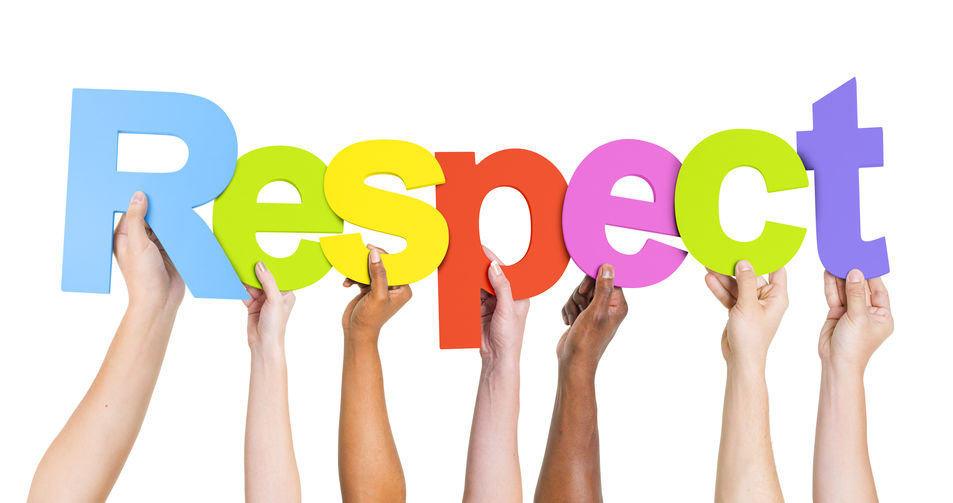
What "Respect" Looks Like

Respect

Respect is one of the most important words we can know.  We feel it when we read or hear it. We know its significance when we use it.  And, as the 18th century icon, Adam Smith said, “We desire both to be respectable and to be respected.”  The positive view formed on how persons are living their lives is the stuff of respect. 

But as important as respect is, it’s interesting that the word itself no longer shows up with the same frequency it once did.  Google Books Ngram searches of its data bases of printed books, indicates usage of the word “respect” is the lowest it has been in over three centuries.    

Now is the perfect time to ask ourselves how we conceptualize and demonstrate respect.

Respect is Not Fear

Respect and fear are sometimes intertwined when it comes to how they are perceived, however the two are very different.  You may think you respect someone or something you fear, but this is not true if insecurity, distrust, or chaos also exist.

The following statements help confirm the difference between respect and fear:

  • A respected person commands respect, but their respect is never commanded. 
  • When you admire a person and what she stands for, she commands your respect. 
  • Recognizably honoring a person or cause demonstrates your statement of respect, or your desire to show respect for what others value. 
  • If you deem another person worthy of respect, you can find personal inspiration in that person.  
  • Qualities, deeds, values that attract and draw us to a person also call us to make these our virtues.
  • Respect is not earned by making people fear us, but by their naturally admiring us. Admiration by fear is coercion. 
  • We can always be afraid; we only earn respect.  Fear repels; respect attracts.

Putting it Into Practice

Respect in action is as simple as living by The Golden Rule.  You can test this by asking yourself:
“Am I treating others the way I would want to be treated?”  
“Are my actions admirable, honorable?”
“Do my actions make others feel cared for, valued, and important?”

Practicing respect looks, sounds, and feels like:  

  • Listen, really listen, to what others say. 
  • Give your attention to those you interact with. 
  • Offer encouragement and support for the best in others. 
  • Acknowledge that another person wants to speak and be heard.
  • Put yourselves in someone else’s shoes to enable compassion, which sometimes is friendly silence. 
  • Recognize and honor the difference among what’s mine, thine, and held in common. 

Each of the actions above demonstrate that respecting others is simply treating them as you would want to be treated.

Does Self-respect Come First?

It’s a “chicken and egg” question.  Learning to respect yourself does not happen apart from learning to respect others.  Other people are necessary in complex social mirroring and feedback processes.  

Every human being has intrinsic value and discovering this is a lifelong uncharted journey.  We respect ourselves when we find, define and accept our own worth and value.  

Self-check on self-respectful actions:

  • Am I consistently being honest with myself?
  • How am I doing with my learning and self-education?
  • Am I taking care of myself, treating myself well?
  • Am I taking responsibility for my own conduct?  
  • Do I self-assess and work to eliminate bad influences or habits in my life?
  • Do I give myself time to clearly articulate how I feel?
  • Am I able to give myself an “A” for good manners and proper conduct, realizing that how other people react to me can be signals that I need to reevaluate and make changes?

Showing respect for yourself and others is the core of etiquette.  It is a simple word, but holds more meaning than the majority of other words in our language.  As George Matthew Adams wrote in the Sacramento Union on March 21, 1913: 
“Respect is the name of the Fellow who tends door for your Conscience.  He is the most sacred Office in life of your Character…Respect is your most faithful of Friends, your greatest Guide, your most powerful Protector, your safest Pilot into Port.”


“A person is a person no matter how small.”  ~ Dr. Seuss


Contributor, Candace Smith is a retired, national award-winning secondary school educator, Candace Smith teaches university students and professionals the soft skills of etiquette and protocol. She found these skills necessary in her own life after her husband received international recognition in 2002. Plunged into a new “normal” of travel and formal social gatherings with global leaders, she discovered how uncomfortable she was in many important social situations. After extensive training in etiquette and protocol, Candace realized a markedly increased confidence level in meeting and greeting and dining skills and was inspired to share these skills that will help others gain comfort and confidence in dining and networking situations. Learn more at http://www.candacesmithetiquette.com/


🍽️Etiquette Enthusiast, Maura J. Graber of The RSVP Institute of Etiquette, is the Site Editor for Etiquipedia© Etiquette Encyclopedia

Monday, November 16, 2020

Etiquette and Digital Civility


How is Technology 
Challenging Civility?

Phone and Laptop

Technology can improve lives and provides boundless communication possibilities.  It brings people together when physical distance would keep us apart.  The opportunities for friendships, education, and employment abound because of endless technological advancements.

However, there is a downside.  Technology makes private reactions instantly public, creating a challenge to civility.  

In 2020, Microsoft reported that digital civility is at the lowest level in four years.  “Microsoft’s Digital Civility Index stands at 70%, the highest reading of perceived online incivility since the survey began in 2016, and the first time the DCI has reached the 70th percentile.  Moreover, the equally troubling trends of emotional and psychological pain—and negative consequences that follow online-risk exposure—both also increased significantly.”

A recent personal experience with online incivility came about when I entered a live-streaming news event.  The app allows for anyone to post immediate, hair-raising reactions in emoji’s and comments as well.  An angry emoji often accompanies a venomous comment.  Comments consume two-thirds of the app screen and subsumed the live news report.  

During this same live-stream event, I offered a compliment regarding the person speaking.  I received an instant notification from a person I don’t know who had placed negative emojis and negative comments about my positive comment—on my social media page.  I checked this person’s social media and he seemed as if he would be a nice enough fellow, yet he felt compelled to “dis” my positive comment with negativity.  Not very civil. 

Technology is a Problem

Technology is neutral.  Whatever good or bad, positive or negative, form it takes is created by how we engage it.  

The problem with digital technology is that there is little accountability or incentive to encourage empathy.  And no disincentives for bad behavior.  

Without an accountability structure, there is no opportunity to learn empathy, as there is no reason to have to put yourself in another person’s shoes.  Absent is in-person, face-to-face, having to look someone in the eye and be response-able.  You really can be more or less anonymous and face no consequences, no feedback. 

Will this hurt civility in our society?  It certainly could.  Empathy is at the core of civility, and without empathy we can never know how we might help someone or understand beyond our narrow bubbles of perception what another person is like or what they might need.

Civility is a Big Deal

A person wrote to me asking why I make such a big deal out of etiquette.  He commented that he likes getting things off his chest and what he says doesn’t hurt anyone—no, he continued—if anything his comments might stop them long enough to think.  I responded, “Maybe your negativity hurts you.  Maybe you are de-humanizing yourself.”  He didn’t write back.  

Being human requires being aware of the effects and impact you have on another human.  Otherwise, there is no consideration.  Feedback and consequences give us the opportunity to put ourselves in someone else’s shoes.  

If we can’t imagine what it is like in those shoes, then we can’t develop empathy.  Without empathy, we are more likely to create a situation where a person might be hurt.

At the end of the day, we must ask ourselves what kind of a person we’ve been.  Would we want those we love to know that we hadn’t intended to be civil, to be respectful?  

Practice this digital civility challenge daily:  

  1. Live by the Golden Rule.
  2. Respect differences and perspectives.
  3. Pause before responding to things.
  4. Stand up for yourself and others.  

There is always promise for the future.  But, really, it’s up to each of us as individuals to be the best we can be.  Humans can choose to be etiquette-ful.  This quality can never be legislated.

Will you choose to be respectful and kind today?


Contributor, Candace Smith is a retired, national award-winning secondary school educator, Candace Smith teaches university students and professionals the soft skills of etiquette and protocol. She found these skills necessary in her own life after her husband received international recognition in 2002. Plunged into a new “normal” of travel and formal social gatherings with global leaders, she discovered how uncomfortable she was in many important social situations. After extensive training in etiquette and protocol, Candace realized a markedly increased confidence level in meeting and greeting and dining skills and was inspired to share these skills that will help others gain comfort and confidence in dining and networking situations. Learn more at http://www.candacesmithetiquette.com/


Etiquette Enthusiast, Maura J Graber, is the Site Editor for the Etiquipedia© Etiquette Encyclopedia

Monday, September 15, 2014

Etiquette and Fortunes Made from Good Manners

British statesman, Philip Stanhope, 4th Earl of Chesterfield (1694-1733). 


FORTUNES MADE BY PLEASING MANNERS


Pleasing manners have made the fortunes of men in all professions and in every walk of life—of lawyers, doctors, clergymen, merchants, clerks and mechanics—and instances of this are so numerous that they may be recalled by almost any person. The politician who has the advantage of a courteous, graceful and pleasing manner finds himself an easy winner in the race with rival candidates, for every voter with whom he speaks becomes instantly his friend. 
Civility is to a man what beauty is to a woman. It creates an instantaneous impression in his behalf, while gruffness or coarseness excites as quick a prejudice against him. It is an ornament, worth more as a means of winning favor than the finest clothes and jewels ever worn. 
Lord Chesterfield said the art of pleasing is, in truth, the art of rising, of distinguishing one's self, of making a figure and a fortune in the world. Some years ago a drygoods salesman in a London shop had acquired such a reputation for courtesy and exhaustless patience, that it was said to be impossible to provoke from him any expression of irritability, or the smallest symptom of vexation. 
A lady of rank learning of his wonderful equanimity, determined to put it to the test by all the annoyances with which a veteran shop-visitor knows how to tease a shopman. She failed in her attempt to vex or irritate him, and thereupon set him up in business. He rose to eminence in trade, and the main spring of his later, as of his earlier career, was politeness. Hundreds of men, like this salesman, have owed their start in life wholly to their pleasing address and manners.   

CULTIVATION OF GOOD MANNERS 


The cultivation of pleasing, affable manners should be an important part of the education of every person of whatever calling or station in life. Many people think that if they have only the substance, the form is of little consequence. But manners are a compound of spirit and form—spirit acted into form. 
The first law of good manners, which epitomizes all the rest is, "Thou shalt love thy neighbor as thyself." True courtesy is simply the application of this golden rule to all our social conduct, or, as it has been happily defined, "real kindness, kindly expressed." It may be met in the hut of the Arab, in the courtyard of the Turk, in the hovel of the freedman, and the cottage of the Irishman. 
Even Christian men sometimes fail in courtesy, deeming it a mark of weakness, or neglecting it from mere thoughtlessness. Yet when we find this added to the other virtues of the Christian, it will be noted that his influence for good upon others has been powerfully increased, for it was by this that he obtained access to the hearts of others. An old English writer said reverently of our Saviour: "He was the first true gentleman that ever lived." The influence of many good men would be more than doubled if they could manage to be less stiff and more elastic. 
Gentleness in society, it has been truly said, "is like the silent influence of light which gives color to all nature; it is far more powerful than loudness or force, and far more fruitful. It pushes its way silently and persistently like the tiniest daffodil in spring, which raises the clod and thrusts it aside by the simple persistence of growing."                     
Sir Philip Sidney (1554 –1586) was an English poet, courtier, and soldier. He is remembered today, as one of the most prominent figures of the Elizabethan Age. 

POLITENESS 


Politeness is kindness of manner. This is the outgrowth of kindness of heart, of nobleness, and of courage. But in some persons we find an abundance of courage, nobleness and kindness of heart, without kindness of manner, and we can only think and speak of them as not only impolite, but even rude and gruff. 
Such a man was Dr. Johnson, whose rudeness secured for him the nickname of Ursa Major, and of whom Goldsmith truthfully remarked, "No man alive has a more tender heart; he has nothing of the bear about him but his skin." To acquire that ease and grace of manners which is possessed by and which distinguishes every well-bred person, one must think of others rather than of himself, and study to please them even at his own inconvenience. 
"Do unto others as you would that others should do unto you"—the golden rule of life—is also the law of politeness, and such politeness implies self-sacrifice, many struggles and conflicts. It is an art and tact, rather than an instinct and inspiration. 
An eminent divine has said: "A noble and attractive every-day bearing comes of goodness, of sincerity, of refinement. And these are bred in years, not moments. The principle that rules our life is the sure posture-master. Sir Philip Sidney was the pattern to all England of a perfect gentleman; but then he was the hero that, on the field of Zutphen, pushed away the cup of cold water from his own fevered and parched lips, and held it out to the dying soldier at his side." A Christian by the very conditions of his creed, and the obligations of his faith is, of necessity, in mind and soul—and therefore in word and act—a gentleman, but a man may be polite without being a Christian.


From John H. Young's 1879, “Our Deportment / Or the Manners, Conduct and Dress of the Most Refined Society.”