Showing posts with label Tea Etiquette. Show all posts

Wednesday, March 20, 2024

Etiquette at Club Teas


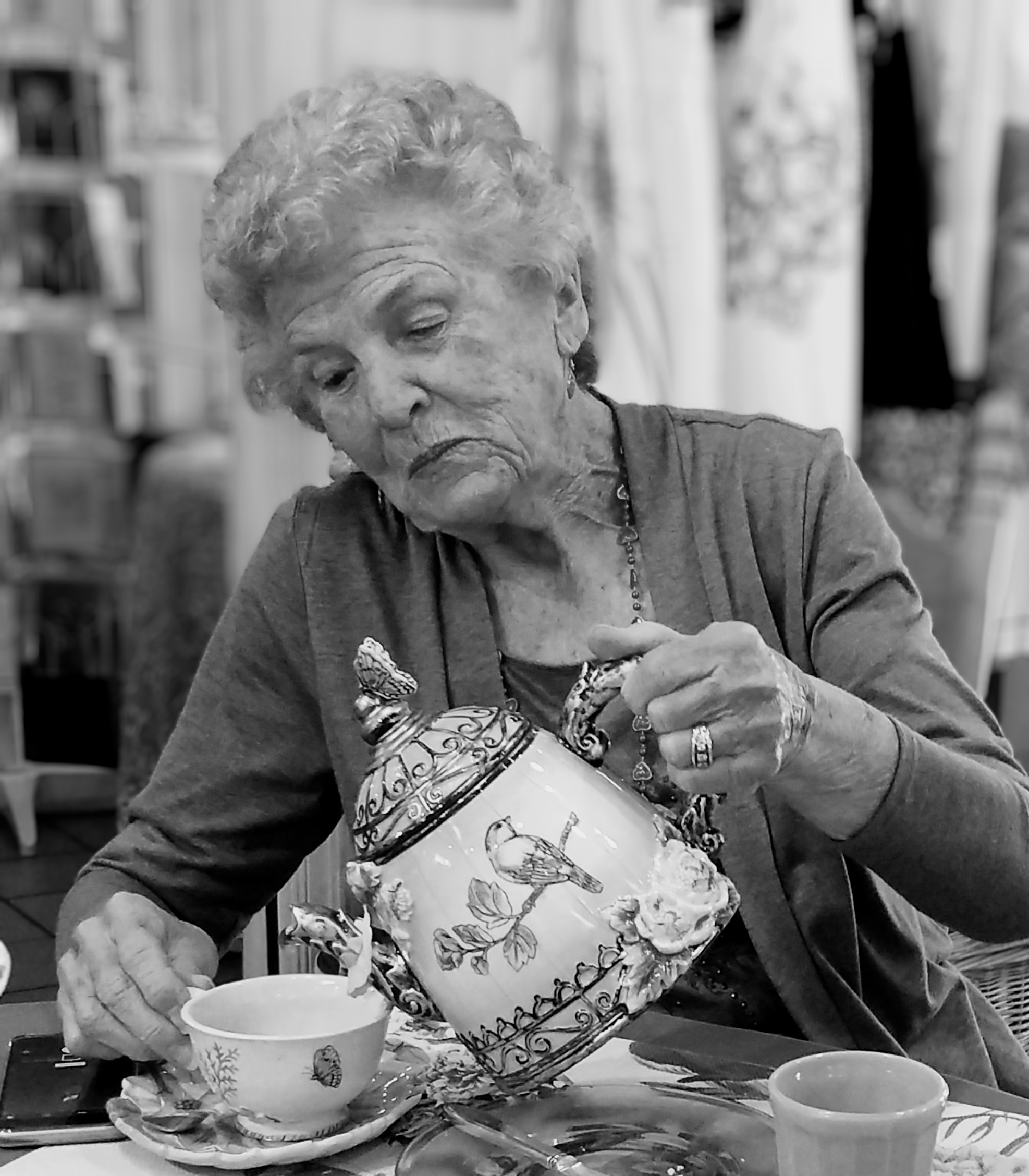
As has long been custom, being asked to pour at a tea is an honor. It should always be looked upon as just that. If a hostess asks you to pour at her afternoon tea, she sees you as friendly, cheerful, competent and, probably, a person who is tidy and detailed. — “If sufficient members of the committee take turns at pouring, it should not be too tiring for any one of them, and there is no question that club hostesses at the tea table would create a more friendly atmosphere.” ~ Emily Post, 1937

Let the Women Pour

Dear Mrs. Post: Our women's club is giving a large tea for approximately a hundred and fifty guests. Would you suggest that it is better at a tea of this size to let the hotel do all the serving, or do you think it more friendly to have members of the committee preside at the tea table?

Answer: At a tea for as many as fifty, the details of serving are more often than not taken care of by the caterers, or by the servants in a private house. However, in your case, if sufficient members of the committee take turns at pouring, it should not be too tiring for any one of them, and there is no question that club hostesses at the tea table would create a more friendly atmosphere. In any case, all the other details of replacing used cups and saucers with fresh ones and replenishing sandwiches and cakes and passing them will be taken care of by the hotel.
 
Emily Post in “Good Taste Today,” 1937


🍽Etiquette Enthusiast, Maura J. Graber, is the Site Editor for the Etiquipedia© Etiquette Encyclopedia

Tuesday, February 13, 2024

Tea Etiquette: Reading the Leaves

"Floating tea leaves mean 'watch for strangers coming.' To tell the gender and the day of arrival, put them on the back of one hand and tap with the back of the other until they adhere - each tap is one day - and if they are soft leaves it is a woman; if hard, a man." 

The story of tea is as strange and as fascinating as any that one can read. A prehistoric event dating back some five thousand years is bound to be shrouded in many mysteries, but the exceptional qualities of tea are such that many legends developed concerning its beginnings. A highly civilized people like the Chinese considered it a special gift from heaven. In India, too, it was much the same. In Japan a special ceremony grew around it. This habit of drinking tea is the only purely Asian custom which commands universal interest. Through it the East and West have met - in a teacup! 

Its introduction had a charming influence on our Western culture, even though a great deal of smuggling and piracy helped to bring it about. Discriminating Chinese taste insisted that tea should be drunk from porcelain; and this subsequently had a tremendous effect on world trade and the voyages of clipper ships. Art, politics, and religion were all involved.

All this mystery and adventure stirred up many superstitions. Even today some tea companies attach a little saying to each teabag, such as:

"To stir tea in the pot is to stir up strife."

"Floating tea leaves mean 'watch for strangers coming.' To tell the gender and the day of arrival, put them on the back of one hand and tap with the back of the other until they adhere - each tap is one day - and if they are soft leaves it is a woman; if hard, a man." 

Fortune-telling from tea leaves is not solely a gypsy custom. Many people have read meanings into the shapes and groups of leaves that form in the bottom of the cup - how accurately is, of course, another matter. — By Patricia Easterbrook Roberts, 1967


 🍽Etiquette Enthusiast, Maura J. Graber, is the Site Editor for the Etiquipedia© Etiquette Encyclopedia

Monday, August 7, 2023

More 1930’s Etiquette Advice

In Continental Dining, the salad course is served after the main course, as it is felt that the salad “aids in digestion.” Thus, the salad fork and salad knife at the place setting, are the closest to the left and right sides of the plate. — “Cutting dinner salads with a table knife is permissible under dictates of the new etiquette.”

8 More Hints on Etiquette 

A high school boy should not only rise when a lady enters the room, but also when a girl over 12 years old enters. — 1937

Modern etiquette considers it in good taste to serve the woman guest of honor first rather than the hostess. — 1937

Informal teas are held in the living room, on porch or lawn. They are never served in the dining room. — 1937

Faultless etiquette is never more desirable than at the bridge table. The ideal player does not argue, snap the cards, whistle or take excessive time in playing. — 1937

It is poor etiquette to permit a child to run up and down a railroad car. — 1937

Cutting dinner salads with a table knife is permissible under dictates of the new etiquette. — 1937

Courtesy should prevail on the highway as well as in the ballroom. The keynote of road etiquette is “consideration”. — 1938

The new etiquette does not look with favor upon stilted speech. The first law of good speech is to say the natural, spontaneous thing in a natural, spontaneous way. — 1938

 From the “Grab Bag” feature in the Imperial Valley Press, 1937 and 1938


🍽Etiquette Enthusiast, Maura J. Graber, is the Site Editor for the Etiquipedia© Etiquette Encyclopedia

Thursday, January 6, 2022

A New Table Drink from London

A “true trio” is two different shaped, porcelain cups (one for coffee and one for tea) and one matching saucer. This set is circa 1840s. True trios were sold in this manner, as a consumer would conceivably need only need one saucer, as the coffee and tea would not be drunk simultaneously. Etiquipedia has not yet found if a specific gilded age, “coffee-tea” cup was ever invented. 

Coffee-tea, a beverage made from the leaves of the coffee shrub, is a new candidate for popular favor, and would seem to have some advantages over the berry. It has not yet reached this country, save as a chance curiosity, but was recently brought under the notice of the Royal Botanic Society of London. The samples of coffee-tea, or prepared coffee leaves, were grown in the society's conservatory. 

The secretary said it had been estimated that the percentage of theine in the leaves of coffee was 1.26 as against 1.00 in the beans. As the leaves may be easily grown in many parts of the world where it is difficult to insure good crops of coffee beans, he thought it might prove a valuable agricultural product in many warm colonies. At present, he said, only some two millions of men use coffee-tea, in comparison with 110 millions who use the bean, and 500 millions who drink Chinese and Indian tea. — Good Housekeeping Magazine, 1892


Etiquette Enthusiast, Maura J. Graber, is the Site Editor for the Etiquipedia© Etiquette Encyclopedia

Monday, April 19, 2021

Tea Etiquette and Use in Early America

 The bitter concoction that New Englanders made with tea was enough to discourage anyone from adopting it. Few knew how to prepare it. Most often they boiled the leaves much too long, and then, after drinking the liquid, they salted the leaves and ate them with butter, as had been done in England in the 1650s. — Pictured above is grouping of Georgian and Regency Era tea equipage, including a rare mote spoon. 
—Photo source, Etiquipedia private library


“Tea was first brought to America in the late 17th century. At that time cider, ale, and wine were the favorite table drinks, and the bitter concoction that New Englanders made with tea was enough to discourage anyone from adopting it. Few knew how to prepare it. Most often they boiled the leaves much too long, and then, after drinking the liquid, they salted the leaves and ate them with butter, as had been done in England in the 1650s. After New Amsterdam passed into the hands of the English and became New York, it took on English customs, and tea, though still expensive, became more popular.

“At fashionable dinner parties, the ladies withdrew after the meal was finished, and were rejoined later by the gentleman in the parlor. Dessert in the form of fruit, biscuits, or cakes, was then served with tea. Tea was also taken privately in the morning and socially in the afternoon, following the English custom. In the homes of professional men, tea was served with their earlier family supper. And so drinking tea went hand-in-hand with the development of the private and social life of the 18th century. Acquiring the proper equipage and the etiquette for serving tea was the ambition of every housewife with social obligations. And even the very young used dolls’ tea sets in the very serious world of make-believe.” — Patricia Easterbrook Roberts, 1960


Etiquette Enthusiast, Maura J. Graber, is the Site Editor for the Etiquipedia© Etiquette Encyclopedia

Thursday, January 7, 2021

Royal Tea and Soup Faux Pas


Princess Victoria Adelaide Mary Louise, “Vicky” was the eldest child of Britain's Queen Victoria and Prince Albert — Through marriage she became Empress Consort in Germany and Queen of Prussia, late 19th century.
Public domain image, Wikipedia 


You may stir your tea so as to rattle the spoon and cup, and it is your privilege to sip soup from the side or the point of the tablespoon, and still be counted as Courtly; for so doth the Empress of Germany and the Queen of Prussia. — Chicago Times, 1888


Etiquette Enthusiast, Maura J. Graber, is the Site Editor for the Etiquipedia© Etiquette Encyclopedia


Sunday, February 2, 2020

Mote Spoon Etiquette and Usage

The skimming was done by the “tea-blender,” usually the most presentable house-maid or parlor maid, who had charge of the tea-table equipment, preparing the tea and handing a cup of tea to each guest and member of the family. Unless on formal occasions, however, mote-skimming was each individual’s own concern. Modern day usage and etiquette would have the honored guest at an afternoon tea— one who has been asked to pour — to use the mote spoon for skimming any pieces of tea leaf floating in a tea cup. 

The Georgian tea equipage usually included a tea strainer or mote-skimmer, “mote” being the old English word for a minute particle of foreign matter in food or drink. This dainty little tool was like a long-handled spoon. The barbed or point on its slender stem, was used for clearing the perforations at the base of the tea spout, and the bowl patterned with perforations, for skimming the infusion in the cup.

The London Gazette for 1697, refers to long or ‘strainer’ teaspoons, with narrow pointed handles. They were known as “long teaspoons” throughout Queen Anne's reign. The bowl had rat-tail strengthening and circular perforations. Saw pierced bowls, lacking the rat-tail, were of the Georgian era. Early examples were sold en suite with the teaspoons.

It has been suggested that the contemporary tea-pot spout was usually too boldly curved for the spear-topped stem to be thrust down it. This suggestion overlooks the fact that the juncture of spout and body was protected by a perforated tea leaf strainer.

At that period, according to John Worlidge and other contemporary writers, the tea leaves were dried whole. After two or three minutes infusion in the pot, “the leaves spread out to their former breadth and shape” and were liable to block up the perforations, obstructing the flow of the tea into the spout. The sphere knop of the mote-skimmer was used to remove these from inside the perforations.

Another widespread misapprehension concerns the perforations in the bowl of the mote skimmer. Some collectors consider these too large to collect tea dust. In this connection, it must be remembered that Georgian tea contained all the foreign matter now extracted by mechanical means. Such as floating on the cup of tea, (the motes) could be removed in the skimmer bowl.

The skimming was done by the “tea-blender,” usually the most presentable house-maid or parlor maid, who had charge of the tea-table equipment, preparing the tea and handing a cup of tea to each guest and member of the family. Unless on formal occasions, however, mote-skimming was each individual's own concern. 


Giant specimens (of mote spoons) usually bear George III hallmarks and were designed for use with contemporary tea urns. Some collectors of strainer spoons express their belief that they were used in France as snail spoons, shell-fish spoons and absinthe spoons. While somewhat resembling the mote-skimmer, such spoons show certain dissimilarities of design in keeping with their different purposes. - From “1500-1820: Three Centuries of English Domestic Silver,” by Bernard and Therle Hughs, 1952


Etiquette Enthusiast, Maura J Graber, is the Site Editor for the Etiquipedia©️ Etiquette Encyclopedia 

Friday, May 13, 2016

Tea Etiquette and Debutantes

Certain formalities are observed on a special occasion of the sort for the introducing of a debutante. An engraved card is used, having the name of the daughter beneath that of her mother...


How to Give the Popular Afternoon

Afternoon teas continue to be a great feature among the entertainments of the day. Fashion calls on a mother to introduce her daughter. Certain formalities are observed on a special occasion of the sort for the introducing of a debutante. An engraved card is used, having the name of the daughter beneath that of her mother, with the date, the hours for receiving and the address in the lower left hand corner of the card may be the words, "Fridays in January," too.

Indicate other days during the winter for receiving more informally. Cards are about five inches long, by three and a half wide. The usual style of engraving is script. According to recent fashion the form is: Mrs. Archibald Robinson and Miss Edith Hobinton Will Be At Home on Tuesday, the first of December from four until seven o'clock at Seven East Seventy-third Street. 

Cards for large teas or days at home are sent out two weeks in advance; small teas a week or so in advance. Invitations to teas are in the name of the hostess, not in the united names of husband and wife. At a large tea or reception for a debutante, music for dancing is a feature. An orchestra is in the hall or in a room set apart for dancing. The musicians may be screened off by palms. – The Mariposa Gazette, 1914


🍽Etiquette Enthusiast, Maura J Graber of The RSVP Institute of Etiquette, is the Site Editor for the Etiquipedia© Etiquette Encyclopedia 

Monday, August 31, 2015

Etiquette and Pinky Fingers

Please keep your “pinky” curled, and we'll offer you some of these yummy treats.  
Many people mistakenly think, and actually still teach others, that one’s pinky finger should be extended when one is drinking tea from a cup. This is not considered proper by any trusted etiquette authorities. It is what is commonly known as an “affectation” that has been promoted by television and the media for some time now, just as women eating and drinking while wearing gloves, has been promoted in period dramas and films. As Judith Martin put it, these little nuances help with what “is evidently intended to add a touch of what passes for ‘class.’” However, they are absolutely incorrect.
Curl your fingers as much as you can.
Many anthropologists and sociologists believe this habit was acquired hundreds of years ago, when the poor servants of the wealthy landowners and royalty in Europe, watched how their “Lords and Ladies” dined. They believe the servants picked up the habit of keeping a finger extended while drinking and dining.
And look, we don't thrust our pinky fingers out to pour the tea, either...
Only the wealthy could afford to purchase salt and exotic spices, like nutmeg, at their tables. Foods were eaten with one’s hands and a knife. Utensils were not used at many tables then. When dining, these wealthy people would keep the “pinky” finger extended when scooping up foods so that they could keep grease off of that finger. The finger could then be dipped into the salt or spices needed to season their foods. This kept grease and food particles out of the dishes holding the spices.
                          
Pinky fingers are perfect for “pinky rings,” not for sticking out while drinking tea.
Others think it started when tea and handle-less cups from China became popular in Europe. They believe tea drinkers would keep the pinky out because the cup was too hot to hold. However, the Chinese have never extended fingers in that manner, nor have the Japanese when drinking tea from cups without handles, so why would the British? 

The traditional cups that the Chinese use, still do not have handles to this day. These cups are held in the palm of the hand. Old artwork from the time, proves this as well. Perhaps the size of the hand holding the cup affected whether or not a pinky finger was left dangling in the air with some tea drinkers?
Old artwork can be very helpful in showing a period as it truly was lived.
Coffee houses, at which hot coffee was served
, were very fashionable in England prior to tea drinking becoming the trend. There is no debate though on how to drink coffee from a cup with regard to pinky fingers being ridiculously thrust out. The only debate with coffee, is that in many countries, it is still socially acceptable for one to pour his or her hot coffee into the saucer, in order for it to cool down to a drinkable temperature more quickly. Pouring one's coffee into the saucer to drink, has not been socially acceptable in many other countries, since the early to mid-1800s. 

Hot chocolate was also drunk in similar, but oftentimes taller, cups. Saucers with deeper wells or “cages” were the norm for many years with these sets for hot chocolate. Also called “trembleuse” in France or “mancerina” in Spain, the saucers were designed to protect the cups from the “trembling” hands of elderly hot chocolate drinkers. Again, pinky fingers were seemingly not an issue.
Here are two etiquette violations in one image~ Drinking with gloves on and sticking the pinky finger out.
Today, most all etiquette authorities agree; The proper way to hold a tea cup is with one or two fingers of the right hand put through the hole of the cup handle, while balancing the cup with your thumb on the top of the handle. Some etiquette consultants recommend “pinching” the tea cup handles to hold the cup. Either way, your other fingers should be curled beneath the handle. — By Maura J. Graber, The RSVP Institute of Etiquette, 2005


🍽️Etiquette Enthusiast, Maura J. Graber of The RSVP Institute of Etiquette, is the Site Editor for Etiquipedia© Etiquette Encyclopedia

Sunday, May 17, 2015

Etiquette and French Tea Customs

"le 5 o'clock," has by this time become thoroughly domesticated in Paris


French Tea Drinking

The afternoon tea habit, or as it is known to our French cousins, "le 5 o'clock," has by this time become thoroughly domesticated in Paris. It is not so long ago that the name was greeted with an indulgently superior smile as "so English you know," and therefore hardly worth the serious consideration of the Parisienne, whose duty was not to follow fashions, but to set them. Yet gradually the tea table began to make its appearance in Paris salons. 

Those who had been in the habit of paying calls where mere words were exchanged found it pleasant also to receive a dainty cup of tea. The visitor, when her turn as hostess came about, repeated the refreshment, and the fashion spread. But the foreign custom in passing into Parisian life is always, to a certain extent, transformed and Parisianised.
Tea gown, circa 1902

The case of afternoon tea was to transplant the little function from the home circle, making it a feature of more public life. Between 4 and 6 o'clock every afternoon, French society now betakes itself to certain well known tea rooms.

Visits must, of course, be paid at this season, but they are cut short so as not to interfere with the tea. A Parisian now says, "Come and have tea with me at Ritz's," whereas not so long ago she would have said. "Come and see me at home." 
                 – From The Los Angeles Herald, 1904


Etiquette Enthusiast, Maura J. Graber, is the Site Editor for Etiquipedia© Etiquette Encyclopedia

Thursday, May 14, 2015

Etiquette and American Tea Culture

Now and then one sees men scattered through the fashionable throng enjoying a cup of fragrant tea instead of a more masculine kind of drink. It is the fashion now to invite your friends to take tea with you and a fashion that is both sane and enjoyable. 

Will You Have a Cup of Tea? 
Every Woman is Serving It Now 

Everybody takes afternoon tea now. Society women meet for a little chat and a bite to eat when sipping their favorite Ceylon or Formosa; business women leave their work a few minutes early or snatch a short respite for the pleasure of the tea drinking hour; matinee girls have transferred their affections from ice cream sodas to Oolong and sweets, and now and then one sees men scattered through the fashionable throng enjoying a cup of fragrant tea, instead of a more masculine kind of drink. It is the fashion now to invite your friends to take tea with you and a fashion that is both sane and enjoyable.
    
Tea was always fashionable in some circles. 

If there is the least lingering doubt in the mind of any one as to the popularity of the tea our glimpse through any of the fashionable restaurants or small tearooms will dissipate the suspicion forever. Once it was the luncheon hour at which Women gathered for gossip and refreshment, but now that tea hour is the time set for this combination of pleasures. Luncheon parties are still given, but they are not half so popular and entertaining as the 5 o'clock tea gathering.

Informal tea drinking at home exists, or rather the fashion is being introduced in many homes with the serving of afternoon tea was an event instead of a daily occurrence. Friends dropping in on their way home from A shopping tour or after the matinee supply the atmosphere of the chatty crowded two rooms overlooking Fifth Avenue, but the home tea is never quite the same as the more brilliant and kaleidoscopic scene of the restaurant tea room. There women meet their friends
, see the newest fashions, and hear the latest tidbit of gossip.
               
Tea was introduced to Americans by the British 

Having been introduced to the tea drinking habit by the English, we have made of variation or two in which does not diminish the social function's popularity, though it converts it into a more substantial repast than the original afternoon tea. Either we shall have to advance the regular tea hour, or adjust the dinner one hour, said a well-known restauranteur when discussing the growing habit of tea drinking in this country.


Oh yes! We American women are fond of eating cakes and French pastry! 

American women are so fond of eating cakes, sandwiches, French pastry, and ices with their afternoon tea that their appetites must suffer and their weights increase. They partake of a substantial tea at 5:00 or 5:30 and dine between 6 and 7. There is a greater demand each season for French pastry with tea while the modest little sandwich and the wafer recede further and further into the deep recesses of the stewards' domain.
                                
                                 A plate of cakes and dainties.

Tea and muffins, tea and toast, or tea and crumpets, used to form the menu for either a restaurant tea or one served at home, and when these dainties are perfectly prepared and brought in crisp and hot, there is nothing more delicious. Currant buns are a sweet and appetizing accompaniment to a fragrant cup of tea and in certain tea rooms, they are a specialty.

                 
Americans now have the distinction of being called tea connoisseurs — and this is a distinction indeed when one has sampled a few of the foreign brew afternoon beverages that are made in a teapot.

The hostess can pick up many useful ideas on tea serving and what to have with tea from the best restaurants and tea rooms. She will find that her guests like muffins, sandwiches and buns and that they revel in sweets, so that it is always wise to include some cakes among the tea table viands.

A plate of plain bread and butter sandwiches cut very thin and perfectly fresh should be served with the other delicacies. There will be some guests who prefer the simple fare to the more elaborate sweets of the American tea table. Brown bread treated in the same way is excellent with tea and offers a little variation to the white bread. The home tea table should excel in this particular dainty, for it is easy to prepare and one of the most difficult orders to have filled satisfactorily in a restaurant.
Nut mixtures spread between thin slices of bread, thin layers of cheese or cream cheese mixed with seasoning and nuts and either brown or white bread with crisp lettuce leaves and a bit of mayonnaise will prove an inspiration to the woman who is flagged from a tiresome shopping trip or a long interview with her dressmaker. The host of palatable tea table sandwiches is almost limitless if the hostess will only take the trouble to prepare them, or see that they are prepared.
                  
Reading tea leaves to tell one's fortune, was a popular pastime. 

Where the cook is accomplished in the art of scone making, these delicious Southern dainties should by all means have a place of honor on the afternoon tea table. One woman owes a large part of her social success and popularity to the scones and tea she serves two or three afternoons a week.

Women as well as men are susceptible to culinary attractions, and few can resist the crisp yellow brown scones that come piping hot from the oven and are spread with melting butter.
                                    
A samovar is worth its weight in gold in the making of perfect tea. In fact, tea rooms depend entirely upon those tall Russian water heaters for the perfect preparation of their afternoon tea, where cup after cup is made in quick succession. And in nearly all the fashionable tea rooms you will see these brass ornamental objects steaming merrily behind tall vases of flowers and surrounded by a regiment of china teapots. 

A much prized recipe for afternoon tea biscuits, one that is not even confided to a friend, but has been treasured by a single household for generations, has a mixture of mustard and cheese that baffles the analytical powers of all who partake of this delicacy. It is one of the simplest tea table accompaniments. Tea biscuits, either homemade or those that come from a good bakery, form the foundation of this appetizing viand.

The biscuits are split open, and each half is spread with a little mustard, then sprinkled with grated cheese and spread with butter, and the disks are ready for a visit to the hot oven, where they should remain long enough to convert the tops of the biscuits into a rich yellow brown crust and to heat them all the way through. Afterward, they should be taken from the oven and served immediately before the cheese takes on a gummy consistency. This unusual and simply prepared tea delicacy will tempt any woman to run the risk of spoiling her appetite for dinner, even spoiling her complexion, one might almost say, for the sake of tasting the dainty piquant morsel, as it fairly melts in her mouth.

Americans now have the distinction of being called tea connoisseurs — and this is a distinction indeed when one has sampled a few of the foreign brew afternoon beverages that are made in a really. Not only do we know good tea, but we understand the art of serving, which is quite as important as the selection of leaves. English breakfast tea with cream is the favorite brand served in the restaurant tearooms, while Ceylon, Formosa, and some of the special blends taken with thin slices of lemon and sugar have a host of devotees.

                                     
Tea connoisseurs? 

Novices who preside over a samovar, often encounter a great difficulty deal of difficulty in lighting the charcoal and keeping the fire burning. Where the tea hour extends over a long period and hot water must be at hand all the time the Samovar requires occasional replenishing both with water and fuel. After the handful or more of charcoal has been dropped into the chimney — and it must be remembered that the charcoal should be sorted and only the good pieces retained as the others will smoke — a little alcohol poured over the fuel before lighting will start it burning merrily. Afterward one need only glance into the chimney now and then to see that there is enough fuel.

Sparks and black cinders will fly upward and then settle over every object in the room, including the guests, if the charcoal is dropped into the fire carelessly. The proper way is to let it fall gently to the bottom of the chimney or else remove the samovar from the room during the act of replenishing.

Studio tea hosts and hostesses favor the samovar on account of the picturesque note it gives to the surroundings. Others have looked upon the Russian water heater as an affectation, useless and awkward, because they did not know how to use it. Restaurants have given it a place of honor on the tea table and consider it essential to perfect tea making and serving. — From The San Francisco Call, November 1908

Etiquette Enthusiast, Maura Graber, is the Site Editor for the Etiquipedia© Etiquette Encyclopedia

Saturday, March 29, 2014

Tea Glossary, Etiquette and History

Depiction of an afternoon tea, circa 1890s

AFTERNOON TEA
A traditional British snack taken during the late afternoon, at which tea, cakes, and biscuits are consumed. Afternoon tea is characterized by fine china, good manners, and polite conversation. The tradition is believed to have been started by the Duchess of Bedford during the first half of the nineteenth century.

AROMA
An important consideration in cupping teas is the smell that is given off. A favourable aroma is most often associated with a flavourful taste.

ASSAM
A black tea grown in the Northeast section of India. A strong full-bodied tea with a rich, robust flavour. Chosen by many tea lovers to be a wake-up tea to be consumed in the morning. Often used in blends because of its strong taste.

BANCHA
A Japanese tea made from coarse leaves, usually from the last plucking. This tea is generally consumed domestically.

BEDFORD, ANNA, 7TH DUCHESS OF
(see Duchess of Bedford)

BERGAMOT
A four-metre high citrus tree (Citrus bergamia) grown in southern Italy that produces a bitter, orange-like fruit. The fruit is not eaten fresh, but can be made into marmalades and liqueurs. Bergamot oil is the key aromatic ingredient of the famous Earl Grey blend of tea.

BILLY TEA
A style of tea originally brewed by the early Australian settlers, so named after the billy (can) in which the beverage is made.

BLACK TEA
The world's most commonly produced tea, originally developed in China. Black tea is processed in four stages: withering, rolling, oxidation, and drying. Of the three major tea types (black, oolong, and green), black tea undergoes the longest process of oxidation.

BLECHYNDEN, RICHARD
The man who inadvertently invented iced tea. Blechynden was an expatriate Englishman with a tea stall at the 1904 St Louis World Fair. His hot tea was not selling in the hot weather, so he added ice cubes as a last resort.

BODHIDHARMA
Sixth century Indian Buddhist monk who, according to Indian and Japanese myth, discovered tea. Bodhidharma was born near Madras and traveled to China in 520, where he met the emperor.
Depiction of the “Boston Tea Party”

BOSTON TEA PARTY
An act of defiance by American patriots against the Tea Act of 1773. In December of that year, a group of colonists boarded British ships in Boston harbour and tossed 342 chests of East India Company tea into the water. Their action hastened the approach of the American War of Independence.

BRAGANZA, CATHERINE OF
(see Catherine of Braganza)

BRICK TEA
(see compressed tea)

BRUCE, CHARLES
Charles Bruce and his brother, Robert, were employees of the East India Company. They persuaded the Company to grow the native variety of tea plant, Camellia sinensis var assamica, in India instead of the Chinese variety, Camellia sinensis. The trials were a success which launched the Indian tea industry.

BRUCE, ROBERT
(see Bruce, Charles)

CADDY
A lidded receptacle for storing tea in the home. A corruption of the Malay word 'kati' which was adopted (originally as 'catty') by the East India Company as a standard weight of tea (roughly 0.6kg). When tea was at its most expensive, caddies included a lock, for which there was only one key entrusted to the lady of the house.

CAFFEINE
A component of tea, which stimulates the nervous system. A cup of tea averages 40 milligrams of caffeine versus approximately 110 in a cup of coffee.

CAMELLIA SINENSIS
An evergreen plant, native to China and formerly known as Thea sinensis. Both green and black teas come from the leaves of Camellia sinensis, although Europeans were not aware of the botanical connection until the mid-nineteenth century.

CAMELLIA SINENSIS VAR ASSAMICA
A subspecies of the tea plant, Camellia sinensis, which is native to north-eastern India. The Indian tea industry is based on Camellia sinensis var assamica.

CATHERINE OF BRAGANZA (1638-1705)
Wife of Charles II and daughter of the Duke of Braganza, who later became King John IV of Portugal. Catherine married Charles II in 1662 and brought the Portuguese custom of drinking tea to the English Court. She bore no children and returned to Portugal after Charles' death.

CEYLON
The common name of teas grown in Sri Lanka.

CHAI
A blend of black tea with various spices and steamed milk as commonly drunk in India. Also, a common name for 'tea'.

CHARLES II (1630-85)
King of England, Scotland, and Ireland (1660-85). Although his wife, Catherine of Braganza introduced tea-drinking to the English Court, Charles was monarch when Parliament first introduced the tea taxes that eventually reached 119%.

CHEST
Traditional way of packing bulk teas. Usually made of wood with an aluminum lining.

CHINA OOLONG
A select blend of large leaf teas from China.

CHOP
From the Hindi; means to stamp. A chop of tea means a certain number of chests all carrying the same brand. Each chop of tea should have the same characteristics rather than the same brand. The teas would be from the same batch of manufacture.

CLIPPER
(see tea clipper)

 
Clotted cream is an essential ingredient of a cream tea.

CLOTTED CREAM
A type of thick cream with a yellowish crust from the English counties of Devon and Cornwall. Clotted cream is an essential ingredient of a cream tea. It contains an average fat content of 63% (the minimum is 55%) and is produced by cooking full-fat milk over a bain-marie.

COFFEE HOUSE
Coffee houses were popular places for drinking and socializing in England during the second half of the seventeenth and early part of the eighteenth centuries. Competition between them was fierce. Many coffee houses prospered by catering for a specific clientele; some of them developed into important City institutions. Custom forbade women to enter the masculine world of the coffee house.

COMMUTATION ACT 1784
An Act of Parliament that ended 100 years of punitive tea taxes. William Pitt, acting on the advice of Richard Twining, introduced the Act to counter the evils of tea-smuggling and to generate increased revenues through legitimate sales of tea.

COMPRESSED TEA
Solid cakes of tea, first produced in China during the Tang Dynasty. Compressed teas take many shapes, including bricks and balls. Modern tea bricks are made by the hydraulic compression of tea dust.
The indulgence of tea, scones and clotted cream.

CREAM TEA
A popular feature of British social life, combining the gentility of afternoon tea with the indulgence of scones and clotted cream.

D'AETH, THOMAS
A wealthy merchant of the East India Company who employed Thomas Twining and introduced him to tea and coffee, the new drinks from the East.

DARJEELING
A very high quality black tea grown in the Himalayan Mountains in North India. It is most often referred to as the champagne of teas.

DENGYO DAISHI
A Japanese Buddhist monk who spent two years (803-5) in China. He returned to Japan with tea seeds which he planted at his monastery. It is said that he later served the new drink to the Emperor Saga, who ordered tea to be grown more widely.

DEVEREUX COURT
The site of Tom's Coffee House, Thomas Twining's original coffee house. Devereux Court was situated just off London's Strand. The location no longer exists, although adjacent buildings eventually became Twinings shop at 216 Strand.
Anna, 7th Duchess of Bedford

DUCHESS OF BEDFORD
It is said that Anna, 7th Duchess of Bedford invented afternoon tea sometime during the 1840s. Although her simple pot of tea with a light snack was originally introduced to counteract her hunger pangs, it soon developed into a popular social occasion among the fashionable classes.

EARL GREY (1764-1845)
Charles, 2nd Earl Grey was Prime Minister from 1830 to 1834. He was a great reformer, but best-known for the blend of tea that still bears his name. The blend was a gift from a grateful Chinese mandarin. When his original supply ran out, Earl Grey asked his tea merchants, Twinings, to recreate it for him.

EAST INDIA COMPANY
A private company that had a monopoly over British trade with the East. The Company was granted its exclusive charter in 1600 by Elizabeth I, and was dissolved in 1858. The East India Company had a profound effect on the history of tea, initially through its control of the Anglo-Chinese tea trade, latterly by introducing tea-production to India..

GARRAWAYS
A London coffee house owned by Thomas Garway from which tea was sold in 1660.

GARWAY, THOMAS
An early dealer in tea, based in London. In 1658, he advertised tea at a London coffee house known as the Sultaness Head. Two years later, he was selling tea at his own coffee house, Garraways.

GEORGE III (1738-1820)
George III was a king who liked to govern as well as reign. His determination not to grant concessions to North American colonists led Lord North to introduce the Tea Act of 1773. The Boston Tea Party was a response to the Tea Act. American Independence followed a few years later.

GOLDEN LYON
A symbol erected by Thomas Twining over his dry tea and coffee shop at 216 Strand. The lion, which became a timeless emblem of the Twinings company, still sits today above the shop at 216 Strand.

GREEN TEA
A type of tea in which the leaves are withered, rolled, and fired but, unlike black or oolong, are not subject to a process of oxidation. Green tea most resembles the original green leaf. Green tea originated in China. Production is still confined to a few

GREY, CHARLES, 2ND EARL
(see Earl Grey)

GUNPOWDER
A type of green tea which had been rolled into pellets.

GYOKORU TEA
A prized Japanese green tea considered to be Japan’s finest grade of green tea, usually reserved for special occasions. The tea undergoes special handling at every stage of its growth where leaves are picked after a period of shading that concentrates the chlorophyll to provide a deep green colour and a sweeter taste. These teas are hand-fired resulting in tea which is rich to the taste and pleasing to the eye.

HIGH TEA
A heavier version of afternoon tea, first developed as a grander, three-course meal. Whereas afternoon tea retained an aura of middle-class gentility, high tea became 'tea', the main cooked meal of the day for the working classes, eaten when the breadwinner returned from work.

HOGARTH, WILLIAM (1697-1764)
An influential British artist who trained as an engraver. His depiction of the effects of cheap gin, for instance, led to immediate legislation. Hogarth was a customer of Thomas Twining and, during his early career, found that he could not meet his bills. The solution was to paint a portrait in oils of Thomas Twining.

HORNIMAN, JOHN
The man who, in 1826, introduced pre-packaged tea. Horniman's presealed, lead-lined tea packets did not immediately find favour with grocers, so he sold his tea to pharmacists and apothecaries.

HYSON, YOUNG HYSON
A Chinese green tea named for the East India merchant who first sold it in England. Young Hyson is generally preferred to Hyson.
Iced tea is believed to be invented at the 1904 St. Louis World Fair by expatriate Englishman, Richard Blechynden.

ICED TEA
Fresh-brewed tea served in a tall glass with ice cubes, a slice of lemon slotted to the rim, and a long spoon for stirring in sugar or honey. Iced tea was invented at the 1904 St. Louis World Fair by an expatriate Englishman called Richard Blechynden. It is the most popular way of drinking tea in America.

ILEX PARAGUARIENSIS
(see maté)

INFUSION
Infusion is a common name used for herbal teas, but it is also used in tea tasting to refer to the 'infused' tea leaves after brewing.

INSTANT TEA
Developed in the 1930s and commercialized in the 1950s, instant tea sacrifices nuances in fragrance and flavour for convenience.

JASMINE
The Chinese use green tea as the base to which Jasmine flowers are used to scent tea. The finest Chinese Jasmine is called Yin Hao and Chun Hao. Fromosa Jasmines use Pouchong teas as a base. Pouchong is allowed to wither for a longer period of time (than Green) before it is fired which places it between Green and Oolong.

LONDON TEA AUCTION
A daily tea auction held in London until 1998. The first tea auctions were held quarterly under the control of the East India Company. Independence from the Company came in 1834. The sales ended because tea was increasingly auctioned offshore or in the producer countries.

LONDON TEA DEALERS
An eighteenth-century trade association of tea dealers. Richard Twining was Chairman of the association when William Pitt came to power. He persuaded Pitt to introduce the Commutation Act of 1784.

LORD NORTH (1732-92)
Frederick North, 2nd Earl of Guilford was Prime Minister from 1770 to 1782. His approach to the American colonies matched that of his king, George III. It was Lord North who imposed the Tea Act of 1773 that led to the Boston Tea Party.

MATCHA TEA
A powdered green tea drunk in Japan, especially at the Tea Ceremony where it is whisked into a frothy green liquor. Matcha, which has a short shelf-life, is produced by milling tencha tea.
Maté is drunk through a bombilla straw/strainer,  from a gourd-shaped drinking vessel.

MATÉ
A tea-like drink enjoyed by the gauchos of Argentina. Maté is an infusion of Ilex paraguariensis, a South American species of holly. It is drunk through a straw from a gourd-shaped drinking vessel.

NAVIGATION ACTS
A series of Acts of Parliament that regulated navigation and controlled commerce at British ports. The Acts ensured that only British ships landed imported goods. Their repeal in 1849 brought foreign competition into the British tea trade.

NORWICH CASTLE MUSEUM & ART GALLERY
(see Twinings Teapot Gallery).

OOLONG TEA
A less common type of tea produced in four stages: withering, rolling, oxidation, and drying. Of the two tea types that are oxidized (black and oolong), oolong undergoes the shortest process of oxidation. Oolong is sometimes known as semi-fermented brown tea. The term is of Chinese origins and means Black Dragon.

ORANGE PEKOE
Is used to identify a large leaf size. The tea is characterized by long, thin, wiry leaves, which sometimes contain the white or yellow tip of the leaf bud.

ORGANOLEPTIC
The process used by most tea tasters to evaluate the quality of a tea using all the senses.

POUCHONG
Some of the finest quality and high priced teas. A very fragrant tea, which is also used as a base for making jasmine tea.

RANELAGH GARDENS
A popular tea garden which opened in 1742 and remained fashionable throughout the eighteenth century. In 1765, the nine-year-old Mozart performed there. The site is now home to the annual Chelsea Flower Show.

ROOIBOS
A red-coloured, tea-like infusion drunk in South Africa. Rooibos (pronounced 'roy-boss') is made from the leaves of Aspalathus linearis, a low-growing bush from the Cedarberg Mountains of the Western Cape. The plant was first identified in 1772 by the Swedish botanist, Carl Thunberg.

RUSSIAN CARAVAN
A blend of China Black Teas. Although there is little consistency between available blends in the marketplace.

SABI
Tranquillity; one of the principles established by Sen Rikyú that underpin the Japanese Tea Ceremony.
 

The Samovar Tradition

Since the 17th century, when the custom of drinking tea migrated to Russia from China, Russians have taken the tradition of enjoying tea to heart, focusing on the samovar.  A samovar is a large metal urn that heats water with burning charcoal or wood, or, more recently, electricity. On top rests a teapot in which a strong tea is brewed.  Each cup is served by diluting this concentrate with hot water from the samovar’s spigot, then sweetening it with honey, sugar or jam.  Supremely functional and almost ubiquitous (in homes, offices and restaurants, aboard trains, even on street corners), samovars are beloved works of art.  A samovar in the center of the table symbolizes home, comfort and good times. Families traditionally gathered around their tables on Sunday afternoons to share strong tea, a meal and news of their week.

SAMOVAR
An ornately decorated Russian tea urn that supplies hot tea throughout the day. Samovars consist of a metal urn containing water, topped by a cradle that holds a teapot. Heat comes from an internal charcoal-burning pipe. Modern samovars are heated electrically.

SCONE
A traditional type of flour-based baked bun, with a sweet and crumbly texture halfway between bread and cake. The scone (pronounced 'skon') is an essential ingredient of cream tea. Recipes vary and may include currants or sultanas.

SELF-DRINKING
Describes an original tea which is palatable in itself and does not necessarily require blending before being consumed by the public.

SEN RIKYÚ (1522-1591)
The greatest exponent of the Japanese Tea Ceremony. Sen Rikyú took the ritual back to the simple modesty of its founders. He established the principles of wabi and sabi that underpin the ceremony.

SERICA
A tea clipper built in Greenock by Robert Steele in 1863. The Serica competed in the famous clipper race of 1866, taking 99 days to travel from Foochow to London. The Serica came third, a couple of hours behind the Taeping and the Ariel.

SHENNONG
(see Shen Nung)

SHEN NUNG, EMPEROR
Chinese legend attributes the discovery of tea to the Emperor Shen Nung (pronounced 'Shay-Nung' and sometimes written 'Shennong') in 2737 BC. Although Shen Nung is widely regarded as a scholar and a herbalist, it was imperial etiquette that gave him credit for the discovery. In those days all good ideas were attributed to the Emperor.

SILVER TIP PEKOE
A very costly tea from China made from full-grown buds of a special bush. This is also referred to as White Tea.

STRAND, 216
The site of Twinings dry tea and coffee shop since 1717. After three centuries, the shop (together with the associated Twinings Museum) remains as fascinating and lively as ever.

STRENGTH METER
A row of leaves found on Twinings teas that indicates the expected flavour strength of the tea inside the box ranging from one-two leaves as light, three as medium, four as robust and five as strong.

SUEZ CANAL
A 169km canal linking the Mediterranean with the Red Sea. The Canal was built between 1859 and 1869 by the Suez Canal Company under the supervision of the French engineer, Ferdinand de Lesseps. Unreliable winds in the Red Sea forced the tea clippers to take the long route round southern Africa, while steamships took full advantage of the newly-opened shortcut.

SULLIVAN, THOMAS
A New York tea importer who sent samples of tea to his customers in small silk bags. His customers were soon asking to buy their tea in bags.
The earliest-recorded advertisement for tea was posted in 1658 by Thomas Garway.

SULTANESS HEAD
A London coffee house at which the earliest-recorded advertisement for tea was posted in 1658 by Thomas Garway.

SUMATRA
Tea grown on the island of Sumatra. Gradings and characteristics are similar to Java teas.

SUN TEA
A late twentieth-century version of iced tea that originated in the southern states of the US. Cold water and tea bags are placed in a glass-capped pitcher and left to infuse in direct sunlight for a couple of hours.

TAEPING
One of the most successful British tea clippers, built at Greenock by Robert Steele in 1863. The Taeping won the famous five-ship clipper race of 1866, taking 99 days to travel from Foochow to London, and docking just half an hour ahead of the Ariel.

TAYLOR, JAMES
A Scotsman who first experimented with tea planting in Sri Lanka in 1867. By 1872 he had established a tea factory and, a year later, was selling Ceylon tea in London. Taylor's pioneering efforts contributed to the early success of the Ceylon tea industry

TEA
The leaf and extracted liquor of the shrub Camellia sinensis. No other beverage merits the unqualified term tea.

TEA ACT 1773
An ill-advised piece of legislation devised by Lord North to ensure that American colonists paid taxes to Britain on the tea they consumed. It led directly to the Boston Tea Party.

TEA BAG
A sealed paper bag containing finely-divided, quick-brewing tea. Tea bags are the most popular way of brewing tea in Britain and the US. They were invented by accident by a New York tea importer named Thomas Sullivan. Twinings teas are blended for the same quality in loose as in tea bag.

TEA CHEST
A foil-lined wooden box for transporting tea. The original lining was lead foil; nowadays aluminium foil is used. These days most tea is shipped in foil-lined paper sacks; only the finest teas still travel in wooden chests.


TEA CLIPPER
A type of sailing ship that was built for speed, so called because they could 'clip' the journey time. The distinctive features of a tea clipper were a sharply-raked bow, an overhanging stern, and acres of sail. Their brief period of pre-eminence on the seas ended with the opening of the Suez Canal.

TEA DANCE
An irresistible mix of afternoon tea and dancing that began in the 1910s, and which is still popular today.

TEA GARDEN
A feature of eighteenth-century social life at which men and women of all classes could gather. The tea gardens included tree-lined avenues, lantern-lit walks, music, dancing, fireworks, good food, and fine tea. The most famous were Ranelagh Gardens and Vauxhall Gardens.

TEA HOUSE (CHINA)
A public place where Chinese people go to appreciate tea for its flavour, aroma, and appearance, rather than to quench their thirsts. Tea houses (the Chinese term means 'tea art house') have reopened in China following many years of repression.

 
A tea house in Nanjing, Japan

TEA HOUSE (JAPAN)
A special building in which the Japanese Tea Ceremony is performed. Every element of the tea house is arranged according to strict rules of design.


TEAPOT COLLECTION
(see Twinings Teapot Gallery)

TEA ROOM
A public place where Britons can relax and enjoy afternoon tea or cream tea. Tea rooms sometimes referred to as 'tea shops' have been a popular feature of British social life since 1864.

TEA ROSE
A popular garden rose with a scent that was said to resemble that of tea. The tea rose is a hybrid derived from Rosa odorata.

TEA SOURCING PARTNERSHIP (TSP) NOW THE ETHICAL TEA PARTNERSHIP
An organization dedicated to improving the conditions under which tea is produced through credible, independent monitoring. The TSP represents most of the major UK tea companies. Twinings is a founding member. Visit the TSP website.

TEA TASTER
An expert judge of the beverage. A person who uses organoleptic means to discern various characteristics and qualities of tea. Twinings tea experts are unsurpassed in the skill of their trade.

TEA TREE
A native Australian evergreen shrub (Melaleuca alternifolia) with well-known antiseptic properties. The tea tree has nothing to do with tea. The name allegedly arose because in 1770, the explorer, Thomas Cook, made an infusion of the leaves which his crew drank to prevent scurvy.

TENCHA TEA
A type of green tea that is ground down to make the famous matcha powdered tea used in the Japanese Tea Ceremony.

THÉ DANSANT
(see tea dance)

TOM'S COFFEE HOUSE
A coffee house situated in Devereux Court just off London's Strand. Thomas Twining bought Tom's Coffee House in 1706. The location was perfect: it straddled the border between Westminster and the City of London, an area that was newly-populated with aristocracy displaced by the Great Fire of London.

TSP - HAS BEEN RE-NAMED ETP - ETHICAL TEA PARTNERSHIP
(see Tea Sourcing Partnership)


Twinings should be pronounced with a long 'i' like in the word 'mine'.

TWININGS PRONUNCIATION
Twinings should be pronounced with a long 'i' like in the word 'mine'.

TWININGS TEAPOT GALLERY
A gallery at Norwich Castle Museum & Art Gallery that permanently houses a representative selection of the world's largest collection of British ceramic teapots.

TWININGS MUSEUM
A delightful and intriguing museum situated to the rear of Twinings shop at 216 Strand. The Museum features stories and artefacts from the history of Twinings and of tea.

TWYNING
A Gloucestershire village situated between the Rivers Severn and Avon, roughly two miles North of Tewkesbury. The village has ancient connections with the Twining family. Both names come from an old Saxon expression meaning 'between two streams'.
 

A portion of the flamboyant sentimentalist, Nikolai Karamzin (Letters of a Russian Traveller 1789-1790), description of Vauxhall: "The London Vauxhall brings together people of every social standing - lords and lackeys, fine ladies and harlots. Some come here as actors, others as spectators. I visited all the galleries and looked at all the pictures, whose themes have been taken either from Shakespeare's dramas or from recent English history. The walls of the large rotunda, where music is given in rainy weather, are covered with mirrors from floor to ceiling. Wherever you look, you see ten living portraits of yourself.

At about twelve o'clock supper was served in the pavilions, and horns sounded in the groves. Never in my life have I seen so many people seated at table. It looked like some kind of magnificent feast. We chose a pavilion, too, and ordered chicken, anchovies, cheese, butter, and a bottle of claret. This cost about six rubles.

Vauxhall is two miles from London, and in summer is open every evening. One pays forty kopecks to enter. I returned home at dawn, completely satisfied with the whole day."

VAUXHALL GARDENS
The most successful and long-lasting of London's tea gardens, lasting from 1660 to 1859. The gardens were situated on the southern bank of the River Thames on a site opposite where the Tate Gallery now stands. Handel regularly performed there.

WABI
A deliberate simplicity in daily life; one of the principles established by Sen Rikyú that underpin the Japanese Tea Ceremony.


Tea Glossary from Twinings Tea, among Other Sites


TWININGS HISTORY 

Thomas Twining had a vision in 1706 to import the finest teas for London’s most discerning tea drinkers. More than 300 years later, Twinings has upheld that vision, delivering a collection of the finest teas enjoyed by tea drinkers around the world.


Etiquette Enthusiast Maura J Graber is the Site Editor for the Etiquipedia© Etiquette Encyclopedia