Showing posts with label Manners and Personal Grooming. Show all posts

Tuesday, March 3, 2020

Etiquette and Gilding the Lily

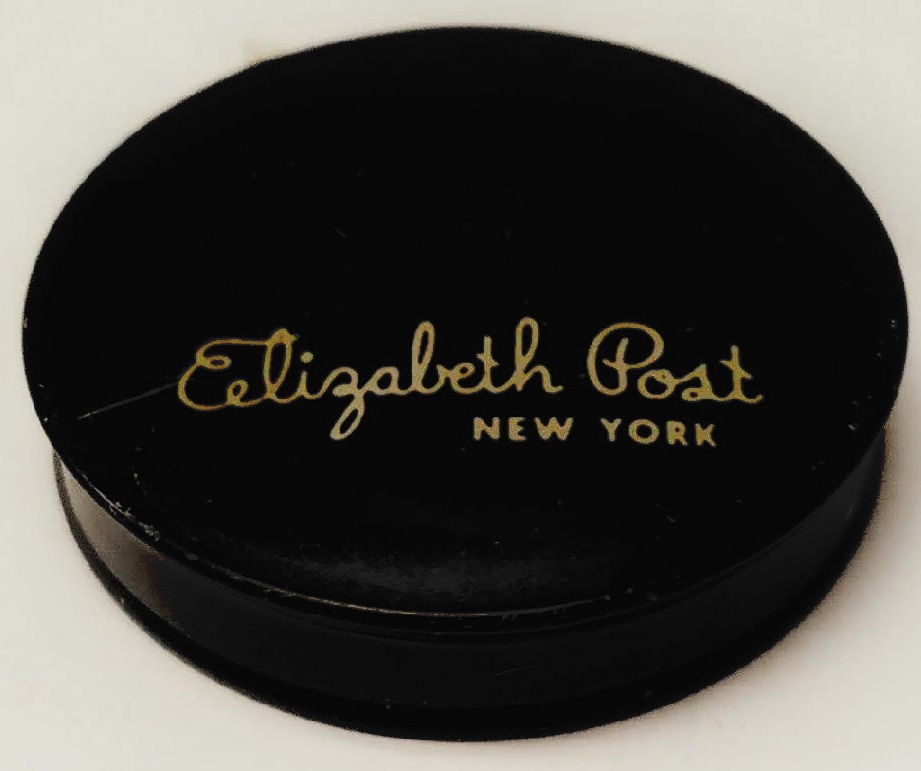
For centuries, books of manners and proper etiquette, had advised young women especially against wearing cosmetics. Lipsticks and powders, etc... were supposed to do no more than enhance one’s “natural charms” and not “gild the lily.” A young woman was seen to be reckless if she were to appear during the day and out in public, in a “made-up” manner. But, by the end of WWI, as more women were smoking and drinking in public, among other things, American women felt much more comfortable in cosmetics, and it wasn’t long before even a few etiquette authorities were promoting its use. Soon, women around the world were taking their cues from their American sisters.   – Along with being the first successor to Emily Post’s etiquette media business, Elizabeth Post, Emily’s only grand-daughter in-law, had a line of “Correct Cosmetics” that were marketed to American women.


American  Beauties

Listen to this girls! A newspaper writer on beauty methods quotes a “famous Frenchman who is a leading light in the cosmetic field” as follows: “To me the most alluring thing about the American girl and woman is that she acts as though she were beautiful, whether she is or not. In France, only the most attractive women have the courage to carry themselves off in the charming manner that is part of almost every American girl and woman.” There is more to this, it appears, than a mere boost for American use of cosmetics. Also, there is more than is meant by the saying, “Beauty is as beauty does.”
 

American women, with or without classic features and perfect natural coloring, do not hesitate to groom themselves smartly and develop ease of manners and charm. The result is that America has acquired international fame as a land of beautiful women. As a woman thinketh, apparently so is she. Courage, good health, independence, cleanliness and—ahem!—wise use of cosmetics, have worked marvels. Only a grouch will raise the question. “What is beauty?” – Lompoc Review, 1930


Etiquette Enthusiast, Maura J. Graber, is the Site Editor for the Etiquipedia© Etiquette Encyclopedia 

Sunday, September 17, 2017

Etiquette for Canada

This is basic handshaking etiquette. Overall, it is good advice for any country where handshakes are expected — First, shake hands firmly. This gives the impression that you are genuine and confident. Hold the handshake for one or two seconds and shake steadily from your elbow. However, avoid an overly powerful handshake; Do not crush the other person’s hand in yours.


Customs and Etiquette Written 
for Those Moving or Migrating to Canada

There is a certain set of etiquette expectations that Canadians have in any professional or social setting, from how you shake hands to your basic manners.

First, shake hands firmly. This gives the impression that you are genuine and confident. Hold the handshake for one or two seconds and shake steadily from your elbow. However, avoid an overly powerful handshake; in other words, do not crush the other person’s hand in yours.

Making eye contact is an important, and often neglected, sign of mutual acknowledgement and respect. Also continue to make natural eye contact with others, without staring uncomfortably. If you’re in a meeting or interview with several people, move your gaze between the people in the room.

General good manners are also very important. Do hold a door open for someone else, male or female, let your boss exit the elevator first and do not interrupt others while speaking.

Don’t be shy to say “I’m sorry,” “Please,” and “Thank you.” While in some cultures, it’s all important to “save face,” which makes apologizing difficult, but in Canada those words can smooth things over quickly, instead of allowing ill feelings to harbour. Also, say “I’m sorry” or “Excuse me” when walking by a person too closely. Walking into somebody’s “personal space” is considered enough grounds for an apology.

If you did not hear something properly, do not say “What?”, but politely say, “I’m sorry, I did not hear what you said, can you please repeat it?” or “Pardon me?” Always make the other person feel confident and never bring them down.

Etiquette extends to your physical appearance as well. While Canada is a multicultural environment, there is something to be said for clean, crisp business attire. That doesn’t mean you can’t bring touches of your culture to your appearance, be it in colour or jewellery, etc., but subtle is best.

The same thing goes for grooming. Be aware of food smells clinging to your clothes, which can turn some people off. And personal hygiene. In other words, keep some breath mints on you!

Don’t forget to smile. It’s a sign that you’re a positive person, even in times of difficulty. When speaking on a phone, smile into the phone as well. While the person you are speaking with cannot see you, they can feel your smile radiate positive energy!

A few words must be said about etiquette with neighbours. Often, when you move into your first house in the new community, your neighbours will knock on your door. Most of the time they want to present you with a card or a gift basket, to congratulate you on your new home. Be polite to your neighbours, always say hi when you see them on the street. If you do not wish, there is no need to engage in a lengthy conversation, but it is important to acknowledge them when you see them.

Canadians are often more uptight about inviting people into their home. It is unlikely that they will keep the door open for you to walk in any time of the day to have tea. People will schedule parties or coffee dates, but most of the time this will be somewhere outside the house. Many neighbours live side by side many years, and never see the inside of each other’s houses.

If you do happen to invite people over, remember, that in Canada, people gather to socialize, not to feast! In many cultures, it is very important to serve a huge table of food. For many it is taken as an offence if somebody comes to your house, but does not eat what you serve them. However, this is not the case in Canada. When inviting people, place snacks or finger food on the table.

Another interesting thing to note is that neighbours are often very vigilant about rules. Canadians are brought up with an understanding that they must report a crime or any suspicious activity. Do not be surprised that the neighbour who gave you a warm welcome when you just moved in is the same person who called the by-law officer because your car was not parked properly. — Fom by prepareforcanada.com , March 2012


Etiquette Enthusiast, Maura J. Graber, is the Site Editor for Etiquipedia© Etiquette Encyclopedia

Tuesday, September 8, 2015

Etiquette and Personal Grooming

The secret of her manicure should be left at home, or with her manicurist, and kept a secret.


Women Win by Tact Rather Than by Beauty
I have seen various vulgar habits exhibited at a public table, but never until this week has it been my misfortune to sit at table with a woman who brought along her manicure implements and used them while waiting for the first course of her dinner.  

She was a good-looking young woman, with an air of repose that was positively refreshing in these days of nerves. She was carefully dressed and seemed to be more than ordinarily intelligent. I considered myself fortunate in having such a presentable vis-a-vis until she produced her nail file and began the scraping process which is irritating at all times, but was particularly nerve-wasting as an accompaniment to soup. 

People with weak stomachs have a hard time in life. There are so many disgusting things to be met with outside one's home that scarcely a day passes without an experience which cannot be readily banished from the memory. I felt really angry with my neighbor who gave the finishing touches to as ugly a set of nails as I ever saw before her dinner was served. I looked for other uncommon traits in her behavior but could find nothing else at which to complain. Why she should have thought herself justified in such an act passes my comprehension. 

Somebody told me once that every person had some disgusting trick. I did not believe it then, I do not believe it now, even with a wide experience of men and women and their little ways. I do believe, however, that many persons have more than one objectionable trick, for they are likely to go in pairs like reptiles. Why does not father, mother, relative or friend call such a person's attention to these horrid little ways? It is infinitely better to risk unpleasantness at home than to allow a woman to be publicly condemned for a thing that could be avoided. Women are shunned for smaller offenses than the one I witnessed the other day, and perhaps they never guess the reason. 

Refinement is bred in the bone, and where it exists such ways are impossible. The next best thing is the veneer which comes from the polishing process of education and experience. The possessors of this, too, would scarcely be guilty of glaring faults except under the stress of excitement, when the veneer seems to break away and show glimpses of the true nature below it. It is said that as a nation we are improving year by year, but the progress is so slow when compared with all there is to be done that the task seems an endless one. 

It would hardly seem necessary to say that one's nails should be cared for in private like other points of the toilet. It is not at all uncommon to see women rearrange side combs after removing their hats in the theater, but there is some excuse for the act in the discomfort of loose-ends of hair which have been pulled away from their fastening and float about one's ears and in front of the eyes. So we accept this breach of manners. There is no good excuse for the nail file and toothpick when they appear in public, and it will be long before refined people will care to search for one, by her irreproachable toilet. –By Mrs. Martha Taft Wentworth, in San Francisco Call, 1901


Etiquette Enthusiast, Maura J. Graber is the Site Moderator for Etiquipedia© Etiquette Encyclopedia