Showing posts with label Being “Etiquette-ful”. Show all posts

Wednesday, August 6, 2025

Etiquette: The Right Tools

Etiquette is Akin to 
Using the Right Tool

Using the Right Took

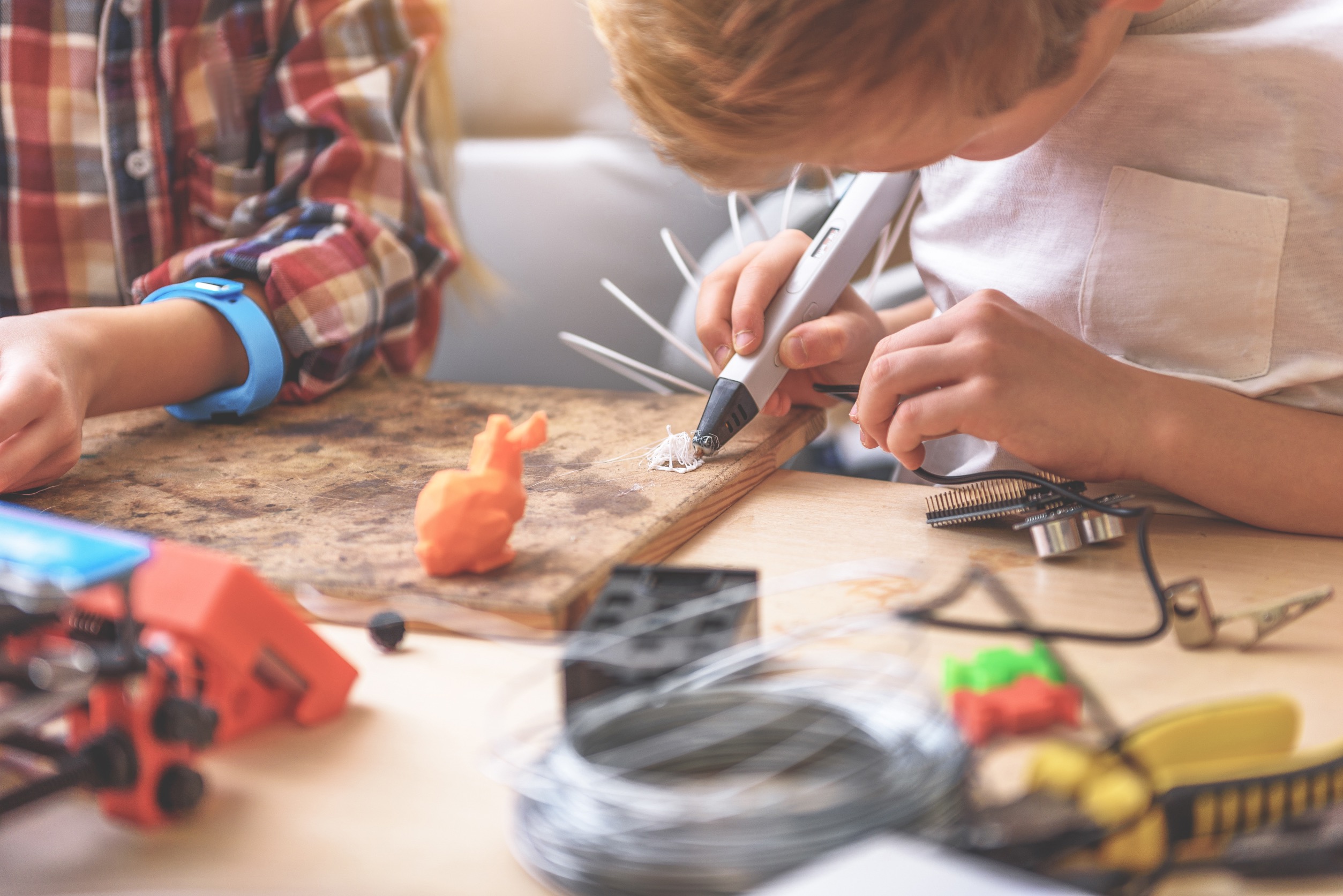
When I was a child, many of my dad’s irritations came about when we kids didn’t use the right tool… a knife for a screwdriver, the handle of anything as a hammer, pliers as a wrench, trimming scissors to cut cardboard… on and on.  It was hard for me, as expediency too often overrode the lesson.  But experience teaches us that using a right tool for a particular task is necessary in advancing a person’s know how and can-do practical knowledge through practice.

Using etiquette-ful practices and guidelines when interacting with other people is akin to selecting and using the right tool.  When you accept that there are right tools for particular tasks, you accept that situationally, contextually, and relationally when we use our etiquette skills, interacting with others hones purpose and helps you gracefully communicate.

How to Know You’re Using the Right Tool

  • The etiquette framework fosters effective and respectful communication between individuals. 
  • Employing the norms for appropriate language, tone and behavior creates environments of respect, where people can be comfortable being themselves.
  • Having learned the social rules of getting along is noticed and appreciated by others and contributes to relationship building.
  • Professionally, etiquette-fulness is vital in building a person’s relationships with clients and colleagues, and it is an outward sign of professionalism and reliability.
  • When tension or conflict arise, etiquette calms and guides persons back to the basics of listening with care, being constructive and positive, and seeking win-win outcomes. 

Becoming etiquette-ful is purposely chosen. It takes will power to harness the self and develop proficiency in navigating social situations.  Like tool use, we can learn through practice to employ guidelines and understandings that make us more sensitive to the needs of others and to what is needed in social and professional contexts that benefit not only others but ourselves as well. 

This is because when a person decides to learn and employ the specific skills of respectful behavior, the mindset brings benefits of surprise and pleasure as you become more adaptable, friendly, and positive. 

Honesty and right intentions build in the habit of reflection and the willingness to grow and change.  Friendships are cultivated and warmed through the ongoing practice of mutual effort as friends invest their time, energy, and care.  This happens in the context of learning the practices of etiquette.

Practice Using Your Etiquette Tools

  • Listen actively and seek to understand another person’s perspectives and concerns.
  • Employ your knowledge of good eye contact, engaging facial expressions and open body language.
  • Avoid interrupting and speak your mind clearly and concisely with language that is polite and respectful. 
  • Be a questioner, using open-ended questions that engage the other person to share their thoughts more fully.
  • Regardless of how the conversation goes, always look for mutual understanding.
  • Put your empathy to work and acknowledge the other person’s situation or point of view.
  • Keep your purpose in attending an event or meeting in mind, realizing that others are there for reasons, too. 
  • Stay focused.  If your mind begins to wander, you might summarize what the other person has said. This has the added benefit of others being drawn back into attention.

As my father taught me, proper tool use requires an attitude of respect for the tool and respect for the desired outcome.  And remember that kindness to yourself, the learner, is necessary in advancing your skills in the use of any 


Contributor, Candace Smith is a retired, national award-winning secondary school educator, Candace Smith teaches university students and professionals the soft skills of etiquette and protocol. She found these skills necessary in her own life after her husband received international recognition in 2002. Plunged into a new “normal” of travel and formal social gatherings with global leaders, she discovered how uncomfortable she was in many important social situations. After extensive training in etiquette and protocol, Candace realized a markedly increased confidence level in meeting and greeting and dining skills and was inspired to share these skills that will help others gain comfort and confidence in dining and networking situations. Learn more at http://www.candacesmithetiquette.

🍽️Etiquette Enthusiast, Maura J. Graber, is the Site Editor for the Etiquipedia© Etiquette Encyclopedia  

Saturday, July 8, 2023

How Etiquette Evolves

Etiquette is for People by People

Handshake Greeting

Etiquette guidelines are created from the ground up, for people by people, as standardization for navigating certain situations arises. It isn’t declared by any standard maker. It’s not ‘something you can grab hold of’ like a fork or knife, but through time in all cultures, etiquette evolves from social and professional best practices – those actions that are recognized as respectful, considerate, and honest.

Creating Etiquette for People by People

The main business of each of us is to find our better selves and to shoulder responsibility for our actions. Developing habits of character and working to organize the qualities into effective personal lives is everyone’s duty to themselves. 

To aim for etiquette-fulness as a personal goal, in and of itself, is confidence boosting. As habits of kindness are learned and practiced, they become second nature, leaving time to focus on the substance of engaging with others. We end up modeling for and with each other.

Big Back-up Ideas

There are some really big ideas behind etiquette, and these big ideas are the basis of etiquette, regardless of culture. 

  • Have and show respect.
  • Be thoughtful and considerate.
  • Be forthright in all affairs.

These ideas ground what become known as polite, as etiquette-ful. The big ideas are the why’s and the how-to’s that fall under the etiquette-ful umbrella. 

In every culture, greetings are given and accepted. From an early age, children are taught how to physically greet other people, whether that be a handshake or a bow or other known gesture. We learn to make eye contact when communicating and practice it to know how much is too much or too little. 

This learning process is the perfect example of etiquette being for people by people. It is taught person to person. As social creatures living in families, working, and playing together, we teach each other how to temper the passions and, as Adam Smith famously says, “bring our self-love down to what others will go along with.” 

Our own views about etiquette and its importance no doubt change with the times as we embrace traditions and create new ones with our families and friends. We outgrow the silly idea that etiquette is stodgy, stuck-up, and sullen. We realize how important etiquette considerations are in gaining practical skills for personal and professional success. 

When you venture down the road of being “etiquette-ful,” you become a new kind of problem-solver, increasingly able to manage your personal space and remain sensitive to the needs of others.


Contributor, Candace Smith is a retired, national award-winning secondary school educator, Candace Smith teaches university students and professionals the soft skills of etiquette and protocol. She found these skills necessary in her own life after her husband received international recognition in 2002. Plunged into a new “normal” of travel and formal social gatherings with global leaders, she discovered how uncomfortable she was in many important social situations. After extensive training in etiquette and protocol, Candace realized a markedly increased confidence level in meeting and greeting and dining skills and was inspired to share these skills that will help others gain comfort and confidence in dining and networking situations. Learn more at http://www.candacesmithetiquette.com/


🍽Etiquette Enthusiast, Maura J Graber, is the Site Editor for the Etiquipedia© Etiquette Encyclopedia

Thursday, July 6, 2023

Etiquette Helps You Restart

Restart Your Best Self

Woman Looking in a Mirror

The decision to restart your best self can be made for a variety of reasons.  Maybe you’ve noticed you might be the person repeating unpleasant things, you don’t like the way you’re coming across to others, or you’d like to perk up your social media presence.

You might sense that you’re not being perceived as the person you want to be: cheerful, gracious, convivial, and respectful of others.  This can feel disappointing.

If you’ve already committed to living by the etiquette-ful code – operating on the principle of sympathy, kindness, and consideration for other people – try making the same commitment to yourself.  What might you do out of kindness for you?  This is a great place to begin when you want to restart your best self.

Find a Source of Inspiration

We all know someone with qualities we want to possess.  Consider those qualities and what your life would look like if you had them.  Perhaps you already do, you simply need to live them more externally.

The most admired people I can think of are friendly, considerate of others, engaging, good listeners, trustworthy, and confident.  They are comfortable being themselves and appreciate other people who have this same quality without judging them.

In your effort to restart your best self, refresh your memory by listing the people who have inspired you.  You might reach out to someone who has served as a source of inspiration and let them know of your gratitude.  

You might also look to a spiritual source of inspiration.  Spend time in meditation and prayer.  Ask for blessing of your renewal and give honest thought to what you most want for yourself.

Let Etiquette Help Restart Your Best Self

Once you have the inspiration for the kind of “best self” you want to be, put it into practice when you interact with others.  Especially if your interactions have been limited.

  • Friends or colleagues will enjoy a friendly note, reminding them of how much they mean to you.
  • Think about the neighbors and family members who haven’t recently heard your encouraging voice and write, call, or text them just to say hello.
  • Offer to schedule a friendly meet-up via teleconference.

Etiquette is your guide to showing your best self when spending time with other people.  Your conscious consideration will be appreciated by everyone and may create opportunities for deeper relationships.  

  • Let others go first in conversation.
  • Do not interrupt when someone is speaking, and quickly apologize if you do.
  • Notice if you’re talking too much about yourself and stop if you are. 
  • Yield the right of way in conversation so everyone has a chance to speak.
  • Spare the feelings of others by speaking about subjects that aren’t delicate or intrusive or boastful. 
  • Open the door for someone or signal that you wish someone to enter the room or go down an aisle before you. 

Etiquette can work as a funnel to slow down thinking before speaking and acting.  It’s a great tool to help you manage your time and gives you the space you need to make the time you spend with others more enjoyable for everyone.  

Become a contagious source of cheer; restart your best self and live by example the ethics of everyday life.  Do this, and you will begin inspiring other people to do the same.


Our etiquette-ful contributor, Candace Smith is a retired, national award-winning secondary school educator, Candace Smith teaches university students and professionals the soft skills of etiquette and protocol. She found these skills necessary in her own life after her husband received international recognition in 2002. Plunged into a new “normal” of travel and formal social gatherings with global leaders, she discovered how uncomfortable she was in many important social situations. After extensive training in etiquette and protocol, Candace realized a markedly increased confidence level in meeting and greeting and dining skills and was inspired to share these skills that will help others gain comfort and confidence in dining and networking situations. Learn more at http://www.candacesmithetiquette.com/

🍽️Etiquette Enthusiast, Maura J Graber, is the Site Editor for the Etiquipedia© Etiquette Encyclopedia

Thursday, August 1, 2019

Etiquette and Adam Smith


Smith uses the word, “manners,” thirty-six times in his Theory of Moral Sentiments.  And for good reason.  Manners are essential for a free and open society to exist.
 

Edmund Burke wrote that “Manners are of more importance than laws.  Upon them, in a great measure, the laws depend.  Manners are what vex or soothe, corrupt or purify, exalt or debase, barbarize or refine us, by a constant, steady, uniform, insensible [unaware, unconscious, imperceptible] operation, like the air we breathe.” Adam Smith fully agreed.
Smith uses the word, “manners,” thirty-six times in his Theory of Moral Sentiments.  And for good reason.  Manners are essential for a free and open society to exist.  
Manners are bottom up, uncodified, consensual rules of tacit knowledge.  Simply verbalizing or reading about them is not sufficient to transfer them to people; they are often learned at home.  In reference to her son, if a mother receives the compliment, “He has such good manners,” she has a sense that she is doing her job.  All of that prompting and correcting and forcing, and reminding, “Mind your manners, Johnny!” is paying off.  Many a parent seeks help in educating their children to be mannerly and polite.  Schools, too, seek to teach the virtue of being kind, and the benefits of having good manners in order to get along with others and progress in life.

Smith writes, 
“A very young child has no self-command…When it is old enough to go to school, or to mix with its equals, it soon finds that they have no such indulgent partiality [as parents often do]. It naturally wishes to gain their favor, and to avoid their hatred or contempt. Regard even to its own safety teaches it to do so; and it soon finds that it can do so in no other way than by moderating, not only its anger, but also all its other passions, to the degree which its play-fellows and companions are likely to be pleased with.  It thus enters into the great school of self-command; it studies to be more and more master of itself, and begins to exercise over its own feelings a discipline which the practice of the longest life is very seldom sufficient to bring to complete perfection.” 
The journey of self-mastery takes all our lives. 
It is from experience with others that we learn to become social, and through self-command to “humble the arrogance of our self-love and bring it down to what others [humankind, society, the impartial spectator] will go along with.”  This is not a simple process. 
It is generally the case that people think themselves sufficiently skilled when it comes to having manners.  If an individual comes into the personal realization that he/she is lacking knowledge that will explicitly help in getting along with others and accomplish true self-satisfaction, he/she doesn’t sign up for a course in manners.  It’s too late for that.
Etiquette, however, can be taught directly, but the individual alone must choose to learn and practice it.  Knowledge of the “how-to’s, what-to-do’s and not-to-do’s,” situationally, contextually, and relationally is the stuff of etiquette.  
We learn from Smith that human beings seek “a mutual sympathy of sentiments” with others, and the modern desire expressed as being likeable and seeking to be agreeable with others reflects Smith’s understanding that our sociality is the back and forth experiencing and trying on for size the behaviors that fit us when we are being the best version of ourselves.  The word, “etiquette” had not been used in Smith’s day, but the code of behavior regarded as specific and precise for given situations was clearly recognized by Smith.  
As an etiquette enthusiast and educator, I have realized that if a person mindfully aims to become “etiquette-ful,” that person can exact more self-command, can be a better conductor of self in particular and general situations, showing up and viewed as “recognizably respectful to others and to himself.”  Moreover, if a person catches the “etiquette” bug, he continues to want to discover more of, as Adam Smith might say, awareness of the “impartial spectator,” in every social moment we have.  Taking a breath, stepping back and pausing as first actions in social moments helps us line up with the general rules of civility as we continually balance our self-love with what we are learning others will go along with.  We become actively involved in imagining what it must be like to be on “the other side of me.”  
Aiming to be etiquette-ful implies that you aim to be aware, alert, and mindful of extending actions of kindness due to a kindness that has been extended to you.  Yes, as Smith says, “Kindness is the parent of kindness,” and if he were in our world today, he would agree that being etiquette-ful is recognizing that there are shared rules that we experience as “good” in all regards when in the company of others.  An etiquette-ful person is aware that he is both an actor and spectator of his own and in regard to other’s actions.  He is a chooser and at his best, he would be in self-command. 
Smith expresses the need for self-command and harmony in social situations, as exampled in this passage.  “It is indecent to express any strong degree of those passions which arise from a certain situation or disposition of the body; because the company, not being in the same disposition, cannot be expected to sympathize with them.  Violent hunger, for example, though upon many occasions not only natural, but unavoidable, is always indecent, and to eat voraciously is universally regarded as a piece of ill manners.  There is, however, some degree of sympathy, even with hunger.  It is agreeable to see our companions eat with a good appetite, and all expressions of loathing are offensive.  The disposition of body which is habitual to a man in health, makes his stomach easily keep time, if I may be allowed so coarse an expression, with the one and not with the other.  We can sympathize with the distress, which excessive hunger occasions when we read the description of it … We imagine ourselves in the situation of the sufferers, and thence readily conceive the grief, the fear, and consternation, which must necessarily distract them.  We feel, ourselves, some degree of those passions, and therefore sympathize with them; but as we do not grow hungry by reading the description, we cannot properly, even in this case, be said to sympathize with their hunger.  …Such is the aversion for all of the appetites which take their origin from the body: all strong expressions of them are loathsome and disagreeable.”
As one student wrote to me, “…Being social isn’t easy.  But I am choosing to be addicted to etiquette in a good way.  I now ask myself often, “What would Etiquette say to me right now?  This helps me know what to do in the next moment.” 
Though etiquette is typically defined merely as the code of polite behavior in society, it requires an understanding of manners.  I contend that the intentional choice of learning etiquette helps us find and align with every good manner we could conceive of. – by Candace Smith for AdamSmithWorks.org

 Contributor, Candace Smith is a retired, national award-winning secondary school educator, Candace Smith teaches university students and professionals the soft skills of etiquette and protocol. She found these skills necessary in her own life after her husband received international recognition in 2002. Plunged into a new “normal” of travel and formal social gatherings with global leaders, she discovered how uncomfortable she was in many important social situations. After extensive training in etiquette and protocol, Candace realized a markedly increased confidence level in meeting and greeting and dining skills and was inspired to share these skills that will help others gain comfort and confidence in dining and networking situations. Learn more at http://www.candacesmithetiquette.com/

Etiquette. Enthusiast, Maura J Graber, is the Site Editor for the Etiquipedia© Etiquette Encyclopedia