Showing posts with label Gilded Age Table Manners. Show all posts

Monday, January 19, 2026

A Gilded Age Philosophy of Etiquette

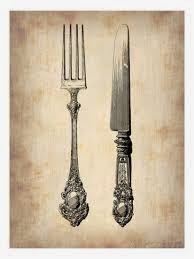
Though forks hadn’t started to appear on the tables of the United States until the 1830’s and 1840’s, like early mobile phone usage in the U.S., they soon took hold and were common place within a matter of just 15 to 20 years, as new technology always does. New etiquette was written for them too. By 1883, eating from one’s knife instead of a fork was discouraged in every book and publication of the day, as Granny would well know!

There is an 1883 philosophy in the requirements of good breeding, whether in the etiquette of the table, the street, the call or in the discharge of other social duties and pleasures. The requirements which polite society demands of its votaries are not mere arbitrary rules, but will be found to be invariably the result of a careful study of the greatest good and pleasure of the greatest number. 
Take, for instance, a very gross and marked example: Etiquette requires that the food shall be borne to the mouth on the fork and never on the knife. It is, evidently, most unclean, and, therefore, disagreeable to see a person thrust a knife into his mouth, and exceedingly trying to delicate nerves to see him in continual danger of involuntarily enlarging his mouth by an awkward slip of the knife.- From “Granmaw’s Kitchen” in Hilltop Messenger, 1967


 🍽️Etiquette Enthusiast, Maura J. Graber of The RSVP Institute of Etiquette, is the Site Editor of the Etiquipedia© Etiquette Encyclopedia 

Tuesday, June 3, 2025

National Guard Battles Bad Manners


Then things grew warm, for if there is one thing that Captain Sullivan prides himself on it is his ability to behave as a gentleman, and as for his table etiquette- well, he just simply defies any one to prove that he is not on to the very latest wrinkles. Of course the captain’s friends have implicit faith in him and stand ready to back him against Ward McAllister if necessary, but then Adjutant Delaney’s have not, and they are making every possible use of Colonel Barry's insinuations. – Public domain image of the California National Guard logo

LACK OF MANNERS

Why a Captain May Not Be a Major

THIRD REGIMENT TROUBLES

One Officer Insinuates That Another May Eat Pie With a Knife

To be a member of the National Guard and not to be mixed up in some sort of internal row is considered the greatest kind of a disgrace just now.

First the Light Battery privates became mixed up with their superiors; then the boys over in Oakland took a hand in the affair and began to call each other choice and pet names and now a big dark war cloud is hovering over the Third Regiment.

It is over an election that the Third Regiment folks seem fated to quarrel.

The Legislature at the last session, perhaps with the purpose in view of providing additional attractions to the feminine eye during the summer encampments, created the office of junior major in each regiment in the State.

When the time came for the filling of the office in the Third Regiment two persons appeared up as aspirants for it.

One was William M. Sullivan, at present captain of Company D, and the other William P. Delaney, the present adjutant.

Immediately the officers took sides, and when a count of noses was made it was found that the Sullivan end was the stronger.

Then Colonel Barry waxed wroth. The colonel is a supporter of Delaney and it grieved him to learn that a majority of his subordinate officers was not in sympathy with him.

It was during Colonel Barry's angry moments that the great trouble started.

“Elect this fellow Sullivan major of my regiment,” exclaimed the colonel. “No, never while I have a thing to do with it,” and then in a quiet way he proceeded to make known his objections to the “fellow Sullivan.”

Among them were insinuations that “D” company’s captain was a bit short on manners. That he knew but little of table etiquette, and that were he to gain the coveted office the regiment, could never again shine socially.

Now had Colonel Barry made his remarks in the presence of his own friends only, or, better still, to himself in the secrecy of his boudoir, all might have gone well. But then he didn't. He made them in the presence of a number of people among whom were a few of Sullivan’s friends, and they of course immediately carried the tale to him.

Then things grew warm, for if there is one thing that Captain Sullivan prides himself on it is his ability to behave as a gentleman, and as for his table etiquette- well, he just simply defies any one to prove that he is not on to the very latest wrinkles. Of course the captain’s friends have implicit faith in him and stand ready to back him against Ward McAllister if necessary, but then Adjutant Delaney's have not, and they are making every possible use of Colonel Barry’s insinuations.

They recite the adjutant’s many acts of gallantry; tell of his dancing ability, the graceful manner in which he acts at table and of his captivating manners while in the company of the fair sex, and in the most sarcastic manner they inquire what Sullivan has to say for himself.

Then Sullivan’s friends take a turn at talking. They begin by denying all the charges against their man, and they take a shy at his opponent, but all this talk is doing little to solve the much-mooted question, and among the disinterested a doubt still exists as to whether Captain Sullivan be a man overburdened with good manners, or if he be one who eats pie with a knife, uses a napkin for a facecloth and wears his hat in a parlor, or Colonel Barry be a little hasty.

It has been found necessary to postpone the election in order to solve the knotty question, - San Francisco Call, 1893


🍽️Etiquette Enthusiast, Maura J. Graber, is the Site Editor for the Etiquipedia© Etiquette Encyclopedia 

Monday, November 4, 2024

Gilded Age Finger Foods

Saratoga Chips or ‘chipped potatoes’ were a favorite dish in the gilded age. Shown above is a gilded and sterling Saratoga Chip server” in the Hope” pattern by Mount Vernon Silver, circa 1899“Chipped potatoes are generally eaten with the fingers by epicures. There must be no particle of fat adhering to the chipped potatoes and they must be crisp.” —Delineator, 1903

Finger Food Etiquette is Particular 

There are a number of things that the most- fastidious and well-behaved persons now eat at the dinner table without the aid of either knife, fork or spoon. The following are a few examples:

  • Olives, to which a fork should never be applied. whether hot or cold, when served whole, as it should be. 
  • Lettuce, which should be dipped in the dressing or a little salt. 
  • Celery, which may properly be placed on the tablecloth beside the plate. 
  • Strawberries, when served with the stems on, as they usually are. 
  • Bread, toast, tarts, small cakes, etc… 
  • Fruits of all kinds, except preserves and melons, which are eaten with a spoon. 
  • Cheese, which is almost invariably eaten with the fingers by the most particular. 
  • Either the leg or small pieces of a bird. 
  • Ladies at most of the fashionable lunches pick small pieces of chicken without using knife and fork.
  • Chipped potatoes are generally eaten with the fingers by epicures. There must be no particle of fat adhering to the chipped potatoes and they must be crisp.—The Delineator, 1903

🍽Etiquette Enthusiast, Maura J. Graber, is the Site Editor for the Etiquipedia© Etiquette Encyclopedia

Tuesday, March 19, 2024

Table Manners and Carving Etiquette


If your husband complains when confronted with the Thanksgiving turkey - you might tell him that carving is the Art of Noblemen. In the Middle Ages, Edward IV of England was served by no less than five Royal Carvers, all noblemen of high degree. After the carving, correct etiquette for those times called for a sort of "grab and gobble" technique, without benefit of table cutlery!

Wail of the Man Who Carves for a Large Family

"A Veteran" writes to the Listener of the Boston Transcript to complain of table manners in these later days, incidentally protesting against the hard lot of the father who has to carve for a large family: "In the old way we are taught to wait until the carving and helping was done before beginning to dispose of the food, out of respect to the carver, and so that he might have a chance to get something to eat and not come out behind all others at the table, but modern 'table manners' seem to have changed all that, and if the carver gets anything to eat he is lucky.

“Modern table manners also do not appear to regard it as any way inappropriate to have a newspaper at hand to occupy the time at table. The old way was to occupy the time in lively conversation, and reading a paper or book was disrespectful. In modern table manners there seems no incivility in lighting a cigarette at the table or in adjourning to the hall to smoke one while the table is being cleared for dessert. There are many other innovations in modern table manners which might be noted, but I think many of the old ways best."

The Listener gives the old grumbler comfort. "It is a queer father of a family who expects to carve and get anything to eat. The size of the roast may be simply prodigious, but, even if the young people at the table who were first served do not come around for a second helping by the time the last person is served the first time the roast will probably by that time have got into the shapeless and refractory condition peculiar to roasts, which will incline the carver to content himself with a little bread and gravy– or at least to the edges off the pangs of hunger with something of that sort, while he is organizing a second assault on the roast for the benefit of the others." – Placer Herald, 1898


🍽Etiquette Enthusiast, Maura J. Graber, is the Site Editor for the Etiquipedia© Etiquette Encyclopedia

Wednesday, June 7, 2023

Table Manners of 1880


Corn on the cob, even today, is not a normal item at a formal meal— it is too messy. Yet, some Victorian hostesses did serve corn on the cob. There were several ways of handling corn on the cob. One was to use the silver cob holders shown. These worked exactly like the plastic cob holders the fastidious use on picnics to day. At least one 1880s etiquette book favored serving corn on the cob, noting, “A lady who gives many elegant dinners at Newport causes to be laid beside the plate of each guest two little silver-gilt spike-like arrangements. Each person then places these in either end of the corn-cob and eats his corn holding it by two silver handles.” Some etiquette writers advised people to use a knife to cut the kernels off the cob and then eat the loose kernels with a fork. The corn fork (bottom middle of photo) reflects another approach. The center portion of this large fork was designed to be used in scraping the corn kernels from the cob. The fork could then be used to eat the loose kernels. As a design, it was a success, the scraper worked quite well. How ever, it was a product for which there was no real market. Few diners wanted to go to that much trouble for corn so the fork sold very poorly and today is almost impossible to find.— From “Forgotten Elegance,” 2003

One of the surest tests of refinement is the test of eating. There may possibly be persona of taste and delicacy who are careless of the table and careless at the table, but they are black swans, exceptions which prove the rule. This test is as applicable to brutes as to men. There is as much difference in tke refinement of individuals of the canine and bovine and feline species as in those of the human species; and this difference is seen most plainly in their personal habits, and particularly in their habits of eating. Even in that omnivorous animal, the pig, we find this statement verified. 

An aristocratic pig is dainty at the trough, and refuses food if not up to grade or served in a slovenly style. There is no pain of the social sort more exquisite than the pain endured by a sensitive and refined nature when by stress of circumstances it is compelled to feed on husks and with swine. This was the crowning agony that brought the prodigal son to himself and influenced him to return to his father’s house, where the servants had good food and to spare. 

To some, good table manners come by nature; to others only by training. Those who are born with a delicate sense of taste and smell, with fine organizations and limited powers of digestion, are naturally particular about their eating, and prefer starvation to indulgence in anything “common or unclean.” Others in whom all the senses are dull and whose bodies are coarsely made, are easily pleased, and have no difficulty in eating whatever is set before them, asking no questions for conscience’s or any other sake. This latter class, unfortunately quite too numerous for the comfort of the former, though not perhaps too many for the rough fare and work of the world, are proper subjects for culture in table manners. 

It was doubtless in the interest of this class our correspondent wrote, at whose earnest request a few hints are here printed. Any one who will from principle and by habit keep the Ten Commandments will have no doubts as to their worth to the world, and their divine origin. “If any man will do His will, he shall know of the doctrine.” The formation of a habit creates a sentiment. It may take a long time to form it, but the habit once formed, a settlement will grow up and twine round it as the ivy graces the oak. This is why mothers who seek to develop good table manners in their children, will first provide good table appointments, and carefully prepared and daintily served food, and will thus insist upon good behavior. 

These three things insisted on, will in time, create a sentiment in the minds of children that will make correct table manners a second nature.
  • 1. As to table appointments.– The cloth, should be scrupulously clean, though it be only coarse material; nicely starched and ironed, and put on straight, its folds parallel with the sides of the table, and they with the sides of the room. The napkins, of however coarse material, must also be clean, carefully ironed and put on in place. The arrangement of the dishes on the table must be uniform, regular and tasteful, each dish, plate, spoon, glass, being in its appointed place and kept there. Any one accustomed to orderly appointments by habit soon learns to feel the necessity of taste and exactitude. These are fearfully neglected in many families. Table furniture of all sorts is hustled on without regard to appearance or order, the napery is disgusting, the carelessness in disposing it equally so, and the results are only such as might be expected. 
  • 2. As to the food.– It is impossible to feel polite and well-mannered over unpalatable, coarse, ill-prepared, indigestible food. Every mouthful of it provokes ill-humor, resentment, dissatisfaction. The house mother who insists on good table manners must give her family good food. There is no need of sour bread, muddy coffee, soggy potatoes, heavy pie-crust, leathery batter cakes. Chesterfield himself would forget his manners if compelled for any length of time to subsist on such a diet. 
  • 3. As to methods of eating.– With the assistance of the knife and fork the food may be so divided as to relieve the incisors of the heaviest part of their work, and make small mouthfuls a pleasure. The grinders indicate that grinding in the mouth is a part of the process of nutrition. Animals destitute of grinders bolt their food. It is not fitting that human beings cat as dogs do, since they have each a “mill” ready for use—which dogs have not. The lips are so constructed that the noise of the grinding, which is intolerable to ears polite, may be effectually disguised. This is a point that cannot be too urgently insisted on. 
Food, whether liquid or solid, must be conveyed into the mouth and from the month downward silently. The position at table should be unconstrained and easy, the person sitting erect or slightly bent forward when eating, so that the mouth may be directly above the plate; the arms should be held at the side, not extended at right angles with the body. The elbows should be kept off the table. Leave-taking is admissible only by permission of the hostess. 

Table talk should be light, agreeable, general, each person present contributing his or her quota to the general fund, and children observing the excellent rule of being “seen and not heard,” unless they are in such majority that the conversation is keyed to their level. Parents who will be at the pains to set their children such examples as they wish to see followed, and will themselves conform ta a high standard of table etiquette, will have little difficulty in attaining the results of culture they all desire. — N. Y. Tribune, 1880


🍽Etiquette Enthusiast, Maura J. Graber, is the Site Editor for the Etiquipedia© Etiquette Encyclopedia

Saturday, November 27, 2021

Gilded Age Etiquette for Family Dining

“Serviette Complete” — Popular publications like Godey's Lady's Book often included tips on etiquette and entertaining, including instructions like these on elaborate napkin folding. From "Dinner Serviettes," Godey's Lady's Book (Philadelphia) 88, no. 525 (March 1874), Special Collections, Michigan State University Libraries.

Finger bowls are not a general institution, and they seem to be quite as needful as the napkin, for the fingers are also liable to become a little soiled in eating. They can be had quite cheaply, and should be half filled with water and placed upon the side table, or butler's tray, with the dessert, bread and cheese, etc. They are passed to each person when the dessert is placed upon the table. A leaf or two of sweet verbena, an orange flower, or a small slice of lemon, is usually put into each bowl, to rub upon the fingers. The slice of lemon is most commonly used. The finger tips are slightly dipped into the bowl, the lemon juice is squeezed upon them, and then they are dried softly upon the napkin. At dinner parties and luncheons, they are indispensable.


In many families there is no waitress, then everything should be placed upon the table before the family are called, and the dessert can be put on a little table at your right. Always make your eldest daughter set the table, and do it neatly. Lay the cloth straight, and put the salt cellar and the butter plate, with the tumbler or cup, at the right hand of each person. Have crocheted macramé twine mats to keep the table cloth from being soiled, and at the head and foot of the table place a napkin cornerwise to the centre, or straight as one prefers. This will prove a great saving of table cloths, and the napkins can be retrieved often. 


Then tell her to look carefully over the table to see that not one thing is omitted. Look at your place, and see that there are enough cups and saucers placed neatly at the left hand, for breakfast or tea, and that the sugar bowl is well filled, and the cream and milk pitcher are prepared for use. Have a stand of metal at the right hand, to hold the coffee or tea pots, and the water pot, and a spoon cup should be placed beside the sugar bowl, with the tea spoons and sugar spoon in it. Also see that the carving knife, fork and steel are laid beyond the plates at your husband's seat. And have these plates well heated, and all the food as hot as possible. It is a decided annoyance to have this child, or that one, asked to leave the table to procure needed appliances, that ought to have been upon it.— From “Hints Upon Etiquette and Good Manners,” In Ladies Home Journal, by Mrs. S.O. Johnston, 1886


Etiquette Enthusiast, Maura J. Graber, is the Site Editor for Etiquipedia© Etiquette Encyclopedia

Tuesday, June 8, 2021

Sentenced to Teaching Etiquette

“I was well raised. Among other things, I learned not to eat without a fork. Thoughtless persons frequently hand food out of the kitchen, but forget the fork.”
                                 

Gilded Age Etiquette Humor or Why He Stole a Fork...

  • Judge—You are accused of stealing. You went to this man’s house and asked for a bite to eat. It was given you and you put a silver fork in your pocket. Is this true? 
  • Prisoner—All true, Your Honor. But hearken, I am no common thief. I was forced by a sense of duty to society to take the fork. May I explain? 
  • Judge—You may. 
  • Prisoner — I was well raised. Among other things, I learned not to eat without a fork. Thoughtless persons frequently hand food out of the kitchen, but forget the fork. It was to protect myself from outraging social usages that I took one. Is the explanation satisfactory? 
  • Judge—Yes. You may instruct the county prisoners in etiquette for thirty days. – Omaha Herald, 1887


Etiquette Enthusiast, Maura Graber, is the Site Editor for the Etiquipedia© Etiquette Encyclopedia

Wednesday, January 20, 2021

Skip the Fads When Entertaining

“At a recent dinner party the hostess, wishing to indulge in some novelty, had the cheese cut precisely in the shape and size of an ordinary piece of pie. When placed on the plate, it closely resembled a cut of custard pie. It was first passed to an elderly gentleman, who, without observing closely, took it supposing it to be pie, and put it down by his plate. After a time, the hostess sent the servant for it, and with a fork removed a small piece, after which it was passed to the other guests.” — Photo of a Victorian sterling silver cheese fork. 
— Source, Etiquipedia private photo library.


Hostesses Should Avoid Table Innovations

In these days, when the social aim and object of every hostess seems to be to get up something new, it would be well to have some way to indicate the use or management of novelties and thereby spare the guests much embarrassment. When dishes are to be served in any unusual way, some hint should be given to some of the guests, and others may take note of the manner of handling, and thus avoid confusion and awkwardness. 

At a recent dinner party the hostess, wishing to indulge in some novelty, had the cheese cut precisely in the shape and size of an ordinary piece of pie. When placed on the plate, it closely resembled a cut of custard pie. It was first passed to an elderly gentleman, who, without observing closely, took it supposing it to be pie, and put it down by his plate. After a time, the hostess sent the servant for it, and with a fork removed a small piece, after which it was passed to the other guests. 

There are few things more annoying than the consciousness that one has made some blunder at table. In some way, it has come to be an accepted idea that to go wrong in such things is to be in a condition of dense ignorance. As a matter of fact, there are so many changes, so many fads, so many new wrinkles and so much rivalry between ladies in the same society, that innovations are continually sought out and eagerly adopted. The wonder is not that people make mistakes, but that they make so few. 

At one time, the spoon and fork must be used in some special way. After a time, there is an entire change in this custom. People who go out but rarely cannot, or at least do not, keep up with the fads and fancies of the social swim and consequently are likely to do certain things in the old way, which is quite unlike the new, and of course are made uncomfortable by the discovery that they have violated some portion of the code of social etiquette. 

It would be well if eminent social authorities could prepare a set of rules and have them adopted and rigidly adhere to them. This would make things easier for entertainers as well as guests, and be much more satisfactory in every respect. Hostesses in places removed from fashionable centers should be specially careful about indulging in innovations. In nothing are genuine refinement and culture more clearly shown than in the avoidance of forms that may cause embarrassment to guests.—New York Ledger, 1894


Etiquette Enthusiast, Maura J Graber, is the Site Editor for the Etiquipedia© Etiquette Encyclopedia

Wednesday, November 18, 2020

Gilded Age Stupidity and Etiquette


The objectionable features of the after-dinner finger-bowl arise principally in the stupid idea that they add to the elegance of the table, as much as does an épergne, and from the other fact that those using them, in order to do homage to the host, who has provided them with much récherché utensils, deem it incumbent on themselves to perform an elaborate after-dinner toilet. —The New York Times, February 1880


FINGER-BOWLS

The objectionable features of an after-dinner toilet

The subjects of finger-bowls, and mouth-cleansers are apparently again agitating the minds of the diners-out. Quite a long time ago, in the Household columns, an opinion was advanced in regard to after-dinner ablutions. Considered as a matter of dinner etiquette, it may be roundly asserted that finger washing after dinner is really an over refinement, and rather disagreeably suggestive than otherwise. If this system of cleansing the hands were pushed a l’outrance, we might require that the servants between the different courses, should go through the same operation, for a good many doubtful thumbs concealed under dingy cotton gloves might be the better for it. Practically considered, however, finger-bowls after dinner are rather useful than ornamental. 

Possibly it is too much for the latter cause that they are used. There are certain fruits which cannot be eaten without sticking the fingers. Confectionery — marron glacé and such things — when partaking of, does make the fingers feel uncomfortably. It is, then, perfectly legitimate to use a finger-bowl and small napkin; even further use may be made of the bowl by dipping the end of the napkin in the water and applying it to the lips. Such as are masculine, with mustaches, find such use of the finger-bowl is comforting to a degree.

All the trouble about it is in the display. Why do people who give dinners, insist on having such highly decorative small-sized hand basins at their tables? The simpler, the less obtrusive they are, the better. In fact, when introduced, they should be brought in last, just as the curtain falls on the dinner, not advanced while the play is going on. Those who use these finger-bowls are often at fault in the way they employ them. They make too much of a business of it. They repeat, on a minor scale, the tubbing process. 

The best table manners are those which are the most quiet. If there is any one thing more uncomfortable than any other, it is to hear your neighbor at the table swishing away, scrubbing his hands, and flicking his napkin around as if it were a jack-towel on a kitchen door. All you have to do is dip your fingers in the water, but you must be a very clumsy feeder if the palms of your hand are sullied; then the business is over. You may, before you begin, dip your napkin in the water and wipe your mouth. But the use of that extra cup inside of the bowl is to be inveighed against as a disgusting thing. No screen made with the hands avails to hide this repulsive act. 

There is something horrible in the idea of one’s rinsing out their mouth at dinner, which recalls the toothbrush or the dentist’s chair. The act of gurgling, and the final expulsion of the fluid, is simply nauseating. This filthiness was never intended, as the usage of the smaller glass. What it was put there for was to wash the outside of the mouth only. The nasty use of it may be called one of the false developments of civilization, and should be held up to scorn. As it is a temptation in the way of the ignorant, it would be wiser to abandon the small glass entirely, and then no mistakes could be made. 

Unusual things at a dinner table are not to be recommended to be recommended; nevertheless there is an Eastern custom, sometimes used in the south of France and in Spain, derived undoubtedly, from the Moors, which is not so much out of the way. At the conclusion of a dinner a servant presents to each guest a large copper basin, which he holds in one hand while with the other he pours from a large metal vessel, which has a spout with a small aperture, a thin stream of water. A very little water, without splashing falls on the fingers of the guest, who then uses his napkin, or takes one from another servant who follows. It is the parade of the thing, however, which renders it objectionable, though it is sensible enough. 

The objectionable features of the after-dinner finger-bowl arise principally in the stupid idea that they add to the elegance of the table, as much as does an épergne, and from the other fact that those using them, in order to do homage to the host, who has provided them with much récherché utensils, deem it incumbent on themselves to perform an elaborate after-dinner toilet. —The New York Times, February 1880


Etiquette Enthusiast, Maura J. Graber, is the Site Editor for Etiquipedia© Etiquette Encyclopedia

Wednesday, April 15, 2020

Rising Up in Society

He dresses himself well if his means will allow; be he ever so poor he must be clean. If he commits any little error at the dinner table he must learn to be composed; he must be deaf and blind to the errors of others in society. 


Attention to Minor Manners

To descend to the lowest thing about a gentleman, we should remember that his minor manners must be attended to; he does not swear or smoke in the presence of women, he does not eat his dinner in a hurry, he does not crumble his bread about, making it into pills; he does not eat his soup with a hissing sound, or tip the plate to get the last drop; he mends his table manners if they are bad. 
He dresses himself well if his means will allow; be he ever so poor he must be clean. If he commits any little error at the dinner table he must learn to be composed; he must be deaf and blind to the errors of others in society. 

But etiquette never means stiffness. The best bred people are the unconscious of the manners of others around them. So sudden are the rises in American society, that many a man has been invited to a dinner party to eat his dinner off the plate which he lately washed. A politician may rise from being a waiter to being President of the United States. And he is a better man and a better diner and a better president. If, when he was a waiter, he had good manners and was obedient. “He also serves who only stands and waits” has a greater master than the one who pays him his wages. The noble quotation can be read two ways. A man may thus be a gentleman at heart, even in a state of servitude.—Philadelphia Times, 1888


Etiquette Enthusiast, Maura J Graber, is the Site Editor for the Etiquipedia©️ Etiquette Encyclopedia 

Friday, April 3, 2020

Good Form in Dining of 1894

It is good form to sit erect, to keep the arms off the table, to look pleasant, and to keep room in the mouth for a laugh...


It is good form to break off morsels of bread, toast, biscuits and cake. It is vulgar to bite into a slice. It is good form to train the left hand to use the fork. A gentleman does not lay down his knife and take the fork in his right hand, when the course consists of meat and a salad. 

It is good form to eat slowly and quietly. Only vulgar people are noisy. It is good form to sit erect, to keep the arms off the table, to look pleasant, and to keep room in the mouth for a laugh. People who eat like cattle should be induced to take meals in sheds or vacant lots. Babies and men and women in their “second childhood” can be excused for slobbering at table. – San Jose Herald, 1894


Etiquette Enthusiast, Maura J Graber, is the Site Editor for the Etiquipedia© Etiquette Encyclopedia 

Thursday, January 24, 2019

Domestic Notes on Table Etiquette

 An antique, King’s pattern, corn stripper or kernel scraper. Victorians loved green corn, and by the late 1800’s and early 1900’s had produced numerous patented items, like the one above, for making the eating of green corn from the cob a more graceful process.

A writer in Harper's Bazaar takes up her pen to put us all to rights on our behavior at the table. We give a part of her lecture as follows: A cream-cake, and anything of similar nature, should be eaten with knife and fork, never bitten. Asparagus may be taken from the finger and thumb. Peas and beans, we all know, require the fork only. Potatoes, if mashed, should be mashed with the fork. Green corn should be eaten from the cob, but it must be held with a single hand. Celery, cresses, radishes, and all that sort of thing, are, of course, to be eaten from the fingers; the salt should be laid upon one's plate, not upon the cloth. 

Fish is to be eaten with the fork, without the assistance of the knife; a bit of bread in the left hand sometimes helps one to master a refractory morsel. Berries, of course, are to be eaten with a spoon. It is not proper to drink with a spoon in the cup; nor should one, by the way, ever quite drain the cup or glass. Spoons are sometimes used with puddings, but forks are the better style. A spoon should never be turned over in the mouth. 

Ladies have frequently an affected way of holding the knife half way down its length, as if it were too big for their little hands, but this is as awkward a way as it is weak. The knife should be grasped freely by the handle only, the forefinger being the only one to touch the blade, and that only along the back of the blade at its root, and no further down. In sending one's plate to be helped a second time, one should retain one's knife and fork, for the convenience of waiter and carver. At the conclusion of a course, where they have been used, knife and fork should be laid side by side on the plate, never crossed; the old custom of crossing them was in obedience to an ancient religious formula. 

The servant should offer everything at the left of the guest, that the guest may be at liberty to use the right hand. If one has been given a napkin-ring, it is necessary to fold one's napkin and use the ring; otherwise the napkin should be left unfolded. One's teeth are not to be picked at the table; but if it is impossible to hinder it, it should be done behind the napkin. One may pick a bone at the table, but, as with corn, only one hand is allowed to touch it; yet one can usually get enough from it with knife and fork, which is certainly the more elegant way of doing; to take her teeth to it gives a lady the look of caring a little too much for the pleasures of the table; one is, however, on no account to suck one's fingers after it. 

Wherever there is any doubt as to the beat way to do a thing, it is wise to follow that which is the most rational, and that will almost invariably be found to be the proper etiquette. There is a reason for everything in polite usage; thus the reason why one does not blow a thing to cool it, is not only that it is an inelegant and vulgar action intrinsically, but because it may be offensive to others– cannot help being so indeed; and it, moreover, implies haste, which, whether resulting from greediness or from a desire to get away, is equally rude and objectionable. Everything else may be as easily traced to its origin in the fit and becoming. 

If to conclude, one seats one’s self properly at the table, and takes reason into account, one will do tolerably well. One must not pull one's chair too closely to the table, for the natural result of that is the inability to use one's knife and fork without inconveniencing one's neighbors; the elbows are to be held well in and close to one's side, which cannot be done if the chair is too near the board. One must not lie or lean along the table, nor rest one's arms upon it. – Pacific Rural Press, 1879


Etiquette Enthusiast, Maura J Graber, is the Site Editor for the Etiquipedia© Etiquette Encyclopedia

Friday, September 8, 2017

Gilded Age Food and Etiquette


Spoons are sometimes used with puddings, but forks are the better style and a spoon should never be turned over in the mouth.


  • A cream-cake, and anything of similar nature, should be eaten with knife and fork, never bitten. Asparagus may be taken from the finger and thumb. 
  • Peas and beans, as we all know, require the fork only. 
  • Potatoes, if mashed, should be mashed with the fork. 
  • Green corn should be eaten from the cob, but it must be held with a single hand. 
  • Celery, cresses, radishes, and all that sort of thing, are, of course, to be eaten from the fingers; the salt should be laid upon one's plate, not upon the cloth. 
  • Fish is to be eaten with the fork,without the assistance of the knife; a bit of bread in the left hand sometimes helps one to master a refractory morsel. 
  • Berries, of course, are to be eaten with a spoon. 
  • It is not proper to drink with a spoon in the cup; nor should one, by the way, ever quite drain the cup or glass. 
  • Spoons are sometimes used with puddings, but forks are the better style. 
  • A spoon should never be turned over in the mouth. 
  • Ladies have frequently an affected way of holding the knife half way down its length, as if it were too big for their little hands, but this is as awkward a way as it is weak. The knife should be grasped freely by the handle only, the forefinger being the only one to touch the blade, and that only along the back of the blade at its root, and no further down. 
  • In sending one's plate to be helped a second time, one should retain one's knife and fork, for the convenience of waiter and carver. 
  • At the conclusion of a course, where they have been used, kuife and fork should be laid side by side on the plate, never crossed; the old custom of crossing them was in obedience to an ancient religious formula. 
  • The servant should offer everything at the left of the guest, that the guest may be at liberty to use the right hand. 
  • If one has been given a napkin-ring, it is necessary to fold one's napkin and use the ring; otherwise the napkin should be left unfolded. 
  • One's teeth are not to be picked at the table; but if it is impossible to hinder it, it should be done behind the napkin. 
  • One may pick a bone at the table, but, as with corn, only one hand is allowed to touch it; yet one can usually get enough from it with knife and fork, which is certainly the more elegant way of doing; to take her teeth to it gives a lady the look of caring a little too much for the pleasures of the table; one is, however, on no account to suck one's fingers after it. 
  • Wherever there is any doubt as to the best way to do a thing, it is wise to follow that which is the most rational, and that will almost invariably be found to be the proper etiquette. – Harper’s Bazaar, 1879


Etiquette Enthusiast, Maura J. Graber, is the Site Editor for the Etiquipedia© Etiquette Encyclopedia

Saturday, November 22, 2014

More Victorian Era Dining Etiquette

“Modern cookery is of such a high degree of excellence, modern table-implements so luxurious and varied, that elegant enjoyment and graceful ease may reasonably ‘be expected of those who gather round a well-appointed table.’”
One of the fundamental rules for graceful carriage is, keep your elbows at your sides, and this rule should dominate the movement of the arms while at table. Its workings are felt rather than seen, but they are nevertheless evident in the graceful methods of those who understand the difference between dining elegantly and merely consuming food.

Modern cookery is of such a high degree of excellence, modern table-implements so luxurious and varied, that elegant enjoyment and graceful ease may reasonably “be expected of those who gather round a well-appointed table.” Even if the general verdict falls a little short of this, the standard is sure to grow toward it. It cannot be otherwise where the desire for improvement exists, and it would be false to assume that there are not many who feel the need and seek the means of improvement. Progress is more quickly noticeable in city than in country life for many reasons, first among them being the necessity for quick and ready adaptation to rapidly moving events.

Although the four-pronged silver fork was in use upon the continent of Europe in the first decade of the present century, it is noticeable that the use of the knife in carrying food to the mouth is by no means obsolete among some of the most advanced of the European nations. One can easily draw a mental picture in which the dogmatists of etiquette a half century ago are seated about a tempting board, all eating with their knives, but using them daintily ; and the retrospect need not go back of the times of those whose manners at table, as well as elsewhere, are defined as models of elegance. 

Since then the steel fork has been banished, the knife subjugated and the spoon subdued. The reason for all this is commonly supposed to be the danger of cutting the lips with the knife, but such danger is very slight, unless one be persistently stupid in handling it. It is much more sensible to assume that mankind was not slow to perceive the more agreeable sensation of putting to the lips the delicate tines of a fork, which were close enough to convey all except liquid edibles with comfort and convenience.
   
Then, too, there are many varieties of food which deteriorate from even the slightest contact with steel, a metal still much in use for knives. There is, however, an inclination to force the use of the fork to the point of affectation, and excess in this direction is quite as deplorable as the indiscriminate use of the knife. The proper use of any table implement at a table where one is a guest is no different from what it would be at the most informal meal, except as it may be influenced by the special preparation of an edible.

In seating one’s self at table a comfortable posture is not incompatible with a dignified attitude. The shoulders should not be thrown back too far, nor should they drop forward. It is the latter pose which produces the inclination of the arms suggestive of the " all elbows" idea which some people give of themselves.
“Of course, the right hand is most frequently used, because it is the best trained for such service; but those who believe it to be an oversight not to train both hands to do our bidding with equal skill are not slaves to the dictum of never raising the fork with the left hand, nor is it supposable that in such a minor matter personal opinion should cause one to relinquish a carefully considered habit or adopt a new one. Etiquette only advises that, if the fork is used in the left hand, it be carried to the mouth with the tines pointing downward.” ~Beautifully stylized oyster forks with one lobster claw fork from a silver catalog

When oysters on the shell are served, at the beginning of a dinner, oyster forks are provided, and in eating such shell-fish the right or left hand may be employed to carry them to the mouth. Of course, the right hand is most frequently used, because it is the best trained for such service; but those who believe it to be an oversight not to train both hands to do our bidding with equal skill are not slaves to the dictum of never raising the fork with the left hand, nor is it supposable that in such a minor matter personal opinion should cause one to relinquish a carefully considered habit or adopt a new one. Etiquette only advises that, if the fork is used in the left hand, it be carried to the mouth with the tines pointing downward. This applies to its use with all kinds of food and to all varieties of forks, but is emphasized here in its application to the oyster fork, because there are many people for whom the smallest blue-points lose their relish if the eyes are forced to rest upon them as they approach the mouth.
Rolls used to be placed in one's napkin, prior to seating the guests, on each guest's plate.
The bread or dinner roll is removed from the napkin on which it is found and placed at the left side, but aside from doing this and placing the napkin the diner does not interfere with the arrangement of the cover until the servant removes the plate. Fingering the glasses, etc., is evidence of a vacuous state of mind.

The servant, if well trained, omits no one in passing such condiments as the various dishes call for, or in replenishing anything of which a first supply may not suffice; consequently, a gentleman's duties in this respect are light, but, trivial as they may be, he should not neglect them.

Even though decanted wines be placed upon the table and the attendant be only a maid, do not offer any kind to a lady until she has finished her soup and do not undertake to assume the duties of the butler, if there be one, in this respect. It is one thing to see that a lady is provided for, and quite another to perform the service in such a way that it interferes with pre-arranged plans.

Soup should be lifted with an outward motion of the spoon and taken from the side of the spoon when possible, and the impossible instances are very rare. A man with a heavy moustache may be excused if he deviates somewhat from this rule, but not until after he has acquired the dexterity necessary to raise his spoon with the end toward him without thrusting his elbow out or making the movement of his arm conspicuous. Such skill can be cultivated, but not so easily as the movement of lifting the spoon sidewise to the mouth. It ought to be unnecessary to add that soup should be taken noiselessly. If the variety served is not agreeable to the palate, let it remain until the servant is ready to remove it.    
An elegant presentation for soup.

It is not good form to refuse soup, even if you do not care for it, it being an easy matter to take up the time of this course with conversation. Indeed, when dinner is served a la Russe, that is, each course placed separately before the diners, it is not judicious to refuse any course unless the list is very long and a menu from which to select is provided. Superabundance in this direction, and the use of the cards as well, are, however, neither fashionable nor refined. No one is obliged to partake of a dish placed before him, and ladies especially are excusable from partaking of richly made dishes and highly seasoned compounds. They may sip their wine and partake of the bread or dinner roll, and if they desire more of this satisfying and healthful food they are entitled to express their desire at the most formal dinner. Their escorts should see that they are provided, and this can best be done by attracting the attention of the waiter in an unostentatious manner. A New Yorker, whose appearance at any dinner, private or public, gives it the cachet of success, and whose delightfully entertaining qualities are recognized both here and abroad, when asked how he preserved his digestion and kept his head clear under pressure of attendance at so many social dinners and formal banquets, replied, "By avoiding made dishes and eating bread while others are partaking of them, and by taking only one variety of wine."

As each course is ended, readiness to have your plate removed may be expressed by placing the knife and fork across it, with the handles to the right, and when the next plate is placed before you, if the knife and fork to be used for the succeeding course be upon it, remove them deftly to the table, placing them at the right side without touching the plate, even though it be the one from which you are to eat.
“Etiquette only advises that, if the fork is used in the left hand, it be carried to the mouth with the tines pointing downward.”

In the use of the knife and fork, daintiness should be cultivated without impairing or interfering with the proper function of either implement. Some varieties of fish do not require the use of the knife, the fork and a piece of bread being sufficient. Others, notably those having many small bones, cannot be properly managed without one, and a small silver knife accompanies their service. Both knife and fork should be held with the handles resting in the palms of the hands when cutting or separating food, but in carrying food to the mouth the handle of the fork should not be kept against the palm, as conveying it in that position gives the effect commonly expressed as “shoveling” the food into the mouth. 

A firm hold upon both knife and fork does not necessitate gripping them as if they were endowed with the ability to fly. It is inelegant to appear busy with both knife and fork all the time. Such foods as require special preparation upon the plate may be prepared neatly and quickly before beginning to eat them, and while it is not desirable to cut one's portion of roast in small bits, as for a child, it may be divided into morsels as wanted without appearing to be incessantly sawing upon it. Whoever is given to "loading up'' a fork or holding upon it a quantity of food pending its deposit in the mouth, had best dine by himself until such gaucheries are overcome.

Eating and drinking at the same time are reprehensible for more than one good reason; but the fact that the practice is contrary to good manners condemns it sufficiently in the minds of the well-bred. Hurry, the bane of our epoch and the foe of self-possession, has implanted the tendency to do everything in the shortest possible time, and the habit of hurrying clings after the necessity has sped. There should be no evidence of haste at a dinner-party, and even the suggestion of it should be guarded against. 

The napkin should be touched to the lips in the interval between partaking of greasy food and drinking; otherwise the rim of the glass will not be inviting to look upon. In eating or drinking, the fork, spoon, glass, or cup is carried to the mouth, but not beyond the lips. Throwing the head far back, thrusting the spoon or fork far into the mouth, turning the bowl of the spoon over in the mouth, draining the glass, emptying it at a single draught, or reversing it so that the stem is inverted, are not merely sins against the social gods — they are coarse and repulsive habits, which should be cured as speedily as possible.
“Crumbing” the table before dessert
It was a pleasing and proper acknowledgment when an invitation to one's table signified the most sacred form of social hospitality, but though an invitation to dine still suggests a desire for some degree of social intimacy, the giving of dinners has grown to be more of a formality since that time.

No more nonsensical statement could be made than that everything eatable should be carried to the lips with a fork. The spoon is the proper medium for conveying many varieties of semi-liquid foods; but methods of preparing certain foods differ according to locality, and to this difference is attributable much of the misunderstanding existing between the use of the fork and spoon. Tomatoes cooked without anything to absorb their liquid contain but little pulp which can be eaten with a spoon, but the delicious manner of thus preparing them, which prevails throughout New England, more than counterbalances the satisfaction that the remnant of solid matter conveyed to the mouth upon a fork would bestow; and those to whom the preparation is agreeable would merely proclaim themselves ridiculously automatic in their ideas by attempting to eat them without the aid of a spoon. On the other hand the same vegetable, prepared so that but little moisture remains, is as easily lifted upon the fork as mashed potato. We have made an every-day selection to illustrate this point, but the rule applies as practically to the daintiest viand that rejoices in a French name, and should be as faithfully adhered to at the table of a king as at the humblest board.

Many people, believing it bad manners to ask for anything not provided by their hosts, inconvenience themselves by refraining from asking for anything which the table equipment does not include. There is, however, no reason why a spoon or any similar implement should not be asked for, if needed; but never on any account should a person signal conspicuously to the waiter nor address him as " waiter." In a restaurant you may ask the usher to send a waiter to you if the service is slow or the attendant negligent, but not even in this public place does a well-bred man call out “waiter,” and he who commits such a blunder beneath a private roof might as well hope for future canonization as for present social success.

Primus, a dinner party pre-supposes enjoyment of the viands; secundus, it does not require that a guest shall express his pleasure by waving his napkin, gesticulating with his knife, fork, or spoon, or talking while his mouth is full of food. Fleeting as is time, there is enough of it for all things, and when conversation is in order, let eating be suspended. Exciting topics may be banished without excluding those which have an exhilarating interest. – By Eliza Lavin, 1889


🍽️Etiquette Enthusiast, Maura J. Graber of The RSVP Institure of Etiquette, is the Site Editor for Etiquipedia© Etiquette Encyclopedia

Thursday, January 3, 2013

Gilded Age Table Manners

Gilded Age patent and design from 1878 for an ornamental goblet cover, with a cherub poised atop, to pull back a cover revealing the area to drink from on the glass – Etiquette below is from “Decorum; A Practical Treatise on Etiquette and Dress of the Best American Society” from 1883

Table Etiquette:

Breakfast is the least ceremonious meal of the day. Where the corps of servants is large, so that the arrangements of the day are not disturbed thereby, it is customary to let the members of the family breakfast at their own proper hour. Each one comes in without ceremony whenever it pleases him or her to do so. In smaller households a good deal of inconvenience would attend such a course, and it is well to insist upon punctuality at a reasonable hour. Nevertheless, at this first meal of the day a certain amount of freedom is allowed which would be unjustifiable at any other time. The head of the house may read his morning paper and the other members of the family may look over their correspondence if they choose. And each may rise and leave the table when business or pleasure dictates, without waiting for a general signal.


The Breakfast-Table:

The breakfast-table should be simply decorated, yet it may be made extremely attractive, with its snowy cloth and napkins, its array of glass, and its ornamentation of flowers and fruit.

Queen Victoria has set the fashion of placing the whole loaf of bread upon the table with a knife by its side, leaving the bread to be cut as it is desired. However, the old style of having the bread already cut when it is placed upon the table will still recommend itself to many. In eating, bread must always be broken, never cut, and certainly not bitten.

Fruit should be served in abundance at the breakfast-table. There is an old adage which declares that "fruit is golden in the morning, silver at noon and leaden at night."


General Rules for Behavior at Table: 


Tea and coffee should never be poured into a saucer.

If a person wishes to be served with more tea or coffee, he should place his spoon in the saucer. If he has had sufficient, let it remain in the cup.

If anything unpleasant is found in the food, such as a hair in the bread or a fly in the coffee, remove it without remark. Though your own appetite be spoiled, it is well not to spoil that of others.

Never if possible, cough or sneeze at the table. If you feel the paroxysm coming on, leave the room. It may be worth while to know that a sneeze may be stifled by placing the finger firmly upon the upper lip.

Fold your napkin when you are done with it and place it in your ring, when at home. If you are visiting, leave your napkin unfolded beside your plate.

Never hold your knife and fork upright on each side of your plate while you are talking.

Do not cross your knife and fork upon your plate until you have finished.

When you send your plate to be refilled, place your knife and fork upon one side of it or put them upon your piece of bread.

Eat neither too fast nor too slow.

Never lean back in your chair nor sit too near or too far from the table.

Keep your elbows at your side, so that you may not inconvenience your neighbors. Do not find fault with the food.

The old-fashioned habit of abstaining from taking the last piece upon the plate is no longer observed. It is to be supposed that the vacancy can be supplied if necessary.

If a plate is handed you at table, keep it yourself instead of passing it to a neighbor. If a dish is passed to you, serve yourself first, and then pass it. 

Luncheon:

Luncheon is a recognized institution in our large cities, where business forbids the heads of families returning to dinner until a late hour.

There is much less formality in the serving of lunch than of dinner. Whether it consists of one or more courses, it is all set upon the table at once. When only one or two are to lunch, the repast is ordinarily served upon a tray.


Dinner:


We have already spoken at some length of ceremonious dinners, so that all we need speak of in this place is the private family dinner. This should always be the social hour of the day. Then parents and children meet together, and the meal should be of such length as to allow of the greatest sociality. Remember the old proverb that "chatted food is half digested."

It may not be out of place to quote here an anecdote from the French, which will illustrate, in most respects, the correct etiquette of the dining-table.

The abbe Casson, a professor in the College Mazarin, and an accomplished literateur, dined one day at Versailles with the abbe de Radonvilliers, in company with several courtiers and marshals of France. After dinner, when the talk ran upon the etiquette and customs of the table, the abbe Casson boasted of his intimate acquaintance with the best dining out usages of society.

The abbe Delille listened to his account of his own good manners for a while, but then interrupted him and offered to wager that at the dinner just served he had committed numberless errors or improprieties.

"How is it possible!" demanded the abbe. "I did exactly like the rest of the company."

"Nonsense!" exclaimed the other. "You did a hundred things which no one else did. First, when you sat down at the table, what did you do with your napkin?"

"My napkin? Why, just what everybody else did: I unfolded it and fastened it to my buttonhole."

"Ah, my dear friend," said Delille, "you were the only one of the party who did that. No one hangs his napkin up in that style. They content themselves with placing it across their knees. And what did you do when you were served to soup?"

"Like the others, surely. I took my spoon in my right hand and my fork in the left—"

"Your fork! Who ever saw any one eat bread out of a soup-plate with a fork before? After your soup what did you eat?"

"A fresh egg."

"And what did you do with the shell? "Handed it to the servant." "Without breaking it?"

"Yes, without breaking it up, of course." "Ah, my dear abbe, nobody ever eats an egg with out breaking the shell afterward," exclaimed Abbe Delille. "And after your egg?"

"I asked the abbe Radonvilliers to send me a piece of the hen near him."

"Bless my soul! A piece of the hen. One should never speak of hens out of the hennery. You should have asked for a piece of fowl or chicken. But you say nothing about your manner of asking for wine."

"Like the others, I asked for claret and champagne."

"Let me inform you that one should always ask for claret wine and champagne wine. But how did you eat your bread?"

"Surely I did that properly. I cut it with my knife into small mouthfuls and ate it with my fingers."

"Bread should never be cut, but always broken with the fingers. But the coffee—how did you manage that?"

"It was rather too hot, so I poured a little of it into my saucer and drank it."

"Well, then, you committed the greatest error. You should never pour either coffee or tea into your saucer, but always let it cool and drink it from the cup."

It is unnecessary to say that the abbe was deeply mortified at his evident ignorance of the usages of polite society.


 🍽Etiquette Enthusiast, Maura J. Graber of The RSVP Institute of Etiquette, is the Site Editor for the Etiquipedia© Etiquette Encyclopedia