Showing posts with label Manners and Servants. Show all posts

Friday, August 26, 2022

Etiquette for Greeting Servants

Housekeepers are often dignified by being called “Mrs. Jackson” or “Miss Lang” by the staff and their employers, as is the cook, very often, in a house with a large staff. 


If you are a familiar of the house you are visiting you may say, “Good afternoon, Perkins,” to the butler or houseman who opens the door and greet by name other servants you recognize if you wish. Housemen and butlers are usually addressed by their surnames, chauffeurs preferably by their surnames but often by their proper names (never nicknames). 

Maids and cooks are “Ella,” “Katherine,” or “Katie,” whichever they prefer, although in some formal households the woman servants are called, English fashion, “Murphy,” “Keene,” etc…

Chinese men servants are called by their last names, which, Chinese fashion, are always given first. A man who tells you his name is Fu Wang expects to be called Fu, his last name. 

Housekeepers are often dignified by being called “Mrs. Jackson” or “Miss Lang” by the staff and their employers, as is the cook, very often, in a house with a large staff. 

To the staff the butler is always “Mr. Perkins,” for he is the household's executive officer. A chef is “Chef” or else is referred to by his surname alone. A French chef is usually "Monsieur Robert" (his first name). — Amy Vanderbilt’s New Complete Book of Etiquette - The Guide to Gracious Living, 1952


🍽Etiquette Enthusiast, Maura J. Graber, is the Site Editor for the Etiquipedia© Etiquette Encyclopedia

Sunday, March 28, 2021

Polite Treatment of Domestic Servants

Servants treated with suitable regard, are attentive, zealous and grateful, and consequently every thing is done with propriety and affection. Who does not know the charm and value of this?


Domestic propriety, which is at once a duty of justice, religion and humanity, is also a source of peace and pleasure. Servants treated with suitable regard, are attentive, zealous and grateful, and consequently every thing is done with propriety and affection. Who does not know the charm and value of this?

Duties of this class require that you should never command your domestics with hauteur and harshness. Every time that they render you a service, it claims an expression, a gesture, or at least a look of thankfulness; it requires that you should be still more affectionate towards the domestics of your acquaintances, and especially towards those of your friends, whom you ought always to treat kindly. 

As to your own domestics, you should carefully beware of addressing to them any confidential or even useless conversation, for fear of rendering them insolent or familiar; but propriety requires you to listen to them with kindness, and give them salutary advice when it is for their interest.

It commands us also to show them indulgence frequently, in order to be able, when there is cause, to reprove them with firmness, without being obliged to have recourse to the false energy of anger.

The ton of domestics ordinarily announces that of their masters. Never suffer them to remain seated while answering distinguished persons who ask for you. Take care that they do it always in a civil and polite manner; let them lose no time, if there is occasion, in relieving your visitors of their over-shoes, umbrellas, cloaks, etc... let them go before, to save your visitors the trouble of opening and shutting the door. 

When an announcement is made, let them inform themselves respectfully of the name of the person, and pronounce it while holding open for them the door of your room. If you are not there, let them offer a seat, requesting the guests to wait a moment while they go to call you.

When visitors take leave, domestics ought to manifest a promptness in opening the outer door; they should hold the door by the handle, while you converse with the person whom you reconduct; they should present them respectfully with whatever garments they may have thrown off, and aid them in again putting them on; and should, if occasion requires, light them to the door, going slowly behind them.

Accustom your domestics never to appear before you too poorly, or too much dressed; never to sit in your presence, especially while waiting upon the table; not to enter into conversation; never to answer by signs, or in coarse terms.

It is only among the badly educated people of the small towns that they say, the 'maid,' the 'boy,' the 'domestic,' the 'servant;' and among the proud, ill-bred fashionables, who ape grandeur; the 'lackey,' the 'valet,' 'my people;' well-bred persons simply say, the 'nurse,' the 'cook,' the 'chamber-maid,' etc... and what is still better, they designate their domestics by their Christian names.— Elisabeth Celnart, 1833


Etiquette Enthusiast, Maura J. Graber, is the Site Editor for the Etiquipedia© Etiquette Encyclopedia

Saturday, June 27, 2020

Etiquette of Servants’ Balls

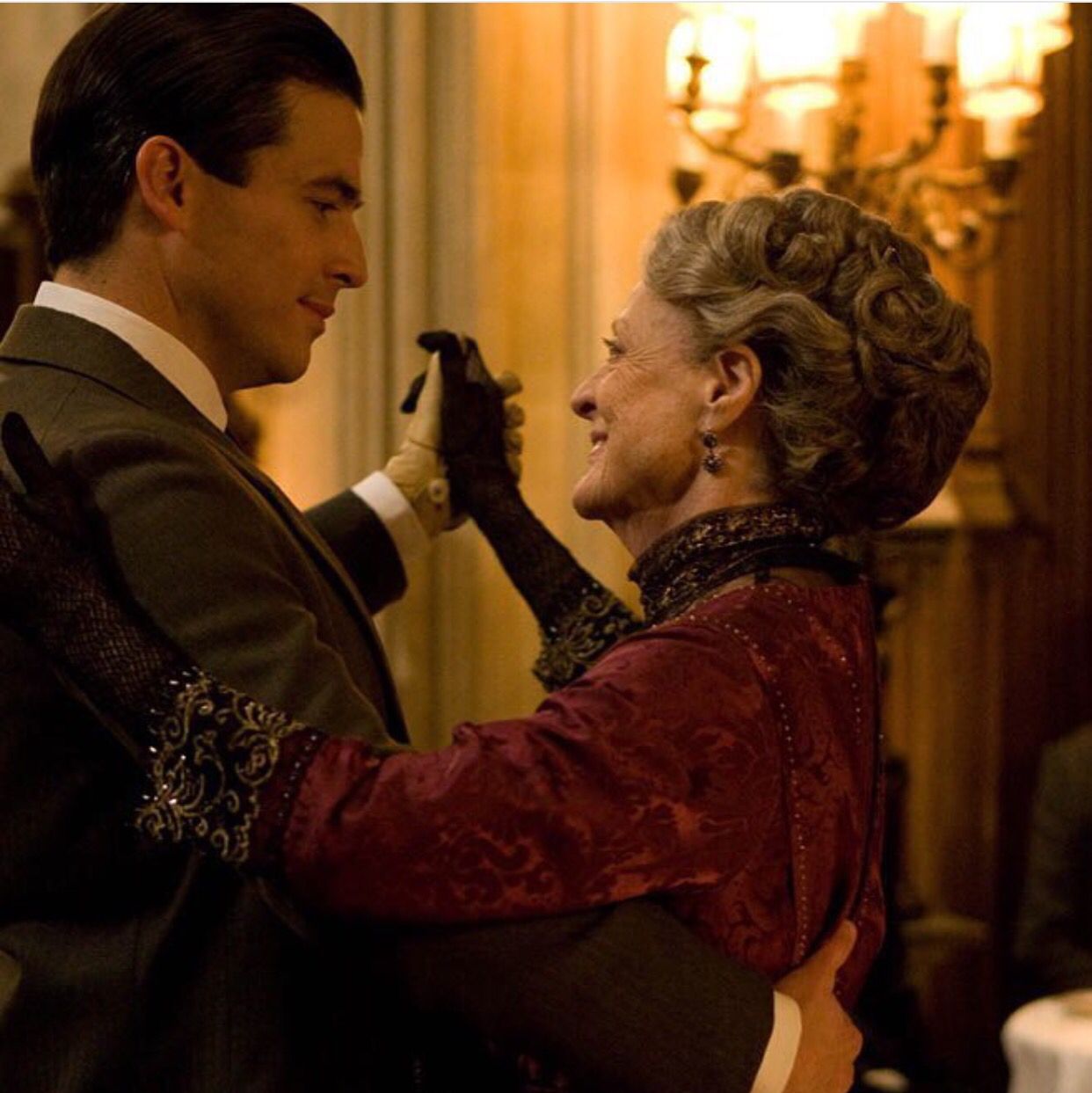
English aristocracy glories in this annual abjuration of pride and prejudice and on the truly republican instincts which permits, nay commands, a Duchess to dance with her cook or coachman, and encourages her daughters to waltz with a footman. Lady Salisbury, after performing a similar act, observed to a foreigner; “If you want to see true democracy, here it is.” This sentiment is not sincere, and does not deceive either the one who emits it or the recipients of these honors.
— Photo source, Pinterest

Lord Salisbury’s Annual Ball
Aristocracy Dancing with the Servants— Annual Abjuration of Pride

When the long table is surrounded by women glittering with the diamonds so profusely worn, when the magnificent gold and silver plate lends its massive splendor to the wealth of crystal, flowers and fruit, the lofty apartments in the white chaste light involuntarily recalls the gorgeous scenes painted by Veronese. The liveries worn by the twenty tall footmen of the noble are at once simple and tasteful—black coat, blue breeches and white waistcoat, and silken hose gartered with silver. The servants’ ball takes place in the winter dining-room, decorated with some flowers and greenery and provided with a small orchestra. Refreshments are adjoining apartment and a stand-up supper in the marble hall. 

English aristocracy glories in this annual abjuration of pride and prejudice and on the truly republican instincts which permits, nay commands, a Duchess to dance with her cook or coachman, and encourages her daughters to waltz with a footman. Lady Salisbury, after performing a similar act, observed to a foreigner; “If you want to see true democracy, here it is.” This sentiment is not sincere, and does not deceive either the one who emits it or the recipients of these honors. The upper and under servants preserve a stifled and embarrassed, almost an antagonistic, attitude as long as their superiors are present, and eye the quality with ill-concealed distrust. They flatten themselves stiffly against the wall while Lady Salisbury passes with her guests, and addresses a word to each before the dancing commences. 

There is more of feudal pomp than hearty equality in the custom. The French chef, to whom the visitor was rather ostentatiously introduced by the son of the house, admitted that he had been several years in the establishment, and liked England well enough. Then he suddenly and almost angrily exclaimed: “But I did my duty in 1870. I served in the Carabineers, and am not one of them.” He was evidently not won over by the mock favor, and rather resented it than otherwise, as an added display of superiority and a showing off of the number of retainers and generosity of employers. The upper servants themselves stand on their dignity, and rarely condescend to dance with the underlings, this being considered an infringement of domestic etiquette. 

The real enjoyment only begins after midnight, when the hostess retires with her friends. With the exception of the ladies’ maids, the women are absurdly and grotesquely attired—cotton velvet, red gloves, short muslins being common features. Each servant is authorized to issue two invitations. No control is placed on the duration of the revels, the housekeeper and head butler assuming the functions of Master of the Ceremonies: but the next morning all must return to their respective duties, and no trace remains of the festivities of the night, while the whole palatial establishment of Hatfield resumes the even, aristocratic tenor of its way. —London Correspondent, New York Sun, 1886


Etiquette Enthusiast, Maura J Graber, is the Site Editor for the Etiquipedia© Etiquette Encyclopedia

Below Stairs’ Etiquette

Many don’t realize that the pecking order and social hierarchy in the servants’ hall was just as rigid as that of that of the Lords and Ladies of the manor. There was a natural expectation that one’s manners would be commensurate with one’s position in service.

The Case of Muggins, Who Wished She Were Dead

The terrors of etiquette below stairs! There once strayed into employ a housemaid whose career hitherto had been confined to lodging houses. Upstairs she always looked frightened, and her face had a great attraction for “smuts,” but she was very willing and very competent. “It is not for me to ask madam to send Muggins away, but the rest of us will go if Muggins stays. I don't know where she has lived out before, but she drinks out of her saucer and does not even know that we expect her to be down in our sitting room at half past 4:00, dressed in her black and ready to pour out the servants tea.” 

Of course I gave Muggins notice, recognizing that the lodging house was her proper sphere, and in the month that followed, I knew she suffered martyrdom. She used to wipe her eyes stealthily, and as she was not proud, I showed her some sympathy. “They ain't nice to me downstairs like you are, ma’am,” she sobbed, “though I'm doing my best. Cook says she won’t wipe up the dishes for the likes of me.” “Never mind, Muggins. You’ll be going soon, and, after all, you have learned a good deal here.” I consoled her. “I wish,” said Muggins. “I was dead.” —Mrs. John Lane, Harper’s Bazar, 1905


Etiquette Enthusiast, Maura J Graber, is the Site Editor for the Etiquipedia© Etiquette Encyclopedia

Monday, June 8, 2020

Conduct for Keeping Good Servants

The proper costumes for a Chambermaid and a Lady’s Maid... It is not just a servant whose conduct needs to be superior. It is important for the mistress of the home to model exemplary behavior to those she employs. – “Let your servant observe in your conduct just the qualities and virtues that you would desire they should possess and practice toward you. Be liberal with food. Housework is a very hungry calling, so don’t grudge your servants a share of the various dainties you press upon your family and visitors.”


How to Secure Good Servants 

Just try to remember that servants have feelings as well as yourself. When their work is done, give them a word of praise, so that they see that you appreciate  their efforts, and see to i
t that they have time to do their mending and to get out a little for a change of scene. Borne mistresses do not realize how dreary the common round of a domestic servant is. Let your servant observe in your conduct just the qualities and virtues that you would desire they should possess and practice toward you. 

Be liberal with food. Housework is a very hungry calling, so don't grudge your servants a share of the various dainties you press upon your family and visitors. Don’t expect your servant to execute half a dozen errands for you when she is out for her own pleasure. She doesn't like it; neither does her sweetheart. Remember when you engage a maid, that you are making a contract. State clearly the duties which you expect her to perform and in this way avoid contention arising afterward from misunderstandings. 

Show every kindness to your servant, but from the first be firm in correcting things you dislike, then she will see that you are mistress and not attempt that undue liberty which later on is so difficult to check. Give your servant a reasonable stated time “out,” and if you will help her to start out, in good time you will find that she will more readily come in on time. If it is your fault that she is late going out, it is hardly fair to blame her for being late in returning.

Never accept notice from a servant in a huff nor give one notice when you are angry with her. A mistress is often unjust when she is angry. Allow yourself sufficient time to think the matter over calmly before deciding whether notice is to be given or not. A few kind words and a bit of good advice from a mistress, will go ten times further toward making a good maid, than all the grumbling in the world. Remember a servant is not a machine, but that she is a human being with varying moods and failings like her mistress. – San Diego Union, 1910


Etiquette Enthusiast, Maura J Graber, is the Site Editor for the Etiquipedia© Etiquette Encyclopedia
Saturday, April 1, 2017

Etiquette and Swell Servants

 There is no doubt that the English nobility, have a way of employing servants which offers grand opportunities to rogues. 

The Swell Servants in England

''Although all hopes of recovering the jewels of Lady Dudley has vanished—their real value was £30,000 there is still a good deal of speculation about their disappearance, and a pretty general belief that some of His Lordship's servants must have been at least an accomplice in the transaction. It is difficult to believe that a box of such value entrusted to the care of servants could have disappeared in a railway station from unwilling hands, or that an outside thief could have known so much about the movements of the family as to have been on the spot at the precise moment. However this may be, there is no doubt that the English nobility, have a way of employing servants which offers grand opportunities to rogues.

In most cases the outside of the servants is the chief thing. If the coachman or footman is good-looking in his livery and of the required dimensions, his character is not inquired into. A well known Duke recently advertised for a footman of exactly five feet eleven and a half inches, whose sole business it would be to stand at the back of his coach beside another of like station. A youth, now in the employ of a lady of my acquaintance, applied for the advertised position, and says that his character was not asked for— he was taken into the servants' hall , and measured, and dismissed for lacking the half inch demanded by the Duke.

There is a passion tor tallness in servants, and of one noble family, at least, it is a rule to admit no man servant under six feet. There are six of these eminent personages in their fine mansions. The English servants are good-looking, neat and constitutional flunkeys and flunkeyesses. They are very shrewd, and have their class rules as well defined as any trade union. Downing street does not possess more pigeon-holes and red tape than a mansion of the wealthy. 

An upper house-maid would die at the stake before she would do a bit of work that came within the province of the under house-maid. A swell butler would throw up his position in the face of the Lord Chancellor himself if he were expected to black his own boots. There are many boys of thirteen kept in brass buttons, and in many an instance the sole duty of this boy is to brush the clothes and boots of the butler, the master of the house having his own separate valet.

Of course, it is not pride which has made the inflexible laws of etiquette among these servants, which they refuse to step out of an official groove or function. It is the determination of their class to preserve the conventional number of the servants required for any first-class household. They particularly dislike servants from other countries, especially the Germans, because if well paid, and well treated, they will do anything requested of them."— London Correspondent of the Cincinnati Commercial, 1875


Etiquette Enthusiast, Maura J Graber, is the Site Editor for the Etiquipedia© Etiquette Encyclopedia

Friday, October 30, 2015

Etiquette and Treatment of Servants

Policy, as well as good breeding, inculcates the necessity of gentle treatment and courteous behavior to servants... though your parents may not want you to marry one of them.
There is no surer sign of ill breeding and ill feeling than the rude treatment of dependents. The obligation of civility to servants should be inculcated especially upon the young American, who ought to learn at the earliest period that the accidental relation of advantage of position, which is ever alternating in a country free from prescriptive right, gives no title to a haughty demeanor and a domineering conduct.

The recognition of the mutual obligation of master and man, and mistress and maid, is a certain sign of the true gentleman and lady, who will never exact from those temporarily placed in subjection to them the civility they are unwilling to bestow. The “thank you,” “please,” and other courteous expressions of a kindly consideration of the obligation of the employer to the employed, will be freely proffered by all who are fully conscious of their social duties and willing to acknowledge them.

Policy, as well as good breeding, inculcates the necessity of gentle treatment and courteous behavior to servants, who will seldom fail to respond with a more zealous service and a readier obedience to exactions and commands rendered less harsh and domineering by a soft word and a subdued mastery. 
–From How to Behave and How to Amuse, by G. H. Sandison, 1895

Etiquette Enthusiast, Maura J. Graber is the Site Moderator and Editor for Etiquipedia© Etiquette Encyclopedia