Showing posts with label Vintage Etiquette for Teenagers. Show all posts

Wednesday, June 11, 2014

Vintage 1960's Etiquette for Teen Girls

From 1963's "The Seventeen Magazine Book of Etiquette and Entertaining"

She is attractive physically -- clean, scrubbed, fresh, well-groomed, neatly put together. The physical attraction comes from good maintenance of the human machinery, maintenance to keep it in tune and cycling properly.


As a teen you can build better understanding in many ways right in your own corner of the world.


Here are a few ways that mark you as nice clear through:

A few ways that mark you as nice clear through? Super fun sweaters like these maybe!

1. You don't exclude people from your group merely because


  • they are newcomers and don't belong
  • they come from a different social background, whether its higher or lower
  • they go to private school and you go to public school -- or the reverse
  • their parents are separated or divorced
  • they come from a different social background, whether its higher or lower
  • they go to private school and you go to public school -- or the reverse
  • their parents are separated or divorced 
  • their speech or their clothes are different 
  • their race or religion is different from yours    
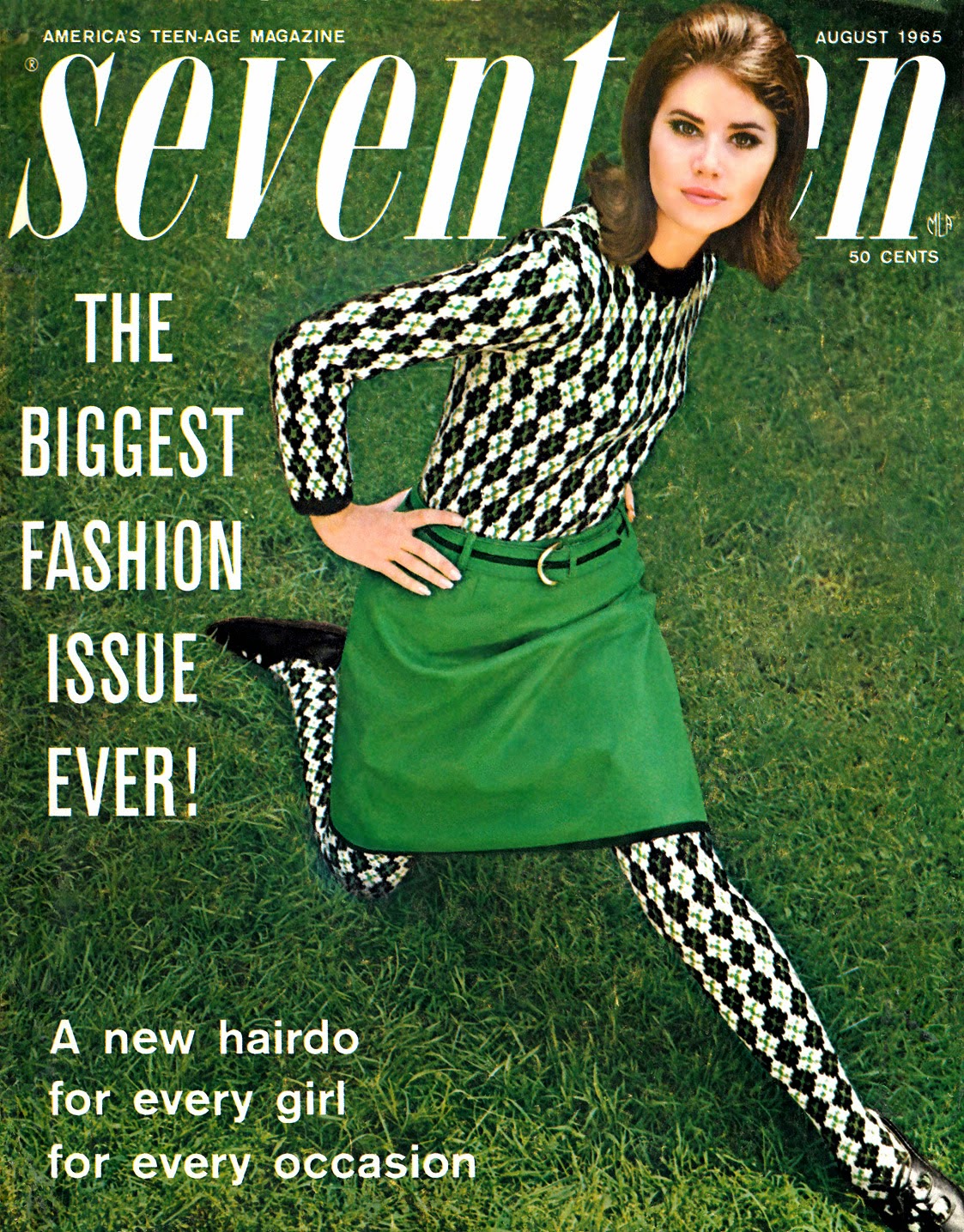
Super neat-o green, black and white ensemble for  1965

2. You don't make other people's loyalties a subject for fun by

telling dialect stories. Let the Scots tell the jokes about Scottish thrift, for example; then it's funny. (The great comedians turn the laughs on themselves.) It's not so funny to a Scot when someone of another group pokes fun at his group's supposed eccentricities or shortcomings.

telling hilarious tales about two clergymen -- or deacons, nuns, rabbinical students or anyone -- who belong to a faith other than yours. If you honestly think the story is choice and is not disrespectful, switch it to your own religion.
  
If your shoes don't match your jacket or tablecloth, glue some fabric on to make them match.

3. You don't make a broad statement condemning any group of humans as a group

To be avoided are also statements, such as the following, that would reflect on a group or profession: "She's not like most . . ." "He's very nice, really, for a . . ." "Some of my best friends are . . ." "Isn't that just like a . . ."

4. You use the honorable term for members of a race or religion that's foreign to you -- 


rather than a slang term or an abbreviation. If you are a Mixo-Lydian member of the Druids faith and wish to refer to yourself as a Mixo, a tree-kook or whatever, go right ahead; at least the lack of respect hurts only your own group. (And you might become pretty unpopular with your own group, come to think of it.)

These four points about the good manners that make nice people stand out in a crowd lead us directly to a bigger subject, because nice people are also very nice to have around.


Let us also consider some of the plain but important points about nice people -- who are

Nice to have near


To describe the matter candidly, they are attractive physically -- clean, scrubbed, fresh, well-groomed, neatly put together. You can be fairly sure the physical attraction comes from good maintenance of the human machinery, maintenance to keep it in tune and cycling properly.

Monday, June 9, 2014

Vintage Etiquette for 'Tween or Teen Boys

From Another Vintage Book on the Etiquipedia© Library Shelves 
"Some Kind Thoughts" from Stand Up, Shake Hands, Say"How do you do?" Vintage etiquette advice for teen boys.

Some Kind Thoughts


When you are around handicapped people, the hardest but most important thing is to treat them like everyone else. Don't change the way you normally talk or act. In other words; be yourself as much as you can. Also, keep these facts in mind:

Blind people are not deaf, so you don't have to talk louder. When you're talking to a blind person, use his name as often as possible, because that is his only way of knowing you're addressing him.  When you first meet a blind person, even if he knows you well, identify yourself: Say, "Hi, I'm Jim Jones." or "Hello, Mrs. Smith — Margy Brown." And always tell a blind person what you are offering him: "Here's your sandwich, Bill." or "This is the iced tea you wanted, Mrs. Johnson."

Deaf people prefer to read lips or to follow their own methods of hearing you; so don't raise your voice around them. Always keep your head turned toward a deaf person when you are speaking, although you don't have to keep your eyes focused on him. Never point out to a newcomer that someone is deaf — it doesn't help anyone or anything.
“You're off to a pal's for a while. You're going to buy some bicycle tape. It's important to let your parents know -- they relax when they're sure of what you're up to.” 

Say good morning — or at least "Hi" to each member of your family when you first see him in the morning. Answer when your spoken to — Say, "Yes, mother."; "No, mother."; "Yes, dad."; "No, dad." instead of Yah, Unhuh, Nope, and Naw, which are noises, not words.

Say hello to your father when he comes home from work — Just a simple, "Hi, dad" as he takes off his coat reminds him of what he's working for —  you, mostly.

Let your family know when you come and go — You're home and all's well. You're off to a pal's for a while. You're going to buy some bicycle tape. It's important to let your parents know — they relax when they're sure of what you're up to. The more cooperative you are about your plans, the more cooperative they'll be.

Replace what you borrow — and believe it or not, others will do the same for you!

Say "Sorry" when you bump into someone, step on a toe, or get in someone's way — and that goes for young and old, male and female victims.

Stand up when your mother comes into a room and offer her a chair if she's going to sit down. Hold her chair for her when she comes to the dining room table. Then you'll remember to do this for other women.

Open doors for your mother and sisters — for all women, as a matter of fact, and let them go ahead of you.

Carry packages for your mother or any other woman you're walking with.  This includes sisters.

Say "Thank you" and "Please" when you ask for something or get it. These may have been your first words of good manners, but no matter how tall in the saddle you get, they're still your most powerful weapons.

Pay your debts, even if it's only a dime you owe your little sister. It's the only way to avoid becoming a dead beat, a beggar, or a bad risk. If you're broke, offer to do an errand or a chore; then pay what you owe on the spot.

Observe others' privacy — and you'll get the privacy you want for your own room, possessions, mail, books, or collections.

When you share a room, do your share of housekeeping — particularly in the bathroom. Hang up towels, put your own stuff where it belongs, and clean the bathtub before you leave.

Say goodnight to your parents when you're ready to go to bed. You don't believe in ghosts anymore, so why disappear like one yourself?


 Source ~ Marjabelle Young Stewart’s and Ann Buchwald's 1969, 
Stand up, Shake hands, Say "How Do You Do" ~ What boys need to know about today's manners


Etiquette Enthusiast, Maura J Graber, is the Site Editor for the Etiquipedia©  Etiquette Encyclopedia