Showing posts with label San Francisco Etiquette History. Show all posts

Friday, January 2, 2026

Proposal Etiquette and the Sexes

The girl might want the man in the case to propose, according to the etiquette of the day she cannot suggest it without fearing to be called forward. In such an instance these two persons, through mutual timidity, fail to arrive at a successful marriage.

Why Shouldn't Women Propose?
 WHAT DO YOU SAY ABOUT IT?

Since the dim ages of antiquity women have had it bred into them that they must sit with folded hands until the “right man” comes along. For years it was considered a disgrace to be a spinster.. The woman who was fastidious enough to wait for the man she really could love and who never met that, man was popularly supposed to be a woman whom all men had refused. Consequently thousands upon thousands of women accepted the first man who. proposed, for fear of being called “old maids.” “Hobson's Choice,” the delightful character comedy which comes, to the Cort Theater next Monday evening, deals with the leap year idea of women proposing. The heroine “gets” the man of her choice, and the result is both happiness and prosperity for both of them.

The coming of “Hobson's Choice,” the discussions that it is sure to bring about, coupled with the fact that 1916 is Leap Year, have suggested to. The Call the idea of finding out just what its readers think about the propriety of “lassie asking lad.”Accordingly it solicits short essays on the subject, such articles not to be over 200 words in length. And it has purchased a box as first prize, a loge as second prize and, twenty pairs of choice orchestra seats to “Hobson's Choice” at the Cort Theater, which will be given to those who, in the judgment of The Call, have sent in the best and cleverest answers to the question, “Why shouldn't women propose?”

The answers should be sent immediately, for some of the best of them will be printed in The Call. The contest will close next Thursday at 12 o'clock noon, and articles received after that time cannot be entered in the contest. Viola Roach, the noted English actress, who is the leading woman of “Hobson's Choice,” and who does the proposing in the play, has some convictions of her own on the subject.

“There is no reason why men should have a monopoly on proposing,” says she. “Many men are as timid as women in, matters of the heart, especially in these days of the advanced woman. A man may meet an attractive girl, well poised, self-possessed, earning her own living, independent in every way, and while she may show a preference. for him he may fear to risk a valued friendship if he received a negative answer when he popped the question. And while the girl in the case might want the man in the case to propose, according to the etiquette of the day she cannot suggest it without fearing to be called forward. In such an instance these two persons, through mutual timidity, fail to arrive at a successful marriage.

“Women should feel thankful that tradition is being overthrown in the matter of proposals. A woman should be advanced enough in these days to propose, or rather suggest, a possible marriage to a man when she feels that in marriage lies the happiness of both of them. I think there would be fewer failures if the job of proposing were left in woman's hands. “Right now is the time to start, You won't have Leap Year for some time, so make hay while the sun shines, girls.”– San Francisco Call, 1916


 🍽️Etiquette Enthusiast, Maura J. Graber of The RSVP Institute of Etiquette, is the Site Editor of the Etiquipedia© Etiquette Encyclopedia  

Tuesday, December 30, 2025

The Waitresses’ Ball of 1908

Miss Bessie Blodgett (upper), Miss Cora Schade (center) and Miss Louise La Rue, three girls of the smart set who are lending a helping hand to waitresses in ball plans.

SAILOR LAD FOR EVERY LADY FAIR

Jolly Tars Accept With Delight Invitation to Waitresses' Ball

A sailor lad for every lady fair at the waitresses’ ball. That is the optimistic prospect confronting the young women who have the affair in charge for tomorrow night at Walton’s pavilion. Graciously was the invitation extended by the waitresses to the men of the fleet now lying in the bay, and graciously has it been accepted. The correspondence leading to this happy consummation was properly formal and none of the niceties of naval etiquette were forgotten.

Serious looking documents stamped with the seal of Uncle Sam’s authority were received yesterday from all the commanders. Captain Nicholson of the Nebraska wrote the only letter of regret, stating that his jolly tars would not be able to attend the festivities by reason of the untimely departure of the Nebraska from the harbor Saturday morning. He added his personal thanks for the courtesy exhibited in the invitation, and so welcome was this epistle that it will be carefully placed in the archives of the waitresses’ union.

Miss Maud Younger, a leader in the local smart set and an honorary member of the union, is chairman of the committee on arrangements. Her assistants number many of the fairest young women in the city, among others Miss Bessie Blodgett, Miss Bertha Schaffer, Miss Sadie Brown, Miss Violet Ennis, Miss Lena Ruddell Miss Josie Hobb, Miss Theresa Simmons and Miss Cora Schade. And to make the ball truly feminine Miss Louise La Rue will act as floor manager..

Aside from the social side of the event, the waitresses have another incentive to make the ball a success. During last winter their union created a sick benefit fund and the proceeds of the dance will be turned into that fund. – San Francisco Call, 1908


 🍽️Etiquette Enthusiast, Maura J. Graber of The RSVP Institute of Etiquette, is the Site Editor of the Etiquipedia© Etiquette Encyclopedia  

Tuesday, November 12, 2024

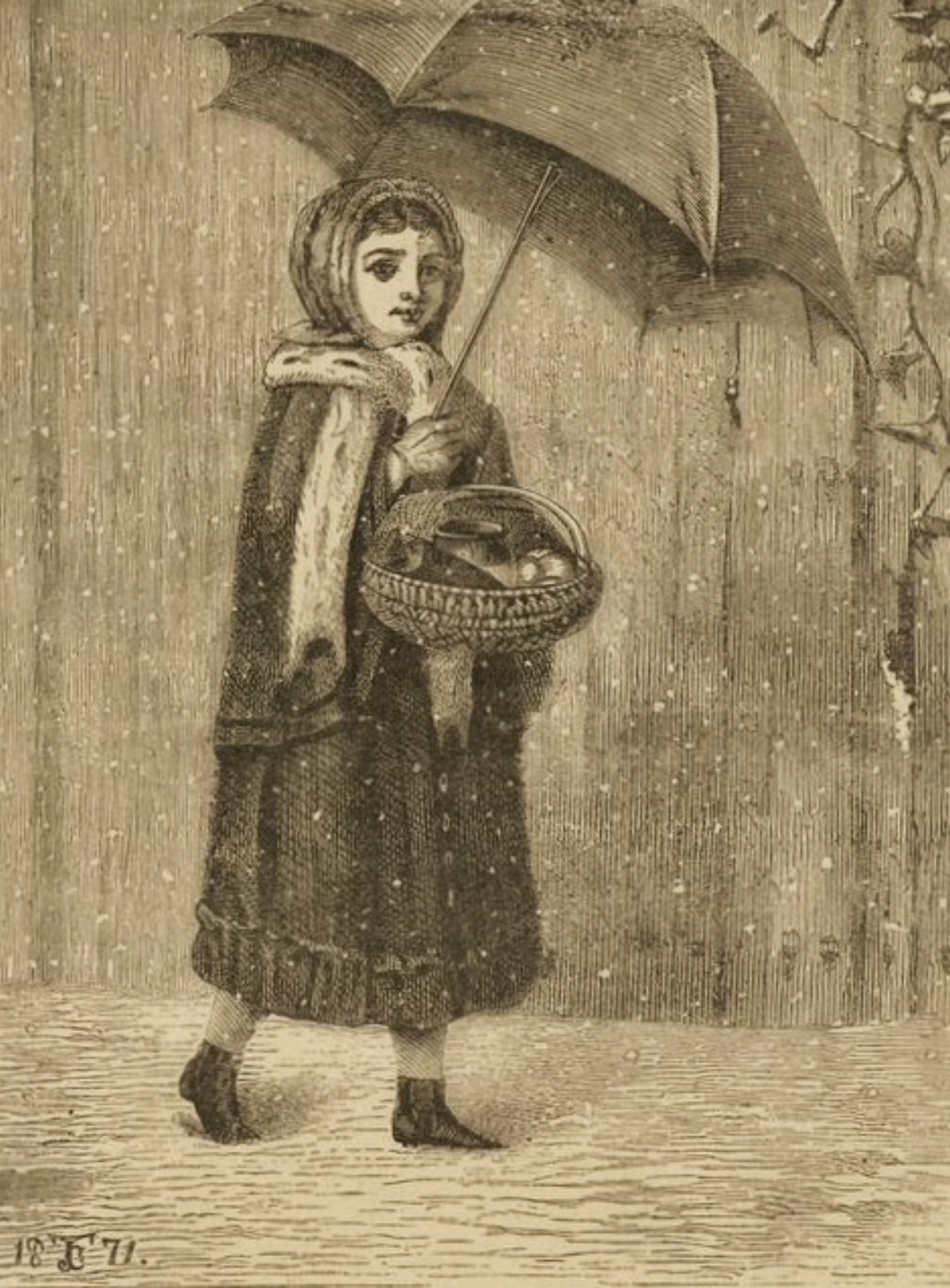
A Need for Umbrella Etiquette

“Offensive possibly,” yet very helpful! – “The etiquette of the umbrella seems comparatively unknown to humanity at large. Perhaps there isn't any written etiquette on the subject, and that's the reason that certain persons passing each other raise their umbrellas high above their heads at the same moment, lower them again and then stand and stare foolishly at each other until one or the other has presence of mind to flit by, carrying his reversed like a banner.”

An Offensive Weapon


On every rainy day the umbrella shows of what it is capable in careless hands. Few know how to carry this useful article in a manner conducive to peace. Why is it that the big, tall man who is passing one on the street draws his umbrella down as close to his head as possible and allows one, if she is a tiny little woman, to stand on her toes and stretch her arm to the breaking point in order to pass the dripping article he carries over him?

Why is it, one is also impelled to ask, that a man in a car unhesitatingly rests his umbrella against the knee of the feminine creature next to him, or so poises it that brown drops from its surface fall into the shoe of his neighbor?

The etiquette of the umbrella seems comparatively unknown to humanity at large. Perhaps there isn't any written etiquette on the subject, and that's the reason that certain persons passing each other raise their umbrellas high above their heads at the same moment, lower them again and then stand and stare foolishly at each other until one or the other has presence of mind to flit by, carrying his reversed like a banner.

An umbrella in the hands of the absent-minded is really a dangerous weapon; at least that is what one young woman recently declared; but then she had just had an unhappy experience, for a careless mortal standing beside her under an awning had closed his with so much force that her new rainy-day suit, her gray hat and fluffy white silk collar, were literally besprinkled and would have to be renovated by a cleaner.

Perhaps someday a practical American will open a little school and give lessons in umbrella carrying, opening and shutting. Then we'll feel much safer when the raindrops fall.– South San Francisco Enterprise, February 1901


🍽Etiquette Enthusiast, Maura J. Graber, is the Site Editor for the Etiquipedia© Etiquette Encyclopedia
Friday, October 20, 2023

A 1951 Plea to Mend Manners

Early disposable picnic and camping utensils were wisely made from wood, not plastic. Wood remains a smart, natural choice over plastic, for the picnicking and camping world’s disposable dining implements, even 70 years after this article was written.
A resolution which many Californians might make, if the comments of the custodians of our state and national parks and of our highway authorities are any guide, is to mend their outdoor manners.

As our seashore, mountain and forest vacation areas fill up with some of the vastly augmented population which has poured into California during the past decade, it becomes more than ever necessary to pick up bottles, cans, paper and other litter and “leave a clean camp” for the next fellow.

At recent meetings where the 1951 vacation season was reviewed, speakers reported that, if anything, worse manners instead of better were on display during the past year. All agreed that unless manners are mended use of the park and recreation areas will become more disagreeable, may have to be curtailed.

Some authorities go so far as to wash their hands of the present generation and say the only hope of improvement is to inculcate good outdoor manners in the rising generation. But whether anything better can be expected from youngsters whose parents set them a horrible example in scattering picnic lunch and camp refuse far and wide, is debatable.

A little consideration and almost negligible effort is all that is required to do your bit in this regard. It is the decent, sporting thing to do and it is essential in a crowded world. Let's all review our conduct and if necessary resolve to mend our outdoor manners in 1952. -Regional News Service, San Francisco, December, 1951


🍽Etiquette Enthusiast, Maura J. Graber, is the Site Editor for the Etiquipedia© Etiquette Encyclopedia

Wednesday, June 15, 2022

Gilded Age San Francisco Social Scene

Ladies’ lunches Mrs. Wallace considers the least alluring form of social entertainment, although she owns that San Francisco society is composed almost entirely of ladies. The men she considers are to blame for this.


Questions of Etiquette for Both Sexes 
Brightly Considered 
From a San Francisco Standpoint

San Francisco society is known in the Eastern States as peculiarly pleasant, but also as unique of its kind. Why is this? Eastern visitors remark upon the absence of rigid form and the free-and-easy plan of entertainment here as "delightful Californian hospitality." In California, they say, invitations hardly require an answer, nobody thinks of paying duty calls, nor is there any strict qualification required to obtain an entree to any particular circle. Above all, they declare, there seems to be no idea of reciprocity in entertainment. 

These floating charges are of serious moment to San Francisco society, and “The Call” has collected some representative ideas regarding them. They would seem to be somewhat borne out by the prevalent local belief that the role of a San Francisco hostess is a difficult one to play. The question is still an open one, but at present the general indictment seems to lie against the San Francisco men. The men appear to largely leave their social duties to the ladies and to think that a mere appearance anywhere is a favor on their part. This, if true, is a heavy indictment, however pleasantly it may be touched upon by the ladies whose views are given below.

Mrs. Judge Wallace is of the opinion that social duties are, as a whole, extremely pleasant. Naturally some forms of entertainment are more enjoyable than others. In her opinion balls and at homes, with dancing, varied by music, yield the most entertainment to old and young alike. The young enjoy taking part and the old enjoy looking on; while the strain upon the hostess is very slight indeed. 

A dinner party is, in her estimation, a more serious affair. Given guests who are intellectual enough to enjoy conversation as a fine art in addition to the banquet, a dinner is the highest form of entertainment, but even then the duty of selecting and pairing off the right people is a serious one for the hostess.

Ladies’ lunches Mrs. Wallace considers the least alluring form of social entertainment, although she owns that San Francisco society is composed almost entirely of ladies. The men she considers are to blame for this.

What more pretty and informal than an afternoon tea? In London and New York, the male element is largely represented at this form of amusement. Mrs. Wallace considers it a pity that San Francisco men, when their day’s duties are over, instead of going to the clubs, do not take an occasional cup of tea with lady friends. In the same way she regrets, for the sake of society, that the married men do not help more to receive at home, or visit with their wives and daughters instead of leaving to the latter nearly all the social duties.

Another prominent society lady smiled at the idea of social duties in San Francisco being fatiguing. “A leader in society,” she observed, “means one who gives up her entire time and energies to social duties. She must take the initiative in balls, dinners and every form of entertainment that becomes the fashion.” In London or New York, this is pleasant, but very hard work. At present in San Francisco the post of a social leader is little more than a sinecure.

“Ten or twelve years ago,” she continued, “when Mrs. Gwin and Mrs. McMullin kept open house, we were much more gay, and, I believe, that eight or ten years hence, when San Francisco has grown more, we shall be gay again. One reason for our present repose is that we Californians are great travelers; we think nothing of going to London or New York for our social diversions. I consider dinners decidedly the pleasantest form of entertainment.” she said.

“It is a compliment to ask a guest to your table. A ball means a crowd, and a guest who accepts an invitation to a ball does me a favor in helping to make up my number. Teas are very enjoyable, and at our Saturday teas we San Francisco hostesses generally have a very fair number of gentlemen. The reason our men do not visit more is that they work harder here than in Europe and the East. They have longer hours and take fewer vacations.”

One of San Francisco’s leaders, who was busy issuing invitations to a large tea, found time to remark: “It seems to me that people are too ready to accept the pleasures and utterly neglect the duties of society. I mean they have no idea of reciprocity. A guest owes something to his hostess, if it is only a ‘duty’ dance with the girl she is chaperoning the next time he meets her at a ball. Here in California these duties, that elsewhere are considered imperative, are rather neglected.” – San Francisco Call, 1892


🍽Etiquette Enthusiast, Maura J. Graber, is the Site Editor for the Etiquipedia© Etiquette Encyclopedia

Thursday, July 23, 2020

Etiquette, Discretion and Preservation

“That to eat with a knife is considered a crime against society, though no discoverable reason exists for the opinion. Ethically, a knife is as good as a fork. Essentially, no less polite. Possibly not. But less safe...The danger of cutting the mouth with a knife is reason enough for its general disfavor. A mere ancestral discretion and self-preservation may be at the root of all manners.” — A rare, hand-crafted, early to mid-19th century, “pea knife.” This blunt and rounded-blade knife, has a steel “bar” attached, so that peas and other foods would not fall off of the other side of the blade, when lifting one’s foods from the plate to the mouth.


In San Francisco, one still feels rather foolish when the Floods’ butler announces Mrs. Buchanan Broadway, just as they do on the stage. One remembers fearful attempts at easy grace of stage guests announced. It is necessary to avoid their elaborations. To remain natural and unaffected. One must seem to have been announced before. If one knows an academic interest in manners, the ceremony is interesting. To become absurd at informal affairs, where, for no other reason in the world than to amuse the footman, one is announced for an intimate call. It’s a question of discrimination. When to and when not to announce.

There was the case of Mrs. Blank, who didn’t know whether one of the guests at her bridge tea last week was really a guest, or a thief in disguise. She was perfectly strange. Entered alone and greeted the hostess, to give no hint of her identity. Mrs. Blank was dismayed. Until it was found she was just “Mrs. D.,” known only, it happened, through cards “left.” A circumstance retold to prove a point. The reason and right of announcing guests on occasions. A footman to properly repeat, “Mrs. D,” would have placed her at once for Mrs. Blank. It was some situation of the sort, no doubt, that first suggested the custom. Manners are sometimes less mad than they seem. Even the custom of shaking hands high under the chin was traced to a royal rheumatism or some aristocratic affection in England.

All of which is provoked by a recent arraignment of manners. In an essay of ridicule, Mr. Francis Rolt-Wheeler, Ph.D., has written of their insignificance and general senselessness at length. He declares there is nothing morally binding in etiquette. That to eat with a knife is considered a crime against society, though no discoverable reason exists for the opinion. Ethically, a knife is as good as a fork. Essentially, no less polite. Possibly not. But less safe. Mr. Francis Rolt-Wheeler, Ph.D., must admit it is that. The danger of cutting the mouth with a knife is reason enough for its general disfavor. A mere ancestral discretion and self-preservation may be at the root of all manners. — The Smart Set, 1912


Etiquette Enthusiast, Maura J Graber, is the Site Editor for the Etiquipedia© Etiquette Encyclopedia

Saturday, April 18, 2020

Early Frisco Cocktail Route Etiquette

It is not barroom etiquette to lounge, any more than it is to order drinks without first depositing your money on the polished mahogany ... Barroom etiquette is a strong influence; so strong that none seems too poor to do it reverence. That is why when one of a party of six, stands for the drinks, the other five make it a point of honor to reciprocate on the spot. That is why men drink before dinner, drink hard spirits that leave them with little or no palate for the finer flavors of wine. 

It is, we believe, the famous historian, Froude, who, when asked what was the best thing he had discovered in California, answered, “the cocktail.” This seductive admixture of spirits, bitters, oil of lime and ice was invented and named in California. San Francisco was the first to have the cocktail, the first to name its line of popular saloons “the cocktail route,” and San Francisco has a lot to answer for. Out of a simple, fascinating drink we have made what may be termed without extravagance a national vice—the vice of drinking before, instead, or with meals; the pernicious habit of “walking the line” from saloon to saloon and with artificial sociability working up an artificial habit—by which term, we mean the drinking of mixed and unmixed spirits before meals—bids fair to demoralize the backbone and stomach of the country. 
The cocktail route is a greater menace to San Francisco than to Chinatown. For it works its evil among the best classes in the community. Business men, professional men, gamblers and idlers are alike the victims of its spell. In a cafe or in a club men gather, and, incidentally drink. But the drinking is incidental, in a club or cafe the members and patrons are seated, they talk, they smoke or drink as little or as much as they desire —but they are not there for the sole purpose of drinking, and the “reciprocity” crime of everybody’s treating is not thought of. In a saloon, men flock only to drink. The waistcoat of the average man about town is prematurely shiny from rubbing against the bar rail. You have no business standing up against a bar unless you keep the barkeeper and the cash register busy. Drinks are handed out as any other merchandise; a bar will accommodate only a limited number of persons, and lounging at it is not encouraged. It is not barroom etiquette to lounge, any more than it is to order drinks without first depositing your money on the polished mahogany. 
Barroom etiquette is a strong influence; so strong that none seems too poor to do it reverence. That is why when one of a party of six, stands for the drinks, the other five make it a point of honor to reciprocate on the spot. That is why men drink before dinner, drink hard spirits that leave them with little or no palate for the finer flavors of wine. That is why there is so much drunkenness. We do not refer to the occasional debauch, but to the regular afternoon jag of the genteel kind. Day in and day out it is the same old round of liquor along the cocktail route. Some men stand it and pickle to a rosy old age; others get to love drink for drink’s sake alone and flop by the wayside. We are not talking morality or temperance, but just plain common sense. The American, the San Franciscan especially, is the most foolish, inartistic drinker on earth. He does not know how to use the liquid delights of life. He is a hog. Here we are living in a country of wine; year by year our vintages have improved until already California can take her place among the famous wine producing places of the world—and how many Californians know the first thing about good wine? Too few. Too few. We drink whisky, whisky, whisky, whisky, and at the wrong time. And all on account of the cocktail route.—San Francisco News Letter, 1900


Etiquette Enthusiast, Maura J Graber, is the Site Editor for the Etiquipedia©️ Etiquette Encyclopedia 

Monday, November 26, 2018

Gilded Age San Francisco Etiquette

It is etiquette to acknowledge all invitations to functions. If a lady sends out an invitation to attend a reception, it would be proper to acknowledge the same and advise the hostess whether the party invited will be present. 

Answer to Query by a Call Reader 


For E. P. T., of San Francisco: If people that you are acquainted with meet a loss by death, and you think anything of such people, it would be proper for you to write a letter of condolence. You should confine yourself to a few words of sympathy. If the life of the person just gone has been a beautiful one, some allusion to that will be proper, but do not offer anything that would seem like preaching a sermon or deducting a moral.

And... P. P. C. cards are not sent out when the party leaves the home for a short visit in the country. Such are used only when the person contemplates an absence from home for a long time, such as a tour of continental Europe or a visit to some other State, which may be of six months' duration or even longer. It is the duty of the person intending to absent himself or herself for a prolonged period, to make a call of adieu on friends, and if such are not at home then the visitor leaves a pour prendre congé card. – 1898


For J. H. of San Francisco:  It is etiquette to acknowledge all invitations to functions. If a lady sends out an invitation to attend a reception, it would be proper to acknowledge the same and advise the hostess whether the party invited will be present, so as to give an opportunity to arrange for the number who will attend. – San Francisco Call, 1901

Etiquette Enthusiast, Maura J Graber, is the Site Editor for the Etiquipedia© Etiquette Encyclopedia
Friday, December 22, 2017

Ferry Police Patrolled Manners

The Palace Hotel in San Francisco, 1880 – “The hotel runners solicited passengers with a Beau Brummel politeness, and passengers were much impressed with their first experience with San Francisco manners.” 


Ferry Boat Police Keeping Manners in Check

So great has been the rivalry between the different hotels of this city during, and since the rush, caused by low rates, that several quarrels have taken place on the ferry boats over passengers. This became such a nuisance that the passengers protested. Yesterday everything was quiet. The hotel runners solicited passengers with a Beau Brummel politeness, and passengers were much impressed with their first experience with San Francisco manners. The cause was apparent, as a big policeman was seen patroling the decks. He had been placed there at the request of the railway company to preserve order. It is a point well taken; as he will be eminently useful in suppressing mashers, as well as quarrelsome hotel runners. – The Daily Alta, 1886


Etiquette Enthusiast, Maura J. Graber, is the Site Editor for the Etiquipedia© Etiquette Encyclopedia