Showing posts with label Stephen Hanson. Show all posts

Tuesday, January 30, 2024

Our Best in Show Winner for 2023 – Amateur Category

For our Third Annual Etiquipedia International Place Setting Competition, Stephen Hanson is again our Best in Show Winner for the Amateur Community category. He won in this category in 2022.    
His theme choice options for the 2023 contest were: A period 1953 place setting in honor of the Coronation of Queen Elizabeth II; A 1930's nursery tea party place setting for young Princesses Elizabeth and Margaret; A mid-century modern, post-World War II tea place setting (for one or two); A complete place setting (for 2 or more) from any period in the life of King Charles III. 
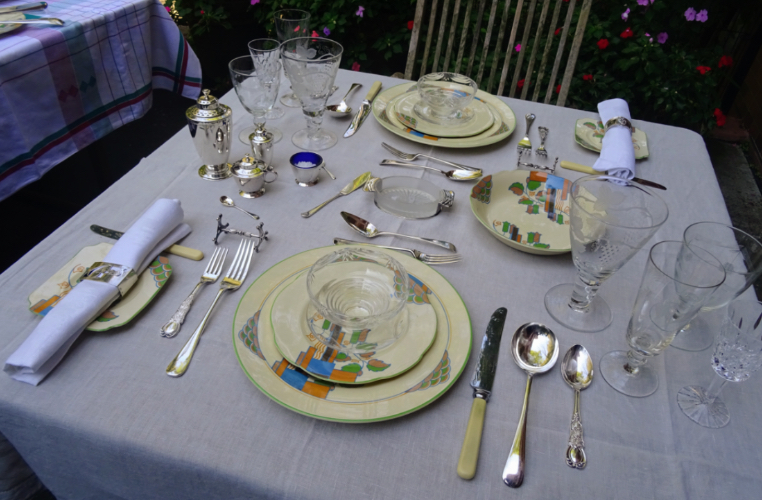
Stephen’s choice was the period 1953 place setting in honor of the Coronation of Queen Elizabeth II. It was a lovely alfresco garden luncheon setting. Congratulations, Stephen!
The following is our interview with Stephen:
1. How did you choose the menu and various elements you used in your setting, and why? Please explain each of the utensils at your setting… For which of the foods on your menu (or course) was each different item intended?

Luncheon Commemorating the Coronation
of
Her Majesty Queen Elizabeth II
on 2 June 1953
Prawn cocktail
Cream of celery soup
Duck confit, served with roast potatoes, cress salad, asparagus with mayonnaise
Selection of cheeses (Stilton, aged Cheddar)
Trifle

Tea & coffee

Cocktail:
Gin & tonic
(Gordon’s London Dry Gin)

Wines:
Champagne Moët & Chandon Impérial Brut
González Byass Tío Pepe Fino Sherry
Château Beauregard Pomerol 1999
Taylor’s 20-year-old Tawny Port
The above menu, I hope, reflects dishes and wines that were available and popular in Britain and elsewhere across the then Empire and Commonwealth in the 1953. One also has to bear in mind that wartime rationing had only ended recently. And not every household had electrical refrigeration, hence the duck confit. Trifle was and remains a popular dessert. Asparagus would have still been in season somewhere in the northern hemisphere in early June.

Being early summer, this meal has been set out on the terrace amid the flowers. (It rained in London, though, on the day of the Coronation.) The champagne is for a toast to the monarch. The Imperial label is appropriate to our late sovereign, who was queen of much of the world when she ascended the throne.Sherry and an aged claret (or burgundy) were regarded as the proper wines to serve with any fine meal. Port was and is de rigueur for cheeses and after a meal.
One hardly needs to explain the role that gin and tonic played in the Empire.

The crockery is prewar. The plates are the Royal Doulton Marina pattern, which came out in 1934. It was created, I believe, to commemorate the marriage of the glamorous Princess Marina of Greece to Prince George, Duke of Kent, who was an uncle of our late Queen. 
The cut-glass champagne flutes and wine glasses date from the 1950s. The water goblets, I believe, are Victorian, while the sherry glasses are the Waterford Crystal Lismore pattern, which came out in 1957. The Stuart crystal bowls for the prawn (shrimp) cocktail bear a number indicating the design was registered in 1926.

The cutlery is mostly sterling silver in the Old English pattern. The Art Deco cruet set and the matching sugar caster are hallmarked for Sheffield 1932 and 1933. The butter dish has an additional hallmark for the 1935 Silver Jubilee of King George V and Queen Mary, the grandparents of our late Queen. 
 
The menu card is on the dining wagon, which is serving as the sideboard. Experience has taught me that someone invariably knocks over the flowers or a wine glass trying to peruse a menu card set on the table. The silver biscuit box (for the cheese course) is hallmarked for Glasgow 1930. The black and white photo of our Queen was taken in 1952 at the start of her reign by Dorothy Wilding.
2. Why did you choose this particular period in time to set your table? Please go into as much detail as you can.
I am a great fan of Art Deco, which lingered into the late    1940s and early 1950s. The Art Deco era brought together craftsmanship and mass production. Mass production won out from the 1950s.
                 
    Note my attire. No self-respecting gent in the early 1950s would have received visitors or ventured outside the house without a jacket and tie (or a hat for that matter). I was also wearing Coronation cufflinks, which I acquired over thirty years ago at a Salvation Army charity bazaar in Tokyo. 
3. Have you always enjoyed a properly set table? Or, if not, was the table setting something you learned to enjoy through your social life and/or business later on in life?
Proper food deserves a properly set table, beautiful        surroundings, and good company. This is something I.   have cherished from a young age. 
4. Did you do any research on table setting etiquette before setting your elements at the table?
 Not really. This is something that grew organically from my upbringing, love of antiques, and reading of history.
5. Do you plan on entering again next year?
Yes.
6. Do you have any special memory they had of watching the Coronation or the Queen’s funeral (if any)?
The funeral of our late Queen was very moving. It’s hard to     believe that Queen Elizabeth II is no longer with us. I greatly     respected and admired the Queen for her selfless devotion to     duty, her deep religious faith, her stoicism, humour, and     impeccable style, and her ability to preserve her privacy and     dignity in this goldfish bowl age.     
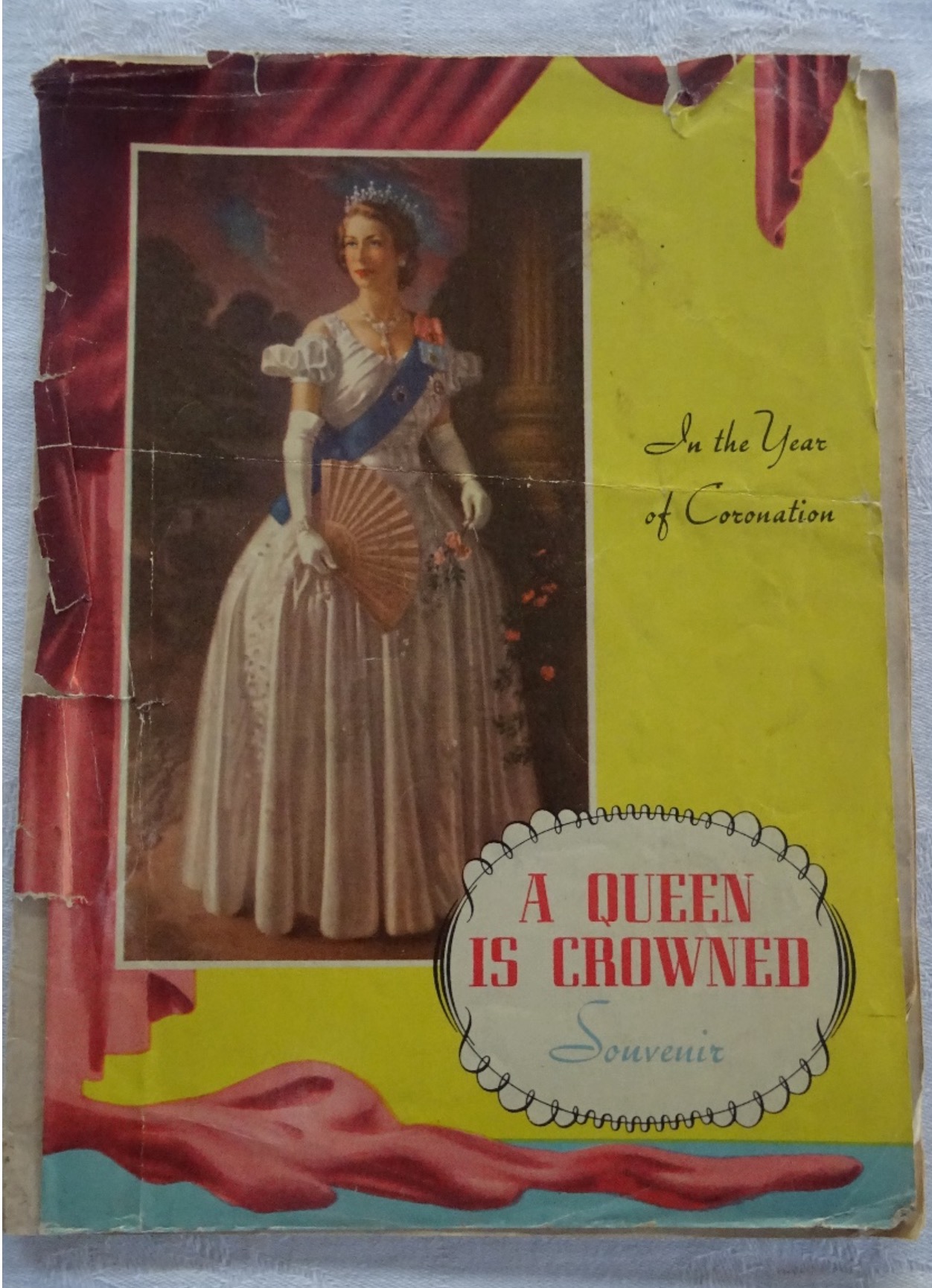
Here is a coronation souvenir that belonged to my paternal grandmother.

Again, Stephen, Elizabeth Soos and I say, “Bravo! And congratulations!” 👑
 – Maura Graber


🍽Etiquette Enthusiast, Maura J. Graber, is the Site Editor for the Etiquipedia© Etiquette Encyclopedia

Sunday, November 6, 2022

An Interview with Stephen Hanson

The Best in Show Winner for the Amateur category in our 2nd Annual Etiquipedia Place Setting Competition is Stephen Hanson. He is shown above with his 
Christmas Dinner for Four table setting entry.
🍽 🍽 🍽 🍽
When asked about himself, Stephen wrote, “ I am Australian by birth and nationality, but Japan has been my home for the last thirty years. I became enchanted with the place when I first came here as a high school exchange student in the mid-1980s. I am a translator by profession. For the past twenty-odd years, I have been lucky to live in a leafy area in the western outskirts of Tokyo. My passions are cooking, gardening, and reading.”

This formal Christmas Dinner setting was our Best in Show for the Amateur entries. Stephen’s inspired choices of his crystal, dinnerware and flatware impressed us. It is a mix of Australian, British and Irish elements which harmonize well together. We love the Art Deco, antique and vintage touches. They are a delightful complement to the menu and wines.  The non-traditional color scheme is perfect for celebrating Christmas, in a country where Christmas is not traditionally celebrated nation-wide. The table, which only needed to be set for 2 persons but was set for 4, is inviting and very well done. Congratulations!


🎄Christmas Dinner Menu🎄

Country-style terrine with assorted pickles and green salad
Crab bisque
Roast sirloin beef, with roast potatoes, peas and gravy
Assorted cheeses and dried persimmons
Christmas pudding, with custard, yuzu butter, and crème Chantilly
Champagne Taittinger Brut Reserve
Champagne Boizel Rosé Tradition
E. Guigal Condrieu 2017
Domaine Bertagna Vougeot Premier Cru Clos de la Perritère Monopole 2016
Château Pichon Longueville Comtesse de LalandePauillac 2015
Dow’s 10-year old Tawny Port
Stephen’s menu is imaginative in both the foods and wines chosen. Stephen has been able to cleverly meld the availability of traditional Christmastime foods in Japan with traditional Christmas family menus which he grew up with in Australia. Elizabeth and I would love to be invited to this dinner and to dine at Stephen’s table.


1. How did you choose the menu and various elements you used in your setting and why? Please explain each of the utensils at your setting… For which of the foods on your menu (or course) was each different item intended?

When I am in Japan at Christmas time, I serve roast beef and a Christmas pudding. (Interestingly, the Japanese idea of Christmas dinner is roast chicken and strawberry shortcake, served on Christmas Eve.)

The Christmas pudding has some Japanese touches. It has rum from Okinawa (the southernmost part of Japan)in it, and the juice and zest of a yuzu (Japanese citron). The latter has a great fragrance, which means it goes into the rum butter as well. Seafood is plentiful in this country, so it appears in this menu in the form of a crab bisque. Dried persimmons are available in Japan from the late autumn, and are a lovely accompaniment to cheese.

The Art Deco-style plates, produced by John Maddock & Sons, were part of my paternal grandmother’s wedding china. My grandmother married in January 1939 and built up a set for eight people. These plates were always brought out at Christmas time in Australia. The pattern, I believe, is called Sundown.

The dessert spoons and forks also belonged to my grandmother – the Josephine pattern produced in the 1960s by the Australian silverware firm Rodd.

The other cutlery is English sterling silver dating from the late 18th to the 20th centuries. The pattern is Old English. The faux-bone handled knives are also English, dating from the 1930s.

The champagne flutes are Stuart Crystal (Glengarry pattern), the wine glasses are Riedel, while the water goblets are Waterford Crystal (Lismore pattern).

The table linen is antique Irish damask linen sourced from eBay, where it can often be bought in mint condition for a song. The sterling silver hurricane lamps, produced by the US-based Preisner, were also acquired from eBay at a bargain-basement price.

The meal of roast beef and Christmas pudding is my own tradition, which I have developed since living in the northern hemisphere. (It took me years to get accustomed to spending Christmas and New Year in the middle of winter!)

Christmas fare in Australia usually consists of roast turkey, ham, and Christmas pudding, which are eaten at lunchtime. My late mother could never see the point of a heavy baked dinner in the middle of the day in the middle of an Australian summer. Our Christmas meal was at nighttime, and featured a roast leg of pork, an apple and celery salad, and a cucumber salad, with a fruit salad for dessert. My mother decorated the table with flowers and candles, a touch I have inherited from her.

2. Why did you choose this particular period in time to set your table? Please go into as much detail as you can.

There is no one particular period or style, as I prefer to mix them. Growing up with and subsequently inheriting a number of family heirlooms, I try to use them where possible. Why just look at them or stash them away in a cupboard? I am a great fan of Art Deco, so much of the silver is in that style and from that period.

3. How, if at all, did Covid-related social restrictions affect your choice of setting? Were you ready to celebrate? Feeling in the mood to do something different? Etc…

Covid hasn’t had any impact on this setting, except in one minor area. Salt mills have been used instead of the usual open salt cellars. The pandemic has unfortunately curtailed the amount of entertaining my partner and I do.

4. Have you always enjoyed a properly set table? Or, if not, was the table setting something you learned to enjoy through your social life and/or business later on in life?

Yes, I have. My late mother loved to entertain, and I learned the basics of setting a table from her. If nothing else, my mother felt there should be flowers on the table.

I also owe much to of an elderly lady of my acquaintance in the small country town where I grew up. She was part of that generation of women who set out a tablecloth at every meal.

There are, I believe, four key elements to any proper meal. Good cooking, of course, is paramount. Second is good wines (or other suitable beverages) to partner the food. Third is a properly set table and pleasant surroundings to complement the food and the wine. And fourth, family and friends to share it.

It grieves me to see so many people these days hunched over disposable containers of takeaway food, eyes glued to the smartphone screen, and oblivious to their surroundings and other people.

5. Did you do any research on table setting etiquette before setting your elements at the table?

Not really. It just seems to have developed organically. Having said that, all of the years spent in Japan have undoubtedly been a major influence. Japanese cuisine puts emphasis on using the ingredients of each season, and ideally a Japanese meal should feature a range of different flavours, colours, and textures. Presentation is all important – the food and the dishes in which it is served should be pleasing to the eye.

6. Do you plan on entering again next year?

Yes, if there is an Art Deco category. 


Elizabeth Soos and I would both like to congratulate Stephen on his award winning setting. We are honored that he entered our contest and love meeting others who are so willing to share their talents, enthusiasm for etiquette, and their wealth of knowledge. Bravo!
 

🍽Etiquette Enthusiast, Maura J. Graber, is the Site Editor for the Etiquipedia© Etiquette Encyclopedia