Showing posts with label Scientific American. Show all posts

Tuesday, June 20, 2017

Etiquette and 19th C. Politeness

"Acquaintances made in travelling, or accidentally in public places, have no claim to more than a passing bow if you afterwards find that the acquaintanceship is not particularly desirable?"

Rules of Politeness and Introductions

As a general role, do not introduce a gentleman to a lady without first privately asking her permission. In going through the ceremony of introducing, pronounce the name of the lady first, adding; "Permit me to present to you Mr. —. " In introducing two gentlemen, present the younger one to the elder, or the one of lower rank to the one of the higher. If the gentlemen are about the same age, and equal in society, present the stranger to the one with whom you are the most intimate. The best form of expression that can be used in introducing two gentlemen, who are in the same circle, is to say; " Mr.— let me make you acquainted wilh Mr. —." But if you are addressing an elderly gentleman, always say, "Mr. — , permit me to present to you Mr. — ." 

A lady should always be perfectly at her ease while introducing her friends to one another, as she has, while performing this necessary little ceremony, great opportunity of proving whether or not her manners are truly graceful. It is not considered fashionable to introduce two persons who accidentally meet in your parlor, and who are paying you a morning visit. The object of this custom in France, (where it first arose) was to prevent formality, as visitors were expected to converse together without an introduction, and were afterwards at liberty to recognize each other or not just as they pleased. It is, therefore, in good taste if you find your guests do not converse together without an introduction to present them to one another. Never introduce in the street, unless the third person joins and walks with you. You may make an exception to this rule when the parties are mutually desirious of knowing one another. 

If you are walking with one lady, do not stop to converse with others who are unknown to her, as she must necessarily feel unpleasant. If you are walking with a gentleman you may follow the bent of your inclination, for if he is well bred he will attend your pleasure without evincing either impatience or awkwardness. A lady is at liberty to take either another lady or a gentleman to pay a morning visit to a friend, without asking permission: but she should never allow a gentleman the same liberty, if he desires to make any of his friends known to her, he must first ask if the acquaintance would be agreeable. 

A lady who is invited to an evening assembly may always request a gentleman who has not been invited by the lady of the house, to accompany her. Acquaintances made in travelling, or accidentally in public places, have no claim to more than a passing bow if you afterwards finds that the 
acquaintanceship is not particularly desirable. When a gentleman is presented to a lady, if she is in her own house, and desires to welcome him, she may shake hands with him, but on any other occasion, unless the gentleman is venerable, or the bosom frfend of the husband or father, this practice is reprehensible. The same rule should be observed when a lady is introduced to a lady: although in this country the habit of shaking hands is very general. 

In introducing a friend, be as cautious of saying too much in his favor, as too little, for if the introduced be really the possessor of very good qualities, they will soon be lound out, and more appreciated than if they had in the first instance been all told. At a large dinner or evening party, although some persons strictly adhere to the French custom of not introducing, the mistress of the house shows real politeness by presenting to one another those persons who she thinks will assimilate in their dispositions. If there are strangers present, a party in America is apt to become formal through the omission of introductions; not so in Paris, where everybody converses with his neighbor without going through the unnecessary ceremony of a presentation. — Scientific American Magazine, 1846


Etiquette Enthusiast, Maura J Graber, is the Site Editor for the Etiquipedia© Etiquette Encyclopedia

Wednesday, April 9, 2014

Being Watched Affects Our Manners

Eye See How You're Behaving!


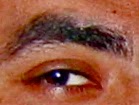
Photos of staring human eyes are enough to significantly change people’s manners and behavior. Studies have shown that people tend to be on their best behavior when they are being watched, even if the only eyes staring at them are on paper.
In a University of Newcastle lounge where paying for coffee was optional, researchers placed a picture of either flowers or a pair of eyes next to the suggested price list. Visitors donated almost three times more money when the eyes were posted.


A group of scientists at Newcastle University, headed by Melissa Bateson and Daniel Nettle of the Center for Behavior and Evolution, conducted a field experiment demonstrating that merely hanging up posters of staring human eyes is enough to significantly change people’s behavior. Over the course of 32 days, the scientists spent many hours recording customer’s “littering behavior” in their university’s main cafeteria, counting the number of people that cleaned up after themselves after they had finished their meals. In their study, the researchers determined the effect of the eyes on individual behavior by controlling for several conditions (e.g. posters with a corresponding verbal text, without any text, male versus female faces, posters of something unrelated like flowers, etc). The posters were hung at eye-level and every day the location of each poster was randomly determined. The researchers found that during periods when the posters of eyes, instead of flowers, overlooked the diners, twice as many people cleaned up after themselves
In fact, this research builds on a long tradition of psychologists being interested in explaining and stimulating human cooperation in matters of the collective. In technical terms, we often speak of a “social dilemma,” that is, a situation where personal interests are at odds with that of the collective. (For example, it would be easier for me to throw my trash on the ground, but if everyone thought that way, we would all be stuck with a huge pile of waste.) Robyn Dawes and colleagues showed in the 70’s that the presence of other people in the room tends to have a positive effect on people’s decision-making when faced with a social dilemma. Yet, it wasn’t until a few years ago that Terence Burnham and Brian Hare published an article in Human Nature that showed people make more cooperative choices in economic computer games when they are “watched” on the screen by a robot with human-like eyes. Somewhat baffled, a number of researchers subsequently conducted a set of experiments that confirmed these initial findings.
Ernest-Jones, Bateson and Nettle sought to better understand the effect of staring-eyes on behavior. Part of the added value of the scientist’s current research is that the results were generated outside of the laboratory. This is important because it allowed the researchers to document naturally occurring behavior, providing greater confidence that the results obtained are not merely an artefact of experimentation. Equally important, it also served to illustrate that the effect of staring-eyes carries across a range of social behaviors.
“Whenever you do a thing, act as if all the world were watching.”  Thomas Jefferson
While the researchers have convincingly illustrated that displaying a mere image of human eyes is sufficient to actually alter real-life social behavior, the real question is how. Humans (and other animals) have a dedicated neural architecture for detecting facial features, including the presence of eyes. This built-in system, also known as “gaze detection,” served as an important evolutionary tool in ancestral environments (e.g. for detecting lurking enemies). Furthermore, the ability to function in social situations hinges on our ability to exploit social information provided by the expressions of the faces and eyes of others. What’s interesting is that this system largely involves brain areas that are not under voluntary control. Experiments have shown that people are unable to inhibit responses to gaze even when instructed to. This makes sense, because there is great evolutionary value in being able to quickly assess whether any predators are on the prowl; neural activation of the gaze detection system is fast and automatic. Yet this also means that it’s possible to “trick” the system and this is exactly what the new experiment has shown: objects that merely resemble human eyes are sufficient to trigger human gaze detection and subsequently alter social behavior.
These research findings are not just food for theory. Supermarkets could use cameras in the form of “blinking eyes” as a means to reduce theft, and quiet, unsafe areas might benefit from displaying pictures of human eyes. And perhaps images of angry looking eyes will also help schools win their battle against those rascals who stick used gum underneath school property.
Even public restroom hand washing etiquette changes when one is being watched!
In an aim to find the most effective message to encourage handwashing in public toilets, a research team from the London School of Hygiene and Tropical Medicine installed a LED screen at the doorway of a gas-station toilet on a British highway. It flashed a series of messages employing a variety of tactics familiar to anyone with a mother, such as:
"Is the person next to you washing with soap?"
  1. Educating: "Water doesn't kill germs, soap does."
  2. Nagging: "Don't be a dope -- wash with soap!"
  3. The Gross-out: "Soap it off or eat it later" 
  4. The Hairy eyeball: "Is the person next to you washing with soap?"


Wireless sensors installed in the doorway and the soap dispensers secretly monitored a whopping 200,000 toilet-goers. The team found that 64 percent of female visitors reached for the soap, yet only 32 percent of the men did. (Compare that to surveys that report that ninety-five percent of people say they wash their hands after using a public toilet.)
What message got the most mileage? Although "Soap it off or eat it later" worked terrifically for men (presumably zeroing in on their complicated relationship to filth), "Is the person next to you washing with soap?" was the only message that increased the wash rate across both genders.
Yep, public shame. When someone's looking, you can bet you'd lather up for appearance's sake.
"It's difficult to know what kind of message is most effective at changing this everyday behaviour, so it's important to experimentally test what works best in a real setting," says Robert Aunger, the study lead. "That way you can save money and make sure your programme will be effective prior to rolling out any public health campaign at great expense." 


Sources ~ Smithsonian Magazine, Laura Allen for Popular Science and Sander van der Linden for Scientific American