Showing posts with label Etiquette of the Sexes. Show all posts

Tuesday, May 7, 2024

Newspaper Poll on Hat Etiquette

What the well dressed men of the 1920’s were wearing. – Image source, Pinterest
‘Hats On’ Signs Appear in L. A. Elevators

Signs stating that it is unnecessary for men to remove their hats when women enter the car appeared today in several elevators in downtown office buildings. They were posted as the result of the discussion of elevator etiquette which was conducted in The Evening Herald.

In the discussion of the question, 136 voted that hats should stay on, 19 that they should come off and 46 for a compromise. The compromise was that the hats should be removed in hotel and apartment house elevators and kept on in business block lifts.

One hundred and twenty-two men wrote letters to the “Elevator Etiquette Editor” and 59 were received from women. Twenty-seven signed anonymously without sex distinction. Those who voted for the hats on rule held that an elevator is a public conveyance, the same as a street car. — Los Angeles Herald, July 1920


🍽Etiquette Enthusiast, Maura J Graber, is the Site Editor for the Etiquipedia © Etiquette Encyclopedia

Thursday, February 29, 2024

Proper Etiquette Equals Prom Success

 
Although there are many ways to approach the festivities of Prom, there are a few guidelines that will make it more enjoyable, smooth, and memorable. Etiquette coach Kim R. Wilson explains what to do and what not to do.
For Ladies:
1. Manners matter: Always remember to say please and thank you.
2. Eating is a skill: Use the proper silverware by starting with the out- side and working your way in. Put your napkin on your lap to keep from spilling on your dress. Remove your gloves during dinner.
3. Accessorize: Wear a wrap or a shawl around your shoulders over a strapless dress. Do not wear rings over your gloves. Do wear your bracelet over your gloves.
4. You and your date: Make all en- trances with your date, and especially do not walk in front or behind them. Do go to Prom with a date who will pull your chair out at dinner. Tell your date how handsome he looks. Be on time, he's nervous enough as it is.
5. Alternative: Do not be afraid to go with your girl friends to Prom. Think of it as "less stress."

For Gentlemen:
1. Manners matter: Do not seat yourself when a lady is standing. Do stand when a lady excuses herself from the table. Pull her chair out when being seated.
2. You and your date: Do not enter a room before your date unless you are turning on the light for her. Check her wrap in for her at hotels and restaurants. Make all entrances with her. Do ask another woman to help pick out the corsage and be sure to match the color to the color of your date's dress. Do not forget to tell her how beautiful she looks.
3. Look and feel good: Do wear your best cologne, but do not completely drench yourself in it. Do not forget your cash. Do not drink and drive. Make your date feel special, and do not leave her with her friends all night, she spent a lot of time getting ready. – By: Monica Boardman for Woodside World, Volume 51, Number 6, 17 April 2007

🍽Etiquette Enthusiast, Maura J. Graber, is the Site Editor for the Etiquipedia© Etiquette Encyclopedia


Sunday, September 17, 2023

Motor Car Etiquette (with Humor)

After you have run down a pedestrian be sure and "honk-honk" very vigorously, especially if you have previously given no warning signal. This little act of attention may be soothing to the last moments of the unfortunate. 


  1. Always assist your lady passengers to their seats before taking your own; when alighting suddenly at a stone wall or fence, however, the question of precedence is not considered.
  2. When a tire is punctured beyond repair it is considered the correct thing on the part of a host to be explicit as to the number if miles the party must walk to reach home.
  3. If anything disagreeable happens, lay it to the chauffeur; if he is bigger than you it is permissible to do this behind his back.
  4. After you have run down a pedestrian be sure and "honk-honk" very vigorously, especially if you have previously given no warning signal. This little act of attention may be soothing to the last moments of the unfortunate. 
  5. If a horse shows signs of fright, put on all possible power and go by at full speed. In this way he will get rid of his fear- and possibly of his driver -more quickly.
  6. If a village constable stands in the road watch in hand, head your machine at the watch. A correct aim destroys evidence.
  7. No matter how well you can run your car, always keep a chauffeur in your pay: court rooms and country Jails are stuffy places,
  8. If ladies are present when you get on your back under the machine to fix that little trouble." It is the custom to gag yourself with cotton waste.
  9. If you have been persuaded to pur- chase a copy of the "Rules of the read,' 'throw it away; there are no rules for motorists.– New York Press 1906


Reminder: We have a free webinar on Dining According to Hollywood and Dining Etiquette as Presented on Film! You can watch it live on September 23rd at 4:00 pm PST (Pacific Standard Time). We have a limited number of viewers who can attend via Zoom, however, if you are registered and cannot watch the event live, you’ll be sent a video link to watch a copy at your leisure. Link to the Free Webinar –– https://events.humanitix.com/dining-according-to-hollywood-the-art-of-dining-on-film Please email any questions to: theetiquettechannel@gmail.com


🍽Etiquette Enthusiast, Maura J. Graber, is the Site Editor for the Etiquipedia© Etiquette Encyclopedia

Wednesday, April 5, 2023

1930’s Etiquette and the Sexes

Q. When a man is being introduced to a girl, is it proper for him to offer his hand? 
A. No; he should wait for the girl to offer her hand, if she cares to do so. That is her privilege.

Q. When a man and a girl meet often, but have never been introduced, is it all right for the girl to speak ?
A. Yes, if she is much interested and is courageous enough to run the risk of an undesirable acquaintance.

Q. When a man is being introduced to a girl, is it proper for him to offer his hand?
A. No; he should wait for the girl to offer her hand, if she cares to do so. That is her privilege.

Q. What should a girl do when a young man calls in the evening and doesn't seem to knew when to go?
A. Allowing long lapses in the conversation is sometimes an effective method. If this doesn't work, it seems that a suppressed yawn or two would be justified.  
Q. What does it indicate when a man. in conversation, is constantly talking: about himself, his adventures and experiences ? A. It is a sure indication of ill-breeding, and such a man can never become popular.

Q. Is it ever proper for the parents of a girl’s fiance to announce the engagement.
A. No; this is the privilege of the girls parents only.

Q. Is it sufficient for a bride and bridegroom to thank their friends verbally for wedding gifts.
A. No; a personal letter of thanks should be written by the bride for each gift.

Q. Is it necessary to write the prefix “Mr.” when “Jr.” is used after a man’s name?
A. Yes, both Mr. and Jr. must be used. – Roberta Lee’s “Modern Etiquette,” 1930’s


🍽Etiquette Enthusiast, Maura J. Graber, is the Site Editor for the Etiquipedia© Etiquette Encyclopedia

Sunday, January 15, 2023

A Woman’s Refusal of Good Manners

When did chivalry die? When did women openly refuse to accept chivalric behavior from men? Many people will say it was after women went to work in WWII and “won their freedom,” but others will say it was in the 1960’s with the advent of Women’s Lib and “the Pill.” Gathering from this news’ account from 1904, chivalry was spurned much earlier than people suspect!  


A little newspaper anecdote the other day bears entertainingly on this mooted question. “Keep your seat, sir,” said a young lady, authoritatively, to an elderly gentleman who seemed about to rise in a street car. He sank back, abashed, but presently, more resolutely, rose, and the lady with emphasis exclaimed: “I will not take your seat, I do not mind standing! I am accustomed to it.” “Take the seat, madam, or leave it,” answered the gentleman; “I want to get out of the car.”

The bad manners of women on the road are inexcusable from every point of view. Why should a woman occupy two seats when she has paid for only one? Yet this is constantly done. A woman seats herself comfortably and then piles her bundles and boxes beside her, staring stonily ahead, when others enter the conveyance. The natural inference of newcomers is that the extra seat is being reserved for a friend, and they pass on without inquiry. If a more daring person ventures to ask, “Madam, is this seat taken?” the “No” is grudgingly spoken, and the luggage is removed with an air of injury.

Women are needlessly brusque and curt in their manner to conductors, and are conspicuously thoughtless in allowing their children to monopolize space to which the latter have no right.— From “Good Manners for All Occasions,” 1904


🍽️Etiquette Enthusiast, Maura J. Graber, is the Site Editor for the Etiquipedia© Etiquette Encyclopedia

Monday, December 12, 2022

Wagers and Etiquette of the Sexes

If you felt that it was wrong for your daughter in college to stake a “batch” of fudge versus a pound of chocolates with her roommate’s brother as to the marks she was to receive at mid- year examinations or even theater tickets over the outcome of a basketball game between the “Freshs and the Sophs,” then the chances are that you would look with disfavor on your son when he staked a goodly share of his next month’s allowance on the next football game.

No Impropriety in Small Wagers

“That makes the good and bad of manners, namely what helps or hinders fellowship.” -Emerson

“Lay no wagers with a gentleman and have no philopenas with them,” cautions a “behavior book,” in wide circulation half a century ago. “In betting with a lady it is customary for a gentleman to pay whether he wins or loses. No delicate and refined female ever bets at all. It always reminds gentlemen of the race course or gambling table.

That many have been very good advice for women fifty years ago, when most women really wanted to be looked upon as “delicate and refined females,” but it would be as absurd for the girl of today to act upon that advice as to wear hoop skirts and to affect a modesty that made it appear indecorous to show more than the toe or at most the instep— beneath those encumbering petticoats.

Sensible and well bred girls of today feel that they have done nothing indescreet in laying small wagers. If they do object to it it is a matter of principle rather than of etiquette. No sane person would consider a girl as ill bred just because she stakes a pound of candy on the outcome of an election or a football game. 

Though the fairness and desirability of equal suffrage is still a moot question among many persons, there are few who lament the fact that the tendency in manners today is toward equality among the sexes. The same characteristic of betting that might make it in bad form for women would also make it in bad form for men. 

If you felt that it was wrong for your daughter in college to stake a “batch” of fudge versus a pound of chocolates with her roommate’s brother as to the marks she was to receive at mid- year examinations or even theater tickets over the outcome of a basketball game between the “Freshs and the Sophs,” then the chances are that you would look with disfavor on your son when he staked a goodly share of his next month’s allowance on the next football game.

The man nowadays who “pays whether he loses or not” is regarded as a poor sport, or at least rather old fashioned. A girl with spirit would never wish to lay a wager with that sort of old school gentleman and she might quite naturally be a little offended if, after he had fairly won a bet, he refused to accept the stake.

Needless to say the girl who bets in season and out and who habitually suggests laying wagers is tire-some and troublesome to her friends. And since, anything that binders the smooth running of friendship is an act of bad manners she is herself ill bred.

For the sake of Mrs. Grundy, may I add that the rule that limits the gifts a young woman may receive from a young man to flowers, books and candy and taboos any article of clothing, ought to be considered in connection with this question of wagers. It is really better— and any sensible girl will agree with me, I am sure —not to suggest such things as hats, silk stockings and gloves or other apparel as the stake for a bet with a man outside of her own family. 

A girl of independent spirit does not like to give any man the satisfaction— if indeed he takes any satisfacton in it— of feeling that he has assisted in the purchase of her wardrobe. That it seems to me is a matter of common sense and not of arbitrary etiquette.— By Mary Marshall Duffee, 1917


🍽Etiquette Enthusiast, Maura J Graber, is the Site Editor for the Etiquipedia© Etiquette Encyclopedia

Wednesday, November 2, 2022

Strange 1954 Etiquette Advice

This “man’s meal” pictured above is from the 1940’s. One would think that advice for what to prepare to win a man’s heart would improve in tens years’ time. We were shockingly incorrect! We at Etiquipedia cannot guarantee the advice of this particular maitre d'hotel below. It’s possible he knew quite a bit about the dining habits of gents, but this seems very questionable. It was a sad day in 1954 when a can of beans and bottle of wine served by candlelight was considered a meal.

🫘🍷🕯

The New Etiquette (from a wire service interview with a New York maitre d'hotel): 

“A can of beans, served with candles and the proper wine, will win the heart of any real gentleman.” – Press Democrat, 1954

This “Man’s Meal” above is brought to you courtesy of American women of the mid-1940's. Made up of a Swiss Steak, Baked or Mashed Potatoes, Cabbage Slaw, Baking Powder Biscuits, and Apricot Pie a la Mode. (Why this is not also a “Woman's Meal” is anybody’s guess.)

To eat this meal, a young man would benefit from the following dining etiquette rules from a 1940’s Fraternity Pledge Manual –
  • Place knife and fork on plate when not in use.
  • Turn the blade of the knife in. 
  • Break a slice of bread into at least four pieces, no less, and butter a bite at a time. 
  • Chew slowly and thoroughly.
  • Use a napkin frequently. 
  • Sit erect. 
  • Take small mouthfuls. 
  • Hold elbows close to body. 
  • Place spoon in proper saucer. 
  • Stir liquids briefly and quietly. 
  • Place your prongs up on plate. 
  • Hold fork in left hand when cutting foods with knife.
  • Eat salads and vegetables with fork. 
  • Take soup from side of spoon, scooping thitherwardly.
  • Converse quietly and not volubly.
  • Be natural and at ease. 
  • Place napkins at left of plate when rising.


🍽Etiquette Enthusiast, Maura J. Graber, is the Site Editor for the Etiquipedia© Etiquette Encyclopedia

Saturday, August 13, 2022

Etiquette of the Sexes in Restaurants


“If men dine alone, 10 men together, how they dress*** I really don't mind. I'm not there. But if a man takes me out to dinner, I like him to smell of a nice soap, to wear his best suit, maybe a black tie, so that I can wear my nice little dress. I will know then he has kindness of heart, he has said to himself, ‘I will make a little effort so that she can look her best’.” – Louise De Vilmorin

Her point is well taken. Then, there are a few things she should remember, as well, and I am sure she does.

For one, not to keep him waiting too long before they even start out, while she decides that her makeup base is too light or her stockings too, well, purplish or something, and changes them. In most fair to good restaurants these days you need a miner's cap to read the menu by, anyway. Ten gets you twenty the man you're with won't notice what color stockings you're wearing, if any, but he'll certainly notice the three cigarettes he had to smoke while he waited.

She should carry the minimum equipment. If she knows she'll need a complete ballot and ring job by mid-evening, it's simpler to bring along a veil. I know a girl who tapes a lipstick, a dime, and a folded dollar bill above her knee (is she could slip them into her bra too) before she goes dining and dancing. This makes great sense – no swollen velvet pouch to end up in a man's pocket and make him heavy on his feet, or hers. (Of course, a girl must carry a small bag she is lost without Compact, cigarettes, and so forth. But it should have a wrist strap or loop, so she can wear it while she dances.)

As for mad money, you don't hear much about these days, a charge account at a cab company can be handy. It is a no-host evening, she won't need much money along, either. Sonia Goodkid always hands Bill Youngenbroke her contribution before they leave. Or if it is entirely her celebration, she'll have stopped in earlier and arranged with the restaurant to bill her later. (However, she better watch her step with this routine, or Bill will get the habit, and first thing you know, she'll be putting him through med school.)

A working girl, at any age in any job, pays for own lunch when she lunches with a man. Or, at any rate, she is expected to, unless this is a budding office romance (as most wives will assume it is, if their spouses lunch money starts disappearing with twice its usual feverish rapidity). She can give him a few dollars before they go into the restaurant – for her share of the bill – and hope she gets her change back.

Or, if she knows he isn't sensitive about these things – and there's no reason he should be, at a business lunch – she can simply pay her own check and leave her own tip. Either way.

By the way, these financial matters should always be clearly understood all around, whether the situation is business or social. A woman I know gave a lavish restaurant party for three couples – she had been visiting in the city and this was the only way she could return their royal hospitality. The champagne flowed; she urged upon them the pressed duckling, the grapes after the fashion of Suzette, the brandy; and her guests needed little urging. Finally, when she asked for the check, it developed that one of the gentleman had already paid it. She protested, but he was adamant. All she could do was send him a note and a gift – a desk clock, it was. He owned to already, but she still feels indebted to her friends.

The worst female restaurant menace, according to men is the woman who stops to chat – standing – with acquaintances at another table. A man feels ungentlemanly if he doesn't rise, and uncomfortable if he can't sit down immediately thereafter. A sweet smile from the lady, and a brisk hello, are sufficient, before she strides on. If she has to say something, she can send a note by the waiter.

Finally, to the matter of ordering. This is a male prerogative. Giving the order to the waiter will – back to our original touchstone – somewhat build the male ego, if he is knowledgeable about these things, and cares. But not if he isn't and doesn't. He'll properly consider it's not worth the effort, if the menu is abstruse, or if the lady shuffles nervously from Crab Thermidor to the Lamb Chops, with a short but dramatic pause at the Curry Indienne along the way. If she can see her way clear, or if she wants to discuss sauces with the waiter, she'd better do her own ordering.

If there are more than two people at the table, each had better order. The hosts usually can't remember all that. Like a wraparound skirt in a high wind, the whole thing is apt to blow up.

And so to a few rough notes on the Social Gathering, as it concerns men and women, and etiquette.

It is true that a man gets gold stars on a ladies ledger – which cancel some of the black marks on his rap sheet – when he tells her how pretty she looks ( or handsome or well put together, as the case may be) before they go to a party, or while they are en route. But he gets double credit for telling her once they get there, for then it has twice the impact. The reason is this: Before she leaves home, a woman is tolerably satisfied with how she looks (or she wouldn't have left). Indeed, she is often delighted with her appearance – the naked black basic, the company face – wholly different from the rather soul – shattering reflection the mirror handed her early that morning. But once they arrive, her innocent glory is apt to be dimmed by all the other naked black basics and company faces, which in her excitement she had forgotten would be there. At this point, especially, she must know how she stacks up, this is the time to tell her.

Still, this is a minor point. A major one – or, to put it another way, what makes women the maddest – is the male tendency to herd together, drinking and talking shop. Many a woman asked for it, with her crossfire chitchat about purely female concerns, which drives the man perforce into the tall timber where the bottle is. But many a woman who doesn't ask for it gets it, too, which can have unhappy repercussions. After all, she didn't put on her company face and her nice little dress just to swap tatting patterns with Irene and Thelma. She'd be glad to do it for a while, mind you, but not all night.

The fact is that the virtuous housewife – if she doesn't work outside the house – sees and talks to few males alone, except for the milkman and the little old codger in the Blanket Department twice a year at White Sales. And this party – she thought – would be a chance to shine a little, showing a few pretty facets that may have rested a bit at the kitchen sink. If she doesn't get to go – if, on the contrary, she goes home feeling like the little woman in the tight permanent, with a pocket full of tuna recipes – she'll feel like kicking the cat.

This sorry state of affairs, with the sexes is getting no practice in attracting and interesting each other, is often reflected in a certain lackluster performance in the bedroom, particularly where our heroine is concerned. Nothing has come alive for her, including herself, though the moon shine ne'er so brightly over the cow shed. 

* "An almost outmoded grace that still thrills me actually is to have a man take his hat off an elevator when I enter. It makes me feel feminine and cherished – makes me feel, and act, much nicer for at least half an hour." ~ Kay Taylor 

** I don't know what makes them think they're auricles. It's common knowledge that female writers and resemble either horses or birds, and their fingers are usually smudgy from changing typewriter ribbons. 

***This goes for the convention hats with the funny tassels, too. Sometimes the boys forget, and keep them on and restaurants.

From Peg Bracken's 1959, "I Try To Behave Myself"


🍽Etiquette Enthusiast, Maura J. Graber, is the Site Editor for the Etiquipedia© Etiquette Encyclopedia

Monday, August 1, 2022

Tactfully Teaching Table Etiquette

“James,” she said, with quick tact, looking all around among the tables, “did you ever notice that men and women eat differently? When a man finishes a meal he always places his knife and fork across each other, while a woman invariably places them side by side. It's funny, but I've often noticed it.”


A Tactful Girl:
The Way She Gave James a Lesson in Table Etiquette


They were an engaged young couple and were having a quiet dinner while the band played alluring music. The girl was sweet and refined looking and the man big and strong. Her manners were perfect, but his left much to be desired as far as etiquette is concerned. After they had finished their meal an interested observer noticed that the big, wholesome man placed his knife and fork like the crossbones under the skull. With a blush the girl, whose own implements were placed correctly side by side, noticed the break.

“James,” she said, with quick tact, looking all around among the tables, “did you ever notice that men and women eat differently? When a man finishes a meal he always places his knife and fork across each other, while a woman invariably places them side by side. It's funny, but I've often noticed it.”

“Which is correct?” anxiously questioned her fiance while he gingerly toyed with the objects of comment.

“Why, placing them side by side, dear, of course,” she said. “But, then, men are so busy that I suppose they have no time for such details.” And then she became interested in the band leader, while the erring James slyly adjusted his knife and fork according to regulations.

“There's a woman who is going to manage her husband without letting him know it,” observed a sweet old lady who had overheard. “It all depends upon the way you do it, whether you can get a man to come round.” Philadelphia Record, 1905


🍽Etiquette Enthusiast, Maura J. Graber, is the Site Editor for the Etiquipedia© Etiquette Encyclopedia

Tuesday, September 21, 2021

1950’s School Dance Etiquette


Might as well teach them early that when they take a girl to a party they have to look out for her.– 1950’s school dance. 
 – Image source Etiquipedia personal library.

Teach Early Social Etiquette

“Do I dance with Janie all the time?” asked a junior high schooler getting ready to go to his first dance. His mother explained he must dance the first and last dances with the girl he was taking to the party and a few others in between. But she assured him he could dance with other girls, too, just so he was sure Janie had someone to dance with. Might as well teach them early that when they take a girl to a party they have to look out for her. – San Bernardino Sun, 1953


Etiquette Enthusiast, Maura J. Graber, is the Site Editor for the Etiquipedia© Etiquette Encyclopedia

Thursday, July 15, 2021

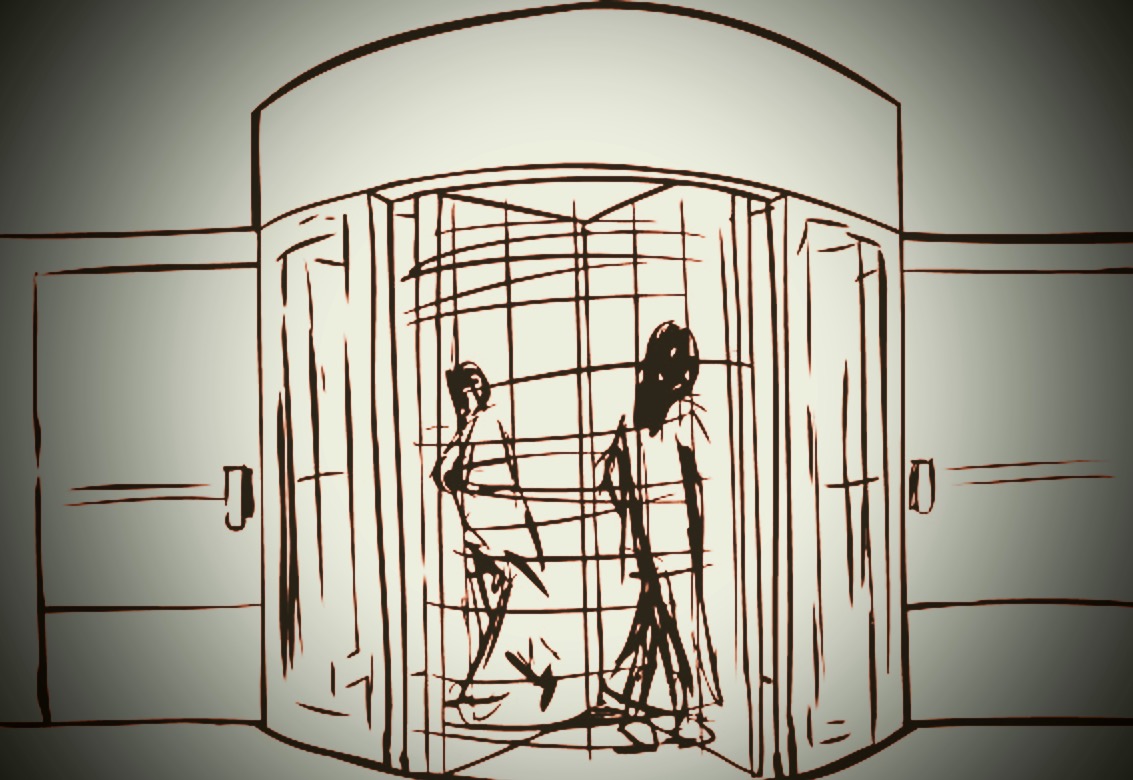
Revolving Door Etiquette

Some think the man should precede the woman furnishing the motive power, while she follows idly in the next compartment. Others hold that the rule “Ladies first” can have no exception…
The following chapter is from the book is entitled “Concerning Revolving Doors.” Listen to a bit of it: 
There has been some discussion of late as to the etiquette of the revolving door. When a man accompanied by a woman is about to be revolved in it, which should go first? Some think the man should precede the woman furnishing the motive power, while she follows idly in the next compartment. Others hold that the rule “Ladies first” can have no exception, therefore the man must stand aside and let the female of his species do the rough work of starting the door’s revolution, while the man, coming after, keeps it going and stops it at the right moment.

 “Starting something” is perhaps of all pastimes in the world, the most popular with the sex we are accustomed to call the gentle sex; one might almost say that “Starting something” is woman’s prerogative; on the other hand there is nothing on earth so abhorrent to that same gentle sex as the thing called Consistency; and though she may be perfectly charmed to start a revolution in South America, or in silk pajamas, or suffrage, or the rearing of children, it does not follow that she will take kindly to the idea of starting the revolution of a revolving door. – La Jolla Light, 1923


Etiquette Enthusiast, Maura J. Graber is the Site Editor for the Etiquipedia© Etiquette Encyclopedia

Tuesday, July 6, 2021

1950’s Dating Etiquette for Teens

“Everything was just so. And he knew exactly what to do!” is what teen-age girls love to tell their admiring congregation of girl friends, after they have had the “big dates.” 


In a Restaurant 

“He took me to the fanciest place. Everything was just so. And he knew exactly what to do!” is what teen-age girls love to tell their admiring congregation of girl friends, after they have had the “big dates.” There is no doubt about it, a boy must know what to do always. 

If he accidentally makes a mistake, on the other hand, he need not be ashamed. It is best for him to learn how and what to do before he takes his young girl friend out, however. For instance, when the boy takes the girl to a restaurant, he should know that he must step to the door, open it, hold it open until his girl friend companion enters the food center, then he must follow her in. 

Usually there is a head waiter or waitress to take care of the new arrivals, but if he doesn't get there immediately, the young couple should stand a little to the side and wait. The boy should be ready to tell the head waiter he wishes a table for two. The girl then follows the waiter and the boy again follows her. Should there be no head waiter, the boy leads the way and selects the table, for he is the host of this little party! — Grace Ramquist. 1953


Etiquette Enthusiast, Maura J. Graber, is the Site Editor for the Etiquipedia© Etiquette Encyclopedia 

Monday, July 5, 2021

Retro 1950’s Etiquette for Teens

As soon as you come to the car, become delicate. If that is difficult, then pretend you don't know how to turn the handle. A boy would feel insulted if you open the door for him. 


In the automobile, don't touch that car door handle, girls! As soon as you come to the car, become delicate. If that is difficult, then pretend you don't know how to turn the handle. A boy would feel insulted if you open the door for him.


It would be embarrassing to have a young man say “Thanks for opening the door for me. I'm too weak.” There is no doubt if he ever said such a thing, he would say it with all the sarcasm he could muster.


Most young men take great pleasure and pride in getting out of their cars, going around the back of them, and then coming around to the side to open the door for their girl friends. Most of the time, it is the fault of the girl if she does not get the proper treatment from the boys. She rushes in when she should have waited.


Girls must remember that it takes time to get around the opposite side of the car, they must be patient! — By Grace Ramquist, 1953


Etiquette Enthusiast, Maura J. Graber, is the Site Editor for the Etiquipedia© Etiquette Encyclopedia

Monday, May 3, 2021

Journalistic Etiquette and “Mrs.”


The first sentence is: “Prefixes indicating marital status should be avoided.” Why? What about the woman who is proud to be Mrs. John Doe, along with any other accomplishments? What about the still unchanged etiquette rule that a married woman is Mrs. John Doe from the moment of marriage until death, unless she divorces or remarries? – Polyester Pantsuits for Women... Hallmarks of the 1960’s and 1970’s Women’s Liberation Movement


“No Phony Titles, Please”

I object! At the risk of having to burrow deeper and longer than the traditional groundhog, I will stand by my convictions and object to the “Guidelines for Newswriting about Women,” compiled by Stanford University Women’s News Service and being circulated by the League of Women Voters, Palm Springs Area. The first sentence is: “Prefixes indicating marital status should be avoided.” Why? What about the woman who is proud to be Mrs. John Doe, along with any other accomplishments? 

What about the still unchanged etiquette rule that a married woman is Mrs. John Doe from the moment of marriage until death, unless she divorces or remarries? It goes on: “A later reference should include last name only.” What about a newspaper’s individual style? A newspaper, like a smoker, has a few rights left, too. It is not The Desert Sun’s style to refer to a woman, a lady, or a girl as just “Doe.” I pray we never do.

In another section is the request (or is it an order?) that: ‘‘If you would not say, ‘The gray-haired grandfather of 3 won the Nobel Prize,' do not say, ‘The grayhaired grandmother of 3 won the Nobel Prize.’ ” Now, listen here. I am a gray-haired grandmother of two (newspapers use letters up to 10), the mother of two, the wife of one, and if I ever win the Nobel Prize (after this piece it won’t be for peace) I want all the data there. 

Along with the facts that I have been a news reporter and editor (Oh, God, don’t make me say “editress”) for 30 years, a homemaker, seamstress, cook, cleaning lady and loving wife for nearly 40 years. In addition, while handling a full time job I was a Boy Scout den mother and a Camp Fire leader. If I win any prize I want the public to know, that regardless of what it says, I won it for juggling. 

I object again to the mandate: “ ‘Man,’ used alone and in words like ‘chairman,’ is a sexually exclusive term and should be avoided when at all possible.’’ What about mankind? Are we going to change that to “person-kind?” Thank God, Neil Armstrong walked on the moon when he did. I’d have died if he had said, “ . . , one giant leap for person-kind.” 

Are we going to “person the pumps?” Call manikins “personikins?” Commit “person-slaughter?” Don’t you ever call my manx cat a “personx.” And let’s not forget man-eating sharks. Science has never found them to be discriminating. To lessen the fears of sons, and husbands they should definitely become “person-eating sharks,” the same for tigers. 

What about women with the last name of Mann? Should they petition to change it to Person? That means changing Hoffman to Hoffperson and can you imagine Milt and Evelanne Heyperson? According to the “Guidelines,” the U.S. Bureau of the Census has begun officially changing its occupation titles to eliminate sexism. Salesmen are now sales workers or sales agents, newsboys are newspaper carriers and airline stewardesses are now flight attendants. Well, what else can you expect in this day of Federalese and gobbledegook where a garbage collector is a sanitation engineer and being “affiliated with a chemical company” in truth means a fertilizer salesman, excuse me, fertilizer sales agent. 

After years in the working world, I believe in equal pay for equal work, community property, joint tenancy and other sensible strides, but I don’t want to be called, as the “Guideline” states: “ ‘Feminist’ is the correct term for a woman committed to equal rights for women” and that “ ‘Women's libber’ is unacceptable,” I don’t want to be called either of these. I’m a woman, proud of it; just call me Mrs. Charles A. Turner or Lisa Turner. No stupid titles, please. – By Lisa Larson Turner, Desert Living Editor, Desert Sun, 1978


Etiquette Enthusiast, Maura J. Graber of The RSVP Institute of Etiquette, is the Site Editor for the Etiquipedia© Etiquette Encyclopedia

Tuesday, January 5, 2021

Gilded Age Carriage Etiquette

The correct and incorrect manners of helping a lady into a carriage — A young gentleman always gives his right arm to an elderly lady in walking with her as a continuation of the “carriage etiquette,” which always puts the gentleman on the lady’s left.


As Rome Does

Etiquette in Rome is very strict as to one point. It is not considered proper for lady to take the arm of a gentleman in a Catholic church. In walking about St. Peter’s, the guides mention this to the couples who innocently stroll arm in arm, looking at the statues, pictures, altars and frescoes of that wonderful interior. Perhaps this is because any idea of its being a promenade should be discouraged. 

A gentleman remonstrated with the guide on one occasion, saying that the lady with him was his mother, and lame. “Then put your hand under her arm,” said the guide; “but do not let her take your arm.” A young gentleman always gives his right arm to an elderly lady in walking with her. When being asked why this is done, he answers that it is a “continuation of the carriage etiquette,” which always puts the gentleman on the lady’s left. — Weekly Butte Record, 1886


Etiquette Enthusiast, Maura J. Graber, is the Site Editor for the Etiquipedia© Etiquette Encyclopedia


Sunday, January 3, 2021

New ‘Approved Etiquette’ of 1880

“I certainly would consider sharing this carriage ride with you if you weren’t wearing such an outlandish suit. That loud plaid won’t be fashionable for several years!” — The fashionable girl now lays her head on the shoulder of her male companion when traveling, according to a Cincinnati Enquirer writer...


Filed Under “Sensible Advice”

The fashionable girl now lays her head on the shoulder of her male companion when traveling, according to a Cincinnati Enquirer writer, who says: “The nicest girls do it, and they are so demure, so innocent, so unconscious in their manner that nobody could deem the practice harmful. They have the unconcerned air of using a pillow. This would have been reprehensible a year ago; now fashion and mothers permit it. But the man must not so far forget himself as to slyly hug the girl. If he does, she pops bolt upright, and will lean on him no more forever. That is new but approved etiquette.” — The Daily Herald, 1880


Etiquette Enthusiast, Maura J. Graber, is the Site Editor for the Etiquipedia© Etiquette Encyclopedia

Wednesday, October 14, 2020

More Etiquette “Fan Fiction”

Actual Japanese Fan Language with Nothing to do with Flirting — At wrestling and fencing matches in Japan the umpire always uses a large fan and the various motions of this fan constitute a language which the contestants understand perfectly and to which they pay prompt attention. The servant girl has a flat fan made of rough paper to blow the charcoal fires, or which ahs uses as a dustpan. The farmer has a stout fan to winnow his grain. Still another variety is made of waterproof paper, which, dipped in water, creates a pleasant coolness by evaporation without wetting the clothes.— Morning Tribune, 1905

More ‘Advertorials,’ on Fans, Disguised as Fashionable Etiquette

According to Esti Brennan, of Clements Library Chronicles, “Unfortunately, the fan language — and other, similar codes like the language of the handkerchief and the language of the parasol— were largely the result of advertising campaigns meant to popularize and sell accessories. There is little evidence that the fan language was ever in widespread use, though the concept was satirized by several writers in the 18th and 19th centuries. Besides being rather impractical, fan codes were a bit dangerous; an unconscious fidget or desire to actually fan herself could embroil a lady in a totally unintentional feud— or marriage. Not to mention the consequences if the matron acting as chaperone to a courting couple had, a few years earlier, employed the fan language to win her own husband!” 

“Mexican Lover” Guide 

There is on sale everywhere and in universal use a cheaply printed little pamphlet entitled “El Secretario de los Amantes.” It is the guide and handbook of lovers. It contains the language of flowers, the significance of the varied wearing and handling of the sombrero, the language of fan, the language of fruits, the meanings of the varied use of the handkerchief, emblems in designating the hours of day and night in making appointments, the use of the numerals in cipher writing, several short chapters on the conduct of a love affair, and the deaf mute alphabet for one hand. This literary gem seems to be more studied than any other in the republic. —Napa Weekly, 1888


The Language of a Fan
  • Opening and shutting—You are cruel. 
  • Closing fan slowly— I wish to speak to you. 
  • Open wide—Wait for me. 
  • Dropping it —We will be friends. 
  • Carrying in right hand in front of face —Follow me. 
  • Carrying in left hand in front of face— I wish to make your acquaintance. 
  • Drawing across forehead—You have changed. 
  • Drawing across cheek —I love you. 
  • Drawing through hand— I hate you. 
  • Fanning slowly— I am married.
  • Fanning quickly— I am engaged. 
  • Placing on left ear —I wish to get rid of you. 
  • Placing on right ear-—Have you forgotten me? 
  • Twirling in right hand— I love another. 
  • Twirling in left hand— We are watched. 
  • Presented shut—Do you love me? 
  • Drawing across eyes—I am sorry. 
  • Resting fan on right cheek—Yes. 
  • Resting fan on left cheek —No. 
  • Carrying in left hand— I have a message for you. 
  • Swinging in right hand—Think of me. 
  • Swinging in left— I will think of you. — Sacramento Union, 1908
Spanish Language of a Fan

Beaconsfield writes: “A Spanish lady with her fan might shame the tactics of a troop of horses. Now she unfurls it with the slow pomp and conscious elegance of the bird of Juno; now she flutters it with the languor of a listless beauty, now with all the loveliness of a vivacious one. Then, in the midst a very tornado, she closes it with a whirr, which makes you start. Magical weapon! It speaks a particular language, and gallantry requires no other mode to interpret a Spanish woman’s most subtle conceits or her most unreasonable demands.” — London Journal, 1882 and this was reprinted in the Coronado Eagle and Journal, 1929

Fan Language

“There is an infinite variety of motion to be made use of in the flutter of a fan.” once wrote Joseph Addison in the Tatler Magazine. “There is the angry flutter, the modest flutter, the timorous flutter, the confused flutter, the merry flutter, the amorous flutter. Not to be tedious there is scarce any emotion of the mind which does not produce a similar agitation of the fan; inasmuch if I only see the fan of a disciplined lady 
I know very well whether she laughs, frowns, or blushes. I have seen a fan so very angry that it would have heen dangerous for the absent lover who provoked it to come within the wind of it. And at other times so very languishing that I have been glad for the lady’s sake, the lover was at a sufficient distance from it. I need not add that the fan is a prude or a coquet, according to the nature of the person who hears it!” — Blue Lake Advocate, 1935

Fans of Yesteryears Recalling Gracious Customs of Past Era

Old as civilization itself, the fan has played an important part in the development of the human race, it changing as rapidly as the civilization that brought it into existence. It has served to sustain people, acted as a shield in time of war and has aided in the comfort of mankind. The first fans on record were those used as bellows to remove the dust from grain and to keep fires burning. Next they were adopted for religious ceremonies and then as token of distinction for the privileged few. In the Orient they were used by, men and women alike. Open fans of metal were used as signal and shield in time of war, while innocent looking closed fans often concealed a dagger.

Had Sign Language 
Versatile young women of the 16th to 19th centuries adopted this instrument as an aid to romance, matching it to every costume and painstakingly memorizing a definite sign language by which a silent compensation might be carried on beneath the eyes of the strictest chaperon. Toying with a fan eased many an embarrassing moment, while its method in handling could indicate, assent, denial, or pleasure. The majority of the more decorative fans came from France or the Orient. In France villages were centered on the fan industry, some acters while the mount has painted ivory faces and minute silk costumes appliqued on the many little figures. localities specializing in the carving of sticks while other centers featured the painting and fine stitches of the mounts.

Revival Sought 
Popularity of the fans reigned as late as 1910, when, with age of speed and mechanics, it has faded into the more romantic past. A recent revival, in which the film industry, fashion books, and Sally Rand have attempted to reestablish it, as yet has has little following by the modern miss. Entering in the spirit of the Old Timer celebration, the Tribune has sponsored the showing of an interesting collection of fans| in the Carlson store window, the majority of which belong to the nineteenth century, and ranging from the careful workmanship of a French wedding fan to the souvenir fans. 

Types of Fans 
Included in the collection is what is known as a flirtation fan, with which the belle of the eighteen nineties might peek through a clever designed gauze window while hiding behind the more opaque material of the mount. Another of special interest might be on old Chinese Mandarin fan, in which the sticks are pierced ivory, the guards carrying unusually small detailed charms. — San Jose Mercury News, 1938


Women of 18th C. Let Their Fans Do the Speaking

Ladies’ fan movements spoke a silent language of romance in the 18th century, conveying as many as 50 established entreaties and endearments. Covering the left ear with an open fan urged, “Do not betray our secret.” Twirling the fan in the left hand signaled, “We are being watched.” A British magazine of July 1711 said, “Women are armed with fans as men with swords, and sometimes do more executions with them.” — Desert Sun, 1983


🍽️Etiquette Enthusiast, Maura J. Graber of The RSVP Institute of Etiquette, is the Site Editor for Etiquipedia© Etiquette Encyclopedia