Showing posts with label Elena Gavrilina-Fujiyama. Show all posts

Tuesday, September 15, 2026

More Etiquette for Kaiseki Ryori

Kaiseki Ryori has been referred to as “ Japanese Haute Cuisine”… The elaborate, multi course meals and the ceremony surrounding them have earned this distinction. —
Photo courtesy of Elena Gavrilina-Fujiyama


Kaiseki ryori. Part 2
Link to Part 1 Here

Kaiseki ryori (懐石料理) is associated with the Buddhist religion of Zen and the tea ceremony. Buddhist priests, strictly following their teachings, used to keep hot stones (seki 石) in the pockets of their kimonos (kai かい) to make fasting more bearable and to better endure hunger and cold. This is the origin of the term "kaiseki ryori." Since Buddhist monks practiced vegetarianism, it was initially modest vegetarian dishes - in the kaiseki style - that were served during traditional tea ceremonies. Sometimes, kaiseki ryori encompassed the specific selection of foods associated with the cha-kaiseki - tea ceremony. It is believed that the aroma and flavor of the tea are enhanced when the person drinking it is not hungry; consequently, the term “kaiseki ryori” came to describe the light meal accompanying the tea ceremony. Kaiseki ryori dishes are primarily vegetarian. While they may occasionally include fish, they never contain meat, the consumption of which was forbidden to monks.

Thus, the history of kaiseki ryori is linked to the tea ceremony tradition and dates back to the Middle Ages. It is known that the earliest references to green tea in Japan appear in the manuscripts of Buddhist monks from the early 9th century. They were the first to sample this beverage in China, where they had traveled to adopt new cultural practices and acquire knowledge. Chinese green tea was introduced to Japan in the form of compressed bricks and tea plant seeds. The spread of the green tea-drinking culture in Japan dates back to the 12th century, thanks to the efforts of the monk Eisai (1141–1215).
Before the tea ceremony begins - which takes place in a dedicated tea house - it is customary to serve guests kaiseki ryori. This is because drinking strong green tea on an empty stomach is not recommended. 


Consequently, a light meal is served first, consisting of four courses: soup, a fried dish, a simmered dish, and a raw dish, with each course served only after the previous one has been finished. As previously mentioned, the kaiseki ryori style of dining was heavily influenced by Zen Buddhism; thus, the procedure was characterized by an absence of any excess. At the same time, the selection of dishes was always refined and costly - much like any work of art. The portions served were very small, and the presentation - featuring specially designed tableware - was exquisite, inviting philosophical reflection. For kaiseki-ryori dishes, the Japanese have traditionally used tableware created by renowned masters:

Imari-yaki (also known as Arita-yaki), produced in Saga and Nagasaki prefectures. The city of Arita in Saga Prefecture serves as the primary production hub for Imari-yaki; since the finished wares were shipped out via the city of Imari, they acquired that name. These wares are categorized into three groups: Iro-Nabeshima, characterized by red, green, and yellow colors; Nabeshima-sometsuke, featuring exclusively blue tones; and the bluish Nabeshima-seiji, made from crushed celadon raw materials.

Kiyomizu-yaki is a type of ceramic ware made from local clay and used in tea ceremonies. It is distinguished by a network of fine cracks - visible against the underglaze pattern - that form during firing in one of Japan’s most renowned kilns, established by Kiyomizu Rokubei in 1771. The name "Kiyomizu Rokubei" is borne by the head of the Kyoto-based Kiyomizu family of ceramicists. With a history spanning over 240 years, the kiln is currently operated by the eighth generation of masters under the leadership of ceramicist and sculptor Rokubei VIII. This "ceramic dynasty" has had a profound influence on the development of Kyo-yaki (Kyoto ceramics). For example, an antique set of Kiyomizu “hakeme” tea bowls by the legendary master Shimizu Rokubei IV (1848–1920) - featuring his personal seal on the bottom of each bowl - is valued at around 40 million yen (approximately 260,000 US dollars).

Karatsu-yaki - ceramics produced in the cities of Saga and Nagasaki using a high-temperature firing process - is notable for its iron-oxide-containing glaze. This ceramic tradition originated in Korea during the 15th and 16th centuries, with the first mention in Japanese chronicles dating to 1603. The only lineage of artisans practicing this technique today is the renowned Nakazato family; the fourteenth-generation master, Nakazato Taroemon XIV, continues to use his ancestors' kiln in the city of Karatsu, Saga Prefecture. The first Karatsu wares were created within the domains of the Hata clan (Kishidake, Saga Prefecture) in the late 16th century.

Kutani-yaki is a type of Japanese porcelain decorated with overglaze painting, originally produced in the city of Kaga (Ishikawa Prefecture). Kaolin and quartz were discovered in the Daishōji domain (present-day Kaga) in 1655. The feudal lord Maeda Toshiharu ordered the establishment of two workshops to produce overglaze-painted porcelain for use in tea ceremonies. This led to the production of two types of ware: “aote” porcelain, featuring surfaces covered in yellow or purple glaze, and “iroe” (polychrome) porcelain in shades of green, yellow, blue, red, and dark maroon. The technique of colorful tableware painting in Kutani was adopted from Kyoto artisans working in the Kyo-yaki style.

Kutani ceramics were showcased at the World's Fairs in Paris (1878) and Vienna (1873). Modern Kutani porcelain ranges from robust pieces -dense like stoneware or heavy porcelain - to the finest, almost translucent wares. Even today, most of these items are hand-painted, retaining the distinctive feature of having the design extend from the front surface to the reverse side.

The tableware described above vividly reflects the role these pieces play in tea ceremonies. However, it is not only the vessels that establish the ceremony's philosophical atmosphere, but also the food itself - kaiseki ryōri, intricately prepared by chefs.

Kaiseki ryori precedes the serving of tea, preparing the guest to appreciate the climactic moment of the entire event. The food should be varied, with portions that are neither too large nor too small. Dishes must not be repeated; at the same time, the full utilization of ingredients is encouraged (for example, using the leaves of a plant in one dish, the shoots in another, and the fruit in a third). The dishes should harmonize in color, taste, and aroma, evoking a sense of joy and comfort for the guest without weighing down the stomach; the appetizers served should convey a spirit of genuine hospitality and a desire to delight. It is also worth noting that the patterns on the tableware should reflect the current season or the theme of the tea ceremony.

                                                                 
By contributor, Elena Gavrilina-Fujiyama especially for Etiquipedia. Elena is a specialist in Japanese protocol and etiquette, and European social etiquette. The founder of the project Etiquette748, Elena is also a member of the National Association of Specialists of Protocol. She authored the best-selling book “Japanese Etiquette: Ancient Traditions and Modern Rules” after living in Japan for over 20 years. Elena recently was awarded the Diploma of the World Prize “Woman of the Russian World” in the category “Entrepreneurship” (Japan). The theme of the 2024 award is “Preservation and strengthening of the traditional family values.” 


 🍽Etiquette Enthusiast, Maura J. Graber of The RSVP Institute of Etiquette, is the Site Editor for the Etiquipedia© Etiquette Encyclopedia

Sunday, August 30, 2026

The Etiquette of Kaiseki Ryori


Note the lack of a Western tradition of using serving utensils in one color and style. If you wish, of course, you can buy a set with many bowls, various plates and saucers, but this is not a requirement of good form.
—Photo courtesy of Elena Gavrilina-Fujiyama
Kaiseki Ryori


Kaiseki Ryori (会席料理) is an important part of Japanese dining etiquette. Translated from Japanese, it means "a meal served during a meeting." This style of Japanese cuisine, which is evident in the content of kaiseki ryori, is entirely original, which automatically increases the price of the meal. The art of “kaiseki” was shaped by several factors - most notably the culinary preferences of the Heian-period (794–1185) imperial aristocracy, samurai traditions, and everyday Japanese and Buddhist cuisine. “Kaiseki ryōri” gained its greatest popularity during the Edo period (1603–1868). The meal is typically served at large, traditional Japanese-style banquets held in rooms featuring Japanese-style décor. Guests sit on tatami mats, with three footed trays placed before each person: a main tray in the center and smaller trays on either side.

Over time, this style of Japanese cuisine became synonymous with the most exquisite dishes prepared for guests gathered to celebrate or simply to enjoy the pleasure of friendly company. “Kaiseki ryōri” also became an integral part of Japanese aesthetics, encompassing the appreciation of creatively crafted and beautifully presented food, refined tableware, the exquisite flavors and pairings of ingredients, and a skillfully composed menu - but above all, the joy of conversation and time spent together.

Kaiseki is often served at traditional Japanese hotels (ryokan) and high-end restaurants (ryōtei), but the most delicious and visually stunning examples of this style are found in Kyoto. Typically, kaiseki ryōri consists of 14 or more courses, each a work of art reflecting the chef's unique vision - from the carefully curated selection of dishes to their presentation on an individual low table for each guest.

The kaiseki ryori style must meet two fundamental requirements: -the serving vessels must be impeccably refined and elegant-crafted by renowned artisans - and reflect the highest standard of service; -there must be a balance of flavor, texture, and exquisite presentation, utilizing only fresh, seasonal ingredients - ideally of local origin. A specific menu is served for each season. Particular attention is paid to the presentation of each dish, often incorporating real leaves, flowers, and edible garnishes shaped to resemble plants or animals.

The Japanese place paramount importance on the visual presentation of a dish; the finest examples are regarded as works of art, and their creators earn the highest praise. Indeed, the concept of beauty - which lies at the heart of all classical art forms and the philosophy of the "Way" (“do”) - permeates every aspect of Japanese life, including cuisine, for classical national art has never been divorced from daily existence. 

Japanese chefs command special respect and are viewed as "poets" who create masterpieces with every dish they prepare.
Traditionally, a kaiseki ryōri meal includes “ichijū-sansai”, comprising four dishes: “ichijū” (miso soup) and three accompanying dishes: “yakimono” (grilled or roasted food), “nimono” (boiled or stewed food), and “namasu” (raw marinated fish). Rice prepared with seasonal ingredients is also an essential component. A sample “kaiseki ryōri” menu is as follows:
  1. sakizuke – a small appetizer served at the beginning; 
  2. gohan – white rice with seasonal additions; 
  3. suimono – clear soup served in a small lidded lacquer bowl;
  4. hassun – a selection of seasonal appetizers and side dishes that establish the seasonal theme (served on a tray with a diameter of 8 “sun” or approximately 24 cm); 
  5. yuto – a lacquer vessel for hot drinking water; 
  6. ko-no-mono – seasonal pickled vegetables accompanying the hassun; 
  7. mukozuke – pickles or appetizers (served on the far side of the dining tray, while rice and soup in lidded lacquer bowls are placed on the near side); most commonly sashimi;
  8. nimono – an assortment of vegetables and seafood simmered over low heat, served in individual bowls;
  9. yakimono – grilled fish; 
  10. takiawase – vegetables with meat, fish, or tofu, simmered separately; 
  11. suzakana – a small dish to stimulate the palate, typically vegetables in vinegar; 
  12. hiyashi-bachi – chilled vegetables, sometimes with shrimp or crab; served only in summer;
  13. naka-choko - like suzakana, a dish designed to cleanse the palate, typically a sour soup; 
  14. shiizakana - the main course; fried or simmered beef, poultry, or fish; 
  15. tome-wan - the final soup, usually miso soup with various additions such as shallots, tofu, seafood, mushrooms, etc.;
  16. mizumono - a seasonal dessert: fruit or ice cream.
Among the most popular types of kaiseki ryori, the following stand out: tofu-kaiseki (dishes based on tofu, complemented by various vegetables) and soba-kaiseki (featuring various preparations of buckwheat soba noodles). As a rule, the dishes are vegetarian, although kaiseki can include fish and meat.
Kaiseki ryori is one of the most expensive cuisines in the world. Restaurants serving this style of cuisine offer private rooms for diners -featuring either tatami mats or chairs - that often overlook a Japanese garden.

                                                            
By contributor, Elena Gavrilina-Fujiyama especially for Etiquipedia. Elena is a specialist in Japanese protocol and etiquette, and European social etiquette. The founder of the project Etiquette748, Elena is also a member of the National Association of Specialists of Protocol. She authored the best-selling book “Japanese Etiquette: Ancient Traditions and Modern Rules” after living in Japan for over 20 years. Elena recently was awarded the Diploma of the World Prize “Woman of the Russian World” in the category “Entrepreneurship” (Japan). The theme of the 2024 award is “Preservation and strengthening of the traditional family values.” 

🍽️Etiquette Enthusiast, Maura J. Graber of The RSVP Institute of Etiquette, is the Site Editor of the Etiquipedia© Etiquette Encyclopedia

Friday, February 27, 2026

Japan’s Chopstick Etiquette Dilemma

Did you know? In Japan, fewer and fewer people know how to use chopsticks properly each year. For example, according to a government food culture survey conducted in 2010, only 54.2% of people 18 and older hold chopsticks correctly.

Chopsticks. In the modern world, depending on tradition, people eat with their hands, utensils, and chopsticks. Since I live in Japan, I'd like to talk about a specialty of table etiquette: chopsticks. 

I'd like to point out that there's an International Chopsticks Day, celebrated on February 6th. This day symbolizes the appreciation of this ancient Asian utensil. 
Chopsticks originated in China around 5,000 years ago, and the tradition later spread to Japan, Korea, and Vietnam. The festival aims to promote East Asian food culture, develop fine motor skills, and highlight the convenience of using chopsticks.
About 30% of the world's population uses chopsticks. They are a very versatile utensil – they can be used to pick up rice or noodles, cut fish, stir soup, wrap sushi, hold solid food while drinking liquids, scoop up food, pick out bones, and so on.

Chopsticks originated in China around 5,000 years ago, and the tradition later spread to Japan, Korea, and Vietnam. The festival aims to promote East Asian food culture, develop fine motor skills, and highlight the convenience of using chopsticks. 

Interestingly, using chopsticks engages over 30 joints and muscles, developing fine motor skills and stimulating brain function.

Chopsticks are made from various materials. Japanese chopsticks are primarily made from wood or bamboo, while in East Asia, metals are also used, such as in Korea, and ivory and plastic, such as in China. ⠀ 

I'd like to note that Japan also celebrates this day on August 4th. Chopsticks in Japan symbolize longevity and good fortune and are called "o-hashi," a polite prefix. This is a recommended gift, especially for newlyweds. Each family member uses their own chopsticks.

According to Japanese etiquette, when eating with chopsticks, one must not place the chopsticks vertically in the dish, pass food from one set of chopsticks to another, or use the same dish with other diners. These actions are performed during the farewell ceremony according to Buddhist tradition. 

Other taboos also exist: waving chopsticks, pointing at people or objects, banging chopsticks, and moving cutlery and dishes.

I'm often asked, "What's the proper way to hold chopsticks?" Even in Japan, fewer and fewer people know how to use chopsticks properly each year. For example, according to a government food culture survey conducted in 2010, only 54.2% of people 18 and older hold chopsticks correctly.
Chopsticks should be held and held like this:
1) Hold one chopstick approximately one-third of the way up between the thumb and index finger, holding it from below with the middle finger;
 
2) Place the top of the second chopstick on the base of the thumb, and below it on the last phalanx of the ring finger, approximately at the base of the nail; 
3) Hold the chopsticks this way, and try to move their ends together and apart. They should always be somewhat apart at the top;  
4) Practice grasping small objects with the chopsticks, such as peanuts or corn.


🍽️Etiquette Enthusiast, Maura J. Graber of The RSVP Institute of Etiquette, is the Site Editor of the Etiquipedia© Etiquette Encyclopedia

Wednesday, February 25, 2026

Japan’s Etiquette and Setsubun

February 3rd is the traditional holiday of Setsubun, which marks the end of the seasons. It's essentially the New Year.
February is a month for the New Year celebration in the East. For example, in China, the Lunar New Year began on February 17th this year, and will be celebrated until March 3rd. In Japan, where I live, February 3rd is the traditional holiday of Setsubun, which marks the end of the seasons. It's essentially the New Year.

Traditionally, the year begins with spring. Even when talking about the arrival of the New Year, they use the expression "Haru o mukaeru" (春を迎える). Translated from Japanese, it means "Welcome spring." February 3rd is the start of the New Year according to the solar calendar.
First, you should eat soybeans (mame) equal to your age plus one bean to become healthier. These beans are sold in all supermarkets, and in large stores, in the lead-up to the holiday…
There are a number of traditions that are traditionally observed on February 3rd. First, you should eat soybeans (mame) equal to your age plus one bean to become healthier. These beans are sold in all supermarkets, and in large stores, in the lead-up to the holiday, they broadcast audio narration about the holiday. The beans are called "fukumame," meaning "lucky beans." This is how the tradition is passed on to new generations.
Celebrities, such as sumo wrestlers, renowned athletes, and famous actors, are invited to participate.
Secondly, on February 3rd, it's customary to scatter these beans at Shinto shrines. Celebrities, such as sumo wrestlers, renowned athletes, and famous actors, are invited to participate. Thirdly, it's essential to eat ehomaki rice rolls. These are rolls of the "auspicious direction." According to etiquette, ehomaki should be eaten silently and with your eyes closed, facing the auspicious direction, so that your wish will come true. The roll must be eaten in one go, without cutting it with a knife.

In 2026, the lucky direction is south - southeast (closer to the south). Incidentally, according to Chinese tradition, the god of wealth also arrives from the south on February 17th this year. This is how the traditions of the two countries intertwine. Ehomaki contains seven ingredients, symbolizing the seven gods of fortune. Kapyo (seaweed) symbolizes longevity, shiitake mushrooms symbolize protection from evil, omelet symbolizes good luck, eel symbolizes promotion and longevity, shrimp symbolizes longevity, cucumber symbolizes vitality and growth, and sakura denbu (crushed dried sea bream with added sugar and soy sauce) symbolizes celebration.
Since ancient times, one family member, usually a man, would wear a "demon" mask, and all family members would throw beans at him. 
Fourth, the mamemaki ritual is performed, which is aimed at driving away evil forces. It is customary to scatter beans while reciting the phrase: "Oni-wa soto! Fuku-wa uchi!" — "Demons out! Happiness into the house!" Since ancient times, one family member, usually a man, would wear a "demon" mask, and all family members would throw beans at him. According to tradition, this was supposed to ward off evil spirits and ill intentions, and also to ensure prosperity and good health for the coming year. Happy spring! May happiness and prosperity come to your homes!


By contributor, Elena Gavrilina-Fujiyama especially for Etiquipedia. Elena is a specialist in Japanese protocol and etiquette, and European social etiquette. The founder of the project Etiquette748, Elena is also a member of the National Association of Specialists of Protocol. She authored the best-selling book “Japanese Etiquette: Ancient Traditions and Modern Rules” after living in Japan for over 20 years. Elena recently was awarded the Diploma of the World Prize “Woman of the Russian World” in the category “Entrepreneurship” (Japan). The theme of the 2024 award is “Preservation and strengthening of the traditional family values.”


🍽Etiquette Enthusiast, Maura J. Graber, is the Site Editor for the Etiquipedia© Etiquette Encyclopedia

Wednesday, August 13, 2025

Japanese Picnic Etiquette and History

Here, the greatest number of picnics are held in the spring during the period of admiring the blooming sakura - hanami. The two main components of hanami: seasonal products with the addition of sakura or in the form of sakura flowers and picnics under the blooming sakura.

It's summer now, which means it's time to talk about picnics. Very often, a picnic is associated with the summer season. But in Japan, it is a little different. Here, the greatest number of picnics are held in the spring during the period of admiring the blooming sakura - hanami. The two main components of hanami: seasonal products with the addition of sakura or in the form of sakura flowers and picnics under the blooming sakura.

This custom first arose among the nobility during the Nara period (710-794). The first grand hanami festival was organized by Emperor Saga in 812. Japanese aristocrats spent many hours under flowering trees, enjoying exquisite drinks and reading Japanese poetry.
To hold a picnic, you need to prepare in advance. This is an important part of the hanami etiquette. First of all, the items that you need to bring to the park are determined. First of all, it is a vinyl mat, since it is customary to sit directly on the ground during a picnic.
When the capital was moved from Kyoto to Edo (modern Tokyo), cherry blossoms were brought from the city of Nara and planted in the capital's Ueno Park. Today, it is the most popular place in Tokyo to admire the cherry blossoms and have picnics under the blossoming trees, of which there are currently more than 2,000.

To hold a picnic, you need to prepare in advance. This is an important part of the hanami etiquette. First of all, the items that you need to bring to the park are determined. First of all, it is a vinyl mat, since it is customary to sit directly on the ground during a picnic.

Secondly, a folding table on which you can put drinks and food. It is also recommended to take a small blanket, because the weather is quite cool in the spring. And from the point of view of etiquette, ladies can cover their knees with it, it looks more aesthetically pleasing. People come to hanami with relatives, friends, and colleagues. So there is an opportunity to visit spring picnics several times.

What is usually eaten during a picnic: food and drinks. Food is usually o-bento, and drinks can be both non-alcoholic and alcoholic. O-bento are portioned boxes with food, which I will talk about later.
During picnics it is very pleasant to open bento and see that everything was prepared with creativity and imagination. Thus, beautiful and aesthetic compositions are obtained. Of course, this is always a complimentary topic for small talk.

As for alcoholic drinks, you should always remember that the purpose of the holiday is to admire the blossoming sakura, feel harmony with nature, communicate with loved ones, and not to taste a large number of alcoholic drinks. Of course, anything can happen. You should also definitely bring garbage bags. At the end of the picnic, everything should remain as clean as it was before the picnic.

Let’s talk about o-bento. Bento it is the joy of a traditional Japanese lunch and picnic. O-bento is an important part of the daily diet of the Japanese. Of course, it is also customary to prepare such boxes with food for picnics.

Traditionally, bento is meant to be a meal for one person. When picnics are organized, it is agreed who will cook what, and accordingly, bento is for several people. What unites bento? That it is always a surprise. ⠀ According to the rules of table etiquette, the ingredients are prepared with great attention to detail. It is important to consider the color, the placement of products in the box, the balance of nutrients, etc… — everything should be harmonious. To add variety, a number of simple and at the same time unusual kitchen utensils are also used.

Depending on the season, it is customary to make figurines from food, for example, cherry blossoms if it is spring. In summer - sunflowers and roses. In autumn in the form of bright maple leaves. In winter with a Christmas theme. Yes, in Japan there are picnics in winter, this is usually on the island of Okinawa, where the air temperature does not fall below 15 degrees Celsius.

Bento is usually wrapped in traditional furoshiki shawls (square pieces of fabric), the pattern of which is recommended to match the season.
The obligatory components of bento are rice, meat or fish, pickled, boiled or fresh vegetables. Also, for picnics, fruits and beans are often put in bento. Lovers of bread, cheese and sausages also put these ingredients in their boxes, because it is important that it is tasty, beautiful, and that the food is liked.
Bento is usually wrapped in traditional furoshiki shawls (square pieces of fabric), the pattern of which is recommended to match the season. In Japan, bento is not just food, it is a part of the culture, expressing care, attention and a creative approach to organizing food.

During picnics it is very pleasant to open bento and see that everything was prepared with creativity and imagination. Thus, beautiful and aesthetic compositions are obtained. Of course, this is always a complimentary topic for small talk.


Meet Elena Gavrilina-Fujiyama, our newest contributor to Etiquipedia. Elena is a specialist in Japanese protocol and etiquette, and European social etiquette. The founder of the project Etiquette748, Elena is also a member of the National Association Specialist of Protocol. She authored the best-selling book “Japanese Etiquette: Ancient Traditions and Modern Rules” after living in Japan for over 20 years.

🍽️Etiquette Enthusiast, Maura J. Graber, is the Site Editor for the Etiquipedia© Etiquette Encyclopedia 

Tuesday, July 2, 2024

Etiquette of Banknotes in Japan

In Japan, there are books on etiquette for children, where there is always a chapter or even a separate book that talks about banknotes, who is depicted on them, and how to correctly understand and manage something. Moreover, for example, in Japan, according to tradition, children are given envelopes with money - “otoshidama” - on New Year’s Day. 

The topic of money and financial status is not directly a topic of etiquette. It is not customary to develop your own well-being, much less be interested in the well-being of other people. And just as we live in a world where paper bills are still used, I think it is important to know and have small talk on this topic.  

For example, in Japan there are books on etiquette for children, where there is always a chapter or even a separate book that talks about banknotes, who is depicted on them, and how to correctly understand and manage something. Moreover, for example, in Japan, according to tradition, children are given envelopes with money - “otoshidama” - on New Year’s Day. 

There are rules on how to put money in envelopes and how to give them. This suggests that traditions are preserved in this way, and children can learn to manage money from childhood. Perhaps this is why there are a large number of millionaires living in Japan.

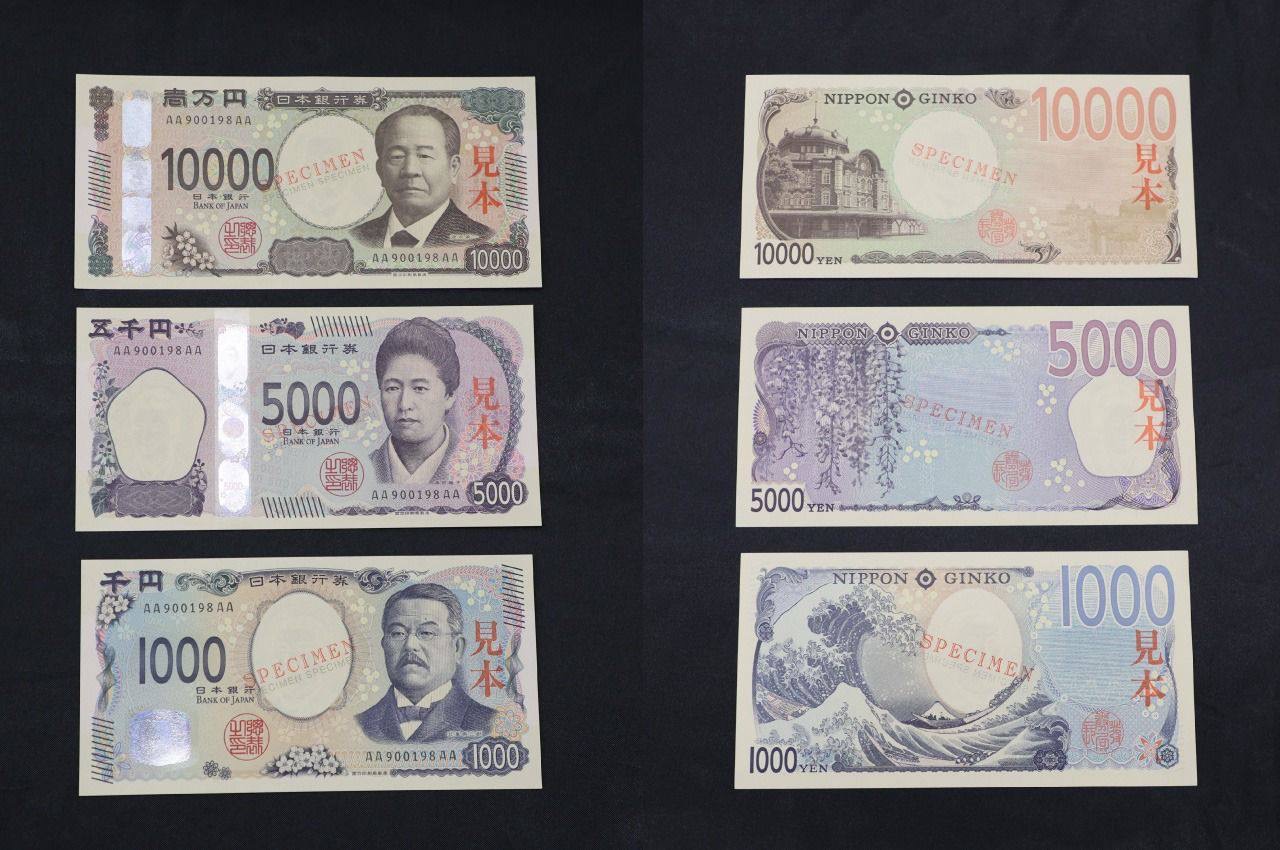
Each country has its own traditions about who and what is depicted on banknotes. Since I live in Japan, I want to tell you that new banknotes will be issued this year, namely on July 3, 2024. This was announced on December 12, 2023 by the Ministry of Finance and the Bank of Japan. I would like to note that this is the first update of banknotes in 20 years since 2004. 
In Japan, there is a tradition of depicting famous people; it so happens that on banknotes we see people from four main areas of life: representatives of education, business, medicine and art. The new 10,000 yen note features Shibusawa Eiichi, known as the "father of Japanese capitalism." Currently, this banknote depicts the writer, translator and philosopher, founder of Keio University, the first president of Tokyo Academy - Fukuzawa Yukichi. His portrait graced the 10,000 yen bill in 1984 and remains on the 2004 banknote, so the face on this banknote will change for the first time in 40 years.

On the 5,000 yen note, instead of Higuchi Ichiyo, the Meiji era writer (1868-1912), the portrait of Tsuda Umeko, who contributed to the development of women's education, will be used. It is recently that the situation of women has been changing. Beautiful representatives of Japan occupy high positions in various fields of activity. On the 1000 yen banknote, Noguchi Hideyo, a bacteriologist and eminent physician, will be replaced by Kitasato Shibasaburo - known as the "father of modern medicine" in Japan.
The reverse side of the bills has also been changed. So on the back of 10,000 yen there will be an image of the Tokyo station building, on the 5,000 yen note there will be wisteria flowers, and on the 1,000 yen note there will be the famous “Great Wave off Kanagawa” by the Japanese artist of the Edo period Katsushika Hokusai. This work influenced foreign artists and modern designers and jewelers.

I would also like to note that for the first time in the world, the banknotes will use hologram technology, which allows you to see portraits in three dimensions when viewed from different angles. As part of efforts to create a barrier-free environment, the bills have markings for tactile recognition of the denomination, and the numbers on the front side themselves are larger than on bills currently in use. 
From the moment the new banknotes are released, they will be available at cash desks of financial institutions and automated teller machines (ATMs). Banknotes currently in circulation can continue to be used. This is how you can pick up a banknote and learn the history of the country. In Japan, they treat everything with care, especially banknotes. For me, as an expert in the field of etiquette, the topic of banknotes from the point of view of historical facts and prominent people of Japan is both a good topic for small talk and a wonderful topic for small talk.

Meet Elena Gavrilina-Fujiyama, our newest contributor to Etiquipedia. Elena is a specialist in Japanese protocol and etiquette, and European social etiquette. The founder of the project Etiquette748, Elena is also a member of the National Association Specialist of Protocol. She authored the best-selling book “Japanese Etiquette: Ancient Traditions and Modern Rules” after living in Japan for over 20 years.
 

🍽️Etiquette Enthusiast, Maura J. Graber, is the Site Editor for the Etiquipedia© Etiquette Encyclopedia