Showing posts with label Diplomacy and Etiquette. Show all posts

Monday, May 18, 2026

Gilded Age Etiquette and “Dudes”

“There is a class of those female dudes in Washington who esteem it the proper performance to chatter in bad French at all times and upon all occasions. A bevy of these young women approached Madame de Struve at a reception in the White House, and began chattering in a more or less broken French…” — Baron de Struve and Baroness de Struve. Baron de Struve was a Russian Minister and the Baroness was a highly popular gilded age guest in diplomatic circles. — Public domain image of Baron and Baroness de Struve, courtesy of Wikipedia 


A WASHINGTON EPISODE

That Had a Pointer in It for Those Who Ape Foreign Manners

Baron de Struve, the Russian minister, and his wife are among the most popular people of the diplomatic circle in Washington. They are utterly simple and sincere, and are completely captivated by all things American. Madame de Struve is a very intelligent woman, but utterly without ostentation, and thoroughly a lady in all the best meaning of the term. The baron is as plain a man as a Maryland farmer, and both pay America the delicate compliment of seeking to appear American in all things.

The Baroness one day recently, showed her quick knowledge and appreciation of the fine points of etiquette, and at the same time fittingly rebuked a pert young American miss in a manner that will not soon be forgotten, and that should be told for the benefit of other similar young women who ape foreign airs, cultivate foreign tongues, and think it the proper thing to shrug one’s shoulders, elevate one’s eyebrows, and turn the palms of one’s hands outward in all the essence of depreciation at the mention of their own country.

There is a class of those female dudes in Washington who esteem it the proper performance to chatter in bad French at all times and upon all occasions. A bevy of these young women approached Madame de Struve at a reception in the White House, and began chattering in a more or less broken French, and she replied in her rather lame English:

“Why,” said one of the party, “do you not speak French, madam? I am sure you must be able to speak it.” The Baroness gave them a keen glance and replied, “Yes, I speak French, but not in the house of the American President. Though I speak English poorly, I speak it here as well as I can.”

The party were not dull enough to miss the rebuke in the calm and lady-like remark, and the baroness continued: “I do not like to speak French any where. It is a foolish and frivolous language and I dislike it. Why should one use it when one can express herself in the English, which is the noblest and best language in the world, as America is the greatest and grandest nation in the world. I am proud to speak in the language of the Americans.”

The giddy young misses began to converse in English, at least while in Madame de Struve’s presence. Some of them told the story, and its circulation caused the young lady who wondered that the Baroness did not speak French, some mortification. — Cincinnati Commercial Gazette, 1885


🍽Etiquette Enthusiast, Maura J. Graber, of The RSVP Institute of Etiquette, is the Site Editor for the Etiquipedia© Etiquette Encyclopedia

Tuesday, April 14, 2026

Washington Society Attends Corean Tea

Stunning, Gilded Age private ballroom in 1890s Washington D.C.


The Corean Minister and Mrs. Ye Cha Yun gave a tea from 4 to 7 o'clock this afternoon which was largely attended by society. The parlors of the location were decorated with growing plants and smilax. Mrs. Ye received her guests in a native gown of light blue brocade with a waist of yellow, trimmed in garnet velvet. Her English is now quite perfect, and there was not the slightest hesitation in starting or sustaining conversation with the many who approached her desirous of that pleasure. 

Minister Ye remained by his wife’s side during the earlier portion of the afternoon, as the company increased he mingled with the guests, escorting friends now and then to the dining room where the receiving party, in pretty light gowns, dispensed with the refreshments.

In the first parlor Mrs. Sevellon Brown assisted in receiving. In the adjoining room Miss Thompson poured tea, and in the dining room Miss Moore served coffee frappé. Miss Cuthbert served bouillon, and Miss Beatrice Farquhar presided at a large bowl of punch. The other young ladies were Miss Riggs and Miss Thompson of Philadelphia. — New York Times, 1892

🍽️Etiquette Enthusiast, Maura J. Graber of The RSVP Institute of Etiquette, is the Site Editor of the Etiquipedia© Etiquette Encyclopedia

Wednesday, November 19, 2025

Diplomatic and Forgiveness Tea

Ordinarily sensible men, of hearty honesty, would have each said for himself “I forgive and hope to be forgiven for errors in this matter,” and they would have shaken hands upon it, and if any body felt interest enough to enquire about, both would have acknowledged to the reconciliation. – Public domain image of General Butler, who later became the Governor of Massachusetts

Three Years After Civil War, General Grant and General Butler have become reconciled –
An invitation to tea has naturally followed.

General Grant, who in his famous report of military proceedings before Petersburg, spoke of Butler as being bottled up at Bermudas Hundreds, and who by that report sends Butler down through history to the latest posterity as a “Bottled Hero,” kindly said that he did not know of his own knowledge whereof he so solemnly reported, and Butler regards that as taking back the offensive report. This being so satisfactorily settled there was a little difficulty about an invitation to tea, which these two great minds had to deliberate upon. 

George Wilkes, editor of the Spirit of the Times, was mediator, intercessor and diplomat all through. The Bottled Up question did not trouble him much, for Grant readily acknowledged that he spoke in his report in a Pickwickian sense, and then too, outside of what he himself knew. Butler could want no more than this - unless he might desire a few more spoons and so Wilkes had the thing fixed. The tea party question presented more difficulties. 

Grant had invited Butler to tea, which in view of the fact that Grant's spoons are pure silver, showed great bravery on the part of Grant. Butler replied in an insulting note because Grant had reported him as a bottled up warrior. The diplomacy of George Wilkes was put up to the straining point to settle this, and divers letters and interviews had to be sent and to take place, to get the adjustment even started. But in time all was settled. 

The impeachment trial was pending when this understanding took place. It would not do, however, to let the public know of the reconciliation at that time, for as Grant might be a witness (why was he not?) a point could be gained by Butler defending a supposed personal enemy from a sharp cross examination. Grant being on the stand as a witness and testifying in answer to questions put by Butler, a personal enemy, would effect more than if answered to Butler the reconciled friend. This was the tricky part of the transaction. 

Ordinarily sensible men, of hearty honesty, would have each said for himself “I forgive and hope to be forgiven for errors in this matter,” and they would have shaken hands upon it, and if any body felt interest enough to enquire about, both would have acknowledged to the reconciliation. 

But sharp George Wilkes made himself a hero by having the secret kept. He was the man who knew all about it, but whose lips were sealed in order to help depose Andrew Johnson. The reconciliation was immense, and great is Wilkes. We have heard of a tempest in a teapot, but such wonderful negotiations to settle the etiquette of an invitation to tea never before astonished the world. Long. live Wilkes the great pacificator.– The Morning Union, 1868


 🍽Etiquette Enthusiast, Maura J. Graber of The RSVP Institute of Etiquette, is the Site Editor for the Etiquipedia© Etiquette Encyclopedia

Wednesday, October 1, 2025

Spotlight on Gabriella Kanyok


Meet our Contributor in the Spotlight is Gabriella Kanyok
Meet Gabriella Kanyok,  a diplomatic protocol, etiquette and communication expert with more than 15 years' experience in working with EU institutes, NGOs, international organizations, and supporting professionals. She not only advises and trains government and EU officials, and businessmen in the field of diplomatic protocol and business etiquette, but she leads the communication department of an international organization. Gabriella holds a Master’s degree in International Studies, and a Master’s in Protocol, Diplomacy and Cross Cultural Relations. She speaks Hungarian, English, French, and Mandarin Chinese.

Below are links to Gabriella Kanyok’s articles on etiquette which you’ll find on Etiquipedia:

The following is a Q. & A. with Gabriella:

What was the impetus for starting your Etiquette business or career involving Etiquette?

About 16 years ago, I recognized a significant gap in the availability of etiquette professionals, particularly in Europe and specifically in Hungary. While working at the European Parliament, I observed how customs varied from one country to another. I realized that if etiquette—both general and international business etiquette—were more widely taught throughout Europe, it could greatly benefit professionals in their daily interactions. Upon my return to Hungary, I served as a protocol officer at the Trade Office of the Embassy of the Republic of The Sudan in Budapest, where I was heavily involved in diplomatic protocol. This experience highlighted the growing need for business etiquette. While I initially focused on advising regarding diplomatic protocol, I took a significant step in 2017 by launching my business, Etiquette.hu, to share my knowledge and expertise in this essential field.

Apart from “White Tie Attire,” “Black Tie” is the most formal of all dress codes. It requires a sophisticated level of dressing. For women, the code typically calls for a floor-length dress or gown. While cocktail dresses can be an appropriate option for Black Tie (when the dress is stipulated as “Black Tie optional”), long dresses tend to be a more elevated choice.
What do you find the most enjoyable about what you do with regard to Etiquette in your work?
During my studies for a second master's degree in diplomatic protocol, I developed a passion for table manners and the art of setting a table beautifully for various meals and occasions. What began as a professional focus has now blossomed into a cherished hobby, allowing me to create diverse table settings and share them on my Instagram page and blog. A beautifully arranged table truly fills my heart with joy.

In addition to this, I find great satisfaction in sharing my knowledge through real-life examples, recounting stories of my own challenges and successes as I navigated my career. It’s rewarding to witness the transformations in others, especially when small adjustments in communication or behavior lead to significant outcomes, such as promotions or perfect dates. I firmly believe that manners are always in style, and etiquette offers personal security by protecting the feelings of others, clarifying communication, enhancing your status at work, and ensuring impactful first impressions.
I find great satisfaction in sharing my knowledge through real-life examples, recounting stories of my own challenges and successes as I navigated my career. It’s rewarding to witness the transformations in others, especially when small adjustments in communication or behavior lead to significant outcomes, such as promotions or perfect dates.
What do you find the most rewarding aspect of your career regarding Etiquette?
The most rewarding aspect of my career in etiquette is the opportunity to witness personal growth and transformation in my clients. I find immense joy in helping individuals improve their professional demeanor, refine their communication skills, and enhance their self-presentation. These changes can lead to significant achievements, such as promotions or meaningful relationships. Additionally, sharing my passion for etiquette through creating beautiful table settings allows me to inspire others to appreciate the finer aspects of social interactions, including the importance of proper dining etiquette and appropriate dress codes. Ultimately, knowing that I can positively impact people's lives by boosting their confidence and social acumen is incredibly fulfilling.
Proper etiquette not only aids in securing jobs and promotions but also fosters strong relationships within the workplace. 

What types of classes or training do you offer, if any? If you don’t offer classes or training, how do you share your expertise?
I offer a range of classes and training programs designed to enhance etiquette in various contexts. In the realm of Business Etiquette, I emphasize the importance of good manners as a vital component for success in today’s competitive environment. Proper etiquette not only aids in securing jobs and promotions but also fosters strong relationships within the workplace. 

For professionals navigating the complexities of international relations, I provide training in Diplomatic Protocol, which focuses on the etiquette essential for diplomacy and state affairs, outlining the correct conduct and procedures in this field. 

My Private Coaching sessions offer personalized, one-on-one training tailored to individual needs, ensuring that participants present themselves with a level of polish and professionalism that stands out. Additionally, my Corporate Training programs equip companies with the necessary tools to instill business and international etiquette in their teams, preparing them for global interactions. Lastly, I delve into the nuances of Table Manners, where mastering international dining etiquette is crucial—especially during job interviews and important meetings—ensuring every gesture reflects confidence and grace.
What age group do you enjoy working with most when it comes to etiquette? And why?
I particularly enjoy teaching adolescents and young adults, especially young professionals, about business etiquette. I feel a strong sense of purpose in guiding them as they embark on their career journeys. The teenage years are a pivotal time to shape daily habits and instill a foundation of good manners and etiquette. With young professionals, I find great satisfaction in witnessing their transformation and the positive outcomes that result from incorporating business etiquette into their everyday lives.
While there are general guidelines that govern etiquette, each of us brings a unique perspective shaped by our diverse career paths. This collective knowledge and experience enriches our understanding and helps us all grow in this ever-evolving field.
Who are some of the older etiquette authors or authorities you enjoy reading most?
I greatly admire the works of those established etiquette authors and authorities whose insights resonate with my own values in the field. Additionally, I find the resources available in Etiquipedia to be invaluable. I believe that learning from colleagues in the etiquette community is essential; while there are general guidelines that govern etiquette, each of us brings a unique perspective shaped by our diverse career paths. This collective knowledge and experience enriches our understanding and helps us all grow in this ever-evolving field.

If you would like to reach Gabriella, you can can contact her via her website 
https://www.etiquette.hu/en/ or find her on Instagram @kgetiquette


🍽️Etiquette Enthusiast, Maura J. Graber of The RSVP Institute of Etiquette, is the Site Editor of the Etiquipedia© Etiquette Encyclopedia

Sunday, March 23, 2025

A Diplomatic Decision in 17981

G.W. Parke Custis was the grandson of Martha Washington, First Lady and wife of President George Washington. His father John was the stepson of George Washington. – Public domain image of G. W. Parke Custis from the National Portrait Library

G. Washington, Marechal de France…

An interesting bit of history was told me lately by a descendant of G. W. Parke Custis. It seems that when, in 1781, the United States sent to France a special Embassador some difficulty arose between him and the French government as to the command of the combined armies.

Colonel Laurens, the Embassador, stated very firmly that George Washington, our chief, must command, “for it is our cause, and the battle on our soil.” The etiquette of the foreign government, however, exclaimed: “C'est impossible!” for here was Count Rochambeau, an old lieutenant general, who could only be commanded by the King in person or a Marechal de France.

The American wit of Colonel Laureus flashed upon the situation a happy thought. He said: “Make our Washington a Marechal de France and the difficulty is at an end.” It was done. Mr. Custis continues that a friend of his heard General Washington spoken of as Monsieur le Marechal at the siege of Yorktown.

I have heard that in some southern home there is a treasure, held beyond price - even the antiquity hunter's price, and he who aspires to buy the bones of his ancestors - an ancient porcelain mug, on which is painted an effigy of of Washington on horseback, and underneath is this inscription: “George Washington, Esq.. General in Chief of the United States Army and Marshal of France.”- Wide Awake, 1892


🍽️Etiquette Enthusiast, Maura J. Graber, is the Site Editor for the Etiquipedia© Etiquette Encyclopedia

Tuesday, July 16, 2024

Hollywood Royalty Dines with Queen

Douglas Fairbanks, Jr. (left), and Ronald Colman in The Prisoner of Zenda


LONDON. Many britons were surprised when President Eisenhower named a banker instead of a movie star the next U.S. Ambassador to England. They welcomed the choice of banker Winthrop Aldrich, long known as a friend of the British. But newspaper gossip columnists and– all unwittingly – Queen Elizabeth II herself had led them to expect that the job would go to Douglas Fairbanks, Jr., screen actor and spare-time diplomat., Fairbanks Junior, now a greying 43 with a hairline moustache and a friendly smile, has never achieved the film fame of his father. But with no apparent effort he has performed in Britain a feat of social climbing that leaves the most ambitious Washington hostess gasping. A few weeks ago, on November 19, he reached the top. Queen Elizabeth and her husband, the Duke of Edinburgh, came to dinner.

The young monarch and a handful of other guests ate off green china in the big dining room of the Fairbanks house in a secluded byway of the classy South Kensington district. For Fairbanks and his wife, the former Mary Lee Epling Hartford, daughter of a Virginia doctor, the party was a triumph. For the starchy "old guard" of society it was something to set eyebrows rising above lorgnettes. The question is: what has turned a Hollywood glamor boy into a respected, statesman-like figure? 

His' Father's Footsteps 

It's probably a case of literally following in father's footsteps. With his wife, Mary Pickford, Fairbanks, Sr., made contacts in London society which have opened many crested doors to his son. Most important was a friendship with Lord Louis Mountbatten, now Earl Mountbatten of Burma, an uncle of the Queen's husband. Fairbanks, Jr., inherited from his father a love for England. His career as an ex-official statesman started when President Roosevelt asked him to help smooth the visit of King George VI and Queen Elizabeth to the U.S. in 1939. Then, in 1940, Roosevelt sent him as an envoy to several Latin American countries. In World War II, Fairbanks served in the U.S. Navy. He was appointed to the staff of Lord Mountbatten. He took part in the raid on Dieppe, finished the war with rows of decorations. His biggest role since the war has been with C.A.R.E.. This won him an honorary knighthood in 1949. As a foreigner, he is not entitled to a "sir" before his name. He prefers to be known as Commander Fairbanks, but he does not object when Britons call him "Sir Douglas." 

Nobody knows just what other statesman plays host to Queen & Prince. About his official capacity, if he has any, the U.S. Embassy says only: "About a year ago the State Department asked Douglas Fairbanks, Jr., to be available for occasional consultation with the American Embassy in London. He now has an advisory status on the information side." 

He Won't Talk 

Fairbanks is silent about his diplomatic and social honors. To his credit, he talks only about his professional career– making movies here for U.S. television. Though he won't say how he managed to get the Queen to come to dinner, friends claim it came about quite naturally. Talking with Prince Philip, with whom he has much in common because of his friendship with the Mountbattens, Fairbanks mentioned that his house in South Kensington was decorated and ready for guests. Thereupon, Philip indicated that a Fairbanks' invitation to a quiet, informal evening would be accepted. And, for the benefit of ambitious hostesses, that's the inside story on how it happened!


🍽Etiquette Enthusiast, Maura J. Graber, is the Site Editor for the Etiquipedia© Etiquette Encyclopedia

Saturday, July 13, 2024

Uncle Sam Stickler for Etiquette

Enrique Alfredo Olaya Herrera was a Colombian journalist and politician. He served as President of Colombia from 1930 until 1934.—Public domain image of the 13th President of Colombia


Diplomacy and Protocol
‘The Capitol, Day By Day’ -1930

WASHINGTON— It would doubtless amaze the average citizen of this republic, if he could, but know just what a stickler for form and etiquette his Uncle Sam really is.

Not much is known outside of Washington concerning this. Of course, there was the Gann-Longworth controversy which is familiar to all, but this was more or less a private affair. Uncle Sam held himself aloof-content to let the principals settle the matter themselves. But when an occasion arises where he is called on to show his hand, nothing is spared to make sure that the correct thing is done in the most correct way and at the exact time.

To illustrate with a recent example:
Several weeks ago handsome, smiling Dr. Olaya Herrara left the Colombian legation on Seventeenth street in Washington for his native country to become a candidate for the presidency. At the time he was Colombia's minister to the United States. His departure was without ostentation a bare handful of people gathered at the union station to bid his goodbye.

News dispatches within a few weeks told of his election. It was also reported that he would return to the United States to close his affairs at the legation and get things in shape for his successor whom he will appoint.

Officials in the protocol division of the state department began to worry. How should he be received -as President-elect of Colombia, or as Colombia's minister plenipotentiary to the United States? It was a knotty problem. Conferences and precedent availed them nothing. Finally, as a last resort, they communicated direct with Dr. Olaya, asking him for an opinion. Between the two a reception program was arranged.

So, when the President-Elect of Colombia arrived in New York he was greeted with the roar of 21 guns— the Presidential salute. When he set foot on American soil he was met by a proper escort— Richard Southgate of the protocol division of the state department, H. Freeman Matthews of the Latin-American division of the state department, and Jose M. Coronado, Charge d’ Affaires of the Colombian legation. But, the moment he stepped on the train for Washington he was no longer officially recognized as Colombia's minister plenipotentiary to the United States.

However, if Dr. Olaya remains in Washington until June 4, or after, he will again be accorded all the honors due a President-elect of a sovereign state. On that date, according to the constitution of Colombia, he will be proclaimed President. If he departs before that date he will be regarded as just another minister leaving his post.

— By Herbert Plummer, April 1930

🍽Etiquette Enthusiast, Maura J. Graber, is the Site Editor for the Etiquipedia© Etiquette Encyclopedia

Saturday, March 2, 2024

Etiquette Broken by Ambassador


“The etiquette of diplomacy has it that an Ambassador, even one from a republic, who hangs about a throne thereby acquires a sort of obligation to observe the etiquette of the throne. When Bismark wrote his memoirs, even that man of blood and iron wrote only of Kingly persons who were dead; etiquette forbade him even discussing the relations he had with living royalties. It is this rule that Gerard is breaking all to pieces.” Kaiser Wilhelm II was the last German Emperor and King of Prussia, from 1888 until his abdication in 1918. This marked the end of the German Empire and the 300-year reign of the House of Hohenzollern in Prussia, along with the end of the 500-year reign in Brandenburg.– Public domain image of Ambassador James W. Gerard, Ambassador to Germany from 1913 to 1917


Gerard’s Story Will Stir London


(Special Correspondence) LONDON, July 28.- Official London is "shocked." It is not the first time London has been shocked by American ways of doing things, and probably will not be the last. The thing which has caused this particular shock is the announcement of the publication of the memoirs of Ambassador Gerard, who but a few weeks ago was President Wilson's personal representative at the court of Berlin. This story will run in the Los Angeles "Examiner" beginning August 5.

It appears that there is a divinity which doth hedge a King– or a Kaiser – for which Ambassador Gerard, like other Americans, care not one straw. The etiquette of diplomacy has it that an Ambassador, even one from a republic, who hangs about a throne thereby acquires a sort of obligation to observe the etiquette of the throne. When Bismark wrote his memoirs, even that man of blood and iron wrote only of Kingly persons who were dead; etiquette forbade him even discussing the relations he had with living royalties. It is this rule that Gerard is breaking all to pieces. 

Just back from Berlin, only a few days out of the diplomatic service, he is proceeding to tell his fellow citizens in good plain American language just what he said to the Kaiser and just what the Kaiser said to him, and how the German secret-service tried to search his. papers while the German Foreign Office was trying to divert his attention by telling him how much they loved America; and how he introduced the good American phrase, "Until hell freezes over," into the German language, and a lot of similar things.

The point is that Mr. Gerard ought to wait until the Kaiser is dead. Eng- land has no love for the Kaiser, and would just as lieve that the Kaiser play he is dead, but England has a KING and a court, and etiquette is etiquette. In the meantime, the American public will undoubtedly be looking for every installment of Gerard's story, and reading it with eager interest, as it appears as a serial in the leading daily papers of all parts of the United States. – Ventura Free Press, 1917


🍽Etiquette Enthusiast, Maura J. Graber, is the Site Editor for the Etiquipedia© Etiquette Encyclopedia

Tuesday, June 6, 2023

Entertaining Monarchs in Style

Entertaining foreign Monarchs can be quite costly… – “The ceilings were studded with Tudor roses, on a gold background. Chairs were smothered with cushions, and cloths of estate, of various shapes and sizes, overlaid with golden tissue and rich embroidery, hung in the state apartments. The walls were hung with the King’s tapestries, and above was a frieze with figures from Greek and Roman mythology and moulds of the King's arms. In fact, pretty much everything was covered in heraldic symbols. Wriothesley, Garter King-of-Arms, was asked to produce a book to “in picture of all the armes…bestes, fowles, devises, badges and cognisances…[of the] kinges hignes, the quenes grace [and] the French king.” These symbols would either be painted, or frequently made of moulds of leather-mache. Outside, there was also some sort of grand staircase on the exterior and, in the courtyard, the famous fountain that streamed claret, hippocras and water into silver cups.” – To read more on this, check out the website, “Tudor Times”

The idea of the Royal banquet is as old as the Monarchy itself. In 1315 a decree was issued which declared that 'feasts' were reserved purely for the Monarch. Dining in public was an important ceremony and a way of offering access to the Sovereign. Close members of the Court were given the honour of serving the King - carving his meat and pouring his wine.

Hospitality and the forming of diplomatic relations have always been among the chief obligations of the Monarch. One of the best- known diplomatic missions undertaken by an English King was that of Henry VIII to visit Francis I of France in 1520. They met near Calais, at the so-called Field of the Cloth of Gold. The monarchs vied to outdo each other in splendour. 

This depiction (above) of the event shows the temporary palaces erected for the occasion - on the far right can be seen the catering arrangements, which were as important for diplomatic relations as any other part of the visit. In the foreground is a fountain flowing with wine, designed by the French to impress their English visitors. — From “The Royal Table: Dining at the Palace,” by Kathryn Jones, 2008


🍽Etiquette Enthusiast, Maura J. Graber, is the Site Editor for the Etiquipedia© Etiquette Encyclopedia

Thursday, November 3, 2022

Comparing Etiquette Accorded VIPs

The official reception of the President of France was warmly cordial, but, being ruled by etiquette, did not exceed that of Emperor William. The Czar, toasting President Faure at a banquet at the Palace to-night, recalled his own reception in France and said: “We delight to hope your stay among us and the sincerity of the sentiments it awakens will draw yet tighter the bonds of friendship and sympathy uniting France and Russia.” — Public domain image of Emperor William II
The Czar Embraces Faure:
The Reception More Cordial Than That Accorded Emperor William

ST. PETERSBURG, August 23.— President Faure of France arrived at Petrhof at 11:30 this morning. He was met by the Czar who greeted him with the utmost cordiality and embraced him. President Faure was the recipient of an enthusiastic ovation from the populace on his way to the palace.

The popularity of the reception accorded Emperor William on his recent visit to Russia was completely eclipsed by the welcome to President Faure. Peter is en fete. The palace is a bower of decorations and the tri-color is every where in evidence. Men and women wear it and children carry the French flag.

The din of the “Marseillaise,” which is being performed everywhere by inexperienced persons, is deafening. Wherever there is a piano nothing else is played or sung. All the bands are practicing the air.

The official reception of the President of France was warmly cordial, but, being ruled by etiquette, did not exceed that of Emperor William. The Czar, toasting President Faure at a banquet at the Palace to-night, recalled his own reception in France and said: “We delight to hope your stay among us and the sincerity of the sentiments it awakens will draw yet tighter the bonds of friendship and sympathy uniting France and Russia.”

President Faure thanked the Czar in be half of France, and added: “I have come to Russia to affirm and strengthen further the powerful ties already binding Russia and France.” — San Jose Mercury News, 1897


Etiquette Enthusiast, Maura J Graber, is the Site Editor for the Etiquipedia© Etiquette Encyclopedia

Thursday, June 23, 2022

Ping-Pong Diplomacy in 1971

American table tennis player, Glen Cowan (bottom left), who caught the ride on the Chinese team’s bus, along with the other U.S. table tennis players in China – on the cover of Time magazine, in April 1971

Ping-Pong Diplomacy

When an American competitor at the 1971 World Table Tennis Championships in Nagoya, Japan, missed his team bus back to the hotel, he set off one of the biggest tectonic shifts of diplomacy in world history — and triggered the end of the Cold War.

Jumping on to the Chinese team’s bus instead to catch a ride, one of the Chinese athletes broke strict protocol by handing him a gift of a silk cloth depicting the famous Huangshan Mountains.

When the bus arrived back at the hotel, journalists were astonished to see the two players chatting. Their photographs of this rare meeting of nations dominated news headlines around the world and Mao Zedong, spotting an opportunity, invited the U.S. team to spend a week sightseeing in China.

Capitalising on this new-found good will, President Nixon instigated a visit to Beijing — so began the defusing of the Cold War, and the term Ping-Pong Diplomacy was coined.– Christian Howgill for the Mail Online, June 17, 2022


Etiquette Enthusiast, Maura J. Graber, is the Site Editor for the Etiquipedia© Etiquette Encyclopedia

Friday, February 25, 2022

How to Behave With a Royal Duke

The Duke and Duchess of Connaught with Princess Patricia and Prince Arthur– What form of obeisance and address is proper when the Duke of Connaught crosses the line on a friendly visit to a democratic republic constitute questions of supreme importance in high social and diplomatic circles.

PROSPECTS of a visit from a Prince of the Blood Royal disquiet exalted circles in New York and Washington, and these are visibly disturbed in mind and body because they are not quite sure how they should behave in the presence. What form of obeisance and address is proper when the Duke of Connaught crosses the line on a friendly visit to a democratic republic constitute questions of supreme importance in high social and diplomatic circles.

If he comes incognito, that pleasing but transparent fiction involves perplexing exploration of the uncertain field of etiquette. What limits shall society put on its eager homage to a Prince in disguise? What restraint must the polite world impose on the pregnant hinges of the knee? It might even be the less embarrassing were His Royal Highness to come in all the pomp and circumstance attending his exalted station.

Such doubts as these might be sufficiently disturbing, even were they not accentuated by the fear that the duke has been captured by “The Whitelaw Reids.” It is not understood that these are an organized banditti taking bodily possession of a wandering Prince. Quite the contrary. The Reids are a distinguished diplomatic family with eminent social aspirations. But the others are suspicious and fearful lest the Duke be held incommunicado by his supposed captors, with a bodyguard to protect him from the climbers. Altogether the situation is embarrassing and full of doubt.– San Francisco Call, 1912


🍽Etiquette Enthusiast, Maura J Graber, is the Site Editor for the Etiquipedia© Etiquette Encyclopedia

Friday, September 3, 2021

Royal Etiquette Maintained in Wartime

A seemingly unflappable diplomat, the war didn’t stop him from expecting the strictest diplomatic etiquette be observed, even if the country had been invaded.
– Public domain image of Baron Cartier de Marchienne

King George Felicitates Leopold on His Birthday
LONDON, Νον. 3 – King George sent congratulations and best wishes today to King Leopold of Belgium on his forty-first birthday. The strictest diplomatic etiquette was observed. Baron Cartier de Marchienne, the Belgian Ambassador, received a visit from Sir John Monck, Vice Marshal of the Diplomatic Corps, who conveyed the messages in the style observed for years. There may be something irregular about handing on the greetings to King Leopold. He is living in his own land under the watchful eye of the Germans. – Wireless to The New York Times, 1942

Etiquette Enthusiast, Maura J. Graber, is the Site Editor for the Etiquipedia© Etiquette Encyclopedia

Sunday, July 11, 2021

Etiquette of Foreign Ministers at D.C.

A failure to seat a member of the corps or his wife in the precise seat belonging to his or her rank at the table would probably destroy the pleasure of the occasion. Not one inch farther from the host or hostess than belonged to the country they represent, would be tolerated.– Public domain image of a map of South America from 1892


Foreign Ministers demand the most scrupulous observance of the stereotyped rules of etiquette, and watch with scrutiny every attention and inattention to them. A failure to seat a member of the corps or his wife in the precise seat belonging to his or her rank at the table would probably destroy the pleasure of the occasion. Not one inch farther from the host or hostess than belonged to the country they represent, would be tolerated. The placing of the diplomats in line to be presented on occasions of ceremony must be done in strict observance of rank and importance of each. 

Hence, persons dining or entertaining these dignitaries must first post themselves accurately on the status of every Kingdom, province and principality, if they expect to give their guests pleasure and to avoid a scene, such as has characterized occasions where “second-class South America” has occupied positions a few paces above “first-class Europe,” or where little European provinces have been given more conspicuous places than greater Kingdoms. — American Magazine, 1888


Etiquette Enthusiast, Maura J Graber, is the Site Editor for the Etiquipedia© Etiquette Encyclopedia

Monday, November 30, 2020

The United Nations' White Chair


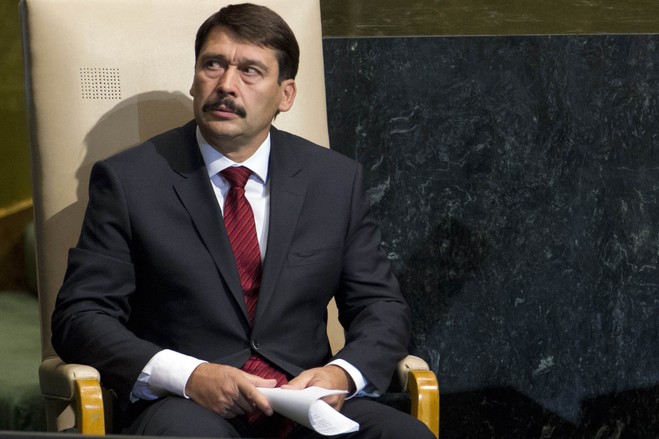
János Áder, President of Hungary is waiting to speak at the General Assembly. An interesting protocol rule, tradition is established at the General Assembly: a White chair is placed on the podium for the honour of a high dignitary guest. 


A Glimpse into the Protocol of the United Nations' General Assembly


Order of Precedence


Every year during the session of the General Assembly, the seating order between the Member States is changed by drawing a name of a country. That lucky state has the right to precede the other Member States during the General Assembly meetings. The precedence of countries is followed by the designated state in English language, alphabetical order. Member states have to seat the Heads of States or Prime Ministers first, then the Ministers, and then on the last row, their Permanent Representatives.


Official Visits of Dignitaries


When a Head of State or Government visits the Secretary-General, the Chief of Protocol greets the Head of State as he or she alights from his or her vehicle and escorts him or her to the office of the Secretary-General. At the end of the meeting, the Secretary-General will bid farewell to the Head of State or Government. 
Brazilian President Michel Temer addresses the opening of the 73rd General Assembly of the United Nations in 2018. 

The Chief of Protocol escorts the Head of State or Government either to the General Assembly Hall or to another designated area. During the general debate, seats are reserved in the VIP area of the General Assembly Hall for the spouses of the Heads of State or Government, Vice-Presidents, Crown Princes or Princesses participating in the general debate, provided that the Chief of Protocol is notified in advance of their attendance at the Session. (Reference: https://protocol.un.org/dgacm/pls/site.nsf/xpManual.xsp)

When a Head of State or Government speaks on the podium at the General Assembly, he or she always has to be accompanied by the Chief of Protocol of the United Nations, who waits for the high ranking person to finish the speech.
The chair itself had its own wait backstage with a cautionary sign, before the opening of the General Assembly.


The White Chair

An interesting protocol rule, tradition is established at the General Assembly: a White chair is placed on the podium for the honour of a high dignitary guest. When Royalty, Prime Minister, or a President, etc... attends the General Assembly meeting by entering the Assembly, he or she goes — in the company of the Head of Protocol of the United Nations— directly to the podium and sits on the White Chair.


The White Chair, right next to the podium of the U.N. General Assembly in New York City is reserved for world leaders waiting to speak at the annual meeting, which is a very interesting tradition of the UN.


Gabriella Kanyok is a diplomatic protocol, etiquette and communication expert with more than 10 years' experience in working with EU institutes, NGOs, internaionalorganisations, and supporting professionals. She not only advises and trains government- and EU officials, and businessmen in the field of diplomatic protocol and business etiquette, but she leads the communication department of an international organisation. Gabriella holds a Master’s degree in International Studies, and a Master’s in Protocol, Diplomacy and Cross Cultural Relations. She speaks Hungarian, English and French, and is currently learning Mandarin Chinese.


Etiquette Enthusiast, Maura J. Graber, is the Site Editor for the Etiquipedia© Etiquette Encyclopedia

Wednesday, October 28, 2020

Work of Art or Diplomatic Insult?


Segev proudly posted a close-up photo of the offending shoe-filled dessert on his Instagram account, writing: “Chocolate selection from the world by #SegevArt — A metal shoe by @tomdixonstudio” ... “The dessert was served inside a sculpture by international artist Tom Dixon, whose works are displayed in major museums around the world and for the first time was displayed in Israel at a meal. This is a high-quality piece of art made of cast metal in the shape of a shoe; it is not a real shoe,” Segev’s publicist said in a statement, according to Yediot Aharonot.


There aren’t that many cultures where putting a shoe on the dining room table is acceptable behavior, but for the Japanese there is clear etiquette against allowing outdoor shoes inside.

That might explain the furor following a visit by Japanese Prime Minister Shinzo Abe and his wife, Akie Abe, to Israel last week.

After a day of high-level meetings on May 2, the Japanese leader was treated to a festive meal at the official residence of Prime Minister Benjamin Netanyahu and his wife, Sara Netanyahu. It was their second time in Israel, and the visiting couple were served a top-notch meal by celebrity Israeli chef Segev Moshe.

But then came dessert. A selection of delectable chocolate pralines - artistically arranged inside a shiny leather shoe.

Israel’s popular daily newspaper Yediot Aharonot wrote Monday that “Japanese diplomats, Israeli Foreign Ministry officials and high-ranking Israeli diplomats who previously served in Japan were shocked by the idea.”

“This was an insensitive decision,” the article quoted one unidentified senior Israeli official as saying. “There is nothing lowlier than a shoe in Japanese culture. Not only do they not wear shoes at home, you also won’t find shoes in their offices. This is disrespect of the first order.”

A Japanese diplomat, also not named by the paper, said: “There’s no culture in the world in which you put shoes on the table. What was the distinguished chef thinking? If it was humor, we don’t think it is funny; we were offended on behalf of our prime minister.”

Israel’s Foreign Ministry said in a statement that it was not involved in approving the dishes for the meal.

“We respect and appreciate the chef. He is very creative,” the ministry said.
Not an actual shoe, but a work of art filled with chocolate.


Segev’s creative side was displayed last May when President Trump visited Israel. Then, the celebrity chef served up a dessert in the shape of a double-headed Trump and Netanyahu.

On Sunday, Segev proudly posted a close-up photo of the offending shoe-filled dessert on his Instagram account, writing: “Chocolate selection from the world by #SegevArt — A metal shoe by @tomdixonstudio”

“The dessert was served inside a sculpture by international artist Tom Dixon, whose works are displayed in major museums around the world and for the first time was displayed in Israel at a meal. This is a high-quality piece of art made of cast metal in the shape of a shoe; it is not a real shoe,” Segev’s publicist said in a statement, according to Yediot Aharonot.

On Instagram, however, some of his 72,000 followers offered a different opinion:

“When you cook at a diplomatic meal, the minimum you can do is inquire about the guest. In Japan, shoes are considered contemptible, they always take off their shoes at the entrance to every home, both for themselves and for others,” wrote one person.

Another person wrote: “you don’t need to know any culture to know that serving shoes at a dinner is WRONG!” 


— From an article by R. Eglash, the Washington Post, Jerusalem 2018


Etiquette Enthusiast, Maura J. Graber, is the Site Editor for Etiquipedia© Etiquette Encyclopedia

Tuesday, October 20, 2020

Diplomatic Blunder Led to Faux Pas

It was bad enough that he had a faux nose to replace the one he lost due to illness, but how on earth could someone with a faux nose use snuff? And would the person even want to???— “Prince Alexander, with his wonted grace of manner, soothed the wounded spirit of the diplomatist, and on taking leave of him was so anxious to be polite that, forgetting the peculiar disabilities under which Gadban Effeudi labored, he presented him with a valuable silver snuff-box.” — Above, antique silver snuff box.


In a letter from Sophia, we find the following story: Gadban Effendi, at some early period of his life, was in delicate health, and his malady settling in his note brought about the total loss of that feature. This misfortune was mitigated by the adoption of a paper substitute, which answers uncommonly well and never turns blue on frosty mornings. But of course it is not a thing to take notice of or talk about. Yet, when Gadban Effendi was going to Stamboul last January with the Prince's message to the Sultan, a passport was given him by the Bulgarian Foreign office, which contained his signalement, of which one of the items was, “Nez Postiche.”


This brutal precision irritated Gadban Effendi very much. He demanded an audience of the Prince, and insisted that the passport clerk should be dismissed. Prince Alexander, with his wonted grace of manner, soothed the wounded spirit of the diplomatist, and on taking leave of him was so anxious to be polite that, forgetting the peculiar disabilities under which Gadban Effeudi labored, he presented him with a valuable silver snuff-box. — Daly Alta, 1886


Etiquette Enthusiast, Maura J. Graber, is the Site Editor for the Etiquipedia© Etiquette Encyclopedia


Thursday, July 9, 2020

Etiquette, Diplomacy and Cads

The dapper, Spencer Eddy, spent 15 years working his way up in the U.S. diplomatic service and was briefly the Minister to Argentina (1908-1909), followed by Romania (1909), when he resigned due to his wife’s poor health. What a pity that in his many lofty positions, he never learned that publicly spreading gossip about others was considered poor manners.
Public domain photo 

Who is the Real Cad?


That brilliant light of diplomacy, Spencer Eddy, who married a granddaughter of the late Claus Spreckels of San Francisco, is said by the New York Globe to be telling a story of the horrible experience he went through when a San Francisco friend ate peas with his knife at a London dinner. Eddy is a Chicagoan, and his story is amusing to Californians, for when Chicago’s millionaires were still serving head cheese for dessert and pigs-feet for breakfast, Californians were returning from European tours where they were indistinguishable from other civilized beings by their table manners, except that Californians conducted themselves at the table better than the average Europeans. 

No Californian abroad has ever behaved in the way British cads have in this country, and several of the cads had titles, too. Nor does it become a New York paper to discuss crudity of table manners, for the public restaurants there give an opportunity for comparison that puts the average Gothamite in the ultra ill-bred class. Here is another point of view. 

Even if Eddy's San Francisco friend did commit the horrible faux pas of eating peas with his knife, he must have been a decent fellow—too decent to have told tales about Eddy, had Eddy, for example, come to California and made a fool of himself, as many such persons do, in discussing local affairs and history. If Eddy told the story credited to him by the New York Globe, it is Eddy who is the boor and the cad for decrying his guest, and not the mythical San Franciscan. — San Francisco Call, 1909


Etiquette Enthusiast, Maura J Graber, is the Site Editor for the Etiquipedia© Etiquette Encyclopedia