Showing posts with label Ceremonial Observances of Society. Show all posts

Tuesday, May 19, 2020

Defining Edwardian Etiquette

Ask yourself the question. “What is it that binds society together?” and we get the answer, “the unwritten laws of etiquette.” What would we be without them? Where would be the check on rudeness and bad manners, and those people of whom unfortunately there are plenty, who are only polite because they are obliged to be so? Obliged? And by what? By these social laws, that we call, for want of a better name, “etiquette.” Without such an unwritten law they would behave as rudely and as disagreeably as their elemental impulses dictated.
— photo source, Pinterest

From the Social Mirror

The Standard dictionary defines etiquette as “the formalities or usage required by the customs of polite society or professional intercourse; the conventional ceremonial of polite society” and we have accepted such a definition without question until we read the following words of a well known writer, recently written upon the “Sins of Etiquette.”

“Etiquette is the foolish and insincere science of ceremony. From a mere conventional form, it has degenerated into tyranny.” Later when alluding to social life, she says: “Etiquette has the appetite and talons of an eagle, and civilized mankind is its prey.” 
Such radical assertions cause us to stop and think just what etiquette is, what it really means to us as an individual and as members of cosmos society. We cannot help but wonder just what society would be like in all its ranks, and just what sort of manners would be prevalent amongst its various members, if the restraining influence of etiquette were removed and everyone could do exactly as he or she saw fit; If, in fact, every person was a law unto himself or herself in all daily matters that have to do with social life. 

Ask yourself the question. “What is it that binds society together?” and we get the answer, “the unwritten laws of etiquette.” What would we be without them? Where would be the check on rudeness and bad manners, and those people of whom unfortunately there are plenty, who are only polite because they are obliged to be so? Obliged? And by what? By these social laws, that we call, for want of a better name, “etiquette.” Without such an unwritten law they would behave as rudely and as disagreeably as their elemental impulses dictated. 

These social laws or “etiquette” as we term them, have not been made at any given period nor laid down by any one person, class or people, but have grown into their present form, bit by bit as the necessity arose for their use and as time and custom required. We look them over closely and find that scarcely one of them as practiced today can really be called useless, foolish or unnecessary. Like so many other things, the laws of etiquette should be used and not abused; but, of course, this is what many people seem to forget. 

There are some who are absurdly formal, even among old friends, but theirs is the fault, not the social laws which they have followed too strictly. Laws of etiquette have not been made so hard or fast that they cannot be relaxed when among our friends, with whom too much ceremony is foolish. Etiquette is made up of social obligations that none of us can deliberately neglect without risk of being considered discourteous, and I doubt if there are many of us who agree with the quoted writer’s definition of meaning of the term “etiquette.” — The Humboldt Times, 1909


Etiquette Enthusiast, Maura J Graber, is the Site Editor for the Etiquipedia©️ Etiquette Encyclopedia

Wednesday, November 18, 2015

Etiquette and Social Invitations

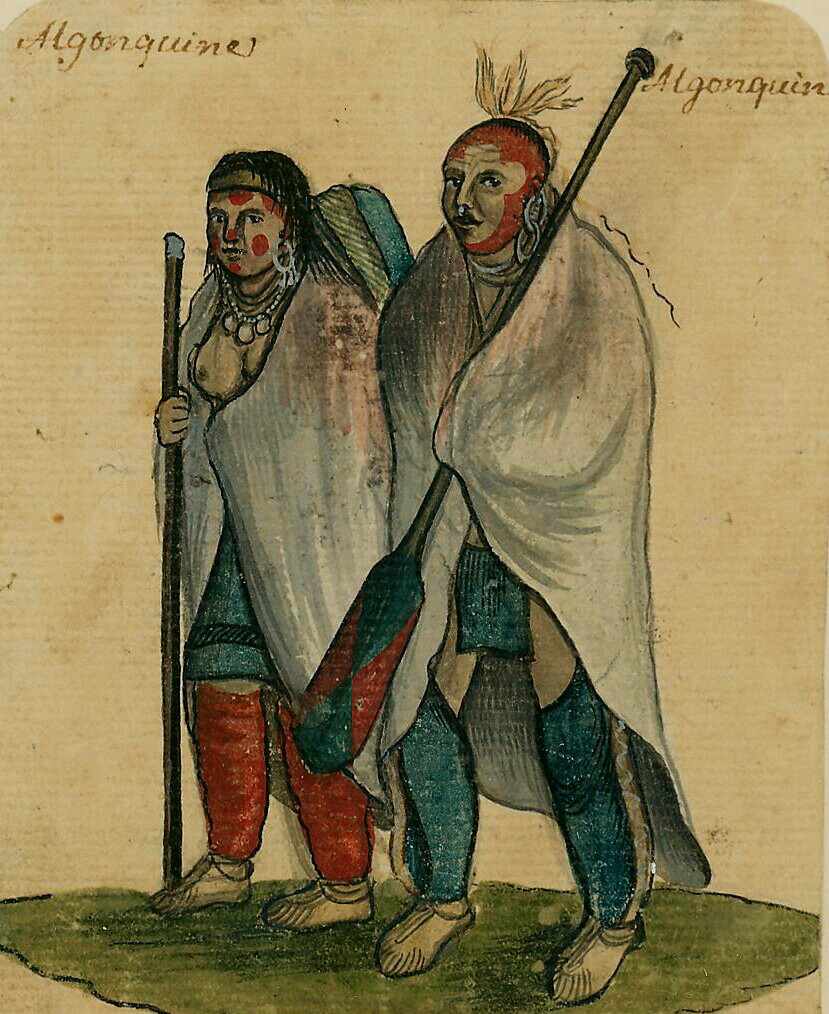
Long before 1600 the Algonquins were sending out "dinner invitations" in the form of specially cut blocks of wood about the size of the little finger. All those who received the bit of wood with its curious picture message, knew that they were invited to attend the feast and celebration being given by the Algonquin

Writing very early became a device for making social affairs run more smoothly. Writing in the sense of books, newspapers, records, stories is one thing; writing in the sense of social correspondence, invitations, cards of greetings, congratulation, and condolence is quite another.

The North American Indians were among the first to use actual invitations. They burned their message on buckskin and sent it by runner to the person for whom it was intended. Tribes also had a smoke message which they used to call their people together for purposes of feasting, celebrating, etc... The smoke message was used sometimes in warfare.

It appears that among the Indians, ever a hospitable people, the development of the invitation was rapid and marked. Long before 1600 the Algonquins were sending out "dinner invitations" in the form of specially cut blocks of wood about the size of the little finger. All those who received the bit of wood with its curious picture message, knew that they were invited to attend the feast and celebration being given by the Algonquin. They came from far and wide to join in the merrymaking.

Among early European peoples the invitation developed slowly. The peasantry, of course, had no need for any such thing as an invitation; if one of their number wished to celebrate at the public bar or in his home, he merely called all his friends together with as much proud noise as he could command. Among the upper classes, a private messenger was sent to give the information orally.

By the time of Shakespeare the invitation had reached a fairly high point of development. The mode of the written invitation first found favour at court and then spread to the people in the cities. These invitations were written on huge sheets of white paper, by hand, the initial letters usually made by stamp and decorated with color.
   
"So many guests invite as here are writ," says Shakespeare. The invitations were carried by pages or messengers to the homes of the people for who they were intended, and usually an answer was required, in the manner of our acknowledgement. –Lillian Eichler


Etiquette Enthusiast, Maura J Graber, is the Site Editor for Etiquipedia© Etiquette Encyclopedia

Tuesday, November 17, 2015

Etiquette and Wedding Invitations

In large towns and cities it became necessary to invite by written word those who were to attend the wedding ceremonies.
The development of the wedding invitation was particularly marked. In small villages the wedding bells ringing sweetly from the church belfry were the only invitation. All the friends and neighbors gathered together to greet the bridal party. But in large towns and cities it became necessary to invite by written word those who were to attend the wedding ceremonies.

The following rare old invitation, written in 1786, was clipped by William Hone from a Cumberland (England) newspaper and incorporated by him in his famous, “Table Book.” Here is an exact reproduction of the invitation:
Notice is hereby given that the marriage of Isaac Pearson with Frances Atkinson will be solemnized in due form in the parish church of Lamplugh, in Cumberland, on Tuesday next, the 30th of May inst. (1786); immediately after which the bride and bridegroom with their attendants will proceed to Lonefoot, in the said parish, where the nuptials will be celebrated by a variety of rural entertainments.

Then come one and all, at Hymen's soft call. From Whitehaven, Workington, Harington, Dean, Hail, Ponsonby, Blaming, and all places between;

From Egremont, Cockermouth, Barton, St. Bee's,
Cint, Kinnyside, Calder and parts such as these; And the country at large may flock in if they please.


Such sports there will be as have seldom been seen,
Such wrestling and fencing, and dancing between,
And races for prizes, for frolic and fun
By horses and asses and dogs will be run,
That you'll go home happy – as sure as a gun.
In a word, such a wedding can never fail to please;
For the sports of Olympus were trifles to these.

*Nota Bene- You'll please observe that the day Of this grand bridal pomp is the 30th of May,
  When 'tis hoped that the sun, to enliven the sight,Like the flambeau of Hymen, will deign to burn bright.
This specimen of an 18th century wedding invitation is doubly valuable. Not only does it reveal to us the kind of wedding invitations that were being written and publicly printed in those days, but it gives us an excellent picture of the kind of weddings that were then in vogue. Can you imagine races by dogs and horses at the modern marriage? Can you imagine fencing and wrestling and the “country at large” flocking in? 

The custom of posting invitations did not come until comparatively late. Not because posting was unknown– a royal post system existed even in ancient Persia. But for a long time a popular superstition made it an insult to send an invitation any other way than by personal messenger. Gradually this superstition passed out of favour, and soon everyone who entertained was posting invitations– recognizing this as a simple expedient toward getting guests together." – Lillian Eichler

*Nota bene is Latin. It means “note well” (effectively meaning ‘please pay attention to this’).


Etiquette Enthusiast, Maura J. Graber, is the Site Editor for the Etiquipedia© Etiquette Encyclopedia

Wednesday, January 14, 2015

Etiquette and the Ceremonial Observances of Society

Polite conduct is not necessarily more exclusive than correct speaking.

It is quite a mistake to suppose that the ceremonial observances of society are merely a set of edicts arbitrarily established by the capricious tyrant, Fashion, for the government only of her slavish subjects. Polite conduct is not necessarily more exclusive than correct speaking. The laws of the one are indeed, like those of the other, founded upon the usage of the refined few, but there is no better reason why these should enjoy a monopoly of good manners than of good grammar. 


There are many, however, who seem to think that social ceremonies are so many frivolous afiectations by which the wealthy or fashionable strive to raise themselves to a factious elevation above others, and consequently refuse all observance of them with scorn. It is an unfortunate thing for general culture when the many acquire such a prejudice against the few that in their aversion to their pretentious superiority they reject their real excellence. 

The small class of the rich and refined have time to cultivate the elegancies of life; and although, in the excess of their leisure, they superadded a variety of frivolous ceremonies, their example in what is practically useful should be followed. Wesley used to say, when advocating the adaptation of the music of the opera and theatre to the sacred songs of the Church, that he did not know why the devil should have all the best tunes. We may ask, with equal reason, why Fashion should have all the good manners, and elevation above others, and consequently refuse all observance of them with scorn. 

It would be easy to show that many ceremonious observances which appear at first sight frivolous are founded upon a solid basis of common sense. Consider, for example, that rule of the dinner-table, "Do not ask twice for soup," This appears at first sight both silly and arbitrary. It is, however, a very sensible ordinance, and is to be justified by the laws of health, and the general comfort and convenience. The soup, being a fluid substance, can easily be absorbed in small quantities, and, thus taken, is a good reason for ceremony, and preparative for the solidities of the dinner. 


If, however, the stomach is deluged with it, the appetite and digestion become weakened, and there is neither the inclination to eat nor the power to digest the more substantial food essential to the due nutrition of the body. As for the convenience or comfort of the single-plate rule, no one can deny it who has ever looked upon an array of hungry guests whose eager appetite for the coming roast has been forced to an impatient delay by some social monster capable of asking twice for soup. The cook in the meantime is, of course, thrown out in his calculations, and the dish, when it does come at last, is either spoiled by overcooking, or cold from being withdrawn so long from the fire. The guests thus are not only tried in temper by a protracted expectation, but balked of their anticipated enjoyment.

The advantage of not putting the knife in the mouth will be obvious, we suppose, to all who are conscious that the one can cut and the other is capable of being cut. There is an excellent chemical reason for that other table rule which forbids the use of a knife of steel with the fish, the ordinary sauces of which combine with the metal, and produce a composition neither wholesome nor appetizing.


A sampling from Bazaar's "Book of Decorum"