Showing posts with label Gilded Age Etiquette of the Sexes. Show all posts

Friday, February 13, 2026

Gilded Age Valentines, Not Vinegar

“No longer may the too bashful swain get behind good St. Valentine to make a declaration of love. Neither is it good form to make it a spite day. The comic Valentine, when the joke is kind is all right, but when one is sent that is insulting and personal, it goes against the spirit of the day.” — Above, a Victorian “Vinegar” Valentine from Pinterest.

“IN place of .going out of date, Valentines are gaining in popularity," said a manufacturer of these conceits. "We don't like to make any show of sentiment in this practical age, so the old-fashioned, foolishly sweet affairs are not. used. No longer may the too bashful swain get behind good St. Valentine to make a declaration of love. Neither Is it good form to make it a spite day. The comic Valentine, when the joke is kind is all right, but when one is sent that is insulting and personal,,,, it goes against the spirit of the day. The once popular lace-trimmed Valentines are a thing of the past. Children have taken possession of these. The lover now sends his lady fair an offering of flowers, bonbons, fruit, a book, a picture or any dainty holiday gift. Where an engagement exists often a piece of jewelry is sent. It is considered better taste not to put any. card on Valentine gifts. The identity of the sender should be shrouded in doubt. This adds piquancy to the occasion. Of course, the woman in the case is usually a good guesser. 

“There is only one time-honored way to send any card or  Valentine, and that is to have it slipped under the door on St. Valentine eve. It must not under any circumstances be intrusted to Uncle Sam. and have the prosaic adornment of a . postage stamp unless the sender lives at a distance. Then it is pardonable because unavoidable, but a part of the flavor is lost when it has to come through such a channel. Even flowers and candy are left on the doorstep by a messenger boy, who runs away in the friendly darkness and watches from a. distance to see that the offering is taken in. "The etiquette of Valentine's decrees that no woman shall make a present to even her dearest female friend on this day. nor must a man give anything to another man. .This does not apply to comic Valentines, but to presents of any description. It is a. day sacred to lovers, and no one else must trespass on their privileges. Neither does a woman remember a man friend with even the most trifling souvenir. There is no hint of leap year prerogatives in this old-fashioned day.”– San Francisco Call, 1901


🍽️Etiquette Enthusiast, Maura J. Graber of The RSVP Institute of Etiquette, is the Site Editor of the Etiquipedia© Etiquette Encyclopedia  

Friday, October 17, 2025

Gilded Age Etiquette, Gender and Smoking

Some may not agree with me, as I am of the old school of manners and custom, when it was considered very ill bred to smoke in ladies’ company or in a room that was not for that purpose. It does appear that all such ideas are laid aside. – George Russell lights a cigar in “The Gilded Age” on HBO

Whither are We Drifting?

EDITOR FLAG: I saw in the San Francisco Chronicle a few days ago an article headed “Where are we Drifting” in regard to politics. Now I ask where are we drifting in manners and etiquette? The first thing I will take notice of is a place where almost every person has to go, both ladies and gentlemen. Is there any place that should be more respected than the Post Office? 

Now what I want to know is, are we always to have smoking in the post office? From five to six cigars and pipes not to mention cigarettes, can be seen there almost every night. I saw five young and one old gentlemen smoking, all at the same time. I took note of one young man smoking a cigar about as large as himself, and he was in conversation with two young ladies, The young man appeared to be trying to see how much smoke to give them the benefit second handed and in as short a time as possible, and I thought I could detect a scorn on the young lady’s faces as much as to say, “I don't like smoking even if it is second handed!” 

I have heard men remark that they have to go out on the sidewalk to get fresh air, the smoke inside being so disagreeable to them. Now if men are annoyed, how is it with ladies that never smell tobacco at home? There certainly is some law in regard to how a Post Office should be kept in regard to the room where people have to go to get their mail. If not, there should be, and it should be enforced without regard to persons. Some may not agree with me, as I am of the old school of manners and custom, when it was considered very ill bred to smoke in ladies’ company or in a room that was not for that purpose. It does appear that all such ideas are laid aside. – H. B., Russian River Flag, 1886


🍽️Etiquette Enthusiast, Maura J. Graber of The RSVP Institute of Etiquette, is the Site Editor of the Etiquipedia© Etiquette Encyclopedia 

Sunday, August 10, 2025

Gilded Age Romeos and Juliets

“The smitten youth finally conformed with etiquette and approached the banker with the subject of accepting him as a son-in-law. He was met with a point blank refusal…” –  I’m sure it’s safe to say that romantic pairings have often been considered “unsuitable” to parents of one or both sides of a couple, since humans started pairing up and settling down, so many, many centuries back in time. Above, the lovely Peggy Scott and her handsome beaux, Dr. Kirkland, picnicking at Newport in  HBO’s series, “The Gilded Age.” Their blooming romance is seemingly about to get rocky due to parental interference. Image source, Pinterest.
A Romeo–esque Romance

 The nephew of one of the most eminent physicians New York ever had, says a New York correspondent, fell in love at Newport two summers ago with the only daughter of a banker of this city. Very wealthy and coming under the head of “leading citizens.” As is sometimes the case the object of his affections reciprocated and in six; weeks it was all arranged, at least as far as the two happy mortals were concerned. 

The smitten youth finally conformed with etiquette and approached the banker with the subject of accepting him as a son-in-law. He was met with a point blank refusal, and, additionally was forbidden ever to enter the house again. Romeo and Juliet had a consultation, and decided to become husband and wife, though the heavens should fall. Papa heard of this determination on the part of the lovers and forthwith, without any ceremony turned his daughter out of the house.

Without any of her money, save what she had on her person, the young lady repaired to the residence of her aunt, who received her with outstretched arms, and preparations for the wedding were hurried night and day. The estimable aunt provided her niece with a fine trousseau and last week the wedding occurred. This is the prevalent scandal, and in this case it is strictly true. Truth is, indeed, stranger than fiction, and did the course of true love ever run smooth? – Feather River Bulletin, 1874


🍽️Etiquette Enthusiast, Maura J. Graber, is the Site Editor for the Etiquipedia© Etiquette Encyclopedia 

Tuesday, November 19, 2024

Gilded Age Leap Year Etiquette

Any lady insulting a gentleman will be put out of the hall at once, and all gentlemen will be protected from rudeness while in the hall regardless, of expense.” – The next opportunity for a Leap Year Party, will be in February of 2028


The Observances of Leap Year Parties

In answer to numerous inquiries as to the rules of etiquette to be observed at Leap Year parties, the unmarried local reporter on the Record-Union, who has been disappointed in love several times and is open to almost any kind of an engagement, suggests the following, which he thinks, if strictly adhered to, will answer all purposes:
  • Every lady is expected to act like a perfect gentleman.
  • Ladies will take gentlemen to and from the ballroom in carriages.
  • No gentleman will dance unless asked by a lady. 
  • No gentleman will walk across the floor unless leaning upon the arm of a lady.
  • Any lady insulting a gentleman will be put out of the hall at once, and all gentlemen will be protected from rudeness while in the hall regardless, of expense.
  • Gentlemen will dance on the right side of ladies, as a matter of course.
  • Any ungentlemanly behavior on the part of a lady will he promptly checked by the floor committee, who shall have intimidating powers.
  • Any gentleman showing a lady attention will be warned once and put out twice.
  • Any gentleman attempting to put on his own overcoat will be shown the error of his ways in a decisive manner, and the overcoat will be given to the Board of County Commissioners,
  • The orchestra will be composed exclusively of lady musicians.
  • Any gentleman asked by a lady to dance can excuse himself by fibbing about his engagements if he chooses and all will be well.
  • If a gentleman is not invited to go to supper by a lady, he is not to eat until a Democrat is elected President of the United States, then he will never eat again. – The Sacramento Daily Union, January, 1884


🍽Etiquette Enthusiast, Maura J. Graber, is the Site Editor for the Etiquipedia© Etiquette Encyclopedia 

Saturday, May 4, 2024

Gilded Age Bloomer Etiquette

Bloomers were quite fashionable for the newly created cycling set, among other fads and cultural trends for younger women, during the gilded age. Cycling gave young women a freedom they had not felt before and wearing bloomers, or pants, were part of that freedom. They were not welcome in many business or social settings, however. Image source, Pinterest
Explaining the Etiquette of Bloomers

It is not denied that woman has a right to wear bloomers or anything else that may suit her fancy, but she mustn’t complain if a man insists that she shall wear skirts in his office, just as she insists that he shall wear a coat in her dining-room. A San Francisco woman is suing a dentist for $250.00 because though he had engaged to put her teeth in good condition when she appeared before him in skirts, he wouldn’t even look into her mouth when she came to his office in bloomers. 
It wasn’t so much that he couldn't stand the trousers himself; he could, because he was quite used to them, having a few pairs of his own, but there were others in the office who would be shocked by them and so he spoke quite harshly to her, just to show her and the others that he was posted on bloomer etiquette. It seems that bloomers on the street, or in the park, are all right, but they don't go in a dentist’s office – if there are other women present.— Expositor, Volume XXXI, August 1897 

🍽️Etiquette Enthusiast, Maura J. Graber, is the Site Editor for the Etiquipedia© Etiquette Encyclopedia

Tuesday, October 4, 2022

When to Use “Lady” or “Gentleman”

In this country refinement and nobility of character are the chief qualities that regulate giving or withholding the title of “lady,” and these qualities no woman should claim for her herself, though she may strive faithfully and well to possess them. Gentlemen ask “if the ladies are at home.” … Grave censure is expressed in the words “he is not a gentleman,” and only grave circumstances justify anyone in giving such a verdict.
— Photo source of HBO’s The Gilded Age”, Twitter


“Lady” and “Gentleman”: When to use these terms

THE words “lady” and “gentleman” are so deeply rooted in our nomenclature and serve so good a purpose that their perversion to all sorts and conditions of uses is as much to be regretted as the slight upon the strong and noble meaning of the words “man” and “woman.” The distinctions between their wrong and right uses are not obscure, though they cannot be guaged by exact rules. 

The mistress of the house says to her servants-and to her children also, if they be still juveniles— “I expect some ladies to visit me to-morrow,” but in referring to them in conversation with an adult, she may observe, “they are women of very quiet tastes.” It would not be incorrect for her to say they are “ladies of very quiet tastes,” hence it is a mistake to assert that the words “lady” and “woman”can never be used interchangeably; but it would be manifestly inelegant, in speaking of the prospective guests to servants or to young children, to call them “women.” 

A matron may address or speak of young ladies as “girls,” but if she be not an intimate, it is more usual for her to speak of them as “young ladies” and to address them collectively as “young women”; not that such a mode of address takes precedence of the salutation by name, but it is permissible on occasion.

Delicacy may justify a refined, highly-bred woman in speaking of another who sews for her as “a lady, who through reverses,” etc., but such a woman would use the word “woman” outside of such a connection more frequently than “lady.” The word lady is, however, much abused in just such a connection as this, without any good The ludicrousness of “fore-lady,” “sales-lady,” etc., is discovered by contrasting therewith “fore-gentleman,” “sales-gentleman.” One is really as sensible as the other. The alternate or correspondent of the word “man” is the word “woman,” and the word lady is not an equivalent term.

In this country refinement and nobility of character are the chief qualities that regulate giving or withholding the title of “lady,” and these qualities no woman should claim for her herself, though she may strive faithfully and well to possess them. Gentlemen ask “if the ladies are at home.” 

Chivalry bends the knee (poetically and metaphorically nowadays) to “my lady;” and refined custom has made the word “lady” preferable to any other when the universal sentiments of polite deference and formal consideration are to be expressed; but when a tribute to those graces and endowments which make a woman admirable is expressed, it is always her womanliness that is emphasized.

The same reasoning applies to the words man and gentleman. Less tendency to the contradiction of terms is, however, noticeable in the use of the masculine appellations. Manliness is an attribute which everyone honors, and the smallest boy rejoices to be thought worthy of being called “manly.” In so far as fashion has any use of choosing terms, she is strongly in favor of Saxon “man” and “woman.” The general use of these terms has been brought about by the abuse of “lady” and “gentleman,” and frequent references which include the latter terms are now voted stilted and overnice.

“The men are looking for some ladies who would enjoy a game of tennis,” says a polite host. “I can promise all the young women a pleasant evening, for there will be a great many dancing men present,” a hostess adds. One gentleman says to another, in expressing his admiration, “Miss Blank is my ideal of a lovely and lovable woman” (mind he does not say of a lovely lady), but in the same breath he may say “Let us join the ladies (not the women) on the balcony.”

Grave censure is expressed in the words “he is not a gentleman,” and only grave circumstances justify anyone in giving such a verdict. Well-bred people are supposed to be always worthy of being pronounced “ladies” and “gentlemen,” but never to require these titles; hence the bad form of giving either word a ridiculous prominence in conversation.

Another word, which is in danger of being made the target of ridicule, is “gentlewoman.” It is a good word and expresses a great deal, but it loses its value when it occurs too often either in speech or writing. Its social meaning varies somewhat from the definition of the word “lady,” but its actual meaning amounts to about the same. 

“Lady-like” and “gentlemanly” both have their proper uses. Their improper use is a sad gaucherie of speech, while “womanly” and “manly” rarely lead to misunderstanding and usually express all that is required of them.

It is polite to assume for another that he or she is a “gentleman” or a “lady,” because such an assumption leads to a high standard, which only the willfully vulgar or the entirely untrained person will obviously depart from, and this polite social expedient certainly bespeaks for the two powerful words, which express all its meaning and carry all its force, a most respectful and permanent hold upon the regard of those who have learned their full value. — From “Good Manners,” by Eliza M. Lavin, 1888


Etiquette Enthusiast, Maura J. Graber, is the Site Editor for the Etiquipedia© Etiquette Encyclopedia

Thursday, May 12, 2022

Etiquette and “Feeing” Waiters

“Not long ago I saw a man in a New-York restaurant tuck a five-dollar bill in the waiter’s hand at the beginning of a luncheon he was ordering for his party of two ladies and himself. This seemed to me as bad in its way as the five cent fee. We Americans do not take kindly to the fee system. It is contrary to the principles of our institutions, but it, is apparently beyond control, and we women, with the rest, must accept, if in moderation.”

Gilded Age Tipping in America

“Women are accused of being inclined to meanness in the matter of feeing waiters,” commented a woman recently, “but I think, perhaps, those who are take their cue from a meanly-inclined husband or brother. On a dining car recently a man sat opposite me who ate stolidly through the courses of the dollar dinner, had a bottle of Apollinaris opened for him, and left 5 cents by his plate when he had done. The waiter pointedly allowed the nickel to remain until every dish had been removed, undoubtedly hoping that the persons at the adjacent tables would see the small coin before, with an indescribable flip, he pocketed it.

“Not long ago I saw a man in a New-York restaurant tuck a five-dollar bill in the waiter’s hand at the beginning of a luncheon he was ordering for his party of two ladies and himself. This seemed to me as bad in its way as the five cent fee. We Americans do not take kindly to the fee system. It is contrary to the principles of our institutions, but it, is apparently beyond control, and we women, with the rest, must accept, if in moderation.

“Among my women friends I find no general rule in regard to the matter. One woman whom I consider rather fast doesn't fee because ‘it's vulgar’; another, who is proverbially extravagant, because she ‘can't afford it’; still another because the waiter won’t expect it from a woman, and so on. I’ve seen a rich woman leave 5 cents and a poor one leave 50 cents. A favorite practice when several women are lunching together is to divide the fee, each contributing an equal part. Men, I believe, never do this, though I don't see why it isn’t a sensible notion. I should really be glad of some authoritative utterance concerning the etiquette of women’s feeing.”– New York Times, 1892


Etiquette Enthusiast, Maura J. Graber, is the Site Editor for the Etiquipedia© Etiquette Encyclopedia
Thursday, February 10, 2022

Gilded Age Flirts vs Honorable Men

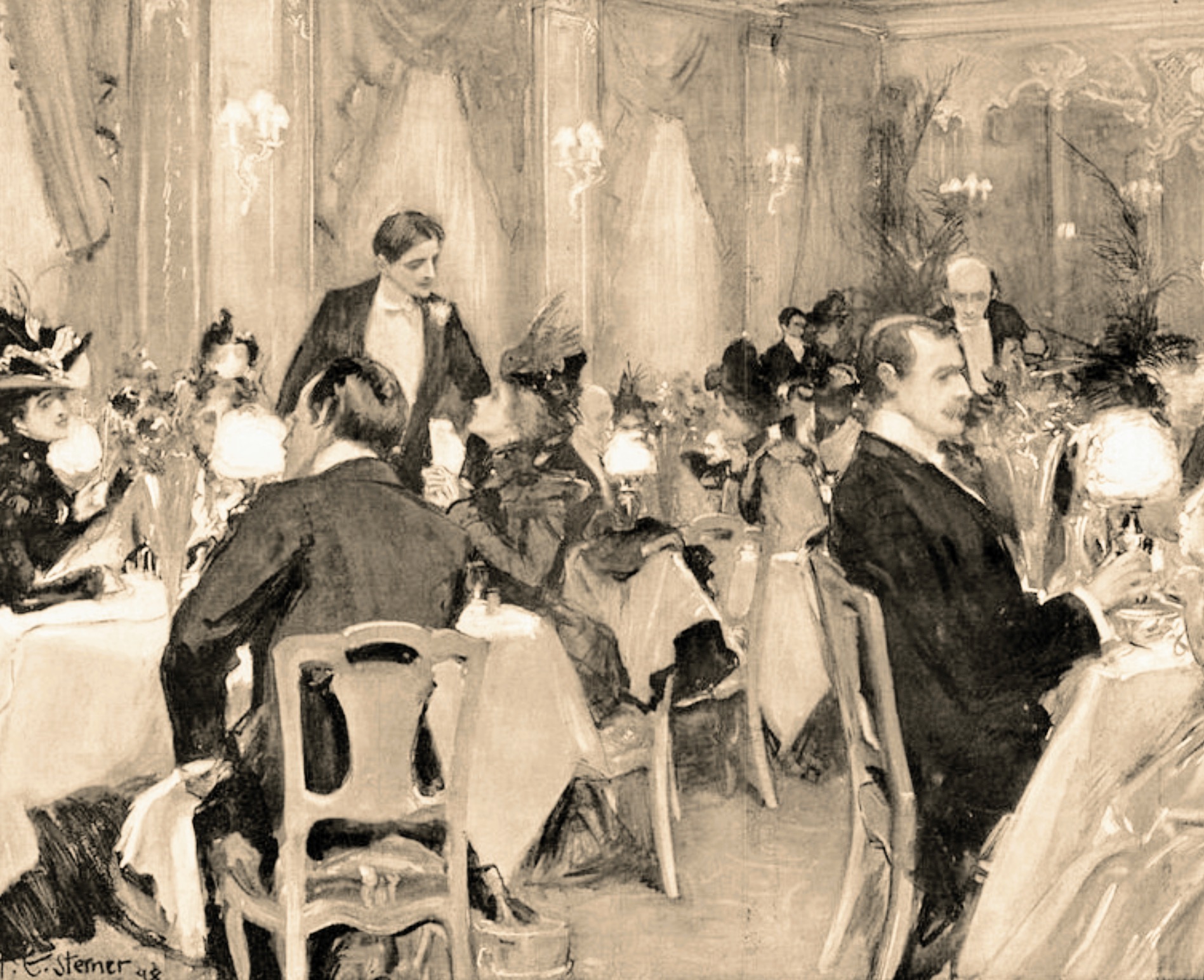
Depiction of a Gilded Age, “lounge lizard” or “slick, dandified cake eater” flirting with two young women.— If you are attracted toward a man who seems to you an embodiment of all that is noble and manly, you do injustice both to him and yourself if you do not, in some way entirely consistent with maiden modesty, allow him to see and feel that he pleases you. But you do not need our instructions, and we will only hint, in conclusion, that forwardness, flirting, and a too obtrusive manifestation of preference are not agreeable to men of sense. As a man should be manly, so should a woman be womanly in her love.” —Samuel R. Wells, 1887

“Women reach maturity earlier than men, and may marry earlier—say (as an average age), at twenty. The injunction, ‘Know thyself,’ applies with as much emphasis to a woman as to a man. Her perceptions are keener than ours, and her sensibilities finer, and she may trust more to instinct, but she should add to these natural qualifications a thorough knowledge of her own physical and mental constitution, and of whatever relates to the requirements of her destiny as wife and mother. The importance of sound health and a perfect development, can not be overrated. Without these you are NEVER fit to marry.

“Having satisfied yourself that you really love a woman—be careful, as you value your future happiness and hers, not to make a mistake in this matter—you will find occasion to manifest, in a thousand ways, your preference, by means of those tender but delicate and deferential attentions which love always prompts. ‘Let the heart speak.’ The heart you address will understand its language. Be earnest, sincere, self-loyal, and manly in this matter above all others. 

Let there be no nauseous flattery and no sickly sentimentality. Leave the former to fops and the latter to beardless school-boys. Though women do not ‘propose’ —that is, as a general rule—they ‘make love’ to the men, none the less; and it is right. The divine attraction is mutual, and should have its proper expression on both sides. If you are attracted toward a man who seems to you an embodiment of all that is noble and manly, you do injustice both to him and yourself if you do not, in some way entirely consistent with maiden modesty, allow him to see and feel that he pleases you. But you do not need our instructions, and we will only hint, in conclusion, that forwardness, flirting, and a too obtrusive manifestation of preference are not agreeable to men of sense. As a man should be manly, so should a woman be womanly in her love.” From “How to Behave,” by Samuel R. Wells, 1887


Etiquette Enthusiast, Maura J Graber, is the Site Editor for the Etiquipedia© Etiquette Encyclopedia

Monday, August 2, 2021

Gilded Age Hand-Shaking Manners


The more public the place of introduction, the less hand-shaking takes place.


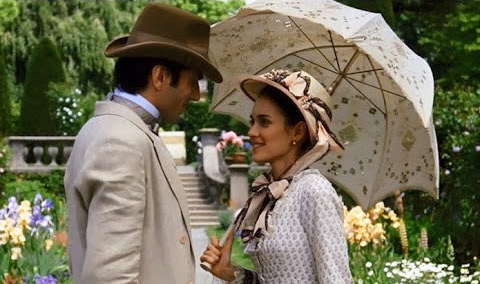
The etiquette of hand-shaking is simple. No man should assume to take a lady’s hand until it is offered. A lady extends her hand and allows the gentleman to take it. On introduction in a room, a married lady generally shakes hands; young ladies not often. In the ball-room, where the introduction is for dancing, not for friendship, never shake hands. The more public the place of introduction, the less hand-shaking takes place.– Chicago Herald, 1885


Etiquette Enthusiast, Maura J. Graber, is the Site Editor for the Etiquipedia© Etiquette Encyclopedia
Monday, May 31, 2021

Etiquette Points for Boys in 1890


  • Keep step with any one you walk with. 
  • Never play with knife, fork or spoon. 
  • Use your handkerchief unobtrusively always. 
  • Hat lifted in saying “good-by,” or “how do you do!” 
  • Do not take your napkin in a bunch in your hand. 
  • Rise when ladies leave the room and stand till they are out.
  • In the dining room take your seat after ladies and elders. 
  • Let ladies pass through a door first, standing aside for them.
  • Let a lady pass first always, unless she asks you to precede her. 
  • If all go out together, gentlemen stand by the door till ladies pass. 
  • Eat as fast or as slow as others, and finish the course when they do. 
  • Hat lifted when offering a seat in a car or in acknowledging a favor. 
  • Look people straight in the face when speaking or being spoken to. 
  • Rise if a lady comes in after you are seated, and stand until she takes a seat. 
  • In the parlor stand until every lady in the room is seated, also older people. 
  • Cover the mouth with hand or napkin when obliged to remove anything from it. 
  • Do not look toward a bedroom door when passing. 
  • Always knock at any private room door. 
  • Hat off the moment you enter a street door, and when you step into a private hall or office. 
  • Always precede a lady up stairs, and ask her if you may precede her in passing through a crowd or public place. —Yonkers Gazette, 1890


Etiquette Enthusiast, Maura J Graber, is the Site Editor for the Etiquipedia© Etiquette Encyclopedia

Saturday, November 19, 2016

Gilded Age Etiquette and Advances to Queens

“As much cannot be said of the prima donna or the great tragic or comic actress. But, whether it should be or not, the queens of the stage, while exposed to at least as fierce a light as that which ‘beats upon a throne,’ stand equally with the enthroned ones above the reach of conventional etiquette.”


Privileged Women


According to Honoré de Balzac, only two kinds of women are permitted to make advances to men—to take that “first step” which, after all, costs very little. The women specially excepted from the general rule are Queens and actresses; and, with all due respect for the throne and for the stage, it must be admitted that members of these two privileged classes have, in many cases, profited largely by the permission accorded to them.

Queens and actresses, meaning in the latter case, “
Queens of the Theatre,” and not the whole crowd of women and girls who have entered upon the dramatic career, are surrounded by homage; so that what on the part of other women would be active selection is but passive selection on theirs. They are no way exposed to the ignomy of a rebuff. A Queen, moreover, is strictly forbidden by etiquette to receive an unhidden declaration of love, or a spontaneous invitation of any kind. From a dancing partner to a partner for life she must signify her choice. 


As much cannot be said of the prima donna or the great tragic or comic actress. But, whether it should be or not, the queens of the stage, while exposed to at least as fierce a light as that which “beats upon a throne,” stand equally with the enthroned ones above the reach of conventional etiquette. – Los Angeles Herald, 1883


Etiquette Enthusiast, Maura J Graber, is the Site Editor for the Etiquipedia© Etiquette Encyclopedia