Showing posts with label Netiquette. Show all posts

Saturday, September 3, 2022

Email Etiquette from Madame Chic

We are bombarded with correspondence on a daily basis. With instant communication through text, phone, and email, people want a response and they want it now! For important calls and emails, the general rule is to try to respond within twenty-four hours.
– 
Image source, Pinterest


From “Polish Your Poise with MADAME CHIC”

Email Etiquette


When you first email someone, especially a business contact, you must follow formal email protocol. With friends or coworkers who frequently exchange emails with you, some of the formalities can be dropped, but it’s always a great idea to keep common courtesy at the heart of your communication. Here are some things to consider:

Reply all? Before hitting “reply all” consider if you need to include everyone in this communication.

Forwarding? If you are forwarding an email, be sure to write a personal note before the forward. Never send chain emails.

Tone. Never write in all caps unless you want to give the impression that you are SHOUTING.

Mr. and Mrs. So and So. Don't let the casual nature of email put your guard down; always address your contact with the appropriate level of formality.

It's Jennifer with two n's. Make sure you spell everyone’s name correctly.

Double-check. Don't forget to use spell-check if you've misspelled something.

Angry? Think before you hit send. Once an email is sent, it cannot be taken back.

Dot your i’s and cross your t’s. Use complete sentences rather than informal abbreviations or slang.

Sincerely, Employ polite common courtesies as you would in a letter. Start off with either “Dear” or “Hello.” Inquire about the other person with a pleasantry such as “How are you?” or wish them well with “I hope this email finds you well.” Don't forget to sign off gracefully just as you would at the end of a letter.

Returning calls and emails

We are bombarded with correspondence on a daily basis. With instant communication through text, phone, and email, people want a response and they want it now! For important calls and emails, the general rule is to try to respond within twenty-four hours. If you are busy and can't give a proper response to a call or an email within twenty-four hours, it is nice to respond by saying, “I have your message and will get back to you.” Give a time frame for your response. 

If you are out of town or unable to return messages, you can set your email to send an automatic message saying you are unavailable to answer emails until you return. Do your best to get back to people upon your return. Do not feel the pressure to get back to lower-priority messages instantly; otherwise you will become a slave to text, phone, and email. – From the book, “Polish Your Poise with Madame Chic,” by Jennifer L. Scott, 2015


When she arrived at Madame Chic’s Parisian apartment as a foreign exchange student, Jennifer Scott was a casual California girl who thought sweatpants were appropriate street attire. Madame Chic took Jennifer under her wing and tutored her in the secrets of how the French elevate the little things in life to the art of living. Years later, Jennifer was back in California with a husband, two young daughters, a dog, and her first home. Every day she confronted mundane duties like folding laundry and unloading the dishwasher, and she began to think about Madame Chic’s home—how the breakfast table was set beautifully the night before, the music that always played in the background, the calm of Madame and Monsieur Chic’s ritual cocktail hour together. Jennifer wanted that life. She decided to see what would happen if she didn’t perform her chores impatiently or mindlessly, if, instead, she could live like Madame Chic… This is just one of the books from her marvelous series.


 🍽Etiquette Enthusiast, Maura J. Graber, is the Site Editor for the Etiquipedia© Etiquette Encyclopedia

Monday, November 16, 2020

Etiquette and Digital Civility


How is Technology 
Challenging Civility?

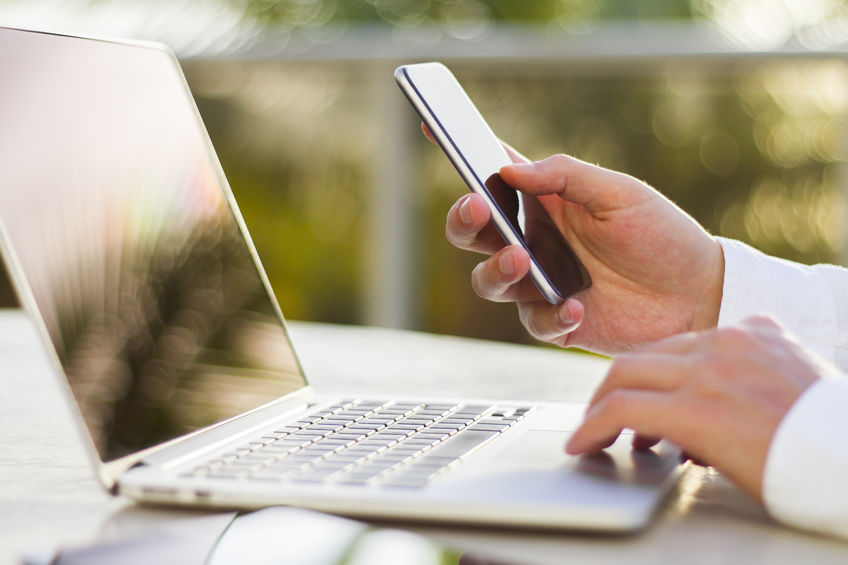
Phone and Laptop

Technology can improve lives and provides boundless communication possibilities.  It brings people together when physical distance would keep us apart.  The opportunities for friendships, education, and employment abound because of endless technological advancements.

However, there is a downside.  Technology makes private reactions instantly public, creating a challenge to civility.  

In 2020, Microsoft reported that digital civility is at the lowest level in four years.  “Microsoft’s Digital Civility Index stands at 70%, the highest reading of perceived online incivility since the survey began in 2016, and the first time the DCI has reached the 70th percentile.  Moreover, the equally troubling trends of emotional and psychological pain—and negative consequences that follow online-risk exposure—both also increased significantly.”

A recent personal experience with online incivility came about when I entered a live-streaming news event.  The app allows for anyone to post immediate, hair-raising reactions in emoji’s and comments as well.  An angry emoji often accompanies a venomous comment.  Comments consume two-thirds of the app screen and subsumed the live news report.  

During this same live-stream event, I offered a compliment regarding the person speaking.  I received an instant notification from a person I don’t know who had placed negative emojis and negative comments about my positive comment—on my social media page.  I checked this person’s social media and he seemed as if he would be a nice enough fellow, yet he felt compelled to “dis” my positive comment with negativity.  Not very civil. 

Technology is a Problem

Technology is neutral.  Whatever good or bad, positive or negative, form it takes is created by how we engage it.  

The problem with digital technology is that there is little accountability or incentive to encourage empathy.  And no disincentives for bad behavior.  

Without an accountability structure, there is no opportunity to learn empathy, as there is no reason to have to put yourself in another person’s shoes.  Absent is in-person, face-to-face, having to look someone in the eye and be response-able.  You really can be more or less anonymous and face no consequences, no feedback. 

Will this hurt civility in our society?  It certainly could.  Empathy is at the core of civility, and without empathy we can never know how we might help someone or understand beyond our narrow bubbles of perception what another person is like or what they might need.

Civility is a Big Deal

A person wrote to me asking why I make such a big deal out of etiquette.  He commented that he likes getting things off his chest and what he says doesn’t hurt anyone—no, he continued—if anything his comments might stop them long enough to think.  I responded, “Maybe your negativity hurts you.  Maybe you are de-humanizing yourself.”  He didn’t write back.  

Being human requires being aware of the effects and impact you have on another human.  Otherwise, there is no consideration.  Feedback and consequences give us the opportunity to put ourselves in someone else’s shoes.  

If we can’t imagine what it is like in those shoes, then we can’t develop empathy.  Without empathy, we are more likely to create a situation where a person might be hurt.

At the end of the day, we must ask ourselves what kind of a person we’ve been.  Would we want those we love to know that we hadn’t intended to be civil, to be respectful?  

Practice this digital civility challenge daily:  

  1. Live by the Golden Rule.
  2. Respect differences and perspectives.
  3. Pause before responding to things.
  4. Stand up for yourself and others.  

There is always promise for the future.  But, really, it’s up to each of us as individuals to be the best we can be.  Humans can choose to be etiquette-ful.  This quality can never be legislated.

Will you choose to be respectful and kind today?


Contributor, Candace Smith is a retired, national award-winning secondary school educator, Candace Smith teaches university students and professionals the soft skills of etiquette and protocol. She found these skills necessary in her own life after her husband received international recognition in 2002. Plunged into a new “normal” of travel and formal social gatherings with global leaders, she discovered how uncomfortable she was in many important social situations. After extensive training in etiquette and protocol, Candace realized a markedly increased confidence level in meeting and greeting and dining skills and was inspired to share these skills that will help others gain comfort and confidence in dining and networking situations. Learn more at http://www.candacesmithetiquette.com/


Etiquette Enthusiast, Maura J Graber, is the Site Editor for the Etiquipedia© Etiquette Encyclopedia


Thursday, May 29, 2014

Internet Etiquette and E-Diplomacy

How Languages of Peace Evolve

Online, English has become a common language for users from around the world. In the process, the language itself is changing.
When America emerged from the ashes of a bruising war with Britain in 1814, the nation was far from united. Noah Webster thought that a common language would bring people together and help create a new identity that would make the country truly independent of the British.

Webster's dictionary, now in its 11th edition, adopted the Americanised spellings familiar today - er instead of re in theatre, dropping the ‘u’ from colour, and losing the double ‘l’ from words such as traveller. It also documented new words that were uniquely American such as skunk, opossum, hickory, squash and chowder.

An American Dictionary of the English Language took 18 years to complete and Webster learned 26 other languages in order to research the etymology of its 70,000 entries. The internet is creating a similar language evolution, but at a much faster pace.


“E-diplomacy: Foreign policy in 140 characters ~ The diplomatic world is considered to be one of protocol and discretion, yet an increasing number of foreign policy officials and diplomats are conducting their business in the most public way possible, on Twitter.” –BBC News Magazine
Just like the rest of the world, diplomats tweet about their dinner... E-diplomacy certainly carries risks. Even experienced practitioners, like the Swedish foreign minister Carl Bildt, have run into trouble. Ahead of 2012's World Economic Forum in Davos, he drew criticism for what many thought was an insensitive missive:
“Leaving Stockholm and heading for Davos. Looking forward to World Food Program dinner tonight. Global hunger is an urgent issue! #davos.”
Hunger and a slap-up meal did not sit happily side by side. In the argot of the Twittersphere, the tweet was judged a #fail.–  
BBC News Magazine
There are now thought to be some 4.5 billion web pages worldwide. And with half the population of China now on line, many of them are written in Chinese.  Still, some linguists predict that within 10 years English will dominate the internet - but in forms very different to what we accept and recognise as English today.

That's because people who speak English as a second language already outnumber native speakers. And increasingly they use it to communicate with other non-native speakers, particularly on the internet where less attention is paid to grammar and spelling and users don't have to worry about their accent.

British diplomats posted to India will first need to learn Hindi as 'Hinglish' – a blend of Hindi and English – becomes the country's most important language. The rise of Hinglish has frustrated British diplomats as it has become more widely used on India's English language television news channels and in the country's English press.The move comes as the unique nature of Indian English is celebrated in the hit Bollywood film English Vinglish, starring veteran actress Sri Devi, about an Indian middle-class housewife who decides to learn English because she is ridiculed by her husband and child who is ashamed to introduce her to her friends. While English is no longer the exclusive language of choice for India's business elites, it is still a badge of status and a passport to better jobs.
“The internet enfranchises people who are not native speakers to use English in significant and meaningful ways,” says Naomi Baron, professor of linguistics at American University in Washington D.C.

In 2012, just one in 40 British diplomats was fluent in the language of the country where they worked, with the majority lacking even basic grasp sufficient for day-to-day exchanges. In contrast, almost a half of Australia’s diplomatic service were proficient in the local languages where they worked.

Users of Facebook already socialise in a number of different “Englishes” including Indian English, or Hinglish, Spanglish (Spanish English) and Konglish (Korean English). While these variations have long existed within individual cultures, they're now expanding and comingling online.

“On the internet, all that matters is that people can communicate - nobody has a right to tell them what the language should be,” says Baron. “If you can talk Facebook into putting up pages, you have a language that has political and social standing even if it doesn't have much in the way of linguistic uniqueness.”

Some words are adaptations of traditional English: In Singlish, or Singaporean English, “blur” means “confused” or “slow”: “She came into the conversation late and was blur as a result.”  Others combine English words to make something new. In Konglish, “skinship” means intimate physical contact: handholding, touching, caressing.

Technology companies are tapping into the new English variations with products aimed at enabling users to add words that are not already in the English dictionary.  And most large companies have English websites, while smaller businesses are learning that they need a common language - English - to reach global customers.

“While most people don't speak English as their first language, there is a special commercial and social role for English driven by modern forms of entertainment,” says Robert Munro, a computational linguist and head of Idibon, a language technology company in California.

“The prevalence of English movies in regions where there is not much technology other than cell phones and DVDs makes English an aspirational language. People think it's the language of the digital age.”

In previous centuries, the convergence of cultures and trade led to the emergence of pidgin - a streamlined system of communication that has simple grammatical structure, says Michael Ullman, director of research at Georgetown University's Brain and Language Lab.

When the next generation of pidgin speakers begins to add vocabulary and grammar, it becomes a distinct Creole language. “You get different endings, it's more complex and systematised. Something like that could be happening to English on the web,” he says. Mobile phone companies are also updating their apps to reflect its growing use.

Hinglish is a blend of Hindi, Punjabi, Urdu and English and is so widespread that it's even being taught to British diplomats. "Most people actually speak multiple languages - it's less common to only speak one," says Mr Munro. "English has taken its place as the world's lingua franca, but it's not pushing out other languages."
In Hinglish, a co-brother is a brother-in-law; eve-teasing means sexual harassment; an emergency crew responding to a crisis might be described as ‘airdashing’, and somewhat confusing to football fans, a ‘stadium’ refers to a bald man with a fringe of hair. There's even a new concept of time - “pre-pone”, the opposite of postpone, meaning “to bring something forward”.

The increasing prevalence of the internet in everyday life means that language online is not a zero sum game. Instead, it allows multiple languages to flourish. “Most people actually speak multiple languages - it's less common to only speak one,” says Mr Munro. “English has taken its place as the world's lingua franca, but it's not pushing out other languages.” Instead, other languages are pushing their way into English, and in the process creating something new.


Sources, Telegraph News and BBC Magazine


🍽Etiquette Enthusiast, Maura J Graber of The RSVP Institute of Etiquette, is the Site Editor for the Etiquipedia© Etiquette Encyclopedia