Showing posts with label Maura Graber Etiquette Sleuth. Show all posts

Friday, August 1, 2025

Spotlight on Maura J. Graber


Meet Etiquette Enthusiast, Teacher, Author, Historian and Etiquipedia© Site Editor and Founder, Maura J. Graber of 
The RSVP Institute of Etiquette

The Etiquipedia© Etiquette Encyclopedia was an idea that took shape in late-2011 after an Etiquette Instructor Trainee was lamenting the fact that there wasn’t a free, online resource, where factual etiquette information could be found, along with the reasons behind the etiquette rules. Maura J. Graber decided then to start such a site. Beginning in 2012, Maura’s first posts were rather long, but there were only seven of them, as she was still focused on a personal etiquette blog, “The Etiquette Sleuth.” By 2013, she had tripled the number of posts. By 2016, she was posting hundreds of articles a year. Since 2020 she has posted many more articles and her goal is to post one new article every day, There are now close to 4,000 articles on the site.
Though Graber offers classes to all ages, working with teens and young adults is especially rewarding for her. She says that they are the most vulnerable to depression, peer pressure, and social media. She also loves to speak on proper table setting and antiques for the table. She is a popular speaker for universities, museums and historical groups. She also worked as a consultant for Seasons 1 & 2 of the Julian Fellowes’ show, “The Gilded Age” on HBO-Max
Below are links to just a few of Maura Graber’s articles on etiquette which you’ll find on Etiquipedia:
The following is a Q. & A. with Maura:
Along with teaching etiquette, Maura was the Table Top Spokesperson for a chain of 9 high-end department stores in Southern California in the mid to late 1990’s, traveling from store to store doing talks. By the time the chain merged with another chain of stores in 1999, expanding to 5 states, Maura decided her children were too young for her to be traveling as much as she would need to, so she continued her busy schedule of after-school etiquette classes throughout several counties and took on a role not only on-air, but producing news segments and reviews for a local PBS station. Her stories highlighted  philanthropic organizations and “feel-good stories.”
What was the impetus for starting your Etiquette business?
After working a few different jobs in high school and college, including as a part-time, Princess House Crystal consultant selling dining and entertaining wares, working in retail sales and also as a telephone operator, I took a position as a restaurant manager in Newport Beach, and got used to watching how people behaved and ate in such a public setting. It was eye-opening. I felt most comfortable selling women’s clothing and accessories though. I was quite good at dressing women, and soon opened my own boutique in 1984. By 1990, with a growing family, I was looking for an old-fashioned charm school but couldn’t find one anywhere, I decided to branch out again and opened my own etiquette school. I quickly became so busy teaching etiquette, I left the fashion business behind me within a few years.
Fun foods and odd utensils are always on the menu at Maura’s etiquette classes for kids.
What do you enjoy most about teaching etiquette?
I found out rather quickly that teaching others etiquette and good manners is very rewarding in a way that most other jobs and businesses are not. Knowing you have given someone social self-confidence and the right tools to navigate their ways throughout all of the societal pitfalls they will likely encounter, especially as teens and young adults, is extremely rewarding. I have also amassed a large collection of antique dining utensils and have written several etiquette history books, featuring the unusual utensils and their uses.
Maura’s latest book is available on Amazon.– In “Yesteryear… More of What Have We Here?” the etiquette authority, social historian, and collector of unusual dining implements, treats readers to a trip back in time through various unusual objects for dining and living, along with the etiquette and social tools that once made up an everyday life in Western society and many that still apply today. Curiosities spanning from prior to the Georgian era, Regency era, Victorian eras, the Gilded Age, throughout the Edwardian era, up until the Mid-20th Century, which describe in a fond clarity, not only how we once socialized, dined and lived, but how to entertain today using antiques and making simple but unique choices.  
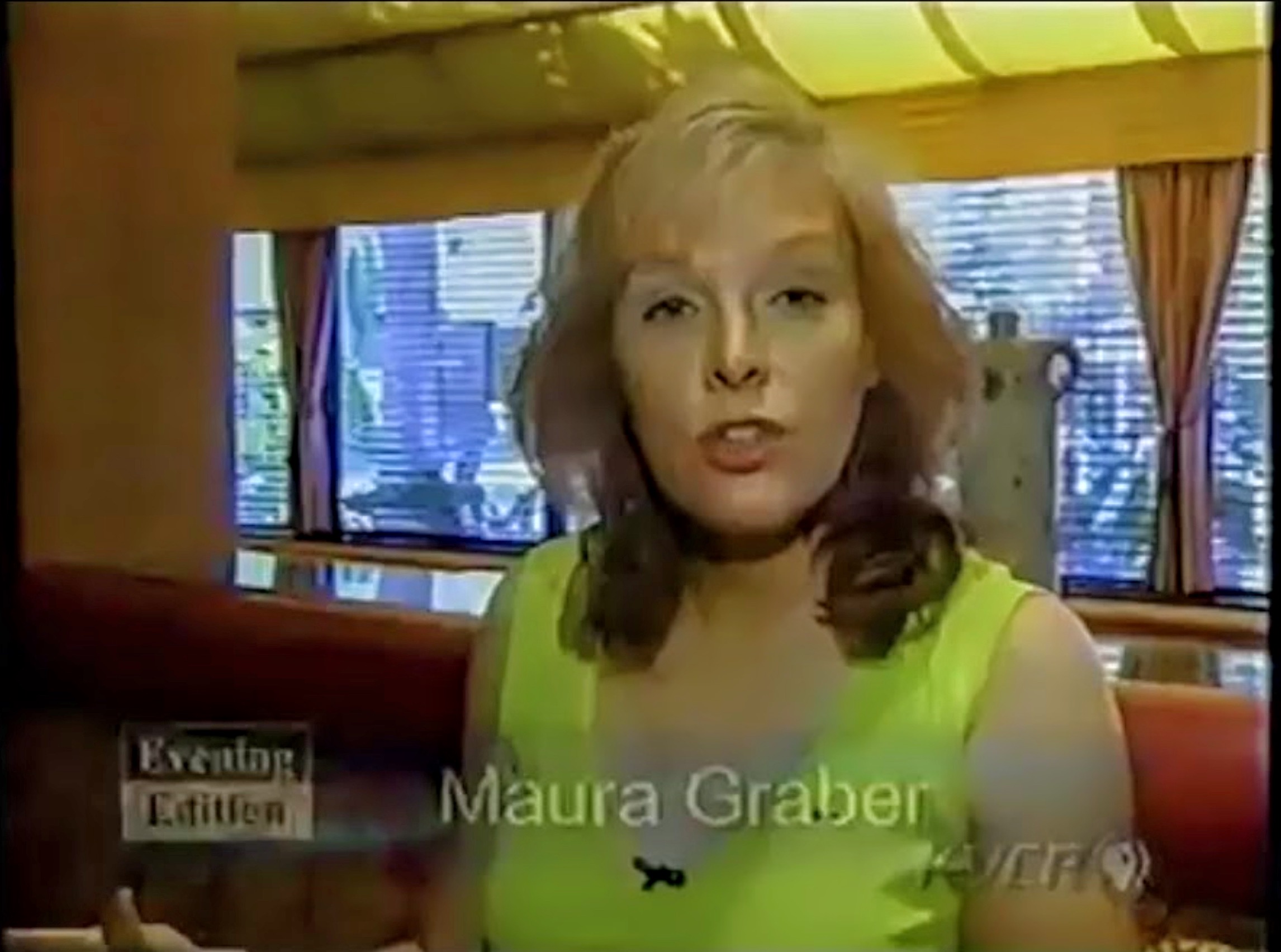
Screenshot of Maura on PBS demonstrating and talking about special dining utensils for those with physical challenges, circa 2006.

What type of classes do you offer?
I offer very personalized, one-on-one classes, along with group classes for children and adults. My afternoon tea etiquette sessions are very popular, for all ages. I also offer classes via Zoom for clients who are overseas, though some people will also fly to Southern California to work with me.

What age group do you enjoy working with most? 
Teens to young adults are my favorite group to teach etiquette, though every student, aged 5 though to 85, is unique and special. 

Which are some of the older etiquette authors or authorities you enjoy reading? 
I love reading old books by Lillian Eichler, Letitia Baldridge, Amy Vanderbilt, Elizabeth Post and Judith Martin, aka Miss Manners, and of course, old newspaper and magazine articles on etiquette.

If you’d like to reach Maura, you can call her at 909-923-5650 or (inside the United States, 800-891-RSVP), you can visit her RSVP Institute of Etiquette website or email Maura at rsvpinstitute @gmail.com or etiquipedia @gmail.com

Talking etiquette at an evening program for the Ontario Museum of History and Art in 2017


🍽Etiquette Enthusiast, Maura J. Graber, is the Site Editor for the Etiquipedia© Etiquette Encyclopedia

Thursday, August 12, 2021

Etiquette of Meeting and Seating Royals


Original seating chart for the State Dinner held on November 23, 1934 in honor of a royal visit by Prince Henry, The Duke of Gloucester


This is a fun and wonderful piece of history that I found on Ebay several years ago. It had evidently been folded up and stuck in an Australian drawer for over 60 years. I was actually looking for vintage Australian etiquette books on Ebay Australia when I stumbled upon the listing.

It is the original seating chart for the State Dinner held on November 23, 1934 in honour of a royal visit by Prince Henry, The Duke of Gloucester. He was in Australia from October 4th until December 11th of that year, and when I researched it later, I found it had been an important state visit by the Duke at the time. I was the only bidder on the item and won it for about $4.50 total. I had it framed and it hangs in my dining room.


Prince Henry, the Duke of Gloucester ~ “Generally, the people found him, as they found his brother the Duke of York, a little shy and somewhat embarrassed at the overwhelming nature of his reception.”

You may be wondering, "Who is Prince Henry?" or, "Huh?" if you are here with me in the United States. He was the Queen’s uncle, and his son, the late Prince William of Gloucester, who died young in 1972, is who the Duke of Cambridge (aka the current Prince William) was named.

The Aussies know very well who he is however, so over the years I have been tempted to send this interesting historic document back to them. It should possibly be in a museum or with a historical group in Australia. Or, maybe mine is one of several copies they made for the 1934 event. Either way, I enjoy it and find it fascinating. Like I wrote in my book on mango forks, the Australians are the nicest people to do business with on Ebay, so I keep thinking I may just pop on over to visit there myself some day.


Note the "Capt. S.S. Bonham Carter" at Seat 2, a distant relative of actress Helena Bonham Carter. He was later "Admiral Sir Stuart Bonham Carter", and had served in the Royal Navy in both World Wars and rose to the rank of Vice Admiral. 


I find it interesting who sat where at this dinner. Of course the Duke was seated in the center at the head table, labeled "A", along with local Australian dignitaries flanking him on either side. The Consul-General from Germany was at Seat 8 at Table B, and fairly far from the center of Table A, where the Duke sat. But he was 4 seats away to his left from the Consul from Poland and 4 seats away to his right from Captain S.S. Bonham Carter. Behind him, to his left just 2 seats away, seated at Table C was the Consul-General to France. In just 5 years time, Great Britain and France would be declaring war on Germany, due to its invasion of Poland.

Seated at tables C, D, E, F & G, were Consul-Generals from China, Spain, Norway, The Netherlands, Finland, Brazil, Paraguay, Czecho-Slovakia, Italy and Denmark, along with the U.S. and other assorted countries. Representatives from the church, Reuters, The Telegraph, The Sun, Labor Daily, and others were also seated throughout the mix. Some printed names had been crossed out, with new names written in by hand. Others were just listed as "Official." Notably absent? Women!

I love this photo of a young Prince Henry at Eton. What a charming looking young chap!

Now back to the Duke... In 1934, the Duke of Gloucester was Prince Henry. Born on March 31, 1900, he was "Henry William Frederick Albert". He was the third son of George V and Queen Mary, thus he was the uncle of Queen Elizabeth II.


The Australian National Archives has a wonderful page devoted to him and his 1934 visit. The following are a few passages I found interesting...

Prime Minister Lyons first announced news of the tour in Parliament:

“I have great pleasure in intimating that since the last meeting of this Parliament His Majesty the King has graciously given his consent to the visit to Australia of a member of the royal family on the occasion of the centenary of the state of Victoria. As honourable members are probably aware, His Majesty in the first instance approved of his son, Prince George [the Duke of Kent], visiting Australia. Later however, advice was received to the effect that His Majesty felt that Prince George, after a strenuous tour of South Africa, should not, in the same year, undertake another tour. Consequently, His Majesty approved of the substitution of His Royal Highness the Duke of Gloucester.”

From the Courier-Mail’s reporting of the event, it would appear that the Duke’s visit to Queensland at least was a wild success:

“A dignified figure in a cavalcade of pomp and pageantry that struck an Imperial note, the Duke, his face browned with Queensland’s sunshine, made a truly Royal progress through bannered streets that echoed with the crash of band music and the skirl of bagpipes, and in which cheering thousands formed living colonnades, so densely packed that they seemed a solidified mass, vital and vivid with its pulsating loyalty, pouring forth with mighty voice its affection for the King’s son.”

I was especially amused by this passage:

It would seem that the only negative incident of the Duke’s tour took place during his visit to Toowoomba:

A remarkable incident was associated with the Duke of Gloucester’s final hour in Toowoomba, when, at supper at the Citizen’s Ball, he was requested by a fireman to cease smoking a cigarette! The Duke was momentarily dismayed by the unusual nature of the request…The incident, which was witnessed by a number of people near the principal table, was exceedingly regretted, as it was the only unfortunate happening in what was regarded as the most brilliant social gathering ever held in Toowoomba...When seen later, the Mayor said it was the most monstrous incident of which he had ever heard.

Under the heading of "General Correspondence relating to the Royal Visit, Canberra 1934-1935" you will find this recollection: 

"In Queensland, the Courier Mail compiled a list of hints for citizens planning to celebrate the Duke’s arrival in the city. The newspaper stated, ‘Police and ambulance officers, remembering incidents of other royal visits and experiences in southern capitals, have issued these “Don’ts” to Brisbane citizens who will be in the city to welcome the Duke today.’

The list of ‘Don’ts’ include the following suggestions:

• Don’t let your pet dog follow you to town where he may be hurt or lost in the crowd
• Don’t let your youngsters wander away from you – if you can help it
• Don’t go out without your hat
• Don’t expect the conductors to change a pound note.


When Prince Henry's brother, George VI, came to the throne in 1936, Henry was required to stay in the United Kingdom. He had been appointed a potential regent for his niece, so until she came of age, in case her father died, Henry was needed there if she ascended the throne as a minor.

He was also the 11th Governor-General of Australia, from 1945 to 1947 and when he died in 1974, he was the last surviving Knight of the “Order of St. Patrick” and the longest surviving child of George V and Mary of Teck.


In 1934, the Duke and Australian Prime Minister Lyons, and Mrs. Lyons
The Current Duke of Gloucester is a grandson of George V and a first cousin to The Queen. He became heir to his father's titles following the death of his elder brother, Prince William of Gloucester, in a flying accident on 28 August 1972. He succeeded his father in June 1974.

Born Prince Richard of Gloucester on 26 August 1944 at Northampton, he was christened Richard Alexander Walter George. When he was four months old he was taken by his parents to Australia, where for two years (1945-47) his father was Governor-General.


The current Duke – HRH Prince Richard, Duke of Gloucester


Modern Etiquette for Meeting Royalty-
  • There are no obligatory codes of behaviour when meeting The Queen or a member of the Royal Family, but many people wish to observe the traditional forms.
  • For men this is a neck bow (from the head only) whilst women do a small curtsy. Other people prefer simply to shake hands in the usual way.
  • On presentation to The Queen, the correct formal address is 'Your Majesty' and subsequently 'Ma'am'.
  • For male members of the Royal Family the same rules apply, with the title used in the first instance being 'Your Royal Highness' and subsequently 'Sir'.
  • For other female members of the Royal Family the first address is conventionally 'Your Royal Highness' followed by 'Ma'am' in later conversation.


Portions of this post were first published in 2012 by Site Editor, Maura J. Graber, on her personal blog site, https://theetiquettesleuth.blogspot.com/


Etiquette Enthusiast, Maura J. Graber of The RSVP Institute of Etiquette, is the Site Editor for the Etiquipedia© Etiquette Encyclopedia