Showing posts with label Candace Smith on Table Manners. Show all posts

Sunday, March 6, 2022

What Not to Do At the Table

6 Categories of "Never-do"

 Table Manners
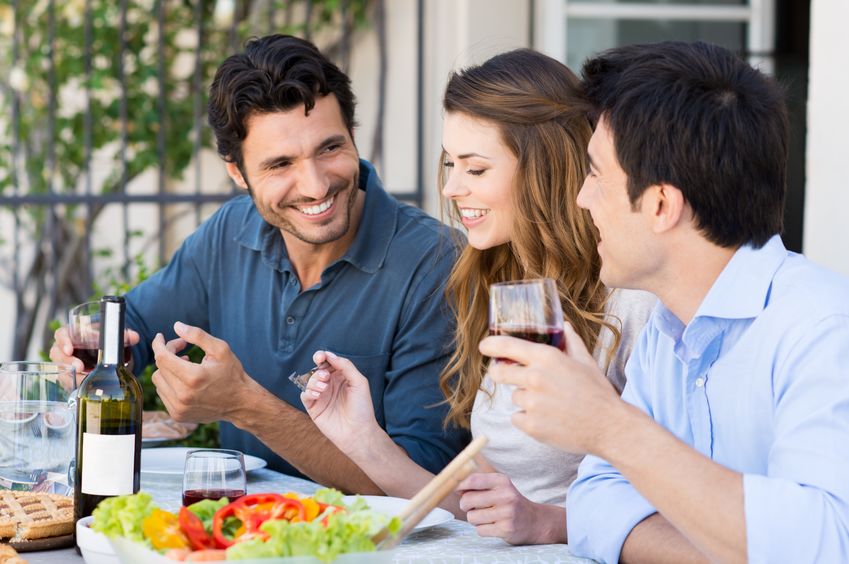
Friends Having Dinner

Sharing a meal is an inclusive experience.  The company, the food, and the conversation work together to blend the time at the table into a nourishing of body and soul.  

Part of this experience includes individuals "flying under the radar" of being noticed for how we eat and, therefore, avoiding the judgments of fellow diners.  No one is perfect and we all commit faux pas when dining with others.  

But whether or not our dining skills are polished or a little rough around the edges, there are things we never do that would bring our common courtesy into question.

Napkin “No-no’s”

  • Using it to blow your nose, wipe your face, or blot lipstick.
  • Tossing the napkin on the table.
  • Spitting food into your napkin is no way to be rid of it.
  • Napkins belong nowhere but on your lap.
  • Don't place on the table at the end of the meal until your host does.  

Properly used, napkins are the most important tool a diner has.  Their use signals the beginning and ending of the meal by the host, and they are convenient for catching crumbs and drips.

Space Invasions

  • Never reach or lean over someone else’s plate or across the table.  This includes shaking hands when others are already sitting.
  • Helping yourself to bread before the host has signaled the meal has begun. 
  • Taking food from someone’s plate.
  • Asking another diner for a bite.
  • Moving plates around to suit yourself. 
  • Placing unwanted food from your mouth on the table. 
  • Drinking before the host has signaled that the meal has begun. 
  • Eating before others have been served or before the host signals it’s time.
  • Talking or laughing loudly such that it's interruptive.  
  • Being anything other than kind to the server.

Our space at the table is our own, but at the same time, we share common space with all the other diners, too.  Being mindful of the boundaries between personal and shared space can prevent accidents and spills and help everyone feel respected and honored.

Unmannerly Sights and Sounds

  • Picking your teeth with your finger or a toothpick.
  • Using your tongue to cleanse outer limits of your mouth.
  • Scratching yourself or repeatedly touching your face, mouth or hair.
  • Swishing your food in your mouth.  Slurping!
  • Belching or burping.
  • Fidgeting or playing with silverware.
  • Knife blade scraping or screeching on the plate.
  • Talking with your mouth full.
  • Taking really big bites that cause difficulty chewing. 
  • Applying lipstick at the table.
  • Slouching in your chair.
  • Making a mess of your table space with your food.
  • Eating with one arm on the table or leaning on the table.
  • Leaning back in your chair with your hands on the back of your head.
  • Eating with your fingers - when you're not eating finger foods.
  • Shoving food onto your fork with your fingers.

What we can’t help but see and hear while dining together can leave unpleasant impressions.  Being aware that only we can manage ourselves as we engage with others over a meal, and being mindful of shared space, will make everyone glad they are with you.

Utensil and Glassware Errors

  • Leaving utensils hanging off your plate.
  • Bringing wine or beverage to the table from previous reception.  (Unless invited to do so.)
  • Licking or sucking on utensils.
  • Stabbing your food.
  • Knife blade aimed outward.  (Read by others as "aggressive.")
  • Waving or pointing with utensils during conversation.
  • Using a butter knife for anything but spreading butter.
  • Placing a used utensil on the table or tablecloth.  ("Used" always belongs on a plate.)
  • Bringing a thermos or water bottle to the table when it is already set with glassware.
  • Picking a dropped utensil or napkin up from the floor.  

A well-set table feels orderly and comforting, unless it’s not there—or unless diners upset the balance by mindlessness.  Disorder doesn’t have the same appeal as order.

Table Conversations that Raise Eyebrows

  • Updating everyone on your latest diet.
  • Complaining or bringing up unpleasant topics.
  • Engaging in ‘conversation stoppers’ such as politics, religion, or topics of a very personal nature. 
  • Talking to one neighbor at the table, but forgetting the neighbor on the other side.

When people dine together they have given their permission to be involved in pleasant conversation.  At a dining table, everyone should feel welcome.  This means sharing talk time and engaging in topics that will contribute to the general good (and good digestion) of all.

General Bad Dining Habits

  • Sitting down without first being invited to sit.
  • Hanging handbags on the back of chairs.  This is not only potentially disruptive, it might also invite trouble.  

When you dine, assume that not everyone knows the guidelines for table etiquette.  There is no need to correct someone if a rule is broken.  Leading by example usually makes a stronger statement of your good manners.


 Contributor, Candace Smith is a retired, national award-winning secondary school educator, Candace Smith teaches university students and professionals the soft skills of etiquette and protocol. She found these skills necessary in her own life after her husband received international recognition in 2002. Plunged into a new “normal” of travel and formal social gatherings with global leaders, she discovered how uncomfortable she was in many important social situations. After extensive training in etiquette and protocol, Candace realized a markedly increased confidence level in meeting and greeting and dining skills and was inspired to share these skills that will help others gain comfort and confidence in dining and networking situations. Learn more at http://www.candacesmithetiquette.com/

Etiquette. Enthusiast, Maura J Graber, is the Site Editor for the Etiquipedia© Etiquette Encyclopedia 


Thursday, March 3, 2022

What to Do at the Table


6 Categories of "Always Do" 
Table Manners

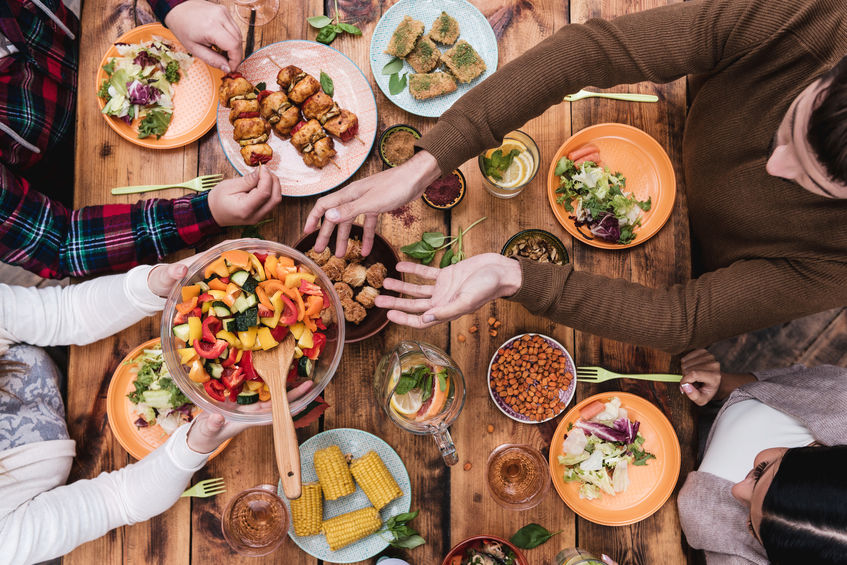
Friends Having Dinner Outdoors

As opposed to the things we never do while sharing a meal with others, there are things we should always do.

Using the following “Always Do” examples as a checklist will make you a delightful dinner guest, dining partner, and one who leads by example.

Perfect Punctuality

  • Have a heart for your host.  This is the person who went to the trouble to organize the party you’re attending and then worries if a diner will show up, has the inconvenience of holding off on calling people to the table when someone is late, or has to adjust or rearrange the evening’s time frame. 
  • Whether for a host or a fellow guest, your arriving on time is important for providing a positive dining experience for everyone.  

Promptness is the first element to consider in making and leaving a positive impression.

A Smile Shows It!

  • It’s impossible to wear a smile and not affect others or yourself positively.
  • Your smile is evidence of your positive attitude – one of the most important qualities to have when spending time with other people. 
  • Smiling affects your own body as a stress reliever, mood improver, blood pressure adjuster, immune booster.  It’s only natural that others will be drawn to you when you smile.

Smiles are peaceful and relaxing to others.  It’s no wonder that laughter also has a place at the table.

Contribute to Winning Table Conversations

  • It’s a great idea ahead of time to write down ten possible conversation starter questions.  No one will know you aren’t a natural born conversationalist. 
  • Say positive things about the food and be generous with “Thank you” and “Please.”
  • If asked if you like (or don’t like) the food, simply say, “I am enjoying my food!  Thank you for asking,” or “Thank you!  Everything is lovely!”
  • When you leave the table, pick up on someone’s departing comments and compliment the statement.  Or offer a final reflection of the good time you had.  
  • Even if a gathering is for a somber event, being as convivial as possible according to the occasion, will be experienced as a relief and peace of mind. 
  • Listening well is helpful to not only the table conversation but your own mindfulness of the food and why you are there. 

Sharing and caring thoughts are general guidelines for good conversation.

Offer Little Gestures of Respect

  • The gift you bring for your host is an expression of gratitude for being invited.  It won’t be a topic of conversation.
  • When food has been passed to you, continue to pass the food to the person next to you after serving yourself.
  • If a person has spinach on her teeth, silently get her attention and gesture quietly.  
  • When someone has something to say, find a positive response or respectful question to ask about it.  
  • If another person makes a faux pas, let it slide by unnoticed. 
  • If you need to leave the table, do so between courses, first saying, “Excuse me.”  
  • If you finish your meal first, wait until the host signals that the meal has ended before loosely folding and placing your napkin on the table. 

Etiquette is the physical means of showing respect for others.  And we know that it’s the little things that count.

Follow the Leadership of Your Host at All Times

  • Your host will welcome you and let you know where and when to sit.
  • The host will welcome the group and will place his napkin on his lap to signal the beginning of the meal.
  • If the host notes a time constraint, model your order at a restaurant similar to his.
  • If a toast is offered, participate.  It’s okay to follow suit if you have a toast to make later in the meal.  Toasting the host is appropriate.
  • When the meal is over the host will place her napkin on the table.  Everyone else at the table should do the same as quickly as possible.  (It’s true: you may have to leave food unfinished.  No doggie bags/boxes, please.)

Hosts carry a lot of responsibility.  They are the leaders of the event.

Wrap It Up with Gratitude

  • Thank your host for the wonderful occasion and let her know she’s appreciated. 
  • A written thank-you note will reinforce your gratitude.

Beneficence or generosity is a main pillar of society.  To paraphrase Adam Smith, 19th century moral philosopher, when someone chooses to do something good for you, this calls for a reward—perhaps a gesture of appreciation—because of the gratitude you feel.

Remembering what you should always do when sharing a meal with other people is easy when summarized.  The bottom line is that you remain positive, kind, and grateful.  The magic of possessing these qualities is that you find yourself surrounded by positive, kind, and grateful people!


 Contributor, Candace Smith is a retired, national award-winning secondary school educator, Candace Smith teaches university students and professionals the soft skills of etiquette and protocol. She found these skills necessary in her own life after her husband received international recognition in 2002. Plunged into a new “normal” of travel and formal social gatherings with global leaders, she discovered how uncomfortable she was in many important social situations. After extensive training in etiquette and protocol, Candace realized a markedly increased confidence level in meeting and greeting and dining skills and was inspired to share these skills that will help others gain comfort and confidence in dining and networking situations. Learn more at http://www.candacesmithetiquette.com/

Etiquette. Enthusiast, Maura J Graber, is the Site Editor for the Etiquipedia© Etiquette Encyclopedia 


Friday, August 6, 2021

Etiquette and Elbows


Is it Appropriate to Place Your
Elbows on the Table?


Of all the hard and fast etiquette rules, placing elbows on the table is one of the most familiar ones. From an early age, children become familiar with the constant reminder, “Elbows off the table, please!”

There was even an often-sung jump rope rhyme on the subject:
“Mable, Mabel,
Strong and able,
Get your elbows off the table,
We’ve told you once,
We’ve told you twice,
We’ll never tell you more than trice.”


In our current age of informality, we tend to be more relaxed. And yet, the general rule still applies: elbows do not belong on the table.

The Practical Reasons for the Rule

Not having elbows on the table has practical and polite application. Consideration of others at the table is, of course, first and foremost.

Recently, I attended a lovely dinner gathering. The table was full of delicious food to be served home style with passing of dishes, but there were many guests seated very close-in to accommodate as many as possible. The person seated next to me sat with his elbows on the table – even during eating. This caused a space challenge for the two of us seated on either side of him as we worked to best accommodate for room.

Health-wise, elbows resting on the table means that you are leaning in and, by default, your ribs are pushed inwards. Where is your stomach? Between the spine and ribs. This hunched-over posture could very well interrupt proper digestion. A pretty good reason not to eat or “rest” with your elbows on the table.

A Little History

In days of old in Europe, it’s claimed that in the great halls where people dined at long tables, all were seated on one side of the table, and leaning on a table might cause it to tip over. Another story is that when opportunity afforded itself and people gathered close-in at long tables, there simply wasn’telbow room.

Contrary to the above, there are tales of the custom of placing arms on the table while eating. One story is that in olden times people needed to guard their food, and elbows on the table made that easier. Also, it’s reported that sailors at sea used their elbows to steady their hands in order to steady plates when weather got rough.

I suppose the bottom line is that practicality has a say in protocol.

Are Elbows on the Table Ever Okay?

Speaking of practicality, there are occasions when it may be acceptable to place your elbows on the table during a meal.

If the place for eating is noisy, sometimes you might feel the need to lean in to participate in conversation.

It may be that conversation is so intense that not leaning in (with elbows on the table) would indicate disinterest.

Elbows might be placed on the table when there is no food there – before or after ordering in a restaurant or when between courses once the plate from the previous course is cleared.

Sometimes, conversation continues at the table well after the meal is over. It would be uncomfortable to sit upright for any length of time, so for comfort’s sake, resting with arms on the table is quite fine.

During a working lunch when pads, pens, and laptops are in use alongside food served. Not the healthiest way to enjoy a meal, but another example of practicality taking precedence.I always advise using mindful discretion before becoming too relaxed. Consider what it’s like “to be on the other side of me.”

Does the dining environment call for formality?

Would you cause a space challenge for anyone seated next to you?

Do you happen to know that the host of the meal is a hard and fast rule follower?

Also consider that your body language sometimes speaks louder than spoken language. Your body language at the table informs others of your openness to conversation, your comfort with yourself, and your consideration of others.


"Oh, I would never put my elbows on the table."
~ Mary Berry, British Chef and Author


 Contributor, Candace Smith is a retired, national award-winning secondary school educator, Candace Smith teaches university students and professionals the soft skills of etiquette and protocol. She found these skills necessary in her own life after her husband received international recognition in 2002. Plunged into a new “normal” of travel and formal social gatherings with global leaders, she discovered how uncomfortable she was in many important social situations. After extensive training in etiquette and protocol, Candace realized a markedly increased confidence level in meeting and greeting and dining skills and was inspired to share these skills that will help others gain comfort and confidence in dining and networking situations. Learn more at http://www.candacesmithetiquette.com/

Etiquette. Enthusiast, Maura J Graber, is the Site Editor for the Etiquipedia© Etiquette Encyclopedia