|
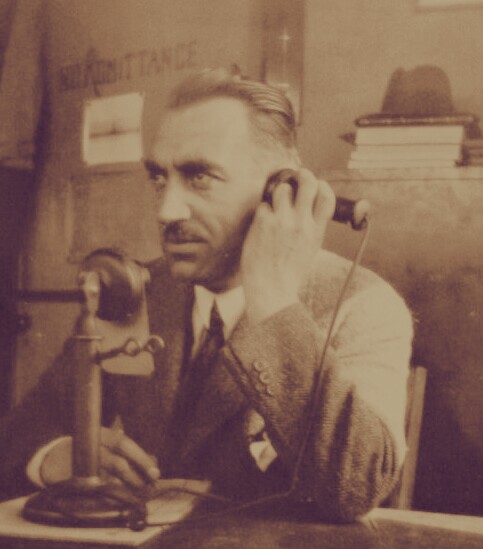
| The telephone is a most ill-mannered member of society. But who would do without it? |
The Unruly Telephone:
Some of the Pranks it Plays Both Day and Night —
It Has No Etiquette or Delicacy
—
Though Many Are Its Services to Mankind
It has long been noticed by careful observers that the telephone as an adjunct to civilization has done many marvelous and unlooked for things. It has shortened distance, but it has also doubtless increased profanity among mankind. By reason of the fact thai one's identity is not revealed it has led to fraud, vulgarity, flirtations, and practical joking to a larger scale than ever practiced before.
It is said that a certain Sacramento restauranteur has had more trouble over orders that were sent in by wags—"just for fun"—than over all his other troubles combined. The same kind of a complaint comes from San Francisco and from every town of any importance in the country. "Send five oyster loaves to room 21," (such and such a street.) sounds like a business-like transaction, especially if the voice making the order over the telephone says it is the voice of a well known customer; yet just such orders have often been sent to the alleged address, only to find that the person living there was wholly innocent of giving the order, or that the place named was a vacant lot.
The "Record-Union" is only one newspaper in hundreds that have learned through the telephone some of the characteristics, if you please, of women. As a point in illustration: During the great Corbett-Fltzsimmons prize fight, the telephones in this office rang quite often, and many of the eager voices that inquired for the result were the voices of women who would not give their names. In some instances they confessed to a morbid desire to know the result, though they said they had never attended prizefights and had no desire to see one.
Some weeks ago a doctor, who had been very busy all day, was awakened by the ringing of his telephone. "Who is there?" he asked. "Mrs. Jones," said the voice at the other end of the line. "What is wrong?" "Oh, come up right away," said she, "for baby is very sick. He awake hoarse and is crying now." "Is he near you?" "Yes, right here by the telephone." "Hold him up and let me hear him cry." The babe was held up, the telephone was in good order, and the sleepy doctor heard the hoarse crying of the child. The telephone told the story of the labored breathing. "He has croup," said the doctor, "and it will not be necessary for me to come up. Do what I tell you and all will be well." The doctor then told the excited mother what to do and the child was saved, though the doctor lost the opportunity to charge mileage.
The telephone is a most ill-mannered member of society. On a recent occasion in this city a well-known professional man was engaged in his office on private and important business. The telephone rang and got his ear, though a dozen respectable citizens had been waiting at the outer gates for hours to see the man for just a moment. This illustrates that the telephone has no etiquette and that when it wants to see you its appeals are invincible.
When it lends its voice to the entire public how is the patron of the noisy thing to tell whose voice it is that calls? It may be his wife, his sweetheart, his banker, or his doctor. There is no way to tell, until one hushes the intermittent ringing of its sharp bell—and then it is too late to say one is not at home.
There are many points yet to be settled regarding the legal phases of the telephone. Men have accepted service of legal process by telephone, thousands have been interviewed by newspapers in the same way, while the courts show that breach of promise suits have been based on a proposal made over the telephone. The weird instrument plays so many tricks when wires are crossed and when atmospheric conditions are ajar that no man can swear by the card that this or that sound is the voice of friend or foe. A man is just as likely as not to ring up his bitterest enemy by mistake, or to take his friend for a stranger and refuse to grow warm in the conversation.
In its manifold phases there is much in the telephone to attract the attention of mankind, now drawing forth the admiration and now the condemnation of those who use the talking machine either for pleasure or during the rounds of their daily cares. But who would do without it? — Sacramento Daily Union, 1898
Etiquette Enthusiast Maura J Graber is the Site Editor for the Etiquipedia© Etiquette Encyclopedia