Showing posts with label Etiquette for Wearing Gloves. Show all posts

Wednesday, August 14, 2019

Etiquette, Hand Kisses and Shakes

Chaucer commends his gentle Princess for her white hand and taper fingers and the cleanly fashion in which she dined. Nowadays the modern belle has the finger-bowl to help her, and she can cleanse her fingers after an olive in a bowl of rose-water. It is a curious contradiction that a man takes care of his hand as he drives, runs, or plays ball or cricket, wearing a thick dogskin glove. The Prince of Wales covers his hand from sun and wind, then goes to a ball with his rosy ringers uncovered, except by rings. 

One would think, since the science of palmistry has so become a favorite a pastime, and if there be only a step between divination and prophecy, that the lines formed by an oar, or a ball bat, would confuse the lines of long life, hand fortune, one husband or more, so that the old fashioned, sleeping in chicken skin gloves, would come back again. A soft hand is very comforting to the sick, and a child who is ailing loves the soft hand of his mother on his head. It is a marvelous poultice for his aches and pains. As an object to kiss, a white and well kept hand is very important. The kiss of respect should be imprinted on the hand. It is a continental fashion still and might well be introduced on our shores. The hand is, after all, the natural member to salute. The nerves of touch are most highly developed in the finger, and the charm of the hand is its grasping power, which enables the giver to denote every shade of cordiality, to vary the salute at pleasure. 

There is everything in the hand. It has actioning freemasonry. If only two fingers are extended, if no prehensile thumb completes the maneuver, farewell to cordiality. If a strong hand catches a weak one and gives to it a grip which mashes the bones, farewell to friendship. Let the hand-shake be warm, cordial and welcome—the juste milieu of salutation. The French rarely shake hands, and only with intimate friends. They often give the left hand as nearer the heart, “la main du couer,” they call it. On the Continent the etiquette of hand-shaking is observed with delicacy. No man should assume to shake hands with a lady unless she extends her hand first. It is the privilege of a superior to offer a hand. In a ball-room there is no shaking of hands. The more public the place of introduction, the less hand-shaking takes place. Still, among effusive foreigners, both hands are frequently extended to old friends. 

The Irish hand, among a peasantry who labor from the cradle to the grave, is almost universally small and well shaped. It is a Milesian trait; whether potatoes, bog-tretting, poor living, political disturbances, shillalahs and damp climate improve the hand we know not, but the Irish lass has a pretty hand. No matter how much they cook, wash or dig, tbe knuckles seldom grow to be large and prominent, as in the English and Scotch hand. Tbe American hand is sinewy, and, as we have observed, does not follow the example of the American foot in being beautiful. No doubt the accomplishments are somewhat trying to the hand, such as playing the harp, the zither, the guitar, the banjo. The nails of a musician are apt to betray him. There is an eccentricity peculiar to the handwriting of executive musicians, as witnessed in that part of Beethoven. But this need not be attributable wholly to the use of the hand. 

Chaucer commends his gentle Princess for her white hand and taper fingers and the cleanly fashion in which she dined. Nowadays the modern belle has the finger-bowl to help her, and she can cleanse her fingers after an olive in a bowl of rose-water. It is a curious contradiction that a man takes care of his hand as he drives, runs, or plays ball or cricket, wearing a thick dogskin glove. The Prince of Wales covers his hand from sun and wind, then goes to a ball with his rosy ringers uncovered, except by rings. A young woman, on the contrary, exposes her hand to wind, and sun, and rain. She hardens it with the recklessness of a prizefighter, and when she goes to a ball, she covers it with a glove. This is not the way her predecessor belle has done in the past ages of the world. 

“The hand of a Duchess” has passed into a proverb. The old novelists always gave their heroines white hands; the poets are devoted to white hands and rosy palms. Expressive hands are, perhaps, better than pretty hands, and useful hands are better than either; but young girls who are poetry and romance combined, should not allow their hands to grow too brown and rugged. It is a strange freak of fashion, for if they were Joan of Arc and had to labor in the fields, they would look regretfully at those brown and callous hands. However, work is what you are obliged to do, and amusement, however hard, is what you choose to do, so there is all the difference in the world. As it is, however, the brown hand of an athlete is worth a dozen of the creamy hands of an idler, so we prefer the present habits of our athletic girls. If they cannot be both healthy and happy and have white hands, too, we throw up our hands. —Mrs. John Sherwood in New York World, 1887


Etiquette Enthusiast, Maura J Graber, is the Site Editor for the Etiquipedia© Etiquette Encyclopedia

Tuesday, January 8, 2019

Men’s Glove Etiquette

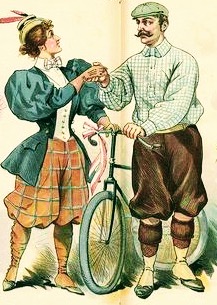
In the “bad old days” it was a capital offense to shake a woman’s hand with your glove on.

Male Polish – Good Taste Dictates Glove Etiquette

By Dot Goodwin

Dressing right is always a partly subjective proposition and in our era a lot of the old rigid “rules of dress” have been loosely treated and lightly taken. As a result, many “must” matters are now matters of taste. Take gloves. It's possible today to go gloveless and still be thought well dressed (except on formal occasions such as weddings where gloves are strictly required). Gloves, like hats, have dropped from the “necessary” to the “optional” class. But with the best-dressed men, and with those who put even a little extra time and thought into their wardrobes, both gloves and hats are indispensible throughout the winter months. 

“What gloves do I wear, and when?” Here are a few guideposts: 
Buck leather or dark gray suede gloves look best with gray or black coats. 
With a navy blue coat, pearl gray suede gloves are the ultimate in good dress. With coats in the brown group (including tan and beige), wear brown leather. In general, contrast the glove shade against that of the coat. 

For example, with a light tan or copper pepper-and-salt tweed, dark, grained pigskin gloves are in order. Note that this combination unites a casual coat with a casual leather. With a solid color or quiet herringbone topcoat, pick a more formal, smooth leather or suede. 

In the bad old days, it was a capital offense to shake a woman’s hand with your glove on. Not so today. Manners have become jet-propelled. It’s now far worse to keep a woman waiting while you shuck off your glove than to shake with it on. Nor should you apologize for a begloved shake. In truth, you're doing HER the favor by not dawdling. 

It’s unnecessary to remove your gloves when shaking a man’s hand. Indoors, you will have shed the things anyhow, leaving them with your hat. In the case of white-gloved ushers at weddings and funerals, of course, the gloves stay on. – The Sun, 1963 


Etiquette Enthusiast, Maura J Graber, is the Site Editor for the Etiquipedia© Etiquette Encyclopedia

Tuesday, May 1, 2018

Etiquette for Gloves at Tea


If one lady goes to call upon another a short afternoon visit, not one where she is staying at tea, she would not think it necessary to take off her gloves just for the purpose of shaking hands. The impulse of a younger woman coming up to a tea-table where her older hostess is pouring out teas, is to unglove before touching her hand.


Q.  Is it proper for a lady to remove her gloves before shaking hands with any one? Also what about the gentleman in this case? This is a little bet I read your paper and will see your answer when you find it convenient to reply. – “H.G.”

A.  Just regard it from the simple, common sense point of view and you can easily see that it is a question of circumstances. If one lady meets another lady walking, it would be entirely unnecessary for them both to unglove before shaking hands. If one lady goes to call upon another a short afternoon visit, not one where she is staying at tea, she would not think it necessary to take off her gloves just for the purpose of shaking hands. The impulse of a younger woman coming up to a tea-table where her older hostess is pouring out teas, is to unglove before touching her hand. 


The idea behind this is not to take with your gloved hand, the hand of your elder that is bare and busy among eatables. But no particular rule would be broken if you came in just to say a few words, meaning to depart without eating or drinking, and did not take off your glove. Women would not take off a glove to shake hands with men. Men always should, if possible, when shaking hands with women. I don't mean, again, that gloved hand may not meet gloved hand in the street, but that a man takes his glove off to touch a woman's bare hand on entering her house. 

Questions about gloves are asked often in these days, because many women are new to the wearing of evening gloves. When gloves are worn with evening dress they are not taken off at all except when eating. Then they are to be taken off entirely. They always look awkward when tucked in at the wrist. – San Bernardino Sun, 1931

Etiquette Enthusiast Maura J. Graber, is the Site Editor for the Etiquipedia© Etiquette Encyclopedia 

Tuesday, November 17, 2015

Etiquette and Tea Visiters

The domestic that attends the door should be instructed to show the guest up-stairs, as soon as she arrives; conducting her to an unoccupied apartment, where she may take off her bonnet, and arrange her hair, or any part of her dress that may require change or improvement. 


TEA VISITERS (sic)

When you have invited a friend to take tea with you, endeavour to render her visit as agreeable as you can; and try by all means to make her comfortable. See that your lamps are lighted at an early hour, particularly those of the entry and stair-case, those parts of the house always becoming dark as soon as the sun is down; and to persons coming in directly from the light of the open air, they always seem darker than they really are. 


Have the parlours lighted rather earlier than usual, that your guest, on her entrance, may be in no danger of running against the tables, or stumbling over chairs. In rooms heated by a furnace, or by any other invisible fire, it is still more necessary to have the lamps lighted early.

If there is a coal-grate, see that the fire is burning clear and brightly, that the bottom has been well-raked of cinders and ashes, and the hearth swept clean. A dull fire, half-choked with dead cinders, and an ashy hearth, give a slovenly and dreary aspect to the most elegantly furnished parlour. A sufficiently large grate (if the fire is well made up, and plenty of fresh coal put on about six o'clock) will generally require no further replenishing during the evening, unless the weather is unusually cold; and then more fuel should be added at eight or nine o'clock, so as to make the room comfortable.

In summer evenings, let the window-sashes be kept up, or the slats of the venetian blinds turned open, so that your guest may find the atmosphere of the rooms cool and pleasant. There should always be fans (feather or palm-leaf) on the centre-tables.

The domestic that attends the door should be instructed to show the guest up-stairs, as soon as she arrives; conducting her to an unoccupied apartment, where she may take off her bonnet, and arrange her hair, or any part of her dress that may require change or improvement. The lady should then be left to herself. Nothing is polite that can possibly incommode or embarrass —therefore, it is a mistaken civility for the hostess, or some female member of the family to follow the visiter up-stairs, and remain with her all the time she is preparing for her appearance in the parlour. 

                                         
Let both mothers and children understand that, on all occasions, over-officiousness is not politeness, and that nothing troublesome and inconvenient is ever agreeable.

We have seen an inquisitive little girl permitted by her mother to accompany a guest to the dressing-table, and watch her all the while she was at the glass; even following her to the corner in which she changed her shoes; the child talking, and asking questions incessantly. This should not be. Let both mothers and children understand that, on all occasions, over-officiousness is not politeness, and that nothing troublesome and inconvenient is ever agreeable.

The toilet-table should be always furnished with a clean hair-brush, and a nice comb. We recommend those hair-brushes that have a mirror on the back, so as to afford the lady a glimpse of the back of her head and neck. Better still, as an appendage to a dressing-table, is a regular hand-mirror, of sufficient size to allow a really satisfactory view. These hand-mirrors are very convenient, to be used in conjunction with the large dressing-glass. Their cost is but trifling. 


The toilet-pincushion should always have pins in it. A small work-box properly furnished with needles, scissors, thimble, and cotton-spools, ought also to find a place on the dressing-table, in case the visiter may have occasion to repair any accident that may have happened to her dress.

For want of proper attention to such things, in an ill-ordered, though perhaps a very showy establishment, we have known an expected visiter ushered first into a dark entry, then shown into a dark parlour with an ashy hearth, and the fire nearly out: then, after groping her way to a seat, obliged to wait till a small hand-lamp could be procured to light her dimly up a steep, sharp-turning stair-case; and then, by the same lamp, finding on the neglected dressing-table a broken comb, an old brush, and an empty pincushion,—or (quite as probably) nothing at all—not to mention two or three children coming to watch and stare at her. On returning to the parlour, the visiter would probably find the fire just then making up, and the lamp still unlighted, because it had first to be trimmed. 


Meanwhile, the guest commences her visit with an uncomfortable feeling of self-reproach for coming too early; all things denoting that she was not expected so soon. In such houses everybody comes too early. However late, there will be nothing in readiness.

The hostess should be in the parlour, prepared to receive her visiter, and to give her at once a seat in the corner of a sofa, or in a fauteuil, or large comfortable chair; if a rocking-chair, a footstool is an indispensable appendage. 


By-the-bye, the dizzy and ungraceful practice of rocking in a rocking-chair is now discontinued by all genteel people, except when entirely alone. A lady should never be seen to rock in a chair, and the rocking of a gentleman looks silly. Rocking is only fit for a nurse putting a baby to sleep. When children get into a large rocking-chair, they usually rock it over backward, and fall out. These chairs are now seldom seen in a parlour. Handsome, stuffed easy chairs, that are moved on castors, are substituted—and of these, half a dozen of various forms are not considered too many.

Give your visiter a fan to cool herself, if the room is warm, or to shade her eyes from the glare of the fire or the light—for the latter purpose, a broad hand-screen is generally used, but a palm-leaf fan will do for both. In buying these fans, choose those whose handle is the firm natural stem, left remaining on the leaf. They are far better than those with handles of bamboo, which in a short time become loose and rickety.

There are many persons who, professing never to use a fan themselves, seem to think that nobody can by any chance require one; and therefore they selfishly keep nothing of the sort in their rooms.

If, in consequence of dining very late, you are in the custom of also taking tea at a late hour—or making but slight preparations for that repast—waive that custom when you expect a friend whom you know to be in the practice of dining early, and who, perhaps, has walked far enough to feel fatigued, and to acquire an appetite. For her accommodation, order the tea earlier than usual, and let it be what is called "a good tea." If there is ample room at table, do not have the tea carried round,—particularly if you have but one servant to hand the whole. 


It is tedious, inconvenient, and unsatisfactory. There is no comfortable way of eating bread and butter, toast, or buttered cakes, except when seated at table. When handed round, there is always a risk of their greasing the dresses of the ladies—the greasing of fingers is inevitable—though that is of less consequence, now that the absurd practice of eating in gloves is wisely abolished among genteel people.– From The Ladies Guide to True Politeness and Perfect Manners, by Miss Leslie, 1864


Etiquette Enthusiast, Maura J. Graber, is the Site Editor for the Etiquipedia© Etiquette Encyclopedia

Thursday, November 12, 2015

Etiquette for Women's Gloves

Depiction of a “glove fitting” from 1906 ~ “The average store is sadly deficient in facilities for trying on gloves, and also in the attention paid to fittings.”
– 
From Shoe and Leather Journal, 1905

Glove Etiquette in Period Dramas from Miss Manners –
"The only place where it seems to be traditional for ladies to eat or drink with gloved hands is in costume dramas. In real life, it was always considered crude, not to mention yucky, but in every period film, television show, play and opera, it is evidently intended to add a touch of what passes for “class.” Miss Manners pities the laborers who were taxed with cleaning those gloves afterward. 
(You are correct that) gloves are worn during dancing, but they had to be removed before touching any refreshments. This was a good argument against drinking when dancing. It would serve Miss Manners right if, after obeying her strict command to remove your gloves, you handed them to her. You might reasonably point out that ball dresses unaccountably lack pockets, and are cunningly constructed so that gloves placed on them when the wearer is seated slip off the lap, thus requiring the wearer’s unfortunate dinner partner to crawl under the table to fetch them. 
If you cannot cram your gloves into your tiny evening bag, where we hope there is no makeup on the loose, you must hold them with your free hand when eating or drinking while you are standing. At dinner, she suggests surreptitiously sitting on them, but please don’t tell anyone she said so." – Judith Martin, aka Miss Manners

Incorrect! Lady Edith sits at the table with gloved hands and a glass of champagne beside her.

More Glove Etiquette:
  • Don’t eat, drink, or smoke with gloves on.
  • Don’t play cards with gloves on.
  • Don’t apply makeup with gloves on.
  • Don’t wear jewelry over gloves, with the exception of bracelets.
  • Don’t make a habit of carrying your gloves 
  • Don't play musical instruments while wearing gloves

Glove Etiquette Violations 
in Period Dramas
A beautiful woman, but the gloves and cigarette, shout, "Tacky!"
All in that attempt to add what “passes for class...” Two much! Two faux pas for the price of one. Both a cigarette and a drink in gloved hands. Both etiquette “no-nos.”
Terribly tacky! Gloves that unbutton... for when a woman wants to throw that drink back or gobble some bon bons, without looking “incorrect.” A fail.
Gloved ones violating etiquette while having tea. Downton Abbey is a repeat “glove etiquette offender” over its six seasons.
It is hard to find examples of someone playing an instrument in gloves, who is not a cartoon character or a cabaret act. So with regard to etiquette, wearing gloves while to playing the piano, is an etiquette “don't.”
Wearing gloves while eating or drinking is a violation of good manners, but...

So is not wearing gloves! To not wear gloves while dancing in the Regency Era, would find a young woman shunned by “good society.”


🍽️Etiquette Enthusiast, Maura J. Graber of The RSVP Institute of Etiquette, is the Site Editor of the Etiquipedia© Etiquette Encyclopedia