Showing posts with label Dining History in Roman Empire. Show all posts

Wednesday, December 25, 2024

Dining Etiquette and History in Spain

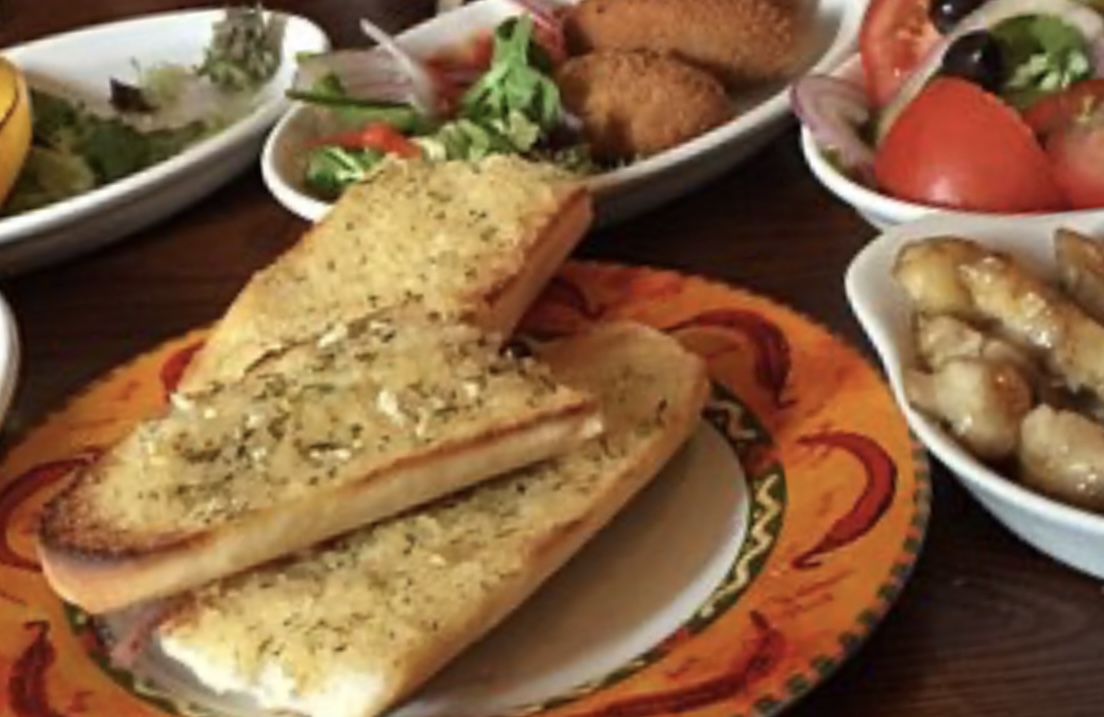
“Today, Spanish dining etiquette retains traditional elements, such as the emphasis on sharing food, reflected in the popularity of ‘Tapas’, they are hot and cold appetizers brought in platters to share and to keep ordering during your entire meal.” – Most authorities agree that in Spain, to be safe, always use utensils for dining, unless of course you’ve ordered or been served Tapas. Tapas (shown above) are small dishes of shared food, which are typically served as snacks or appetizers. They are a staple of Spanish culture and Spain’s cuisine. Served hot or cold, Tapas can make a full meal, when combined together.


Dining has been since the Roman civilization an important social event and many of their customs laid the groundwork for Spanish dining habits. During the medieval period, the Romans introduced the concept of “convivium”, or banquet, emphasizing the importance of communal meals and shared experiences. Meals were often served on a large platter from which diners would eat with their hands, reflecting both practicality and a lack of formal table settings.

As the Spanish Monarchy consolidated power, particularly under the reigns of Charles V and Philip II in the 16th century, table etiquette began to formalize. The introduction of silverware, intricate table settings, and the use of a variety of dining courses were significant changes. Nobility started to adopt more refined manners, such as using knives and forks, which were becoming increasingly common across Europe.

The Baroque period witnessed heightened ceremonial dining, where elaborate meals were often accompanied by strict rules of conduct. The importance of social hierarchy was evident; seating arrangements, serving order, and the presentation of dishes were meticulously planned to reflect status and power. The practice of holding lavish banquets became a means for monarchs to showcase wealth and influence.

In the 18th century, the influence of Enlightenment ideas contributed to changes in etiquette, including a shift towards more egalitarian dining practices. Although the essence of hierarchy remained, the focus on civility, politeness, and respect became more pronounced in royal circles.

The 19th and early 20th centuries marked a period of modernization. The influence of French dining customs were adopted, like the French style of service “à la française”, where dishes are presented on platters. The concept of a formal dining setting, complete with elaborate place settings and the proper use of cutlery, became increasingly important.

Today, Spanish dining etiquette retains traditional elements, such as the emphasis on sharing food, reflected in the popularity of “Tapas”, they are hot and cold appetizers brought in platters to share and to keep ordering during your entire meal. Formal dining still retains its place, especially in business and state contexts, where a clear understanding of hierarchy and decorum is vital. Greeting before meals, the proper use of wine and toasting, and the order of service are all observed meticulously in formal settings.

The history of protocol and etiquette at the table in Spain is a fascinating reflection of its evolving society. From ancient Rome to contemporary gatherings, dining customs embody the country’s diverse cultural heritage, social norms, and values. Understanding this evolution not only enriches the dining experience but also highlights the ongoing significance of hospitality and community in Spanish culture.


Meet our newest contributor, Isabel. E. Martinez, who was educated in Business Management at the Universidad Católica Andrés Bello, in Caracas, Venezuela. After relocating for a few years to Miami, Florida, Isabel developed a company teaching computer skills. Among her clients were Baccardi in Bermuda, and Mavesa, Telcel (Movistar), and Heinz in Venezuela. That is when she discovered her passion for teaching. As her children became adults, she shifted her focus and dedicated her time to teach on subjects she is very passionate about; Hospitality and Table Etiquette. Throughout workshops in English and in Spanish, Isabel works with employees in the hospitality industry, and those business professionals who when interacting with customers, would like to make sure that they are the most professional representations of their companies. Especially when attending business lunches and events. She also offers youth and teen courses in etiquette, helping them to excel with integrity and pride in whatever field they desire to pursue. To learn more about Isabel, visit her website: www.learningschool2.com or @isasetiquette 


🍽Etiquette Enthusiast, Maura J. Graber, is the Site Editor for the Etiquipedia© Etiquette Encyclopedia

Monday, May 9, 2022

Etiquette and Leftovers in Ancient Rome

“Up to a certain point the remnants were fairly divided, but unfortunately one chicken, more plump than the rest, attracted the attention of one of the party who had no just claim to it. The proper owner would not let it go, so they both tugged at it; a general tumult ensued, and the guests grasped the birds by the legs and hit each other in the face…”— Above, a depiction of ancient Roman dining.


DIVIDING FOOD LEFT OVER

A very strange custom prevailed with both the Greeks and the Romans of the guests carrying away with them the viands that remained uneaten. Martial has an extremely witty epigram on this; but the drollest account of it is in the “Symposium” of Lucian. The party consisted of learned and dignified philosophers, whom, of course, the author intends to satirize. Up to a certain point the remnants were fairly divided, but unfortunately one chicken, more plump than the rest, attracted the attention of one of the party who had no just claim to it. The proper owner would not let it go, so they both tugged at it; a general tumult ensued, and the guests grasped the birds by the legs and hit each other in the face with them, pulled beards, shouted, and pelted with cups. 

That such scenes really took place at the dinners given to Roman clients is seriously affirmed by Juvenal (v, 26,) and in one of the satyric plays of Eschylus, (“The Ostologi,”) a guest complains that a certain vessel was broken over his head, “by no means so fragrant as a pot of spikenard.” Indeed, it would be a rather curious inquiry how far drunkenness was sottishness or mere excitement, for it is obvious that such a term is but relative, and it is likely enough that the Greek temperament was easily roused to fury by a very small amount of alcohol. 

Certainly, no rigid etiquette prevented practical jokes of a serious kind. We read in Plautus of an unfortunate parasite having a pot full of ashes flung at his head at dinner for no other purpose than to raise a general laugh against him. Some an ecdotes are told which confirm this view. One Philoxenus, a poet of Cythera, was dining with Dionysius. Observing a small mullet served on his plate, but a large one on that of the host, he took the cooked fish in his hands and applied it to his ear. “What are you doing?” asked the host. “I am writing poem entitled 'Galatea,' and a I want to learn from this fish something about Nereus! But it says it was caught too young, whereas the big fish on your plate followed in Nereus’s train, and knows all about him.” The host laughed, and ordered the fishes to be exchanged. 

A certain Spartan was dining at a table on which sea-urchins were served. He took one, and not knowing how to manipulate it, put it into his mouth, and crunched it shell and all. After making wry faces over it be exclaimed, with true Spartan bravery, “Filthy eating! I am not going to turn a coward and give you up now, but I shan't take you any more.” Rather a neat repartee is recorded of one Philoxenus, a parasite. Observing that the host supplied black bread, he quietly said, “Don't put any more of that or you will make the room dark.” Another, seeing an entrée that was being carried round stop at the host, inquired, “Am I tipsy, or is it a fancy of mine that these things are going round?”—Fraser's Magazine, 1881


Etiquette Enthusiast, Maura J. Graber, is the Site Editor for the Etiquipedia© Etiquette Encyclopedia

Sunday, May 17, 2020

Etiquette and People of the 5 Meals

Downton Abbey’s Mrs. Hughes, Mr. Carson and Anna Bates enjoying a Middle Age “beever” or “noonshine?”
——————————————————- 
What 5 British meals was Signor Bergeret referring to?  —The terminology around eating in the UK is confusing. For some, “lunch” is “dinner” and vice versa. From the Roman times to the Middle Ages everyone ate in the middle of the day, but it was called dinner and was the main meal of the day. Lunch as we know it didn’t exist - not even the word. During the Middle Ages daylight shaped mealtimes, says food historian Ivan Day. With no electricity, people got up earlier to make use of daylight. Workers had often toiled in the fields from daybreak, so by midday they were hungry. “People got up much earlier and went to bed much earlier.” By midday workers had often worked for up to 6 hours. They would take a quick break and eat what was known as a “beever” or “noonshine,” usually bread and cheese. As artificial light developed, dinner started to shift later in the day for the wealthier, as a result a light meal during the day was needed. The origins of the word “lunch” are mysterious and complicated, says Day. “Lunch was a very rare word up until the 19th C.,” he says. One theory is that it's derived from the word “nuncheon,” an old Anglo-Saxon word which meant a quick snack between meals that you can hold in your hands. Others theorise that it comes from the word “nuch” which was used around in the 16th and 17th C. and means a big piece of bread. — from an article by Denise Winterman, BBC News Magazine


Signor Bergeret, the special traveling correspondent of the “Mattino,” Naples, has been much impressed with the wonderfully adaptive qualities of the British, who bend all things to their will. Writing from Colombo he says: “Only the English, the race of stone and iron, are able, in the midst of this high-pressure work of nature, to continue their physical and mental activity, and the over-feeding which has procured for them the name of  ‘people of the five meals.’ They demand that in the colonies, every Briton shall be ‘twice British.’ 

“They have transported to the torrid zone their fatiguing games, their rigid etiquette, the abuse of meat, and the use of whisky, and have got the better of the climate as of the land; of the hostility of commercial and official intrigues, as of the violence of nature. No human race has ever been so admirably tempered for colonial domination. Their nature, education and moral principles combine to render the British masters of men and things on the seas and in distant countries. “Seeing their work, one becomes reconciled to the English. These gentlemen of the porcelain shirt fronts, the impeccable cravats, are marvelously tenacious workers, but their incessant fatigue does not make them into so many machines as it does the Germans.” — 1904

🍽️Etiquette Enthusiast, Maura J Graber, is the Site Editor for the Etiquipedia© Etiquette Encyclopedia

Friday, February 2, 2018

Etiquette and Fork History

Had the luxurious Romans been users of forks, some specimens of the implement would certainly have been found in the ruins of Herculaneum and Pompeii. But though they fed themselves with their fingers, it must not be imagined that the medievalists were altogether forkless. – Shown left to right- A modern 2-tined appetizer fork, a 19th c. berry fork and a 19th c. strawberry fork.

Dining, Fingers and Forks 

“Fingers were made before forks,” says the familiar adage that had its origin in the warm disdain with which our ancestors of the seventeenth century repudiated the Italian table-fork as a fantastic and even impious contrivance.
Products of necessity, the first culinary forks were devised for the benefit of cooks bent on withdrawing meat from a boiling caldron. The Greek creagra –a staff, fitted at the lower end with a hook or with prongs that bore a distant resemblance to human fingers—was a crude pot-fork, which, though greatly serviceable to cooks, would have been of no convenience to a reclining gourmand. Possessing several varieties of this kitchen tool, the Romans, notwithstanding their care for the caprice as well as the comfort of epicurian feasters, never produced a table fork. 

Caylus and Grignon, indeed, maintained that table forks were not absolutely unknown to imperial gastronomers; but their opinion, which never had the testimony of sufficient facts, has been altogether discredited. Had the luxurious Romans been users of forks, some specimens of the implement would certainly have been found in the ruins of Herculaneum and Pompeii. But though they fed themselves with their fingers, it must not be imagined that the medievalists were altogether forkless. Forty years since, a fork, of Anglo-Saxon manufacture, was discovered in Wiltshire, England, under circumstances which leave no room for doubt that it was made at least as early as the latter part of the ninth century. Another Anglo-Saxon fork, described in Ackerman’s Pagan Saxondom, is a bone handled implement, that some foppish thane may have used, to the mingled surprise and contempt of his simpler acquaintances. And from that period to the close of the Tudor time there is evidence that our ancestors had a few forks long before they were commonly placed on the daily table as necessary articles. 

Queen Elizabeth had at least three forks, one of “crystal, garnished with gold and sparks of garnets: another of coral, slightly garnished with gold, a third of gold garnished with two little rubies, two little pearls pendant, and a little coral.” But it is obvious that these daintily set and jeweled tools were never meant for serious use. Presents from courtiers, who sought the Royal smile with gifts curious for their costly whimsicalness, her highness regarded them as toys fitted for the jewel casket rather than for use at the table. She may have used one of them to pick a sweetmeat or a candied fruit from a dish of syrup, but it certainly never occurred to her to put them into sides of venison or the breast of Michelmas goose. To the last, whether eating in public or private, the Virgin Queen fingered her victuals, and would have imputed sheer madness to any courtier who had prophesied that ere another century had passed no member of the royal family would be able to do likewise without arousing the disgust of all beholders. – Albert Gilman, 1908

Etiquette Enthusiast, Maura J. Graber, is the Site Editor for the Etiquipedia© Etiquette Encyclopedia 

Thursday, December 1, 2016

Etiquette and Early Napkins

Romans were connoisseurs, and whenever a Roman nobleman gave a dining to his many friends, some new fad was anticipated. 

Origin of Napkins in Rome

The Romans were the first to call the semblance of a napkin into use. It is a matter of history, whether it be accepted as true or not, that the Romans were connoisseurs, and that whenever a Roman nobleman gave a dining to his many friends, some new fad was anticipated. Sometimes these expectations were realized in the shape of a new dish, or sometimes it was an innovation that would appear in the next issue of the Rules of Etiquette, stylographed by Ciceronius and Son.

One day a Roman nobleman— I forget his name, though he was an ancestor of Caesar— had a large dining. It was given in honor of his return from Germany, where he had won many rights and captured numerous slaves. These slaves were long-haired, rosy-cheeked maidens of beautiful figure and gentle ways. An idea got into the possession of the nobleman and he carried it into instant execution.

When dinner was served every guest was astonished to observe seated at his very feet a handsome woman, with loose flowing locks of the blonde order. Just what they should do with the fair intruders none of the guests appeared to know, until the host of the occasion having devoured a dish of elegant ragout, leaned over and used the hair of the maid nearest him for a napkin.

Needless to mention the guests were delighted and swiftly followed suit. Later the noblemen who could not afford slaves for this purpose used their own beards. Since that time there has been an evolution in napkins until they have become what they are now. — Atlanta Constitution, 1896


🍽️Etiquette Enthusiast, Maura J Graber of The RSVP Institute of Etiquette, is the Site Editor for the Etiquipedia© Etiquette Encyclopedia