Showing posts with label Etiquette and Saying “Thank You”. Show all posts

Sunday, June 25, 2023

2nd Debut: Singapore’s Courtesy Campaign

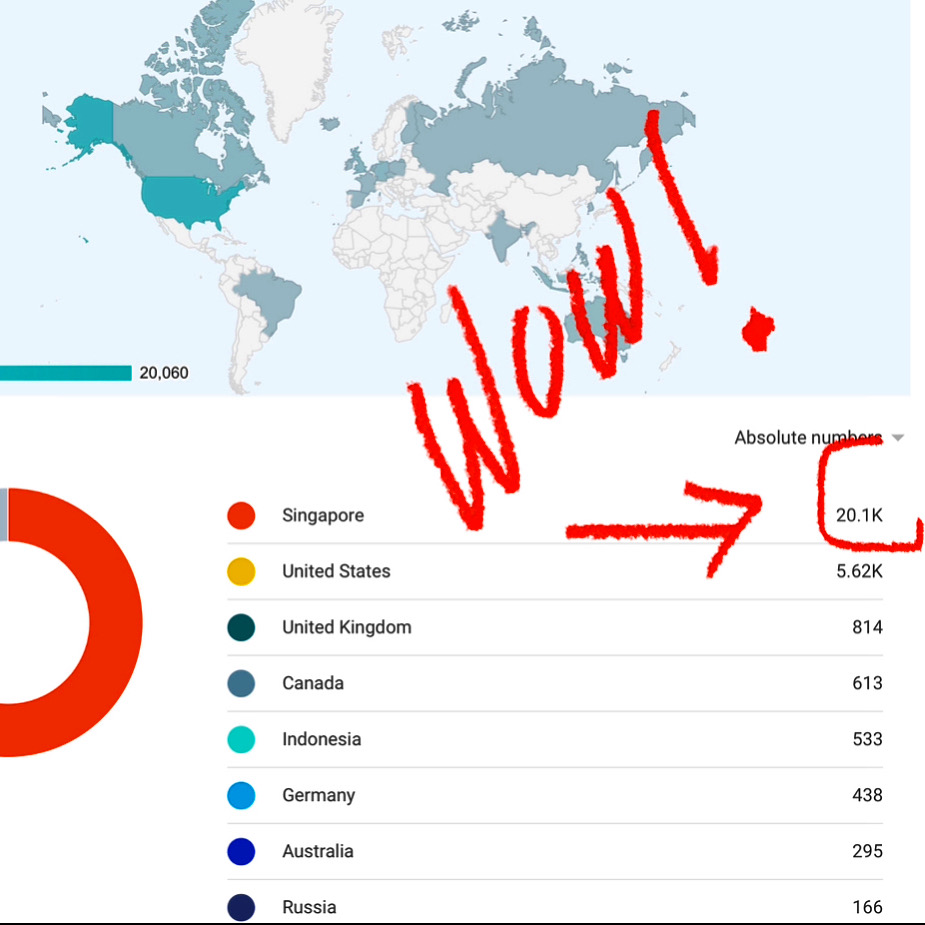
 On behalf of all the contributors to the Etiquipedia Etiquette Encyclopedia, I would like to personally thank the over 20,000 readers of Singapore who have viewed our etiquette articles over the past month. We thank you and applaud you for your efforts in understanding etiquette and etiquette history! Here is an article on the Singaporean Courtesy Campaign that was originally posted in February of 2021 —
A public education campaign featuring Singa the Lion was launched in 1982 under the National Courtesy Campaign with the slogan, “Courtesy is part of our tradition, it’s so nice to be courteous.”

The month of July has been “Courtesy Month” since 1979 in Singapore. Themes have changed from yearly, with songs, comic books and posters, all promoting courtesy. In 2013, Singa the Lion, Singapore's Courtesy Month mascot shockingly quit. In a letter, he explained his reasons:

Singa, the mascot for the Singapore Kindness Movement has called it quits. In an open letter the former Courtesy Lion, said that after 30 years, it was “just too tired to continue facing an increasingly angry and disagreeable society.”
Having done the job for over 30 years, Singa noted that kindness should not be a campaign, but a part of values education, adding that “people in authority - at work, in school, at home and in government - should lead by example”.
“I suppose it's time for real people to step up, and for the mascot to step aside.”
The letter also stressed that “it's not that we aren't a gracious society, or that kindness is not innate in all of us. But some days it feels like not very many of us believe in or care about expressing kindness.”
Signing off as “your friend Singa” the letter reminded that being rude, either online or in public, is a choice and people should be responsible for their actions and the society that they create.


The following day, it was revealed that the letter had been a publicity stunt.

Singa the lion to come out of retirement – the day after ‘quitting’

In what may prove to be one of the most predictable PR stunts in recent memory, the Singapore government’s “Singa the Lion” – the brand mascot for the Singapore Kindness Movement – is not retiring after all.

According to a story in government-backed broadsheet, The Straits Times, the stunt to withdraw Singa from the public eye – announced via a mock resignation letter– was actually a media campaign “to generate conversations and reactions online”, and Singa is likely to make a comeback. 

In the 2013 letter, the 30-year mascot, formerly known as Singa the Courtesy Lion, stated: “I’m just too tired to continue facing an increasingly angry and disagreeable society.” The letter also hit out at anonymous comments made by Singaporeans online, saying: “We can go online and be rude to others, but let’s not think it doesn’t count because it’s anonymous.”

The resignation appeared to have the opposite effect in inspiring kindness among online communities in Singapore, with the stunt prompting ire among bloggers and posters in social media. The Singapore Kindness Movement’s ad agency is DDB Singapore, although the agency said it had nothing to do with the stunt.

Poor PR stunts aside, Etiquipedia asks, “Can etiquette and genuinely good manners, ever be legislated or government run?” You are welcome to leave your thoughts in the comments below, or send us an email. We’re curious as to what our readers think.


Etiquette. Enthusiast, Maura J Graber, is the Site Editor for the Etiquipedia© Etiquette Encyclopedia

Tuesday, March 22, 2022

19th C. Changes to Dining Forks


The spoon is now pretty well subdued also, and the fork, insolent and triumphant, has become a sumptuary tyrant. The true devotee of fashion does not dare to use a spoon except to stir his tea or to eat his soup with, and meekly eats his ice cream with a fork and pretends to like it.

Until 1922, proper etiquette demanded that specialized forks be used for eating ice cream. Not everyone was happy with this fad. As Florence Howe Hall, the the granddaughter of Julia Ward Howe, complained in 1887:

The fork has now become the favorite and fashionable utensil for conveying food to the mouth. First it crowded out the knife, and now in its pride it has invaded the domain of the once powerful spoon. The spoon is now pretty well subdued also, and the fork, insolent and triumphant, has become a sumptuary tyrant. The true devotee of fashion does not dare to use a spoon except to stir his tea or to eat his soup with, and meekly eats his ice cream with a fork and pretends to like it.

The more diners resorted to the fork, the more they noticed its limitations. A two-tined fork may be useful for spearing, but it is not a good tool for eating delicate foods like flaky fish or pastry. To meet this need and other presumed ones, flatware manufacturers stepped into the breach, paying greater attention to the shape of the utensils as they related to food. Although multi-tined forks had periodically been manufactured for centuries, dinner forks were now regularly made with several tines (usually three or four, but on occasion up to five or six) rather than with two long, widely spaced straight ones. 

In this way, the diner could spear food without having to twist the fork and risk damaging a delicate morsel or, worse yet, having the food fall off the tines or slip through the space between them. The additional tines, now molded in a slightly curved fashion, helped to scoop up food like a spoon, and the curve allowed for a clearer view of the food being cut. Fish forks were designed with four tines, of which the outer two curved slightly for ease in picking up flaked pieces of fish. A special pastry fork, or “cutting fork,” was patented in 1869 by Reed & Barton, with one thick outer tine sharp enough to cut the pastry. Its remaining tines functioned like those on a regular fork to bring the food to the mouth. — From “Feeding Desire,” 2006


Etiquette Enthusiast, Maura J. Graber, is the Site Editor for the Etiquipedia© Etiquette Encyclopedia 

Monday, March 21, 2022

Manners Q. & A. on “Thank You”


There are those that we need to thank in business. Those people we are obligated to thank, if we want to start or continue a good business relationship. 

A Reader’s Query on the Importance of “Thanks” 

Question from Anonymous: My wife is angry with me because I asked complete strangers to contact with me any helpful information they could give me, in an unnamed situation that happened in the past. This was over social media. Several people responded. It’s been 3 weeks, and I appreciate it all the information that was sent to me, but my wife is angry with me because I never responded with a thank you to these people who sent information. But I have been busy with other things. Am I in the wrong or she is wrong? I’m planning on thanking these people soon. She knows I’m always prompt in thanking people in business situations.

Answer: There are those that we need to thank in business. Those people we are obligated to thank, if we want to start or continue a good business relationship.

Then there are personal notes of thanks that are needed for complete strangers who have gone out of their way to help you. There is nothing in their job description that requires them to help you. Because you are a complete stranger, they are helping you out of the kindness of their hearts.

A note of thanks is needed in both cases. In both cases it is good manners to say, "thank you." But for the people who have gone out of their way, out of the goodness of their hearts, deserve extra prompt notes of thanks from you. They were under no obligation to be kind to you. — Site Editor Maura J. Graber


Contributor, and Site Editor, Maura Graber has been teaching etiquette to children, teens and adults, and training new etiquette instructors, since 1990, as founder and director of The RSVP Institute of Etiquette. She is also a writer, has been featured in countless newspapers, magazines and television shows and was an on-air contributor to PBS in Southern California for 15 years


Etiquette Enthusiast, Maura J. Graber, is the Site Editor for the Etiquipedia© Etiquette Encyclopedia