Showing posts with label Afternoon Tea Etiquette. Show all posts

Tuesday, January 20, 2026

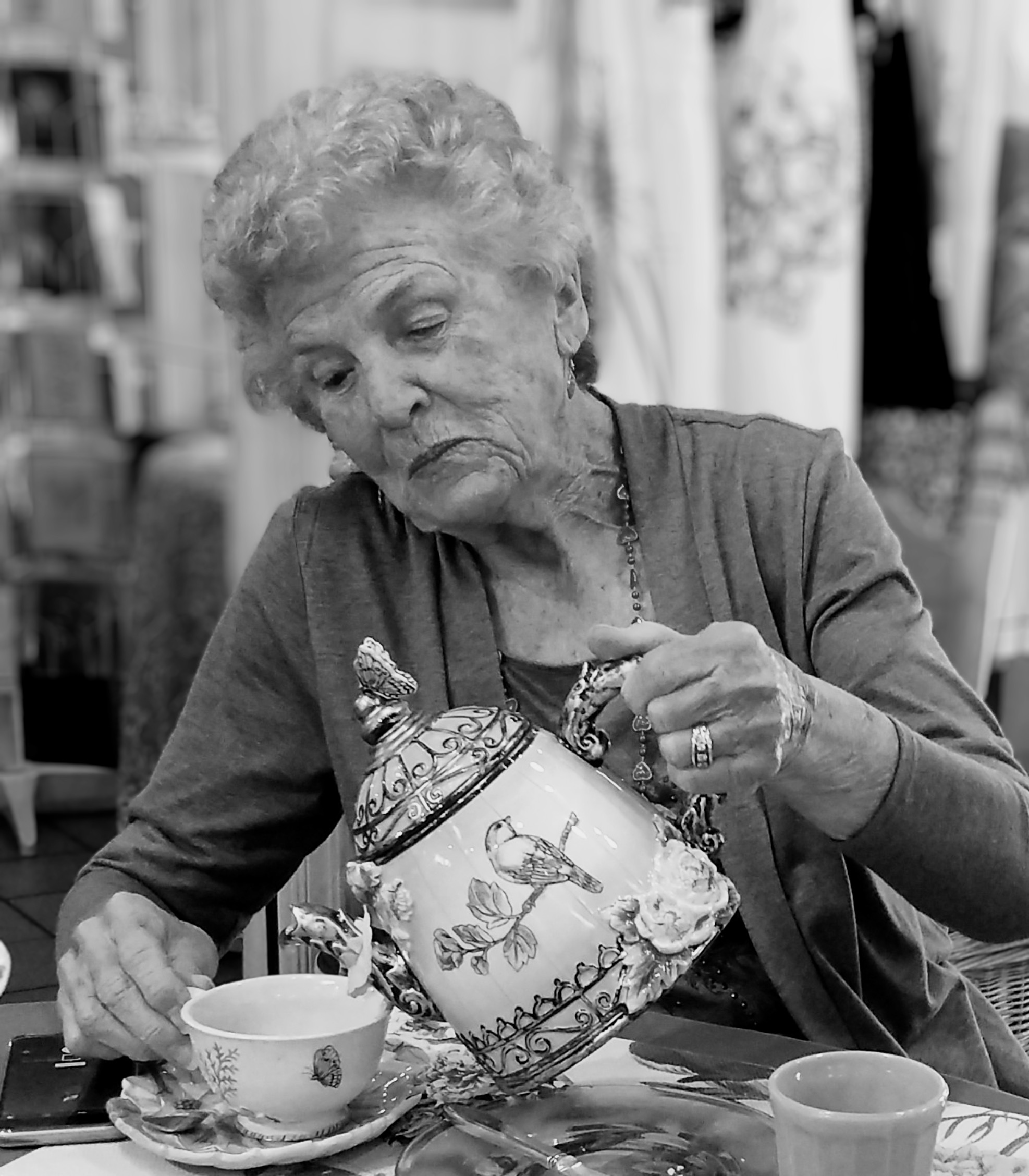
Who Pours at Tea?

More etiquette for pouring at tea: If the hostess for a formal tea is pouring, she need not rise when guests come by the table to bid her farewell. She bows and perhaps offers her hand. If the hostess is not tied to the tea table with duties, but has friends pouring for her, then she should be sought out by departing guests who thank her for her hospitality.

Let Members Pour at Women's Club Tea

DEAR Mrs. Post: Our women's club is giving a large tea for approximately a hundred and fifty guests. Would you suggest that it is better at a tea of this size to let the hotel do all the serving, or do you think it more friendly to have members of the committee preside at the tea table?

Answer: At a tea for as many as fifty the details of serving are more often than not taken care of by the caterers, or by the servants in a private house. However, in your case, if sufficient members of the committee take turns at pouring, it should not be too tiring for any one of them, and there is no question that club hostesses at the tea table would create a more friendly atmosphere. In any case, all the other details of replacing used cups and saucers with fresh ones and replenishing sandwiches and cakes. and passing them will be taken care of by the hotel.– by Emily Post, 1937


 🍽️Etiquette Enthusiast, Maura J. Graber of The RSVP Institute of Etiquette, is the Site Editor of the Etiquipedia© Etiquette Encyclopedia 

Tuesday, October 28, 2025

1940’s Tea Table Service Etiquette

A delightful and inexpensive way to entertain is at afternoon teas. There is the large formal tea, at which the out-of-town friend may be introduced to your own circle or small informal tea, for “visiting” among friends and neighbors.

AT THE TEAS

“Be wisely frugal in thy preparation, and freely cheerful in thy entertainment.”— Quarles 

Being recognized as an ideal hostess is every woman's desire, and one can attain this by study and practice. Here are some suggestions to that end.

1. Appear calm and gracious when your guests arrive.

2. Be rested and fresh in personal appearance.

3. Be free to entertain your guest without having to excuse yourself frequently to prepare refreshments.

4. Be ready at all times for an unexpected guest at your table.

5. Serve delicious yet inexpensive food.

6. A delightful and inexpensive way to entertain is at afternoon teas. There is the large formal tea, at which the out-of-town friend may be introduced to your own circle or small informal tea, for “visiting” among friends and neighbors.

7. Spread a tea cloth or a lace cloth on a table.

8. Set a large tray with the tea service (tea kettle, pitcher and lemon dish, teapot, sugar bowl, tea cups, saucers, spoons, tea plates piled with napkins) near. On the other end beyond the tray, set a plate of hot biscuits, or toast, sandwiches, cookies or cake.

9. Pour tea, adding hot water for those who like it weak, and putting in sugar and cream or lemon, according to each one’s taste. After the guest receives the cup, she helps herself to sandwiches and cake. 


From Charlotte Hawkins Brown’s, “The Correct Thing to Do — to Say — to Wear,” 1940


 🍽Etiquette Enthusiast, Maura J. Graber of The RSVP Institute of Etiquette, is the Site Editor for the Etiquipedia© Etiquette Encyclopedia

Tuesday, February 11, 2025

Etiquette for Numbered Teaspoons

Teapot spouts sometimes got choked up. so the long handle of the spoon with a pierced bowl (the rare ‘mote spoon’) that succeeded the silver strainer was thrust down the spout to disperse the leaves. ~

🫖 🫖 🫖 🫖 🫖 🫖 🫖 

What have we here? A Georgian Era tea bowl and tea cup. – The tea bowl and tea cup are based on early Chinese tea cups and bowls with no handles, however it is a bit larger. This Georgian Era cup is shown with 2 period mote spoons and Georgian tea tongs, to better show the size.

 – Image from “What Have We Here?: The Etiquette and Essentials of Lives Once Lived, from the Georgian Era through the Gilded Age and Beyond...”


In the early days of tea drinking, when the brew was rare and costly, numbered spoons were used. It was not etiquette for a guest to ask for a second cup until all the company had finished the first. The numbered spoons therefore insured each getting his own cup back again. As a sign to the hostess that no more tea was wanted, the spoon was placed in the cup.
Even when etiquette was a fetish, teapot spouts sometimes got choked up. so the long handle of the spoon with a pierced bowl that succeeded the silver strainer was thrust down the spout to disperse the leaves. “Etiquette,” remarks Arthur Hayden in “Chats on Old Silver,” “forbade the hostess to blow down the spout.” — San Luis Obispo Daily Telegram, October 1915


🍽️Etiquette Enthusiast, Maura J. Graber, is the Site Editor for the Etiquipedia© Etiquette Encyclopedia 

Wednesday, March 20, 2024

Etiquette at Club Teas


As has long been custom, being asked to pour at a tea is an honor. It should always be looked upon as just that. If a hostess asks you to pour at her afternoon tea, she sees you as friendly, cheerful, competent and, probably, a person who is tidy and detailed. — “If sufficient members of the committee take turns at pouring, it should not be too tiring for any one of them, and there is no question that club hostesses at the tea table would create a more friendly atmosphere.” ~ Emily Post, 1937

Let the Women Pour

Dear Mrs. Post: Our women's club is giving a large tea for approximately a hundred and fifty guests. Would you suggest that it is better at a tea of this size to let the hotel do all the serving, or do you think it more friendly to have members of the committee preside at the tea table?

Answer: At a tea for as many as fifty, the details of serving are more often than not taken care of by the caterers, or by the servants in a private house. However, in your case, if sufficient members of the committee take turns at pouring, it should not be too tiring for any one of them, and there is no question that club hostesses at the tea table would create a more friendly atmosphere. In any case, all the other details of replacing used cups and saucers with fresh ones and replenishing sandwiches and cakes and passing them will be taken care of by the hotel.
 
Emily Post in “Good Taste Today,” 1937


🍽Etiquette Enthusiast, Maura J. Graber, is the Site Editor for the Etiquipedia© Etiquette Encyclopedia

Monday, November 6, 2023

Some Afternoon Tea Necessities

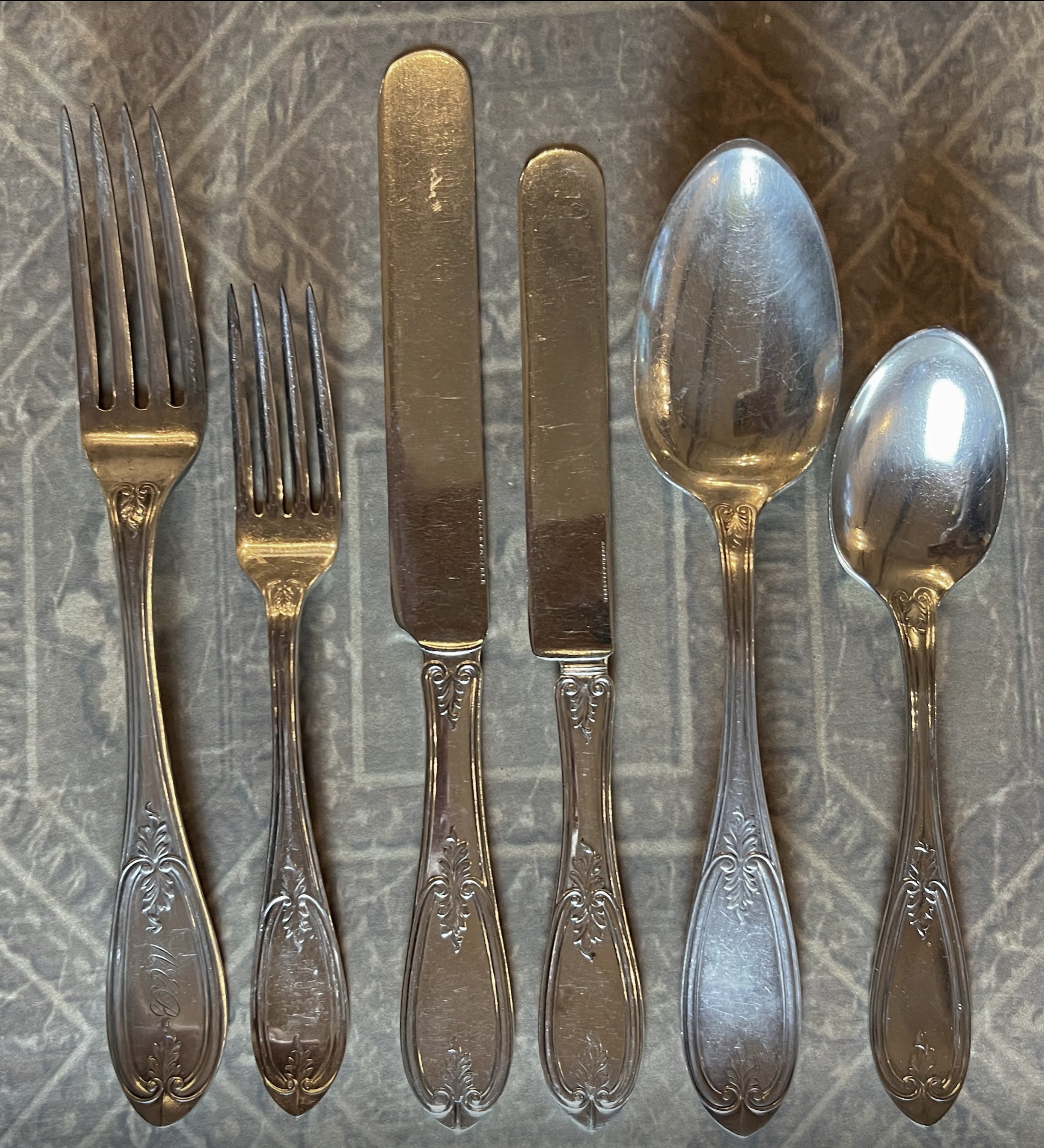
Pictured above is a typical five piece place setting in one of the oldest patterns of silver; the Olive pattern. The pattern can be found in several variations by several different silver makers. The teaspoon on the far right is the smallest spoon of regular place setting spoons, though it does not belong at a formal place setting. The teaspoon should only be at a dinner setting if it is being used for a fruit cocktail, a dessert  or a sorbet, though a fruit spoon, dessert spoon or a sorbet spoon are far more appropriate and designed to eat those specific foods. A teaspoon and cup and saucer are allowable at breakfast and luncheon settings. Coffee spoons are a bit smaller than teaspoons and demitasse spoons are smaller still. 

After your cups and saucers, here are some other afternoon tea necessities: “Naturally your necessary silver is only a spoon since, customarily, forks are not used for afternoon tea. The food should be only what can be picked up in the fingers. After all, afternoon tea is little more than a bit of refreshment at the end of the day, a stimulant- it's not a meal and whatever there is to eat should not be enough to spoil the appetite for dinner.

Tea napkins are about fourteen inches square, quite rightly dainty and decorative bits of fabric edged with lace or embroidery, a hemstitched hem or just a plain rolled one. White or in color, they are anything that you want to make them, providing they harmonize with your other tea appointments.

When you are entertaining at tea for six or eight, you merely enlarge the tray set-up. Use a table low enough so that seated at it, you can pour conveniently. Cover the table with a tea cloth and then set out your tea equipment on its tray. Use the hot-water kettle if you have one. Arrange the napkins, plates and some of the cups and saucers on the tabletop. Add, if there is room, a low flower arrangement; also, if it is autumn or winter, a candle or two.” – From Helen Sprackling, 1960


 🍽Etiquette Enthusiast, Maura J. Graber, is the Site Editor for the Etiquipedia© Etiquette Encyclopedia

Sunday, December 11, 2022

Afternoon Tea Etiquette of 1917

A tea set for easy serving that is comprised of a set of 6 cups and saucers, spoons, a sugar bowl and a creamer on a stand.

“And while the bubbling and loud-hissing
Throws up a steamy column, and the cups 
That cheer but not inebriate, wait on each,
So let us welcome peaceful evening in.” — Cowper

A question that readers frequently ask is whether or not napkins should be served with afternoon tea. And the answer is: you may do as you choose. If you do serve napkins don't make the mistake of serving dinner napkins. 

Small napkins about twelve inches square are most appropriate. The Madeira napkins are suitable but rather expensive. Squares of white linen neatly hem- stitched and marked, perhaps, with an initial or monogram at the corner are less expensive for the hostess who has time for needlework.

A popular book on etiquette makes the statement that it is the fashion nowadays to drink weak tea. Perhaps so, though, personally, it seems as if the drinking of strong afternoon tea was a transgression of the question is sometimes raised as to whether it is “smarter to drink tea with milk, cream or lemon.” 

Readers also want to be informed as to the amount of sugar that good form the permits in sugaring tea. Concerning seems as if Commissioner Hoover had more to say than Dame Fashion and since it is our patriotic duty to give up unnecessary lavishness in sugar, I venture to say that during the period of the war one lump is the correct amount of sugar to use. 

If you wish less than a lump it is awkward to attempt to break or bite a lump in two. Rather put in in in in your cup and do not stir your tea with your spoon after you have gained the desired amount of sweetness. 

A complete tea service includes a pitcher of light cream or leman. There is no good or bad form about lemon or milk— it is simply a matter of individual taste.

Nowadays tea is usually brought in the drawing room or sitting room on a large tray on which the complete tea service is arranged. A muffin stand may be brought in also bearing wafers or bread and butter sandwiches or small cakes or crackers. Sometimes a tea wagon holding the entire service is rolled in from the kitchen or pantry instead.

If you have a satisfactory alcohol tea kettle it is very nice to have this on the tea tray with the kettle full of hot water and proceed to bring the water to a boil and then make the tea, taking the tea leaves from a small tea caddy on the tea tray. But it is just as well, and sometimes more convenient, to have a teapot of freshly made tea and a jug of boiling water brought in from the kitchen. 

If you have no maid it is a simple matter to bring in the tea tray for yourself and drink tea in your living room, and that is in much better form than to take afternoon tea in the dining room. —By Mary Marshall Duffee, 1917


🍽️Etiquette Enthusiast, Maura J. Graber, is the Site Editor for the Etiquipedia© Etiquette Encyclopedia

Saturday, May 14, 2022

Gilded Age Garden Party Etiquette

Lawn tennis, croquet, archery and, for those disinclined to active exertion, card tables, furnish sources of amusement at these picturesque assemblies. Sometimes a platform for dancing is provided, and a band of music is another pleasant feature of entertainment.

SOCIAL ETIQUETTE
Manners and Customs Practiced in Pollte Society

People in pretty country or suburban places can hardly devise a happier form of entertaining than the garden party. There may be a little awkwardness at first where people are unused to these parties. Without the accustomed shelter of a house, guests may feel a little forlorn and wander dismally about for a time, but a hostess of tact soon suggests forming parties for whatever sports or games are provided, and after the first stiffness is over any one can find congenial entertainment of some sort.

The garden party proper is held entirely in the open air. The hostess receives upon the lawn, wearing her hat or bonnet, and lady guests always wear bonnets. Upon arriving at the house guests are shown upstairs to lay aside wraps and brush off dust, if they wish to, and are then shown to where the hostess is receiving. It is proper for a lady to ask for an invitation for a friend to a party that is to be entirely out of doors, as there will always be plenty of room. 

Still no lady should take offense if such a request is not granted, as a hostess may have excellent reasons for refusing. Lawn tennis, croquet, archery and, for those disinclined to active exertion, card tables, furnish sources of amusement at these picturesque assemblies. Sometimes a platform for dancing is provided, and a band of music is another pleasant feature of entertainment.

These parties are sometimes conducted on the principle of an afternoon tea. The hostess receives in the house, the guests then wander through the grounds and return to the house for refreshments when fatigued. This is a modification of the garden party which meets with approbation from the timid, the elderly and the rheumatic, and is less troublesome to the entertainer than serving refreshments on the lawn. Where grounds are ample and handsome, the garden party proper, however, is a beautiful and enjoyable affair. – The Humboldt Times, 1887


🍽Etiquette Enthusiast, Maura J. Graber is the Site Editor for the Etiquipedia© Etiquette Encyclopedia

Monday, January 25, 2021

Etiquette for Farewells at Tea

Most commonly, afternoon teas begin any time from 3:00 pm to 3:30 pm, however any time between 2:00 pm and 5:00 pm is appropriate. Proper etiquette dictates one remove  gloves before eating or drinking anything, and when one is finished, prior to leaving, the gloves should be put back on.


Etiquette Outlined for Guests Departing a Tea


  • Most commonly, afternoon teas begin any time from 3:00 pm to 3:30 pm, however any time between 2:00 pm and 5:00 pm is appropriate. 
  • If you are having a particularly enjoyable time, watch your hostess and the other guests for cues as to when you should plan to depart. 
  • Guests at such functions may feel free to leave after having had tea, that is, after about a half an hour. 
  • Proper etiquette dictates one remove gloves before eating or drinking anything, and when one is finished, prior to leaving, the gloves should be put back on. 
  • If the hostess for a formal tea is pouring, she need not rise when guests come by the table to bid her farewell. She merely bows, and perhaps, offers her hand. 
  • If the hostess is not tied to the tea table with duties, but has friends pouring for her, then she should be sought out by departing guests, who thank her for her hospitality.

—The New York Times, 1964


Etiquette Enthusiast, Maura J. Graber, is the Site Editor for the Etiquipedia© Etiquette Encyclopedia

Saturday, June 27, 2020

Tea Etiquette and Affectations

“Let me suggest, if you have not already done so, putting your little ‘dolls’ cups away in the cabinet and have some of the usual size, as handsome as purse affords. The little cups have gone by as too much of an affectation.”
––––––––––––––––––––––––––––––––––
 
af·fec·ta·tion/ˌafekˈtāSH(ə)n/  noun/ Behavior, speech, or writing that is artificial and designed to impress; Pretension.
Many affectations surround afternoon tea – most notably the 20th century affectation of lifting of one’s pinkie, or pinky finger, when drinking.


Of Fashionable Oriental Pots and Cups — If $15 is too much to pay, then 15 cents will buy a blue and white Japanese teapot holding two cups, and the tea will be just as good, for, like the costly one, it will have a little earthen strainer inside for the tea leaves. The tea bell is a fussy, inconvenient affair, and rather than use it, have some of the Chinese cups with perforated strainers.  
Place the strainer over the cup, put in the tea, and pour on the required amount of boiling water. Set the saucer over the whole and let the tea steep until strong enough to suit. Lift out the strainer by its broad edge, leaving the tea in the cup, clear and free from leaves. But let me suggest, if you have not already done so, putting your little “dolls’’cups away in the cabinet and have some of the usual size, as handsome as purse affords. The little cups have gone by as too much of an affectation. — Los Angeles Herald, 1906


Etiquette Enthusiast, Maura J Graber, is the Site Editor for the Etiquipedia© Etiquette Encyclopedia

Thursday, May 7, 2020

Memories of British Tea Drinking

There are many ways to enjoy tea. Curling up by the fireplace on a cloudy afternoon with a cup of tea can be the highlight of the day. Just because it’s solitary tea doesn’t mean it should be dreary. Arrange some light food in a plate, make it look pretty and enjoy this quiet time by yourself. Kids can also entertain themselves with tea just like the young children in the “Mary Poppins” or “Alice in Wonderland” classic movies. 


Brewing the Perfect Cuppa 
(tea, that is)

To some, drinking a cup of tea is a ritual. To others, it is simply a time to spend a soothing afternoon with friends. Quite easily, visions of scones, strawberry jam, wafer-thin sandwiches and china cups come to mind. Regardless of what images partaking of tea evokes, people have long been fascinated by this charming custom. The popularity of drinking tea has both diminished and flourished since the Chinese discovered it as a suitable beverage about 4,000 years ago. According to legend, Emperor Shen Nung, who was known as the Divine Healer, made it a habit to drink only boiled water after determining that those who did were sick less often. One day, sitting by a tea bush, some tea leaves found their way into his pot. Seeing that the resulting aroma was pleasant, Nung drank his first cup of tea. But it wasn’t until the 16th century that tea was introduced to Europe by Portuguese merchants who brought silks, spices and other Eastern items into the continent. 

While other European countries found tea flavorless in the mid-1600s, England and Russia found it soothing and relaxing. In the 17th century, tea drinking found its spot in English coffee houses. By the mid-1700s, tea gardens emerged. These lush, landscaped gardens were a meeting ground for the fashionable to chat, drink tea and gossip. By the end of the century, however, tea gardens were less prevalent and tea drinking developed into an at-home activity in England. What is now known as afternoon tea can be attributed to Anna, Duchess of Bedford, who realized this ritual was a way to satisfy her appetite during the void between lunch and dinner.

In those days, a day’s worth of meals consisted of a substantial breakfast, a light lunch and a heavy dinner late in the evening. Feeling a bit faint around five o’clock, the Duchess resorted to drinking tea and petite sandwiches to make it to dinner. This sort of “afternoon tea” is quite a contrast to the “high tea” served then in working class homes where hearty cold meats, breads and cheeses were served when the men returned home from work. Although Coronadan Jan Lichty hasn’t lived in England since 1939, her memories of having tea are still fresh in her mind. “The tea I remember, was with the dainty little cups, cucumber sandwiches and wafer-thin sandwiches,” Lichty said. “As children, we had tea, milky tea, with cakes and snacks.” 

“Don’t forget the war changed everything,” she said. “It was a different world then.” Barbara Taylor, a Coronado resident for most of her adult life, remembers growing up in war-torn England and having tea with her family. During the war, Taylor said a lot of English families would sit down for breakfast with a cup of tea and other breakfast items. At school. Taylor would have a heavy meal with tea at mid-day. After school, Taylor would come home to find tea, bread and butter, jams and cakes to share with her parents and sister. Sometimes, cheese or egg dishes made their way onto the table. “Five o’clock was quite a typical time for an English (working class) family to have tea,” Taylor remarked. 

Sarah O’Sullivan, who grew up in the southwest region of England, also remembers sitting around the dinner table and having traditional tea with scones, clotted cream and jam. “That’s extremely fattening,” she joked. “It’s one of the things we miss here.” Like Taylor, O’Sullivan recalls having a hearty lunch at mid-day and coming home for tea around 5 p.m. She used to come home for lunch at times, since her Dad owned a shop nearby and could join them. “It was nice because it was family time, we all sat down together,” O'Sullivan recalled. “Times have changed a bit now in England," Taylor pointed out. “Customs have shifted somewhat.” Most men are no longer able to come home from work at mid-day to have their cooked meal with tea. That tradition has slowly faded. “England is much more like America, more on the run,” added O’Sullivan, who’s been living in Coronado for the past two years. Her husband, who is part of the Royal Navy, is on an exchange with the U.S. Navy. Nowadays, O’Sullivan and her family have their main meal in the evening when her husband returns from work. “Sunday is the closest you get to having an afternoon tea.” 

Taylor, who travels to England frequently, still drinks tea for breakfast but now has a lighter lunch. She continues to drink her afternoon tea around 4 p.m. everyday before her evening meal. “I think it gives you a lift,” she said. “It’s a shame more people don’t stop and take a break at 4 o’clock in the afternoon,’’ Having a cup of tea in the afternoon brings back fond memories for Shelia Davis Lawrence who recalls quiet afternoons drinking tea with her grandmother. “I guess it’s a quiet time in the afternoon, a more gracious time,” Lawrence said, “It can grow into an interesting past-time as an adult.” Lawrence added that she sees drinking tea as an activity for all occasions, not as something stuffy. 

There are many ways to enjoy tea. Curling up by the fireplace on a cloudy afternoon with a cup of tea can be the highlight of the day. Just because it’s solitary tea doesn’t mean it should be dreary. Arrange some light food in a plate, make it look pretty and enjoy this quiet time by yourself. Kids can also entertain themselves with tea just like the young children in the “Mary Poppins” or “Alice in Wonderland” classic movies. Tea for two? This is a great opportunity for a couple to cozy up together and share a romantic time together. Power teas are also catching on in hotels worldwide. They’re a great way to top off power breakfasts and power lunches for busy executives. What better way to spend an afternoon with friends than to throw a tea party. Delicate snacks, a good pot of tea and stimulating conversation are sure to be a success. 

“The properness of tea is not in the elegance of the implements or delicacies of the food—it’s how food is served,” Lawrence said. It is this hospitality and graciousncss as a hostess that Lawrence finds pleasing when having tea. Prompted by her memories as a young girl, Lawrence recently invited a group of Brownies for tea at Crown Manor. The experience to share tea with these young girls was something Lawrence said she cherished. “It’s like passing on a part of history.” Lawrence, like many others, prefers tea to coffee, yet drinking coffee has seen a rise in popularity with the British—for all the wrong reasons though. “My husband has learned to like coffee because he can’t stand the American tea,” noted O'Sullivan. Lichty, however, rarely drinks tea anymore because it’s more convenient to make coffee. 

“Once in a blue moon (I drink tea),” Lichty said. “But if I want to make the effort to do tea, I want to do it right ” Which brings to mind the ubiquitous tea bag, which dates back to 1904 when Thomas Sullivan, a New York tea merchant, started sending his customers samples of his teas in silk pouches. The idea caught on because of its practicality and has even been accepted now in England, according to Taylor. However, it is the way tea is served in many American restaurants that has given tea bags a bad reputation. O'Sullivan said she will never forget the first time she came across tea in the United States. A waitress at a restaurant brought a jug of lukewarm water to her table with tea bags next to it. “I thought, ‘This isn’t tea’,” O’Sullivan said with a laugh. “It tastes peculiar when the water’s not boiling.” Lichty’s great aunt also had a funny encounter with tea bags when they first came out in England years ago. Lichty remembers her great aunt cutting out the top of the tea bag and pouring the tea leaves into the cup. “She tipped it out, she didn’t know any better until I showed her how to do it,” Lichty said. — Stories by Karen Koehler, Coronado Eagle and Journal Reporter, 1991


Etiquette Enthusiast, Maura J Graber, is the Site Editor for the Etiquipedia©️ Etiquette Encyclopedia

Friday, July 6, 2018

White House Etiquette and Teas

Ida Saxton McKinley was the wife of the 25th U.S. President, William McKinley

White House etiquette permits that Mrs. McKinley hold informal receptions on Saturday afternoons. The President is not in evidence at the pleasant gatherings, nor do the cabinet ladies assist as at more stately functions. During her long residence in Washington as a congressman's wife, Mrs. McKinley made many friends outside the exclusive circle to which she is now largely confined. Many of these old acquaintances drink tea with the “first lady in the land” at the Saturday afternoon receptions. – Los Angeles Herald, 1899

Etiquette Enthusiast, Maura J. Graber, is the Site Editor for the Etiquipedia© Etiquette Encyclopedia

Wednesday, June 20, 2018

An Afternoon Tea Primer

“High Tea” has nothing to do with “high society”, “upper class”, or “royalty”. It was actually a more hearty “supper style” meal that included meat between the bread (introduced by the Fourth Earl of Sandwich, thus the High Tea Sandwich), and happened to include tea, that was served in the early evening to the “working men” coming home very hungry from a hard day’s work. 

A Brief History of Afternoon Tea

“Afternoon Tea” was started in the mid-1800s by Anna Russell, Duchess of Bedford.  At that time in history, only two meals were common; a mid-morning breakfast and a somewhat late evening dinner.  The Duchess found herself with a “sinking feeling” in the late afternoon, with the unacceptably prolonged period of time between lunch and dinner. The Duchess decided to have some friends over for assorted snacks and tea – and the idea of an “afternoon tea” gathering became very popular among the elite, as well as a favorite pastime for “ladies of leisure”. The Duchess ordered a few delicacies and some tea to be brought to her boudoir.  The assortment was placed on her low bedside table, and this became known as “Low Tea”.  As time went on, the Duchess wished to enjoy these delights with friends in a more social setting – and so the parlor became the venue for “Afternoon Tea”.

“High Tea” – an often misused term for Afternoon Tea/Formal Tea/Royal Tea could not be more different from these specific tea formalities. “High Tea” has nothing to do with “high society”, “upper class”, or “royalty”. It was actually a more hearty “supper style” meal that included meat between the bread (introduced by the Fourth Earl of Sandwich and thus the High Tea Sandwich), and happened to include tea, that was served in the early evening to the “working men” coming home VERY hungry from a hard day’s work.  This meal, like “Low Tea”, is so named, due to the height of the table on which it was served – to accommodate the height of the men who typically stood at the table or sat on high stools to feast. This meal gradually became more important on the social calendars of Ladies and Gentlemen and was enjoyed prior to social events like attending the theater or playing cards. 

On a quick note, “Royal Tea” or “Champagne Tea” simply mean a delightful addition of the bubbly to the occasion. 


Meet our newest contributor, Jonnie Fox Flanagan. Born and raised in New Orleans, Louisiana she enjoyed exquisite dining at famous and fabulous restaurants such as Brennans, Arnauds, Commander’s Palace, Emeril’s, before moving to southern California. Ms. Flanagan, busy as the lead singer of Jonnie Fox and the Satinettes, also founded The Magnolia School of Etiquette and Protocol, offering classes in the art of fine dining, good manners, and the social civilities that enhance our society with kindness and graciousness. Workshops include private consultation to brides, business professionals, individuals, university etiquette dinners, corporate conferences, and group workshops for children ages 5+.


Etiquette Enthusiast, Maura J. Graber, is the Site Editor for the Etiquipedia© Etiquette Encyclopedia 

Wednesday, February 21, 2018

Tea Rituals and Scone Etiquette

This looks delicious, but it is not "the done thing" to cut a scone, slather clotted cream and jam on, then put the scone back together to form a kind of bulky sandwich. Scones are broken, much like a bread roll. The scone (pronounced as in “gone” not as in “cone”) is to be eaten in a very particular way. Scones are served whole and preferably warm from the oven, and as with bread you break a scone with your fingers, and spread the jam and cream on, bite-size by bite-size piece. One should never be seen to cut a scone with a knife.

The Beginnings of the Afternoon Tea Ritual 

The British ritual of afternoon tea is attributed to Anna Maria, 7th Duchess of Bedford. The Duchess was staying as a guest of John Manners, the 5th Duke of Rutland, at Belvoir Castle in Leicestershire when she found herself experiencing a “sinking feeling” during the long hours between midday luncheon and late evening dinner. 

She requested a snack of tea and cake to curb her hunger and found that she so enjoyed it that she invited her friends to join her. She continued the social gatherings when she returned to her home at Woburn Abbey and even took her own silver tea equipment with her when she went to visit her friends in their castles and palaces.
A stunning, late 19th century silver and enamel tea service. Tea services added to the ceremony of Victorian afternoon tea we know today.  

As the popularity of this new found ritual spread amongst the upper and middle classes the Victorians unsurprisingly began producing new specially designed apparatus to further enhance the enjoyment of afternoon tea. So up sprang all the elegant tea pots and kettles and creamers and tea strainers, and subsequently the ceremony of afternoon tea grew into what we know today.– Contributor Rachel North

Contributor Rachel North is an etiquette and afternoon tea enthusiast with a love for anything -ancient and historical.
Etiquette Enthusiast Maura J. Graber, is the Site Editor for the Etiquipedia© Etiquette Encyclopedia 

Etiquette, Low and High Teas

Several 19th century ladies and a gentleman,  enjoying an outdoor afternoon, or “low tea.” “High tea” is a completely different meal in itself and does not connote any segment of society, wealth, ability to exhibit manners or the oft and incorrectly used term, “classy.” 

Afternoon tea is traditionally known as “low tea” because it was served whilst sitting down on low sofas and chairs, whereas high tea is a completely different meal in itself. High tea does not have anything to do with the overused and misused phrase, “high class,” but instead got its name due to being eaten on high tables amongst the working classes.

After a long day’s hard labour, the working classes would gather together for their evening meal which usually consisted of meat, fish and other heavy foods. It is still common to hear people from various areas of the country refer to their dinner as “tea” and their lunch as “dinner.”

When presented correctly, afternoon or a “low tea” is actually a three course meal, hence the prettily decorated three-tier stand.

The tea when presented correctly is actually a three course meal, hence the prettily decorated three-tier cake stand. Quite apart from being purely aesthetic, the cake stand represents the three courses. When when having tea, you “work from the bottom up” when it comes to the stand.

The bottom tier represents your first course and is usually laden with finger sandwiches, the middle tier sports warm, succulent looking scones and the top tier finishes the meal off with various cakes, pastries and petit fours. It is incorrect for the three tier cake stand to be arranged in any other way.— Etiquipedia Contributor, Rachel North

Contributor Rachel North is an etiquette and afternoon tea enthusiast with a love for anything -ancient and historical.
Etiquette Enthusiast, Maura J. Graber, is the Site Editor for the Etiquipedia© Etiquette Encyclopedia  

Friday, February 9, 2018

Miss Manners on Tea Etiquette

“Tea is made in the drawing room in full view of the guests, so get it right. The proper method is this: Rinse the teapot with boiling water. Give your teaspoons a chance to do the job for which they were trained by putting in one teaspoon of loose tea (tea is claustrophobic and hates being stuffed into little bags) for each tea drinker, plus one. Now pour on the rapidly boiling water. There are few things worse than tepid tea.” 


Tea for Two or 3,000 

Dear Miss Manners: I should like to begin having tea on a daily schedule with friends stopping in, with or without invitations. A couple of questions do require answering: At what time is “teatime,” and should coffee be offered or placed on the table? 

Gentle Reader: Miss Manners adores afternoon tea, from “oh-do-join-me-for-a-cup” to royal receptions for 3,000 people. She would advise you to get some practice in the former before attempting the latter. There are few more charming ways to spend an afternoon than to sit, surrounded by fine china and friends, wolfing down scones and bringing up epigrams. 

If you wish to test the water before jumping in even on a weekly basis water for tea should always be boiling invite people for a specific day writing: Tea Tuesday the Seventeenth. Four to Six o’clock. All should be written in the lower left corner of your visiting cards. Later it may be “Tuesdays 4 to 6 p.m.” Place on a tray a large silver or copper kettle over an alcohol burner and tea caddy, with a teapot, cups (which have been warmed with boiling water), teaspoons, a slops bowl, a tea strainer, a milk pitcher (cream overpowers a dainty cup of tea), a bowl of lump sugar, little plates and napkins. 

Tea is made in the drawing room in full view of the guests, so get it right. The proper method is this: Rinse the teapot with boiling water. Give your teaspoons a chance to do the job for which they were trained by putting in one teaspoon of loose tea (tea is claustrophobic and hates being stuffed into little bags) for each tea drinker, plus one. Now pour on the rapidly boiling water. There are few things worse than tepid tea. 

When the tea has steeped for about four minutes, ask your guest of honor how she takes it. Using the strainer, pour straight from the pot for strong tea and dilute it from the kettle for weak. Then add sugar (the reason for using lump sugar is so you may ask the traditional “One lump or two?”) and milk, according to the taste. Some troublemakers prefer lemon to milk and you may put slices in a glass dish on the tray, but you are only encouraging them. 

When this ritual is performed, the guest takes her tea from the hostess or if there is a gentleman present, he takes it to her. She then takes a plate, napkins and a modest selection from your platters of hot breads, tiny sandwiches, cookies and a slice of whatever luscious cake your cook has baked that day. If you become addicted to this form of entertaining, you may need to to move on to stronger doses, such as the reception, which is tea served in the dining room.

The tea service is placed at one end of the table, and the teacups napkins, plates, forks if needed, and a larger supply of tea food (at least two of each kind mentioned above) go in the middle. At the other end stands an urn of chocolate, boullion, or more often lately to Miss Manners' dismay, coffee. You may ask friends “to pour,” that is to serve the tea and chocolate for you as you move among your guests. Being asked to pour is an honor just short of knighthood.

The traditional time for tea is four o'clock, which is perfect if you have your afternoons free. However, coffee is only one of the sad things that has happened to tea over the years. Some people have the idea that there is something more important to do in the afternoon than sip tea and eat buttered bread, such as earning a living. If you have friends who work, Miss Manners suggests that you schedule your tea on a weekend or at a time convenient to them on their way home when you could give them yet another variation, “high tea,” so as to replace, rather than interfere with, their supper. 

High tea is more substantial in all matters of food and drink than afternoon tea. It could include a whiskey and soda tray. Along with the dainty foods traditional to afternoon tea, there are soft boiled eggs, sausages, sardines on toast, kippers, chicken livers and such. While some unscrupulous restaurants try to make afternoon tea sound more “high society” by calling it “high tea,” the word “high” is actually related to “it's high time we had something to eat.” As social events go, high tea is lower on the scale than afternoon tea, because the chances of being fed dinner are small on a day you are given high tea. In that respect it is like the “cocktail-buffet,” than which there are few lower social events. – From Judith Martin’s, “Miss Manners’ "Guide to Excruciatingly Correct Behavior,” 1985


Etiquette Enthusiast, Maura J. Graber, is the Site Editor for the Etiquipedia© Etiquette Encyclopedia

Friday, May 13, 2016

Tea Etiquette and Debutantes

Certain formalities are observed on a special occasion of the sort for the introducing of a debutante. An engraved card is used, having the name of the daughter beneath that of her mother...


How to Give the Popular Afternoon

Afternoon teas continue to be a great feature among the entertainments of the day. Fashion calls on a mother to introduce her daughter. Certain formalities are observed on a special occasion of the sort for the introducing of a debutante. An engraved card is used, having the name of the daughter beneath that of her mother, with the date, the hours for receiving and the address in the lower left hand corner of the card may be the words, "Fridays in January," too.

Indicate other days during the winter for receiving more informally. Cards are about five inches long, by three and a half wide. The usual style of engraving is script. According to recent fashion the form is: Mrs. Archibald Robinson and Miss Edith Hobinton Will Be At Home on Tuesday, the first of December from four until seven o'clock at Seven East Seventy-third Street. 

Cards for large teas or days at home are sent out two weeks in advance; small teas a week or so in advance. Invitations to teas are in the name of the hostess, not in the united names of husband and wife. At a large tea or reception for a debutante, music for dancing is a feature. An orchestra is in the hall or in a room set apart for dancing. The musicians may be screened off by palms. – The Mariposa Gazette, 1914


🍽Etiquette Enthusiast, Maura J Graber of The RSVP Institute of Etiquette, is the Site Editor for the Etiquipedia© Etiquette Encyclopedia 

Monday, February 22, 2016

1920s Afternoon Tea Etiquette

 An informal outdoor tea in the open, on the lawn or in the garden, is perfect for when the weather is nice, or if your guests aren't planning on staying too long.


Afternoon Teas

Afternoon teas are of two kinds, formal and informal, and the informal outdoor tea in the open, on the lawn or in the garden, is a variant of the latter variety. Here the tea wagon comes into play, and tea is often tea in name only, since at summer outdoor teas not only iced tea, but iced coffee, iced chocolate or punch are often served.

The Informal Tea

Do not set a table for the informal tea. The tea service is merely brought to the sun parlor, drawing room or living room in which the tea is to be served, and placed on the table. There the hostess makes and pours the tea, unless she prefers to have it brought in on a tea tray already made for pouring.

The tea service comprises: a teakettle for boiling water with filled alcohol lamp and matches; a tea caddy with teaspoon and (if only a few cups are to be made) a tea ball. A tea creamer, cut sugar, a saucer of sliced lemon, and cups and saucers with spoon on cup saucer, as well as tea napkins complete the service. The water brought in the teakettle should be hot. If this precaution is observed, the tea will boil very soon after the lamp is lighted. The sandwiches served at an informal afternoon tea should be very simple: lettuce, olive or nut butter, or plain bread and butter, nor should the small cakes also passed be elaborate or rich.


The Formal Tea

The formal tea—a tea becomes formal as soon as cards are sent out for it—is a very different affair. As many as four ladies may pour, two during the first, and two during the second hour. Friends of the hostess—they serve all refreshments, though waitresses assist, removing soiled cups and plates and bringing in fresh ones—preside at either table end, and the table is decorated (flowers and candles). At one end of the luncheon cloth (or the table may be laid with doilies) stands the service tray, with teapot, hot-water pot, creamer, sugar bowl with tongs and cut sugar, and sliced lemons in dish with lemon fork. The tray also contains cup and saucers (each saucer with spoon, handle paralleling cup). The coffee, bouillon or chocolate service is established in the same manner at the other end of the table. If coffee is served, the service tray is equipped with urn, cream and sugar; if chocolate, whipped cream in bowl with ladle; if bouillon, the urn alone.

Each lady who pours must have a large napkin convenient to guard her gown. Arranged along the table should be plates of sandwiches and cakes, bonbon dishes and dishes with salted nuts. But the table must not be crowded. This important rule is responsible for the existence of the frappe table.

The frappe table holds the afternoon tea punch. Since the dining room is apt to be well filled as it is, the frappe table had best be established in some other room. On its luncheon cloth is set the punch or frappe bowl with ladle, and individual ices, frozen creams (not too rich or elaborate) or punch are served in frappe or punch bowls by a friend of the hostess. The small plates on which the frappe glasses are served should be piled on the table with doilies (linen always) between the plates. When served, the glass is filled with the sherbet or cream, and a sherbet spoon laid at the right-hand side of plate (a tray of sherbet spoons belongs to the frappe table equipment, as well as a filled cake basket, dishes of candy, piles of small plates and small linen napkins). Unless you are entertaining guests to the number of a hundred or more, never use paper doilies at a formal afternoon tea!

A pretty custom dictates that young girl friends of the hostess serve the guests. They provide the latter with plate and napkin, ask their choice of beverage, and serve it, together with sandwiches and cakes. Or the plates and napkins may be handed the guests as they enter by a waitress stationed at the door, before they are served by the young girls.

A salad should never be offered at a formal afternoon tea! To do so is to commit a social solecism.” — From Lillian B. Lansdown's 1922, “How to Prepare and Serve a Meal; and Interior Decoration.”


 Etiquette Enthusiast, Maura J Graber, is the Site Editor for the Etiquipedia© Etiquette Encyclopedia

Sunday, February 7, 2016

Etiquette, Culture and Polish

Never ask a man twice to call upon you. If he does not accept your first invitation, take it for granted that he does not care to do so. 


Etiquette and Social Customs:

Useful Points for People in Search of Culture and Polish 


The following, from answers given to correspondents in Harper's Bazaar, cover just such points as many people are interested in: 

While the use of "for" or "to" before the name addressed upon an envelope is not "distinctly bad form," it is certainly unnecessary, and lessens the elegant appearance of a more simple form of address. 
It is certainly not nice form to offer the left hand to an acquaintance while the right is of possible use. 
The receipt of the card from your summer acquaintance leaves you precisely as if she had given you the card in exchange for yours last summer. If you desire to continue the acquaintance, and are the younger woman, call upon her; if not, wait for her to call upon you.
Of all things be simple, quiet and natural in your manner; cultivate a soft toned voice, and do not gesticulate; speak good English before you attempt French; the latter is an accomplishment, the former a necessity. 
An afternoon tea is the most informal of entertainments. You may serve your tea in a special room or all about, as you find most convenient. Serve small napkins with the tea.
A young girl is not supposed to do any entertaining in her own name, unless possibly an informal affair where only other young girls are invited. 
Never ask a man twice to call upon you. If he does not accept your first invitation, take it for granted that he does not care to do so. 
It is better form to ask for a card for your guest, although you may take her to a tea without that formality. 
On a reception day or at a tea you should leave your cards in the card tray in the hall on your departure. 
A lady should rise to greet a gentleman or to bid him farewell in her own house. The proposal to correspond should come from the gentleman. 
No call is necessary in acknowledgment of an afternoon tea. A card left or sent to a tea discharges the obligation. — From The Los Angeles Herald, 1891

Etiquette Enthusiast, Maura J Graber, is the Site Editor for the Etiquipedia© Etiquette Encyclopedia