Showing posts with label "London's Debutante Season" Etiquette. Show all posts

Monday, September 21, 2020

Etiquette for Victoria’s Drawing Room

Above, a dress featuring the “en coeur neckline.” Good luck in getting that doctor’s note!  — “... from some remarks which we have lately heard, people do not seem to be aware that bodices cut either square, or en coeur, are not considered full dress, and that ladies presenting themselves at a drawing room so attired, will be denied admission, unless provided with a special permission from the Lord Chamberlain’s office, to obtain which a doctor’s certificate of the impossibility of the lady in question wearing a low dress with safety, is imperatively necessary.”
— Photo source, Pinterest


The drawing-rooms for the season will soon be announced, says the ‘London Queen,’ and those who have never yet attended one, but propose doing so, may be glad of a few hints on the etiquette of the occasion. It is whispered, whether on good authority or not, we cannot say, that, in consequence of the crowded state of the drawing-room held after Easter last season, more receptions are to be held this year. Usually there are three drawing-rooms— two before Easter and one after. It is curious that people who really ought to know better, will continue to talk of the birthday drawing-room, the fact being that no such reception has been held since the lamentable death of the Prince Consort. At the birthday drawing-room, no presentations could take place, and no one could appear in mourning ; those who attended it were supposed to be desirous of congratulating the Sovereign on the auspicious occasion. All the drawing-rooms now held, are presentation drawing-rooms, and it is with the etiquette ot these that we are principally concerned.


Presentation


The lady wishing to be presented must first find a lady willing to present her, and also to attend the drawing room at which she wishes to be presented, for although it is by no means necessary that the two ladies should pass at the same time, or even that they should meet, it is absolutely de rigueur that a lady who presents another should attend the drawing-room. This preliminary being arranged, the presenter gives her friend a note addressed to the Lord Chamberlain, adding her intention of attending a certain drawing-room and of presenting Mrs. Jones. This note, Mrs. Jones leaves at the Lord Chamberlain’s office, at least two clear days before the drawing-room, accompanied by a large card on which is legibly written, “Mrs. Jones, presented by Lady Brown;” or, “Mrs. Jones, presented on her marriage by Lady Brown.” From the Lord 
Chamberlain’s office she receives, an application, two pink presentation cards, on which “Presentation” is marked in large letters. These she takes to the palace with her, giving one to the page in waiting at the corridor at the top of the grand staircase, and reserving the other to be given at the door of the presence chamber, where it is handed from one official to another till it reaches tbe Lord Chamberlain, who announces the name to the Queen. Care should be taken by the lady to write her own name and also that of the lady presenting her, very legibly, so that there may be no danger of mistakes. In the case of the presentation of a bride, it is usual for her to be presented by her husband’s mother, sister, or some other member of his family, if possible and convenient ; but this is a matter of taste, not of necessity.


On Presentation Dresses


Presentation dresses for brides and young girls should be entirely white, no further color being allowable than blush roses or apple blossoms ; but this rule is not arbitrary for more elderly ladies, indeed, it would look rather absurd in the case of a mother who is herself presented, and then presents her daughters on the same occasion. One word here as to the feathers, which form an essential part of the court-dress. A fashion has been gaining ground of late years, of having these plumes to match the color of the toilet, and they are certainly very pretty and far more becoming than the orthodox white feathers, which are somewhat trying to any but the most delicate complexions. Still, we are able to say on excellent authority, that these colored plumes are regarded with much disfavor in the very biggest quarters, where they are considered as a departure from the strict etiquette of court costumes, which imperatively demand white feathers. Also, from some remarks which we have lately heard, people do not seem to be aware that bodices cut either square, or en coeur, are not considered full dress, and that ladies presenting themselves at a drawing room so attired, will be denied admission, unless provided with a special permission from the Lord Chamberlain’s office, to obtain which a doctor’s certificate of the impossibility of the lady in question wearing a low dress with safety, is imperatively necessary.


On Entering the Palace


Ladies cross the ball to a large cloak room, where all wraps are deposited, and then, ascending the staircase and passing along the couridor, enter the ball-room, which is the first of the suite of reception rooms. The room nearest to the presence chamber is reserved for those having the privilege of the entree, such as the diplomatic corps, members of the present and former governments, the great Officers of State, members of the household, Queen's aids-de-camp, and others. As each room fills, the doors are closed by a bar, presided over by two of the gentle-men-at-arms, so as to prevent undue crowding; and as each apartment empties those in the next room are admitted to it. The last room is separated from the present chamber by the width of the picture gallery, and while crossing this, the ladies’ trains are spread out by the attendants in waiting. If her Majesty is present, the lady about to be presented should take off her right-handed glove before reaching the presence chamber, as it is on that hand that her Majesty places hers, for the lady to kiss.


On Peeress or Peer’s Daughter


Her Majesty kisses her on the cheek. If the Queen is not present there is no kissing on hands. In either case, a low courtesy must be made to each member of the Royal family present as the lady passes. To do this gracefully requires some dexterity, as very little time is allowed, and the train is taken up and thrown over the arm almost before the requisite number of reverences are completed.— Telegraphic Sparks, 1875


Etiquette Enthusiast, Maura J Graber, is the Site Editor for the Etiquipedia© Etiquette Encyclopedia

Sunday, December 17, 2017

Budget Debutante Etiquette


All of the Court gowns have many similar features. Unmarried young women must appear in white. The gown must have a train not less than two yards in length and must be cut moderately low in the neck, and the sleeves must be short. A veil similar to that worn by a bride must also form a part of the costume. A bouquet of flowers is also a compulsory feature...


The London Season... At Cut Rate Prices

One girl who was presented last year, boasted of having passed through the ordeal at a cost of less than $50! She managed it by hiring a gown and veil for $30, borrowing some jewels, paying $10 for a carriage and $10 for a bouquet of flowers. It is possible to do it for $175 without hiring or borrowing anything. A fair gown can be had for $125, the veils, slippers, gloves, etc., for $25 more, leaving $25 for the carriage and flowers. This, of course, is shaving matters dangerously close. Usually, the parents of a girl who is presented, give a reception at their hotel or home after the drawing room, and this has grown to be such a fixed custom, that the cost must be reckoned the same as the price of the Court gown. 


All of the Court gowns have many similar features. Unmarried young women must appear in white. The gown must have a train not less than two yards in length and must be cut moderately low in the neck, and the sleeves must be short. A veil similar to that worn by a bride must also form a part of the costume. A bouquet of flowers is also a compulsory feature, but aside from these, the young woman can allow her fancy to run as freely as her pocketbook will permit. It is the Lord Chamberlain who fixes all these rules, and his assistants see to it that they are rigorously adhered to. – London (UP),1896

Etiquette Enthusiast, Maura J. Graber, is the Site Editor for the Etiquipedia© Etiquette Encyclopedia

Wednesday, November 18, 2015

Etiquette and Social Invitations

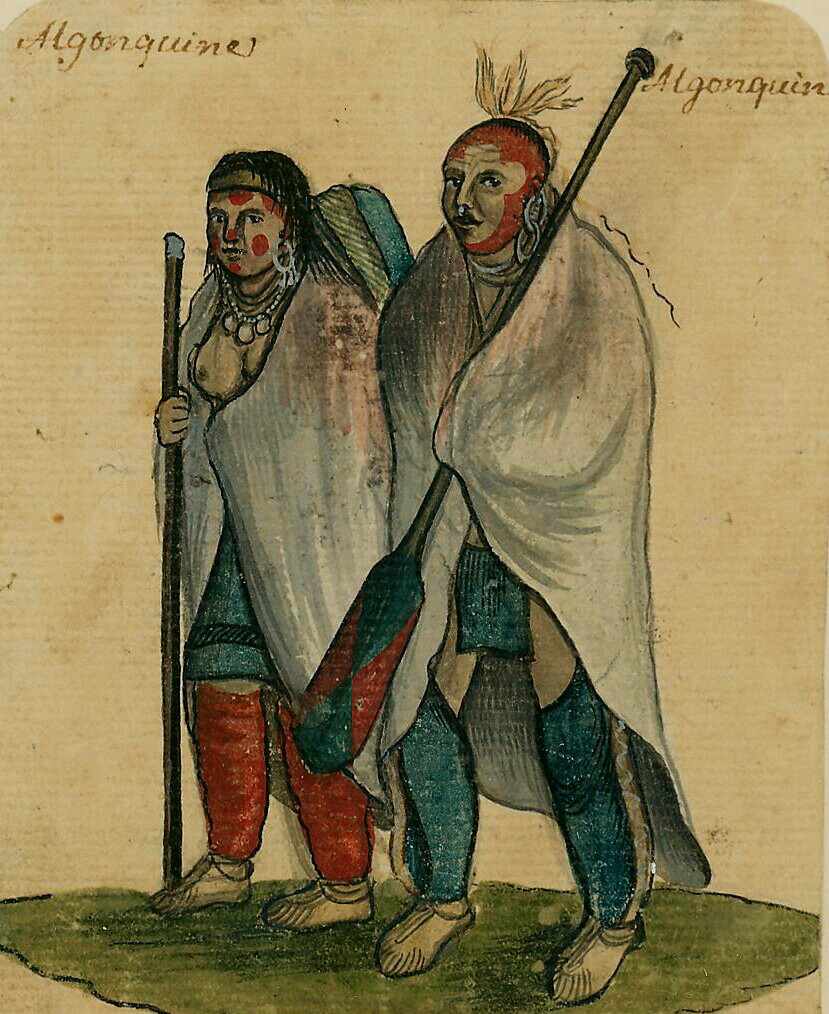
Long before 1600 the Algonquins were sending out "dinner invitations" in the form of specially cut blocks of wood about the size of the little finger. All those who received the bit of wood with its curious picture message, knew that they were invited to attend the feast and celebration being given by the Algonquin

Writing very early became a device for making social affairs run more smoothly. Writing in the sense of books, newspapers, records, stories is one thing; writing in the sense of social correspondence, invitations, cards of greetings, congratulation, and condolence is quite another.

The North American Indians were among the first to use actual invitations. They burned their message on buckskin and sent it by runner to the person for whom it was intended. Tribes also had a smoke message which they used to call their people together for purposes of feasting, celebrating, etc... The smoke message was used sometimes in warfare.

It appears that among the Indians, ever a hospitable people, the development of the invitation was rapid and marked. Long before 1600 the Algonquins were sending out "dinner invitations" in the form of specially cut blocks of wood about the size of the little finger. All those who received the bit of wood with its curious picture message, knew that they were invited to attend the feast and celebration being given by the Algonquin. They came from far and wide to join in the merrymaking.

Among early European peoples the invitation developed slowly. The peasantry, of course, had no need for any such thing as an invitation; if one of their number wished to celebrate at the public bar or in his home, he merely called all his friends together with as much proud noise as he could command. Among the upper classes, a private messenger was sent to give the information orally.

By the time of Shakespeare the invitation had reached a fairly high point of development. The mode of the written invitation first found favour at court and then spread to the people in the cities. These invitations were written on huge sheets of white paper, by hand, the initial letters usually made by stamp and decorated with color.
   
"So many guests invite as here are writ," says Shakespeare. The invitations were carried by pages or messengers to the homes of the people for who they were intended, and usually an answer was required, in the manner of our acknowledgement. –Lillian Eichler


Etiquette Enthusiast, Maura J Graber, is the Site Editor for Etiquipedia© Etiquette Encyclopedia